
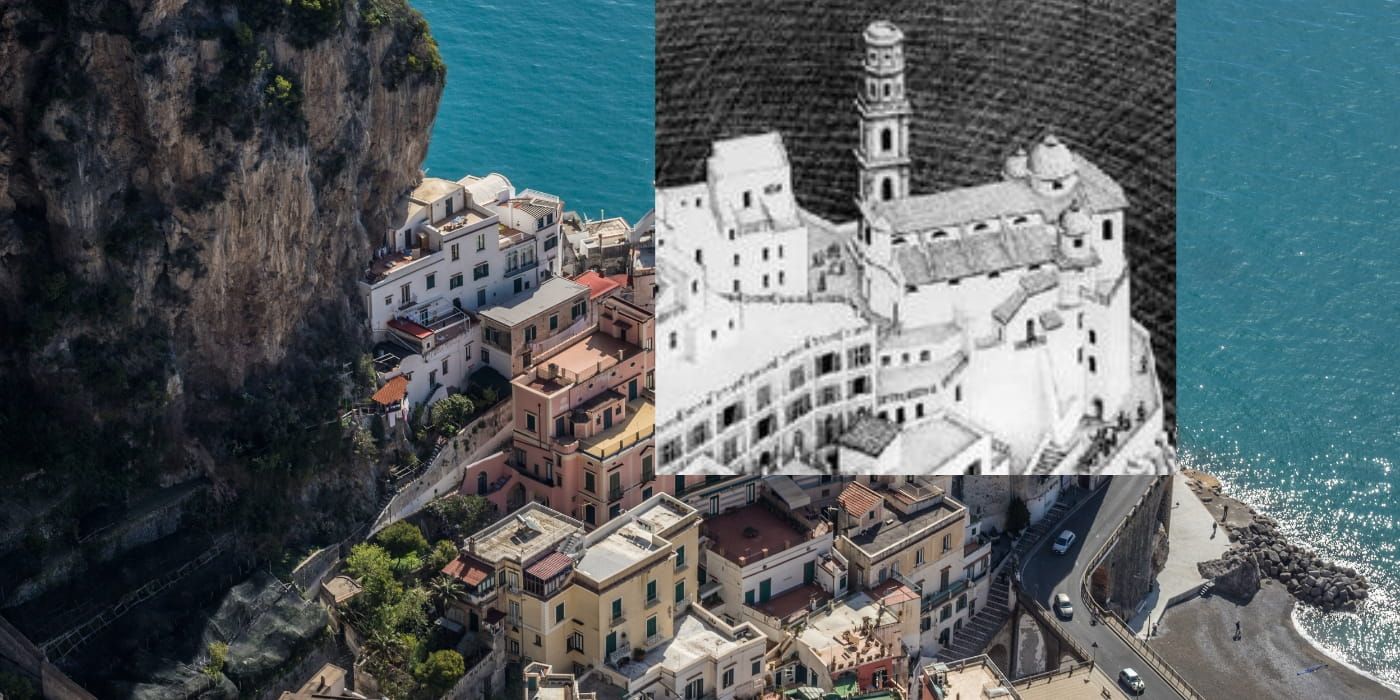

Behind some of the world’s most celebrated masterpieces are real Italian landscapes, vistas that legendary artists once gazed upon, reimagined, and immortalised on canvas.
Thanks to decades of detective work by art historians and scholars, many of these sites have now been pinpointed on the map. That’s why we set out to discover the very places that sparked famous Italian paintings now showcased in the world’s most renowned museums.

7 Italian landscapes that left a mark on art history
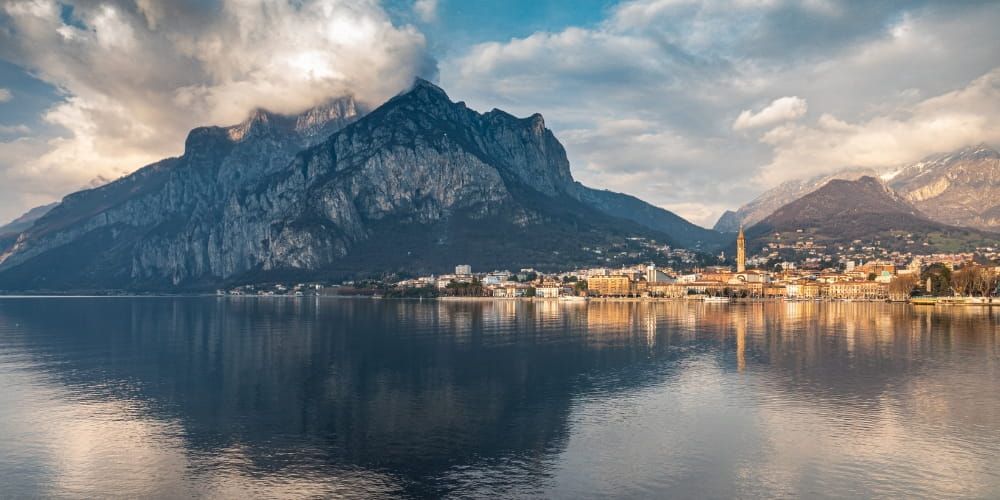
Some now hang in the Louvre. Others are displayed at the Museum of Modern Art in New York, the National Gallery in London, or the Uffizi in Florence. But before they became masterpieces, they were ordinary corners of Italy.
Leonardo da Vinci studied them with a scientist’s curiosity. Escher bent their forms into mind-bending geometries. Warhol splashed them into the realm of pop culture.
With Google Maps in hand, we set out to find the locations that inspired seven unforgettable works of art. Not all of these destinations make it into glossy travel guides, but they have earned a place among the world’s most prestigious museum collections.
Our art-inspired journey through Italy led us to the real-life settings behind paintings that captured its beauty, atmosphere, and character. Here are the places to discover:
– San Vigilio and Lake Garda through the eyes of John Singer Sargent
– Atrani, the Amalfi Coast village that captivated M.C. Escher
– Lecco, following Leonardo da Vinci’s Italian landscapes
– Andy Warhol’s Vesuvius: Naples' volcano as a pop icon
– Gaeta and the Mediterranean visions of Cy Twombly
– Tresigallo, the town that looks like a De Chirico painting
– Montefeltro through the portraits of Piero della Francesca
Related story – The places in Italy that inspired famous novels
7. San Vigilio – “San Vigilio, Lake Garda” by John Singer Sargent
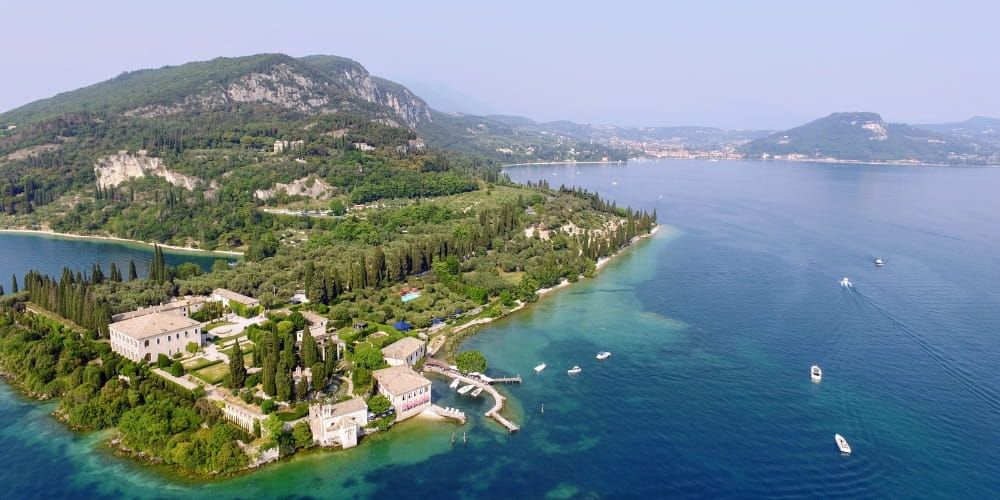
In the summer of 1913, John Singer Sargent traded the ballrooms of the European capitals for the gentle shores of Lake Garda. He spent his days painting outdoors, drawn especially to Punta San Vigilio, a slender peninsula on the Veronese side, famed for its cypress trees, olive groves, and breathtaking vistas over the water.
Here, Sargent produced a series of works worlds apart from the glamorous society portraits – like Madame X and Lady Agnew of Lochnaw – that cemented his fame and anticipated the visual language of modern fashion photography.
Punta San Vigilio is an easy stroll from the town of Garda and still shimmers with the atmosphere that captivated Sargent more than a century ago. A tree-lined lane leads to a hidden harbour and bay, revealing the same sunlit scenes immortalized in his paintings.
Of Sargent’s Lake Garda series, the watercolour San Vigilio, Lake Garda hangs in London's Tate Britain, while Three Boats in Harbor, San Vigilio resides at the Art Institute of Chicago.
6. Atrani – “Atrani, Coast of Amalfi” by M.C. Escher
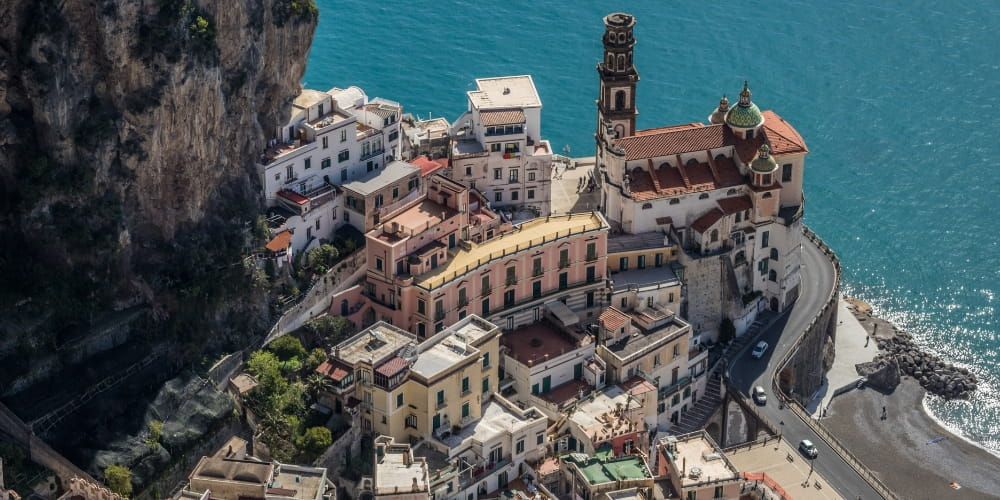
Famed for his mind-bending perspectives and impossible worlds, M.C. Escher also fell under the spell of Italy’s landscapes. During his travels, the Amalfi Coast – primarily the small village of Atrani – captured his imagination. In the 1930s, he rendered this quaint Salerno province town in a series of remarkable works.
Escher returned to this subject again and again. Atrani’s skyline – especially the bell tower – became a recurring motif in his Metamorphosis series, weaving the village into his signature visual puzzles.
For a glimpse of his interpretation of these iconic Italian views, visit the National Gallery of Art in Washington, D.C., home to both Atrani, Coast of Amalfi and Covered Alley in Atrani, painted in 1931.
To see the source of Escher’s intricate visions, make your way to Atrani itself. From Amalfi, it’s a leisurely 15-minute stroll or a two-minute bus ride. The Collegiate Church of Santa Maria Maddalena, with its bell tower, twisting stairways, and maze of alleys, holds all the ingredients that inspired his labyrinthine art.
Laorca (Lecco) – “The Virgin of the Rocks” by Leonardo da Vinci
@nationalgallerylondon How to look at Leonardo da Vinci's 'Virgin of the Rocks' #leonardo #leonardodavinci #learnontiktok #nationalgallery #arthistory #arttok original sound - National Gallery
When Leonardo da Vinci arrived in Milan in 1482, he began studying the panoramas of the Lombardy region with the curiosity of a natural scientist.
Mountains, waterways, and geological formations filled his notebooks and drawings and fed the fascination with the natural world that would also shape one of the most famous Italian paintings of all time: The Virgin of the Rocks.
There are two versions of the composition painted between the late 15th and early 16th centuries, one in Paris’s Louvre, the other in London’s National Gallery. Both depict a landscape worlds apart from the golden skies and gentle meadows of Renaissance altarpieces. Instead, Leonardo conjured a mysterious realm of jagged cliffs, caves, and primaeval wilderness.
A fascinating theory suggests that the Cave of San Giovanni in Laorca, a district of Lecco, may have inspired this setting. The area’s limestone cavities and rugged cliffs echo the rocky world imagined by Leonardo and suggest a possible glimpse into the Italian scenery behind one of his most enigmatic works.
The cave of Laorca is just a short drive from Lecco along the road to Valsassina. From the village, a brief walk brings you to the old cemetery and the caves themselves.
4. Naples – “Vesuvius” by Andy Warhol
Andy Warhol had already turned soup cans, celebrities and everyday objects into icons. In the ‘80s, he chose something much more dangerous: an active volcano.
Invited to Naples by visionary art dealer Lucio Amelio, he created a series of 18 canvases for the exhibition Vesuvius by Andy Warhol at the Museo e Real Bosco di Capodimonte. The main theme was Naples’ volcano, splashed in electric hues and simmering with unpredictable energy.
His 1985 painting Vesuvius still hangs at the Capodimonte Museum as a testament to Warhol’s unlikely artistic love affair with Naples.
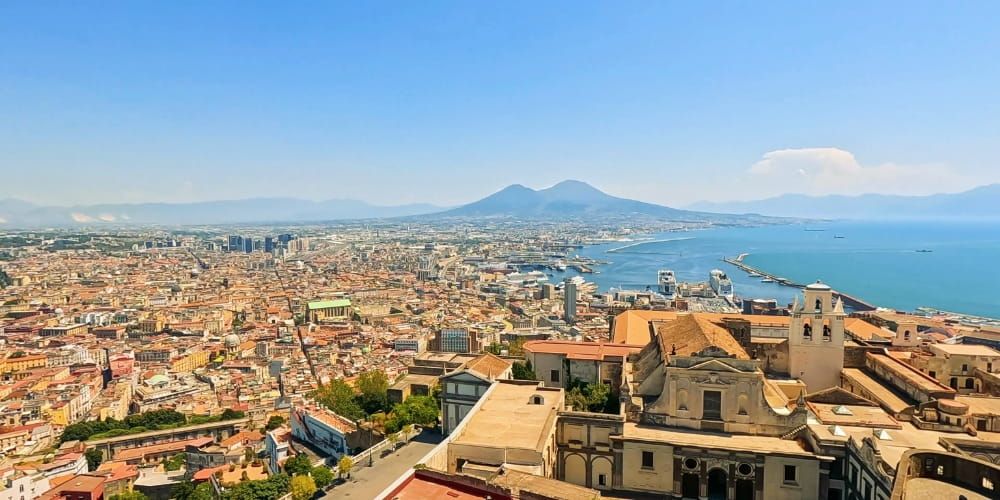
The artistic travel experience we suggest: to see the landscape that inspired one of the most influential American artists of the last century, drive or take a bus from Naples to the Vesuvius National Park, then follow the path up to the crater.
For postcard-worthy views from the city, head to the Belvedere di Sant’Antonio in Posillipo, stroll the waterfront between Via Partenope and Via Caracciolo, or take in the panorama from San Martino and Castel Sant’Elmo in the Vomero district.
Related story – The best street art in Naples
More info on Vesuvius3. Gaeta – “The Four Seasons” by Cy Twombly
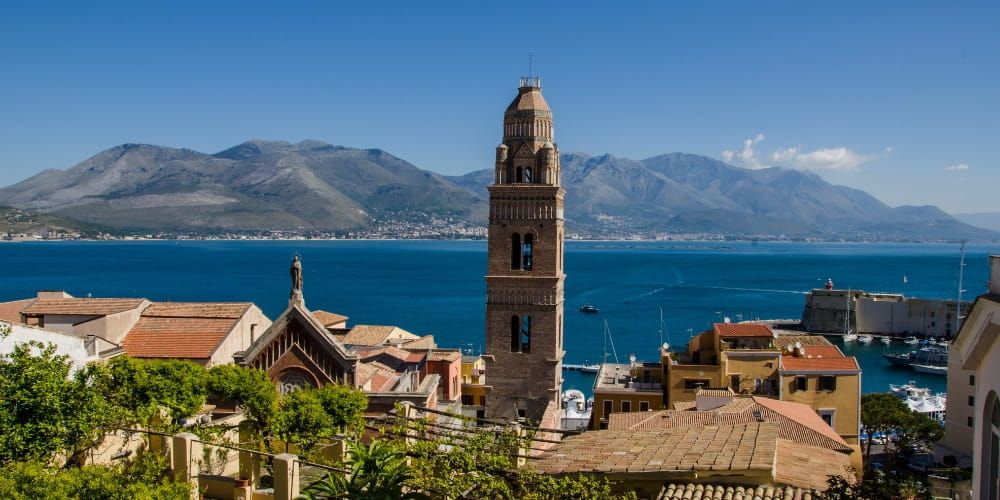
Cy Twombly first arrived in Italy in the 1950s, and in his later years, Gaeta became his creative sanctuary.
In this seaside town bathed in Mediterranean light, he also painted Quattro Stagioni (A Painting in Four Parts), a monumental series completed between 1993 and 1994.
Instead of recognisable vistas, Twombly conjured spring, summer, autumn, and winter with sweeping brushstrokes, bursts of colour, and handwritten fragments.
The sequence, a sort of meditation on time and nature’s cycles, was unmistakably influenced by Gaeta’s intense light and atmosphere. Twombly used to move between the quiet rhythms of the town and his life back in the United States.
The four paintings are now part of the permanent collection of the Museum of Modern Art (MoMA) in New York.
As for the Italian landscapes that inspired them, Gaeta offers a more subdued alternative to the headline museum cities for travellers drawn to artistic travel in Italy. Walking from the medieval quarter to Monte Orlando reveals the Mediterranean light and coastal scenery that became part of Twombly's visual language.
2. Tresigallo – “Piazze d’Italia” by Giorgio de Chirico
There is a small town in Italy that feels as though it has stepped directly out of a Giorgio de Chirico painting. It’s called Tresigallo, in the province of Ferrara, and is widely regarded as the capital of Italian Rationalist architecture.
Built in the 1930s with monumental perspectives, perfect geometry, symmetrical buildings, and theatrical public squares, it uncannily evokes the metaphysical world of De Chirico, even though the artist himself may never have visited.
The association between Tresigallo and De Chirico is therefore visual rather than historical, as the town shares the same unsettling sense of stillness, mystery, and suspended time that defines his most famous works.
To trace De Chirico’s real journey, though, you must head to Turin. The city’s endless arcades, imposing piazzas, solemn statues, and stark play of light and shade left a mark on the artist during his 1911 visit. Such elements would later inspire his famed Piazze d’Italia series, in which everyday cityscapes are transformed into mysterious and timeless theatres.
The works from the Piazze d’Italia series are held in major museum collections like the Galleria Nazionale d’Arte Moderna e Contemporanea in Rome, the Kunsthalle Mannheim, and the Peggy Guggenheim Collection in Venice.
1. Montefeltro – “The Double Portrait of the Dukes of Urbino” by Piero della Francesca
Painted around 1472, the Diptych of the Dukes of Urbino is far more than a portrait of Federico da Montefeltro and his wife Battista Sforza. Behind the two figures, Piero della Francesca unfolds luminous vistas of rolling hills, winding rivers, and cultivated fields – a background that has long been admired as idealised Renaissance landscapes.
For centuries, these scenes were thought to exist only in the artist’s imagination. More recently, however, the Montefeltro Vedute Rinascimentali project has worked to connect the painted panoramas to real places in the regions of Marche, Emilia-Romagna, and Tuscany, tracing the similarities between the scenes in the paintings and actual views of the Valmarecchia and Metauro valleys.
There is also a network of panoramic viewpoints, I Balconi di Piero (Piero’s Balconies), that allows visitors to see the same perspectives the artist chose centuries ago.
The artistic itinerary winds through the hills around Urbino, Pennabilli, and the Marecchia Valley, where the Renaissance geography still unfolds in the form of ancient fortresses, hill towns, and the rolling Apennines.
As for the Diptych itself, both original panels can be admired today at Florence’s Uffizi Gallery.
Visit the Uffizi GalleryItalian Landscapes That Became Famous Works of Art - FAQs
Which Italian landscapes inspired famous artists?
Among the Italian landscapes that inspired great artists are Lake Garda, painted by John Singer Sargent; Atrani, seen through the eyes of M.C. Escher; Vesuvius, reimagined by Andy Warhol; Gaeta, a muse for Cy Twombly; Turin, filtered through Giorgio de Chirico’s imagination; and the rolling hills of Montefeltro, immortalised by both Piero della Francesca and Leonardo da Vinci.
Where can you visit these places?
Many Italian regions are home to landscapes that sparked the creativity of generations of artists. It’s possible to design your own art-inspired travel itinerary to explore them: some areas even offer dedicated routes, such as the Balconi di Piero in Montefeltro, which lets you gaze at the countryside from the same vantage points chosen by Renaissance painters like Piero della Francesca and Leonardo. But the artworks themselves aren’t always housed in their places of origin: many now reside in world-class museums such as the Louvre, London’s National Gallery, the Uffizi in Florence, or New York’s MoMA.
About the author
Written on 24/07/2026
Lorena Calise
I'm a content writer for magazines and websites. I also explore Italy through my writing for Visit Italy and Visit Naples.

Lorena Calise
You've already admired these Italian landscapes in some of the world's greatest museums. Now it's time to discover where they really are.