

The Tuscan hills lined with cypress trees, the ancient stones of the Colosseum, the colorful cliff side villages along the Amalfi Coast: that are the highlights tourists expect to see travelling to Italy.
But, what’s happen if travellers can admire in Italy also dramatic red rock canyons reminiscent of Utah, geothermal steam fields mirroring Iceland, living sand dunes that evoke the Sahara, and even a hand-carved Moai monolith straight out of Easter Island?
Thanks to its geological and cultural diversity Italy in fact can tells a far more complex story. For all the travellers who grow demand for authentic, off-the-beaten-path experiences, Italy can surprise them with these surreal landscapes which offer an exceptional alternative for travelers seeking the unexpected.
Here is an insider guide to 10 of Italy's most unexpected destinations which look don't like Italy, but they are.

Italy's most unexpected destinations: the top 10 hidden landscapes
Despite their striking visuals, many of these Italian spots often remain unknown not only by mainstream international tourism but also by Italians . Driven by shifting travel trends—such as the rise of "destination dupes, these locations can surprise for their authentic beauty and to look far from he classic Italian tourist destinations.
Whether you are a travel photographer, a geography enthusiast, or a curious explorer, these destinations challenge every conventional perception of Italian geography. Let's find out together.
10. Grotta della Poesia: the Mexican Cenote of Salento
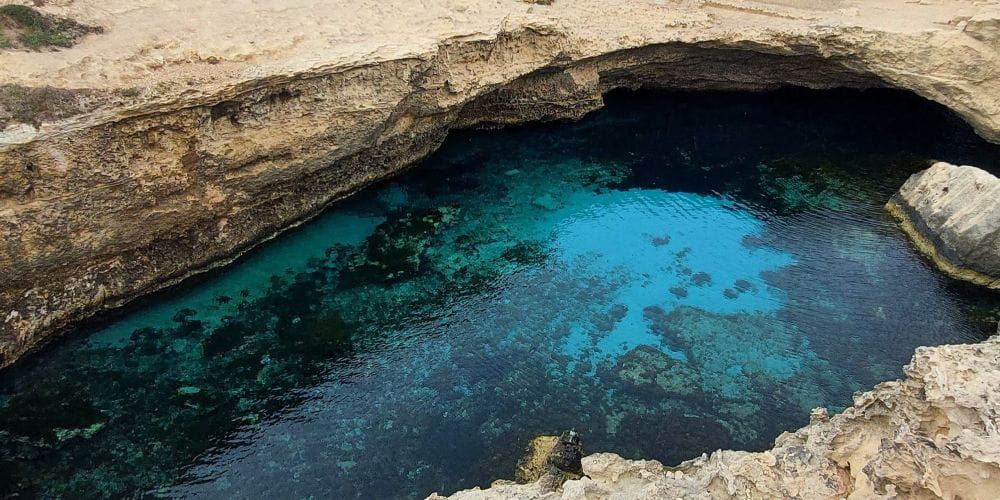
Located in Melendugno, just a short drive from Otranto, this natural sinkhole is carved directly into the coastal limestone. Marine water flows through a network of underground caves, filling a circular basin with vibrant turquoise and emerald water. The visual effect strongly resembles the famous cenotes of Mexico’s Riviera Maya or hidden Aegean sea caves. Beyond its aesthetic appeal, the site holds historical significance, featuring ancient Messapic inscriptions along its rock walls.
9. The earth Pyramids of Zone: the Cappadocia on Lake Iseo
On the eastern shore of Lake Iseo, the Zone Nature Reserve hosts impressive erosion pyramids reaching heights of up to 30 meters. These earth pillars were formed by water eroding ancient glacial deposits and remain protected by heavy erratic boulders resting on top like "hats." The landscape bears a striking resemblance to the famous fairy chimneys of Cappadocia in Turkey or the hoodoos of Bryce Canyon in the United States.
8. Lame Rosse: the Red Canyon of the Sibillini Mountains
Rising above Lake Fiastra within the Sibillini Mountains National Park, Lame Rosse features a barren landscape of red gravel and clay pinnacles. Sculpted over centuries by wind and rain, these vibrant red formations transport visitors to the arid, dramatic canyons of Utah or Arizona, offering a sharp color contrast against the surrounding green forests.
7. Piscinas Dunes: the Undiscovered Desert of Costa Verde
Along the wild Western coastline of Sardinia lies one of the highest active sand dune systems in Europe. Shaped by strong mistral winds, these golden dunes rise up to 100 meters high, extending several kilometers inland before sweeping down to the Mediterranean Sea. Interspersed with wind-bent junipers, the landscape mirrors the vast expanses of the Namib Desert or the Sahara.
Explore Sardinia with us6. Scala dei Turchi: chalk Terraces on the Mediterranean
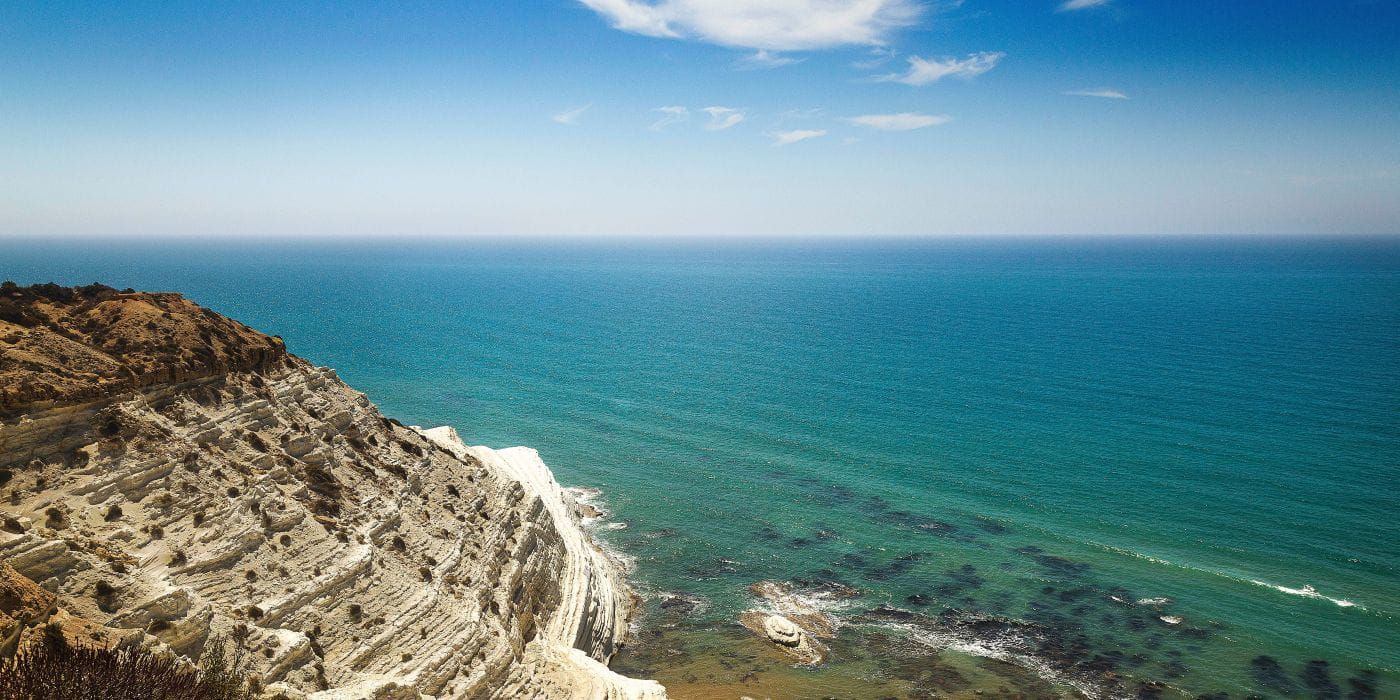
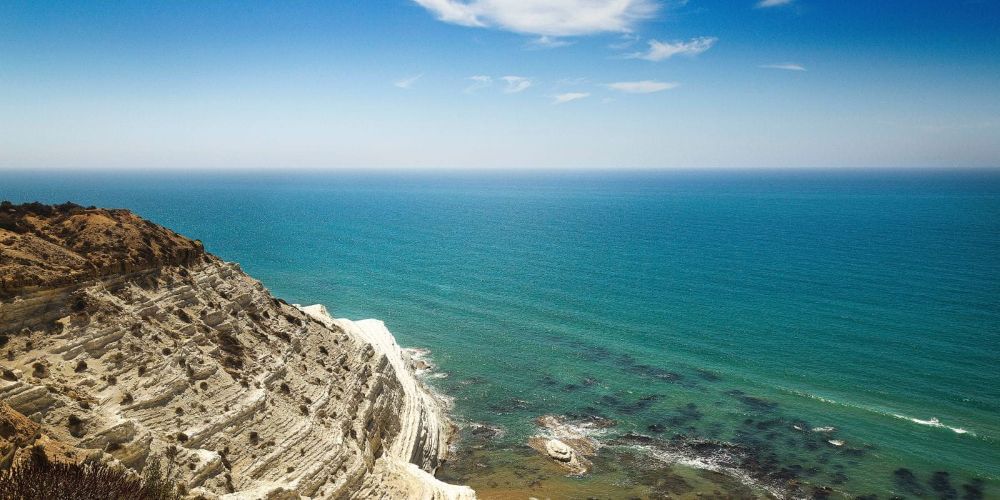
Near Realmonte on the southern coast of Sicily, the Scala dei Turchi ("Stair of the Turks") is a monumental cliff made of pure white marl limestone. Its natural step-like formation slopes gently into turquoise waters, evoking the white travertine terraces of Pamukkale in Turkey or the bright sands of Australia's Whitehaven shorelines.
5. Le Roste di Boccheggiano: Martian landscape in the Metal Hills
In the heart of Tuscany’s Colline Metallifere (Metal Hills) lies a striking geological anomaly. Le Roste are bright red and rust-orange clay hills formed in the 19th century from pyrite mining residue. Erosion over time has carved these vegetation-free ridges into sharp formations that look like the surface of Mars or the Badlands of South Dakota.
Discover Florence with Florence Pass4. Moai of Vitorchiano: Rapa Nui Heritage in Central Italy
In the village of Vitorchiano stands a 6-meter-tall Moai monolith. This is not a modern commercial replica, but the only authentic Moai carved outside of Easter Island. It was handcrafted in 1990 by indigenous Rapa Nui artisans of the Atan family using local grey volcanic stone (peperino). Overlooking the valley, it brings a distinct touch of Pacific heritage to the Italian countryside.
Discover Rome with Visit Rome Pass3. Devil’s Valley: geothermal Plumes in Larderello
At Larderello in the province of Pisa, the earth releases geothermal energy on a grand scale. Known as the Valle del Diavolo (Devil's Valley), this region is characterized by rising white steam plumes (soffioni boraciferi), sulfurous fumaroles, and bubbling mud pools. This dramatic landscape inspired Dante Alighieri's depiction of the Inferno and shares striking similarities with geothermal fields in Iceland or Rotorua, New Zealand.
2. Labirinto del Masone: bamboo Forest in Northern Italy
In Fontanellato, near Parma, sits the world’s largest vegetation maze, designed by publisher and collector Franco Maria Ricci. The star-shaped labyrinth spans over 200,000 bamboo plants across twenty different species. Walking through its tall, dense green corridors mirrors the serene atmosphere of Kyoto’s famous Arashiyama Bamboo Grove.
1. Balze del Valdarno: Grand Canyon in Da Vinci's Background
Located between Florence and Arezzo along the Arno Valley, the Balze are dramatic rock pillars and ridges composed of sand, clay, and gravel—remnants of a prehistoric lake bed. Reaching heights of up to 100 meters, these golden spires mirror the rock formations of the American Southwest. Their landscape was so iconic that Leonardo da Vinci famously painted them into the background of the Mona Lisa.
Unlocking a new perspective on Italian Travel
Exploring these 10 destinations reveals that world-class natural wonders do not always require long-haul flights across continents. Italy’s unique geological evolution and rich history and majestic beauty can offer not only the classic famous tourists destinations. These place are part of the 99% of Italy which still must be discovered, unexpected landscapes for those willing to venture beyond standard tourist itineraries.
About the author
Written on 14/10/2026
Elisa Verrazzo
Copywriter, globetrotter, photo-addicted. In love with Italy, its culture and its cuisine.

Elisa Verrazzo
Discover with us 10 extraordinary, unexpected, and unusual places that don't look like Italy—but they are!