
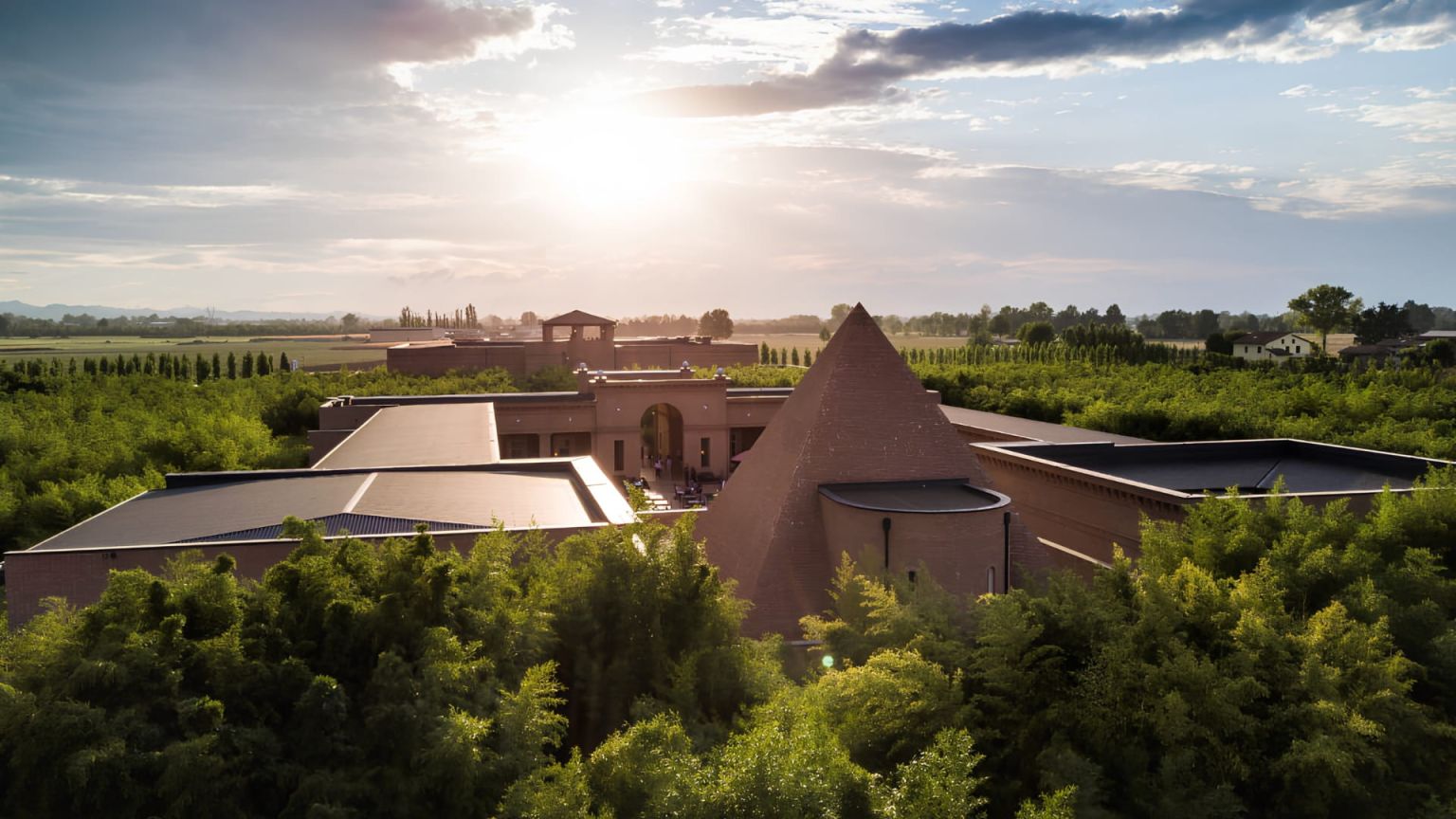

A place to escape the city – and, just as importantly, the crowds and the weight of an Italian summer – Labirinto della Masone feels unlike anywhere else in Italy. Sited less than half an hour from Parma, it’s the world’s largest bamboo labyrinth.
Yet to describe it as a curious monumental folly would be a mistake. This is a living cultural space, where exhibitions are staged, precious books are crafted, and events unfold throughout the year.
Here’s what to know about Labirinto della Masone and why it has become one of Italy’s most surprising cultural destinations.
Labirinto della Masone: a secret green escape in Italy
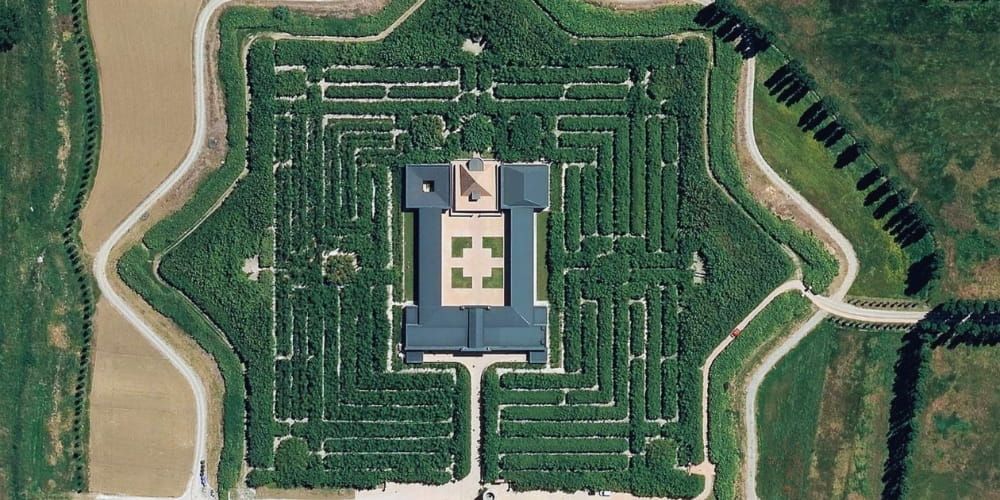
Opened in 2015 in Fontanellato, Labirinto della Masone is not only the largest bamboo labyrinth in the world, but a true cultural citadel, a place where exhibitions and workshops are staged, events are hosted, and rare books are crafted with almost ritual care.
Set between Italy’s so-called Food Valley and Motor Valley, it could just as easily belong to a parallel universe: certain views feel closer to dream logic than to reality itself.
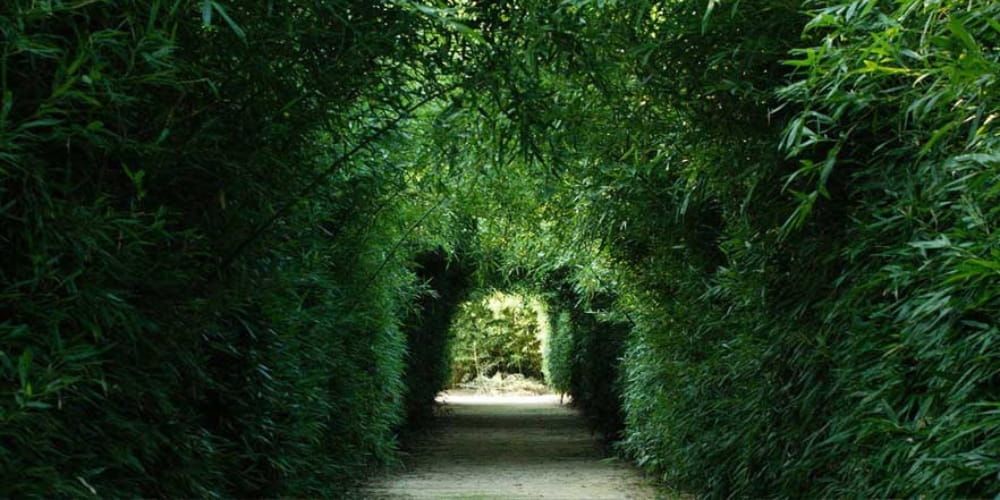
From the outside, it seems quite an improbable view – a dense weave of bamboo (over 300,000 plants, across different varieties), growing in strict order, geometric and hypnotic, in the middle of open countryside, with endless green corridors that invite wandering, getting lost, and finding one’s way again.
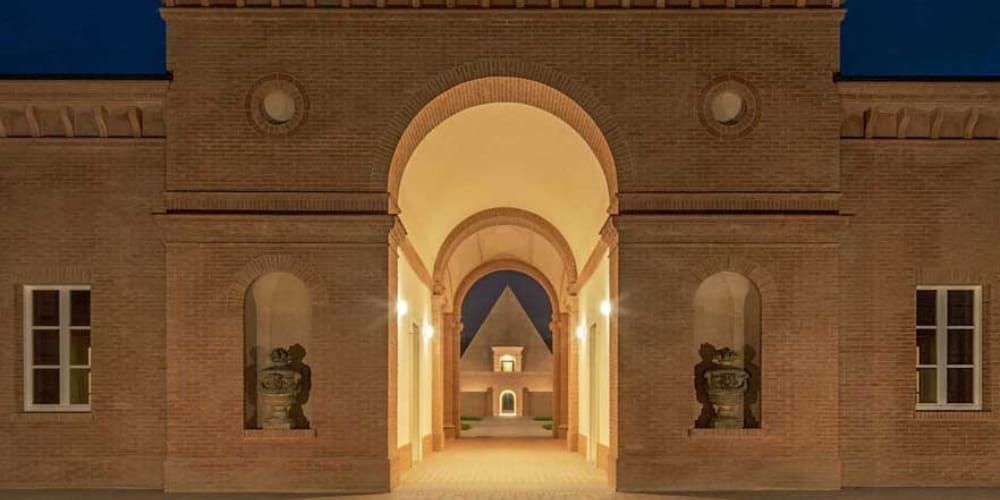
Rural stillness meets a highly composed architectural vision, hidden where you might least expect it. Across the flat Emilia plain, unusual buildings emerge, inspired by architects such as Boullée, Ledoux, Lequeu and Antolini.
At the heart of the labyrinth lies a one-of-a-kind museum complex, guardian of the aesthetic universe Franco Maria Ricci built over a lifetime.
More info on Labirinto della MasoneThe world’s largest bamboo labyrinth
@labirintodellamasone Pronti a perdervi nella meraviglia? #labirintodellamasone #fmr #labirinto #labyrinth #bamboo Love in the autumn - for reading,studying,sleeping,warming,campus BGM,coffee shop BGM,background music - Mr_书杯
In 1977, Franco Maria Ricci made a promise to his friend Jorge Luis Borges – the writer who perhaps more than anyone else transformed the labyrinth into a literary universe – that one day he would build the largest maze in the world.
Not in a sprawling metropolis or an exotic garden, but in the plains near Parma, where the two would walk together, imagining impossible architecture and fictional worlds.
Almost four decades later, that vision took shape in Labirinto della Masone: eight hectares threaded with around 300,000 bamboo plants across multiple species, some rising as high as 15 metres.
The choice of bamboo came about almost by accident, after a Japanese gardener suggested Ricci plant a few varieties in the garden of his Milanese home. There, he realised how quickly the plant grew, how naturally it adapted to the climate, and how effectively it could create dense, almost theatrical green walls.
In Fontanellato, bamboo found its ideal habitat and formed a luxuriant microcosm that stays cool even at the height of summer.
Moving through its green corridors, the surrounding farmland seems to dissolve, leaving only the rustle of leaves overhead, shafts of filtered light and the strange sensation of having walked into a world entirely separate from the Emilia countryside beyond.
Related story – A weekend in Parma: the complete itinerary
The Labirinto della Masone and the vision of Franco Maria Ricci
To understand Labirinto della Masone, you have to begin with its founder and his deeply personal idea of beauty.
Franco Maria Ricci – a publisher, designer, collector and bibliophile – moved through the Italian cultural landscape with an uncompromisingly aesthetic vision.
The founder of an elegant publishing house, instantly recognisable for its black-covered volumes and meticulous layouts, as well as the internationally distributed cult magazine FMR, Ricci ultimately transformed the labyrinth into a physical extension of his own aesthetic universe.
It is no coincidence that a cultural complex, housing temporary exhibitions, an art collection and hundreds of rare and antique volumes, sits next to the maze.
The ambition was never to create a tourist attraction in the conventional sense, but rather a layered space where architecture, publishing, nature, and contemplation could coexist. That is perhaps what makes the Labirinto della Masone so difficult to define – and so unlike anywhere else in Italy.
Related story – What to do in Parma like a local in 2026
What’s inside Labirinto della Masone
A small pyramid, a symbol of the bond between the labyrinth and faith, reinforces the sense of unreality that runs through the entire visit.
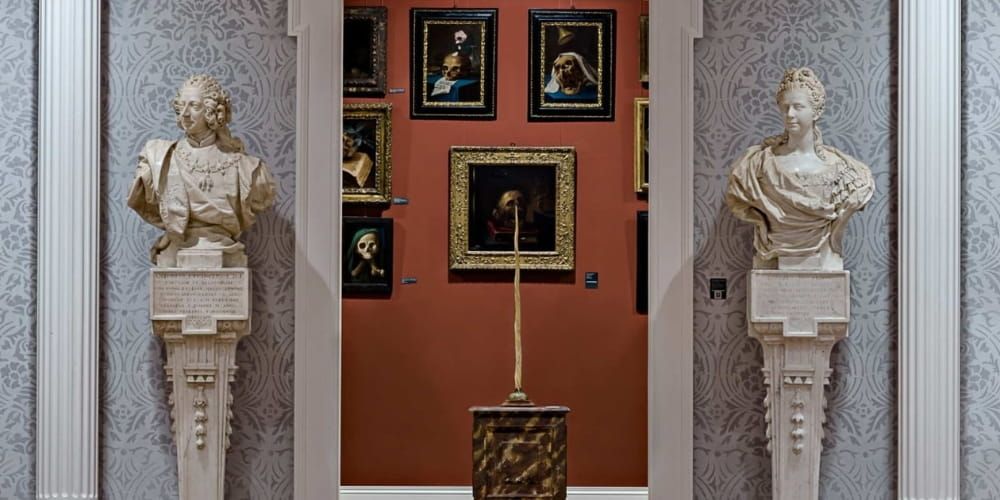
Beyond the branching corridors of bamboo, the labyrinth continues to invite you to get lost. At its centre lies a cultural complex of over 5,000 square metres, now home to the Franco Maria Ricci Foundation.
What was once his family estate has been transformed by Ricci into a multi-layered space where art, design, publishing and collecting coexist. Inside are a publishing workshop, exhibition spaces and rooms dedicated to events and educational activities.
The museum houses around 500 pieces spanning from the 16th to the 20th century (including artists such as Ligabue and Hayez), alongside rare books – among them the largest private collection dedicated to Giambattista Bodoni, with around 1,200 volumes – as well as antique furniture, curious objects Ricci gathered during his trips, and eccentric details that reflect the founder’s personal taste more than any conventional curatorial logic.
A place to stay (longer than expected)
Past the bamboo galleries and exhibition spaces, there is an unexpected find: two suites set in the quiet of the Emilia countryside. Each room overlooks the labyrinth and the central courtyard of Labirinto della Masone.
Staying in these suites is like a continuation of the immersive experience initiated within the dense bamboo pathways and museum spaces. The rooms reflect the same aesthetic sensibility as the rest of the complex: elegant, theatrical, unmistakably shaped by Franco Maria Ricci’s taste.
It is, in effect, an experience within an experience: breakfast served in-room by chef Andrea Nizzi and his team from 12 Monaci, guided visits to the complex, and the rare possibility of returning, afterwards, to the deepest stillness of the world’s largest bamboo labyrinth.
Where is the Labirinto della Masone and how to get there
Labirinto della Masone is located in Fontanellato, in the countryside outside Parma. Though it feels remote at first glance, it sits within one of Emilia-Romagna’s most densely layered cultural and productive landscapes – a short distance from Parma itself, between the so-called Food Valley and Motor Valley, where farmland, industry and food traditions exist in close proximity.
Getting there is straightforward. By car, it is around 15 minutes from Parma and less than 10 minutes from Fidenza. From Milan, exit the A1 motorway at Fidenza and continue along the Via Emilia towards Parma; from Bologna, take the Parma Ovest exit and follow signs towards Fidenza; from La Spezia, drive along the A15 to Parma Ovest, then continue on the Via Emilia.
Alternatively, the nearest railway stations are Parma and Fidenza, both of which offer taxi connections to the site.
The labyrinth is generally open from April to October, from 10:30am to 7pm, and during the winter months from 9:30am to 6pm, with Tuesdays closed.
About the author
Written on 23/06/2026
Lorena Calise
I'm a content writer for magazines and websites. I also explore Italy through my writing for Visit Italy and Visit Naples.

Lorena Calise
Neither a garden nor a theme park, Labirinto della Masone is a world of its own, made of art, nature and architecture.