
Parmigiano Reggiano is synonymous with Italy. Simply seeing its name on a shop label, perhaps thousands of miles away, is enough to make your eyes light up and awaken the desire to taste it. Yet its story does not begin at a delicatessen counter. To discover it, we must travel to the only place in the world where it can be produced—a territory to which it has been bound for almost a thousand years.
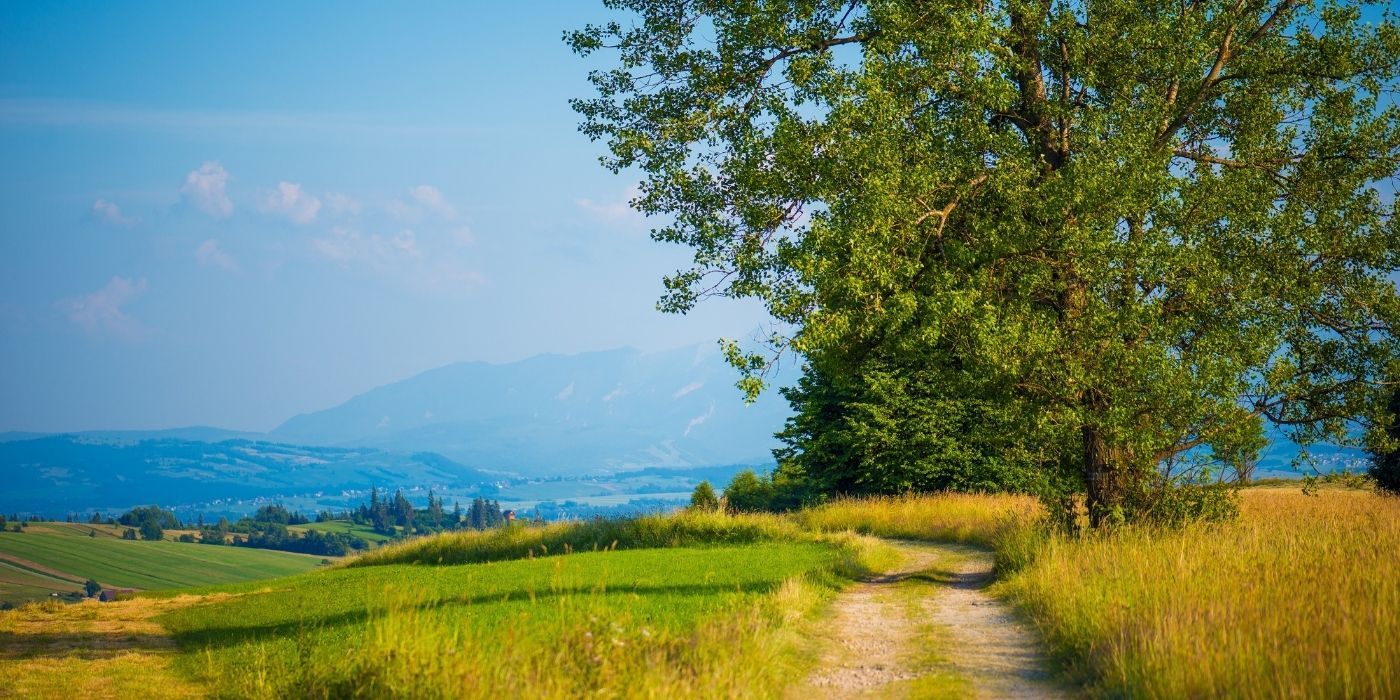
We will take you through a landscape of river-crossed plains, alfalfa fields moving in the wind, farmhouses and small villages, art cities and roads climbing slowly towards the hills and the Apennines. Here, among cattle farms, bell towers and ancient abbeys, rituals handed down from one generation to the next are repeated every morning, while great wheels of cheese mature in silence to the slow rhythm of time.
Experiencing Parmigiano Reggiano means entering a unique territory, spanning five provinces, and discovering the profound bond that unites the cheese to its landscapes, traditions, and the people who make it possible every day.
To discover the land behind Italy’s most iconic cheese, we will travel from Bologna to Mantua via Modena, Reggio Emilia and Parma. The dairy will be only the starting point—or perhaps the perfect excuse—for an Emilia-Romagna road trip through vinegar cellars, markets, trattorias, Romanesque cathedrals, theatres, castles and Renaissance palaces.
The five provinces that shape Parmigiano Reggiano
The lands of Parmigiano Reggiano extend across two regions and five provinces, yet they do not feel like a succession of separate destinations. They share a plain shaped by rivers, a network of farms and a food culture in which craftsmanship still plays a central role.
The DOP area has very precise boundaries. It encompasses the entire provinces of Modena, Reggio Emilia and Parma, from the Apennine ridge to the River Po. It then continues into the part of the province of Bologna west of the River Reno and the Oltrepò Mantovano, south of the Po.
Bologna and Mantua therefore form the gateways to our journey, while the heart of production lies between the Emilian plain, the hills and the Apennine valleys.
The milk must be produced, transformed into cheese and aged for the minimum required period entirely within this area. Over 2,100 farms are concentrated here, raising cattle fed mainly on grasses and hay grown within the territory.
This is a remarkably varied agricultural landscape. It will take us from open countryside to exceptional art cities and from the Po Valley to the Apennines, while introducing us to other expressions of local culture, including Traditional Balsamic Vinegar.
Here are the stages of our five-day itinerary:
• Bologna
• Modena
• Reggio Emilia
• Parma
• Mantua
Discover moreDay 1: Bologna, the gateway to the lands of Parmigiano Reggiano
A car is the best way to follow this itinerary. It allows you to reach dairies, farms and villages that are often far from the main railway lines, stopping and setting off again at your own pace.
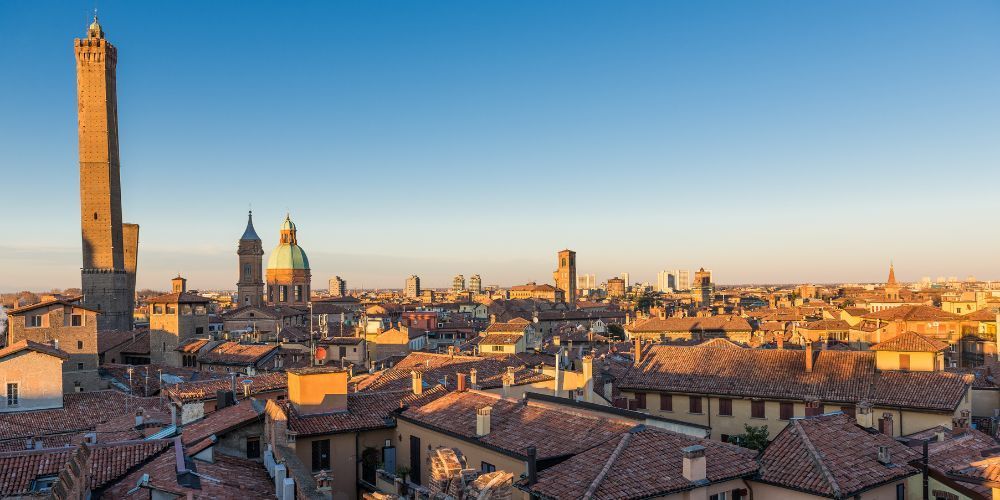
Bologna is the natural gateway to our journey and is also easily accessible thanks to Guglielmo Marconi Airport. After a brief tour of the city,, we head west and cross the Reno, the natural boundary beyond which the Bolognese lands included in the DOP area begin.
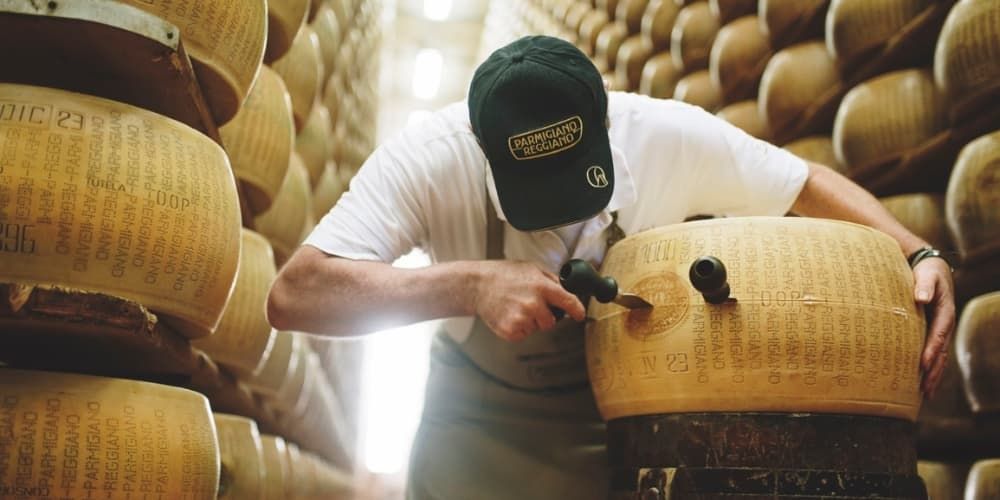
Our first stop is a dairy on the plain. If you want to watch the cheese being made, arrive early in the morning, when the milk is poured into copper vats and the cheesemaker repeats gestures that demand experience and absolute precision. The visit continues inside the ageing room, where long rows of wheels rest for at least twelve months before being examined individually by the Consortium’s experts. Only if they pass this test, they are branded and can be called Parmigiano Reggiano DOP.
The pace slows in the afternoon. Follow quiet roads between alfalfa fields, canals and small rural towns, or rent a bicycle to experience the landscape more closely. Spend the night at one of the area’s many agriturismi. Surrounded by farmland, you will begin to recognize in its fields and cattle farms the first stages of the process you witnessed inside the dairy only a few hours earlier.
visit a dairy farmDay 2: Modena, from Romanesque art to Traditional Balsamic Vinegar
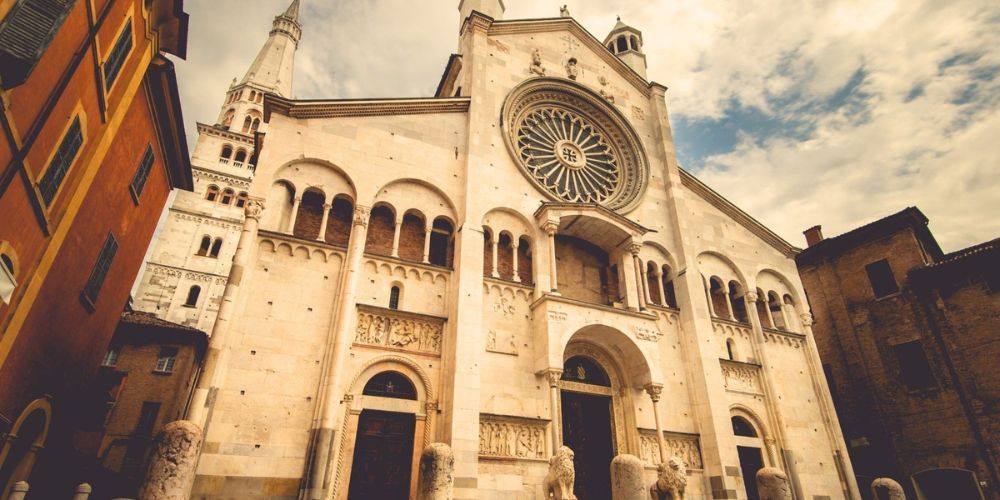
Following the Via Emilia, we reach Modena. Leave the car behind and walk through the historic centre to Piazza Grande, where the Cathedral and Ghirlandina Tower form a UNESCO World Heritage complex. Begun in 1099 and embellished with sculptures by Wiligelmo, the cathedral belongs to the same medieval world of monasteries and abbeys in which Parmigiano Reggiano first developed.
A short walk away, Albinelli Market is still animated by stalls selling fruit, cured meats, bread and cheese. Visiting it is one of the most rewarding things to do in Modena if you want to understand how local ingredients belong to everyday life rather than existing solely for formal tastings.
In the afternoon, visit an acetaia, a traditional vinegar cellar. You will discover how Traditional Balsamic Vinegar of Modena DOP is made from cooked grape must and matured for at least twelve years in sets of wooden barrels. Cheese and vinegar share more than an affinity on the palate: both belong to a culture built on time, experience and knowledge passed down within families.
End the day in a trattoria, tasting Parmigiano Reggiano in tortellini or over fresh pasta. If you have an extra day, add a detour into the Motor Valley, visiting Maranello and the museums devoted to the region’s automotive history.
Day 3: Reggio Emilia, at the heart of the tradition
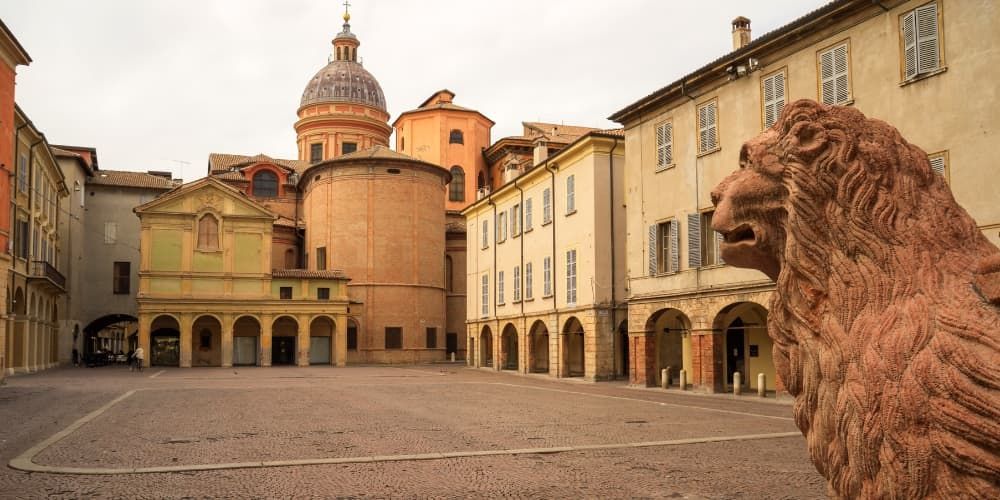
Reggio Emilia occupies a central place in both the geography and identity of Parmigiano Reggiano. The connection is already present in the name, but it becomes tangible in the countryside, where fields, cattle farms and dairies form interconnected parts of the same production chain.
A second visit to the dairy will allow you to compare different aging methods or discover another local production. The specifications are the same for all, but fodder, seasons, and the cheesemaker's experience produce recognizable differences in texture and aroma. You can complete the comparison at a vinegar factory dedicated to Traditional Balsamic Vinegar of Reggio Emilia DOP.
In the afternoon, explore the city’s historic centre, from Piazza Prampolini, with its Cathedral and Baptistery, to the Basilica della Ghiara and the Romolo Valli Municipal Theatre. These are among the essential things to do in Reggio Emilia, but you can also return to the countryside to visit Bianello Castle and the lands associated with Matilda of Canossa, or venture up to the Pietra di Bismantova, one of the most recognisable symbols of the Reggio Emilia Apennines and a much-loved destination for trekking and climbing.
Day 4: Parma, where music meets food culture
Together with Reggio Emilia, Parma gave Parmigiano Reggiano its name, but the city’s identity extends far beyond food. Begin in Piazza Duomo, where the Cathedral houses Correggio’s frescoed dome and the pink marble Baptistery bears the unmistakable hand of Benedetto Antelami. Nearby, the Palazzo della Pilotta complex contains the monumental wooden Teatro Farnese.
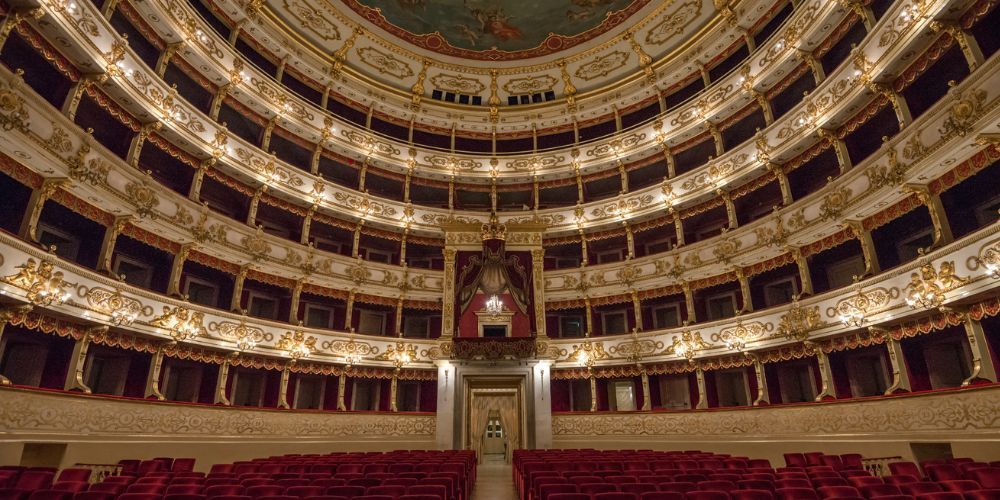
Check the program at Teatro Regio: attending a performance could become one of the most romantic and memorable moments of the journey. Commissioned by Marie Louise of Austria and inaugurated in 1829, the theatre remains deeply connected to Parma’s celebrated operatic tradition.
In the markets and food shops of the historic centre, compare Parmigiano Reggiano aged from 12 up to over 100 months. Time changes its aroma, texture and even its digestibility. End the day in a trattoria with anolini or tortelli d’erbetta, accompanied by a local wine.
If you'd like to extend your journey, you can visit the fascinating Food Museums in the province of Parma. This unique and fascinating project aims to raise awareness and promote some of the most famous local products in Italy and around the world.
Discover Musei del CiboDay 5: Mantua, where the route meets the Po
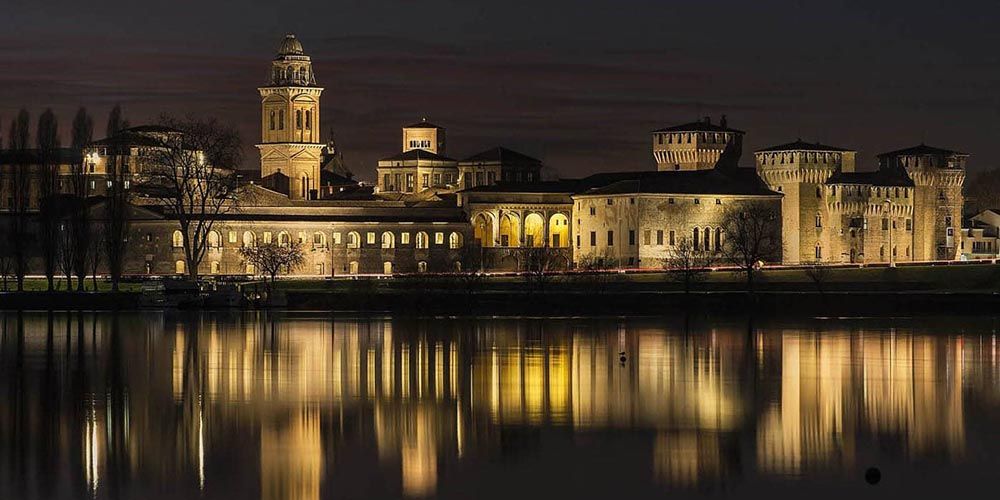
From Parma, we travel east towards the Oltrepò Mantovano, the only part of Lombardy included in the Parmigiano Reggiano production area. Before crossing the Po, visit a dairy surrounded by a broad plain patterned with fields, embankments and waterways.
Mantua lies outside the DOP boundaries, but it provides a natural cultural conclusion to the journey. In the historic centre, explore Palazzo Ducale and Mantegna’s frescoed Camera degli Sposi, the Basilica of Sant’Andrea and Palazzo Te, celebrated for the rooms decorated by Giulio Romano. Together with Sabbioneta, Mantua is recognised by UNESCO for the architectural and urban legacy of the Gonzaga dynasty.
At the table, order pumpkin tortelli, where Parmigiano Reggiano, Mantuan mustard and amaretti create a balance of savoury, sweet and piquant flavours. The journey ends beside the lakes formed by the River Mincio around the city. From here, you can travel to Milan for your return flight or continue towards Sabbioneta or Lake Garda.
Experience Parmigiano Reggiano Inside and Outside the Dairies
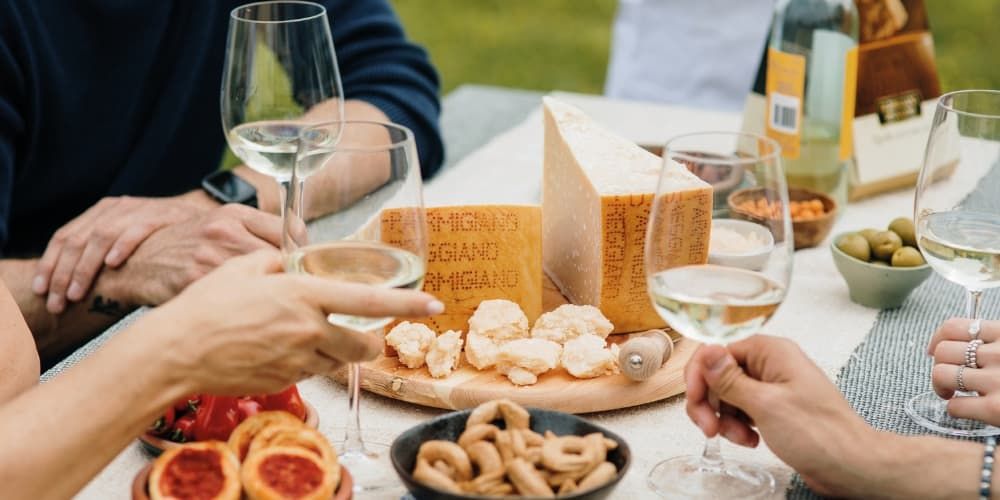
Getting up early to watch milk being poured into copper vats, listening to a cheesemaker explain how he recognises the precise moment to lift the curd, or comparing wheels of different ages will be only one part of your Parmigiano Reggiano tour. To understand these lands, you must also leave the production rooms, cross the countryside, enter markets and trattorias, and move closer to the daily life of the people who live here.
Plan your journey in advance and check the dates of local events. Village fairs, farmers’ markets and cultural festivals can offer valuable opportunities to meet residents and producers.
Why this landscape exists nowhere else in the world
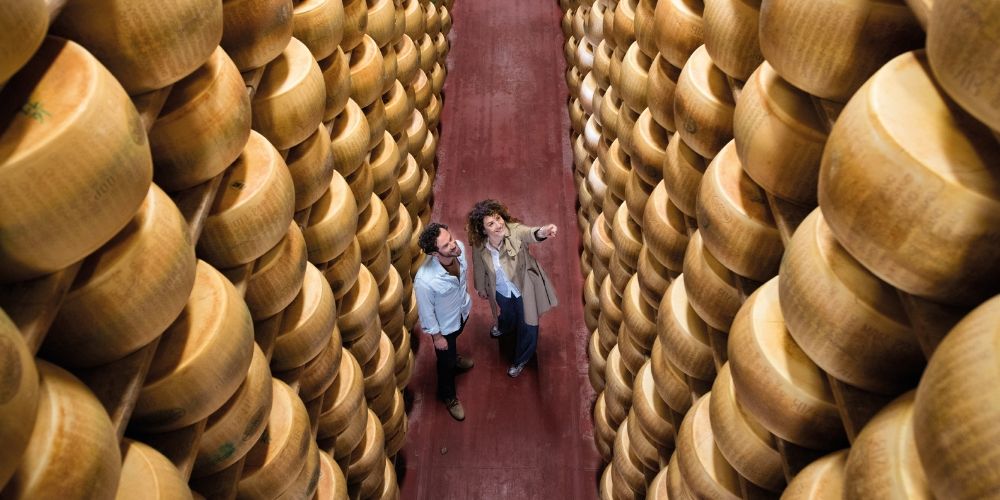
Parmigiano Reggiano can be made only in these lands because it does not depend on a recipe alone. Everything begins in the meadows, with the grasses and hay that feed the dairy cattle and pass the qualities of the local environment into their milk. The milk is processed raw, retaining the natural microorganisms connected to the fodder, climate and farms of the area.
It's the cheesemaker's experience and time that transform it. Every morning, the temperature is checked with special thermometers, while the cheesemaker monitors the consistency of the curd using techniques and expertise passed down through generations. The cheeses then rest for at least twelve months, slowly developing their structure and aromas. The DOP protects this very chain, from the field to the maturation warehouse.
Excellent hard cheeses can be produced elsewhere, but they cannot be authentic Parmigiano Reggiano. They would lack the connection to these meadows, this milk and this tradition. That's why experiencing Parmigiano Reggiano is about more than visiting a dairy. It continues through the countryside, local markets, and kitchens. Every wheel contains a fragment of this landscape, following this itinerary means discovering the only ingredient that cannot be exported.
About the author
Written on 07/08/2026
Chiarastella Campanelli
Dreamer, editor, beauty lover

Chiarastella Campanelli
A five-day journey from Bologna to Mantua to experience Parmigiano Reggiano. Through the dairies, landscapes, and people that make it unique.