

As soon as you arrive here, the excitement is so great that you wish time would stretch indefinitely so that you could do for good all the unmissable things to do in Venice, Italy.
Although small, in fact, this extraordinary city, suspended between the sea and the lagoon, offers a treasure of wonderful experiences and activities that you cannot do anywhere but here.
To make it easier for you to choose, we have listed here the most unique points of interest in Venice that will undoubtedly enrich your stay with incredible and exciting nuances.
Remember to buy the Venice Pass to enjoy Venice sightseeing with ease and to get entrance tickets to the most visited attractions. Discover with us the best things to do in Venice!
Discover Venice with the Venice Pass
What to do in Venice: our guide
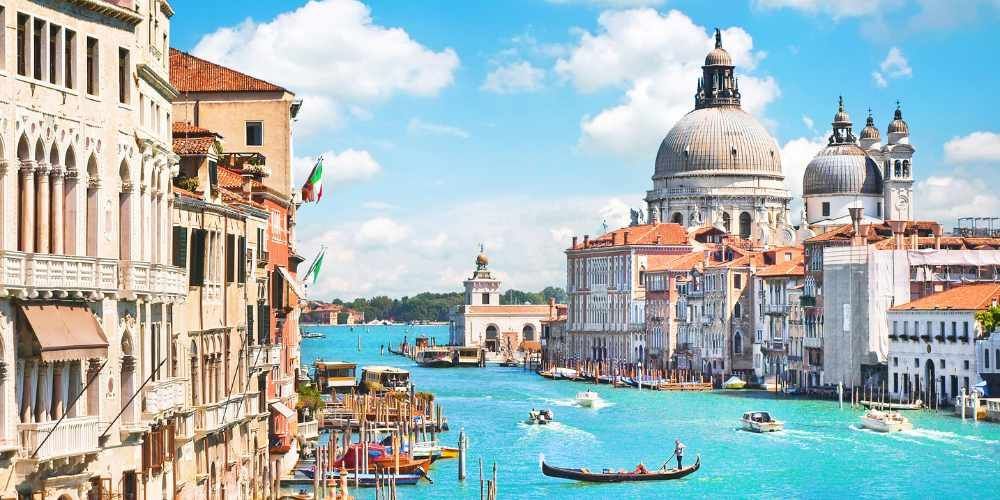
When you arrive in this beautiful place, the feeling is that time is always too short to experience it fully. Palaces, museums, monuments of extraordinary elegance, but also colorful festivals and events that set the lagoon ablaze with merriment and fireworks.
In other words, the things to do and experience in Venice are almost endless. In every corner, this incredible place has something to offer, even to those who are returning after countless trips, or those who have lived there all their lives. Indeed, there is nothing more exciting than being a tourist in your own city.
Find out the best things to do in Venice in 2026!
Explore Venice with a storytelling Gondolier!What to Do in Venice: Some Historical Insights
Before reviewing our favourite itineraries and discovering what to do in Venice in 2026, we want to step back a few centuries and briefly recall the history of La Serenissima.
According to lore, the city was born on a specific date: March 25, 421 AD.
The first stable settlements arose during barbarian invasions in the Western Roman Empire. The safety of the lagoon islands attracted people from nearby areas, leading to the formation of a town.
It was the beginning of an extraordinary journey that culminated in the 7th century with the birth of the Republic of Venice, which thrived for over a thousand years.
Venice's significance soared through its flourishing trade and maritime industry. However, it was more than just a bustling commerce hub.
Under the rule of the Doges, it emerged as one of the most elegant and progressive cities in Europe, a cultural and artistic reference point attracting the brightest names in painting, theatre, and music.
Tiepolo, Canova, Vivaldi, Goldoni, and many others contributed to forge an immense cultural legacy.
The end of the Venetian Republic in 1797 marked a turning point in its history, with the city adapting to totally new political and economic realities.
Today, its value is recognized as a UNESCO World Heritage site celebrated each year by millions of tourists.
Listen to our tips about what to see in Venice with the voice of Monna Lisa & Leonardo
How to Get Around Venice (Vaporetto, Traghetto, Gondola)
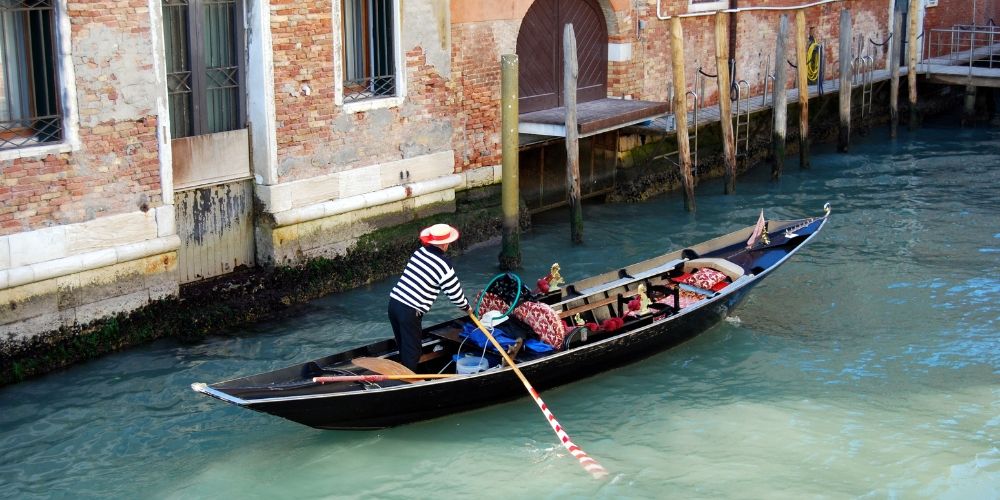
Venice is well connected to the mainland and easily accessible.
For those travelling by plane, the fastest (and most scenic) way to reach the lagoon is with Alilaguna, the water transfer service that connects Marco Polo Airport to the city centre, Lido, Murano, and Rialto.
Once in the city, how do you get around Venice? In the historic center, it's either on foot or via water vehicles. You have several options for moving between the canals.
ACTV vaporettos (pass 24h/48h/72h) stop near the main points of interest and are the simplest and most convenient way to travel between the islands for those who want to avoid constantly navigating bridges or need to reach more distant attractions.
Gondolas, a true symbol of the city, are not just a mode of transport but a romantic and characteristic experience unique to Venice. While hiring an expert gondolier can be a bit pricey, it's an adventure that's worth every penny.
A more affordable option (~€2) for crossing the Grand Canal is by gondola ferry, a larger boat operated by two gondoliers. Just head to the designated stop, the "stazio," and hop on board to reach the other bank.
When time is of the essence, water taxis are your best bet. The motorboat service is fast and efficient and available at the main access points in the lagoon.
Book transfer from Venice airportTake a Gondola Ride on the Grand Canal
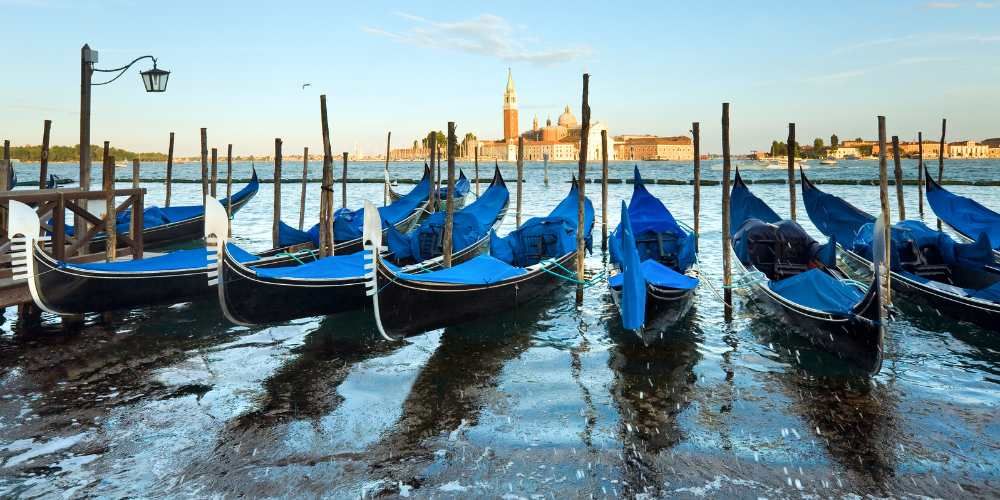
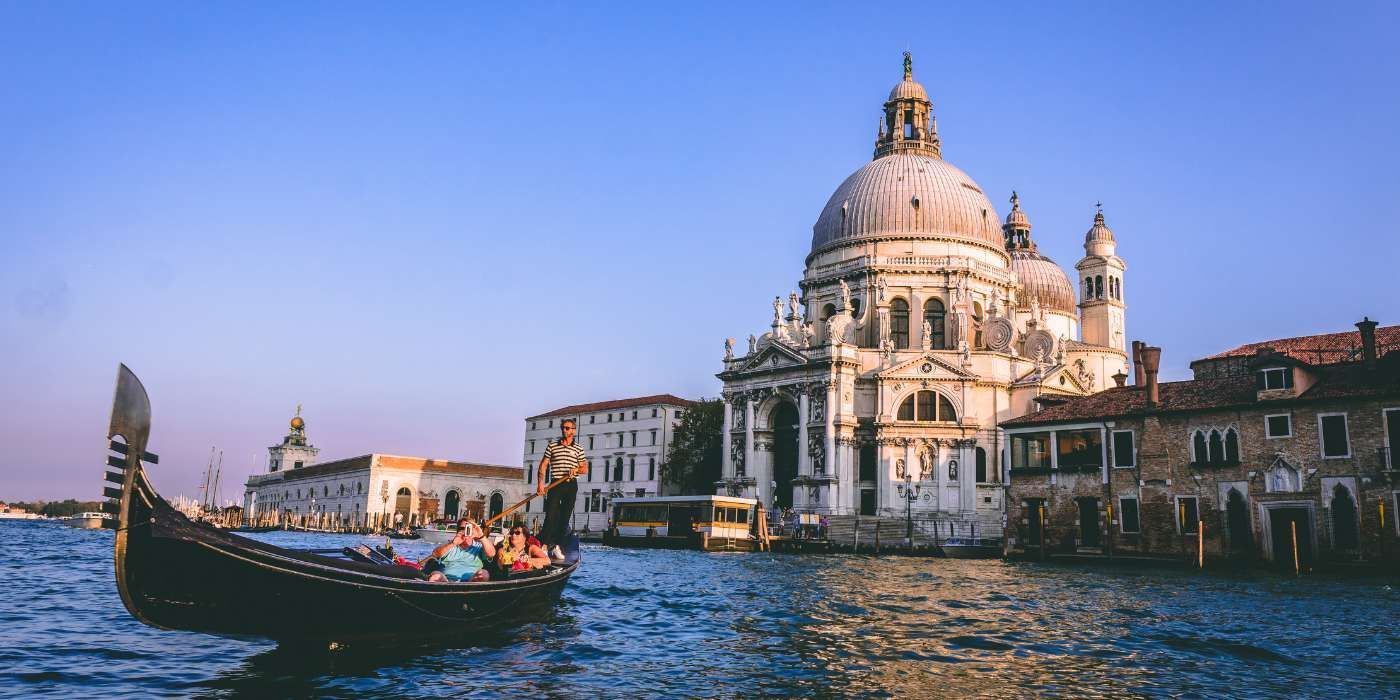
One of the best things to do in Venice, and certainly not to be missed, is a gondola ride. The lagoon, the canals and the splendor of the elegant palaces reflected on the water: isn't it the most classically Venetian picture?
Not so many people, however, know that this experience can be customized as you wish. What if we told you, for example, that you could sail through the placid waters of the lagoon with a gondolier telling you about the wonders of the place where he has lived all his life?
Even more than that, would not it be great to blend together the beauty of the historic center with the real tale of customs, traditions but also everyday life?
You can discover from the water some of the most famous places and at the same time learn about their history, secrets and mysteries. If you wish, the gondola tour can also be organized in a totally private form: just you, the gondolier and your traveling companions!
A gondola ride is also more accessible than many travelers expect: official fares are fixed at €90 during the day and €110 in the evening for a 30-40 minute tour. For a much cheaper taste of the experience, you can cross the Grand Canal on a traditional traghetto for around €2.
Book your gondola ride with live commentary!Piazza San Marco: the heart of Venice
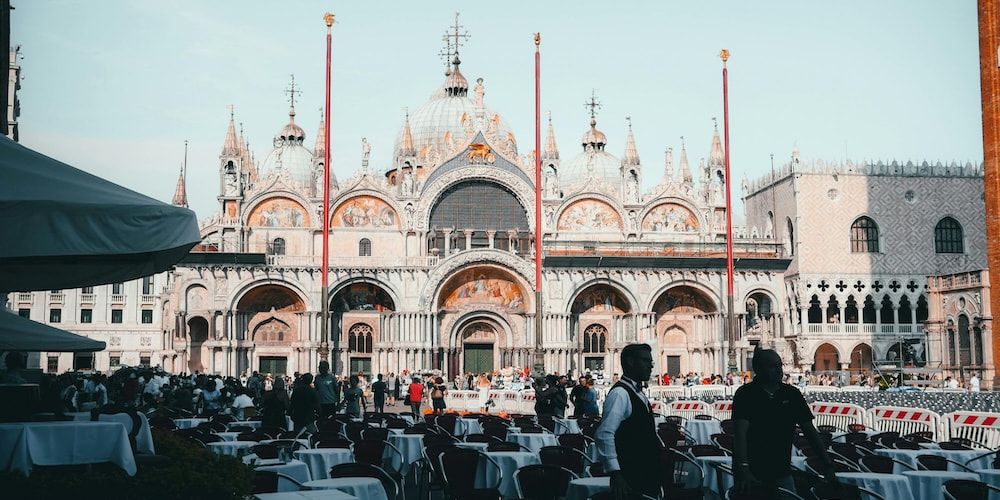
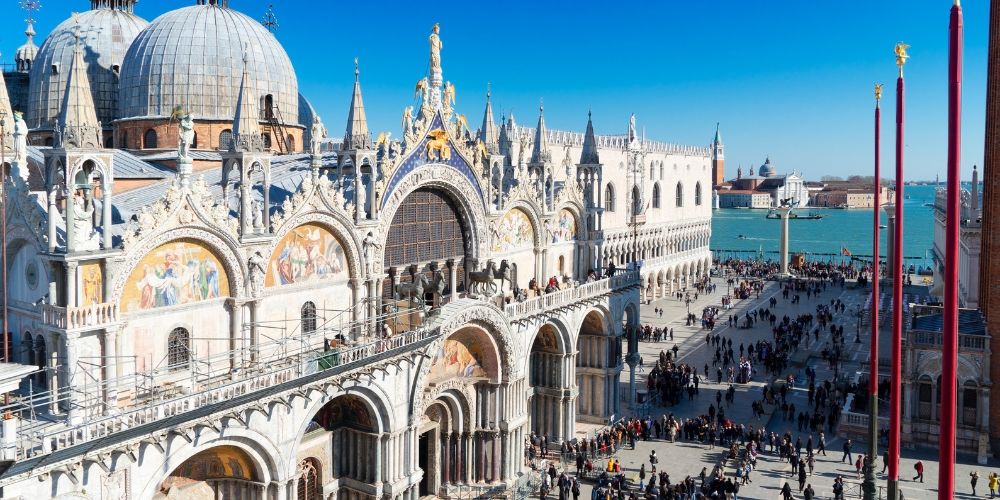
Known by Napoleon as “the drawing room of Europe,” Piazza San Marco is the place that more than any other embodies the soul of Venice. Grand, elegant, and surrounded by some of the city's most iconic landmarks, it has served for centuries as the political, religious, and social heart of the Serenissima.
Overlooking the square are the magnificent St. Mark’s Basilica, with its domes and golden mosaics, the imposing St. Mark’s Campanile, which offers one of the most spectacular views over the lagoon, and the majestic Doge’s Palace, once the seat of Venetian power. Completing the square’s architectural harmony are the Procuratie, elegant arcaded buildings that today house shops and historic cafés.
This is the ideal starting point for exploring Venice’s main attractions. From Piazza San Marco, you can easily enter St. Mark’s Basilica, climb the Campanile, or wander through the halls and courtyards of the Doge’s Palace, immersing yourself in the history and splendor of the Serenissima.
St. Mark’s Basilica
Not everyone knows that the famous St. Mark's Basilica has not always been the most important sacred place in the lagoon. Before, in fact, the cathedral was the church of San Pietro di Castello. The change to a cathedral came only in the 19th century, after the fall of the Serenissima Republic.
Beyond the history, it is the sumptuous beauty of the so-called Church of Gold that will leave you breathless.
Already from the outside, when you admire the mosaics and statues and Gothic elements that enrich the façade, you will understand that entering here is certainly one of the best things to do in Venice.
On the other hand, it is inside where the real magic happens, when you can let your eyes wander in a triumph of gold and light.
Don't miss the chance to also see the famous Pala d'Oro, completely covered in gold, silver, precious stones and enamels: a timeless masterpiece created by Venetian goldsmith Giovanni Paolo Boninsegna in the 14th century.
Finally, not everyone knows that the Basilica complex also includes a museum and the splendid loggias, from which you can enjoy an exceptional view of the square in front of it.
Just remember to book your tickets in advance and choose the skip-the-line option! Admission starts from €3, but reserving your entry ahead of time is highly recommended, especially during the busiest months.
Discover the attractions in VeniceDoge’s Palace & the Bridge of Sighs
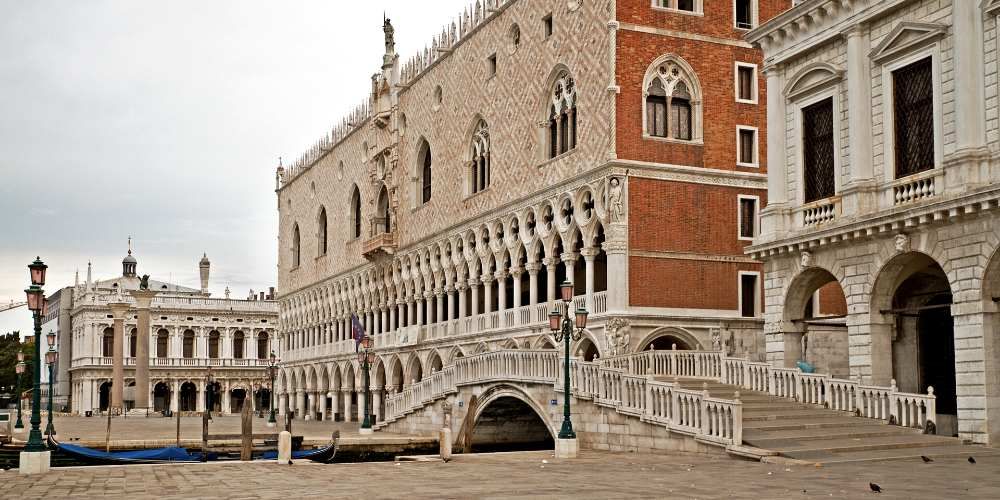
While using this periphrasis, a masterpiece of Venetian Gothic architecture, we all know what we are talking about.
Indeed, the Doge's Palace is one of the most iconic symbols of Serenissima. Not only was this building the seat of power of the Doges, but it is also a triumph of Gothic art. Its exterior architectural elements, from windows to colonnades, are like elegant embroideries carved on stone.
If you decide to visit its interiors as well, you will discover state rooms and private apartments, as well as works of art and extraordinary frescoes. You will be able to enter the heart of history, seeing the halls where justice was administered, but also in those where politics were discussed. Finally, you will be able to explore the darker face of the Law of the Republic: the Leads and the terrible Wells, as well as the Hall of Torture and the Hall of the Inquisition.
As this is one of the most visited places in the historic center, we suggest you book your tickets with fast-track access!
Along this route into the darker side of the Republic’s justice system, you can also encounter the famous Bridge of Sighs, the enclosed passage in white limestone that connects the Doge’s Palace to the New Prisons. Crossing it, prisoners would catch their last glimpse of Venice through the small stone-barred windows, a detail that gave rise to its evocative name.
Today, the Bridge of Sighs remains one of Venice’s most iconic landmarks, not as a standalone monument, but as a silent threshold between power and confinement within the Palazzo Ducale complex.
Buy your priority tickets to the Doge's Palace here!Rialto Bridge & Rialto Market
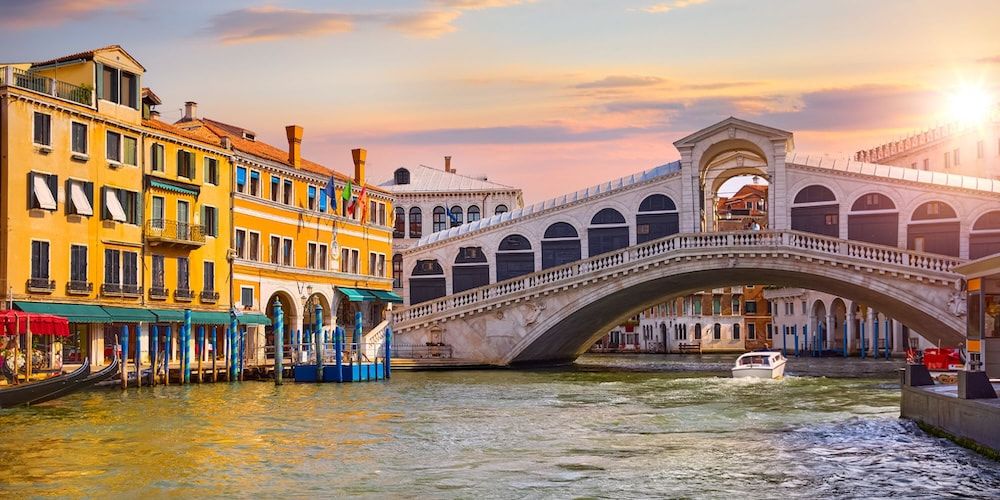
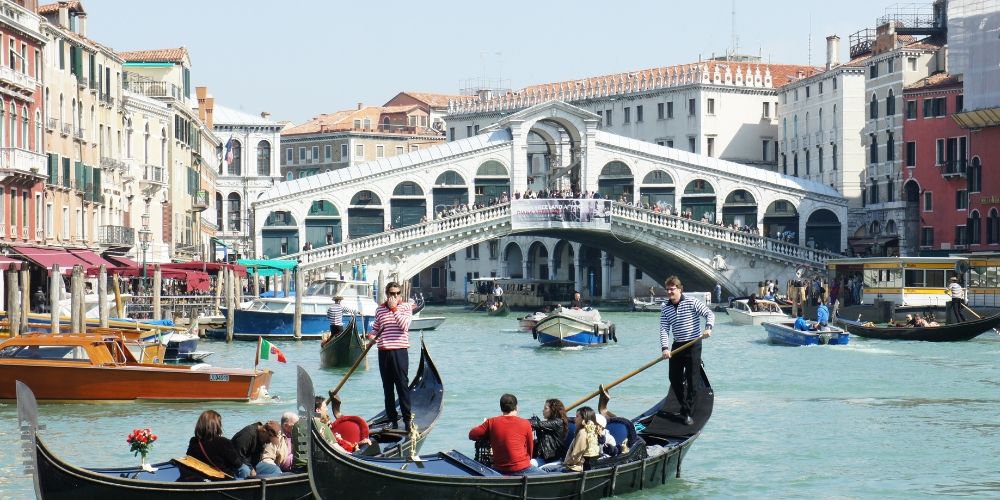
Crossing the Rialto Bridge is one of those classic Venice moments. The Grand Canal opens up beneath you, boats glide across the water, and for a brief instant the city is exactly what you expected to find—a magnificent bubble that carries you back to another era.
It’s the oldest bridge over the canal and still one of its busiest, lined with small shops and always full of movement.
Just beyond it, Rialto Market wakes up early in a very different way. Before the crowds arrive, stalls fill with fruit, vegetables, and fish straight from the lagoon, and the whole area feels more local than postcard-perfect. The fish market, in particular, gives you a raw, everyday glimpse of Venice that hasn’t really changed much over time.
Together, the bridge and the market show two sides of the city: the iconic view you expect, and the everyday rhythm that keeps Venice going behind the scenes.
A Day Trip to Murano & Burano
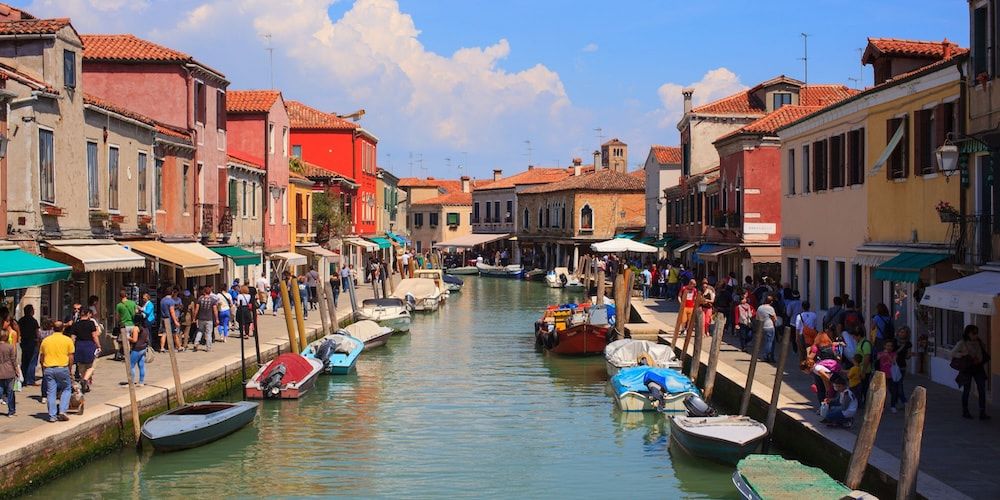
Leaving Venice for a few hours opens the door to a very different rhythm of the lagoon, and a day trip to Murano and Burano is one of the most rewarding escapes from La Serenissima.
Sailing to Murano, just around 40 minutes by vaporetto from the city center, you’ll discover a place world-famous for its centuries-old glassmaking tradition. Watching artisans shape glowing glass in furnaces is still one of the island’s most fascinating experiences, and small workshops and museums help tell the story of this delicate craft.
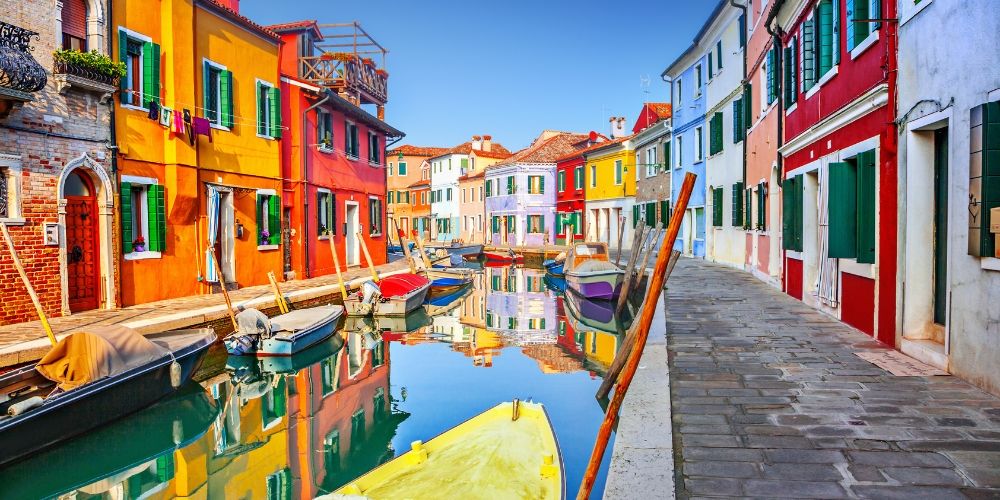
From Murano, it’s about another 45 minutes to reach Burano, a tiny island instantly recognizable for its brightly painted houses reflected in the canals. Known also for its lace-making tradition, Burano feels slower and more intimate, perfect for wandering without a fixed plan, camera in hand.
The journey is usually made using ACTV vaporetto lines 12 and 4.1/4.2, making it easy to combine both islands in a single day. Together, Murano and Burano offer a striking contrast to Venice’s historic center, shifting from craftsmanship to color in just a short ride across the lagoon.
Get Lost in the Calli: The Real Magic of Venice
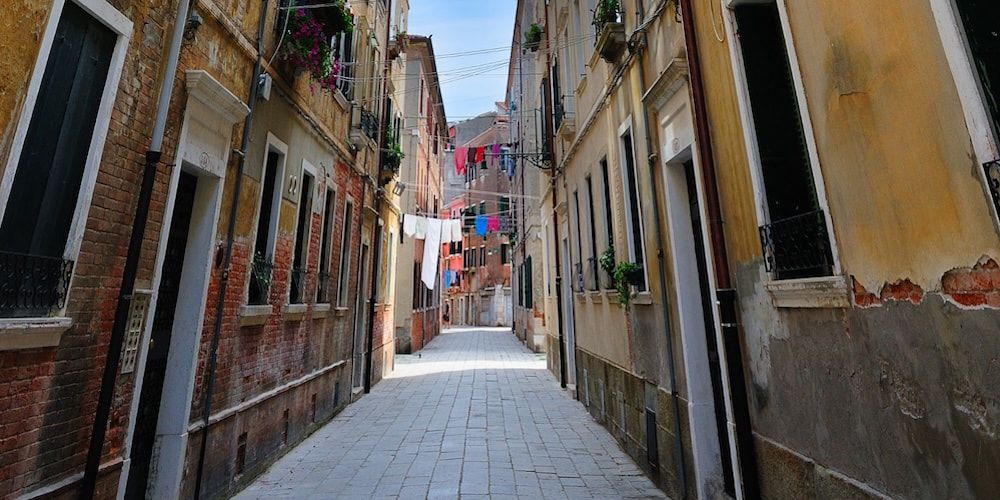
Getting lost in Venice’s calli is less a mistake and more a rite of passage. The moment you step away from the main routes, the city begins to reveal a quieter identity, one that doesn’t follow maps or itineraries.
Narrow streets (calli, the typical Venetian alleyways) suddenly open into unexpected small squares (campielli), where laundry hangs between buildings and the sound of footsteps replaces the hum of crowds.
In these hidden corners, Venice feels almost suspended in time. You might find yourself crossing a tiny bridge over a silent canal or turning a corner to discover a faded façade lit by soft reflections on the water. There’s no single direction to follow, only a rhythm that invites you to slow down and observe.
Far from the busiest landmarks, these walks offer a more intimate encounter with the city. Venice stops being a sequence of attractions and becomes a living maze, where getting slightly lost is exactly what allows you to understand its true character.
Peggy Guggenheim Collection
The Peggy Guggenheim Collection is much more than just a museum.
It houses within it one of the richest collections of 20th-century art and, more importantly, it is a museum in constant evolution, thanks to numerous donations.
It is located inside the Palazzo Venier dei Leoni, a whitewashed and curious-looking building, perhaps because of its unfinishedness, overlooking the Grand Canal. It was the last residence of the famous American collector Peggy Guggenheim.
You can admire here works by Magritte, Dali, De Chirico, Picasso and countless other artists who forever marked the course of 20th-century art. There are many events that are organized by the museum-a way to bring visitors of all ages and interests closer to art.
Definitely one of the unmissable things to do in Venice!
Get your fast access to the Guggenheim!Eat Cicchetti in a Bacaro: Venetian Food Culture
Trying cicchetti in Venice is one of the simplest and most authentic ways to experience the city. These small bites, often compared to Spanish tapas, come in countless varieties, from seafood-based specialties to local cheeses, cured meats, and slices of bread topped with seasonal ingredients.
More than a meal, cicchetti are a social ritual that invites you to slow down and savor the flavors of the lagoon one bite at a time.
The best place to enjoy them is a typical bacaro, the informal Venetian tavern where locals gather for a quick snack, a chat, and a glass of wine. Stepping into a bacaro means discovering a hidden and special side of Venice, far removed from the crowds of the city's most touristy spots.
Here, you can also take part in the tradition of ordering an ombra, a small glass of local wine enjoyed standing at the counter. Among the many Venice activities available, few capture the city’s character quite like moving from one bacaro to another, sampling cicchetti and soaking up the atmosphere of Venetian food culture.
Climb St. Mark’s Campanile
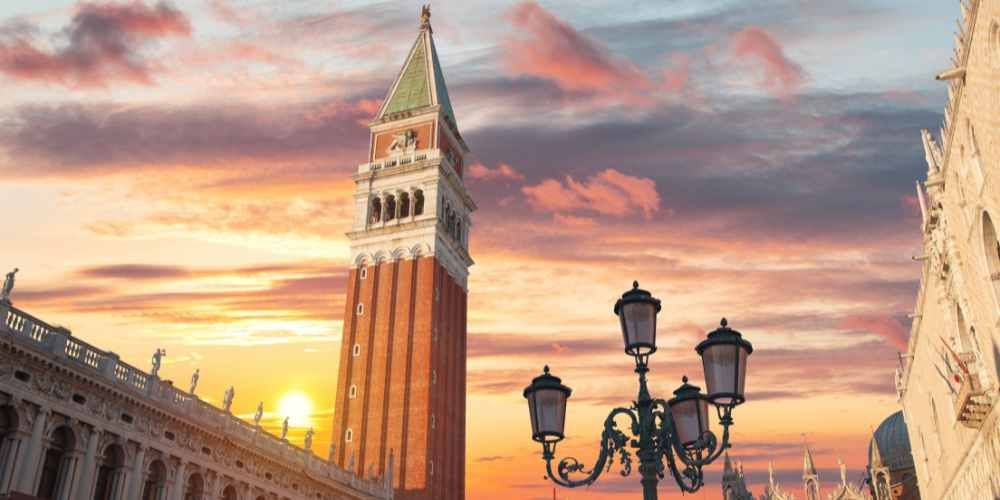
The St. Mark's Campanile tower, with all its grandeur, is located in the heart of the city.
Such its importance is that it is affectionately addressed by locals as the Paron de Casa which could be translatable as "the Landlord''.
At 98.6 meters (321 ft) high, it not only represents the highest point in the entire historic center, but is also one of the tallest bell towers in Italy!
Its simple shape, topped by a spire with a statue of the archangel Gabriel, has been the inspiration for other buildings, such as the Sather Tower in Berkeley, California, and the Metropolitan Life Insurance Company Tower in New York.
Let's not forget that the base of the tower is also quite unique, with the famous loggia designed by Jacopo Sansovino.
Can you imagine the excitement of climbing up here, with your gaze being able to sweep over the entire downtown and the lagoon?
Book your experience on the top of the St Mark's Bell!Gallerie dell’Accademia: Venice’s Greatest Art Museum
If you want to understand how Venice became one of the great artistic capitals of Europe, there is no better place to start than the Gallerie dell’Accademia. Home to the most important collection of Venetian art in the world, the museum offers a journey through centuries of creativity, tracing the evolution of the city’s unique artistic identity.
Its galleries showcase masterpieces by some of the greatest names of the Venetian school, including Giovanni Bellini, Titian, Tintoretto, Paolo Veronese, and Vittore Carpaccio. Moving from room to room, visitors can admire works that transformed the history of painting through their innovative use of color, light, and perspective.
Beyond its individual masterpieces, the museum provides valuable insight into the cultural and political influence of the Serenissima at the height of its power. Whether you are an art enthusiast or simply curious to explore a different side of Venice, the Gallerie dell’Accademia offers one of the city's richest and most rewarding cultural experiences.
Gran Teatro La Fenice
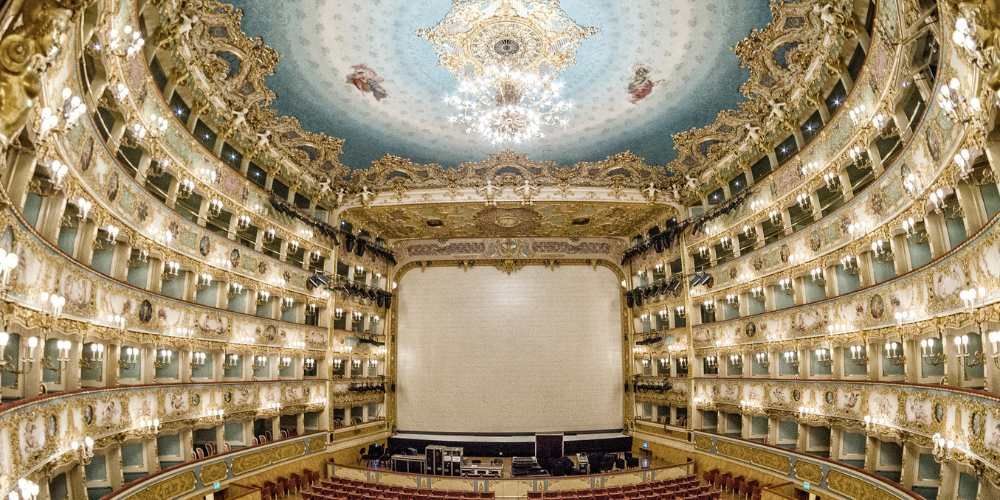
Non only Gran Teatro La Fenice is one of the most famous opera houses in the world, but it is also a symbol of rebirth for Venice.
Destroyed, burned and demolished more than once, in fact, this venue is known for the sublime quality of its concerts and ballets. In addition, the famous New Year's Concert, one of the most anticipated events on the entire Venetian calendar, is staged here every year.
Visiting the theater, with a great audio guide explaining every detail of its troubled history, is a truly intense thrill.
Reserve here your tour of the Venetian opera house!The Palazzo Contarini del Bovolo Spiral Staircase
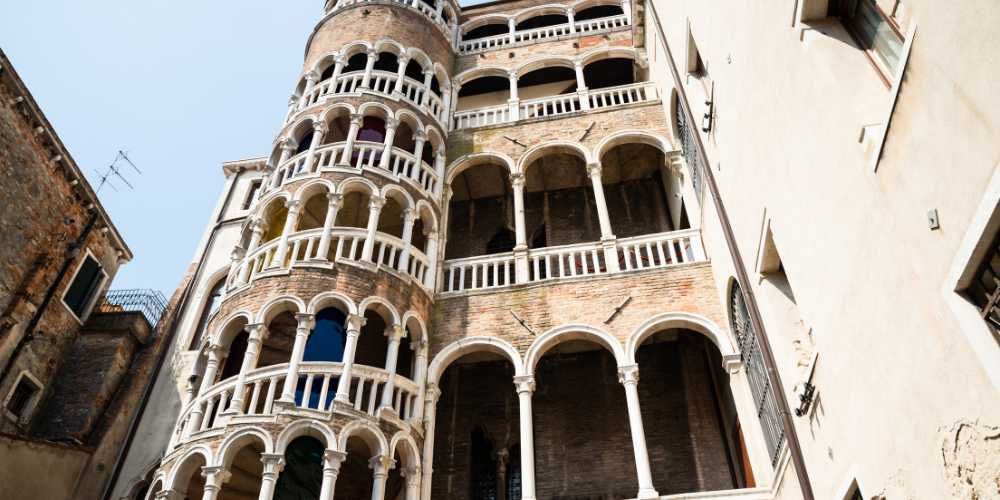
One of the best things to do in Venice is located in one of the most hidden spots in the Sestiere di San Marco. Yet the famous Church of Gold mentioned earlier is just a few hundred meters away.
This extraordinary place is part of the Palazzo Contarini del Bovolo and is undoubtedly the most famous spiral staircase in the lagoon. In fact, "Bovolo," in Venetian dialect, actually means "spiral".
It is an external staircase, made inside a stair tower. What is breathtaking is not so much the uniqueness of this construction, because several were made at that time, but the size of the tower. It is, in fact, as high as 26 meters (85 ft) and provides access to the four floors of the palace.
Climbing this famous staircase not only allows you to appreciate the extraordinary care and abundance of detail with which it was built, but also to admire one of the most panoramic views of the city's rooftops.
Book your tickets for the most famous Venetian spiral staircase!The Leonardo da Vinci Museum
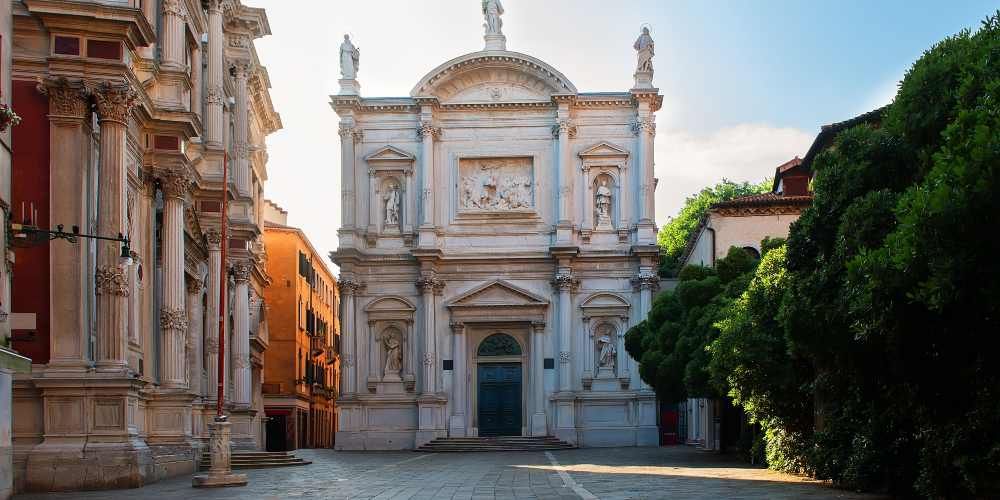
View of Campo San Rocco, where the Museum is located
The Museum of Leonardo da Vinci, in Campo San Rocco, is an exceptional place.
Here, in fact, you can trace the history of the Florentine genius through a collection of machines designed by Leonardo da Vinci.
In the 6 rooms of the museum, in fact, you will see how, following Leonardo's drawings, scholars have managed to reproduce as faithfully as possible the different devices devised by the visionary genius.
Some of these works, you will be amazed to discover, are the basis of some of the machines we still use today, such as the helicopter or the flywheel.
To fully enjoy your visit, we suggest that you purchase a skip-the-line ticket!
Book your entrance to the Da Vinci Museum!The Jewish Ghetto
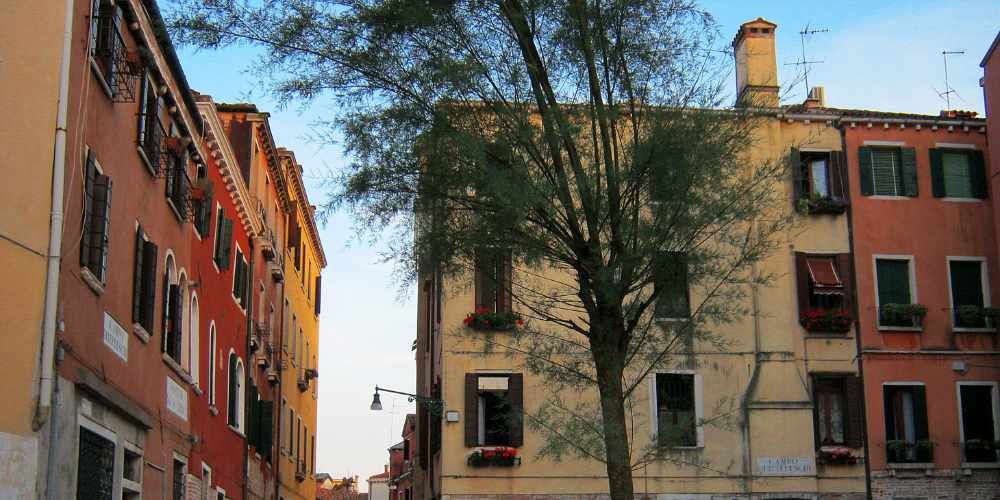
The term "ghetto" was invented right here and probably originates from the foundries that were located nearby and were, in fact, called "getto" in Venetian dialect.
This area of the city, just a few hundred meters from today's train station, became the place of residence for Jews as early as the 16th century, making it the first Jewish ghetto in history.
Today, walking through the narrow streets of the Ghetto will allow you not only to discover museums and synagogues, but also Jewish traditions and gastronomy. Indeed, if you head to the heart of the neighborhood, you will also be able to taste the typical cookies of the Jewish culinary tradition while admiring a truly impressive view.
Get your self-guided tour of Venice's Jewish GhettoVivaldi’s Four Seasons Concert
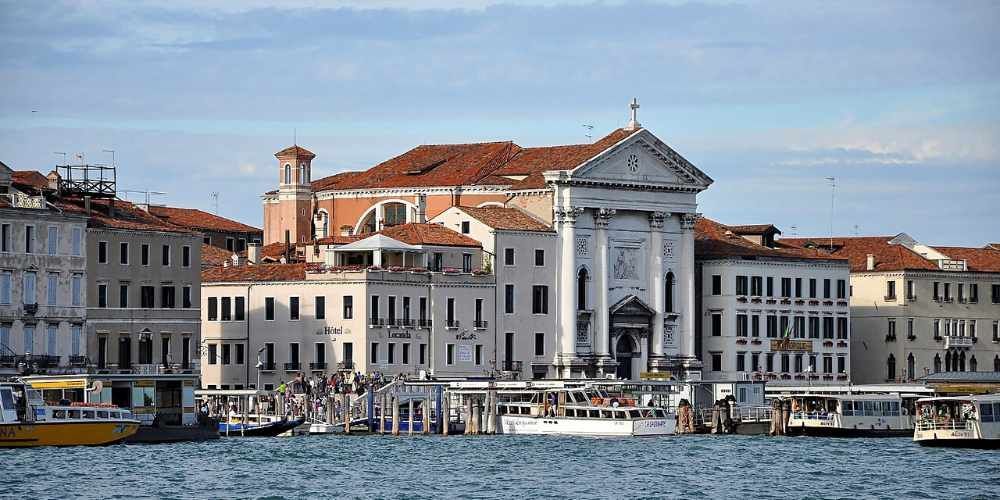
One of the best-known artists who has always linked his name with that of our city is undoubtedly Antonio Vivaldi. He, in fact, was not only born here in the second half of the 18th century, but also worked here for most of his life.
The church of S. Maria della Pietà or the Visitazione, along Riva degli Schiavoni, is in fact known to all Venetians as Vivaldi's church.
Not only will a visit to the church, and the adjoining hospital, allow you to learn more about the history of the Serenissima: here you can attend the Four Seasons Concert, in the very church where the masterpiece was composed!
Performing the concert is none other than I Virtuosi Italiani, one of Italy's best-known orchestras.
Get your tickets to the concert now!Venice Carnival & the Biennale 2026
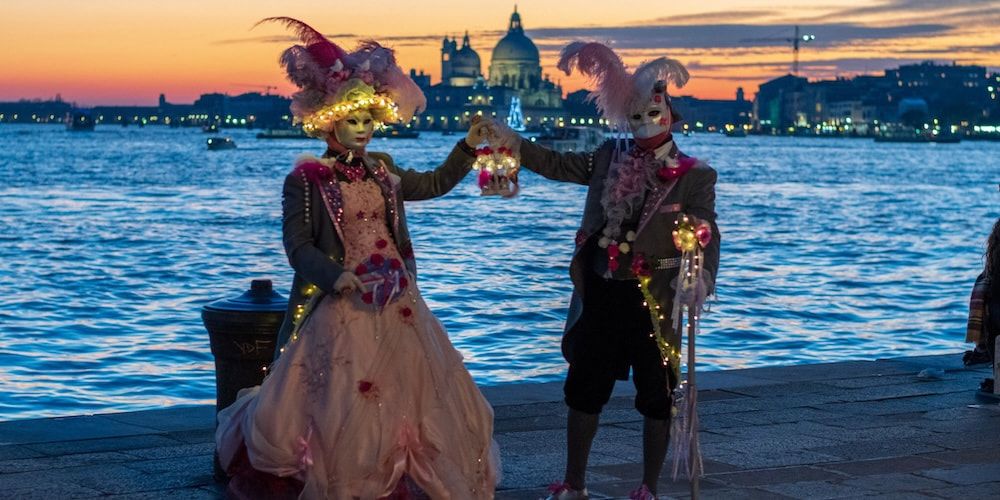
Few events capture the spirit of Venice quite like its famous Carnival. Held every year in February, it transforms the city into a living stage of elegant masks, elaborate costumes, and historic palaces hosting glamorous balls. For centuries, the Carnival has been one of Venice’s most distinctive traditions, attracting visitors from around the world eager to experience its unique atmosphere.
If Carnival celebrates the city's past, the Biennale Arte 2026 showcases its contemporary soul. Running from 9 May to 22 November 2026, the 61st International Art Exhibition brings artists, curators, and visitors from across the globe to venues including the Giardini and the Arsenale.
Whether you visit during the magic of Carnival or the creative energy of the Biennale, these two events offer very different but equally memorable ways to experience Venice beyond its most famous landmarks.
What to do in Venice in 2 days
If your holiday is just a brief break and you are still trying to figure out where to go or what to do in Venice, we can help with our 2-day Venetian itinerary.
Though 48 hours barely scratch the (splendid) surface of the city, our suggestions will ensure you have a fantastic time, whether it's rain or shine.
Thanks to the insider tips and advice from Visit Italy, you can join the crowd in St. Mark's Square with the confidence that you've seen and done much more than the average tourist.
Explore the artisanal shops and kosher restaurants of the Jewish Ghetto, uncovering a significant part of local history; dive into one of the most beloved and frequented neighbourhoods by Venetians; experience local life among bacari (traditional wine bars); and shop at an ancient market.
Want to stay an extra day?
What to do in Venice in 3 days
If yes is the answer, check out our 3-day lagoon guide, our perfect weekend itinerary through the calli, and our romantic suggestions for couples.
Our schedule will help you discover the main sights of Venice in just a few days without any stress.
Of course, we've included must-see destinations like St. Mark's Basilica, the Doge's Palace, and the Bridge of Sighs, but there's more.
You'll also visit La Biennale and Palazzo Venier dei Leoni to admire the Peggy Guggenheim Collection, explore some less-travelled streets, delve into the Jewish Ghetto, and sail to Murano.
What to do in Venice in 5 days
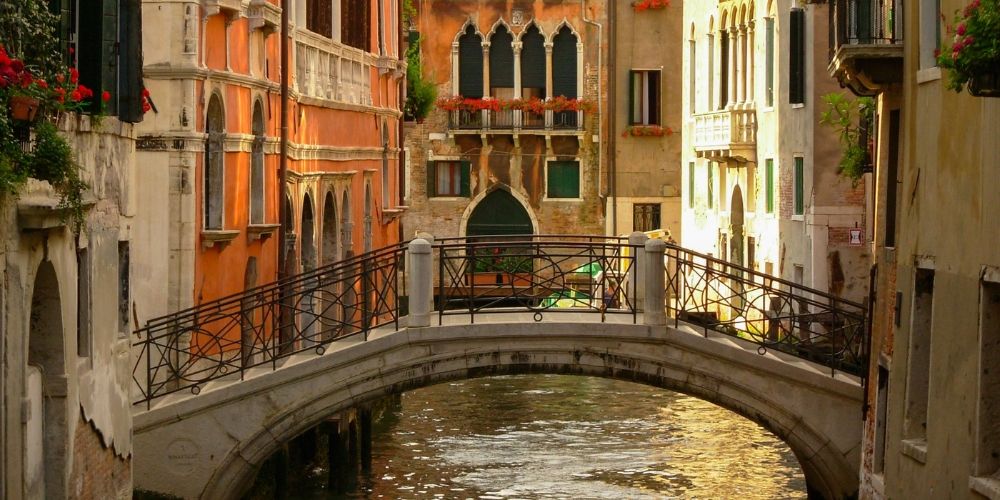
Check out our 5-day guide to Venice and discover how to organize your trip to ensure you get all the best the city offers.
For those who can stay a bit longer, our tailored itinerary is a great planning ally. It covers everything from daytime explorations of the most unique and picturesque neighbourhoods to Venice's lively nightlife.
This journey through Venice's must-see attractions includes legendary sites you must visit at least once, the most interesting art galleries, and nearby excursions.
Once you've chosen your destination and planned an itinerary, all that's left is deciding where to stay. Consult our article on the best district to book your hotel or B&B to find the perfect accommodation for every need.
If you have more time to explore Venice and the lagoon, a 7-day itinerary offers an even more in-depth way to experience this wonderful city.
What to do in Venice like a local
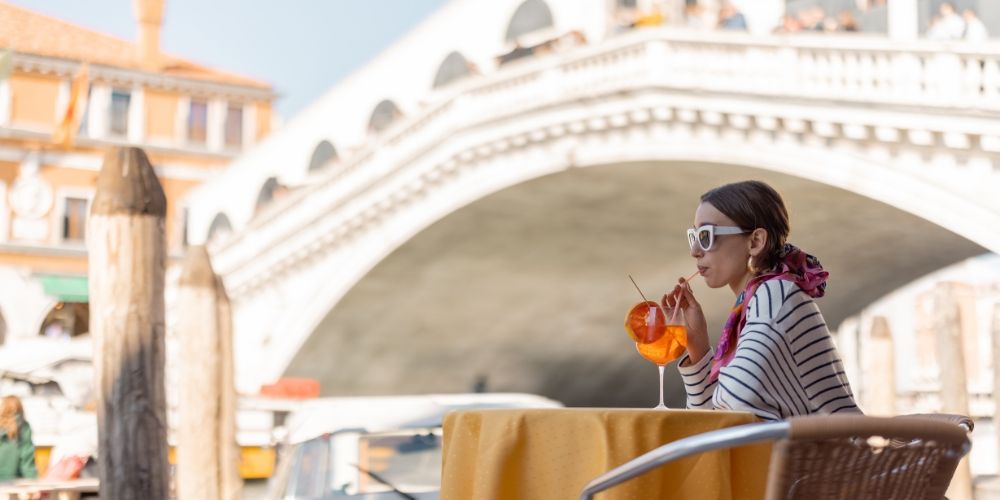
When you want to know how to spend your evening, where to shop for quality goods without breaking the bank, which must-try experiences to have before you leave, or which restaurant to stop at (or avoid) to eat well without spending a fortune, ask the locals: they have the best answers to these kinds of questions.
Show your best smile and start a conversation: you'll gain access to a wealth of information you won't find in any tourist guide (and you might make some new friends, too).
If you're feeling shy or language is a barrier, rely on our insider tips for the can't-miss things to do in Venice that you hadn't even considered.
3 Things Not to Do in Venice
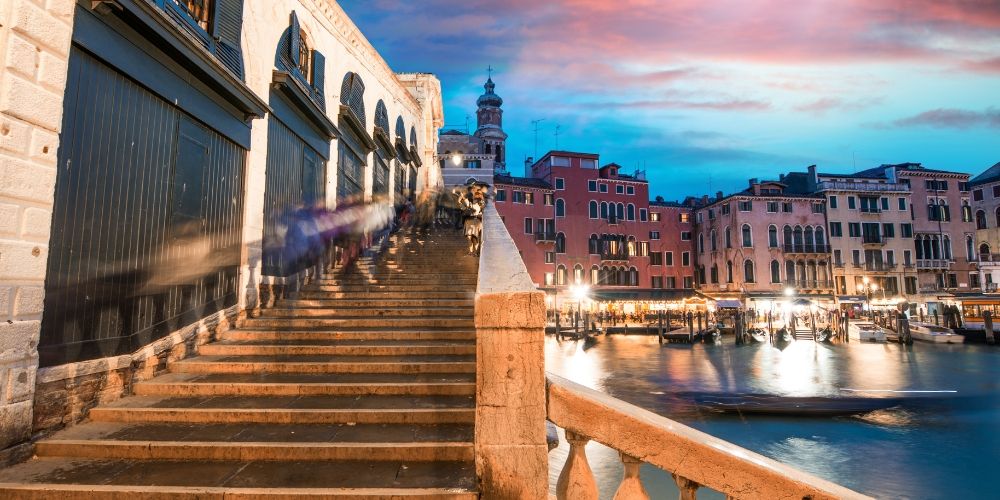
As our journey through Venice's neighbourhoods, attractions, and monuments comes to an end, we want to leave you with a few final tips.
Here's what you absolutely shouldn't do in Venice.
— Explore Venice without a guide. The intricate network of Venetian alleys is a labyrinth that will lead you to incredible hidden corners. Getting lost can be wonderful, but having a reference is always better. A tour guide, Google Maps, or even an old-fashioned map will help you get back on track if you're short on time and don't want to miss the main sights in Venice.
— Dive into the canals. It seems unnecessary to say, but occasionally someone tries it. Swimming in the canals is dangerous and illegal. When you feel like taking a dip, check out our selection of the best beaches near Venice.
— Follow our itineraries to the letter. We've designed our guides to help you navigate the must-see sights in Venice, and we're sure you'll have a great time using them. That said, we encourage you to leave some room for improvisation. Follow your instincts, step through that doorway, order that dish, enter that shop, and explore that alley that catches your eye. You might discover the best gelato of your life hidden in a forgotten alley!
Frequently Asked Questions About Venice
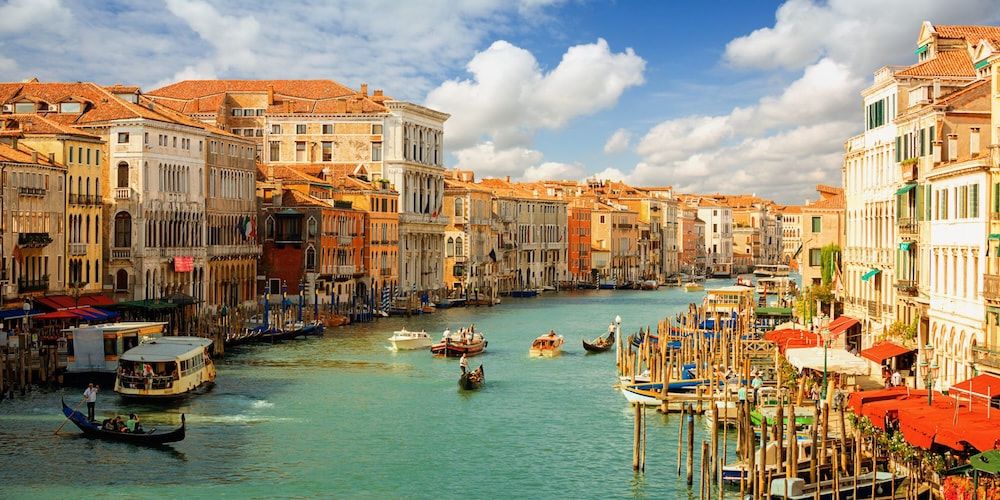
1. Is Venice worth visiting?
Yes. Venice is unlike any other city in the world — a car-free maze of canals, Gothic palaces and art museums built across 118 islands. Even with the crowds, a few days exploring St. Mark’s Square, the Grand Canal and the quiet backstreet calli make it one of Italy’s most rewarding destinations.
2. Is Venice sinking?
Venice is slowly subsiding and faces rising sea levels, causing occasional acqua alta (high water) flooding, mainly between autumn and spring. The MOSE barrier system now protects the city during extreme tides. Venice stays fully open to visitors year-round, and most flooding is brief and limited to low-lying areas.
3. How many days do you need in Venice?
Two days cover the essentials — St. Mark’s Square, the Basilica, the Doge’s Palace and a gondola ride. Three days add Murano, Burano and the Peggy Guggenheim Collection. Five days let you explore at a relaxed pace, including the Lido and quieter neighborhoods.
4. Is Venice expensive?
Venice can be pricey, especially gondola rides (€90 daytime), sit-down meals on the main squares and canal-view hotels. You can save by eating cicchetti in the bacari, using the vaporetto instead of water taxis, crossing the Grand Canal by traghetto (€2) and booking attraction tickets in advance.
5. What is the best time to visit Venice?
April to June and September to October offer mild weather and slightly thinner crowds. February brings the Carnival, while summer is hot and very busy. Winter is quieter and atmospheric but carries a higher chance of acqua alta flooding.
6. Can you walk everywhere in Venice?
Almost. Venice’s historic centre is entirely car-free and most attractions are reachable on foot across its bridges and calli. For longer distances, the outer islands or tired legs, the ACTV vaporetto water buses connect every part of the lagoon.
About the author
Elisa Borgato
Web Content Editor in love with writing, traveling and... Italy.

Elisa Borgato
Things to do in Venice: discover the best experiences, hidden gems, and expert tips to make the most of your trip in the heart of La Serenissima.