

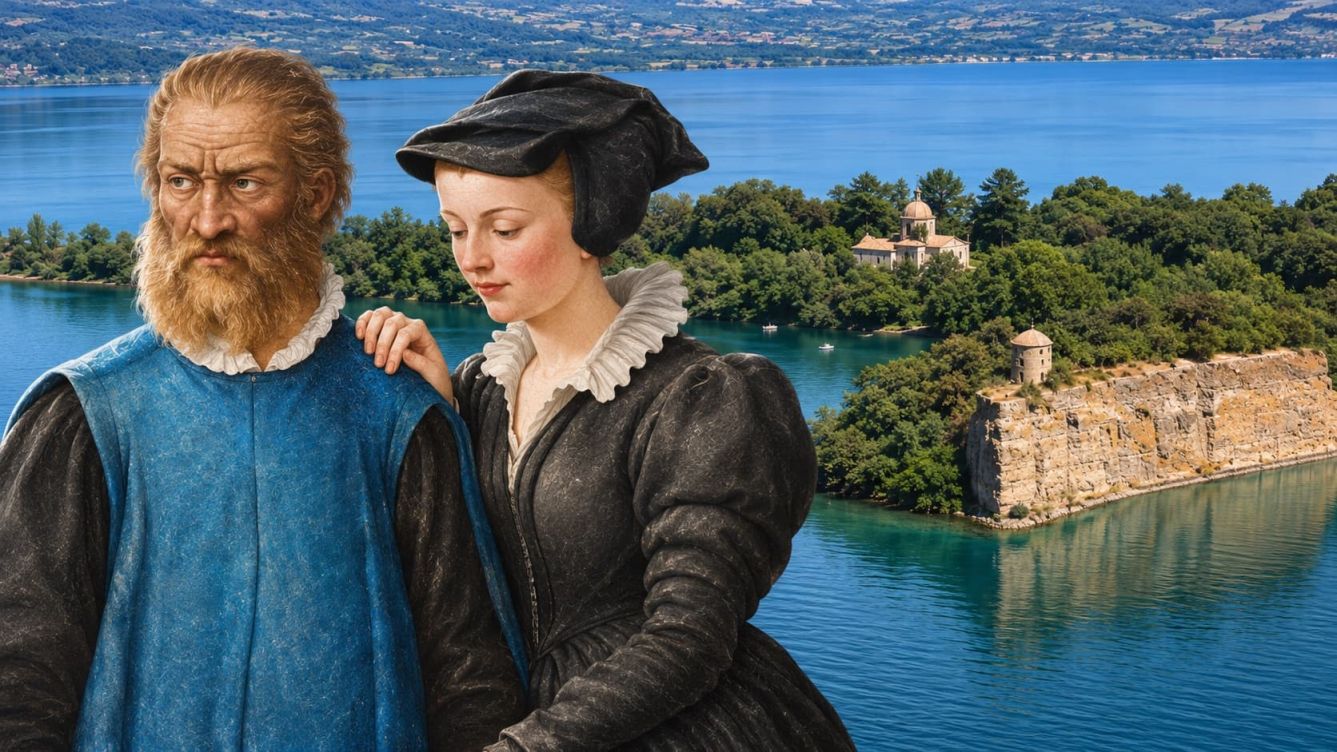

Rising from a steep promontory in the province of Viterbo, in the heart of Lazio, the small village of Capodimonte reaches out toward the waters of Lake Bolsena. Its roots go back to the Etruscans, and it became a settled community around the 7th century. But its golden age came with the Renaissance, when the powerful Farnese family built the Rocca Farnese, a fortress-turned-residence that still crowns the village and looks out over the lake and the hills beyond.
And yet it was here, in the shadow of that fortress, that the life of an extraordinary gentleman came to its close. The story goes that the young lady-in-waiting who became his wife fainted on their wedding day, the first time she saw his face. He was covered in hair from head to toe, yet cultured and kind. Their marriage lasted more than forty years, and he died in Capodimonte in 1618. It sounds like a scene from Beauty and the Beast, and some legends claim the fairy tale was born from his life. His name was Petrus Gonsalvus, and a rare condition called hypertrichosis, which causes excessive hair growth, had earned him the nickname “the wolf man.”
But who was he really, and how much truth is there in this tale? Let’s start with his story, which seems to have stepped straight out of a fairy tale.

Who Were Pedro González and Catherine Raffelin? The Story Behind the Legend
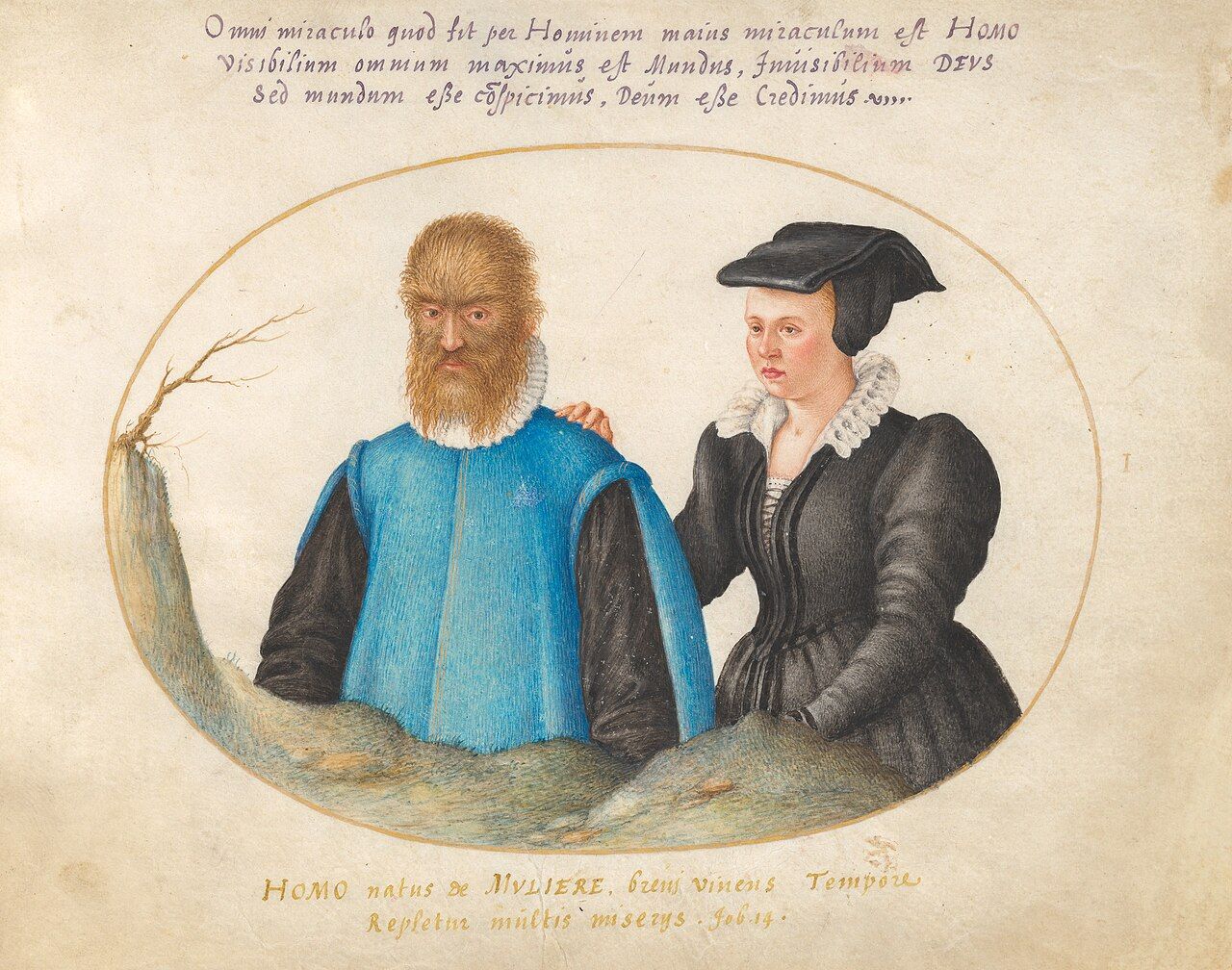
Credits: Joris Hoefnagel, Animalia Rationalia et Insecta (Ignis), National Gallery of Art Washington
Pedro González, better known in Europe as Petrus Gonsalvus, was born in 1537 on Tenerife, then part of the Kingdom of Castile. He was born with congenital hypertrichosis, a rare genetic condition that causes thick hair to grow all over the body, even on the face. Some accounts say that, despite his noble blood, he was abandoned at birth because of it. The most popular version of the tale runs like this: as a boy, he was being sent as a gift to Emperor Charles V, but French corsairs seized the ship mid-voyage and offered the child to King Henry II of France, husband of Catherine de’ Medici.
At court, he was meant to be a living curiosity, there to amuse the royals but Pedro had other plans. His sharp mind won him real standing, a humanist education and the title of don, said to come from his descent from a Guanche royal line.
Then the queen, Catherine de’ Medici, arranged a marriage for him with Catherine Raffelin, one of her ladies-in-waiting. As the story goes, the bride was not told what her husband looked like until the wedding day itself. It was a forced match and an unlikely start, yet the two stayed together for more than forty years. They had several children, six according to the most frequently cited sources, and four of them inherited their father’s hypertrichosis.
Is Beauty and the Beast Based on a True Story?

That is the question that made this story go viral, so it’s worth being precise.
What is documented. Pedro González really existed. He lived at the French court, married Catherine Raffelin, had children, four of them (the most commonly cited figure) with his same condition, and died in Capodimonte in 1618.
What is a hypothesis. Some scholars and popular writers have suggested that his story inspired the tales of beauty and the beast. But this is an intriguing suggestion, not proof, not least because no document directly links the couple to the texts of the fairy tale.
What we know about the fairy tale. The best-known version dates from the 18th century. The first draft was written by Gabrielle-Suzanne de Villeneuve in 1740, then rewritten in a shorter form by Jeanne-Marie Leprince de Beaumont in 1756. The theme of love that sees beyond appearances is far older, with precedents such as the myth of Cupid and Psyche told by Apuleius. The Disney film, finally, draws on the French tradition and not on Pedro.
So the most honest way to put it is this: the story of Pedro and Catherine bears a fascinating resemblance to the fairy tale, and some people believe it may have inspired it, but this cannot be proven with certainty.
How Did Pedro End Up in Capodimonte?
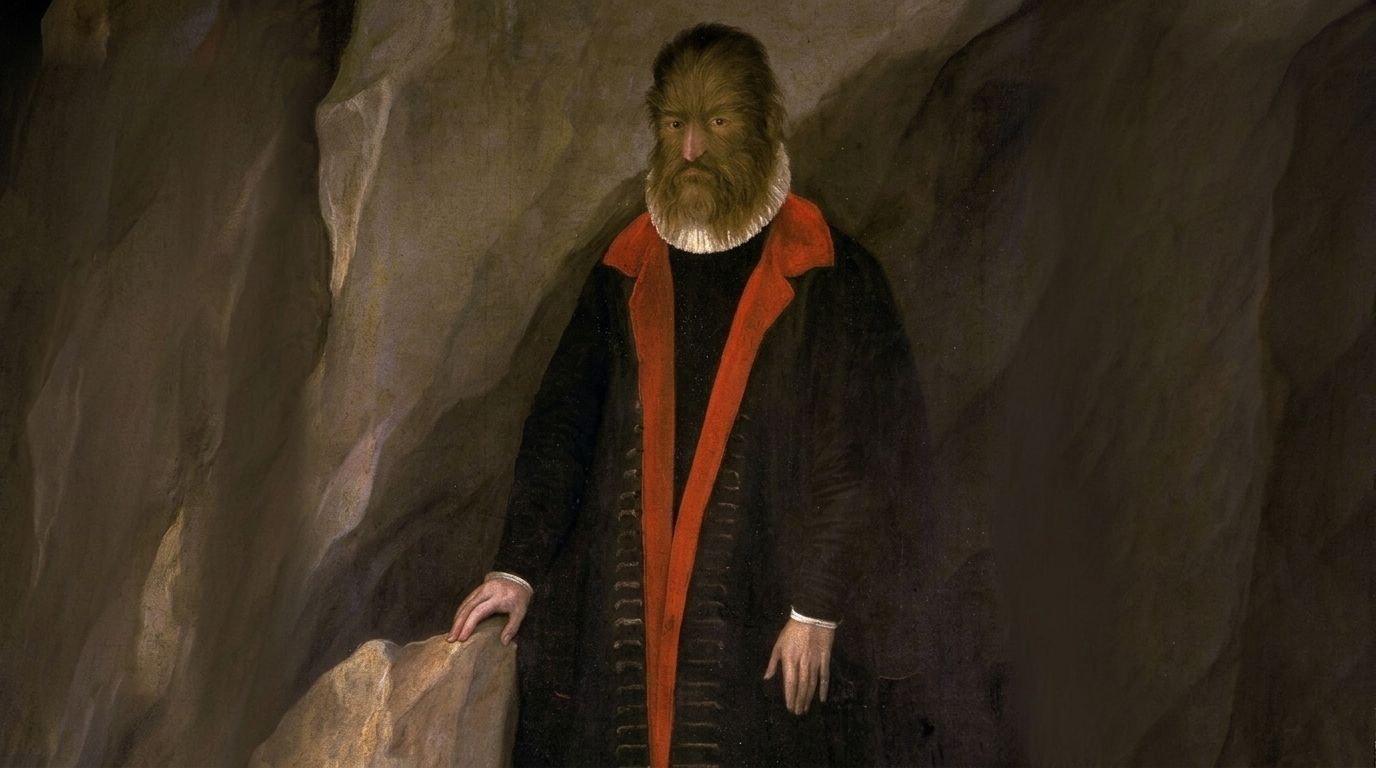
When Catherine de’ Medici died in 1589, the family lost the protection of the French court and drifted through various parts of Europe. According to the most widely accepted accounts, Pedro then came under the protection of the Farnese, the lords of Parma and owners of Capodimonte, who allowed him to settle in the village with his family. He died here on 20 January 1618, well into his eighties, far from the clamor of the royal courts.
We don’t know whether choosing Capodimonte was his own decision. What we can say is that the village has a fairy-tale charm, with or without the legends.
What to see in Capodimonte
The promontory on which the village stands was formed when the volcanoes of the Monti Volsini collapsed in on themselves after their eruptions, leaving a vast basin that was later filled with water, now Lake Bolsena. The same volcanic origin gave the beach along the lakefront its distinctive dark sand.
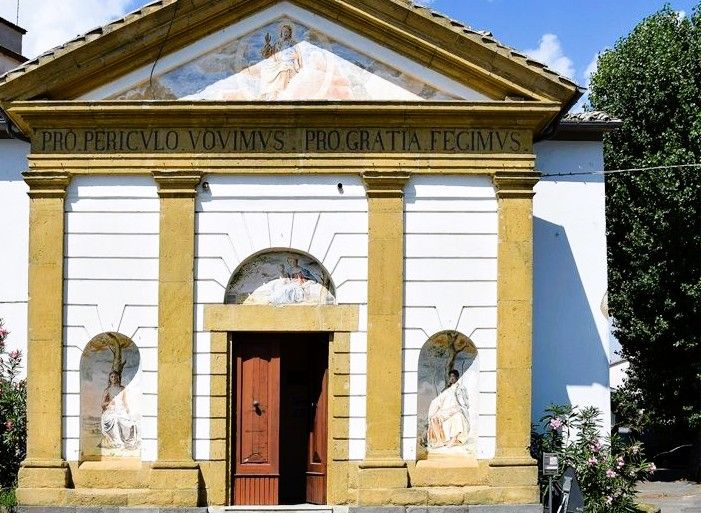
You can stroll along the shore and follow the cycle path that leads to the sailing club. In the more modern part of the village stands the Church of San Rocco, dedicated to the town’s patron saint, whose feast day falls on 16 August. It is to San Rocco that the “Luminata” is dedicated, a torchlit procession that lights up the night and ends with a fireworks display.
Climbing toward the heart of the village, on its highest ground, you can admire the Church of Santa Maria Assunta in Cielo, the parish church, built in the 15th century at the behest of the Farnese. It sits in one of the most striking spots in Capodimonte, with the lake on one side and the Rocca Farnese on the other framing the churchyard, one of the finest panoramic views in the village.
Rocca Farnese, the Fairy-Tale Fortress
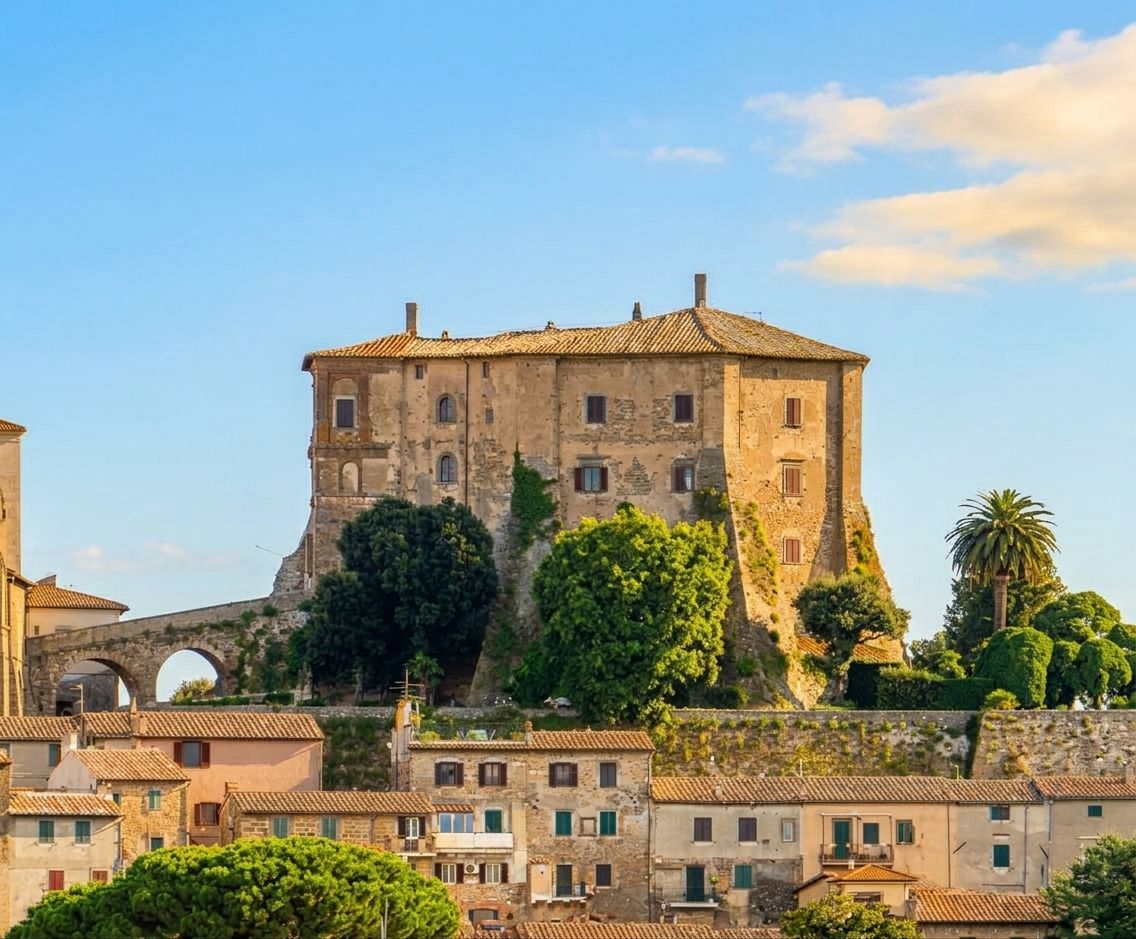
The Rocca Farnese is one of the village’s great attractions. It began as a square tower and was later transformed into an octagonal noble residence. According to some sources, it was originally built to hold heretics prisoner, but its purpose changed in 1510, when Antonio da Sangallo the Younger, commissioned by Cardinal Alessandro Farnese, turned it into a sumptuous and elegant palace that welcomed nobles, popes and other prestigious figures of the age.
Today the residence, surrounded by a lush Italian garden, is privately owned, but part of it is open to visitors. It is best to book in advance.
Within these walls, tradition says, Pedro González and his family may have made their home. It is an evocative idea, and it makes the Rocca the most natural setting for their story.
Lake Bolsena and the Isola Bisentina
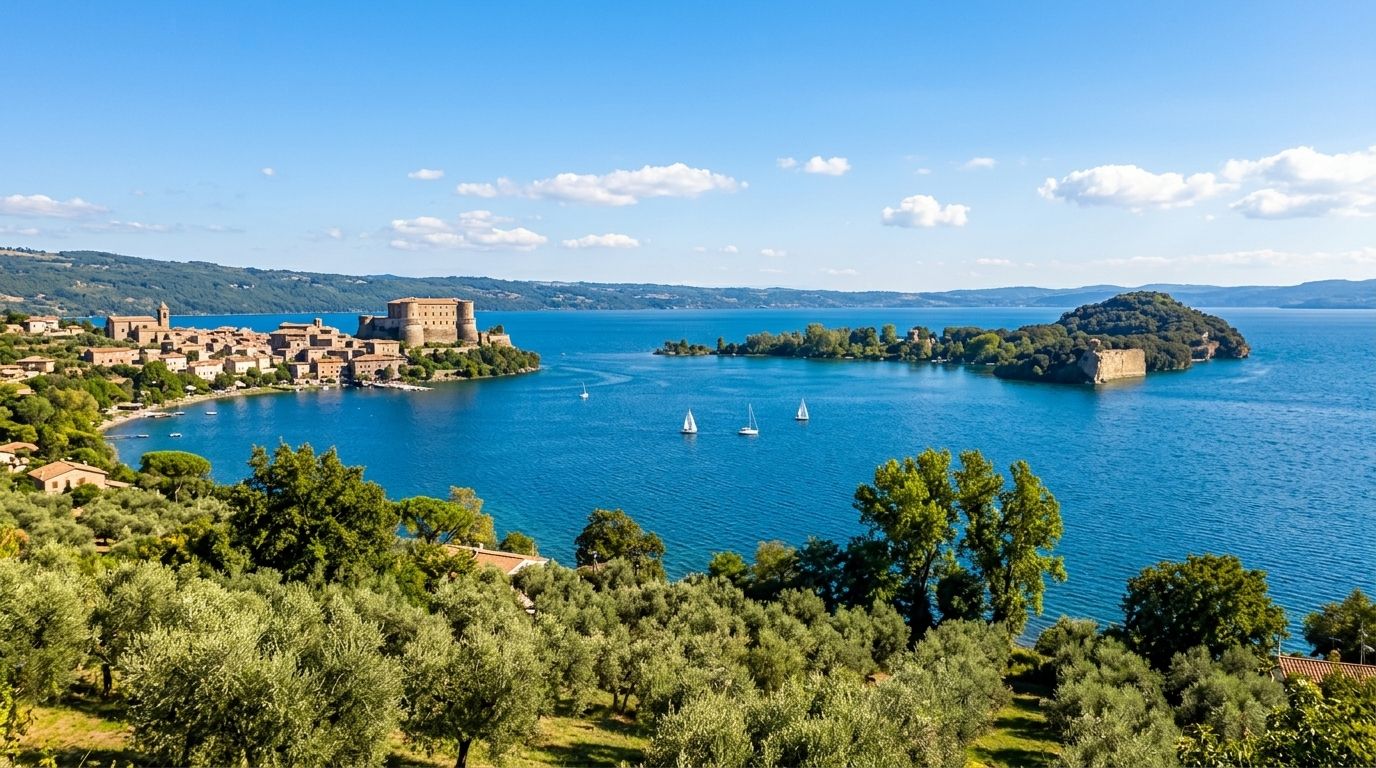
Lake Bolsena is the largest volcanic lake in Europe and is considered one of the cleanest lakes on the continent, with waters that are safe for swimming throughout.
Two islands rise from its surface, the Isola Bisentina and the Isola Martana.
The first, once a spiritual retreat during the Renaissance and a favorite residence of the Farnese family, still holds a timeless charm today. It can only be visited on a guided excursion, which departs from the port of Capodimonte. The island is covered in dense woodland and dotted with seven small churches. Here you will find the remains of the crater of the volcano that gave birth to the lake, as well as the Church of Saints James and Christopher, where the Farnese family tomb is kept. Among its most fascinating curiosities is the “Malta dei Papi”, a high-security prison carved into the tuff, which was reached through a well about thirty meters deep.
The second island, the Martana, is smaller, privately owned and uninhabited. It cannot be visited, but you can sail around it by boat, again departing from the port of Capodimonte or from Bolsena.
What to Do Around Capodimonte
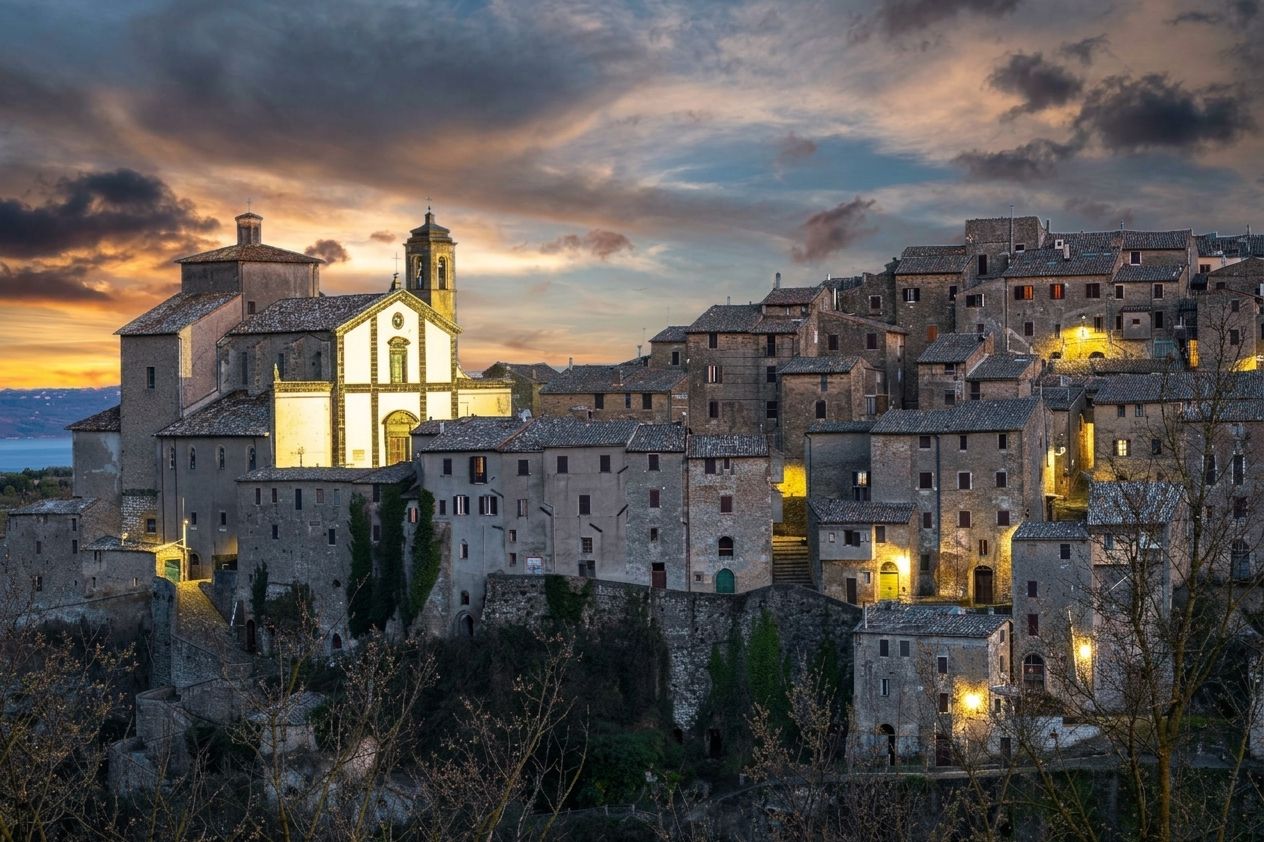
Capodimonte is an ideal base for exploring the Tuscia. Within a few miles you pass from small fishing villages to wine towns, and from Etruscan necropolises to hamlets perched on tuff cliffs. If you have more than a day, these are the stops worth making.
Marta.
Not far from Capodimonte, Marta is a picturesque village on the water’s edge, known as the “Village of the Fishermen”. It sits right across from the Isola Martana, the small private island you can only admire from the shore. It’s the perfect spot for an unhurried walk along the lakefront and a taste of freshly cooked lake fish at one of the local restaurants.
Bolsena.
Follow the shore a little further and you reach Bolsena, where more boat trips depart. On a sunny day, an outing on the water is one of the most relaxing and romantic ways to see the lake from a new angle, discovering its quietest corners and getting close to both islands. From here too, you can sail around the Martana.
Montefiascone.
From Bolsena, head up to Montefiascone, which sits on the highest hill of the Monti Volsini and offers the finest panorama of the lake. From up here, your eye takes in the whole sweep of the water. It is also a treat for food lovers, since this is where the famous Est! Est!! Est!!! wine is made, along with excellent extra virgin olive oil, which makes it the right place to stop for lunch.
Monte Bisenzio Archaeological Park.
If Capodimonte’s ancient past has caught your imagination, the Monte Bisenzio Archaeological Park is just a short distance from the village. This was the site of ancient Bisenzio, a settlement dating back to the Bronze Age that later became an important Etruscan and Roman center. According to tradition, its inhabitants, fleeing, went on to found Capodimonte itself. Walking among the remains, with the lake in the background, you get a sense of just how long the history of this corner of the Tuscia really is.
Grotte di Castro.
For a deeper dive into the Etruscan world, Grotte di Castro is the stop to make. The town, set on a hill about 467 meters above sea level, takes its name from the caves that open beneath the rock on which the old center stands. Of Etruscan origin, it is surrounded by numerous necropolises that have yielded a wealth of finds, many more than at Monte Bisenzio.
Civita di Bagnoregio.
If you have time for a longer outing, make your way to Civita di Bagnoregio, one of the most beautiful villages in Lazio and one of the most photographed places in Italy. It is called “the dying city” because of the fragile tuff on which it stands, which slowly crumbles away. A town suspended in mid-air, it is now one of the area’s best-loved destinations.
Useful tips on Capodimonte
The best time to visit Capodimonte is undoubtedly spring and summer, when mild temperatures and long, sunny days invite visitors to make the most of the lake. From swimming and renting pedal boats, canoes or sailboats to enjoying sailing, canoeing and windsurfing, there are plenty of ways to experience the water. Among the highlights of the sporting calendar is the Tuscia Cup, a prestigious sailing regatta organised by the Capodimonte Sailing Club (Club Nautico Capodimonte). Alongside the Luminata festival mentioned earlier, visitors can also enjoy the Sagra del Coregone, a traditional food festival celebrating one of the lake’s most prized fish, which features in many local specialities.
Spring and autumn offer a quieter, more laid-back atmosphere, making these seasons ideal for exploring the village on foot and wandering through its charming streets at a leisurely pace. Winter, meanwhile, reveals a different side of Capodimonte, with a more intimate and peaceful ambience that appeals to those who appreciate picturesque landscapes and the timeless charm of Italy’s small historic villages.
The most convenient way to reach Capodimonte is by car, with the journey from Rome taking approximately two hours. Those travelling by public transport can reach Viterbo by train or bus before continuing to Capodimonte by regional bus. As services may vary depending on the season, it is advisable to check the latest timetables before setting off.
About the author
Written on 06/11/2026
Adriana Errico
Writer

Adriana Errico
On the shores of Lake Bolsena, in Capodimonte, a village hides a story much like Beauty and the Beast. Come and discover it with us.