
Why is there a Japanese samurai near the port of Civitavecchia? Many travelers know the city only as a stop on a Mediterranean cruise to Rome, or as the starting point or final destination of an unforgettable journey. But what lies beyond the harbor in this coastal city, around an hour from Rome? And why did a Japanese samurai arrive here in 1615, having crossed both the Pacific and the Atlantic?
Join us for a walk through Civitavecchia, a city whose streets reveal a rich history, local traditions and natural beauty. We begin with Hasekura Tsunenaga, the samurai commemorated by a statue near the port, before exploring the city and discovering why it deserves your time before you head straight to Rome.
Perhaps the next time you pass through, you’ll be curious enough to venture beyond the cruise port and see what you’ve been missing.

Civitavecchia Beyond the Cruise Port
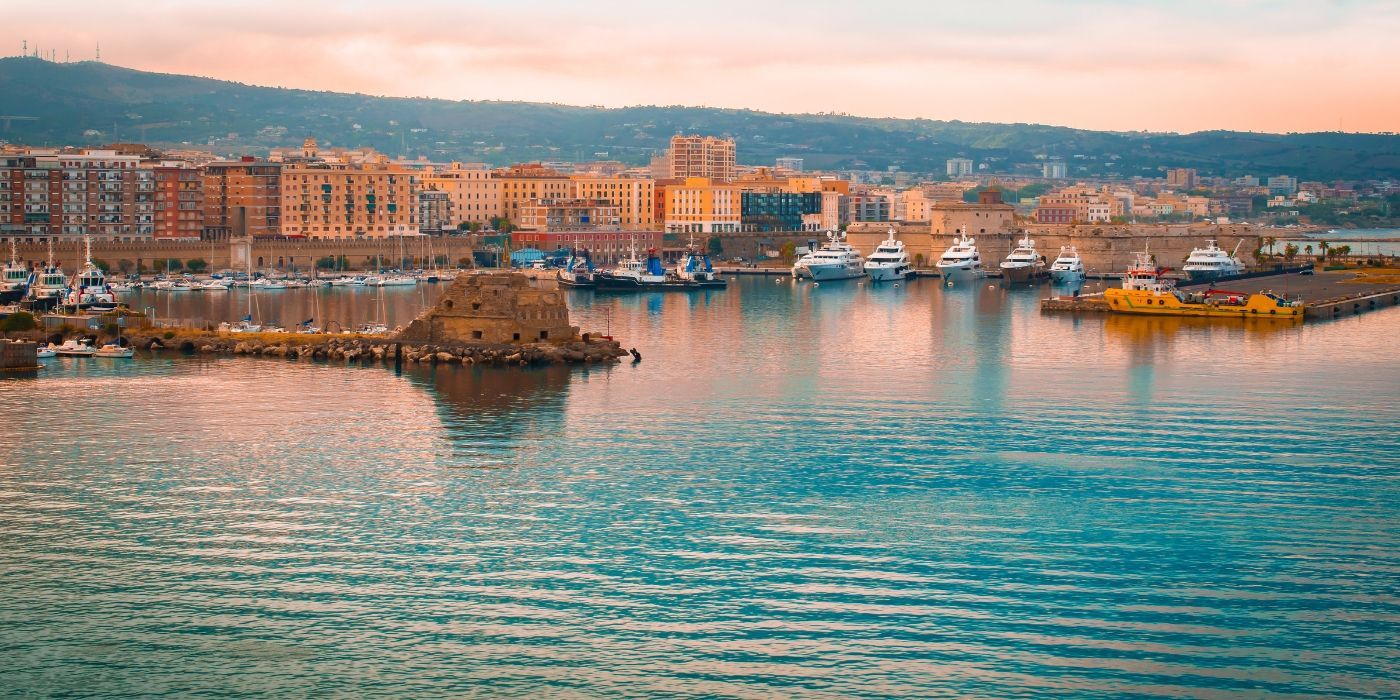
Civitavecchia, just an hour from Rome, is one of the Mediterranean’s major cruise ports, and many visitors know it for that reason alone. Yet the city deserves a few hours of your time, or a longer stay to enjoy the sea air, fresh seafood and sights that are easy to overlook when you’re in a hurry.
There’s Forte Michelangelo, for instance, or the narrow streets gathered around Piazza Leandra. You can even unwind in thermal baths: the small Ficoncella complex sits on a hill, with views that glow at sunset and evening opening hours during the summer.
The city grew around the great harbor commissioned by the Roman emperor Trajan, who owned a villa here that Pliny the Younger described as beautiful and surrounded by lush green fields. Over the centuries, Civitavecchia welcomed remarkable visitors such as Hasekura Tsunenaga. Others left a more lasting mark: Gian Lorenzo Bernini designed the Papal Arsenal, destroyed during World War II, while the writer Stendhal later served here as French consul, combining his diplomatic duties with his literary work.
It makes you wonder how many more stories this seaside city has to tell.
The Extraordinary Journey of Hasekura Tsunenaga, Civitavecchia’s Samurai
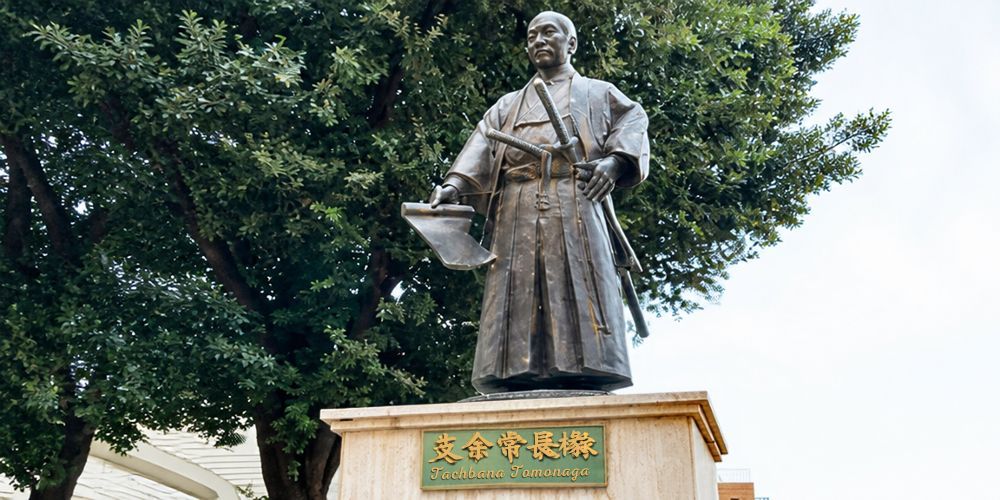
Hasekura was a samurai in the service of Date Masamune, lord of Sendai, who entrusted him with an ambitious diplomatic mission: to meet the king of Spain and the pope, encourage trade with Mexico, then under Spanish rule, and request that missionaries be sent to Japan. Leaving the coast of what is now Ishinomaki in 1613, the delegation crossed the Pacific, reached Mexico and continued across the Atlantic to Spain.
On October 18, 1615, Hasekura landed in Civitavecchia, then a port of the Papal States. This explains why he came here: his destination was Rome, where Pope Paul V received him on November 3. The story of Hasekura Tsunenaga in Italy is part of an extraordinary 17th-century diplomatic journey linking Japan, the Americas and Europe.
His connection with Civitavecchia has endured across the centuries: the city has been twinned with Ishinomaki since 1971. Our walk begins at the statue of Hasekura, whose mission brought these two distant ports together.
To find the Civitavecchia samurai statue, head toward the historic port entrance at Porta Livorno, near number 69 on Corso Guglielmo Marconi. The bronze monument commemorates one of the early Japanese envoys to Europe. This is our first stop: pause before this far-traveled figure and imagine a time when crossing oceans meant entrusting your life to months at sea and encounters whose outcomes were far from certain.
What to See in Civitavecchia: A Walking Itinerary from the Port to the Waterfront
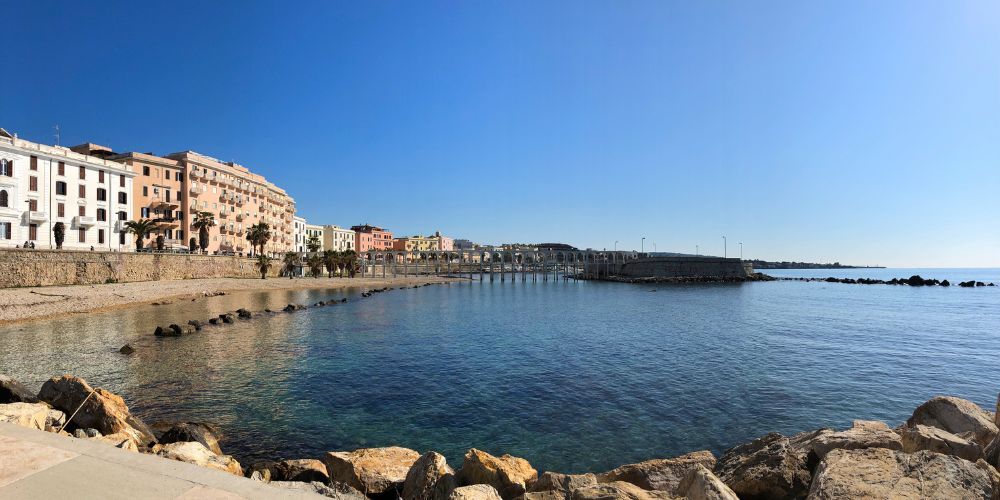
Porta Livorno, the monumental gateway connecting the city with its historic harbor, marks the beginning of our walking itinerary. Look out toward the Darsena Romana, the old Roman dock, and imagine the ships, cargoes and languages that have passed through these waters.
Walk south along the defensive wall built under Pope Urban VIII until you reach the Vanvitelli Fountain. Completed in 1743, it is recognizable by the large face of a faun framed in stone. Stop for a closer look.
A little farther on stands Forte Michelangelo, with its massive towers and imposing Renaissance architecture. Follow the path around the outside to admire it from different angles. The fortress now houses the local Coast Guard headquarters. From here, walk up toward Piazza Vittorio Emanuele II, overlooked by the Cathedral of San Francesco d’Assisi. This is a natural point to leave the harbor behind and enter the historic center.
After visiting the cathedral, make your way to Piazza Leandra and the nearby Archetto passage. Here, the route narrows between old facades, steps and intimate corners. After the open spaces of the waterfront, slow down and spend a little time exploring the medieval quarter. A walk of around three minutes brings you to Piazza Regina Margherita: aim to arrive in the morning to catch the city market at its liveliest.
Now head back toward the Marina, where the waterfront and the Pirgo area offer plenty of places to stop for lunch. Choose an outdoor table and ask about the day’s catch. Seafood pasta, a plate of fried fish or freshly cooked local fish will give you a taste of the city.
After lunch, visit the National Archaeological Museum of Civitavecchia, in Largo Cavour. Its collections explore Civitavecchia’s history and the surrounding area through finds from ancient Centumcellae, the Terme Taurine and the Etruscan sanctuary of Punta della Vipera.
When you leave, return to the waterfront at Piazza della Vita and continue toward Pirgo. Transformed by regeneration projects, the Marina is one of the city’s favorite gathering places, with promenades, cafés and sea views. If you can stay until evening, settle here for an aperitivo: after a day spent following stories through the city, sunset over the sea is a good reason to linger.
If you only have a few hours in Civitavecchia, allow two or three hours for a shorter walk beginning at Hasekura’s statue and taking in the historic port, the exterior of Forte Michelangelo and the streets of the old town.
More Things to Do in Civitavecchia: Thermal Baths and Nature Beyond the Center
If you have more time to explore Civitavecchia, consider renting a car or checking local public transport connections so you can venture farther beyond the center.
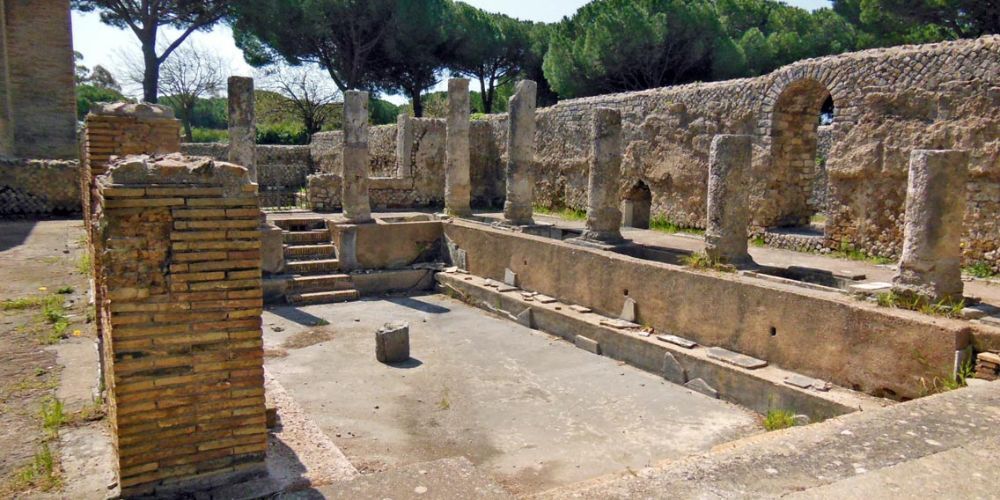
Around five kilometers from town, the Terme Taurine, also known as the Baths of Trajan, preserve the remains of a large Roman bathing complex. Pools, heated rooms and decorative details help you imagine a place where bathing was woven into conversation and social life.
If walking through the Terme Taurine leaves you longing for a soak of your own, head to the Ficoncella thermal baths. This small, affordable outdoor complex sits in the hills above Civitavecchia. Bring a swimsuit, flip-flops and a towel, then take your time enjoying its five small pools, fed by hot thermal waters long celebrated for their reputed restorative qualities and known since Etruscan times. Late-night opening hours are also offered during the summer. Check the municipality’s updated schedule before deciding when to visit.
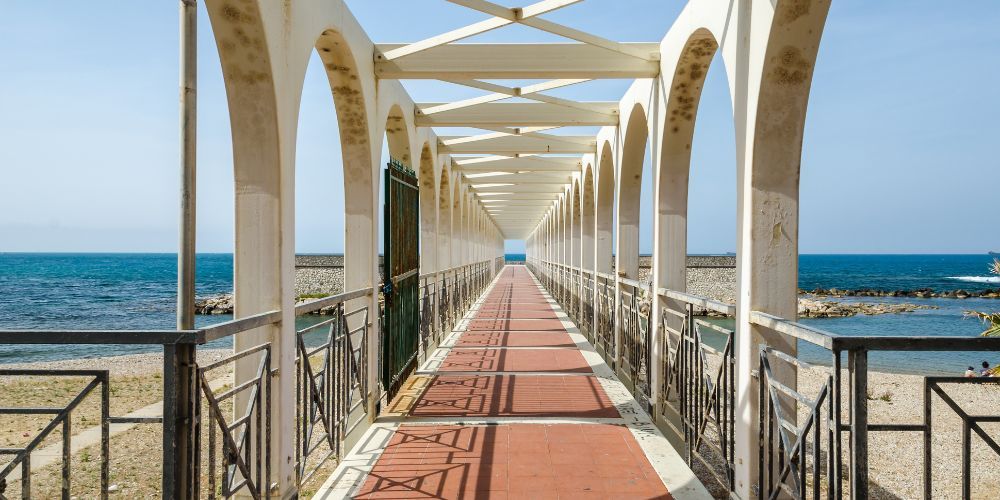
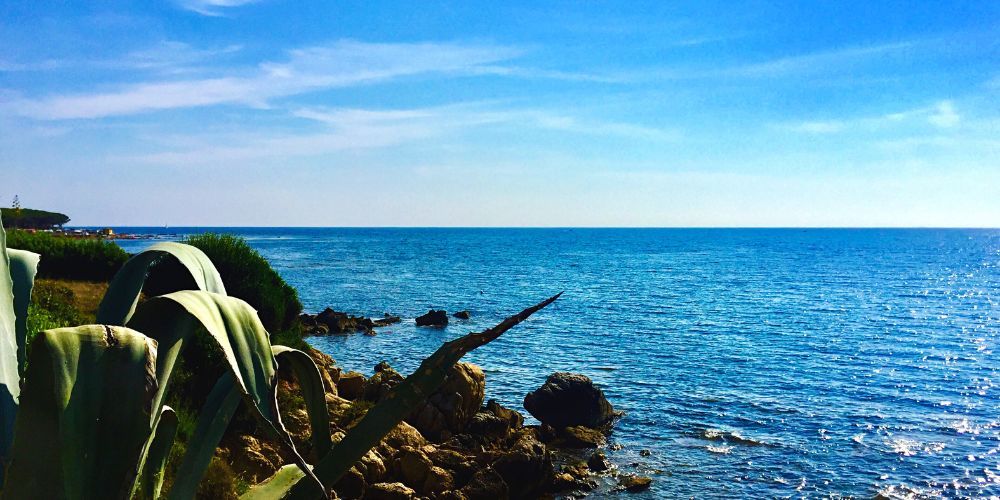
Another place to consider is La Frasca, a stretch of rocky shoreline with small coves and a pine woodland behind the sea. Protected as a Natural Monument, the area also preserves archaeological traces of the ancient landing place of Columna. It is particularly appealing if you enjoy rugged coastlines and spending time in nature. Wear suitable shoes for the uneven ground.
What to See Near Civitavecchia
Stay a little longer and Civitavecchia becomes a base for exploring a stretch of Lazio where ancient ports, castles and Etruscan heritage lie close to the sea. Choose one of these excursions and give it the time it deserves, rather than trying to fit everything into a single day.
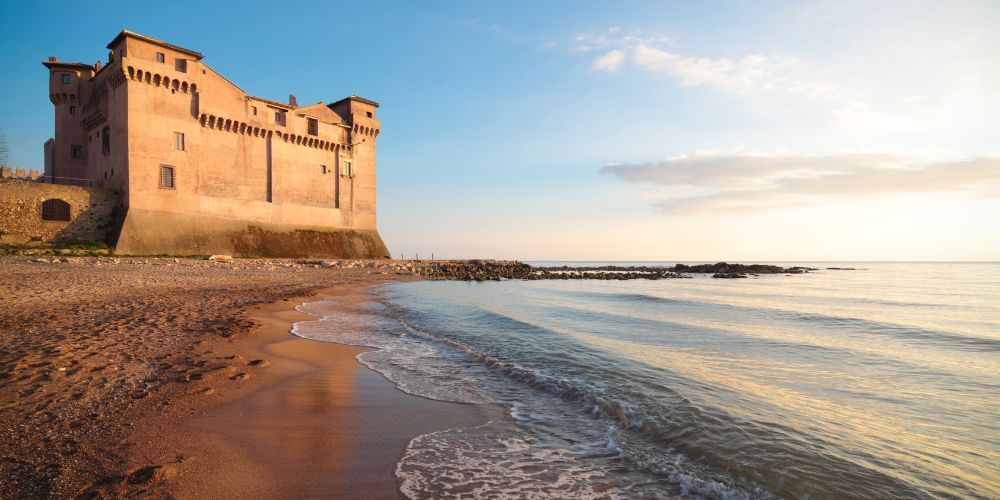
South of Civitavecchia, Santa Severa Castle offers one of the most striking meetings of architecture and sea on the Lazio coast. Explore the small historic village inside the castle and the Museum of the Sea and Ancient Navigation, where artifacts and reconstructions introduce the world of seafaring and its connection with the ancient Etruscan port of Pyrgi. You can reach the castle by car along the Via Aurelia, or take a train to Santa Severa and walk from the station.
Another rewarding destination near Civitavecchia is Tarquinia, where the Monterozzi Necropolis is an essential stop. Part of the UNESCO World Heritage Site shared with Cerveteri, the necropolis offers a glimpse into Etruscan culture through its painted tombs. Figures, gestures and scenes bring fragments of that distant world vividly to life.
At Cerveteri, the Banditaccia Necropolis offers a different but complementary experience. Among monumental burial mounds and tombs carved into volcanic tuff, the layout resembles a city, with streets and spaces echoing those of the living. That is what makes it so memorable: walking through the site also reveals something of Etruscan homes and the way their inhabitants organized space. Together with Monterozzi, Banditaccia is inscribed on the UNESCO World Heritage List.
How to Get to Civitavecchia If You’re Not Arriving on a Cruise
Traveling from Rome to Civitavecchia by train is a convenient option, including for a day trip. Regional services call at several stations in the capital, including Roma Termini, Roma Ostiense, Roma Trastevere and Roma San Pietro. The journey generally takes around an hour to an hour and twenty minutes, depending on your departure station and the service you choose. Check the timetable for your travel dates.
From Civitavecchia train station, the waterfront and Forte Michelangelo are around a ten-minute walk away. To follow the itinerary from Hasekura’s statue, continue toward Corso Marconi and Porta Livorno.
A car is particularly useful if you want to visit the thermal baths, La Frasca or the surrounding towns. For the historic center, you can leave it parked and explore on foot: the main Civitavecchia attractions lend themselves to a day of leisurely walks and stops along the way.
Discover the Visit Rome PassCivitavecchia FAQs
Why Is There a Samurai Statue in Civitavecchia?
The statue commemorates Hasekura Tsunenaga, who landed in Civitavecchia on October 18, 1615, during a diplomatic mission to Rome. Standing near Porta Livorno, it reflects the city’s historic connection with Japan, also celebrated through its twinning with Ishinomaki.
Who Was Hasekura Tsunenaga?
Hasekura Tsunenaga was a samurai serving Date Masamune, lord of Sendai. He led a delegation across the Pacific and the Atlantic to meet the king of Spain and Pope Paul V, pursuing commercial and religious objectives. His journey ended with his return to Japan in 1620.
What Can You See in Civitavecchia Besides the Port?
Explore the historic center, Piazza Leandra, the Cathedral of San Francesco d’Assisi, San Lorenzo Market, the National Archaeological Museum and the Marina waterfront. With more time, add the Ficoncella thermal baths, the Terme Taurine on opening days and the rocky coast of La Frasca.
Is Civitavecchia Worth Visiting?
Yes, particularly if you enjoy combining history, everyday local life and time by the sea. A few hours are enough to explore the historic harbor and old town, while a full day allows time for the museum, a seafood lunch and a waterfront stroll.
Can You Explore Civitavecchia on Foot?
Yes. The historic port, city center and Marina can all be explored on foot. If you arrive on a cruise, allow time for transfers within the port from your ship’s berth. For the Terme Taurine, Ficoncella thermal baths and La Frasca, plan separate transportation.
About the author
Written on 06/11/2026
Chiarastella Campanelli
Dreamer, editor, beauty lover

Chiarastella Campanelli
A samurai from Japan leads the way through Civitavecchia, revealing unexpected stories and plenty of reasons to stay a little longer