
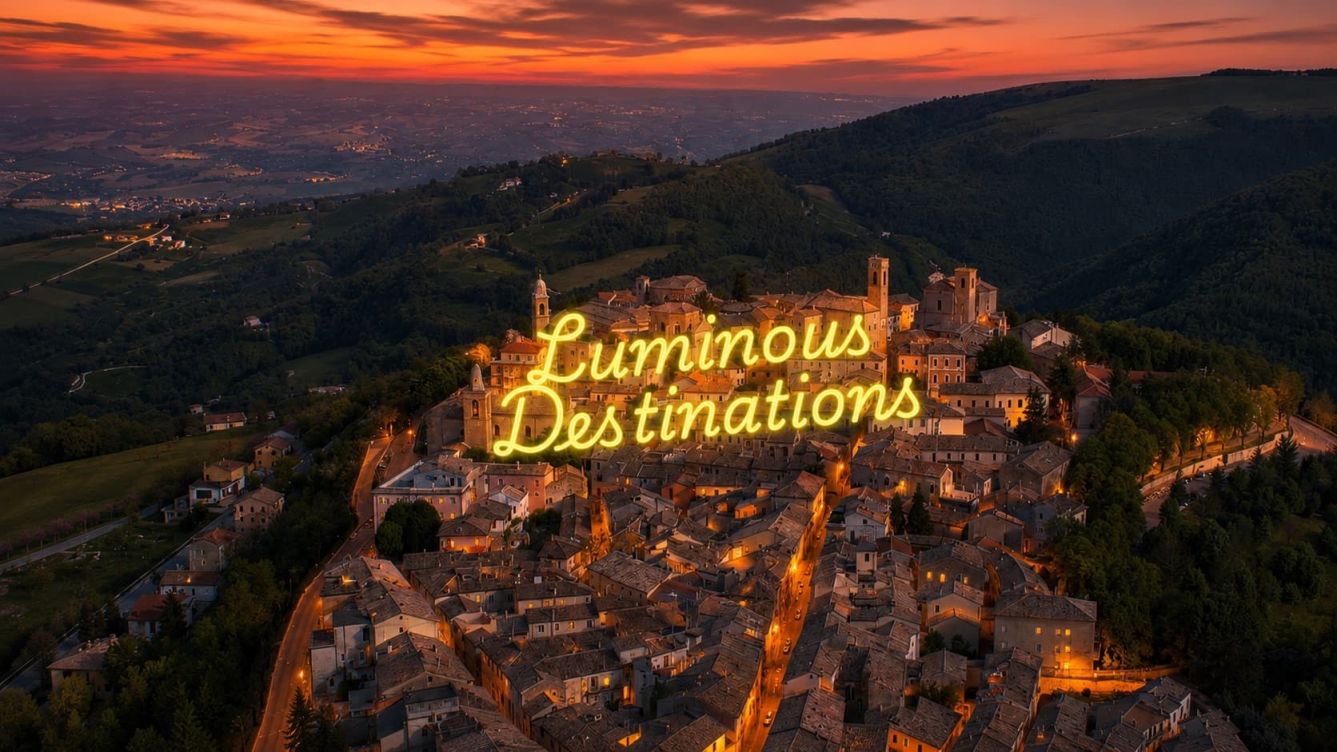

There’s a natural balcony overlooking the Marche hinterland that still lies off the most travelled tourist routes. It's located in the province of Macerata, along a ridge where your gaze stretches across valleys and hills until it reaches the mountain ranges of the Apennines and, on the clearest days, the sea.
This is Cingoli, the so-called Balcony of the Marche, a hilltop town perched at around 600 metres above sea level, where the landscape opens up in every direction, offering you spectacular views embracing the entire region.
You can unveil its most authentic side by letting yourself be guided by the slow rhythm of its historic center and by a surprising artistic heritage that tells centuries of history, together with a cultural tradition that is still very much alive today. A place to discover step by step, where it’s truly worth pausing and looking beyond the breathtaking panorama.

Cingoli, the Luminous Destination overlooking Le Marche
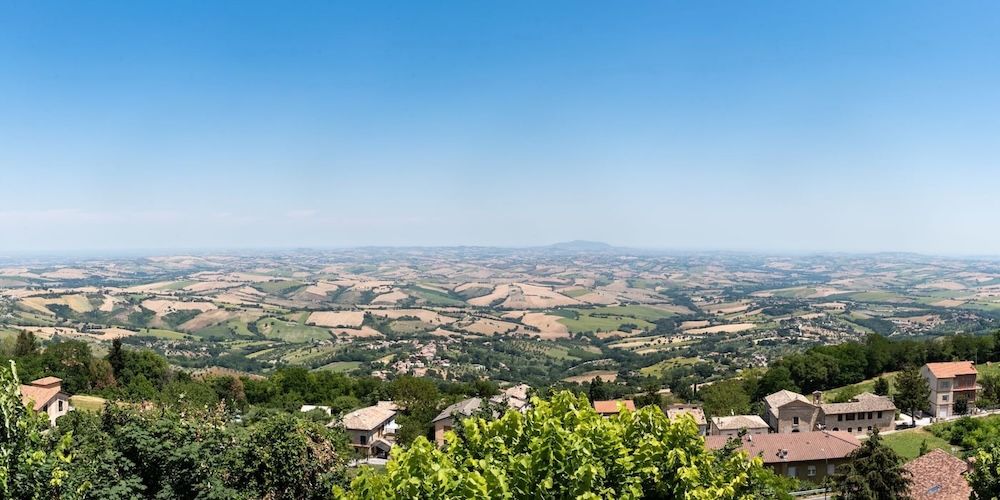
Cingoli is a truly unique and fascinating town, as it brings you into the heart of a special landscape.
Its compact historic center invites you to wander through cobbled alleys that suddenly open into small squares surrounded by porticoes and ancient stone buildings, where you can truly breathe in a timeless atmosphere.
Churches and works of art convey the town’s cultural depth, although its extraordinary panoramic views remain the most distinctive feature, with magnificent vistas over the Marche hinterland that strengthen the connection with the surrounding nature and landscape.
This is why Cingoli has been included among the Luminous Destinations 2026, a recognition that celebrates places distinguished by a more conscious and sustainable approach to tourism, where the enhancement of the territory does not rely on spectacle, but on its true identity.
It’s a choice that places at its core the balance between landscape, culture, and community, and acknowledges the town’s ability to offer an authentic experience, deeply rooted in its history and traditions.
Here are our stops to unveil the secrets of Cingoli:
- Exploring the historic center;
- The natural landscape of the area;
- Must-see treasures;
- Daily life and local events;
- How to reach the village.
A walk through the historic center of Cingoli
To explore Cingoli’s main historical and cultural landmarks, start at Piazza Vittorio Emanuele II, the true heart of the town, where the State Archaeological Museum is located inside the Town Hall building.
Continuing along Corso Garibaldi, the main street of the historic center, you reach the Castiglioni Palace, a residence linked to Pope Pius VIII and now a house-museum that preserves original rooms, furnishings, and traces of the family’s history.
At the end of the street, turning left leads you to the evocative Porta Pia, one of the ancient gateways to the historic center, which still retains the original character of Cingoli’s defensive system.
To complete your walking itinerary through the town, head back along Via Roma until you reach the panoramic terrace dedicated to Titus Labienus, a 1st-century BC Roman general associated with Julius Caesar’s military campaigns. The statue overlooks one of the most scenic spots in town, a terrace with breathtaking views over the green hills of Le Marche.
Cingoli beyond the village: trekking and adventure in the nature of Le Marche
Outside the historic center, Cingoli opens up to a landscape shaped by nature and outdoor activities. You can explore it on foot, following the trails that descend from the town toward the surrounding hills and wooded areas, or take on longer trekking routes in the Monte Nero area and the Bosco delle Tassinete.
Another option is to explore the area by bicycle along the scenic roads that run across the hills and descend toward the Musone valley.
Among the most interesting destinations is Lake Cingoli (or Lake Castreccioni), a green oasis just a few kilometers from the town and one of the largest artificial reservoirs in the Marche region. It’s the ideal place to spend a few relaxing hours or to enjoy water sports such as kayaking and canoeing.
Here you will also find a well-equipped Adventure Park that offers a great experience especially if you are traveling in Italy with family.
The artistic treasures that tell Cingoli's history
After experiencing the atmosphere of Cingoli's historic center and exploring the natural beauty surrounding the "Balcony of the Marche," it's time to discover the landmarks that reveal the town's rich history and cultural identity.
One of the highlights is the Archaeological Museum, whose remarkable collection traces the area's development from prehistoric times through the Roman era. As you explore its exhibits, you'll travel from the Paleolithic period to the Roman era, passing through artifacts from the Piano di Fonte Marcosa site, one of the most important local settlements dating back to the Bronze Age.
Another must-see is the Church of San Domenico, home to Lorenzo Lotto's monumental Madonna of the Rosary, painted in 1539 and widely regarded as one of the Renaissance master's finest works. Following the 2016 earthquake, the painting was moved to the Town Hall, where it is currently on display.
Just a short walk away stands the Cathedral of Santa Maria Assunta, built during the 17th century and elevated to cathedral status in the 18th century. Its imposing façade overlooks one of Cingoli's main squares and reflects the important role the town played for centuries in the religious history of the Marche region.
Squares and local events: where the village comes to life
Beyond its artistic and historical landmarks, Cingoli also reveals its character through the public spaces where everyday life unfolds.
Piazza Vittorio Emanuele II is the heart of the town, serving as both a gathering place for residents and the setting for several of the historic center's most important buildings. Throughout the year, it hosts markets and community events that continue to make the square the social hub of local life.
Just outside the historic center, the broad green spaces of Viali Valentini and Piazzale Cipolloni become the focal point of many of the town's major celebrations. During festivals, they fill with historical parades, traditional games, and costumed reenactments.
One of the most anticipated events is "Cingoli 1848," an annual living history festival that transports the town back to the 19th century through performances, period costumes, and reenactments inspired by everyday life in the 1800s.
Toward the Balcony of the Marche: how to get to Cingoli
Cingoli is located in the inland area of the Marche region, in the province of Macerata, in a position that is easily accessible yet still away from the main tourist routes.
The most convenient way to reach it is by car, which gives you the freedom to explore the surrounding countryside and nearby villages at your own pace.
If you are traveling by air, the two main airports to consider are Ancona-Falconara Airport, the closest and primary airport in the Marche region, and Perugia Airport, a smaller airport that offers a limited number of domestic flights and seasonal low-cost international connections.
By train, you can reach Ancona or Jesi stations, both well connected along the Adriatic rail line, both well connected along the Adriatic rail line, and then continue by bus or rental car, since Cingoli is not directly served by rail.
About the author
Written on 04/07/2026
Alessandro Savino
SEO Copywriter & web editor: I love transforming my passion for writing into engaging narratives, creatively and precisely exploring the beauty and complexity of our wonderful country.

Alessandro Savino
Perched among gently hills, Cingoli wins you over with breathtaking views, the treasures of its historic center and an authentic, relaxed pace.