

Dear traveler,
We have something to tell you, and we won’t beat around the bush.
Italy is not your playground.
Whoever you are, wherever you come from — whether from halfway across the world or from Italy itself — when you choose to travel here, remember that you are a guest.
No village, city, valley or beach exists for you to photograph, post on Instagram or experience on a tour. Every place has a history and an identity. People lived there before you arrived. People live there now. And people will continue to live there long after you have gone home.
Before it became the destination you chose, it was someone’s home. Before it became the experience you came to have, it was a community.
We are sharing this message today, on World Tourism Day, because at Visit Italy we feel a responsibility to take part in the conversation honestly and independently — even when that means confronting its more uncomfortable and complex sides.
When tourism becomes a community issue
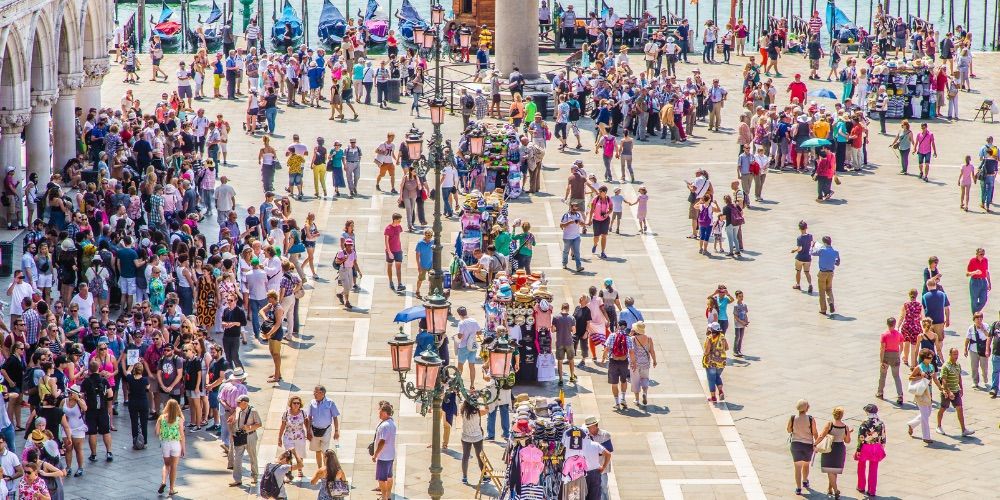
Tourism has long been more than an economic asset. It has become a social, environmental, cultural and political issue, particularly in places where the line between welcoming those who arrive and protecting the lives of those who stay has become increasingly difficult to draw.
Spain is perhaps the clearest example in Europe. For years, cities and destinations under intense tourism pressure have been grappling with housing access, changing neighborhoods, the use of public space and the coexistence of residents and visitors.
Over the past summer, the issue quite literally exploded across Europe, with anti-tourism protests unfolding from Mallorca to Venice.
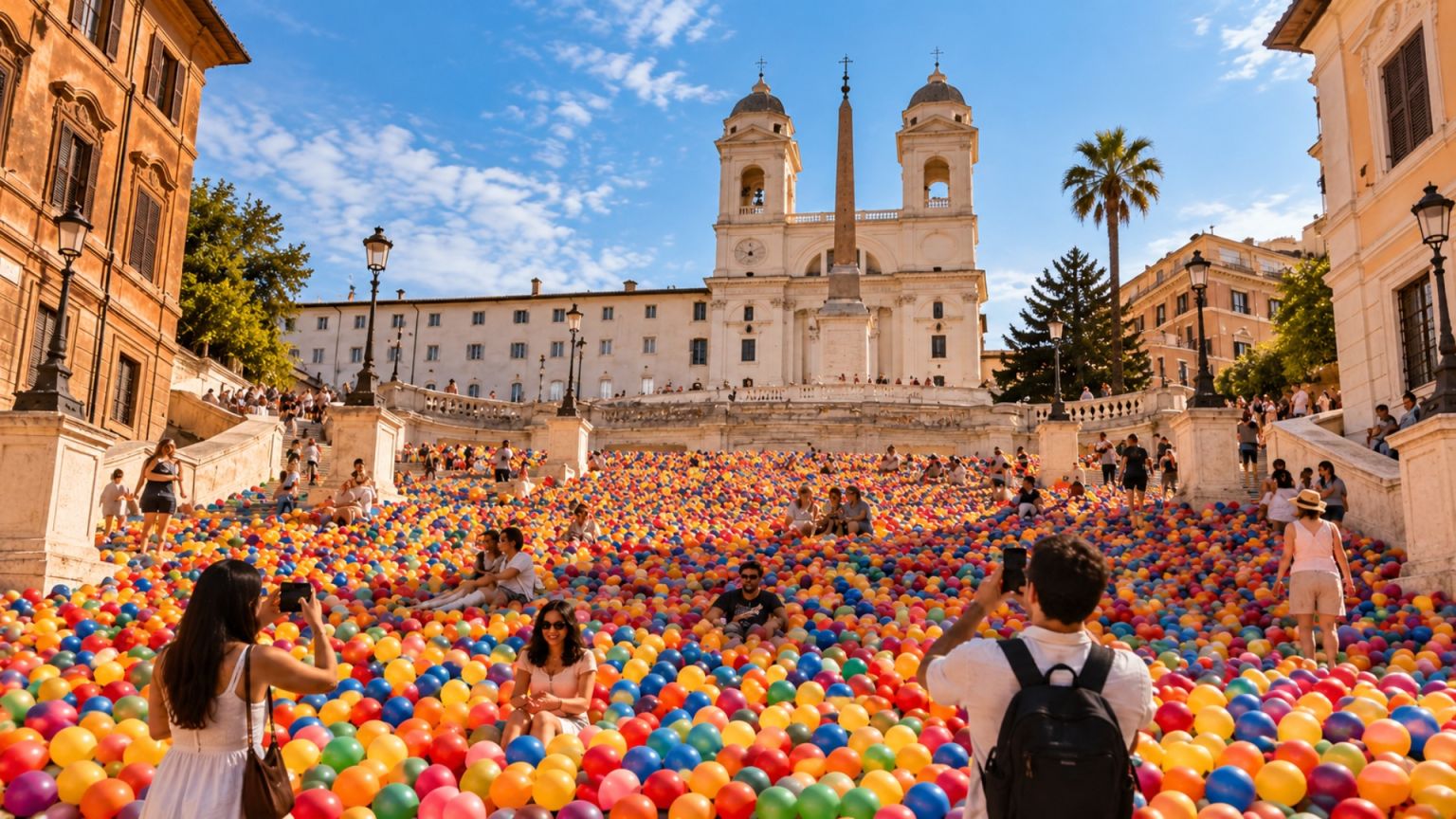
Protests continue to emerge, including recent symbolic attempts by residents to reclaim public spaces. They speak to how difficult it has become to strike a balance between our freedom to travel and people's ability to continue living in the places we visit.
And that tension forces us to ask a deeper question.
What kind of relationship have we built with the places we travel to?
Travel in the Checklist Era
Travel has never been easier. You can see a destination on TikTok, save it, book a flight, choose where to stay, buy your museum tickets and even know exactly where to stand for the perfect sunset photo — all before you have left home. And that is an extraordinary thing.
But there is a paradox: the more accessible the world becomes, the more we risk treating it as something to consume.
A place we see online goes on the list. We get there, photograph it, tick it off and move on to the next one. Sometimes we are no longer looking for something we have never seen before. We are looking for the real-life version of an image we have already seen.
The restaurant has to have a table when we want one. The village has to feel authentic, but still be easy to reach. The view has to be clear for the photograph. The museum has to fit neatly into the itinerary. The city has to accommodate the amount of time we have decided to give it.
This is what we have called the Checklist Era: a way of traveling in which the experience itself risks becoming a collection of things seen, photographed and ticked off.
And the numbers suggest this is more than just a feeling. In Visit Italy’s 2025 analysis of summer travel, 75.8% of travelers planned their trips according to patterns associated with this mindset, while 71% said social media had influenced their choice of destination.
That does not mean Instagram or TikTok are the problem. Nor is there anything wrong with wanting to see the Colosseum, photograph Positano or finally stand in front of a work of art you have waited a lifetime to see.
The problem begins when having been somewhere becomes more important than having truly experienced it. When access is mistaken for ownership. When, almost without noticing, we begin to expect places to adapt to us.
Are “bad tourists” the problem?
This summer in Italy, we also saw some of the most extreme expressions of that loss of awareness.
In Cortina, local authorities introduced an ordinance to tackle camping and disrespectful behavior in public spaces, from the steps of monuments to streets in the town center. On the Asiago Plateau, a couple turned a British war cemetery into a picnic spot, spreading out a blanket on the grass and stopping to sunbathe.
The Italian newspaper Il Messaggero has even created a section on its website called “Turisti Cafoni” — roughly, “Badly Behaved Tourists” — collecting stories of this kind.
These are extreme cases. And they are easy to be outraged by. But it would be too easy to conclude that the problem is simply a handful of badly behaved travelers.
These incidents are the most visible expression of something deeper: our ability — or inability — to remember that the place we are visiting does not exist for the sake of our experience.
The Colosseum is not a backdrop for a selfie. Venice is not a film set. A tradition is not passed down for your entertainment. A beach is not at your disposal because you paid to get there.
Before they are destinations, they are places.
Why are we the ones telling you this?
Does it seem strange to hear this from us? After all, we are called Visit Italy. The invitation is right there in our name.
Every day, we tell stories about Italy. We showcase destinations, suggest itineraries, share stories and help inspire the desire to travel. So we cannot talk about the consequences of tourism as though we were simply watching from the sidelines.
For years, we have worked to promote a more conscious form of tourism — one that is environmentally sustainable and capable of creating value for local communities. We have chosen to shine a light on lesser-known destinations, tell the stories of places beyond the most traveled routes and help spread international attention beyond destinations already under intense pressure. That idea is at the heart of projects such as 99% of Italy. It is part of the philosophy behind Luminous Destinations.
But over time, we have come to understand that the issue runs deeper. It is also about the culture of travel and the way we choose to inhabit a place, however briefly.
We can suggest a different destination, take you away from the crowds and introduce you to a village you have never heard of. But if all we change is the destination, without changing the way we travel, we risk simply moving the problem somewhere else.
For years, we have tried to shine a light on where to travel. Today, we also feel a responsibility to talk about how we travel.
Because changing the destination is not enough if we do not change the way we experience the places we visit.
Dear future traveler
So what can we do differently?
Here is a small set of ideas to take with you on your next journey. Nothing revolutionary — just a few prompts that we hope might spark some reflection and help you make more conscious, respectful choices.
Stay longer.
Give a place the time to become more than the sum of its main attractions. Not everything needs to be seen in a day or squeezed onto a checklist.
Go deeper.
Look beyond what you have seen on social media, the attractions waiting to be ticked off and the photograph you want to take home. Try to understand where you are. Listen to its stories, learn about its traditions, talk to the people who live there. Leave room for what you did not plan.
Travel off-season.
If you can, avoid concentrating your trips in the busiest periods. You will discover different rhythms and help ease the pressure of tourism across the year. Italy does not exist only in high season.
Buy local.
Every trip is also an economic choice. Where you sleep, where you eat and what you buy all shape how much of the value generated by tourism actually stays within the local community.
Be curious, not entitled.
Do not expect everything to be built around your habits. Not everything has to speak your language, be available exactly when you want it or work the way it does at home. Part of traveling is stepping into someone else’s world for a few days — not asking that world to adapt to yours.
Respect what you find.
A beach, a mountain, a church, a village festival, a neighborhood: these are not products you have purchased. Having access to a place does not mean owning it.
And perhaps most importantly:
Be mindful of the footprint you leave behind.
Travel has an impact. We have to be honest about that. If you have the privilege of being able to travel, keep it in mind. Every choice leaves a mark: how you move around, where you stay, what you consume, how you behave and how you engage with the place welcoming you. Being conscious of that footprint means trying to make it lighter, especially when traveling through fragile ecosystems and communities.
We still want you to discover Italy. All of it.
We do not want this editorial to be read as an invitation to travel less.
That would be a paradox. And it is not what we believe.
We still want you to discover the Italy we know: not only Rome, Florence, Venice or the Amalfi Coast, but its mountains, small towns, suburbs, islands, traditions, food and people — everything that makes this country infinitely more complex than the images through which it is so often portrayed.
But precisely because we want to show you that Italy, we also have to ask you to help us do more than simply consume it.
Come and just live. Get lost, learn a few words you do not strictly need, talk to someone, change your plans, accept that not everything has to be perfect, available or designed around you.
And when you find somewhere extraordinary, remember: the most important thing is not whether you were the first to discover it. It is making sure you are not the last to find it that way.
About the author
Written on 27/09/2026
Benedetta Ricci
Head of Content for visititaly.eu. Passionate about art, books and hidden cafes where to have breakfast.

Benedetta Ricci
Today is World Tourism Day. To mark it, we’ve chosen to confront an uncomfortable but necessary question.