
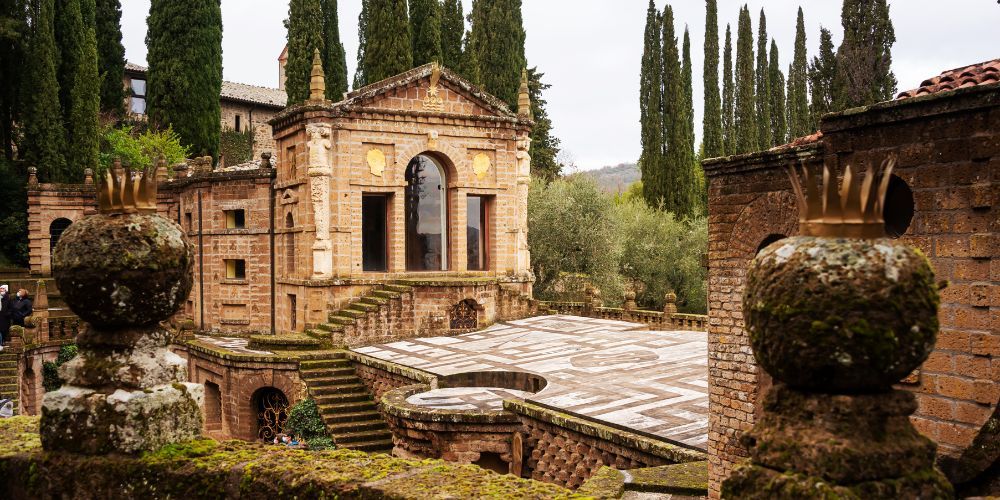

There's a place in Italy that looks like it escaped from a dream, and almost no one has heard of it.
Hidden among the wooded hills of Montegabbione, in the province of Terni, this extraordinary architectural complex combines a medieval Franciscan convent with Tomaso Buzzi’s unfinished “Ideal City.”
Buzzi was one of the most unconventional Italian architects of the 20th century and he worked on the project from 1958 to 1978. Buzzi conceived La Scarzuola as an allegorical journey, with each structure forming part of a larger symbolic composition, therefore his experiment is mainly founded on the juxtaposition of theatres, towers, temples and scaled-down versions of famous classical monuments, designed to be experienced rather than simply observed.
The Story Behind La Scarzuola: A Quick Recap
Long before Buzzi imagined his “Ideal City,” this secluded corner of Umbria was associated with Saint Francis of Assisi. According to tradition, Saint Francis built here a simple shelter in 1218 using the scarza, a marsh plant that gave the place its name.
The modest hermitage later grew into a Franciscan convent, a much large complex that developed around the site, including the church where you can admire a rare fresco dating from the first half of the 13th century depicting Saint Francis in levitation.
The religious foundation stayed active for centuries, until religious suppressions under Napoleon left it largely abandoned. In 1956, Tomaso Buzzi acquired the former Franciscan convent and the surrounding property to do more than simply restoring the historic complex: he began building a completely new construction alongside it.
Buzzi designed and slowly shaped his theatrical and surreal city in the former convent garden and lived at “La Scarzuola” until 1981, continuing to work on the project until his death. The complex remained unfinished until his nephew, Marco Solari, resumed Buzzi’s work to preserve his uncle’s vision.
The Vision of Tomaso Buzzi
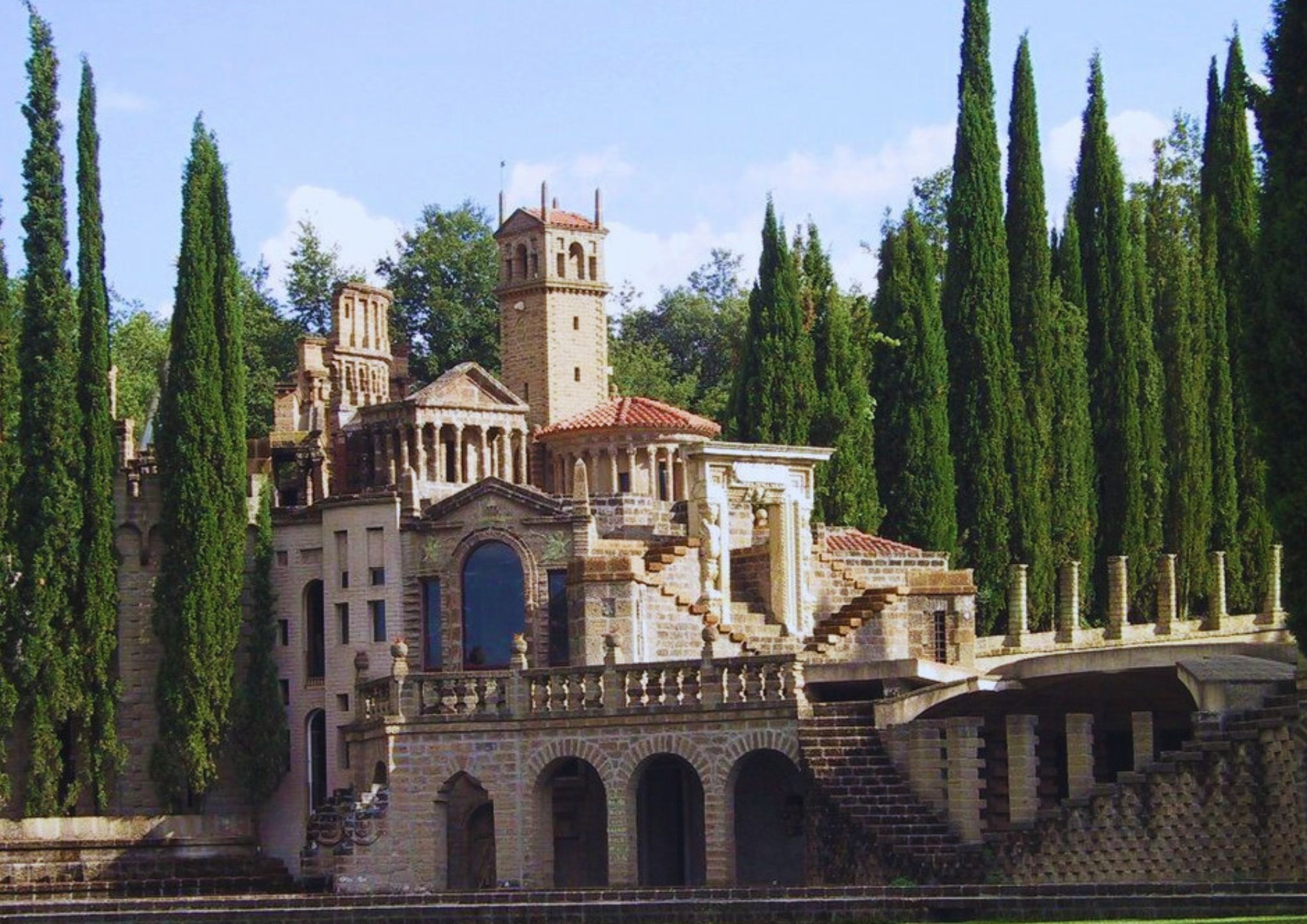
“La Scarzuola” was conceived as a symbolic city, a place where architecture could express ideas about human life, knowledge, spirituality, art and imagination. Its seven theatres form the core of the complex, while the Acropolis rises above them as its most prominent and recognisable feature.
Buzzi’s architectural language embrace deliberate disproportions, complicated staircases, unexpected combinations and buildings that seem to contradict the rules of traditional architecture. That is why the city can be perceived as incomprehensible at first: because it was never envisioned as a straightforward collection of buildings, but as an artwork whose meaning is expressed through the relationship between spaces and perspectives.
Here's a quick preview of what Buzzi’s creation includes:
• The old convent church;
• Theatrum Mundi, the Bee Theater, and the Acropolis;
• The Tower of the Guardian Angel and of Time;
• The Temple of the Giantess and Mother Earth;
• Casa Cubo;
• Jonah's Whale, the Tower of Solitude, and the Door of Love;
• The Green Theatre and the Temple of Apollo.
The Theatrum Mundi, the Bee Theatre and the Acropolis
At the centre of the city is the Theatrum Mundi, a large amphitheatre with a curved seating area shaped as a labyrinth and organized around a stage topped by an enormous eye overlooking the audience. Behind that eye, hidden from view, Buzzi built his own private study, equipped with a two-way mirror that let him watch the outside world without being seen. Facing the eye, below the sun and moon motifs that runs alongside the stage, a horned face represents “the spectator”, a deliberate reversal of the usual relationship between performer and audience.
Beside the stage stands the Bee Theatre, the only covered theatre in the complex, recognisable by the bees, stars and honeycomb cells decorating its façade.
On the other side, right near the Gate of Heaven, rises the Acropolis, a hill filled with miniature monuments of the Parthenon, the Colosseum, the Pantheon, the Temple of Vesta, a triumphal arch and several towers, arranged by theme: buildings representing the virtues near the top, palaces for nobles and artisans just below. Many of these structures are hollow inside, creating a maze of staircases and viewpoints where the same buildings seem to overlap and shift depending on where you stand.
The Tower of the Guardian Angel and Time
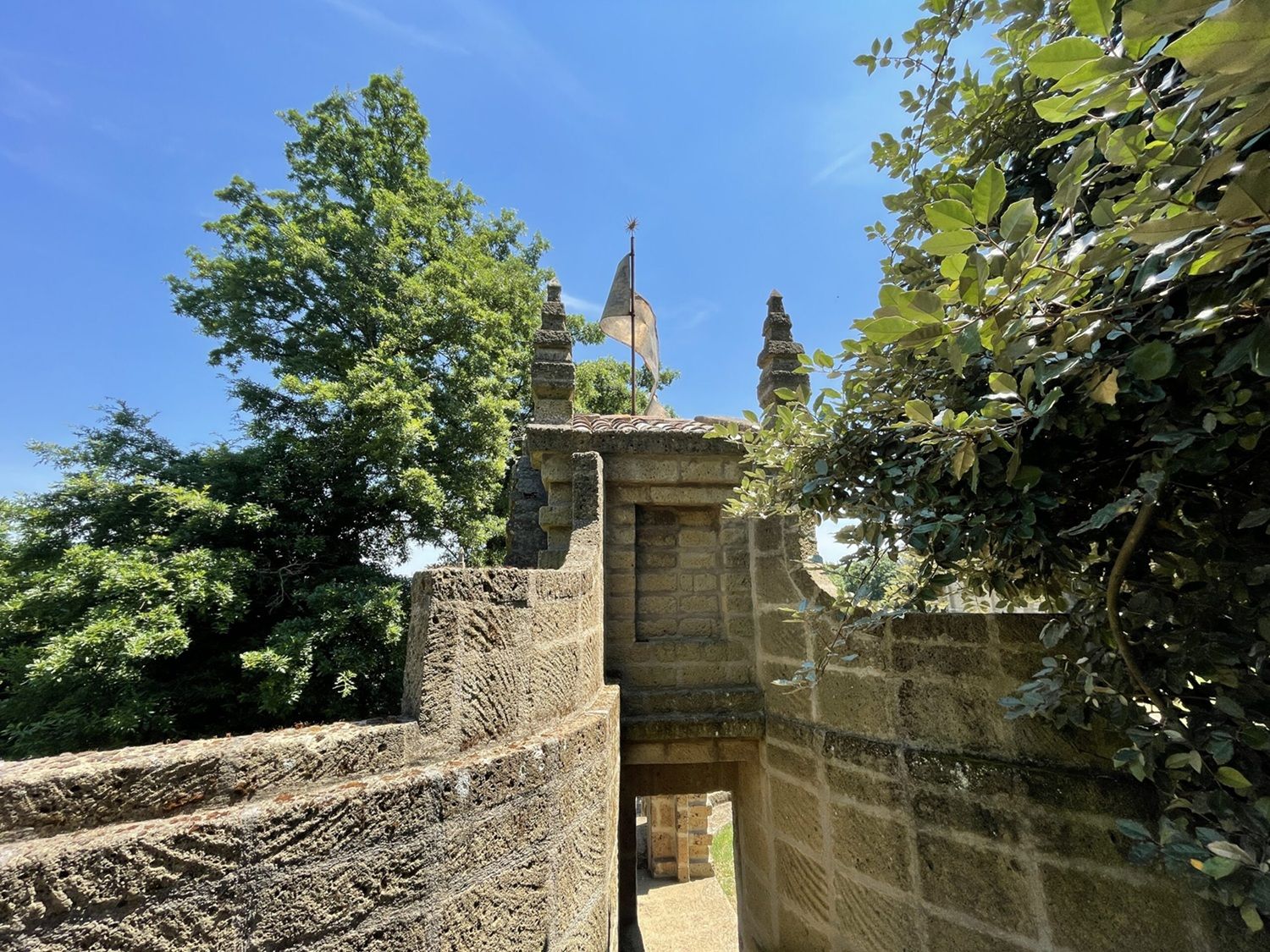
Further along the route stands the Tower of the Guardian Angel and Time, which brings the themes of protection and the passage of time to the surface and add another layer to the whole. A guardian angel may be seen on the tower's crimson entrance and again close to the summit, next to a big clock with a spiral-shaped face that is positioned just underneath the tower's dome and pinnacles.
The Giantess and Mother Earth
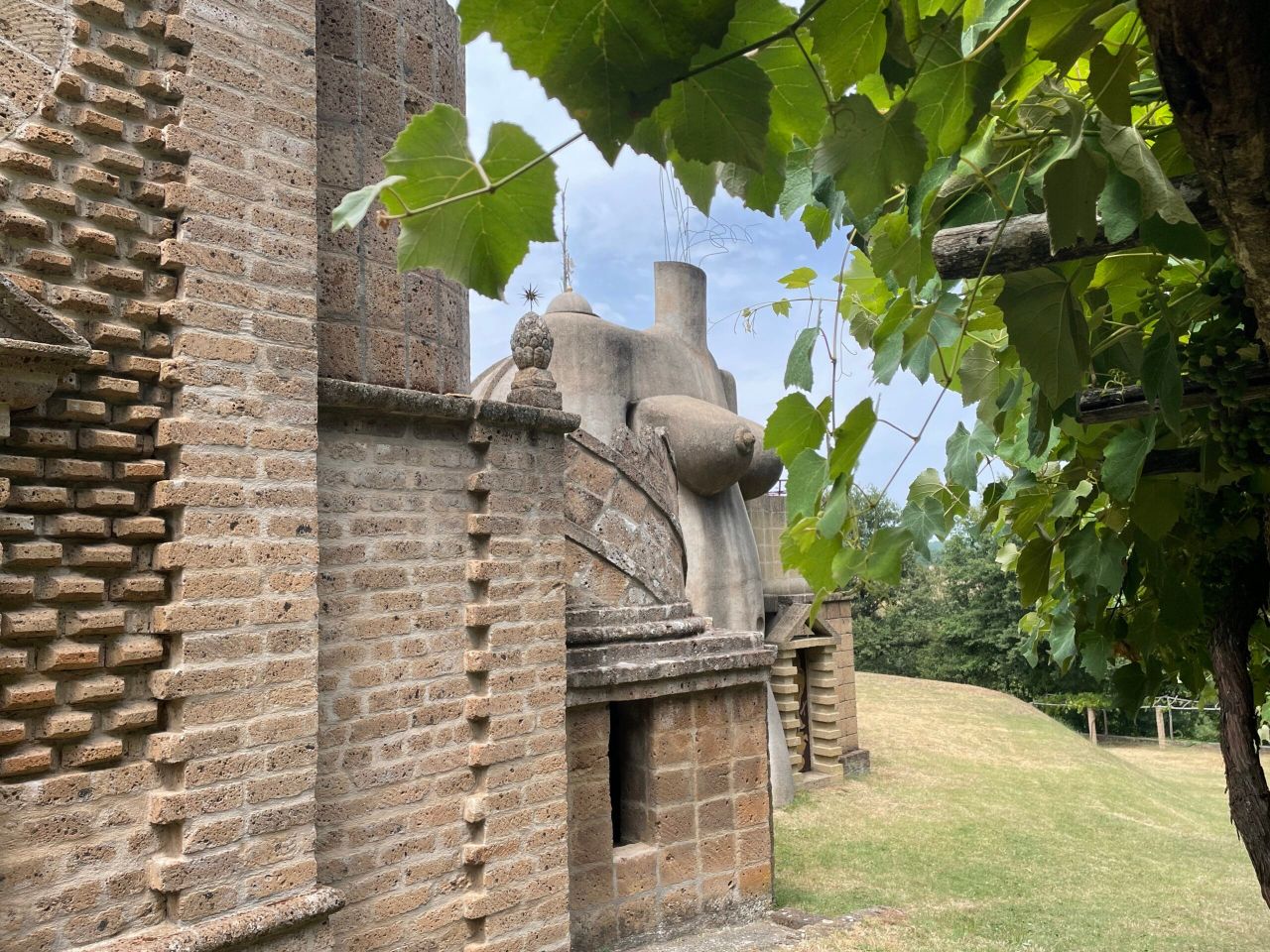
Among the many unusual at La Scarzuola is the Temple of the Giantess and Mother Earth stands out for its imposing female form with a full torso but no head or legs and metal wires rising from her neck, devised to signify magma, the fused substance of the earth's core.
Inside, hidden across several small rooms on different levels, the temple offers a meaningful and visual representation of the passage of life, tracing back to conception and birth. Just beyond, the route passes the Theatre of the Human Body before reaching the areas dedicated to Science and Technology on one side, and Art and Imagination on the other.
Casa Cubo
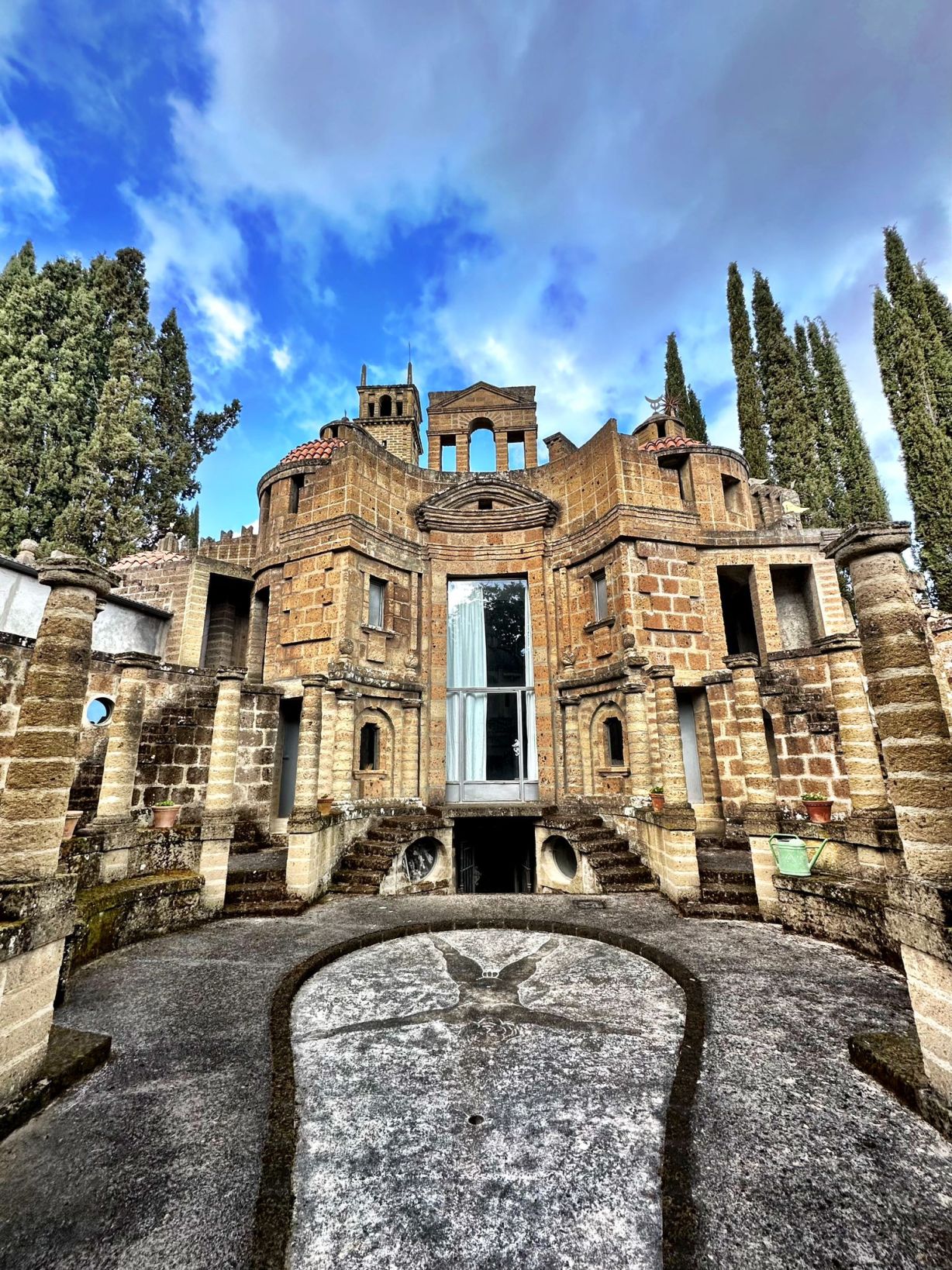
Set apart from the rest, Casa Cubo looks almost unexpectedly plain after the density of the Acropolis and the theatres: a square, stripped-down structure broken only by a door topped with a triangular pediment and a single square window. Its form has been read as an athanor, an alchemical furnace used in the pursuit of transformation, which increases the sense of mystery and magic associated to this place.
Jonah's Whale, the Tower of Solitude, and the Door of Love
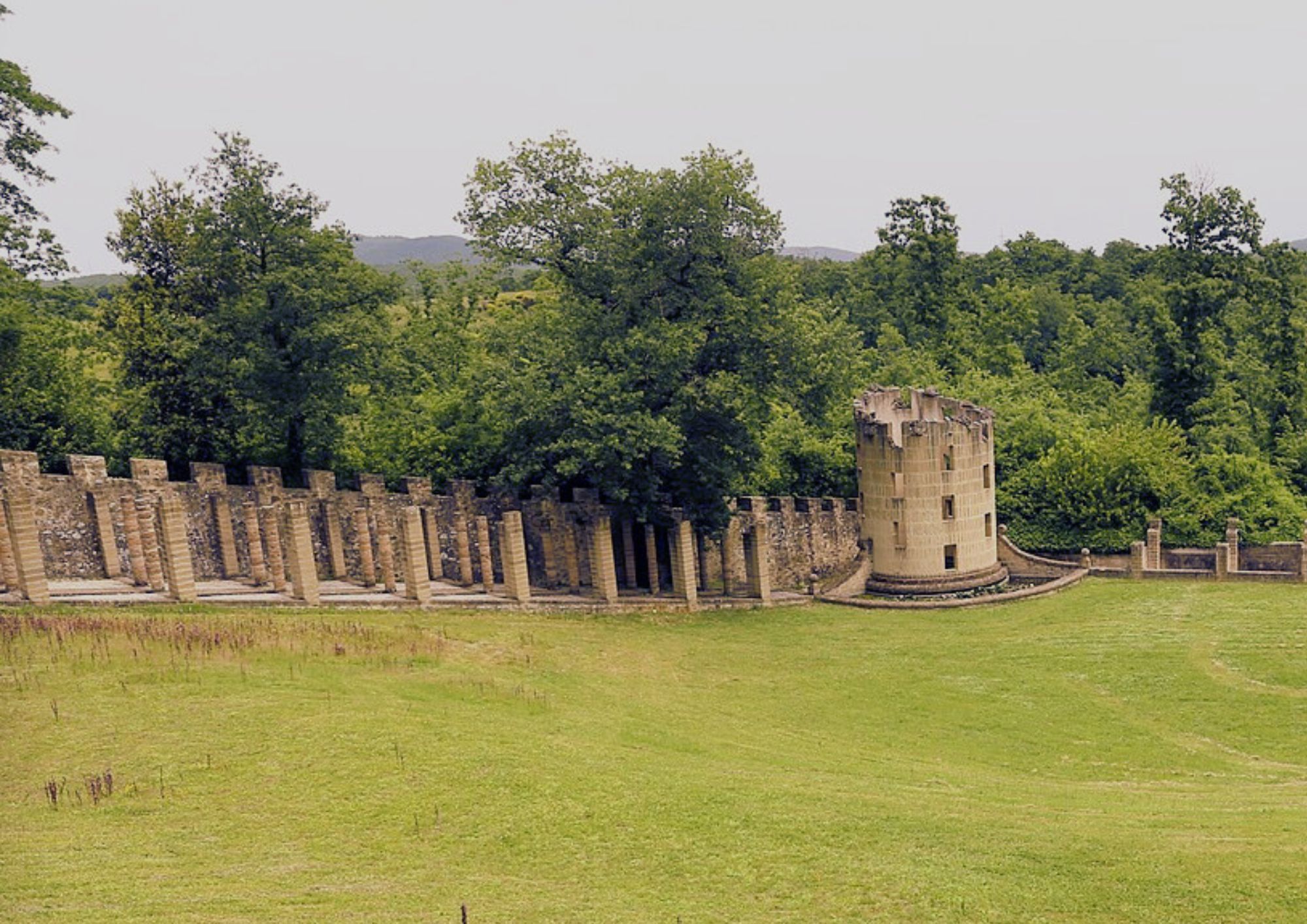
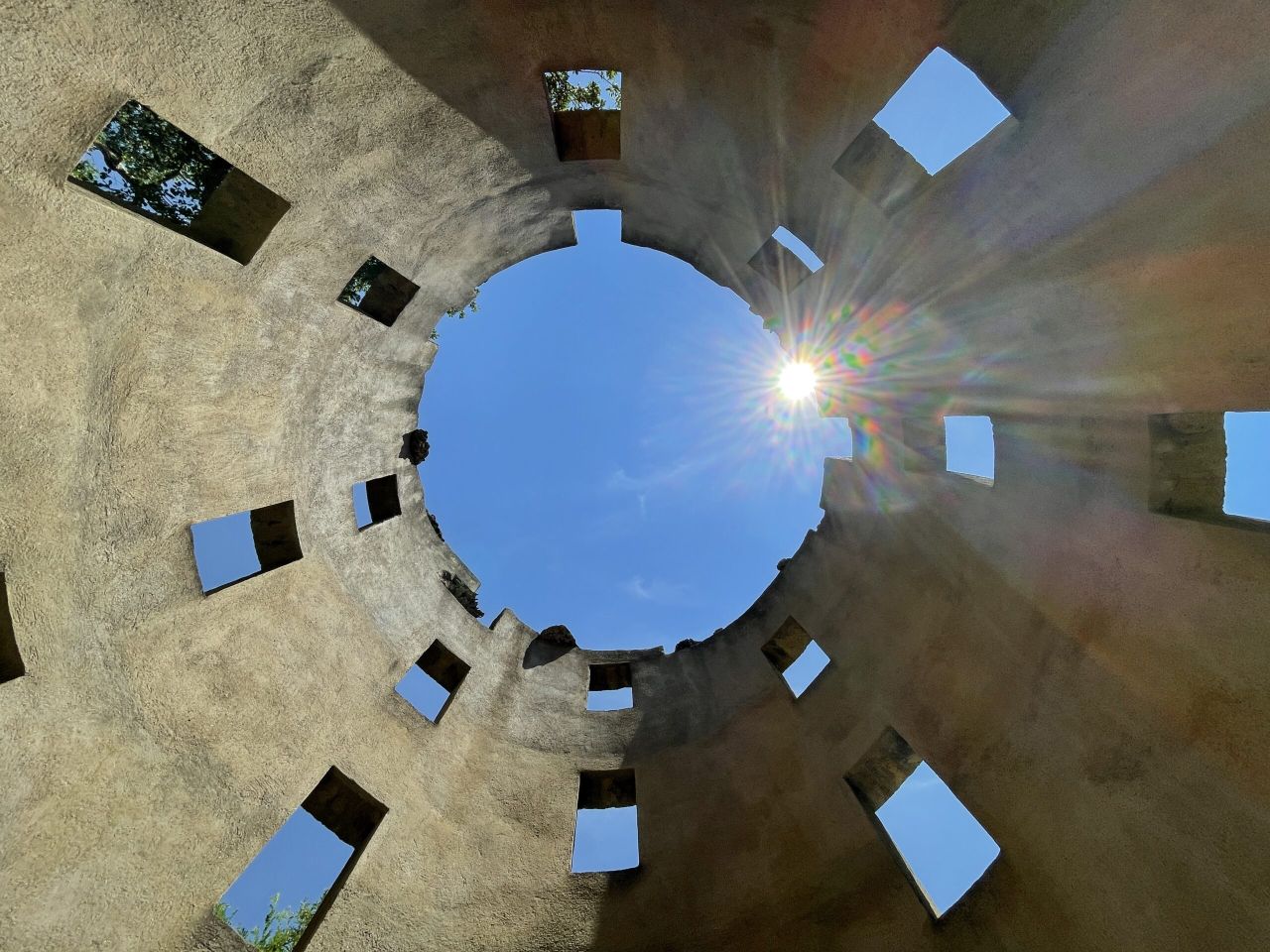
The journey continues on the far side of the Theatrum Mundi, opening with Jonah's Whale, a stone structure surrounded by tufo boulders shaped to look like waves. Passing through it leads to the Tower of Solitude and Meditation, a roofless tower pierced with windows, built for introspection and reflection.
From there, a colonnaded staircase, referred to as “the Staircase of Life”, climbs toward the Door of Love, marked with a gilded inscription: Amor vincit omnia, a latin sentence that means "Love conquers all."
The Green Theatre and the Temple of Apollo
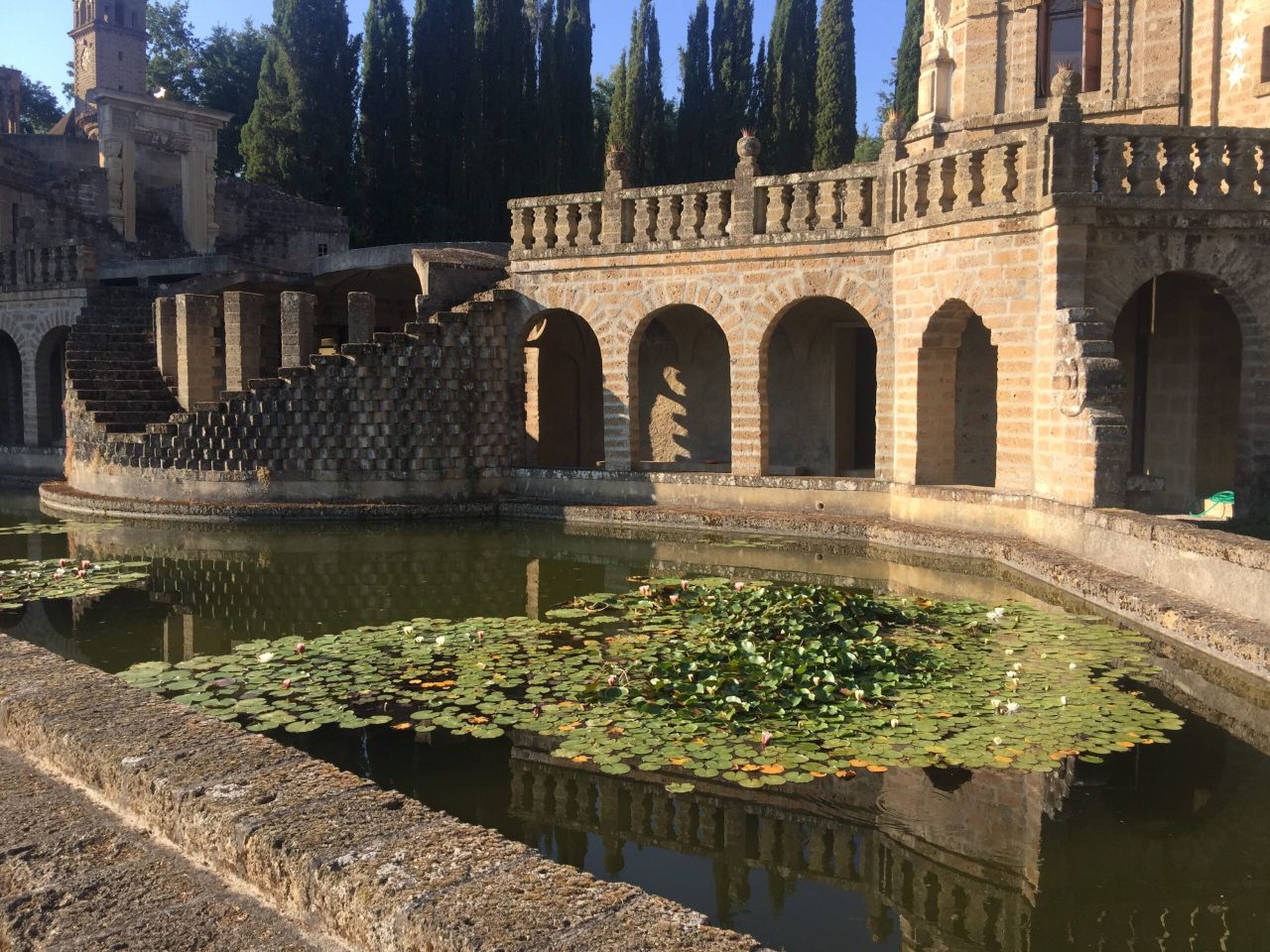
The path will then lead you to the Green Theatre, a hillside space bordered by the colonnade running from the Door of Love to Jonah's Whale on one side, and by the back of the Theatrum Mundi on the other, beneath which a small pool and a portico give the area its other name, the Water Theatre, completed with the Nymphaeum of Diana and Actaeon, also known as the Nymphaeum of the Hours, due to the presence of 24 columns. Here, you’ll also find the beautiful Temple of Flora and Pomona an octagonal domed pavilion, which brings a mythological note to the venue.
The visit ends at the Temple of Apollo, a roofless circular space centred on a cypress tree once struck by lightning, which Buzzi considered the element closest to God. Gold stars line the temple's upper frieze alongside carved symbols like eyes and stars. From here, a short passage reveals the Tower of Babel and the Staircase of the Seven Octaves, a nod to how important music was to Buzzi, its glass pyramid topped with a metal star.
Visiting La Scarzuola: Practical Information

La Scarzuola is privately managed and can only be visited with a guided tour and advance reservation. The official booking system currently lists adult tickets at €15 for visitors aged 15 and over, while children up to 14 enter free. You can pay online by card or PayPal, or choose payment in cash on site.
Visits take place in small groups and are generally held in Italian (you might want to check in advance if you need an English-speaking guide). The terrain can be uneven, so comfortable shoes are recommended. The official terms also note that parts of the route are uneven and that visitors should follow the guide's instructions.
The visit lasts roughly one and a half hours, although the exact duration can vary depending on the tour, and includes almost entirely outdoors as the interiors of the buildings are not open to visitors.
Fair warning: your guide will likely be Marco Solari himself, known for a blunt, no-filter style that some visitors love and others find a bit much. Reviews are split, but almost everyone agrees it's memorable.
Because La Scarzuola is in a remote and not so easy to reach location, arriving by car is the easiest option. The final approach includes an unpaved road, so allow some extra time and follow the property's directions rather than relying blindly on your navigation app. The site itself sits in the hamlet of Montegiove, in the comune of Montegabbione, Terni province, about an hour south of Perugia - and since there's no public transport out this way, a car really is the only practical option.
Nearby Attractions in Umbria
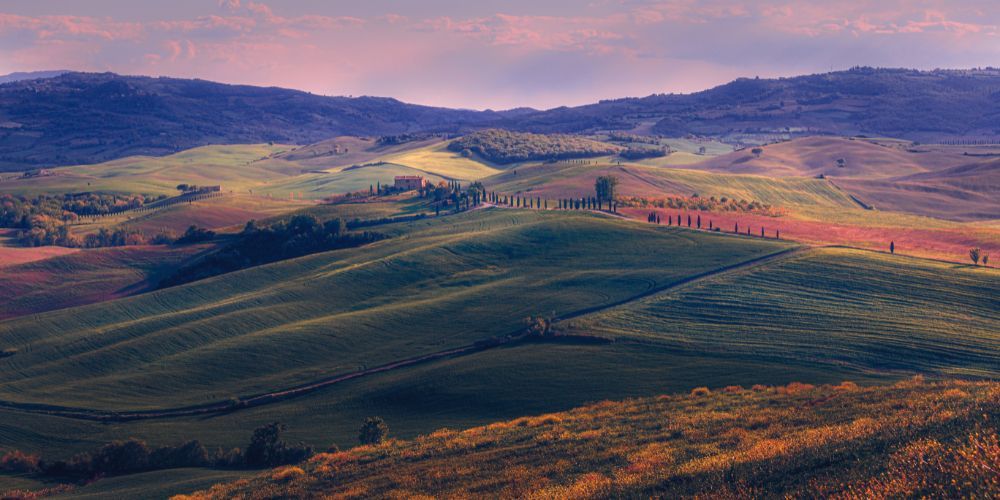
La Scarzuola is in western Umbria, close to the border with Tuscany and within easy reach of several other interesting destinations.
Orvieto is one of the most obvious additions to an itinerary. Its dramatic hilltop setting, Gothic cathedral and underground tunnels make it a natural contrast to the surreal architecture of La Scarzuola.
Lake Trasimeno is another option if you want to combine the visit with landscapes and smaller lakeside towns.
For a longer road trip, you can also cross into Tuscany and explore the nearby Val d'Orcia, where rolling hills and historic villages offer a completely different kind of landscape.
La Scarzuola can therefore work particularly well as part of a wider road trip through Umbria and southern Tuscany rather than as a destination visited on its own.
Discover Passignano sul TrasimenoWhat is La Scarzuola?
La Scarzuola is an architectural complex in Montegabbione, Umbria, combining a historic Franciscan convent with the Ideal City created by architect Tomaso Buzzi between 1958 and 1978. The complex includes seven theatres, the Acropolis and a series of symbolic and surreal architectural structures.
Can you visit La Scarzuola?
Yes. La Scarzuola can be visited, but only through a guided tour with advance booking. It is privately managed rather than operating as a conventional public museum.
Why is La Scarzuola famous?
La Scarzuola is famous for its surreal Ideal City, designed by Tomaso Buzzi as a theatrical and symbolic architectural complex. Its Acropolis combines references to famous classical monuments with staircases, towers, theatres and unexpected architectural forms, creating a place that seems to shift depending on where you stand.
Where is La Scarzuola?
La Scarzuola is located in Montegiove, a hamlet of Montegabbione in the province of Terni, western Umbria. It lies among the wooded hills near Orvieto and close to the Tuscan border.
Is La Scarzuola worth visiting?
If you are interested in unusual architecture, hidden places and destinations that require a little imagination to appreciate, La Scarzuola is one of the most distinctive places you can visit in Umbria.
It is not a conventional monument where you simply walk around and admire the scenery. The experience depends on the architecture, the symbolism and the story behind it. That is precisely what makes La Scarzuola so unusual.
About the author
Written on 09/10/2026
Adriana Errico
Writer

Adriana Errico
Discover La Scarzuola, a surreal place in Umbria filled with visionary architecture and enigmatic symbols.