

In partnership with

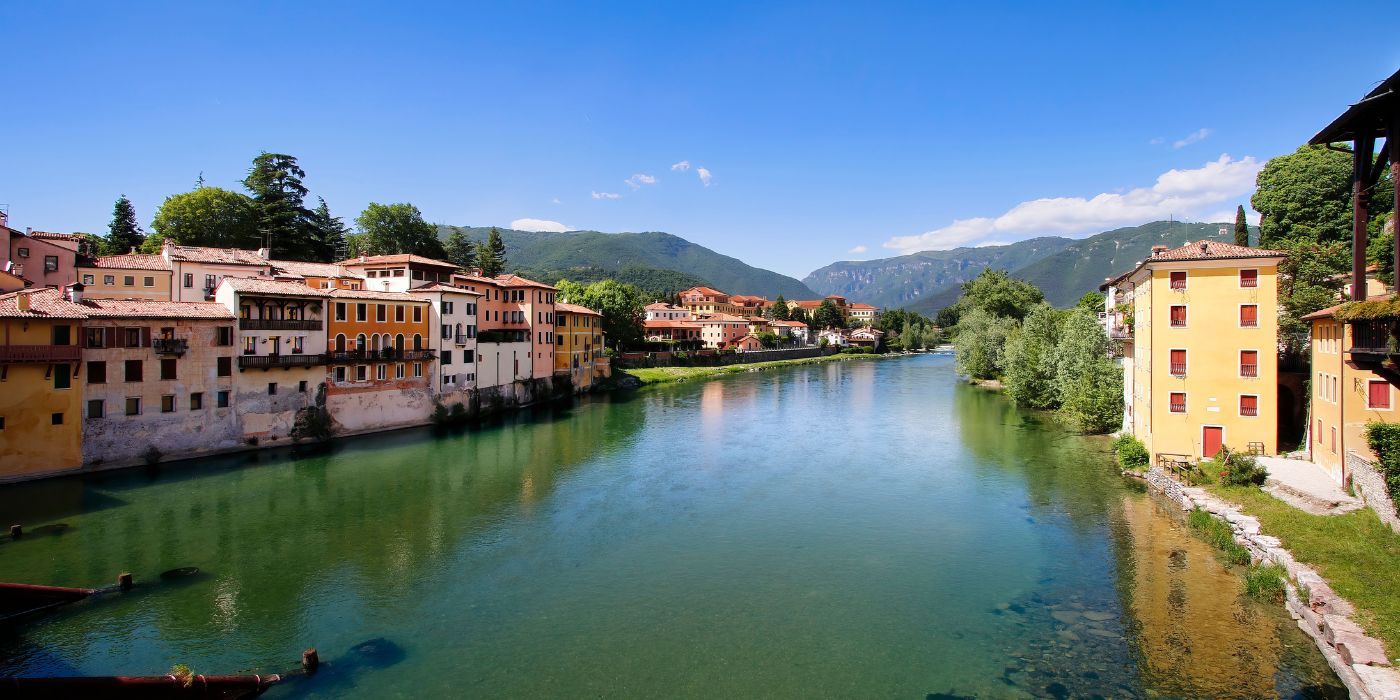
On the Ponte Vecchio in Bassano del Grappa, overlooking the waters of the Brenta River, a doorway leads into almost 250 years of Italian history: it belongs to Grapperia Nardini, the historic home of Italy’s oldest distillery, founded in 1779 by Bortolo Nardini.
Since then, seven generations of the family have succeeded one another in these same spaces, while Bassano, Italy and the way grappa is produced and enjoyed have all changed around them. Yet the Grapperia has never become merely a relic of the past: it remains a lively, authentic place where people still stop at the counter, connect with the city and experience a tradition that has continued for nearly two and a half centuries.
A visit to Distilleria Nardini takes you into the place where a new way of distilling and selling grape pomace spirit first took shape. Here, you can follow the story of a man who arrived in Bassano almost by chance and discover how his knowledge was passed down from one generation to the next without ever becoming frozen in time.
And, in the end, that long story returns in a glass of Grappa Nardini, tasted in the very place where it all began.

Distilleria Nardini at Bassano del Grappa, where it all began in 1779
Before the distillery, there was a journey. Bortolo Nardini was born in 1739 in Segonzano, in the Val di Cembra, an area where wine and distillation had long been part of everyday life. In the 18th century, it was common for distillers to travel from house to house with a mobile still, processing the grape pomace left over after winemaking.
Bortolo chose the same trade and eventually made his way to Bassano del Grappa.
According to the story handed down by the family, his stay in the town was unexpectedly prolonged by an accident. That unplanned stop, however, gave him the chance to get to know Bassano better and understand its strategic position along the route connecting the Valsugana valley with Venice.
In 1779, Bortolo Nardini purchased the Osteria al Ponte, today known as Grapperia Nardini, and permanently installed his still there. It marked an important change: instead of the distiller travelling to farmers with his equipment, the grape pomace was now brought to a fixed location to be processed and distilled.
This was the beginning of what is now considered Italy’s oldest distillery.
Bortolo called his spirit “Aquavite di vinaccia”, using the Latin-style spelling without the “c” and playing on an etymology that evokes both the “water of life” and the “water of the vine”. Behind that name lies a product deeply rooted in Italian rural culture: grappa was born from the ability to give new value to grape pomace, what remains of the grapes after winemaking, transforming it through the knowledge and craft of distillation.
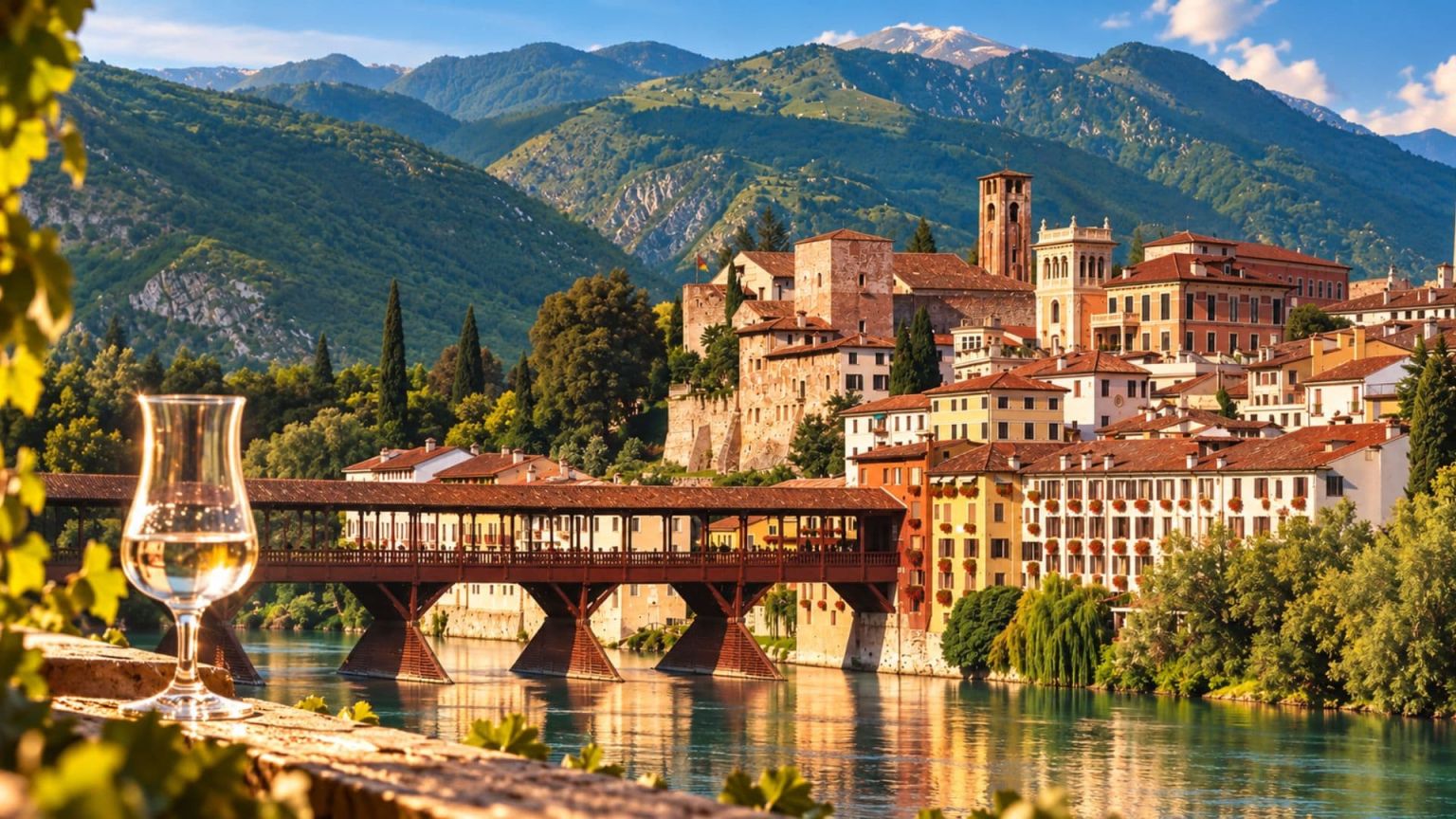
In Bassano, this traditional practice found a permanent home and began a journey that would continue for centuries. The historic Grapperia Nardini, listed among Italy’s Historic Establishments, still overlooks the Brenta beside the Ponte Vecchio and, for almost two and a half centuries, has witnessed generations of locals and visitors, changes in the town and transformations in society, while preserving its identity as a place for people to meet.
Seven generations and almost 250 years of Italian history
Founding a business in 1779 means witnessing, generation after generation, changes that reach far beyond the story of a single family enterprise.
When Bortolo opened the Osteria al Ponte, Italy did not yet exist as a unified nation. Over the following two and a half centuries, borders and society changed, industrialisation transformed the country, Italy was unified, two World Wars followed and then came the post-war years. Bassano itself lived through some of the most complex chapters in the country’s history, and yet Nardini has remained a family-run business since 1779.
That does not mean, however, that nothing changed. Each generation faced the same challenge: preserving what it had inherited while adapting it to a different world.
Across seven generations, a distinct form of Italian entrepreneurial culture emerges, built on the passing down of skills, knowledge and responsibility, but also on the ability to innovate without severing the connection with its origins. This remarkable longevity has also earned Nardini a place in Les Henokiens, the international association bringing together family businesses with more than two centuries of history.
At the Grapperia on the Ponte Vecchio, people still step inside, pause at the counter, meet someone and watch the Brenta flow just a few metres away. Here, memory continues to coexist with the everyday gestures of a place that remains deeply connected to its city.
How Grappa Nardini helped an Italian tradition evolve
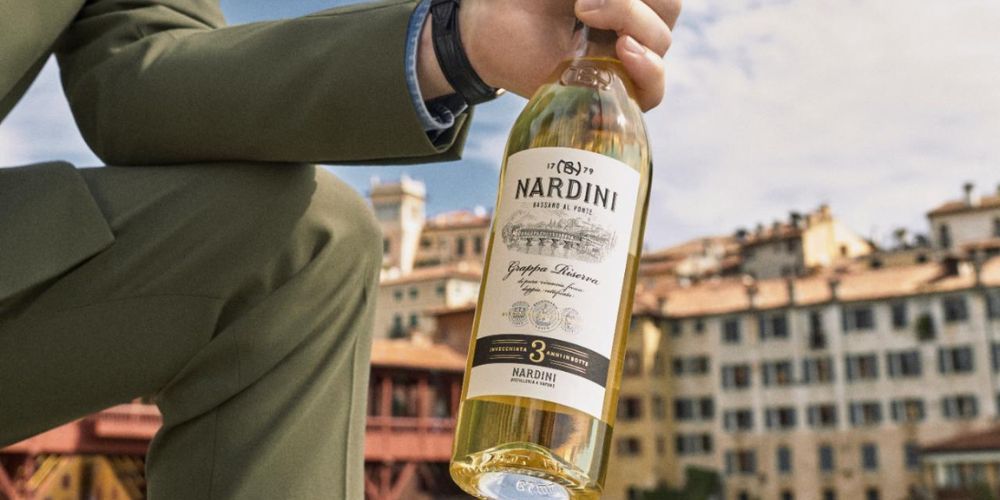
Grappa begins with a humble raw material: grape pomace, the skins and solid parts of the grapes left behind after winemaking.
For centuries, distilling it meant transforming what remained of the harvest into something new, drawing on knowledge rooted above all in the farming culture of northern Italy. Behind the spirit lay experience, a deep understanding of the raw material and the ability to control temperatures and timing.
The Nardini story shows how this practice evolved over time without losing touch with its origins. One of the key turning points came in 1860, when the family introduced steam distillation to replace traditional direct-fire stills. Steam made it possible to process the grape pomace without exposing it directly to the flame, allowing for greater control over the process and improving the quality of the final spirit.
The large copper vessels once used to store the distillate are still displayed today in the Grapperia on the Ponte Vecchio, offering a tangible insight into the evolution of the art of distillation through objects that formed part of that very history.
Further innovations followed during the 20th century, from Grappa Riserva aged in oak barrels to double rectification and, in 1963, vacuum steam distillation, developed to work at lower temperatures and better preserve the characteristics of the raw material.
Yet more important than the sequence of techniques is what they all have in common: for Nardini, passing down a tradition has never meant allowing it to stand still.
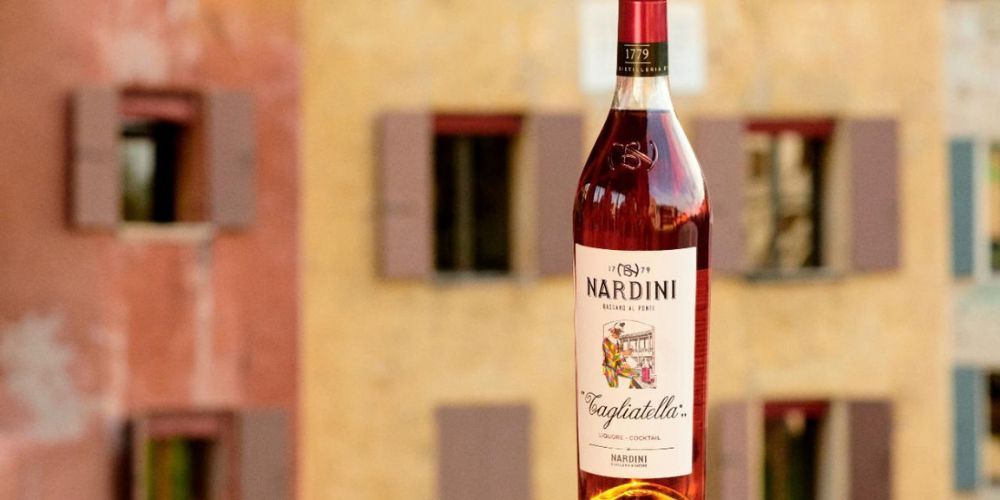
That same spirit has more recently led the company to explore new ways of enjoying grappa, including its use in cocktails, bringing a spirit deeply rooted in Italian culture into contemporary drinking habits.
Alongside grappa, some other specialities have also become part of Bassano’s identity, including Mezzo e Mezzo, closely associated with the city’s aperitivo ritual and the everyday life of the Grapperia.
Visit Nardini and discover a history that is still alive
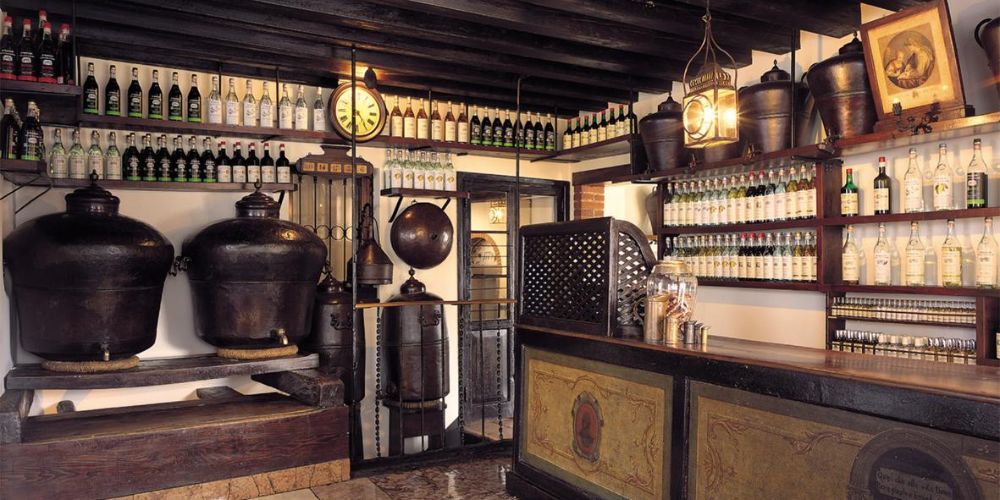
After exploring the key dates, getting to know Bortolo Nardini and following the evolution of the art of distillation, it is time to step inside the places where this story took shape.
The guided tour offers the chance to delve deeper into the history of the Nardini family, explore the historic rooms of the Grapperia and discover the culture and tradition of distillation through the traces preserved in the very place where it all began.
Outside, the Brenta flows past, with the Ponte Vecchio just a few steps away. In these same spaces, at the end of the 18th century, Bortolo Nardini decided to install his still permanently, turning an itinerant trade into a settled business.
The visit brings together an Italian product, the family that guided its evolution, the knowledge required to create it and the territory from which its story cannot be separated.
You do not need to be familiar with the world of spirits beforehand. On the contrary, the experience offers a way to approach Italian grappa through its cultural context before discovering the characteristics of the product itself.
The year 1779 becomes a starting point from which to look at a tradition that, generation after generation, has found its way into the present.
Tasting Grappa Nardini in the heart of its history
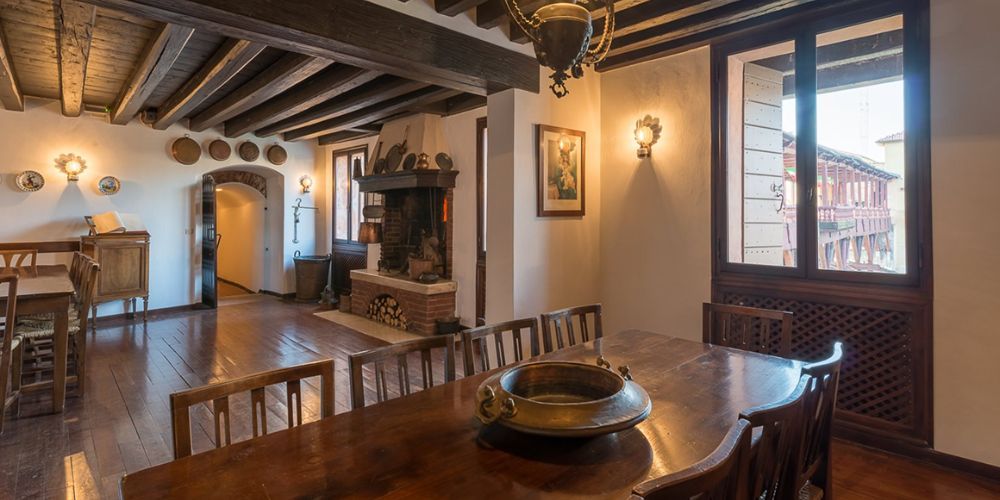
A tasting at Grapperia Nardini completes the experience in the very place where Bortolo began his activity in 1779. After discovering the family’s origins, the evolution of distillation and the bond with Bassano, what arrives in the glass takes on a different meaning.
There is no need to know tasting techniques or to be an expert in spirits. The experience allows you to recognise the aromas, nuances and distinctive characteristics of different expressions of grappa, but above all to connect them with everything you have just seen and heard.
Behind a glass of Grappa Nardini lie the grape pomace, the stills, the innovations introduced over the generations and knowledge passed down for almost 250 years.
The Ponte Vecchio, the Brenta and the Grapperia turn the tasting into the final chapter of the visit: not simply the chance to taste an Italian spirit, but to rediscover its history in the very place where it took shape.
When you step back outside onto the Ponte Vecchio, the landscape completes the story: the river flows beneath the arches and Bassano unfolds all around, with the Grapperia still standing there as part of the city’s everyday life, just as it has since 1779.
How to plan your visit to Nardini in Bassano del Grappa
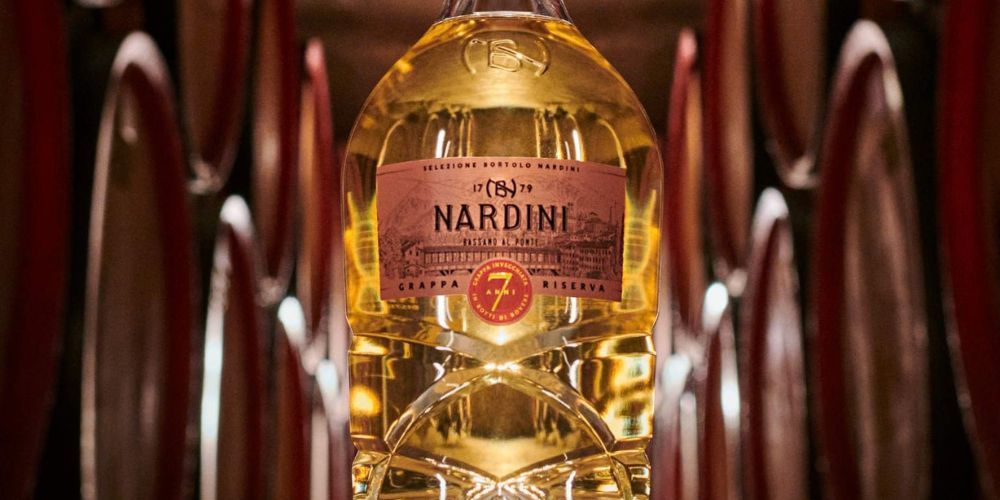
The Grapperia Nardini is located on the Ponte Vecchio, in the historic centre of Bassano del Grappa, making it easy to include in an itinerary exploring the city.
To discover more about the history of the family and Grappa Nardini, you can book a guided tour followed by a tasting experience. Options, availability and formats may vary, so it is best to check the official Nardini website before your visit and book the experience that suits you best.
Bassano, of course, deserves to be explored well beyond the Ponte Vecchio, but stepping inside the Grapperia offers the chance to experience an Italian tradition, in the very place where it began, that has continued uninterrupted since 1779.
About the author
Written on 08/10/2026
Flavia Cantini
Freelance Content Writer with over a decade of specialized experience in tourism, culture, and creative/artistic activities. I assist magazines, web agencies, and end clients in managing blogs and crafting standout articles

Flavia Cantini
In Bassano del Grappa, step into Nardini’s story and discover almost 250 years of grappa tradition, family heritage and culture.