

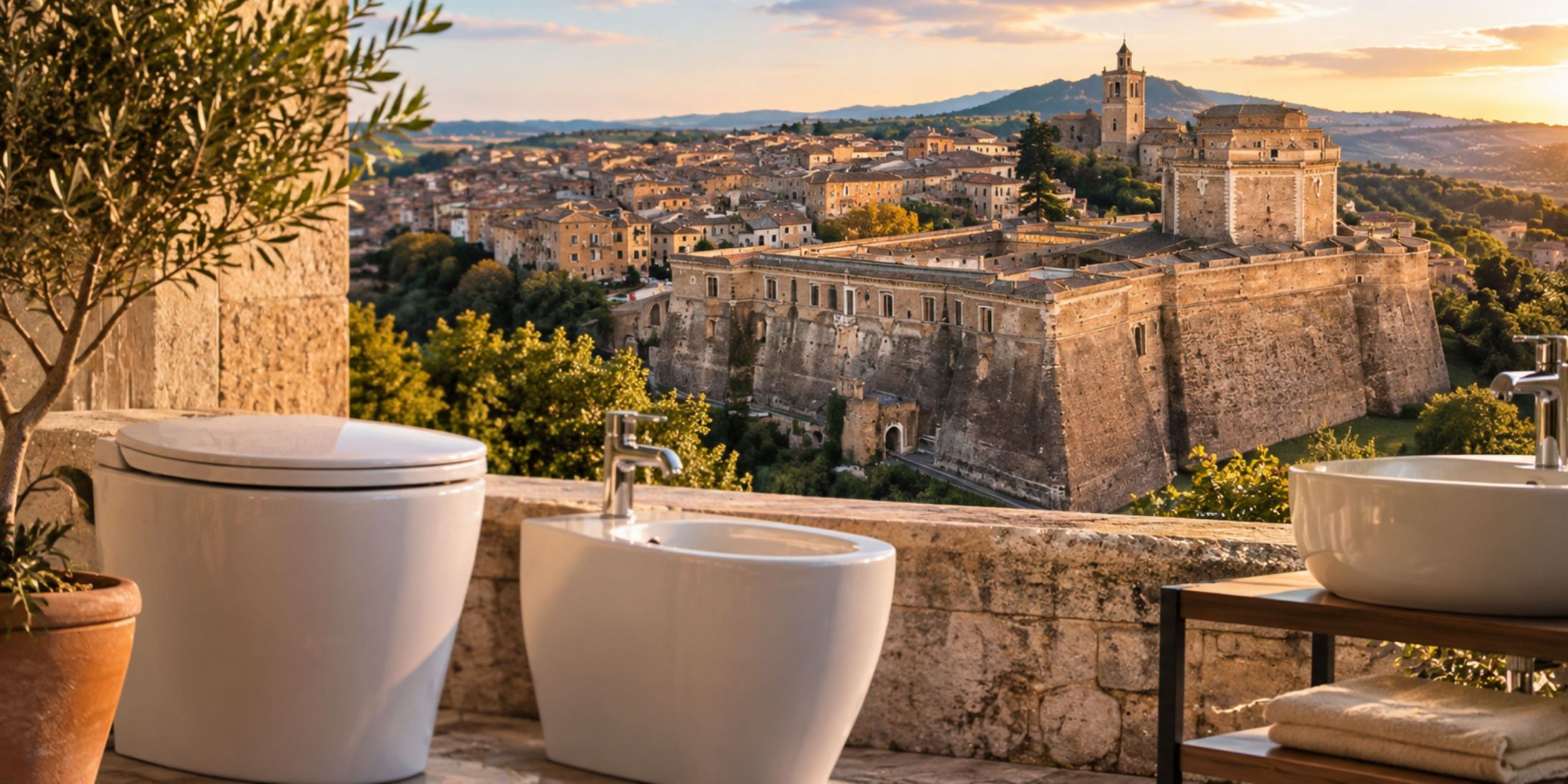

Italians have plenty to be proud of: fashion, food, history, art and… the bidet. A source of fascination (and perhaps envy?) for visitors to Italy, it’s arguably the most unlikely symbol of national pride. Yet behind it lies an unexpected cultural heritage.
To uncover this story, we headed to Civita Castellana, around 40 kilometres north of Rome. An ancient town famous for its archaeological treasures, it is widely regarded as the Italian sanitaryware capital. Read on: by the end of this article, your own bathroom might just have inspired your next trip to Italy.

Meet the Italian sanitaryware capital
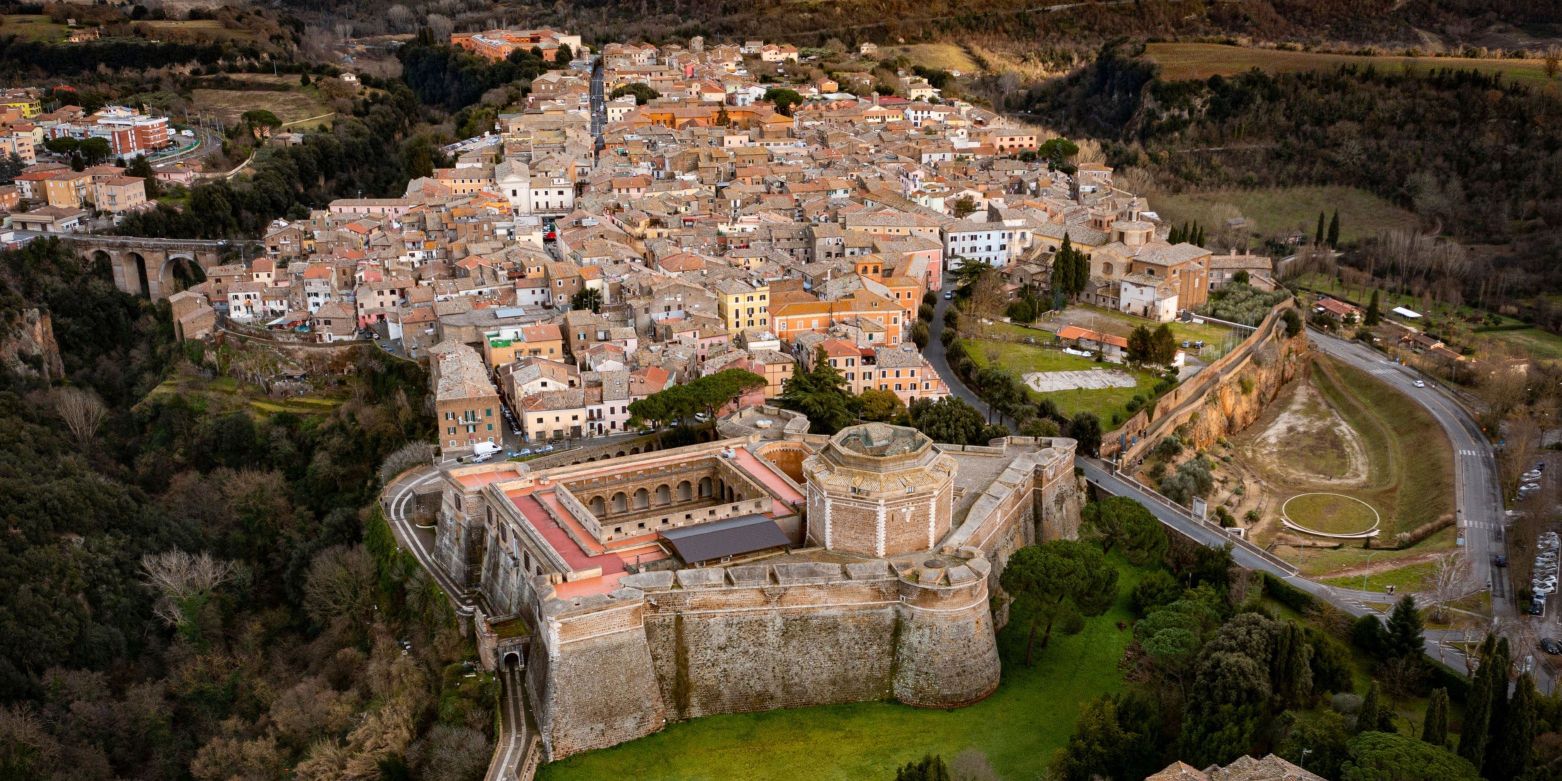
Shaped by ancient volcanoes, dotted with hilltop villages perched on tufa cliffs and rich in traces of long-lost civilisations, Tuscia is a land where traditions have stood the test of time. And it’s here, in this corner of northern Lazio, that you’ll find one of Italy’s most unexpected manufacturing success stories.
While Sassuolo (Emilia-Romagna) is home to the country’s leading hub for ceramic tiles and floor coverings, Civita Castellana has carved out a name for itself as a major centre for ceramic sanitaryware. No fewer than 28 of Italy’s 31 industrial manufacturers in the sector are based here. That means there’s a good chance the Made in Italy washbasin and toilet in your bathroom was made in this very region.
So how did Civita Castellana become Italy’s sanitaryware capital?
Civita Castellana ceramics: a centuries-old tradition
Ceramics were being made here long before sanitaryware came along. The ancient Falisci, whose main settlement was Falerii Veteres (present-day Civita Castellana), were skilled potters who crafted vases, bowls, and temple decorations. Their art reached its heyday in the 4th century BC.
After the Roman conquest in 241 BC, evidence of ceramic production became much scarcer. Few traces survive from the Middle Ages, but something changed during the Renaissance. The 1566 municipal statutes mention a Guild of Vascellari, artisans who worked clay into vessels and everyday objects – proof that the trade was still alive to some extent.
The turning point came in 1792, when the Apostolic Chamber granted brothers Francesco and Giuseppe Antonino Mizelli, together with their partner Giuseppe Valadier, the right to extract clay locally. More workshops soon followed, many specialising in decorative ceramics.
An age-old craft was about to grow into something much bigger.
Related story - Celleno, the cherries' village in Tuscia
Travelling around Tuscia? Visit Underground ViterboFrom painted pottery to WC
As the water closet began entering Italian homes, potters in Civita Castellana turned their hands to a new kind of production.
Among the pioneers was Antonio Coramusi, who experimented with sanitaryware in the early 20th century, initially using locally sourced materials. His vision helped steer the area towards a growing industry that would eventually become its defining specialism.
Painted pots and decorative pieces were no longer the only stars of the show: the future of Civita Castellana ceramics was taking a decidedly more private turn.
The ceramics boom: how Civita Castellana became an industrial hub
It wasn’t all plain sailing. In the 1950s, several companies ran into trouble, and many workers lost their jobs. Rather than give up, some bought the very factories they had worked in, swapping their employee overalls for an entrepreneur’s hat. It was a bold move that helped preserve local skills and expertise while breathing new life into the industry.
Then came the 1960s and the building boom. As demand for sanitaryware soared, production ramped up, new businesses sprang up, and Civita Castellana gradually took shape as the industrial ceramics hub we know today.
How ceramics shaped a town
With 28 companies, 34 factories and more than 2,000 employees, sanitaryware production is a key part of Civita Castellana’s identity. Its rise took time, and the town still bears plenty of traces of this evolution.
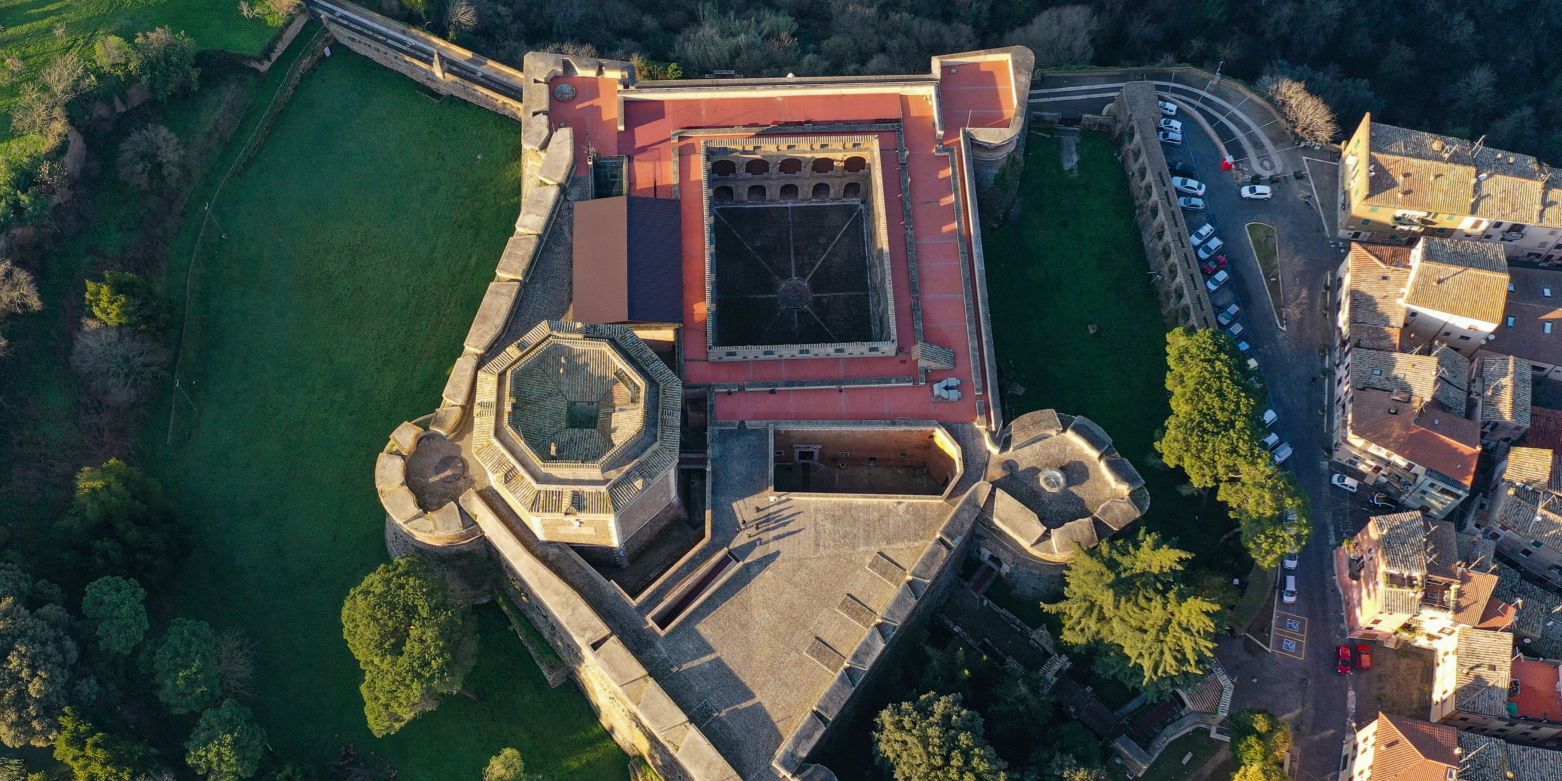
One is the Archaeological Museum of Agro Falisco, housed inside the mighty Renaissance walls of Forte Sangallo. Its collection charts the prosperous ceramic heritage of Falerii Veteres, from early pieces decorated with incised patterns to finely crafted red-figure pottery from the 4th and 3rd centuries BC.
Locally made decorative ceramics, vintage photographs and tools of the trade (there’s also an original potter’s wheel) are on display at the Casimiro Marcantoni Ceramics Museum, in the former medieval church of San Giorgio on Viale Gramsci.
The townscape outside continues the narrative. In the Piazza Marcantoni shopping centre area, two towering chimneys still stand as reminders of the large factory Casimiro Marcantoni founded in the early 1900s. Closed in 1961, they are a vivid example of industrial archaeology.
Related story - How to visit Palazzo dei Papi in Viterbo
What can you see in Civita Castellana?
Civita Castellana is much more than a "town of ceramics". Step into workshops where master potters shape clay with practised hands, but also wander through Renaissance fortresses, enter beautifully decorated churches, and let ancient Roman roads lead you to hidden archaeological treasures.
Begin your visit at Forte Sangallo, its stone walls rising above the town, a Renaissance fortress built at the behest of Pope Alexander VI in the late 1400s. to defend the surrounding territory. Its nine rooms, housed in the former papal apartments, display finds from across the area, including funerary objects, votive offerings, figurines, jewellery and exquisite bronze artefacts.
Another symbol of the town’s past is Palazzo Montalto, an elegant 16th-century residence whose guests were Christina of Sweden, Johann Wolfgang von Goethe, Lord Byron and Pope Pius IX. For another brush with fame, head to the beautiful Cathedral of Santa Maria Maggiore: in 1770, on his way back from Rome, a certain Wolfgang Amadeus Mozart played the organ!
For sweeping views, make your way to Ponte Clementino, overlooking the deep ravine the Rio Maggiore carved out. Before you go, you must try the local frittelloni, thin savoury pancakes, filled with pecorino and rolled up.
The places you should see in Civita Castellana:
- Forte Sangallo: the imposing fortress that houses the Archaeological Museum of Agro Falisco, with notable finds like a rare Roman chariot from the Imperial era.
- Cathedral of Santa Maria Maggiore: also known as the Duomo dei Cosmati, it is renowned for its portico and medieval mosaics.
- Ponte Clementino: built in the 18th century, it offers one of the town’s most picturesque views.
- Casimiro Marcantoni Ceramics Museum: housed in the former church of San Giorgio, it traces the history of local pottery.
- Piazza Matteotti: the heart of the old town, home to the Town Hall and a fountain associated with the Boncompagni family.
- Church of San Francesco: a medieval place of worship featuring works of art and a cloister belonging to the former Franciscan convent.
- Church of San Gregorio: an interesting example of Romanesque architecture, recognisable by its distinctive structure and decorated bell tower.
- Church of Santa Maria del Carmine: one of the oldest religious buildings in Civita Castellana.
- Porta Borgiana: a monumental 15th-century gateway built in honour of Rodrigo Borgia, who governed the town before his election as pope, featuring marble decorations and repurposed Roman materials.
- Via Amerina: an ancient Roman road that crossed the Faliscan territory and now offers walking routes through the countryside, dotted with archaeological remains.
- Tre Ponti Necropolis and Cavo degli Zucchi: along the Via Amerina, Roman bridges and rock-cut tombs offer a glimpse into the area’s ancient burial customs.
- Falerii Novi and the Abbey of Santa Maria in Falleri: the remains of the Roman town founded after the conquest of Falerii Veteres, complete with its city walls, monumental gateways and atmospheric medieval abbey.
- Ponte Felice: a historic bridge over the River Tiber, built in the late 16th century at the behest of Pope Sixtus V.
- Andosilla Castle: in the hamlet of Borghetto, it preserves the remains of a medieval fortified settlement.
What to do in Civita Castellana: the best events
A quirky papier-mâché king and the Borgia family strolling back through the town’s streets: these are the stars of two of Civita Castellana’s biggest annual events.
First up is O’ Puccio, the oversized king of the Carnevale Storico Civitonico. Festivities kick off on 17 January, when the bizarre monarch makes his grand entrance into Piazza Matteotti, accompanied by folk band La Rustica. Then come the carnival floats, fancy dress and dancing, culminating on Shrove Tuesday, when the giant is symbolically burned.
I Ludi Borgiani take you back in time to celebrate Pope Alexander VI and the Borgia family's connection to Civita Castellana in the late 15th and early 16th centuries. Every September, the old town fills with costumed performers, processions, musicians and colourful banners. There are Palio competitions, folk games, cultural events and food and wine stalls. For a few days, the Renaissance is very much alive again.
Civita Castellana, Italian sanitaryware capital - FAQs
What is Italy's sanitaryware capital?
Civita Castellana, near Viterbo, Lazio, is Italy’s sanitaryware capital. Its industrial district is the country’s leading manufacturing hub for the sector, accounting for around 90% of Italy’s industrial bathroom ceramics manufacturers.
Why is Civita Castellana famous for ceramics?
Civita Castellana is famous for its ceramics thanks to a tradition dating back to the ancient Falisci. Over the centuries, production evolved from decorative pottery to industrial manufacturing, with the town specialising in sanitaryware in the early decades of the 20th century.
How did the sanitaryware industry develop?
Civita Castellana’s sanitaryware industry began to take shape in the early 20th century, when traditional workshops started producing bathroom fittings. The real boom came in the 1960s: a growing construction industry, new manufacturing technologies and the emergence of businesses founded by former factory workers turned the area into Italy’s leading sanitaryware district.
About the author
Written on 17/11/2026
Lorena Calise
I'm a content writer for magazines and websites. I also explore Italy through my writing for Visit Italy and Visit Naples.

Lorena Calise
It may not be quite as glamorous as a designer handbag, but even a toilet has its own Made in Italy story. Meet Civita Castellana.