

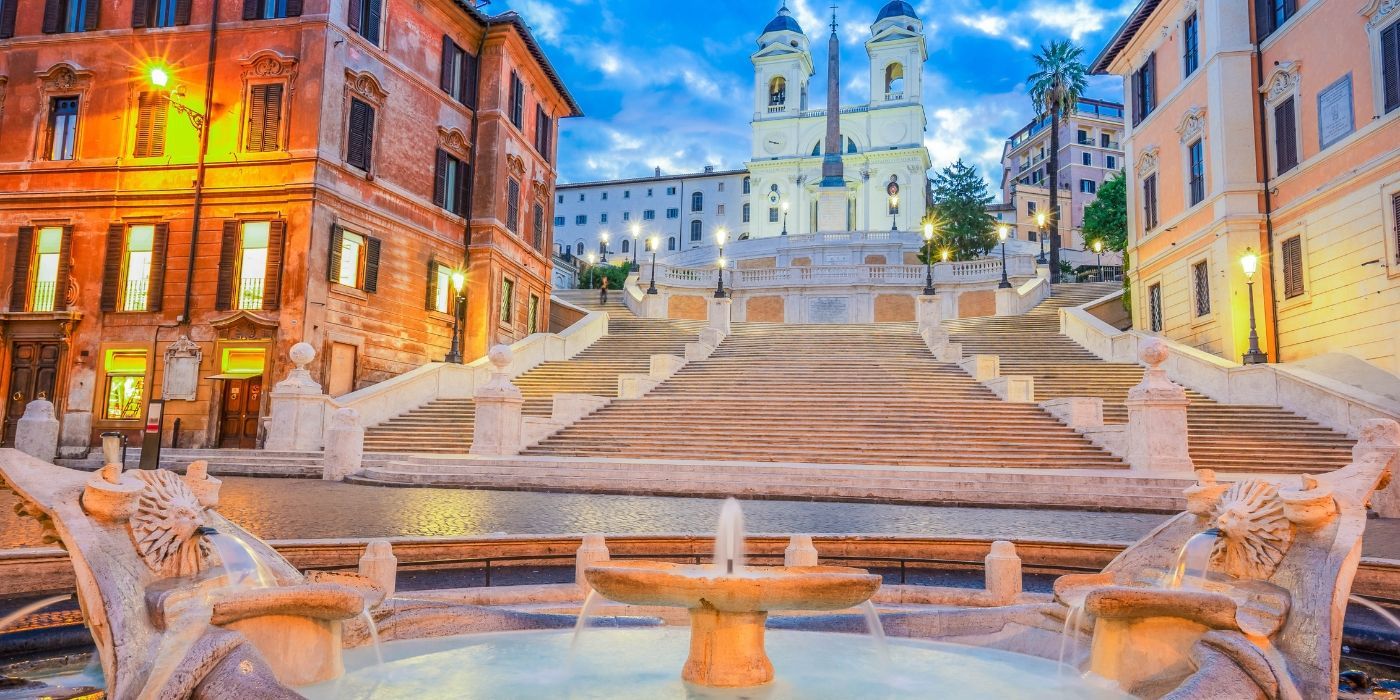
Piazza di Spagna and the Spanish Steps that rise above it are among the most photographed sights in Rome. It’s hard to resist taking a picture on the steps. But have you ever wondered what lies just outside the frame?
For centuries, the streets around the square were the heart of Rome’s international community. Travelers on the Grand Tour, the journey that brought young European aristocrats to Italy as part of their education, found rooms here. Some stayed well beyond a single season. When Goethe arrived in Rome in 1786, he moved in with three German painters on Via del Corso. Glimpses of the neighborhood turn up in paintings and novels, too. At the very top of the Spanish Steps, Gabriele D’Annunzio imagined a home for Andrea Sperelli, the protagonist of his novel Il piacere (Pleasure).
On this walking tour of Campo Marzio, we’ll climb Pincio Hill for a view across Rome, then head down to the streets where artists had their studios. We’ll go slowly enough to read a name on a wall and discover who once lived behind the windows above us. On Via dei Condotti, we’ll pass the Antico Caffè Greco before returning to the foot of the steps for afternoon tea at the tearoom two Englishwomen founded in 1893.
Once you’ve taken your photo, stay a little longer. Come explore the neighborhood with us.
Beyond the Spanish Steps: a lesser-known side of Campo Marzio
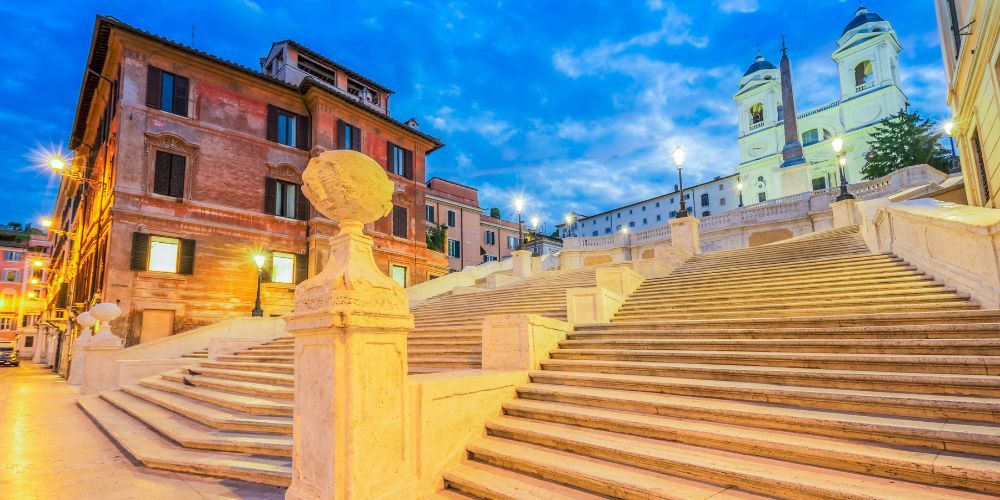
Piazza di Spagna looks different in every season. In spring, white and lilac azaleas line the steps. For many summers, those same steps doubled as a runway, with models descending from Trinità dei Monti in gowns by leading designers. In autumn, climb the steps just before sunset and turn to catch the light on the rooftops. On December 8, Romans turn their attention to nearby Piazza Mignanelli. For the Feast of the Immaculate Conception, a firefighter climbs a fire engine ladder to place a wreath in the arms of the statue of the Virgin Mary.
Our walk begins at the foot of the Spanish Steps. Face the steps and look at the building on your right. On the wall overlooking the staircase, a plaque commemorates a certain Giovanni Keats. It’s the English poet John Keats, his first name translated into Italian. You can still visit his rooms at 26 Piazza di Spagna. From the window of the Keats-Shelley House, you’ll see the square you’ve just photographed, only now you’ll be looking out instead of looking up.
The Campo Marzio walking route :
• Piazza di Spagna, starting with a visit to the Keats-Shelley House
• The Spanish Steps, up to the church of Trinità dei Monti overlooking the square
• Palazzetto Zuccari, for a close look at the gaping mouth around its doorway on Via Gregoriana
• Villa Medici, on the way to the Pincio gardens
• Pincio Terrace, for a view over Rome’s rooftops
• Piazza del Popolo, reached by the paths leading down from the Pincio
• The Ara Pacis, near the Tiber
• Via dei Condotti, past the Antico Caffè Greco
• Via del Babuino and Via Margutta, from fashion boutiques to Rome’s artists’ street
• Back to Piazza di Spagna, for tea at Babingtons at the foot of the steps
Why Grand Tour travelers stayed in Campo Marzio
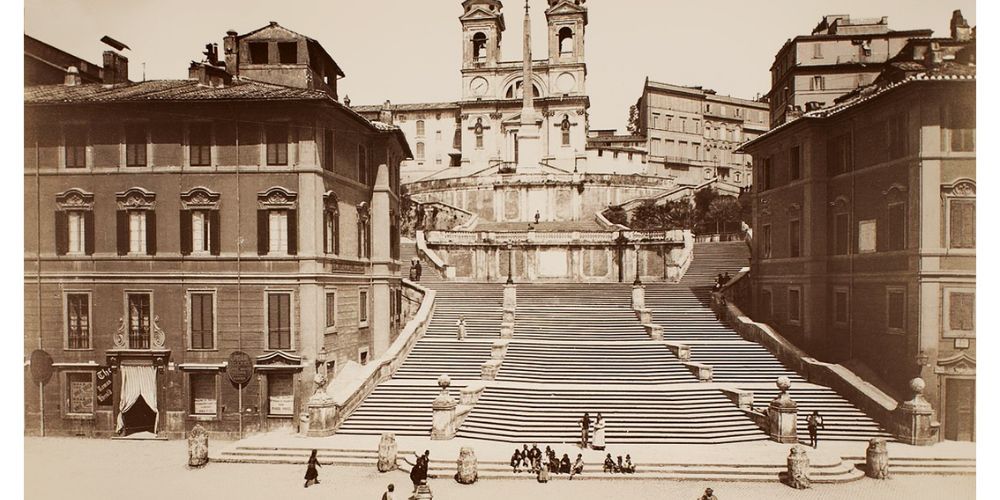
To understand where Campo Marzio gets its name, picture the flat land along the Tiber before the palaces and churches were built. In ancient Rome this was the Campus Martius, the Field of Mars, where Romans practiced with weapons on ground dedicated to the god of war. Piazza di Spagna would once have been hard to recognize, too.
Even in the early 18th century, a steep slope separated the square from the church of Trinità dei Monti. Between 1723 and 1726, Roman architect Francesco De Sanctis transformed it into the staircase you see today. At the foot of the steps, look for the French fleurs-de-lis and the eagles of Pope Innocent XIII’s family carved in stone.
So why did Grand Tour travelers choose Campo Marzio? For visitors arriving from northern Europe, the gateway of Porta del Popolo was their introduction to Rome. From there, Via del Babuino led straight to the inns around Piazza di Spagna. Even the name of nearby Via delle Carrozze, or Carriage Street, tells you where you could once hire a carriage. You might rent a room for a few nights and find yourself staying for months. Goethe did, and a generation later the English poet Percy Bysshe Shelley also made a home on Via del Corso in the spring of 1819. John Keats arrived the following year. It’s on his doorstep that our walk begins.
From the Spanish Steps to Pincio Terrace
Step inside 26 Piazza di Spagna and go up two floors to the Keats-Shelley House. In John Keats’s bedroom, the detail to look for is right above your head. Tiny daisies decorate the wooden ceiling, the very flowers the poet could see from his bed. From the square below he could hear water flowing from the Barcaccia, the boat-shaped fountain at the foot of the steps.
At the top of the Spanish Steps, an obelisk stands in front of the twin bell towers of Trinità dei Monti. It dates from imperial Rome, when all things Egyptian were in fashion. Its hieroglyphs were copied from the obelisk in Piazza del Popolo, and a few signs appear to have ended up backward. You’ll soon see the original from above. For now, face the church, turn right and take Via Gregoriana.
At number 30, you’ll come face to face with a monster, its mouth wide open. This was the entrance to the garden of Palazzetto Zuccari, the house the painter Federico Zuccari designed for himself in the late 16th century. It’s a good spot to read the opening lines of D’Annunzio’s Il piacere. The novel opens on New Year’s Eve, with Andrea Sperelli waiting for Elena in this very house.
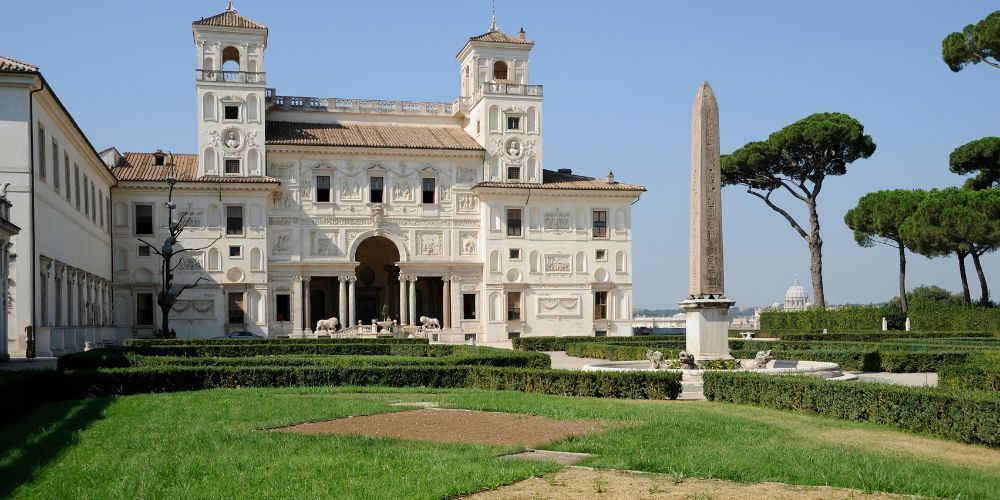
Return to the obelisk and follow Viale della Trinità dei Monti, keeping Rome’s rooftops on your left. A few minutes’ walk brings you to Villa Medici, home to the French Academy in Rome. Opposite the entrance, look for a fountain with a marble sphere at its center. According to a Roman legend, the sphere is a cannonball. Running late for an appointment at the villa, Queen Christina of Sweden supposedly ordered a cannon fired from Castel Sant’Angelo to announce her arrival. If you have time to go inside, a guided tour takes you around to the garden, where ancient reliefs decorate the villa’s façade.
From Villa Medici, follow the avenue toward the Pincio gardens until you reach Piazzale Napoleone I. Walk up to the balustrade. You’ll recognize the dome of St. Peter’s on the skyline, but look down, too. In the middle of Piazza del Popolo stands the obelisk whose hieroglyphs you saw copied at Trinità dei Monti. Follow the paths down from the terrace to see it up close.
From Piazza del Popolo to the Ara Pacis Museum
Once in Piazza del Popolo, walk up to the obelisk you’ve just seen from above and look toward the great gateway in the city walls. Had you come to Rome from northern Europe on the Grand Tour, this is where you would have entered the city. On the side facing the square, you can still read a welcome in Latin: Felici faustoque ingressui, a wish for a happy arrival. The greeting was meant for someone you’ve already met on this walk. Remember Queen Christina of Sweden and the cannonball at Villa Medici? In 1655, Bernini designed this side of the gate to welcome her to Rome.
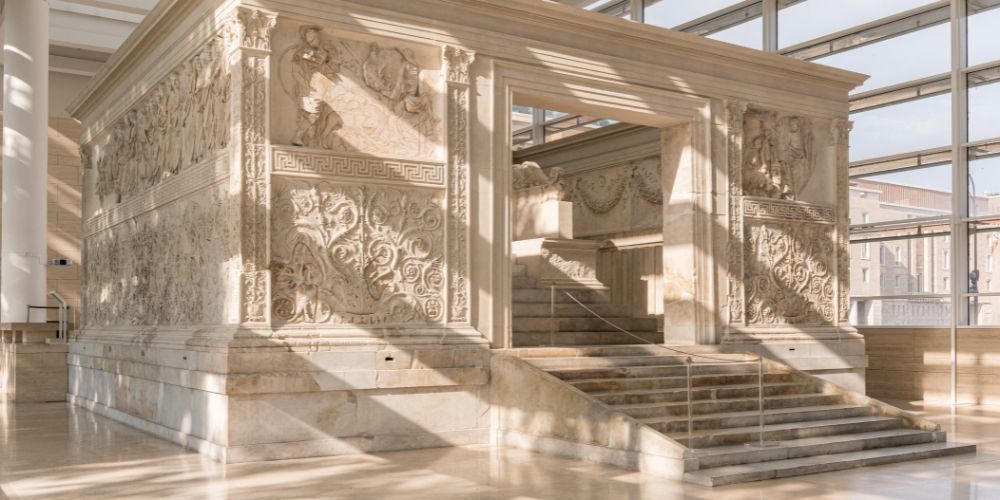
Beside the gate, the Basilica of Santa Maria del Popolo houses two celebrated paintings by Caravaggio. Now face the twin churches across the square and take Via di Ripetta on your right. Follow it toward the Tiber to reach the Ara Pacis Museum, home to the ancient altar dedicated to Peace in the time of Augustus.
Continue along Via Tomacelli and cross Via del Corso. Straight ahead is Via dei Condotti, where you’ll pass the Antico Caffè Greco. The Spanish Steps come into view again at the far end. This time, turn left along Via del Babuino, then right onto Via Alibert to reach Via Margutta.
Via Margutta, Rome’s street of artists
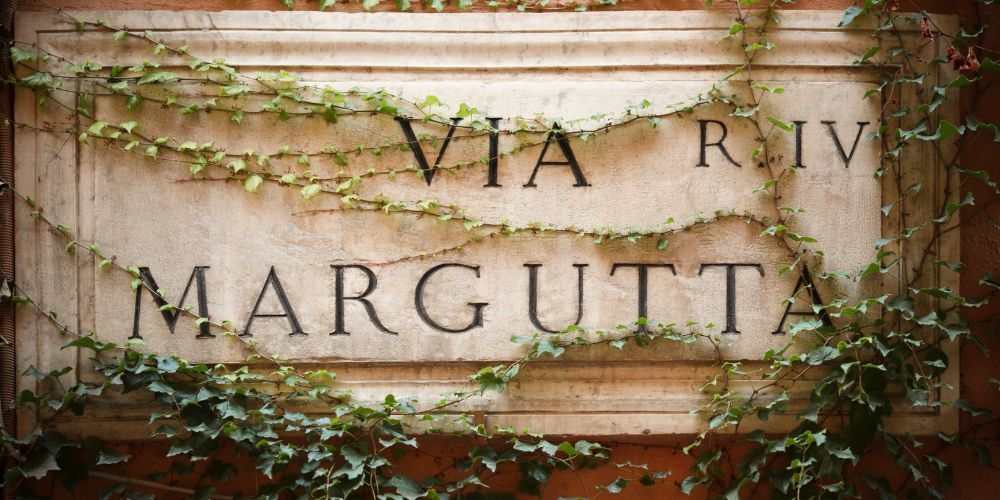
Via Margutta once ran along the backs of the grand houses on Via del Babuino. The galleries and workshops you see today were once stables, storerooms and artisans’ homes. As early as the 17th century, the painter Orazio Gentileschi, father of Artemisia Gentileschi, had a studio here.
Painters from across Europe settled in the surrounding streets, among them the Flemish artist Peter Paul Rubens, France’s Nicolas Poussin and Spain’s Jusepe de Ribera. The Fontana degli Artisti, or Artists’ Fountain, offers a little portrait of their working world. Look closely and you’ll spot palettes, easels and even a bucket of paintbrushes, all carved in stone.
At number 53B, look for the plaque marking Pablo Picasso’s studio. In 1917, Picasso came to Rome with the poet Jean Cocteau to work on the sets and costumes for the ballet Parade. The two stayed at the Hotel de Russie, but Picasso came here to paint. The story goes that when he needed bread and eggs, he lowered a basket on a string from his window so he could carry on working. Thirty years later, Picasso was still a subject of conversation in another studio on the street. It belonged to Renato Guttuso, and young artists gathered there to talk about what to paint after the war, and how to paint it.
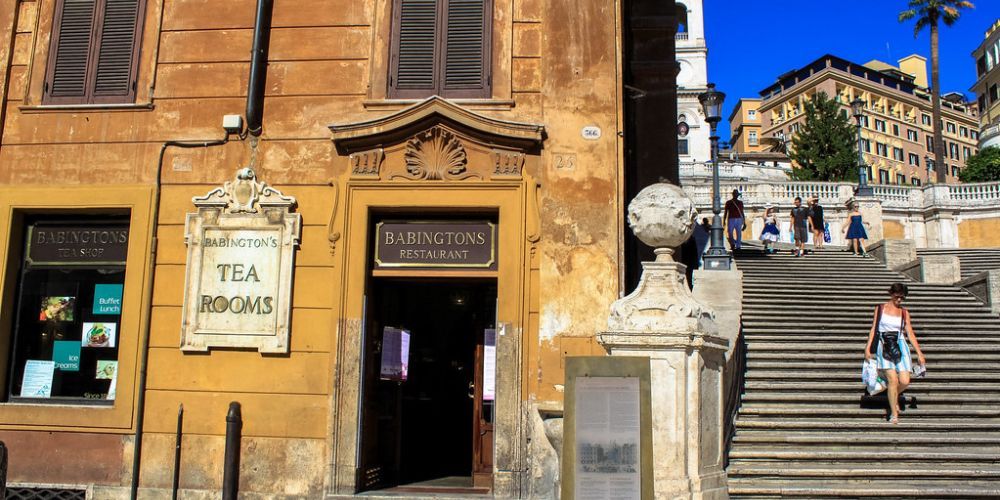
At number 110, see if you recognize the two faces in profile. They belong to the filmmaker of La dolce vita, Federico Fellini and the actress Giulietta Masina, who lived behind this door for decades. Make your way back to Piazza di Spagna along Via del Babuino. If you have room for one more artist’s address, Giorgio de Chirico lived at number 31 on the square. For a break, cross over to the left-hand side of the Spanish Steps. Babingtons, the tearoom founded in Rome by two Englishwomen in 1893, is a good place to put down your bags and order a pot of tea.
Trendy shopping in Rome on Via dei Condotti and Via del Babuino
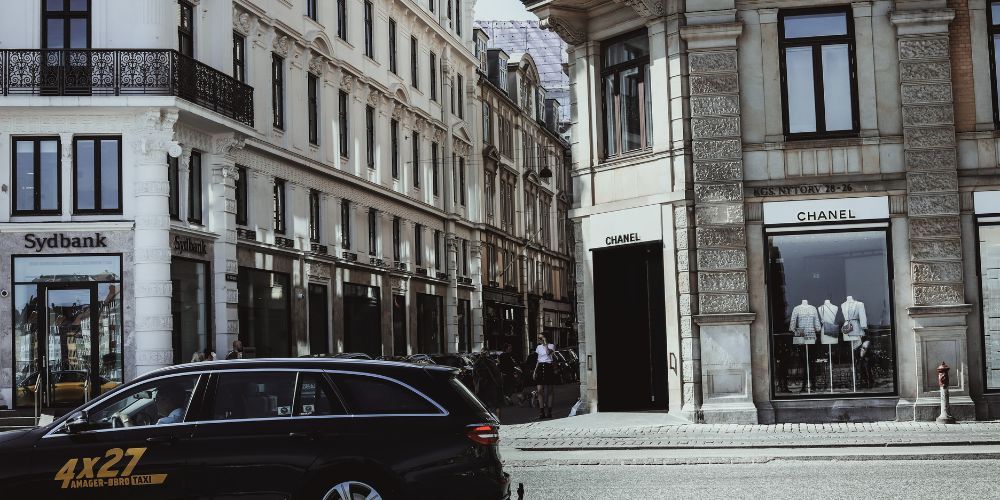
Bulgari, Gucci and Dior on Via dei Condotti, Chanel and Moschino on Via del Babuino. One of these shopfronts has a literary history. Had you passed 10 Via dei Condotti in 1905, the sign above Bulgari’s door would have read Old Curiosity Shop. The Greek silversmith Sotirio Bulgari borrowed the name from a Charles Dickens novel to catch the eye of English travelers in Rome.
If you’d like to spend some time designer shopping in Rome, start at Palazzo Fendi on Largo Goldoni, at the corner of Via del Corso. From there you can walk the length of Via dei Condotti toward the Spanish Steps, stopping for a scarf at Hermès, a pair of shoes at Ferragamo or a bag at Prada. Where the street opens onto Piazza di Spagna, there’s one more address for your list. Valentino has a boutique at number 38, a few steps from Piazza Mignanelli, where the fashion house’s history in Rome began.
From Piazza di Spagna, it’s a short walk along Via di San Sebastianello to the former atelier of the Fontana sisters. At number 6, in rooms that once formed part of the atelier, the Fondazione Micol Fontana preserves dresses, fashion sketches and embroidery. You can see them on a guided visit. Book in advance and check the minimum group size.
Historic cafés near the Spanish Steps: Antico Caffè Greco and Babingtons
On Via dei Condotti, among the fashion boutiques, stands a coffeehouse where artists, writers and intellectuals once came to work. They traded ideas over coffee. Who knows how often someone paused mid-conversation to jot down a melody or find the words for a line of verse? For the Russian-language writer Nikolai Gogol, we know which book took shape here. He worked on Dead Souls at the tables of the Antico Caffè Greco, at 86 Via dei Condotti. Decades later, Richard Wagner came here with the Roman pianist Giovanni Sgambati, who walked down from his home in Piazza di Spagna every evening to catch up with friends at the Greco.
For people who had come a long way to Rome, the café even served as a mailing address. Letters were left in a lead box on the counter until their recipients came to collect them.This historic site was sadly closed in 2025, but you can still see the sign.
Before you leave Via dei Condotti, find number 81 and look up. A plaque marks the house where the Italian poet Giacomo Leopardi lived with his friend Antonio Ranieri in 1831–32. Their apartment was three floors above the street, just a few doors from the tables of the Caffè Greco.
For a leisurely break, head to Babingtons on the left as you face the Spanish Steps. In 1893, Anna Maria Babington and Isabel Cargill pooled their savings of a hundred pounds to open a room on Via Due Macelli where Rome’s English community could read and drink tea. A year later they moved here, and has become one of the most exclusive clubs in Rome.
Today you can order a cream tea, with warm scones to split and spread with cream and strawberry jam, but also a very Italian coffee. If you’ve brought a notebook, use the few minutes while your tea steeps to jot down a detail you noticed on the walk.
How to get to Campo Marzio and how to get around the neighborhood
From Roma Termini station, take Metro Line A toward Battistini and get off at Spagna, the third stop. From there it’s a short walk to the Keats-Shelley House, where the route begins. Allow three to four hours to explore Campo Marzio on foot, including a visit to Keats’s rooms and a stop for tea. If you’d rather finish after walking down from the Pincio, Flaminio station, also on Line A, is just outside Porta del Popolo.
For the rest of your stay, the Visit Rome Pass makes it easy to get from one neighborhood to the next without buying a ticket for every ride. The two- and three-day passes include unlimited travel on Rome’s urban public transport network. If you build your own pass, you can add public transport to your chosen attractions.
Discover Visit Rome PassWhere is Campo Marzio in Rome?
Campo Marzio is a historic district, or rione, in central Rome, between the Tiber and Pincio Hill. It includes Piazza di Spagna, Piazza del Popolo and Via Margutta. The nearest metro stops are Spagna and Flaminio, both on Line A.
What is Campo Marzio famous for?
Campo Marzio is known for the Spanish Steps, the designer boutiques on Via dei Condotti and the artists’ studios on Via Margutta. It also has close ties to European literature. Goethe lived on Via del Corso, and John Keats spent the last months of his life at 26 Piazza di Spagna.
What can you see beyond the Spanish Steps?
At the foot of the steps, you can visit the Keats-Shelley House. At the top, make a short detour onto Via Gregoriana to find the monster’s-mouth doorway of Palazzetto Zuccari. Head back toward the church and follow the avenue past Villa Medici to Pincio Terrace, where a path leads down to Piazza del Popolo.
What was the Grand Tour in Rome?
The Grand Tour was a journey through Europe that young people, especially those from aristocratic families, took to complete their education. Rome gave them the chance to study antiquities and works of art firsthand. Those arriving from the north entered through Porta del Popolo, took rooms in the inns around Piazza di Spagna and met painters, writers and fellow travelers in the neighborhood cafés.
Is Campo Marzio worth exploring?
Yes, even if you’ve already seen the Spanish Steps. Walking through Campo Marzio gives you time to spot Leopardi’s house on Via dei Condotti or the plaque marking Picasso’s studio on Via Margutta. Allow three to four hours for the full walk, a visit to the Keats-Shelley House and a stop for tea. If you’d also like to visit the Ara Pacis Museum, step inside the churches and tour the French Academy at Villa Medici, give yourself a full day, with time for lunch along the way.
About the author
Written on 13/11/2026
Chiarastella Campanelli
Dreamer, editor, beauty lover

Chiarastella Campanelli
From an English poet’s window to the artists’ studios of Via Margutta, walk through the corner of Rome that generations of Grand Tour call home