

Anyone who doesn't want to visit Naples as a mere hit-and-run tourist, but rather as a contemporary traveler with the spirit of the old Grand Tour, must seek out the city's hidden museums. Among the artistic treasures of ancient Neapolis, there is more than just the Real Bosco di Capodimonte, the Cappella Sansevero and the Mann's collections. Naples is a treasure chest that reveals unexpected wonders from Sanità to Vomero.
Naples has been changing for some time now. The city is at the center of a process of cultural regeneration involving every neighborhood. From Casa – Centro delle Arti della Scena e dell'Audiovisivo, housed inside Palazzo Degas, to Vicolo della Cultura, which brings open-air exhibitions to abandoned and rundown spaces, there is a continuous movement of rebirth and experimentation from the city center to its outskirts.

The 20 Hidden Museums of Naples Worth Discovering
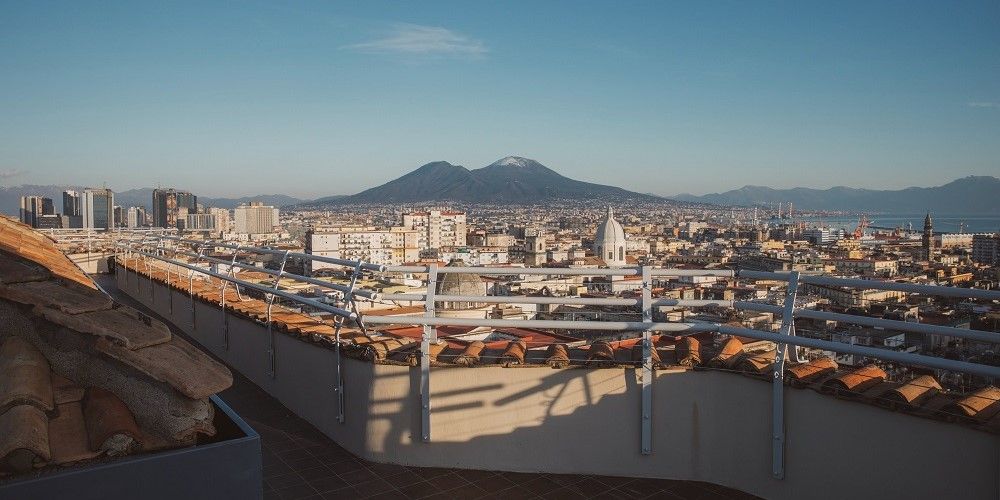
MUDD - Fondazione Napoli C'entro
As one of Europe's leading tourist attractions, Naples has cemented its role within the international art system. Yet many visitors still see the city as a picturesque, charming stopover on the way to other destinations, unaware that, deep in its heart, hidden in the shadow of Vesuvius and easy to miss for the distracted eye, lie enchanting, trendsetting destinations of extraordinary richness.
Naples is a city people love, though some feel it offers cultural and artistic options that are too standardized and unexciting. Nothing could be further from the truth: constantly rewritten through the eyes of those who live in it, Italy's Mediterranean crossroads is today full of hidden places to get lost in, loved by locals and still waiting to be discovered. Here is a guide to the 20 museums worth knowing that make Naples an even more unique city.
20. The Fontanelle Cemetery
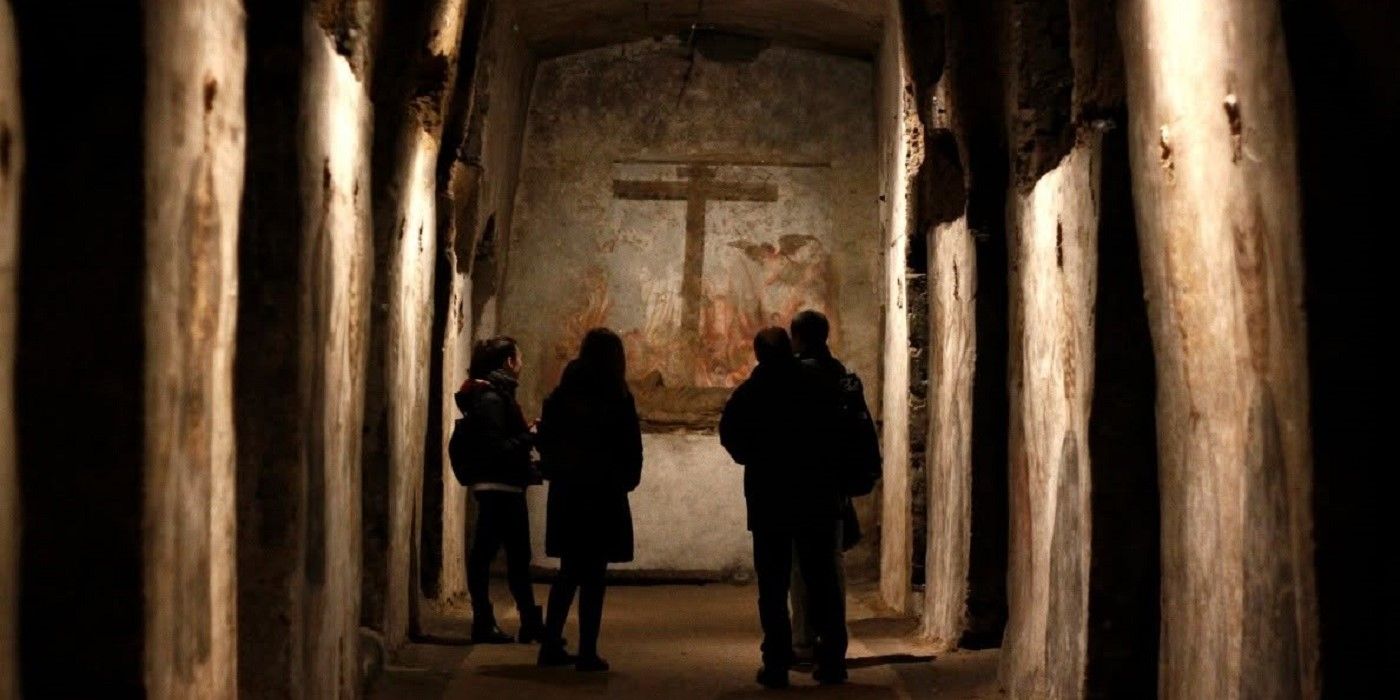
Freshly reopened and a new addition to the Naples Pass, the ossuary of the Sanità district is a magical place that stands alongside the neighborhood's monumental sites, eighteenth-century palazzi and artisan workshops. A twenty-meter-long tufa quarry that, over three centuries, was transformed from a shelter into an underground shrine dedicated to the cult of the “pezzentelle” souls: the anonymous remains of people who died in poverty, from whom favors, miracles and intercessions were sought in exchange for care and prayers.
A visit to the Fontanelle Cemetery is a unique and essential experience for understanding the special relationship in Neapolitan culture between the world of the living and that of the dead. The site is open Monday to Sunday from 10 a.m. to 6 p.m., with last entry at 5:15 p.m. Booking is mandatory and visits cannot last longer than 40 minutes. The full-price ticket for the guided tour costs 10 euros, with discounts for students, under-18s and over-65s. Entry is free with the Naples Pass.
Discover the Fontanelle Cemetery with Naples Pass19. The Church of Santa Luciella ai Librai
The cult of the dead and the “pezzentelle souls” continues beyond the famous Santa Maria delle Anime del Purgatorio ad Arco, moving on to Santa Luciella, a small Baroque gem located in the alley connecting San Biagio dei Librai to San Gregorio Armeno, just off Spaccanapoli. In the underground chamber of this church, consecrated in 1327 and a place of devotion for Naples' piperno stonemasons, an unusual object of worship venerated by thousands of people can be found.
It is the famous “skull with ears”: a skull that still has the mummified cartilage of its ears intact. But the exterior of Santa Luciella ai Librai is striking too, featuring a fresco with the coat of arms of the Soccavo stonecutters' guild, visible above the entrance portal. The church, reopened to the public in 2019 thanks to a maintenance and heritage-enhancement project by the association Respiriamo Arte, can be visited every day from 10:30 a.m. to 6 p.m.; admission costs 6 euros.
18. The Catacombs of San Gennaro
Still in the Sanità district, a visit to the Ipogeo dei Cristallini, the Catacombs of San Gaudioso and above all those of San Gennaro is a must. It is in underground Naples that the cult of the patron saint is celebrated. The tour includes a walk through the lower catacomb, built around the basilica of Sant'Agrippino, and a stop at the upper catacomb, where the remains of San Gennaro were brought and some of the earliest Christian paintings in southern Italy can be admired.
For those who want to get to know the Sanità district in depth, there is also the Miglio Sacro (Sacred Mile), the route that runs from Capodimonte to Sanità following in the saint's footsteps. The full-price ticket for the Catacombs of San Gennaro costs 13 euros, with discounts for students, under-6s, under-18s, over-65s and Artecard holders. Entry is free with the Naples Pass. Booking is mandatory: guided tours run every hour from 10 a.m. to 5 p.m.
Visit the Catacombs of San Gennaro with Naples Pass17. Jago Museum at Sant'Aspreno ai Crociferi

Jago Museum Naples
Once again in the Sanità district, this time to discover a refined personal art space that reinterprets the marble-carving tradition in a contemporary key. It is the museum created inside the restored Baroque church of Sant'Aspreno ai Crociferi by Jacopo Cardillo, known as Jago: a genuine pop phenomenon behind bold, provocative artistic projects. The collection includes famous marble sculptures such as Medusa, the Pietà, Ajax and Cassandra, Habemus Hominem and Apparato circolatorio.
A monographic museum in dialogue with the neighborhood's urban landscape and the city's historical heritage, Jago Museum is open Monday to Thursday from 10 a.m. to 2 p.m., and Friday to Sunday from 10 a.m. to 2 p.m. and from 3 to 7 p.m. The full-price ticket including guided tour costs 10 euros, with discounts for students, under-18s, over-65s, Artsupp cardholders, and those who already hold tickets for the catacombs, the Miglio Sacro or the Fontanelle Cemetery.
16. The Churches of the Mudd Circuit
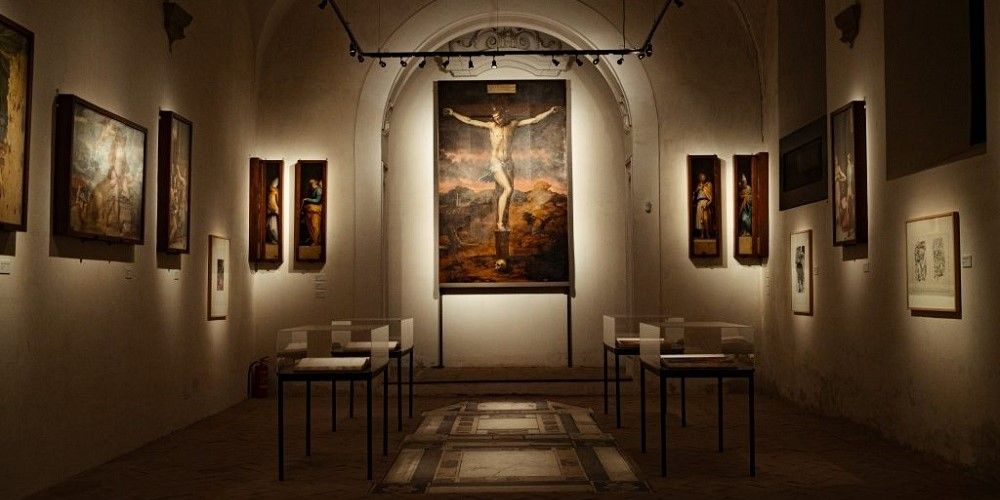
MUDD - Fondazione Napoli C'entro
Mudd stands for Museo Diocesano Diffuso (Diffuse Diocesan Museum): a network that promotes Naples' artistic and religious heritage, not only for tourism but also for social and employment inclusion. The Mudd network includes very famous monumental churches such as the Duomo, as well as lesser-known ones that were once inaccessible, like Sant'Aniello a Caponapoli, a Renaissance church dedicated to one of the city's co-patron saints, and San Giovanni a Carbonara, home to some of the most important works of Neapolitan Gothic art.
The museum also organizes special routes, such as a walk across the roofs of the Duomo (a stroll among the 500 domes of the city center), along with numerous themed itineraries spanning art, nature and faith, from the Miglio d'Oro (Golden Mile) to visits to sites linked to Sant'Alfonso Maria de' Liguori, “the most saintly of Neapolitans, the most Neapolitan of saints.” Each visit and route has its own ticket: full details are available on the official Mudd website.
15. Madre: The Donnaregina Museum of Contemporary Art
Inside a historic nineteenth-century palazzo with a yellow entrance door, abandoned for years and brought back to life in 2005, lies the innovative, experimental heart of Naples: the city's contemporary art museum, instantly recognizable from the tufa horse by Mimmo Paladino on its roof. Renovated by Álvaro Siza, Palazzo Donnaregina is arranged over three floors: the first for site-specific installations, the second for the permanent collections, and the third for temporary exhibitions.
Madre houses permanent collections by major names such as Jeff Koons and Jannis Kounellis, Rebecca Horn and Daniel Buren, Anish Kapoor and Paul Thorel, Paladino and Bianco-Valente. That's not all: evening programming includes concerts, aperitivi and talks. The museum is open Monday, Wednesday, Thursday, Friday and Saturday from 10 a.m. to 7:30 p.m., and Sunday from 10 a.m. to 8 p.m. The full-price ticket costs 8 euros, the reduced ticket 4 euros. On weekends, free guided tours of the permanent collection and current exhibitions are available.
14. Casa Morra at Palazzo Cassano Ayerbo d'Aragona
Fondazione Morra
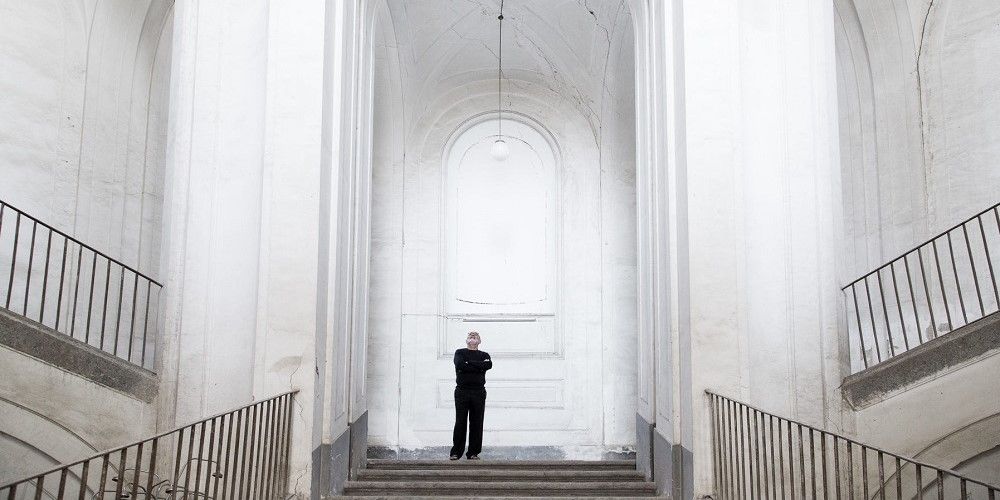
The Ayerbo d'Aragona, princes of Cassano, were a noble Neapolitan family who owned a magnificent palazzo in Materdei, converted into a residence in the mid-eighteenth century. Today this historic residence in the San Raffaele area has become an archive of contemporary art thanks to the work of critic, curator and professor Giuseppe Morra. His foundation runs this museum space, which tells the story of Italian and international avant-garde movements through more than two thousand works.
Active since 2016 with exhibitions dedicated to the artists in its own collection and shared projects with other international institutions, Casa Morra is open Tuesday to Friday from 10 a.m. to 6:30 p.m. and Saturday from 10 a.m. to 2 p.m. The full-price ticket costs 7 euros, the reduced student ticket 5 euros. Admission is free for under-16s. In addition, a combined ticket for 13 euros also grants access to the Hermann Nitsch Museum, dedicated to the master of Viennese Actionism and set in a spectacular location: the former Bellini power station in the Pontecorvo district.
13. The Secret Cabinet at the Mann
At the Naples National Archaeological Museum (Mann) in Piazza Museo, visitors can admire temporary exhibitions and major collections, from the Egyptian collection to the Farnese collection, taking in mosaics, frescoes, furnishings from Pompeii and the Temple of Isis. Decidedly more curious is the Secret Cabinet, a collection of “disreputable” ancient monuments featuring erotic and sexually themed artifacts, mostly from the excavations of Pompeii and Herculaneum.
Opened to the public in 2000, the collection is spread across an antechamber, a vestibule and four rooms holding “obscene objects” of every kind: mythological frescoes, decorative garden elements, banqueting-hall furnishings, mosaics and bronzes, amulets and phalluses. In the past, the morally conservative were so shocked by it that in 1851 the entrance door was even bricked up. The visit is included in the Mann's daily admission ticket: full price 20 euros, reduced 2 euros. The museum is open every day except Tuesday, from 9 a.m. to 7:30 p.m.
12. Made in Cloister in the Former Cloister of Santa Caterina a Formiello
In Piazza De Nicola, in the San Lorenzo district, stands a sixteenth-century church dedicated to the martyr Saint Catherine of Alexandria. The monumental complex, long hidden and little known, dates back to the first half of the fifteenth century and also holds the relics of the Martyrs of Otranto, killed by the Ottomans in 1480 for refusing to convert to Islam. In its cloister, a foundation has carried out an urban regeneration project that blends contemporary art, craftsmanship and design.
In the former cloister of this splendid and rare example of Neapolitan Renaissance architecture, solo and group exhibitions are held, along with workshops dedicated to research, experimentation and showcasing young artists, film screenings and theatrical performances. The foundation aims to carry out its projects with the involvement of the local community. Made in Cloister is open Wednesday to Saturday from 11 a.m. to 7 p.m. and Sunday from 10 a.m. to 2 p.m. The full-price ticket costs 5 euros; admission is free for under-18s and over-65s, visitors with disabilities and their companions, and residents of Porta Capuana.
11. The Doll Hospital
In Spaccanapoli, inside the halls of Palazzo Marigliano, there is a truly unusual museum offering an unexpected tourist experience: a workshop-museum that, since 1895, thanks to an idea by court-theater and puppet-theater set designer Luigi Grassi, has been restoring toys, dolls, teddy bears, puppets, masks and devotional objects. The museum section is “a place outside of time,” entrusted to the intermedia artistic research group Kaos Produzioni.
The exhibition is laid out like a genuine hospital, with different wards. Along its corridors, visitors can admire toys, stuffed animals and vintage dolls in a journey through the emotions of childhood, made of silence, wonder and magic. The museum is open in March and April, on Mondays from 10:30 a.m. to 1:30 p.m. and on Fridays, Saturdays and Sundays from 10:30 a.m. to 1:30 p.m. and from 2:30 to 5:30 p.m. Admission costs 5 euros for adults, with a reduced rate of 3 euros and free entry for young children.
10. Gallerie d'Italia at Palazzo Zevallos Stigliano
Gallerie d'Italia - Intesa Sanpaolo
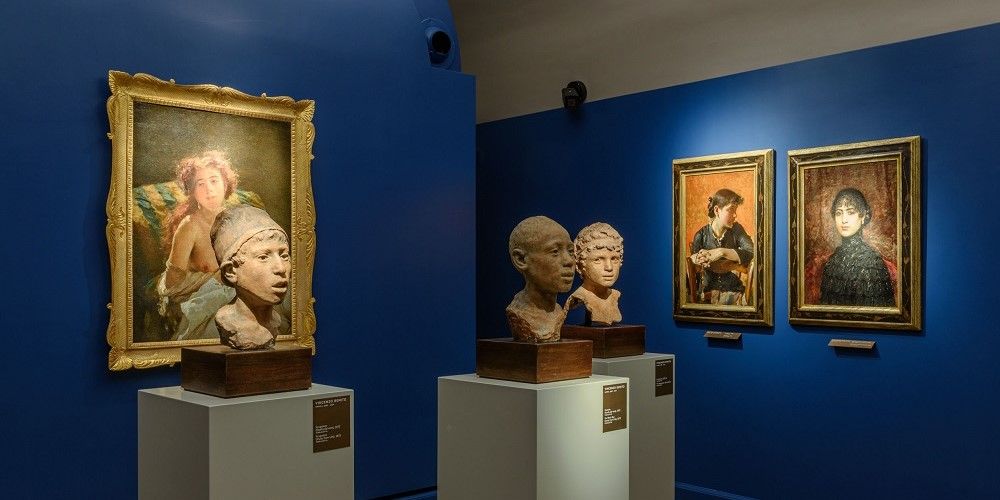
Intesa Sanpaolo's Naples museum venue is housed in the historic palazzo on Via Toledo, built in 1639 by architect Cosimo Fanzago for the Spanish nobleman Juan de Zevallos Nicastro, Duke of Ostuni. Sold to the Flemish banker, merchant and art collector Jan van den Eynde, Palazzo Zevallos later passed to the Colonna family and then to Banca Commerciale Italiana, which became Banca Intesa in 2001. Formerly home to the Banco delle Due Sicilie and the Banco di Napoli, the building owes its present form to the design work of Marcello Piacentini and the architectural repurposing carried out by Michele De Lucchi.
The monumental ground-floor hall is dedicated to temporary exhibitions, while the permanent collections focus on seventeenth- and eighteenth-century Neapolitan art. Among the many works on display at the Gallerie d'Italia, particular highlights include Samson and Delilah by Artemisia Gentileschi and The Martyrdom of Saint Ursula, Caravaggio's final masterpiece, painted in 1610 just weeks before his death. The museum is open Tuesday to Friday from 10 a.m. to 7 p.m., and Saturday and Sunday from 10 a.m. to 8 p.m. The full-price ticket costs 8 euros, the reduced ticket 4 euros; online booking is recommended.
9. The Anatomical Museum at Musa
Musa stands for Museo Universitario delle Scienze e delle Arti (University Museum of Science and the Arts): it is the museum complex of the Vanvitelli University, located in the cloisters of the Santa Patrizia complex on Via Armanni. The site has five sections: anatomy, art, bibliography, pharmacology and dentistry. The anatomical museum is one of the most important of its kind in the world: touring its rooms takes visitors on a journey through perfectly preserved human specimens, surgical instruments, anatomical preparations, fluids and wax models.
Forensic pathology enthusiasts should not miss the collection of obstetric wax models by Francesco Saverio Citarelli, the curious fetal abnormalities, the bizarre cyclopean skulls, and the range of fully mummified bodies assembled by Francesco Folinea, Stefano Delle Chiaje and Antonio Nanula. Musa is open Monday, Tuesday, Thursday and Friday from 10 a.m. to 2 p.m., and Wednesday from 10 a.m. to 4 p.m. The standard ticket costs 6 euros, the reduced ticket 4 euros. Special rates are available for groups and schools.
8. Museo Filangieri on Via Duomo
Within the baronial complex of Palazzo Como, the collections of Prince Carlo Filangieri are preserved, brought together by his son Gaetano into a museum that breathes the refined elegance of Neapolitan artistic craftsmanship. The heart of the museum is the Carlo Filangieri hall, where visitors can admire sculptures, weapons and armor, porcelain, historic textiles, paintings and an extremely rich library. The upper hall is dedicated to Prince Filangieri's mother, Agata Moncada di Paternò.
In the Agata hall, distinguished by its majolica-tiled floor, beats the museum's industrial heart: a modernist architectural feature with an iron-and-glass skylight designed by the Cottrau firm, which lights up works by Italian and foreign artists from the sixteenth to the nineteenth century, including Jusepe de Ribera and Heinrich Friedrich Füger, Luca Giordano and Francesco Solimena. The museum is open every day from 9:30 a.m. to 7 p.m., with last entry at 6:30 p.m. The visit lasts about 30 minutes. The standard ticket costs 10 euros, the reduced ticket 5 euros.
7. Villa Pignatelli on the Riviera di Chiaia
One of the most significant examples of Neapolitan neoclassical architecture, Villa Pignatelli was designed in 1826 by architect Pietro Valente for Sir Ferdinand Richard Acton, son of John Francis Edward Acton, prime minister to Ferdinand I. In the spirit of the era, Valente and his successor, Guglielmo Bechi, managed to blend a range of different styles, from Neo-Renaissance and Neo-Palladian to the typically English approach to landscape design.
In the villa's salons, which later passed to the German Rothschild banking family and to Prince Diego Pignatelli Aragona Cortés, visitors can savor the spirit of Neapolitan and European high aristocracy. The monumental library stands alongside a collection of furniture, silverware, bronzes and European and Oriental ceramics that adorn the residence's spacious rooms. Important works are also on display, including the painting Allegory of Architecture by Francesco Oliva and the bronze sculpture Narcissus by Vincenzo Gemito.
The garden and the Diego Aragona Pignatelli Cortés Museum are open every day from 9:30 a.m. to 5 p.m., with last entry at 4 p.m. The full-price ticket costs 5 euros, the reduced ticket 2 euros. A combined ticket for 17 euros also grants access to the Palazzo Reale in Piazza del Plebiscito. The villa is also home to the Carriage Museum (named after the Marquis Mario d'Alessandro di Civitanova) and the House of Photography, both of which are currently closed temporarily.
6. From the Pan to the Museo dell'Immagine
PAN Palazzo delle Arti Napoli
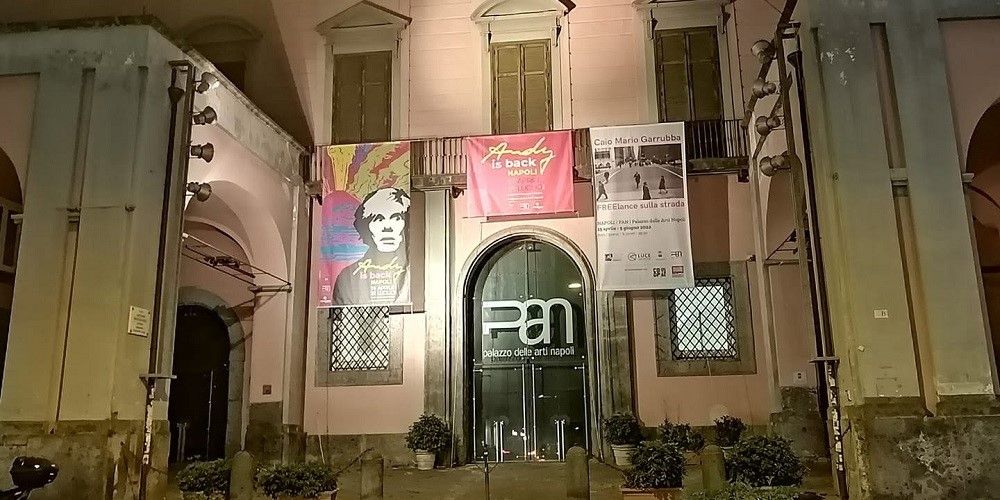
In the historic Palazzo Carafa di Roccella on Via dei Mille, right in the heart of the historic center, the Palazzo delle Arti Napoli operated from 2005 to 2024 as a contemporary art museum hosting exhibitions of painting, sculpture, photography, graphic art, comics, design, video art and film. Currently closed to the public for major renovation work and the repurposing of its exhibition spaces, the Pan will soon reopen, transformed into the Museo dell'Immagine (Museum of the Image).
Once the work on the ground floor and the first-floor exhibition rooms is complete, the Pan will become a museum dedicated to photography, film, video art and new media. Designed by architect Giovanni Francesco Frascino, the Museo dell'Immagine will offer an immersive space where painting and sculpture engage in dialogue with new media, in what has been described as “a kind of kunsthalle that will host retrospective exhibitions by major figures in contemporary art, alongside original site-specific installations produced in partnership with Italian and international institutions.”
5. The Girolamini Monumental Complex
Still on Via Duomo, in Largo dei Girolamini along Via dei Tribunali, an unusual place well worth a visit is what has been nicknamed the Neapolitan Domus Aurea: the Girolamini church, dedicated to Saint Philip Neri and nicknamed after Nero's urban villa because of its golden Baroque decoration. Built in 1586 when the Oratorian Filippini fathers settled in Naples, the complex is one of the city's largest religious buildings. Its underground spaces house hundreds of bones that were once objects of devotion: according to legend, it is here that the alchemist Raimondo di Sangro, Prince of Sansevero, carried out his experiments.
The complex includes two cloisters, Naples' oldest library, an archive with several important collections, and a gallery featuring works by numerous artists from the Neapolitan school and beyond, from Massimo Stanzione and Francesco Solimena to Guido Reni and Francesco Gessi. The church-museum is open Tuesday to Friday from 10 a.m. to 6:30 p.m., with last entry at 5:45 p.m., and Saturday, Sunday and holidays from 8:30 a.m. to 1:30 p.m., with last entry at 12:45 p.m. The full-price ticket costs 5 euros, the reduced ticket (ages 18–25) 2 euros.
4. The Coral Museum at Casa Ascione
Since 1855, Ascione has been the leading name in coral jewelry, cameos, pearls and hardstone carving. The museum, born out of the atelier on Piazzetta Matilde Serao, on the second floor of the Galleria Umberto I opposite the Teatro San Carlo, showcases the history of the house founded by Giovanni Ascione in Torre del Greco, which became a symbol of excellence in the artisanal working of precious stones.
Made up of two sections, the museum includes historic fishing and processing equipment, original documents from the house, and jewelry spanning from the nineteenth century to today. Visits to the museum are guided and by appointment only: visitors must send an email or a message to the address and phone number listed on the official website. Visiting times are Monday at 5 p.m., and Tuesday to Saturday with four available slots at 11 a.m., 12 p.m., 4 p.m. and 5 p.m. The full-price ticket costs 6 euros, the reduced ticket 3 euros.
3. Lapis, the Water Museum at Pietrasanta
The church of Santa Maria Maggiore alla Pietrasanta, one of Naples' many mysterious and esoteric sites, is home to this unusual museum: an excursion into underground Neapolis across three levels. The first is a genuine water museum, revealing ancient Greco-Roman cisterns now transformed into evocative streams animated with lights and colors. The second is the Decumano Sommerso (Sunken Decumanus), a route 40 meters below Pietrasanta winding through tufa quarries and World War II air-raid shelters.
In between, Lapis invented the “archaeological elevator”: a lift that, in just twenty seconds, offers a panoramic 35-meter descent into the belly of the city, making access to the underground easier. The Lapis experience also includes exhibitions and events such as the Fabbrica della Cultura. The museum is open every day from 9:30 a.m. to 8 p.m., with guided tours every hour. The visit lasts 75 minutes, and booking is strongly recommended on weekends. The full-price ticket costs 12 euros, the reduced ticket (over-65s and university students) 10 euros.
2. The Sea Museum in Bagnoli and the Aquarium at the Dohrn Station
Anyone who loves the sea and its flora and fauna should not miss these two spots in Naples, cradle of the Mediterranean. Not everyone knows that the halls of the Istituto Nautico in Bagnoli house a fascinating naval museum, open for visits Monday to Friday by appointment (phone numbers are listed on the official website), with a 5-euro ticket. Visitors can admire ships, models, navigation machinery and instruments, cabins, weather stations, library volumes and archival documents.
At the Anton Dohrn Zoological Station on Via Caracciolo, one of the most important research institutions for marine biology and ecology, visitors will find Italy's first public aquarium, inaugurated in 1874, just two years after the station was founded. The full-price ticket costs 10 euros (or 15 euros for a combined offer that also includes the DadoM, the Darwin-Dohrn Museum), and offers close-up views of the biodiversity of the gulf and the Mediterranean, from the coastline to the open sea. The Aquarium is open Tuesday to Sunday from 9 a.m. to 5 p.m.
1. Villa Floridiana Park and Museum
In 1817, Ferdinand of Bourbon, King of the Two Sicilies, purchased a large villa in the Vomero park to give as a gift to his wife, Lucia Migliaccio, Duchess of Floridia. The residence on Via Falcone became the summer home of the “uncrowned queen,” renovated by architect Antonio Niccolini in neoclassical style, with a park designed in a romantic taste and entrusted to the care of botanist Friedrich Dehnhardt. That green paradise today bursts with camellias, holm oaks, pines, plane trees, cedars, cypresses, rocks and fountains, offering a breathtaking viewpoint over Naples and the gulf.
The villa's interior, meanwhile, houses the Duca di Martina Ceramics Museum, one of Europe's most refined venues dedicated to the decorative arts. The collection on display is that of Placido de Sangro, Duke of Martina, rich in majolica and porcelain, glass and enamels, bronzes, ivory and coral. The park is open every day except Tuesday from 9:30 a.m. to 6:30 p.m., and admission is free. Entry to the Duca di Martina Museum requires a ticket: full price 4 euros, reduced 2 euros.
About the author
Written on 14/10/2026
Alessandro Zoppo
He has been listening to music and watching movies since he was 6. Proudly Samnite but Roman by adoption, he writes about culture, travel, economics, finance, politics and sports and curates film festivals.

Alessandro Zoppo
At the heart of a cultural revival, Naples is home to hidden museums that locals love: here's what they are and where to find them.