

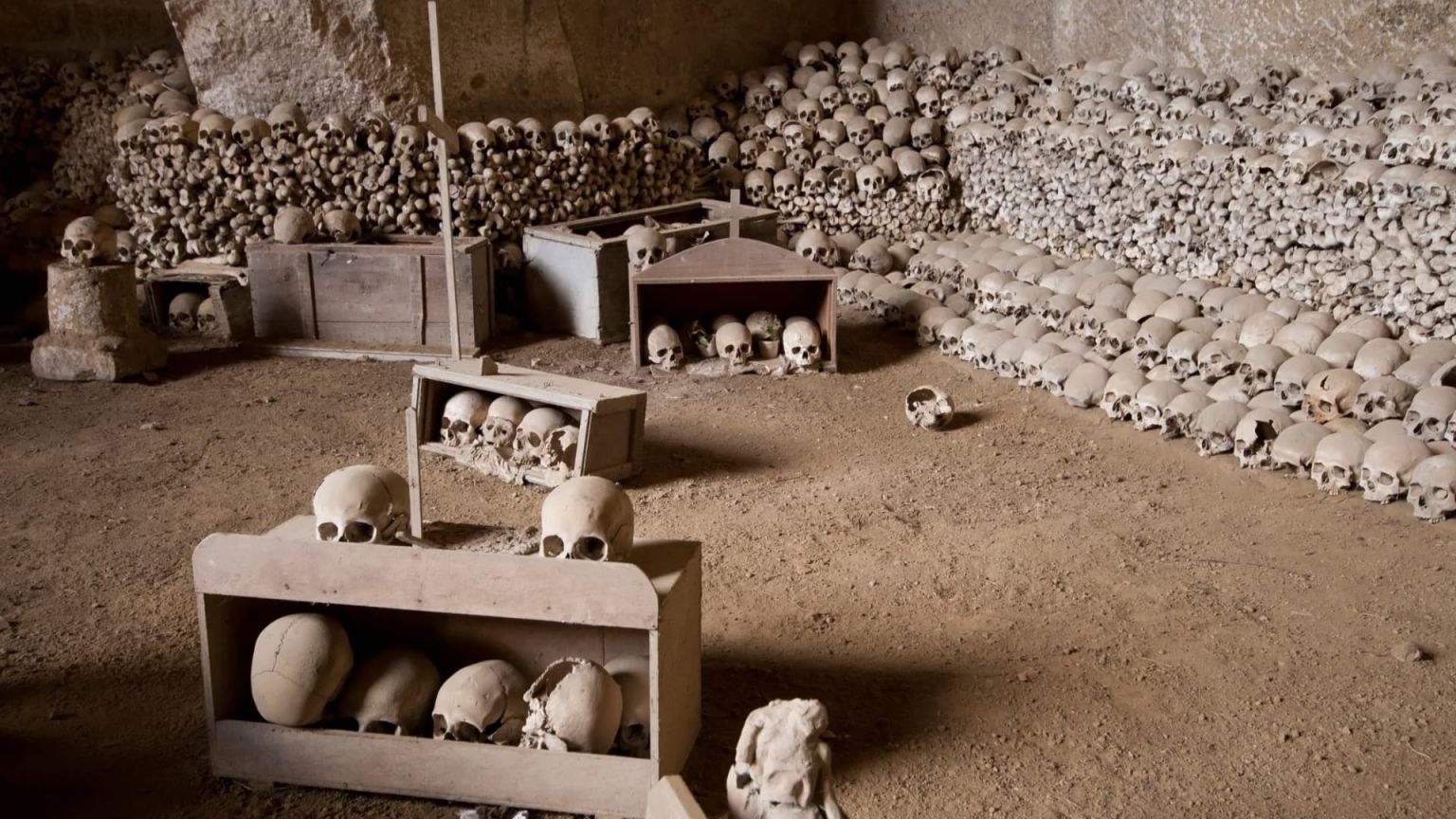

Cimitero delle Fontanelle, one of Naples' most fascinating and mysterious sites, will finally reopen its doors on Sunday, April 19th 2026, after a long five-years closure. Located in the Sanità district, an enchanting neighborhood with its extraordinary heritage of art and traditions, this old and peculiar cemetery with and incredible history is once again ready to welcome visitors from around the world.
Renovated, safer, and barrier-free, the Cimitero delle Fontanelle will be inaugurated on April 18th 2026, the day before the official opening. A solemn ceremony will take place at nearby Largo Totò, starting at 9:00 a.m. The event is eagerly awaited because, after being closed for safety resons, the historic ossuary that more than any other places represents the devotion of the common people, will finally be returned to the city and its guests.

How to visit Cimitero delle Fontanelle: useful info
If you come to Naples, you can't miss this iconic site that unites religion, superstition, and tradition. Furthermore, you'll soon be able to visit it even more conveniently thanks to the Naples Pass, which provides discounted access to Naples' major attractions.
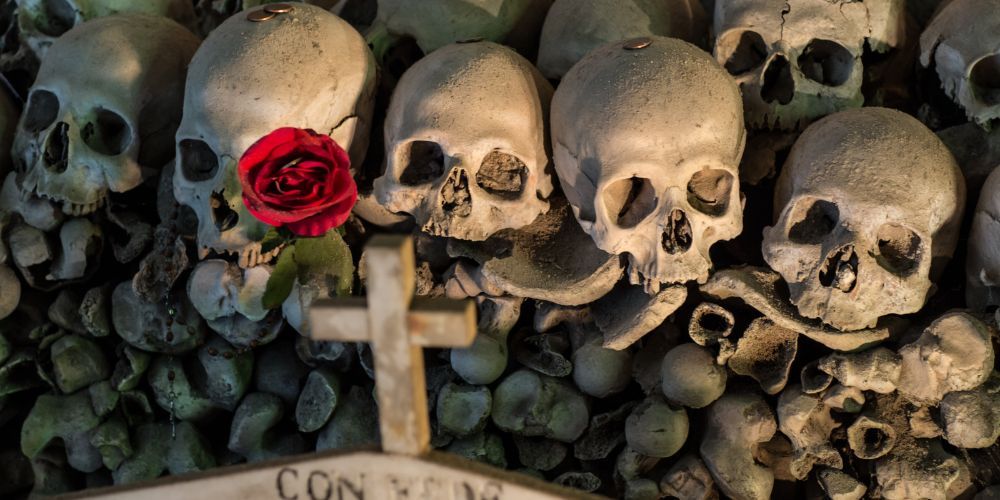
This is a must-see place because it'll allow you to experience a unique aspect of local culture: the cult of the "anime pezzentelle" (little souls), which represents the care and love Neapolitans have always shown for the deceased, including those they never knew in life.
The Fontanelle Cemetery is located at Via Fontanelle, 80.
The site is open daily from 10:00 a.m. to 6:00 p.m. (last admission at 5:15 p.m.), closed on Wednesdays.
Ticket prices range from €6 to €8, and reservations are required. You can book online on the official website.
The closest metro stop is Materdei, on Line 1. Alternatively, you can get off at the Museo stop, also on Line 1, and walk through the Rione Sanità, one of Naples' most iconic neighborhoods.
Find out more about Naples PassDiscover the legend of the ‘pezzentelle' souls
Before visiting the Cimitero delle Fontanelle, it's definitely worth learning about the legend of the "anime pezzentelle" (the poor souls), to which this place is closely linked. At first glance, it might seem like a macabre story, but it's actually a moving testimony to love and devotion, and to bonds that, in Neapolitan tradition, not even death can break.
The idea that the living could atone for their sins by helping the deceased leave Purgatory for Heaven is very ancient and still deeply rooted in Naples.
The people, who over the centuries have often found themselves oppressed and forced into poverty, have since time immemorial established a relationship of mutual aid with equally unfortunate souls, called "pezzentelle."
These were the souls of the poorest people, who had no one to say a prayer for them, nor even a dignified burial, as they were thrown into mass graves. People thus adopted skulls, cleaned them, decorated them, and said prayers for them. In return, the souls intervened to ensure that the wishes of the living were granted.
This relationship between the living and the dead has never ended, and in Naples there are still many testimonies to it, between mistery and religion, as can be seen, for example, in the Church of Purgatorio ad Arco on Via dei Tribunali, as well as, of course, at the Cimitero delle Fontanelle.
Cimitero delle Fontanelle, a five-century-long history
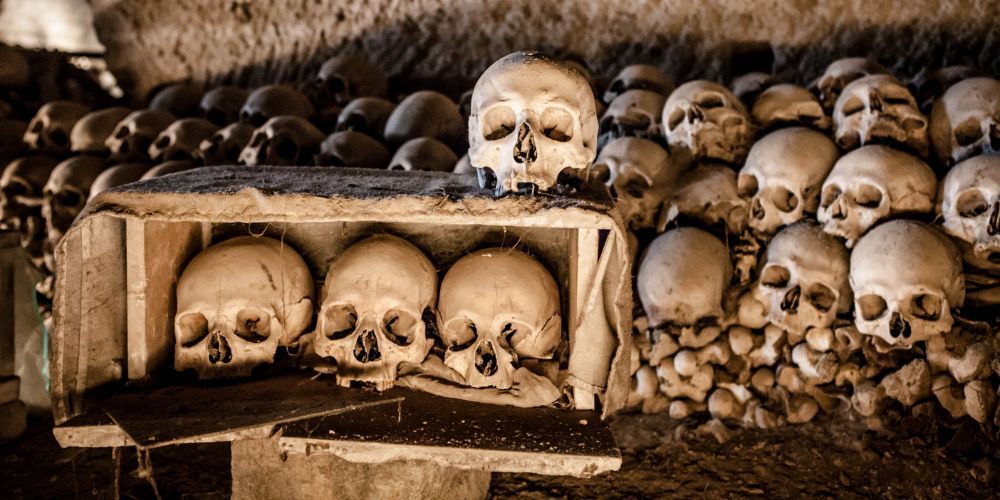
The history of this ossuary begins around the 16th century, when churches were running out of burial places and it became necessary to resort to tuff quarries as an alternative.
Cimitero delle Fontanelle was among these, but it became particularly important after the plague epidemic of 1656. Of the 250,000 victims of the terrible disease, many were buried here. The same thing happened in the 19th century, both after Napoleon issued the Edict of Saint-Cloud, banning cemeteries within the city walls, and after yet another epidemic. Legends say, that this time even the body of the poet Giacomo Leopardi was brought to the Fontanelle.
In the 20th century, the Church attempted to ban the widespread practice of adopting skulls, even going so far as to close the ossuary. It was to no avail, as not only has the custom persisted, but Cimitero delle Fontanelle has become an iconic and increasingly beloved site.
What to see at Cimitero delle Fontanelle
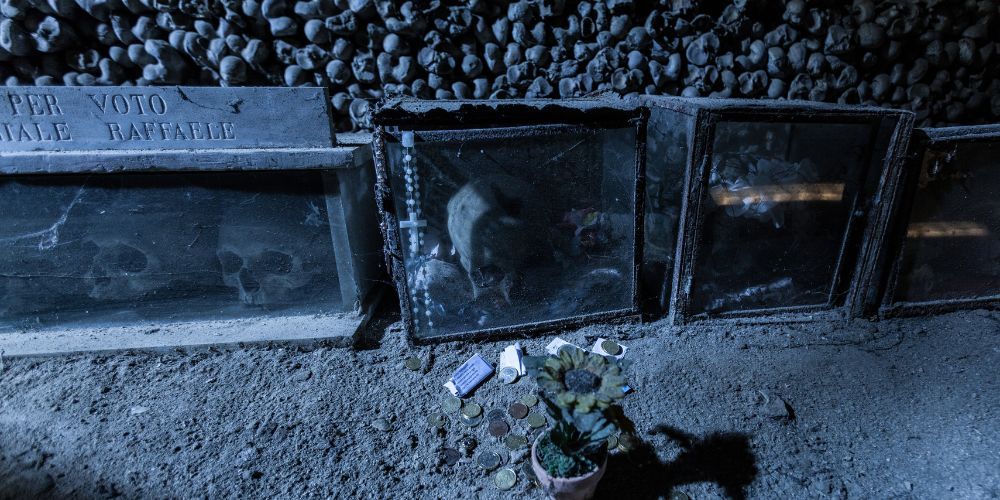
Entering the Fontanelle Cemetery, you'll find yourself inside a huge cave carved into the tuff rock, softly lit and spanning 4000 square meters. Skulls are arranged along the walls basically everywhere, and there are several that have been placed in small glass cases by the people who "adopted" them.
The space is divided into three naves, one of which houses the statue of Don Gaetano Barbati, the priest who in 1872 had the entire ossuary reorganized to create orderly pathways.
There are also several rooms with distinctive features. The Courthouse, for example, is where the skulls are arranged like a jury during a trial. Golgotha is where three large wooden crucifixes are located. The Bone Library is where the pious women who helped Don Gaetano Barbati arranged the bones around the statue of Christ.
Among the hundreds of skulls housed here, some are particularly famous. Among the most beloved, to name a few, there are the Captain, who helps women seeking husbands, and Concetta, also known as the sweating skull because it is always covered in a veil of condensation.
This is, anyway, a place where silence speaks, and every skull tells a story just waiting to be discovered.
About the author
Written on 17/04/2026
Paola Cirino
A content writer who can't help but travel. I'm also a food lover and very passionate about cinema.

Paola Cirino
Cimitero delle Fontanelle, a place of charm and mystery, is ready to reopen on April 19th 2026, after 5 years of closure.