
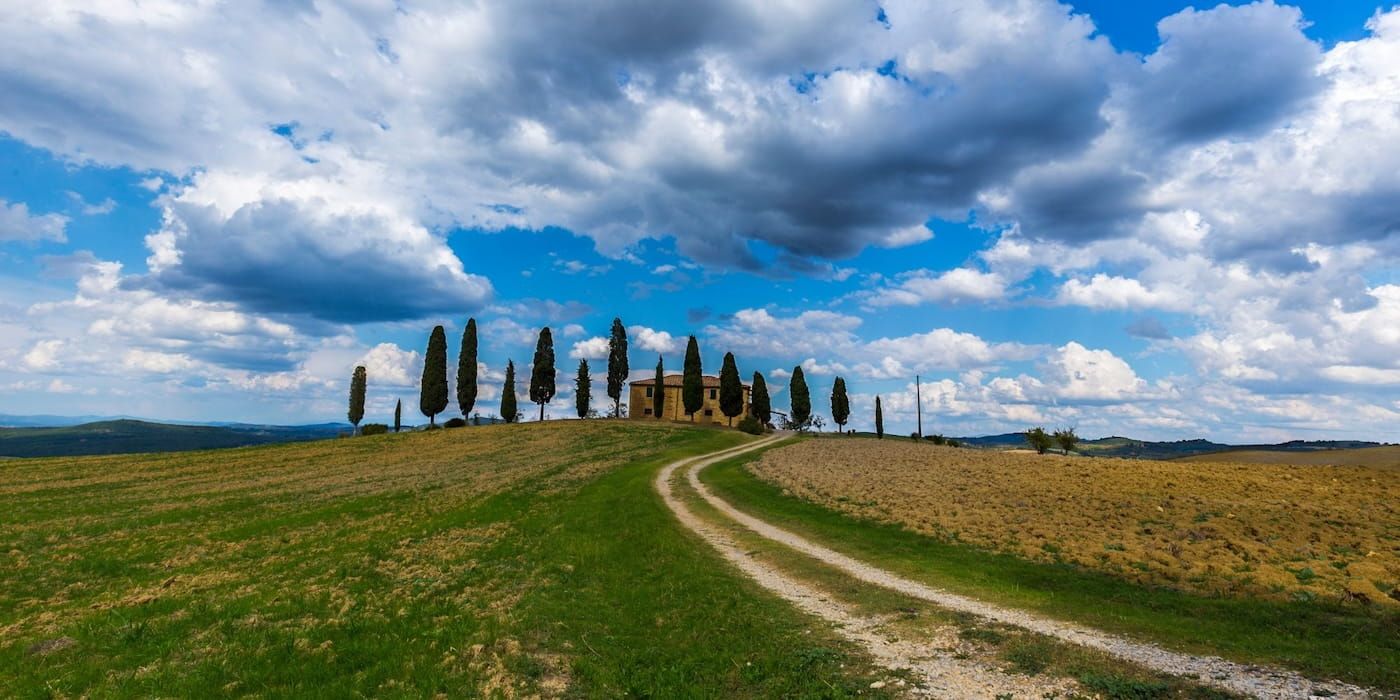

From the Cisa Pass, Via Francigena enters a landscape where rolling hills guide us through medieval villages and remarkable art cities, on a journey that leads toward its historic heart, set within the timeless frame of Rome.
In this section in Central Italy, the landscape offers a balance of history, nature, and spirituality. Lakes, woodlands, and hilltops reveal small stone-built historic towns and monastic complexes that still preserve their role as places of welcome and contemplation.
Between Tuscany and Lazio, Via Francigena also becomes an experience of slowness: a passage through greenery, along paths that trace bodies of water and rural areas where time seems to expand. A setting that accompanies our journey and, at the same time, transforms it, inviting us to experience it with a light step and an open gaze.
Via Francigena in Tuscany and Lazio: hills, art cities, and sacred places
This section of Via Francigena is arguably the most famous and widely recognized, especially the stretch that reaches the most scenic heart of medieval Tuscany, through the iconic landscapes of Val d’Elsa and Val d’Orcia.
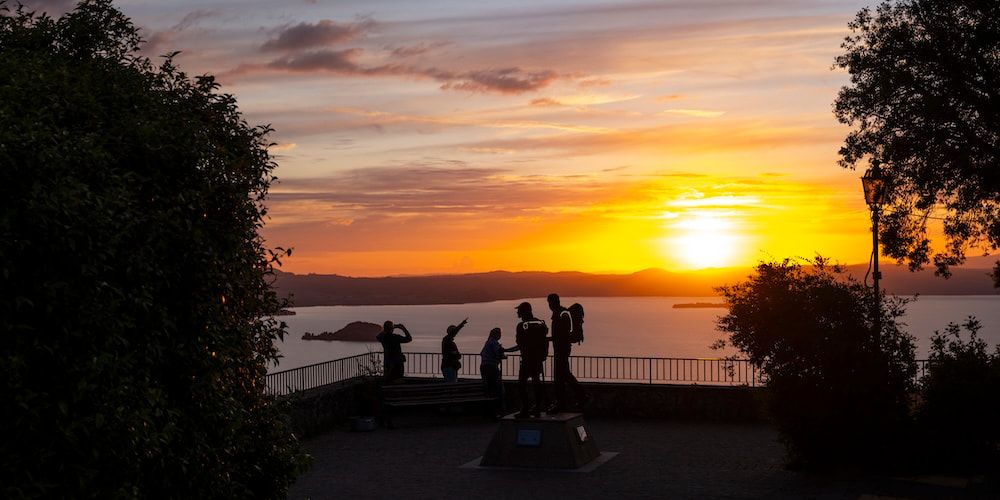
We follow gravel roads that lead us into Lazio, crossing the beautiful Tuscia region with its volcanic lakes and hilltop towns perched on tuff cliffs, where the volcanic landscape still preserves an intimate and ancient atmosphere.
Our journey intertwines with a widespread sense of spirituality, shaped by abbeys, parish churches, and sacred places that for centuries welcomed pilgrims heading toward Rome.
Arriving in the Capital represents the symbolic completion of the medieval pilgrimage: for centuries, reaching Rome meant finishing the journey and achieving its long-awaited goal.
Today, however, Via Francigena doesn't end here. The modern route continues southward, crossing a completely different landscape, that of Castelli Romani and Agro Pontino, passing through places of great spiritual value such as the Abbey of Fossanova, before reaching Terracina, Formia, and finally Minturno on the Tyrrhenian Sea, the last town before entering Campania.
Here are the official stages of Central Via Francigena in Tuscany and Lazio:
STAGE → KM
1 Passo della Cisa → Pontremoli 19,3
2 Pontremoli → Aulla 32,3
3 Aulla → Sarzana 17,4
4 Sarzana → Massa 28,6
5 Massa → Camaiore 25,9
6 Camaiore → Lucca 26,1
7 Lucca -→ Altopascio 18,5
8 Altopascio → San Miniato 29,0
9 San Miniato → Gambassi Terme 23,9
10 Gambassi Terme → San Gimignano 13,4
11 San Gimignano → Monteriggioni 30,5
12 Monteriggioni → Siena 20,6
13 Siena → Ponte d'Arbia 25,7
14 Ponte d'Arbia → San Quirico d'Orcia 26,2
15 San Quirico d'Orcia → Radicofani 32,5
16 Radicofani → Acquapendente 23,6
17 Acquapendente → Bolsena 22,8
18 Bolsena → Montefiascone 16,5
19 Montefiascone → Viterbo 17,6
20 Viterbo → Vetralla 21,9
21 Vetralla → Sutri 23,9
22. Sutri → Campagnano di Roma 23,8
23 Campagnano di Roma → La Storta 23,0
24 La Storta → Roma 19,4
25 Roma → Castel Gandolfo 26,1
26 Castel Gandolfo → Velletri 21,2
27 Velletri → Cori 18,6
28 Cori → Sermoneta 18,9
29 Sermoneta → Sezze 10,9
30 Sezze → Abbazia di Fossanova 20,9
31 Abbazia di Fossanova → Terracina 20,6
31b Abbazia di Fossanova → Monte San Biagio 22,8
32 Terracina → Fondi 22,0
33 Fondi → Itri 15,0
34 Itri → Formia 21,0
35. Formia → Minturno 19,8
Places and villages in a breathtaking landscape
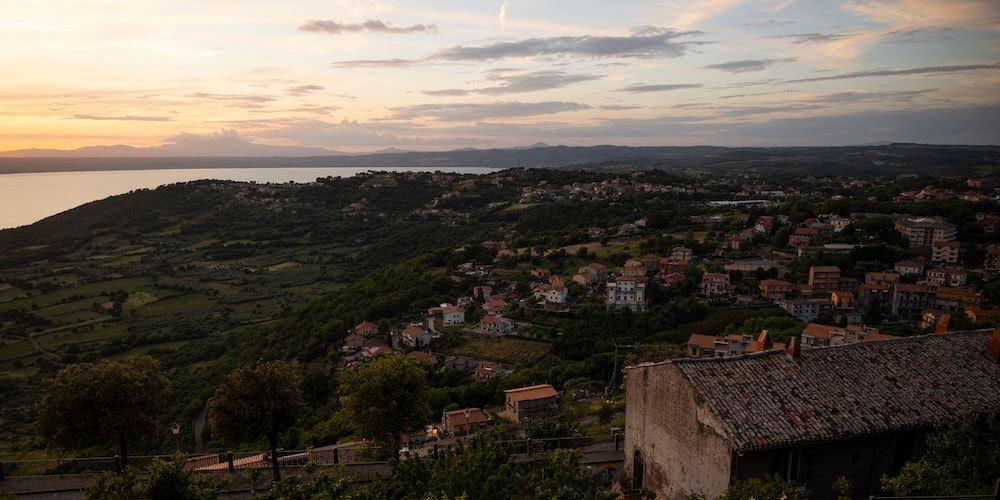
Between Lucca and San Miniato, Via Francigena still preserves the imprint of ancient communication routes, with pilgrims’ hospices and villages that grew along the main historic corridors, amid the white roads of the Tuscan countryside.
San Gimignano dominates the landscape with its spectacular medieval towers. Not to be missed are the beautiful walled town of Monteriggioni and, of course, the enchanting city of Siena.
After the urban charm of Piazza del Campo, we move into the landscapes of the Crete Senesi and the cypress-lined hills of Val d’Orcia, which, especially around San Quirico, seem to shape the land like the brushstrokes of a great artist.
In Lazio, the volcanic Tuscia awaits us, with Lake Bolsena, Montefiascone, and Viterbo, the City of the Popes. And then, of course, Rome, with its churches, monuments, and millennia of history.
Does our journey end here? No, because our Central Italy itinerary continues southward, passing through Castel Gandolfo and reaching the Abbey of Fossanova, where the atmosphere becomes more intimate and monastic.
Finally, to reach Campania and officially enter Southern Italy, we cross the Pontine Plain and arrive at the Tyrrhenian coast of Terracina, Fondi, and Formia.
Spiritual atmosphere, from Medieval Tuscany to the abbeys of Lazio
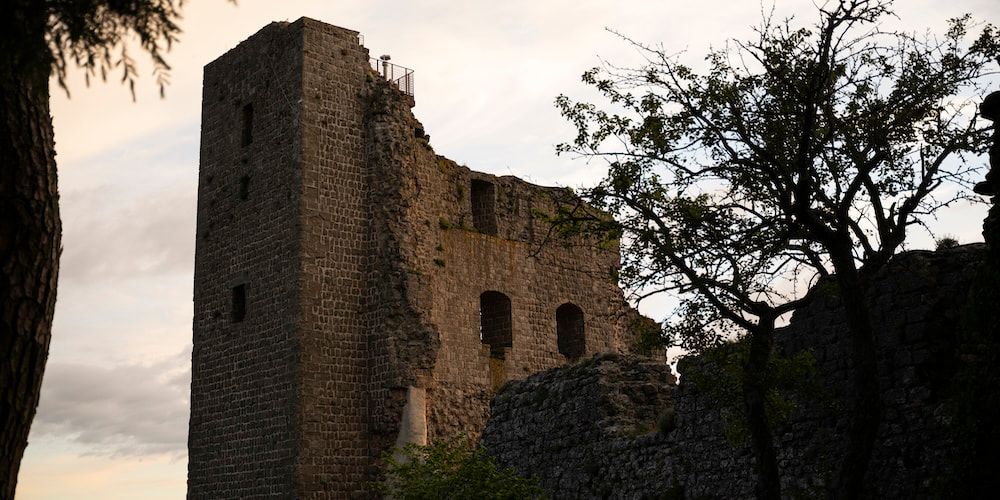
The spiritual dimension of Central Via Francigena is spread across a network of key sites starting in Tuscany, where we can find Romanesque parish churches, hospitality structures, and fortified villages that were an integral part of the support system for travelers.
But it's also, and above all, the intimacy of the hills that strikes and draws us into a contemplative, bucolic, and almost mystical atmosphere.
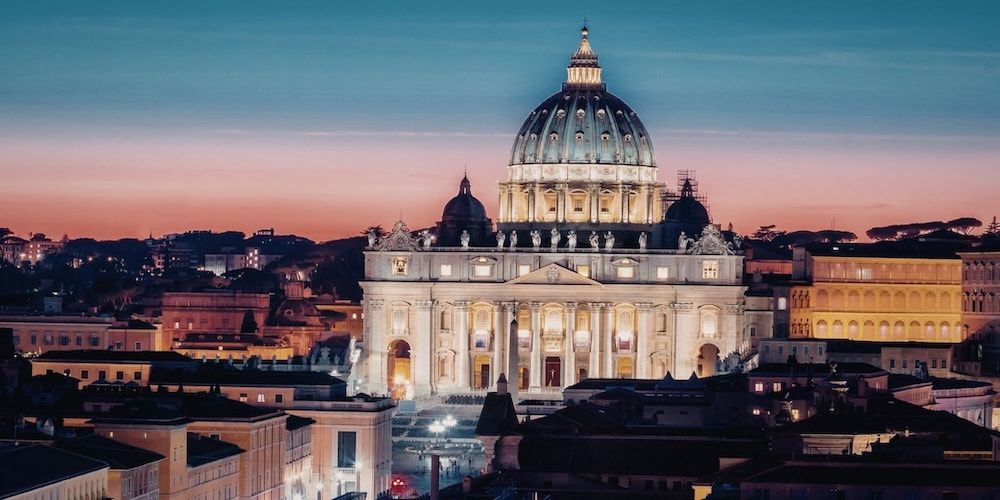
In Lazio, the center of gravity shifts toward a monastic and secluded spirituality, with the obvious exception of the Capital and St. Peter’s Basilica, the ultimate focal point of the Via Francigena and the final destination of the medieval pilgrimage.
Viterbo preserves the memory of papal power, while south of the Eternal City, the Abbey of Fossanova becomes a truly unique place and a perfect example of essential and rigorous Cistercian architecture.
Food and wine culture: two complementary identities
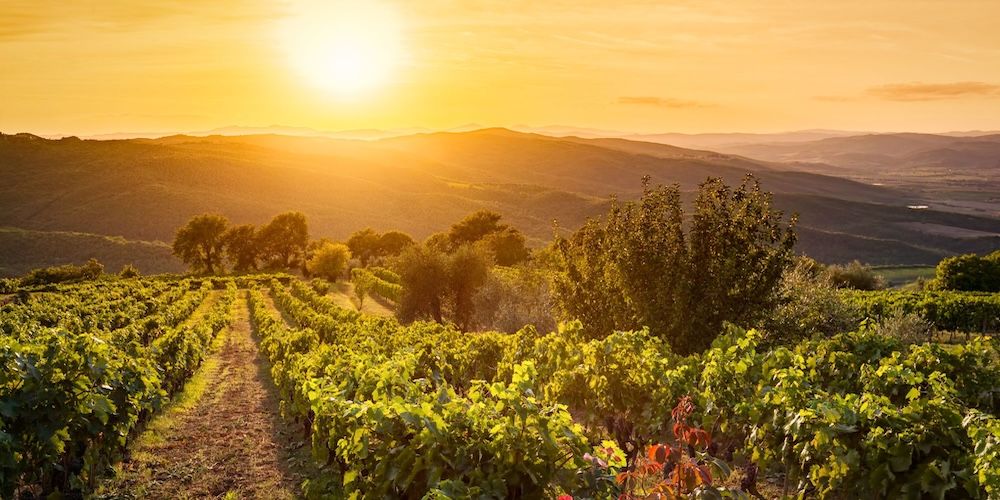
In the Tuscan countryside, we encounter a cuisine built on a precise balance between landscape and tradition.
Pane sciocco, extra virgin olive oil, legumes, cured meats, and pecorino cheeses reflect an agricultural culture that is still deeply rooted in the territory. Around Montalcino, the journey is enriched by one of Italy’s most celebrated wines, Brunello di Montalcino, an expression of a region devoted to high-quality winemaking.
Further on, entering the Tuscia region of Lazio, cuisine becomes simpler and more intimate, shaped by garden vegetables, cheeses, soups, and dishes connected to the lakes and volcanic hills.
In Rome, popular recipes such as cacio e pepe, carbonara, and amatriciana coexist with a broader and more layered culinary tradition. Rural dishes stand alongside a cuisine shaped by centuries of movement, encounters, and cultural exchange.
Finally, in the Pontine Plain and along the coast, we can find maritime influences creating a cuisine that looks increasingly toward the Tyrrhenian Sea through fresh and distinctly Mediterranean flavors.
When to go: Tuscany’s scenic landscapes and Lazio’s spirit
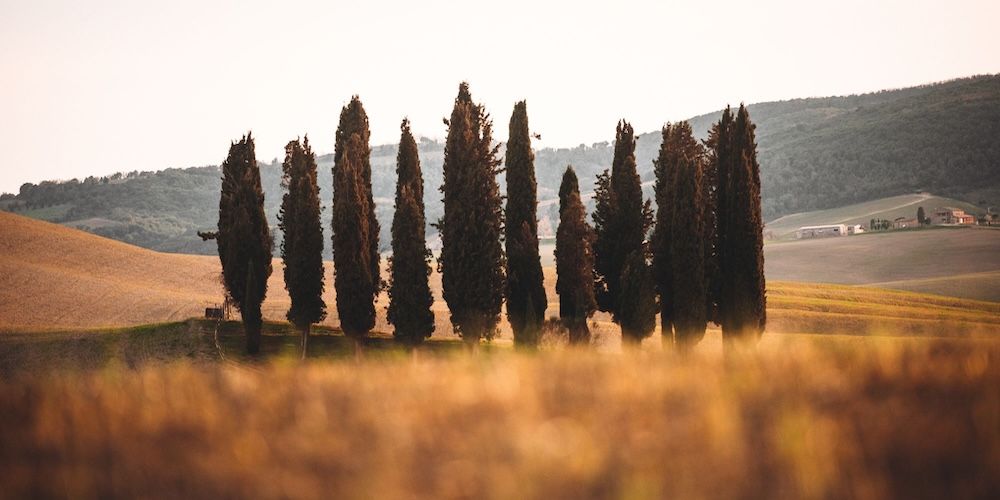
In autumn, Via Francigena through Tuscany and Lazio becomes truly special, offering the chance to admire the golden colors of fall foliage and enjoy an atmosphere of complete peace among abbeys and sacred places.
At this time of year, Tuscan hills reveal their strongest contrasts, while mild temperatures make it easier to maintain a steady pace, even through the stages of the Val d’Orcia and inland Lazio.
Compared with the longer distances of the Northern and Southern Via Francigena, the stages here are fewer and generally shorter. Walking is the best way to experience this section, allowing us to connect with the landscape, admire hilltop villages, visit a winery, or simply pause to take in the quieter corners of Tuscia.
Spring is also an excellent season to set out, while summer is naturally warmer and busier.
And winter? Winter can soften some of the visual impact of the landscapes, and traveling on foot becomes more demanding. At the same time, it's the perfect season to dedicate more time to the art cities along the route—there are many worth exploring, including Lucca, San Gimignano, Siena, Viterbo, and, of course, the extraordinary city of Rome.
The meaning of a journey along Central Via Francigena
Few other sections of Via Francigena highlight so clearly the contrast between two complementary dimensions that unfold across Tuscany and Lazio.
In Tuscany, we are fortunate to admire the most iconic expression of the route, immersed in a magnificent setting shaped by a perfect balance between culture and nature. As we enter Lazio, our perception gradually changes, as Tuscia introduces a more intimate and inward-looking atmosphere.
In the end, it’s an itinerary that feels almost designed to accompany us toward Rome, allowing the landscapes to set the rhythm and to reveal some of the most evocative places of the soul in Central Italy.
And when we finally arrive at our destination, within the unique setting of St. Peter’s Square, we feel the desire not only to celebrate the journey we have made, but also to set out again, as if the journey could never truly be contained within a single destination.
About the author
Written on 04/06/2026
Alessandro Savino
SEO Copywriter & web editor: I love transforming my passion for writing into engaging narratives, creatively and precisely exploring the beauty and complexity of our wonderful country.

Alessandro Savino
Lose yourself in the magic of Via Francigena in Central Italy, among idyllic hills, lakes, and hidden abbeys on the road to Rome.