
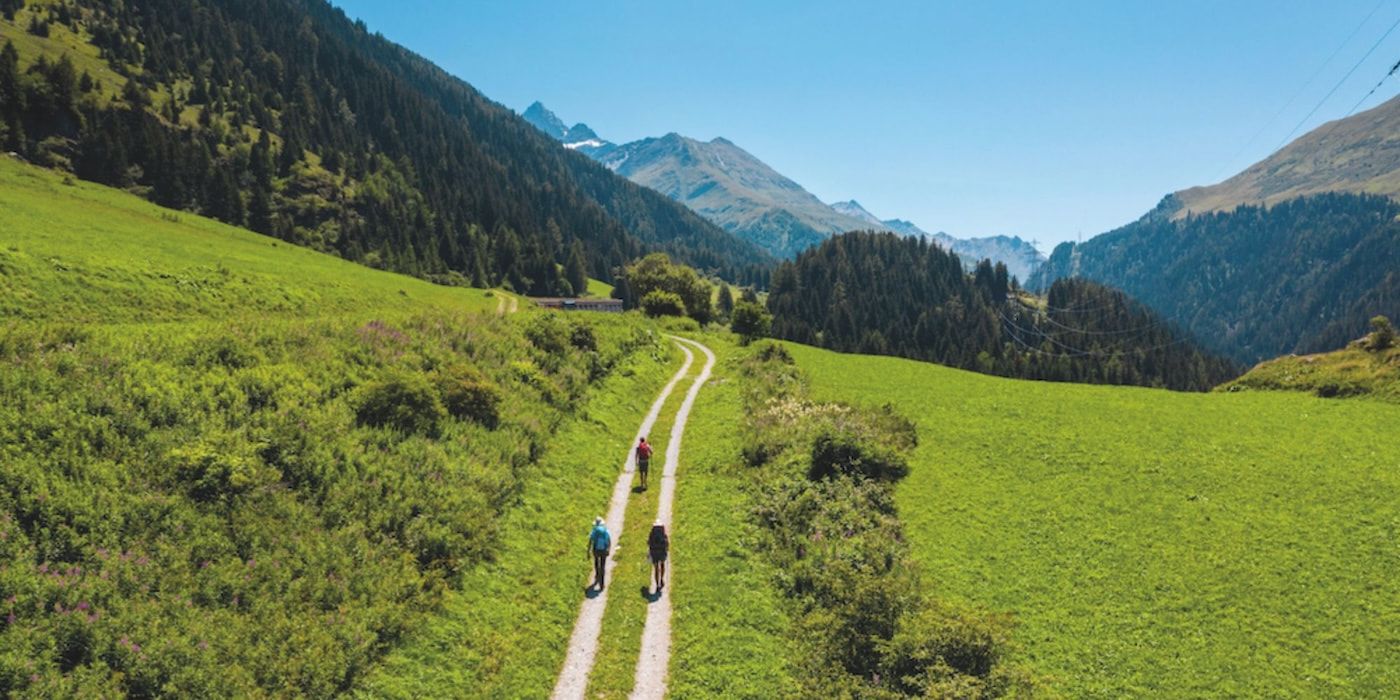

There’s a moment, crossing the Gran San Bernardo Pass, when Northern Via Francigena opens up before us, immediately delivering a shiver of awe and reverence, as if the route itself were setting its own rhythm and measure.
So many stages, so many kilometers ahead: from the majestic mountains of the Aosta Valley to the orderly fields of the Po Valley, all the way to the first undulations of the Apennines. Along this long passage, Via Francigena tells the story of an Italy that constantly changes shape, without ever losing its charm.
It’s a journey that captivates precisely because it does not rely on spectacle, but allows the landscape, its layers, and its traditions to speak for themselves, leaving a lasting imprint on those who walk it.
From the Alps to the plain: the historic backbone of Northern Via Francigena
We take the first breath of this Northern Via Francigena itinerary high in the mountains, against the backdrop of the Gran San Bernardo Pass, the historic gateway into the Italian section of the route.
Entering the heart of the Aosta Valley, numerous castles emerge as former lookout points and defensive strongholds, while small historic villages accompany our journey south toward Piedmont.
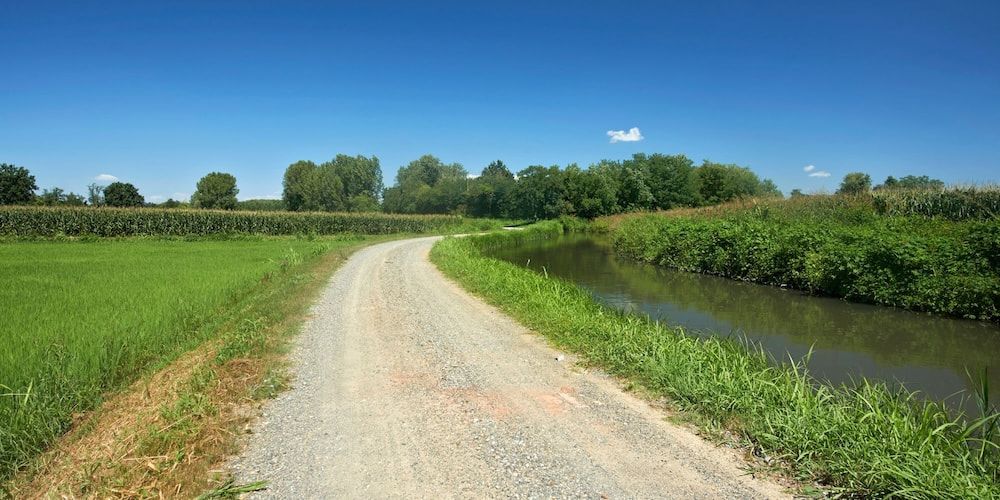
Then the vast plain unfolds before us, leading us through rice fields, canals, farmsteads, and historic towns. Along this stretch, cycling can become an excellent companion, allowing us to combine multiple stages and take small detours off the main route, exploring embankments, villages, and quiet back roads across the Po Valley.
After the cities of Pavia and Piacenza, our route gradually approaches the first hills of western Emilia. The stages toward Fiorenzuola d’Arda and Fidenza mark the transition from open lowlands to a more varied and textured landscape.
Climbs return to the foreground among the valleys and forests of Tuscan-Emilian Apennines, eventually leading to the Cisa Pass, the natural threshold between Emilia and Tuscany.
Here are the official stages and distances along the Northern Via Francigena:
STAGE → KM
1 Gran San Bernardo → Echevennoz 14,9
2 Echevennoz → Aosta 13,9
3 Aosta → Châtillon 27,7
4 Chatillon → Verres 19,2
5 Verrès → Pont-Saint-Martin 14,8
6 Pont-Saint-Martin → Ivrea 22,9
7 Ivrea → Viverone 20,2
8 Viverone → Santhia 16,7
9 Santhia → Vercelli 29,2
sus Valle di Susa → Vercelli 278,6
10 Vercelli → Robbio 18,6
11 Robbio → Mortara 14,2
12 Mortara → Garlasco 20,7
13 Garlasco → Pavia 24,6
14 Pavia → Santa Cristina e Bissone 28,0
15 Santa Cristina e Bissone → Orio Litta 16,1
16 Orio Litta → Piacenza 23,9
17 Piacenza → Fiorenzuola d'Arda 31,7
18 Fiorenzuola d'Arda → Fidenza 22,4
19 Fidenza → Fornovo di Taro 34,0
PAR Parma → Fornovo di Taro 38,0
20 Fornovo di Taro → Cassio 20,9
21 Cassio → Passo della Cisa 19,2
Villages, cities and landscapes: a mosaic That changes step by step
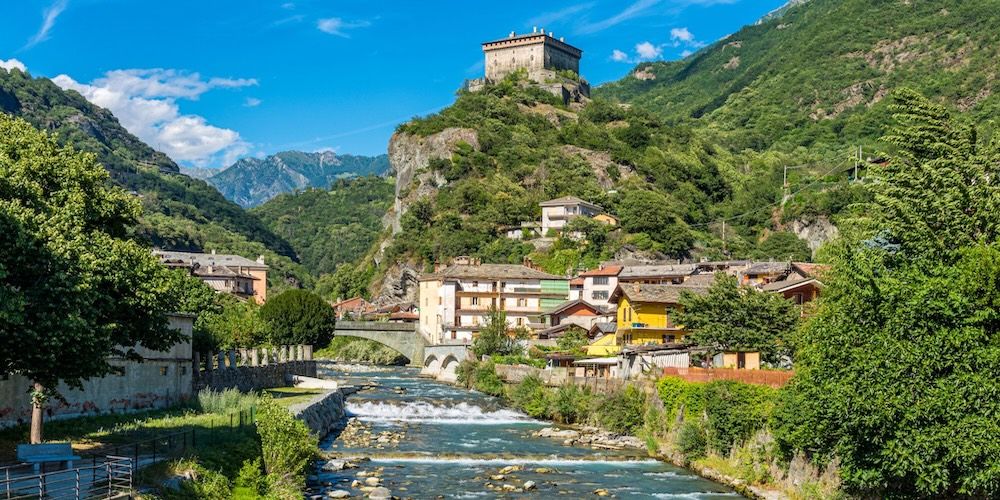
Along this section of Northern Via Francigena, there’s no shortage of places worth remembering.
Aosta is the first unmissable stop, bringing together some of the most important Roman landmarks in the Alpine region, from the Arch of Augustus to Porta Praetoria, all the way to the intimate charm of its historic center.
Châtillon and Verrès reveal the more intimate side of the Aosta Valley, with castles dominating the slopes: the Castle of Ussel watches over the landscape from its panoramic position, while the Castle of Verrès stands out with its severe and compact silhouette. A little farther on, the spectacular Fort of Bard appears, built in a strategic position overlooking one of the valley’s narrowest passages.
Pont-Saint-Martin and Ivrea mark the transition between the Alpine world and the plains, while Vercelli leads the route into the endless horizon of the rice fields.
In Lombardy, Pavia adds the weight of history and deserves a longer stop. Highlights include the Covered Bridge, the city’s symbol and one of the most photographed landmarks along the Via Francigena, the University, and the Basilica of San Michele Maggiore, closely linked to the coronations of the Lombard Kings.
In Emilia, it’s worth taking time to explore the historic center of Piacenza and admire Fidenza Cathedral, a landmark for generations of pilgrims before the final ascent toward the Apennines and the Cisa Pass.
Spiritual places: the deeper dimension of a journey through Northern Italy
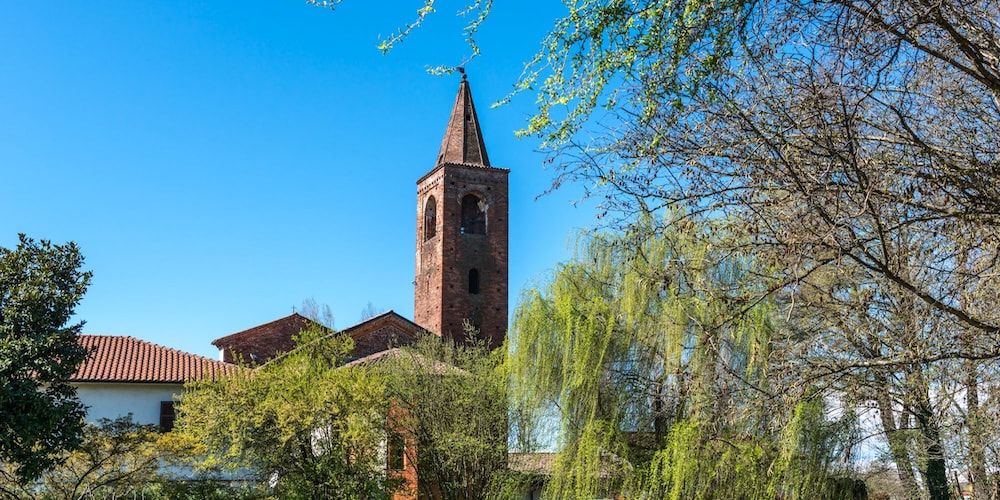
Via Francigena is, before being a geographical route, an intimate and spiritual journey. This spirituality is not concentrated in a single great sanctuary but unfolds quietly along the entire route.
From the hospice at the Great St. Bernard Pass to the parish churches scattered across the valley, and the monastic complexes that punctuate the plains, Northern Via Francigena tells the story of a grounded and everyday spirituality, deeply connected to local life.
Between the Lomellina and Pavia areas, we can discover several hidden and evocative religious sites, such as the Church of San Pietro in Robbio, known for its remarkable frescoes, and the Abbey of Sant’Albino in Mortara, reminders of how the route served for centuries as a network of religious centers and places of hospitality.
Just a few kilometers from Pavia, the Certosa is another place not to miss, even though it lies slightly off the official route. Commissioned by Gian Galeazzo Visconti in 1396 as a family chapel, it became one of the great masterpieces of the Lombard Renaissance and still offers a timeless atmosphere and a deep sense of calm and contemplation today.
Food and wine culture along Northern Via Francigena
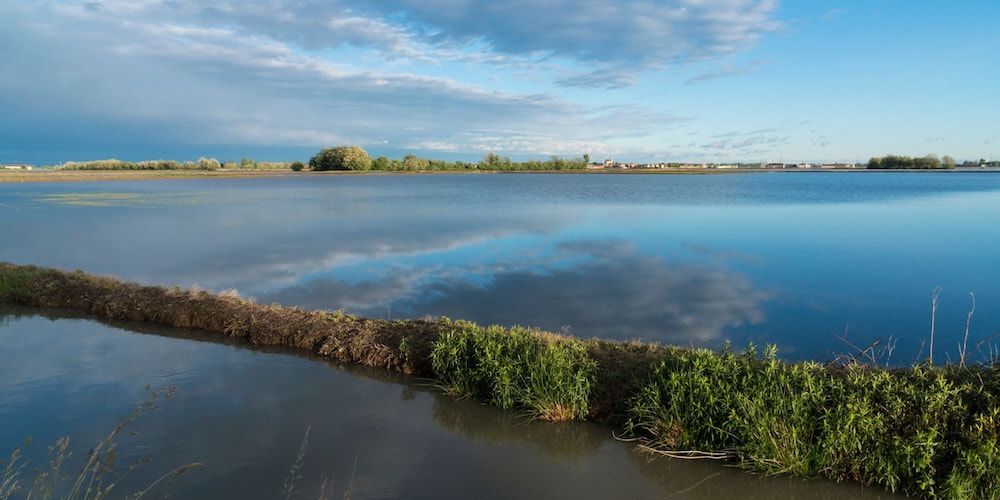
Local products and traditional recipes are another unique part of the experience we can discover and enjoy along Via Francigena.
Northern Italy is sometimes underestimated from a food and wine perspective. Yet it offers extraordinary regional traditions, ranging from the mountain cheeses of the Aosta Valley to the strong rice culture that shapes both Piedmont and Lombardy.
Vercelli and the Lomellina area represent the heart of this identity: an agricultural landscape reflected directly in its cuisine, where local dishes are deeply connected to the rhythm and structure of the land itself.
Finally, Emilia should not be overlooked. From the cured meats of the Piacenza and Parma areas to cheeses such as Parmigiano Reggiano, without forgetting stuffed pasta traditions including tortelli, cappelletti, and anolini.
When and how to travel on Northern Via Francigena
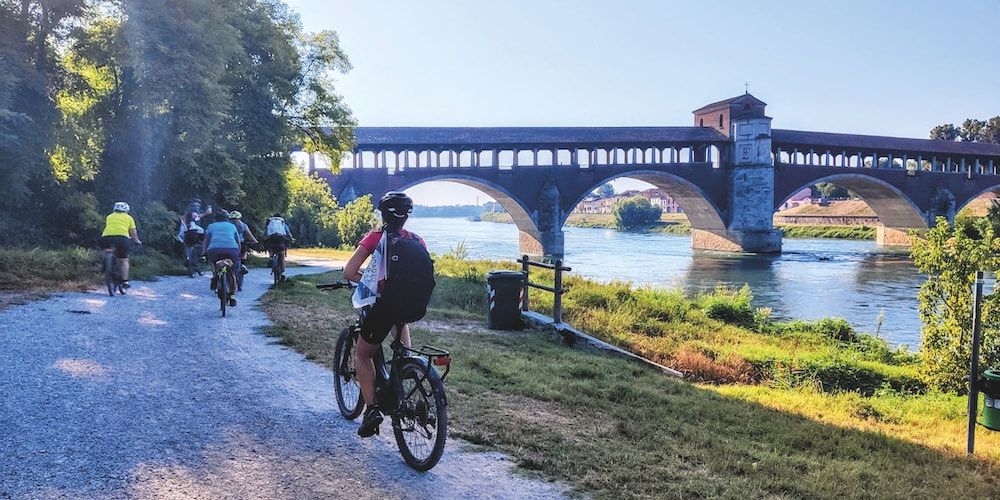
Spring in Northern Italy offers landscapes in transition, with snow still covering the mountains while the plains slowly awaken after winter. Early autumn is another excellent time to go, while summer works well in the mountains but is less suitable for walking or cycling across the Po Valley because of the hot and humid climate (and yes—mosquitoes can be intense).
This route can be experienced as a nature itinerary, following the gradual transformation of the landscape from the Alps to the Apennines, or as a culinary journey through the food identities of the Aosta Valley, rice-growing Piedmont, agricultural Lombardy, and Emilia.
Then, there’s the spiritual dimension—perhaps the most authentic of all—leading us through places that often feel remote and almost mystical, turning each stage into a journey inward as much as across the landscape.
The silent secret of Northern Via Francigena
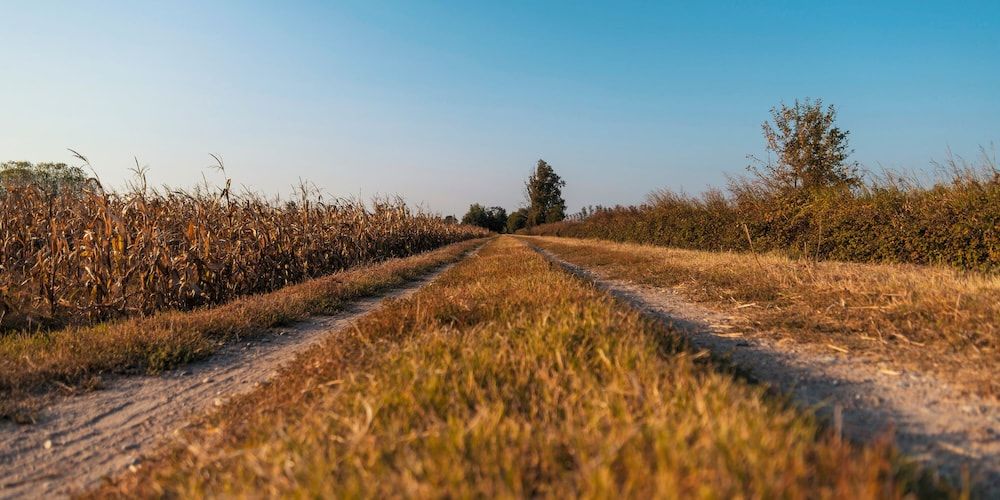
In the end, Northern Via Francigena tells us about a journey that cannot be defined by a single landscape. Rather, its true secret lies in its ability to surprise us where we least expect it.
If the scenery of mountain passes and Alpine valleys takes our breath away, it is when we find ourselves within the stillness of the Po Valley that we can truly come into contact with the meaning of pilgrimage.
At first glance, the plain may appear uniform and almost monotonous. Yet it is precisely here that one of the most authentic faces of Northern Italy emerges, with rice fields reflecting the sky, canals, isolated farmsteads, and the slow rhythm of the countryside.
And perhaps this is the memory we carry with us more than any other. The discovery of a land that does not seek to impress, but rather to reveal its unique secrets to those who take the time to explore and understand it.
About the author
Written on 04/06/2026
Alessandro Savino
SEO Copywriter & web editor: I love transforming my passion for writing into engaging narratives, creatively and precisely exploring the beauty and complexity of our wonderful country.

Alessandro Savino
Northern Italy along Via Francigena: from Gran San Bernardo to the Apennines, passing through Alps, plains, villages, and lasting traditions.