
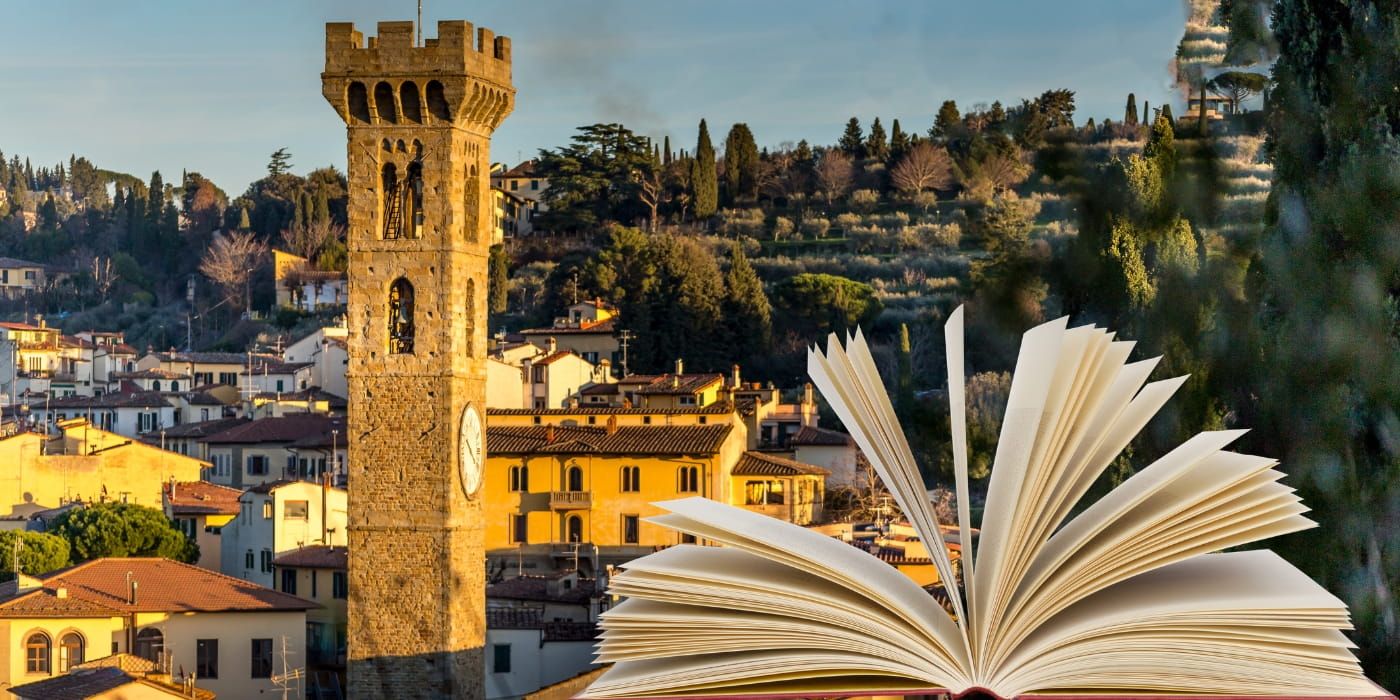

Many great novels are born from real places, villages, islands and cities that have inspired writers from all over the world.
We went in search of the traces left by some of the most celebrated writers inspired by Italy, building a journey through Italian literary towns that have given life to iconic stories.
The result is an itinerary for those who love to read, travel, and move between pages and landscapes without drawing too sharp a line between imagination and reality.
5 Literary Towns in Italy Where Unforgettable Novels Were Born
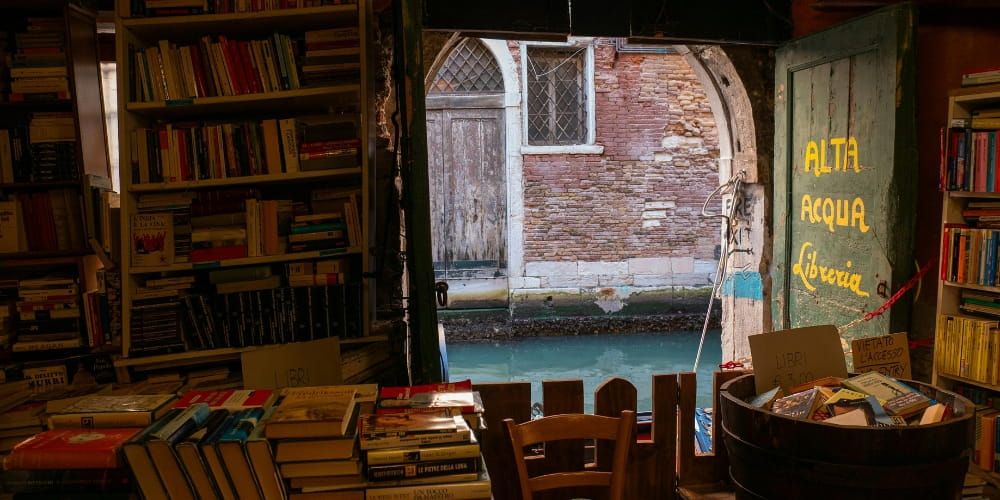
Italy’s landscapes have long been woven into the tapestry of literature.
While Rome, Florence, and Venice may claim the limelight, it is often the smaller or lesser-known places that have offered writers sanctuary and inspiration for timeless novels.
We’ve gathered 5 Italian literary towns that, in different ways, have entered the imagination of acclaimed Italian and international authors – and could easily become your next travel destination.
Here are 5 Italian towns that have inspired famous writers:
– Fiesole – The Decameron, Giovanni Boccaccio
– Castelmola – Lady Chatterley’s Lover, D. H. Lawrence
– Sanremo – The Path to the Nest of Spiders, Italo Calvino
– Bordighera – Call Me by Your Name, André Aciman
– Santa Margherita di Belice – The Leopard, Giuseppe Tomasi di Lampedusa
Related story – 10 books set in Italy you should read now
5. Fiesole – The Decameron, Giovanni Boccaccio
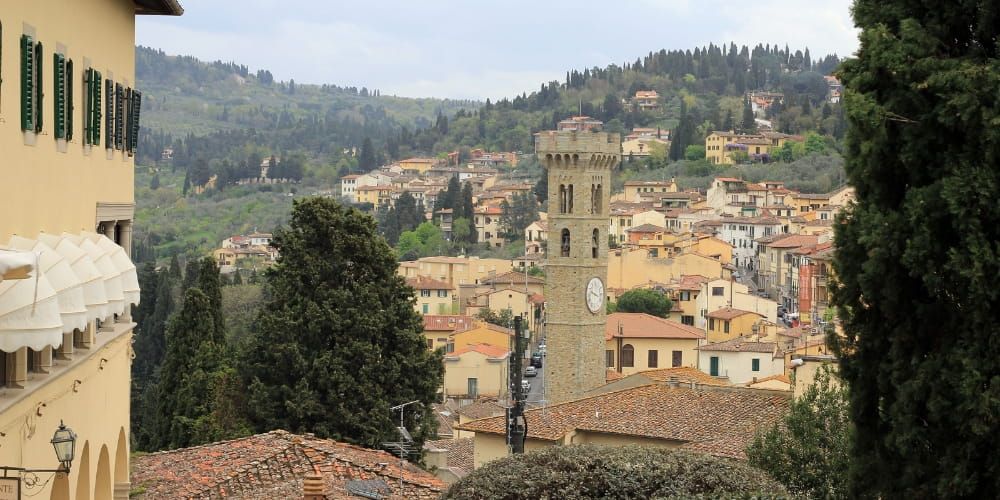
To step into the world of The Decameron, you only need to leave Florence behind and make your way up to Fiesole.
Boccaccio doesn’t imagine a generic setting – he describes these very hills, these neat terraces, these villas wrapped in greenery, these sweeping views over Florence.
The book is well known: one hundred tales of love, trickery, fortune’s twists, and the ever-present shadow of the plague in the background.
The village can be reached from Florence (even on foot), following Via Boccaccio and then Via Vecchia Fiesolana. Worth visiting are the Roman Theatre, the Convent and Missionary Museum of San Francesco, and the Cathedral of San Romolo.
Just outside the centre lies the almost fairytale-like Villa Palmieri, a historic residence surrounded by lush gardens among the largest in Tuscany – almost nine hectares, second only to the Boboli Gardens. For Boccaccio, it resembled an Eden, so he set the events of the Decameron’s Third Day here.
Over the centuries, many illustrious guests have passed through its rooms. Among them, Queen Victoria was particularly fond of the villa, so much so that she had her private apartments furnished according to her unmistakable style.
It is private property and is currently for sale, so it is not open to visitors. However, nearby Villa Schifanoia – home to the European University Institute – can be visited by appointment on selected days.
Book e-bike tour from Florence to Fiesole4. Castelmola – Lady Chatterley’s Lover, D. H. Lawrence
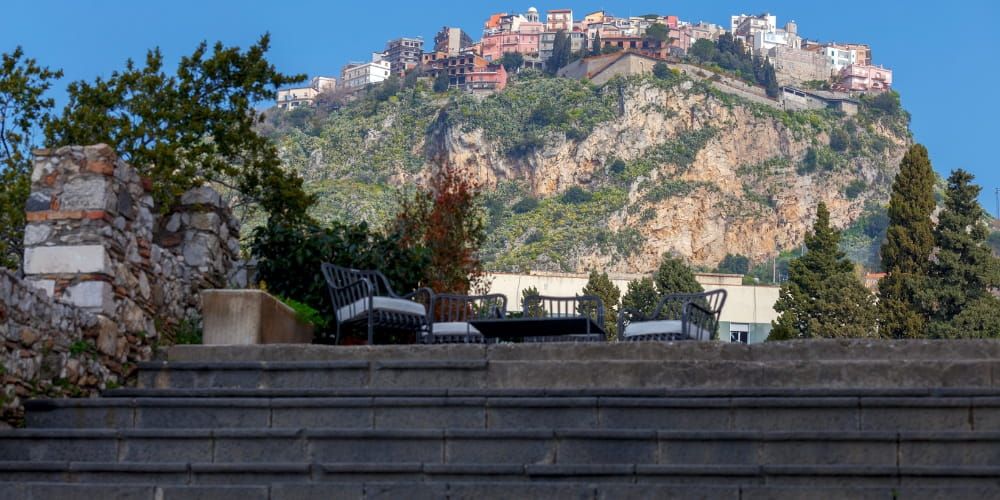
The hilltop village of Castelmola in Sicily is linked to one of the most controversial novels of the 20th century – and for reasons that are anything but purely literary.
In the 1920s, the English novelist D. H. Lawrence and his wife, Frieda Von Richthofen, spent time in Taormina. Locals say a young mule driver, Peppino D’Allura, used to take Frieda up to Castelmola so she could see a friend. Along the way, the two began an affair.
Their story is said to have sparked the central romance in Lady Chatterley’s Lover: a woman from a privileged world drawn to someone entirely different.
Today, Castelmola is home to about 1,000 people and is listed among Italy’s Most Beautiful Villages. It sits just above Taormina and is easy to explore. Walk through Piazza Sant’Antonino for sweeping views, climb up to the old castle ruins, and wander the narrow lanes that twist uphill. From the top, you can see Mount Etna and the Ionian coast spread out below.
Castelmola is worth the detour, also to discover treasures beyond its medieval churches and the famous views over Taormina. One example? The local almond wine.
Related story – The most beautiful villages in Sicily
Visit Taormina Theater, near Castelemola3. Sanremo – The Path to the Nest of Spiders, Italo Calvino
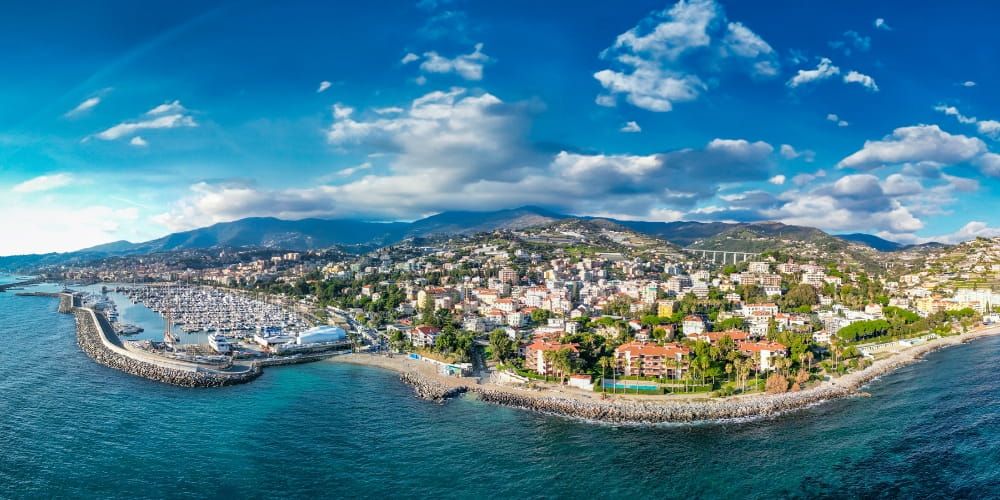
The Path to the Nest of Spiders was published in 1947 and marked Italo Calvino’s debut novel. The setting is never explicitly named, but all clues point to Sanremo, the town in the Liguria region where the writer grew up.
It is a novel about the Italian Resistance, though told through the eyes of an orphaned child, blending realism with an almost fairytale-like structure.
The story unfolds during the Second World War and follows a boy from “Carrugio Lungo”. A street with that very name really exists: a narrow alley in the old town of Sanremo, known as La Pigna.
If you walk through Sanremo today, you’ll find traces of Calvino everywhere. The city has made it easy to follow his footsteps, with plaques marking a path through the places that mattered most to him.
There are 38 stops in all: Villa Meridiana, where he grew up; the Church of San Giovanni, once home to the Calvino family garden; the Cinema Centrale, where afternoons slipped by; the Casino, the Civic Library with its vast Calvino archive, and many more along the way.
Related story – 15 unmissable contemporary Italian novels.
2. Bordighera – Call Me by Your Name, André Aciman
@regioneliguria Mare, eleganza e attività all’aria aperta si incontrano in questa perla della Riviera di Ponente conosciuta come “Regina delle Palme” #lamialiguria #liguria #bordighera suono originale - Regione Liguria
André Aciman’s Call Me by Your Name is set in a town on the Ligurian Riviera referred to only as “B”, widely understood to be Bordighera. Aciman was partly inspired by Claude Monet’s painting Le Ville à Bordighera.
The novel follows Elio and Oliver’s summer among villas, shaded gardens and days by the sea along the western Ligurian coast.
Elegant and refined, with its palm trees, blooming bougainvillea, and 19th-century buildings, Bordighera naturally evokes a yesteryear atmosphere. It’s a great place to visit for anyone interested in literary travel in Italy.
Luca Guadagnino’s acclaimed adaptation, however, was shot elsewhere, in Lombardy, around Crema and nearby towns.
Back in Bordighera, the town remains something of a hidden gem, enjoyable even in peak season. Less crowded than many other destinations in Liguria, it still preserves a charming medieval old town and one of the longest seafront promenades in the region.
1. Santa Margherita di Belice – The Leopard, Giuseppe Tomasi di Lampedusa
Santa Margherita di Belice in Sicily is one of the key locations linked to The Leopard by Giuseppe Tomasi di Lampedusa, a novel that became a cult classic, not least thanks to Luchino Visconti’s film adaptation starring Alain Delon and Claudia Cardinale (followed by a 2025 Netflix reinterpretation).
History and fiction intertwine. Palazzo Filangeri Cutò, where the author spent summers with his family, becomes the palace of Donnafugata in the novel – the emotional and symbolic centre of a story about the decline of Sicilian aristocracy during the Italian Risorgimento.
Alongside Palermo and Palma di Montechiaro, Santa Margherita di Belice is part of the Leopard Literary Park.
The refined Palazzo Filangeri di Cutò still dominates the toewn's main square and now serves as a memorial space, housing documents, artefacts, and a wax museum that reconstructs scenes from Visconti’s film.
Next to it lies a 17th-century garden with more than 80 plant species.
The Italian Towns that Inspired Famous Writers – FAQs
Which Italian towns inspired writers?
Many Italian towns have inspired novels, short stories and poems. Collodi, in Tuscany, is closely linked to The Adventures of Pinocchio by Carlo Collodi; Recanati is tied to the poetry of Giacomo Leopardi; Andrea Camilleri’s Vigata in the Inspector Montalbano saga is widely associated with Porto Empedocle. The island of Montecristo, in the Tuscan Archipelago, plays a central role in Alexandre Dumas’ The Count of Monte Cristo. Santa Margherita di Belice evokes The Leopard by Tomasi di Lampedusa, while Fiesole is connected to Boccaccio’s The Decameron.
Where to go for literary travel in Italy?
For a literary journey through Italy, you can follow Dante’s footsteps in Florence and Ravenna, visit Recanati to explore Leopardi’s world, or travel through Sicily in the footsteps of Verga, Pirandello and Camilleri. Trieste, closely linked to Italo Svevo and James Joyce, is also a favourite destination for literature lovers. Elsewhere, Agliè in Piedmont is associated with Guido Gozzano; on Lake Como, Bellagio is connected to Italian poet, editor and artist Filippo Tommaso Marinetti; Gardone Riviera on Lake Garda is famously tied to Gabriele D’Annunzio.
About the author
Written on 12/05/2026
Lorena Calise
I'm a content writer for magazines and websites. I also explore Italy through my writing for Visit Italy and Visit Naples.

Lorena Calise
A journey through the Italian towns behind some of the greatest stories in literature, past and present.