
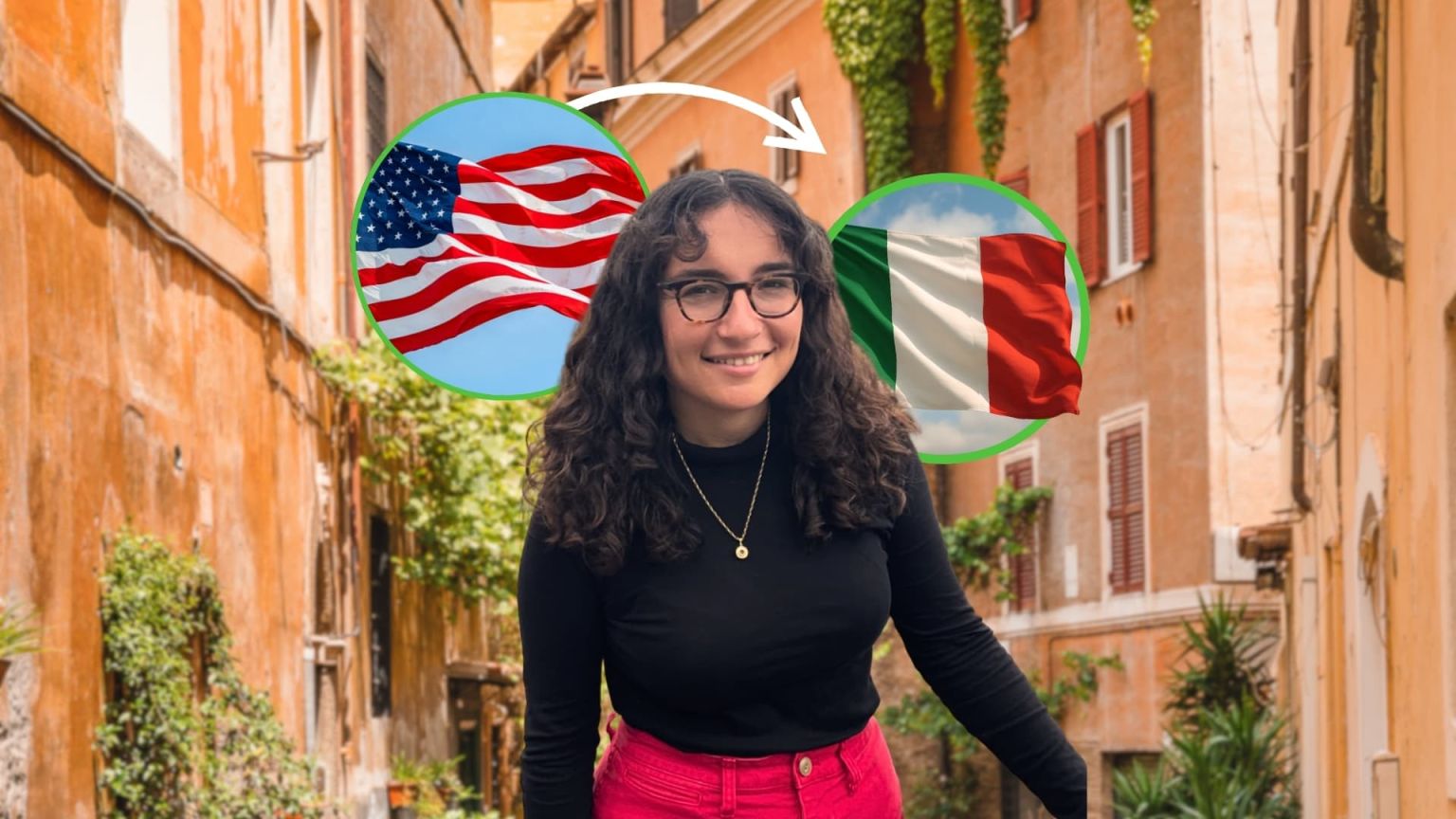

Before I moved to Italy, I had been warned about one thing by almost everyone I talked to, and it lurked behind even mundane conversations. Even when it seemed you had won, it would slow you down, confuse you or reappear in a way you simply couldn’t anticipate. What am I talking about? The Italian bureaucracy.
Like the most hopeful of heroines, I was intrigued by this potential foe—how difficult could it be? Perhaps, with enough logic and patience, I might emerge victorious — victorious in this case meaning simply having accomplished the particular task I had set out to achieve.
Still, I had started my career as a local journalist, and government on the local level had always held some fascination. A municipal office was where you could really see how a country worked—it was like opening up an appliance and examining its varied parts. And with a hubristic sense of enthusiasm, I imagined that Italy’s bureaucracy was a challenge that would reveal itself to me with time.
Of course, I was looking at this all too logically, staring up close at an Impressionist painting that begged to be analyzed from afar. What I didn’t expect was that navigating Italian bureaucracy would teach me far more than how to fill out forms or wait in line. It would become one of the most revealing ways to understand how this country actually works—and, in some ways, how to survive in it.
This is my adventure with Italian bureaucracy and the tips I collected along the way, which may help you if you’re planning a trip or a longer stay in Italy.

When I first arrived, everything brought me to tears
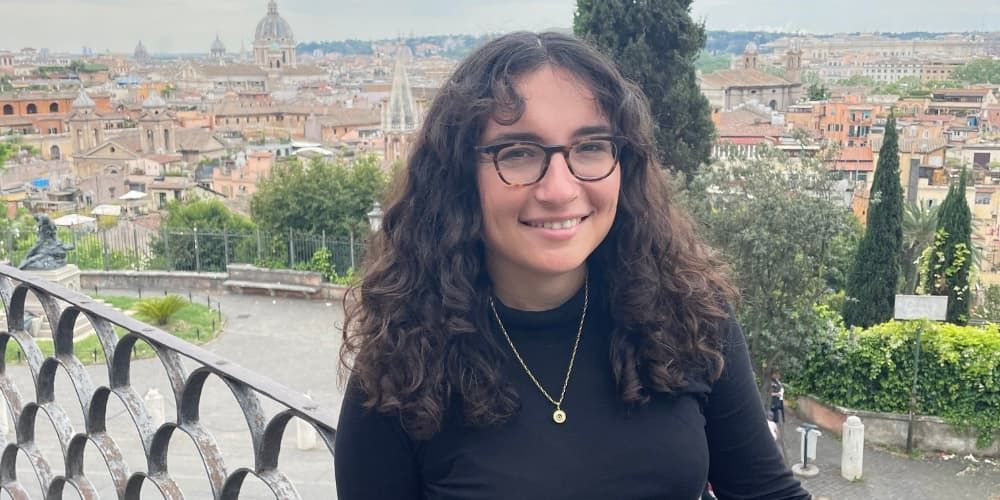
My early days in Rome
As a new arrival to Italy, you are confronted almost instantly with bureaucracy, because you are required to file the application for your long-stay permit, or permesso di soggiorno, within eight working days from your entry in the country.
In theory, this was something I had done once before, as a Classics student on a semester in Rome, but I was largely shepherded through that process, deposited at various bureaucratic offices by our administrators and told to wait in line until it was my turn. This was the first time I would do all of this by myself.
I had been told one thing in advance—the first step of submitting your permesso application entailed going to a "sportello amico" at the post office and asking for what is referred to as a “kit”. Already, this engendered more questions than answers: did every post office have an aptly-named ‘friendly window’ where I could ask for information? Were post offices evenly spaced throughout the city or would I have to walk half an hour to reach one? Would they know what I meant when I said ‘kit?’
In retrospect, I see how writing all these questions out now seems to represent the brink of stupidity—even internally, a voice rears up to tell me: Isn’t it obvious? But moving to a foreign country, particularly one where you have few external connections and little idea of how things work, is not unlike having to walk and speak again, to harness an entirely new set of rules, customs and habits. There is something inherently destabilizing about this, as the mundane things you once took for granted—that you would at least know how to mail a package, to buy a vacuum cleaner, to set up an Internet account—suddenly become inexplicable.
I wanted to use my American expectations, in which point A generally led to point B, but I had to throw those away.
My First time at the Post Office
In any case, when I did finally make it to the first post office, tucked in a tiny square by the exit of the Flaminio metro station, just off of Piazza del Popolo, I made my way through the inching line to the front desk, only slightly confused by the varying menu options offered to me by the machine that dispensed my number.
I practiced what I would say in my head, how I would ask for the kit in what I fantasized would be flawless Italian. And when I reached the desk at last, I managed to spit out my phrase only to have the employee look back at me curtly and say:
“We’ve run out of kits.”
This was a response for which I had not prepared. The machine running in my head was not able to compute. Do you know when you’ll get more, I asked, but getting a response to two questions at an Italian post office was generally not in the cards.
I stumbled out the door in a state of shock, having waited thirty minutes only to be no closer to accomplishing my initial task and now with a new worry. I didn’t even know that kits were something that could be run out of.
A cascade of Russian dolls
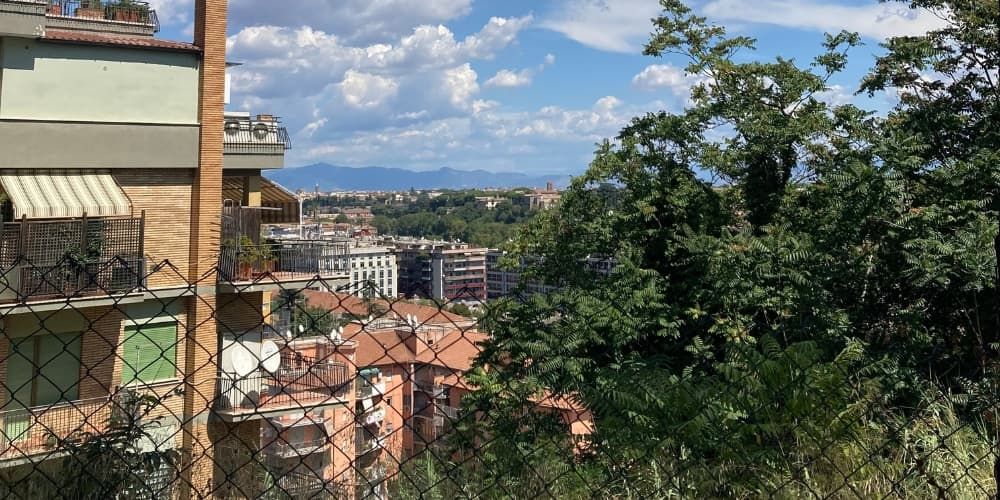
View on Monteverde, my beloved neighborhood
In many ways, this experience became an allegory for the trial by fire that was my first year living in Italy. The problem had never really been the system, but my approach to it. In essence, I wanted to use my American expectations, in which point A generally led to point B, but I had to throw those away.
What I began to learn is that there was an order to things, but the main challenges were determining that order, which could differ at every office, and remaining open to how things would play out instead of resentfully brittle at the first sign of defeat.
The complication often came from the fact that each document was a cascade of Russian dolls, in which acquiring one usually required first having another. When I was finally able to check the permesso application off my list, I found myself in front of another daunting task: renting an apartment.
In addition to the traditional difficulty of actually finding a house that was a) livable, b) in my geographic area of choice and c) in my price range, there was a small wrinkle: I would need a codice fiscale, essentially a tax ID number, in order to sign most contracts.
This was the first I had heard of this number and I had no idea how to even get it. All I was told was to go to the Agenzia delle Entrate, the Italian Revenue Agency, which does not exactly conjure an image of ease.
When I admitted that obstacles were normal and not some tangible proof of my own inability to navigate the system, the entire process started to feel more like an adventure
How I managed my next bureacratic hurdle
After managing to find the online platform, I purposely chose an appointment in the periphery of Rome, since the date was much earlier than at a more centrally-located office. This meant I would not be able to easily reach it with public transit, so when my bus inevitably didn’t come, I was forced to take a taxi. A budget began to total in my head. How much would I spend just to get one document?
Still, Italian bureaucracy has always succeeded in shocking me when I least expect it. Because when I finally reached the desk and explained my situation to the employee in front of me, she input my information only to find that I, in fact, already had a codice fiscale from my previous time abroad in Rome. She gingerly printed the sheet for me and pressed it with an official stamp—I understood that I would need to keep this document safe for life
With time,I came to see each bureaucratic appointment as a sort of rolling of the dice, in which the outcome was completely variable. My friends were my only real source of advice and a basis of comparison—one told me to assume that I would need to go to a public office at least twice before actually getting what I needed. Another warned me that it was best to enter into any bureaucratic application thinking that, at the last minute, the need for another document of which you had previously never heard would be magically presented.
Strangely, this actually assuaged my anxiety. When I admitted that obstacles were normal and not some tangible proof of my own inability to navigate the system, the entire process started to feel more like an adventure and less like an insurmountable challenge at which I had failed.
What actually saved me: the human touch
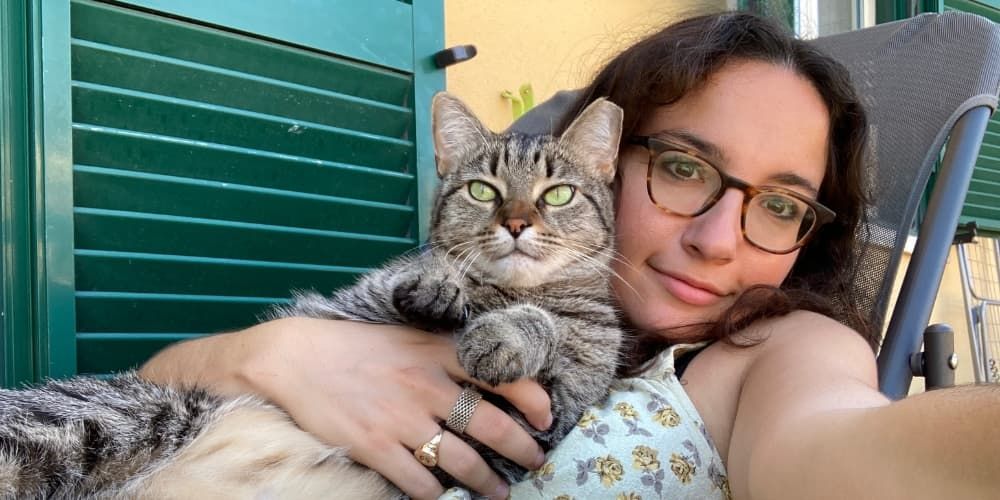
Me, my cat, our Roman balcony
When foreigners talk about Italians, they generally imbue them with one universal quality: an unflagging warmth. And while I have at times pushed back on this, I think it is nowhere more true than in a government office.
I still recall the municipal employee who led me step by step through the instructions on a particularly complicated residential certificate I needed for a long-stay permit. She wrote down her office number on a post-it note for me, insisting I call her if I had any questions. And in the weeks it took me to understand the various requirements, I did call her, many times. So much so that when I finally obtained the certificate, she was the first person I wanted to tell.
Once, when I received a potential job opportunity that would require a change in my status, I went straight to the immigration window of my local police station to ask for advice. There, the employee immediately saw the urgency of my situation.
“Opportunities like this don’t come all the time” she said, pressing a hand to her chest. Even now, she still asks me how I’m doing.
And after weeks of struggling and finally succeeding to make an online appointment for my ID card, I strolled joyously into the office on a Saturday morning, ready to pick up the document I felt I had been waiting for almost my entire time in Italy (metaphorically, not literally). I opened the envelope and unwrapped the card, feeling a sense of belonging. The smile stretched across my face as if it were controlled by a higher impulse than my conscious mind.
The employee wasn’t surprised. “People used to get excited about going shopping or buying new things,” she said. “Now they get excited for their carta d’identità.”
In the United States, it was rare that you could ever get someone on the phone or in front of you to actually listen to your specific issue—you were often directed to a hotline with a robotic tone. What was so difficult about U.S. bureaucracy was precisely how inhuman it was.
In Italy, everything was so human—that came with its own complications, but also its own advantages. Here, I didn’t feel that the apparatus was a machine, but a living, breathing person who might be able to evaluate my situation for its nuances. All this is to say that a no rarely felt like a no, but something more like a not yet.
What I Learned: 5 Survival Tips for Navigating Life in Italy
Moving to Italy or just wanting to stay here for a little while? Here are my few practical tips to help you navigate the bureaucratic system and get the best results while staying sane.
1. Make a document checklist
If you’re planning on moving to Italy for a period longer than three months, consider making a list of all the documents you’ll need to ensure your time here—think permesso di soggiorno, codice fiscale and even a pet passport if you will be bringing your animal. Each of these have their own set of prerequisites, so you’ll want to create a checklist underneath each one as you’re gathering the required paperwork.
2. Budget extra time
As they say, Rome wasn’t built in a day, and neither was your permesso di soggiorno. Make sure you budget enough time to accomplish your intended goal. There will likely be unexpected obstacles: a long line at the post office, a government office that says it’s open online but is actually closed in person or an application that is not available. It’s best to assume you’ll have to come back a second time and be pleasantly surprised if you don’t.
3. Keep copies of everything
Italy is still very much a country of paper documents. The second you receive an original version of a document, particularly if it bears an official seal, it is worth both scanning it and making a photocopy. You will also want to put it in a laminated folder and store it in a safe place. If it’s important, you will almost certainly be asked to present it again.
4. Ask questions in person whenever you can
Employees often have a better idea of the process than what is written online, and sometimes guidelines vary based on specific offices. Where you can go in person, do so. You may also be able to establish a relationship so you can ask questions for the future.
5. Embrace the human touch
The greatest surprise I found? Italian bureaucracy is surprisingly human. Employees can guide, advise, and even empathize when you’re stuck. Respect and kindness go a long way—what might start as a tedious process can turn into a moment of genuine connection.
About the author
Written on 03/04/2026
Elizabeth Djinis
Elizabeth Djinis is a Rome-based writer and journalist. She specializes in feature stories and analysis on history, culture, climate and politics and she regularly writes about Italy for Smithsonian Magazine, The New World and Italy Segreta. She writes a monthly newsletter on life in Rome.

Elizabeth Djinis
An expat’s journey through Italian bureaucracy: frustrations, surprises, and human moments, with practical tips to navigate it and stay sane.