
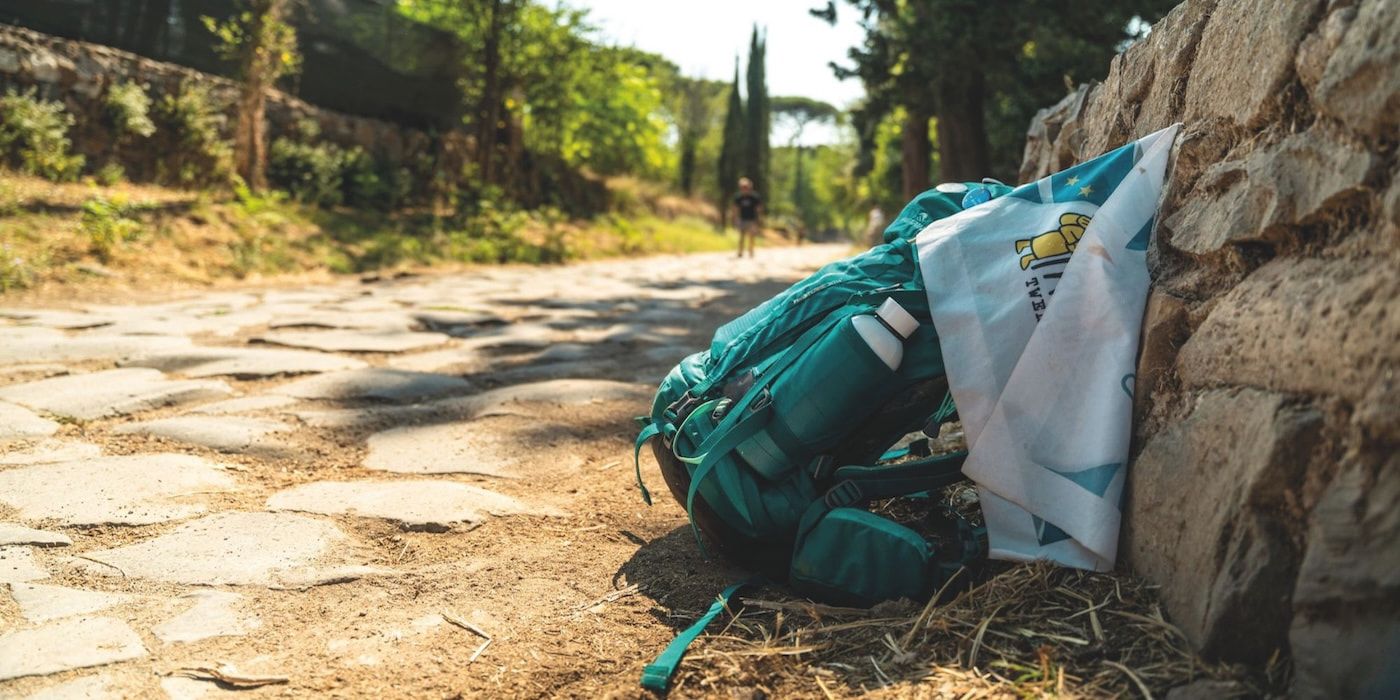

From England all the way to the southern tip of Apulia, the Via Francigena traces one of Europe’s longest and most ancient walking routes: a journey spanning over 3,000 kilometres, with its most vibrant and meaningful section running through Italy.
It’s a path that turns into a slow and captivating experience, where the spiritual dimension of pilgrimage blends with that of travel, as landscapes, villages, and towns unfold along the way, allowing you to discover some of the most beautiful scenery on the peninsula.
And this is exactly where you start to understand how to truly approach it: how to walk the Via Francigena in Italy, when to go, how long it takes, which main sections and stages to know in order to plan a mindful and meaningful pilgrimage… a journey built step by step, through practical choices and personal discovery.
The Via Francigena in Italy: the journey of a pilgrimage to be experienced
🥇 Visit Italy’s brand partnership
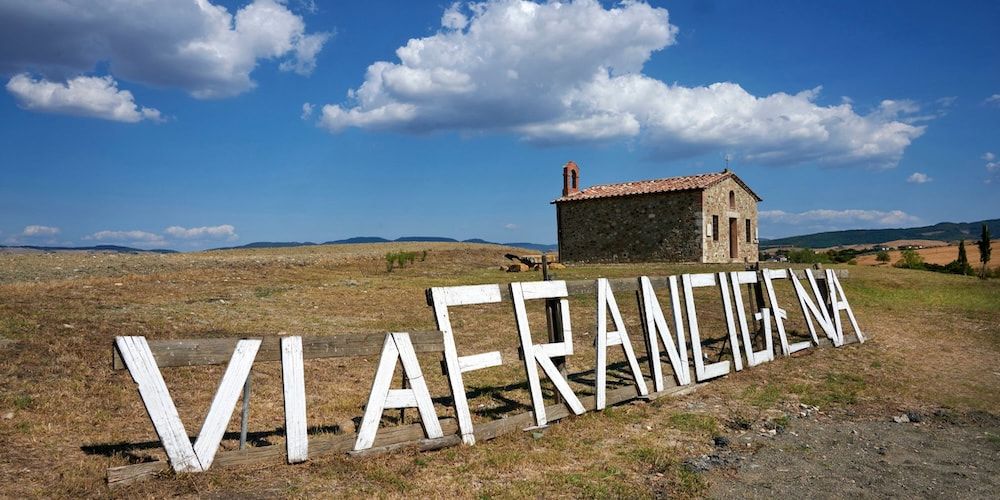
In Italy, the Via Francigena is a slow-paced route designed to be truly accessible, easy to walk or cycle thanks to mule tracks, country roads, secondary roads, and some sections of cycle paths, often in complete tranquillity.
From the Great St Bernard Pass to Rome, the route covers approximately 1,000 kilometers, divided into 45 stages. At a comfortable pace of 20–25 km per day on foot, you can reach the Eternal City in about a month and a half, while cycling at 60–80 km per day takes around two weeks.
But your pilgrimage does not end there: from Rome, the Via Francigena continues south through Lazio, Campania, Basilicata, and Apulia, all the way to its final destination of Santa Maria di Leuca. This section adds almost another 1,000 kilometers, turning the itinerary into a true vertical crossing of the peninsula.
Each stage is designed to end in a populated area, from small villages and historic hamlets to cities such as Pavia, Lucca, Siena, Viterbo, and Rome. It's in these places that the journey takes shape through stops, encounters, and practical choices that allow you to build a unique, fully lived experience.
To understand how to tackle it, all that remains is to explore in detail how to organize this fascinating and unique journey.
Discover more about the Via FrancigenaFrom the Alps to Apulia: the main sections of the Via Francigena in Italy
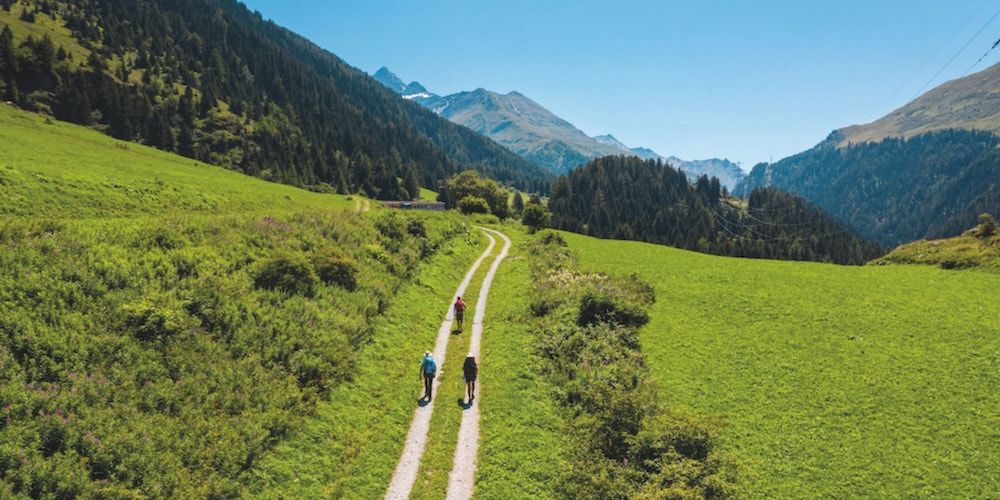
Every stage of the Italian section of the Via Francigena has its own unique charm. Traveling in close contact with the territory, even a few kilometers are enough to change the landscape, traditions, and atmosphere, revealing a constantly shifting mosaic of local identities.
For this reason, rather than analysing each stage individually, the route is best understood through a series of major sections, each with a distinct character, defining scenery, and symbolic towns that capture its essence.
The Alps - From the Great St Bernard Pass to Aosta and beyond, admire the majestic alpine landscapes and ancient mountain passes.
Piedmont and Lombardy - From Ivrea to Pavia, you gradually descend into the Po Valley, passing fields, canals, and historic towns linked to the Lombard and medieval heritage.
Emilia-Romagna and the Apennines - The ascent to the Cisa Pass marks one of the most iconic moments of the entire route, before entering Lunigiana and Tuscany.
Tuscany - You are in the scenic heart of the Via Francigena. From Lucca to Siena and into the Val d’Orcia, this is perhaps the most iconic and photographed section, with stunning medieval villages, white gravel roads, cypress trees, and art cities.
Lazio - After Tuscany, the landscape gradually opens up towards Viterbo and then Rome. In this final part of the historic pilgrimage, you can feel the symbolic and spiritual dimension of the journey.
Southern Italy - From Rome, the Via Francigena continues through Campania, Molise, Apulia, and Basilicata, in a long descent towards the sea, ending in Santa Maria di Leuca, the southernmost point of the route.
How to organize your journey step by step
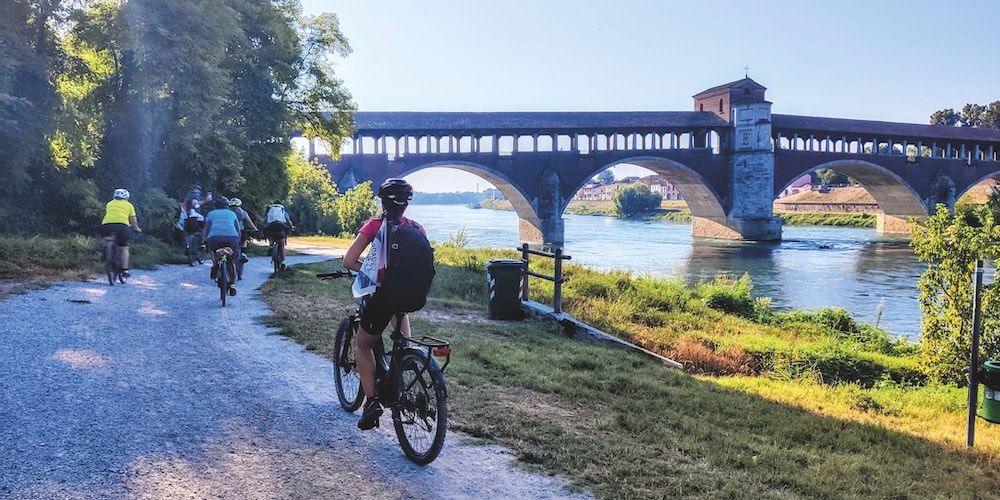
The Via Francigena is an extremely flexible route. You can walk it in its entirety or choose only specific sections, planning the journey according to the time you have available, the pace you prefer and the season you want to travel in.
This freedom is exactly what sets it apart from many of Europe’s other long-distance walking routes: there is no single “right” way to experience it, but rather a personal journey shaped by stages, pauses and adjustments along the way.
To begin, the most important decision is choosing which section to walk. Many travelers start with the most iconic stretches, such as Tuscany, Lazio or the southern route in Apulia, toward Santa Maria di Leuca, focusing on one- or two-week itineraries that are easier to organize and perfect for entering the spirit of the pilgrimage without immediately committing to thousands of kilometers.
To help you plan, here are some of the key practical aspects to consider:
- Trip duration: from just a few days to several weeks, depending on the section you choose;
- Daily pace: on average 20–25 km per day on foot, or 60–80 km by bike;
- Accommodation options: pilgrim hostels, religious guesthouses, B&Bs, agriturismi and small hotels;
- Budget: generally more affordable than many other itinerant trips, especially when choosing simple accommodations;
- Transport connections: regional trains and buses make it easy to connect many stages;
- Luggage transport: available on several sections of the route for those who prefer to walk lighter.
How to prepare: what you have to know before you leave
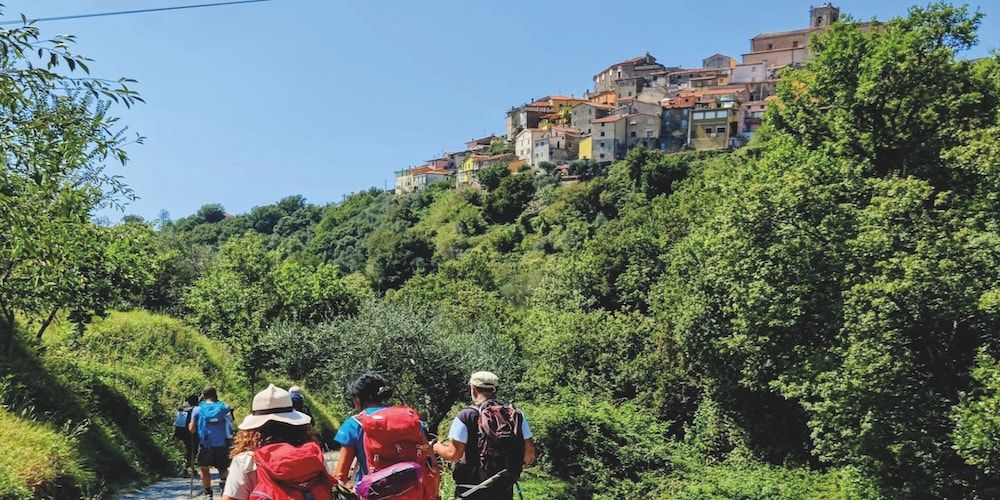
Even before training or choosing the right gear, the most important preparation concerns the pace at which you intend to approach the pilgrimage. The Via Francigena is not a technical or extreme trek. On the contrary, it was designed to be accessible to everyone, both on foot and by bicycle.
This does not mean it should be underestimated. On some stages you may find yourself walking for more than 25 kilometers in a single day, and tackling those distances without gradual preparation can quickly turn the journey into a continuous physical effort. For this reason, one of the most useful tips is to begin with shorter distances during the first few days, allowing your body time to adapt.
Here are some other points you need to know before setting off:
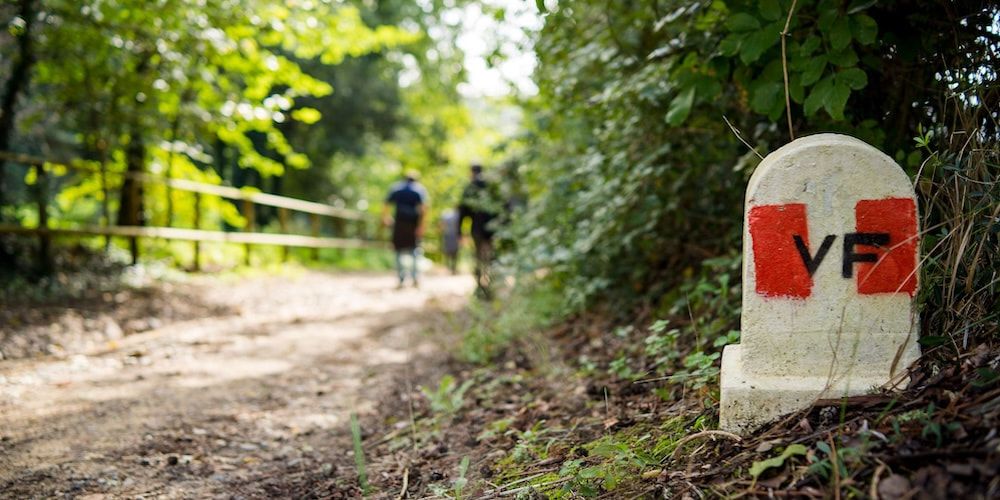
- Signposting: in Italy, the Via Francigena is generally well marked thanks to yellow arrows, brown signs, red-and-white trail markers and pilgrim symbols that accompany much of the route;
- Navigation: in some regions you may encounter local variants or stretches with less visible signage, which is why having an offline GPS track or the official app can be extremely useful.
- Pilgrim Credential: before departure you can request the official pilgrim passport, which is stamped stage after stage and often allows access to discounts and pilgrim-friendly accommodations.
- Water management: some sections, especially in Southern Italy and during warmer months, may have limited refill points, so it is important to always carry an adequate water supply.
What should not be missing in your backpack on the Via Francigena pilgrimage
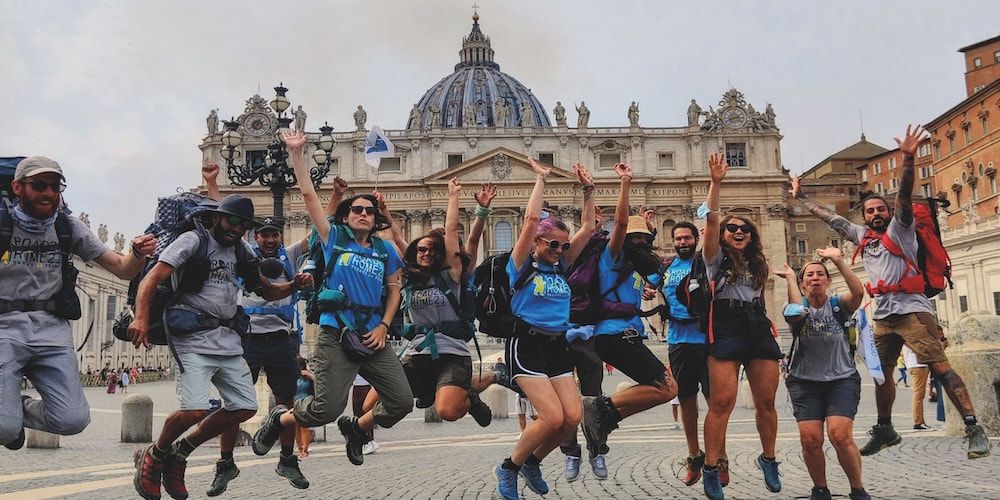
To experience the Via Francigena in the most comfortable way, the best approach is to keep your backpack essential, built around only the truly useful items you will rely on along the way. More than technical gear, it's simplicity that makes the journey smoother and more enjoyable.
Along the route you will cross both remote areas and inhabited towns and cities, where supermarkets, pharmacies and basic services are usually easy to reach.
The climate also requires a minimum level of adaptation. In the south you need to pay attention to hot days, especially in summer, while in winter and even in spring you can encounter quite cold mornings in hilly or Apennine areas. This is why layering your clothing is generally the most effective solution.
Here is what should not be missing in your backpack:
- Well-broken-in shoes: avoid new footwear. Many pilgrims prefer trail running or lightweight trekking shoes, better suited to the white roads and dirt tracks typical of the Italian route.
- Light technical clothing: breathable, quick-drying garments help you manage consecutive stages and changing temperatures.
- Waterproof layer: a light rain or wind jacket is very useful, especially in mountainous or hilly sections.
- Water bottle: essential, and not only in summer!
- Foot care kit: blister plasters, anti-chafing cream and basic first-aid items can make a real difference on long walking days.
What mistakes should you avoid?
- The first and most important mistake to avoid is underestimating the weight of your backpack, which becomes a significant burden when combined with heat, distance, and, on certain stages, elevation gain. The best approach is to travel as light as possible.
- You should also be careful not to treat the journey as a continuous sporting challenge, leaving no room for stops in villages, detours, or slower days that often turn out to be the most memorable. Breaks also allow you to recover energy and fully enjoy the unique experience of the pilgrimage.
- Season choice is equally important. Spring and early autumn are generally the most recommended periods, thanks to mild temperatures and particularly scenic landscapes. Summer and winter, on the other hand, can make certain sections considerably more demanding.
In the end, to truly appreciate the most authentic side of the Italian Via Francigena pilgrimage, you need to experience it without rigidity. Do not see it as a route to be completed quickly, but as a journey to be built step by step, adapting your pace to your abilities and to the ever-changing landscapes along the way.
About the author
Written on 13/05/2026
Alessandro Savino
SEO Copywriter & web editor: I love transforming my passion for writing into engaging narratives, creatively and precisely exploring the beauty and complexity of our wonderful country.

Alessandro Savino
Want to know how to plan your pilgrimage in Italy along the historic Via Francigena? Here is the practical guide you need follow along the way.