
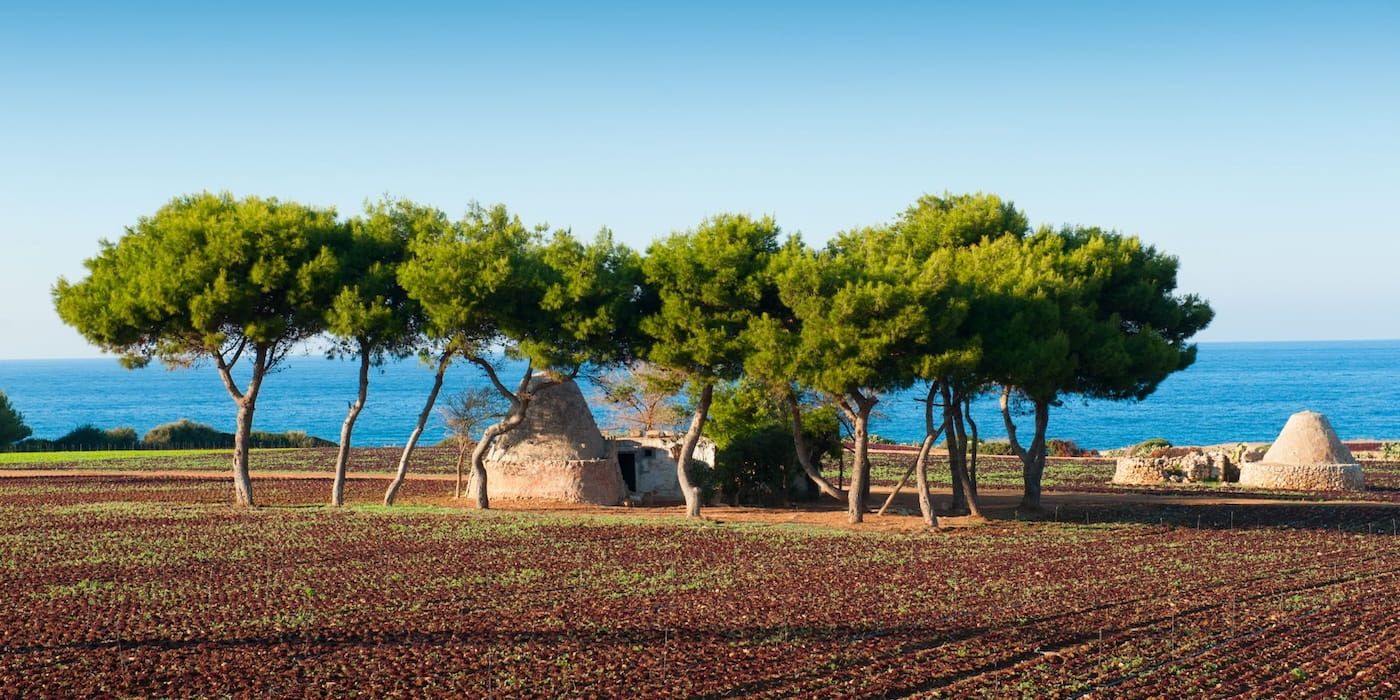

If the historic medieval pilgrimage once had Rome as its final destination, today Southern Via Francigena is more alive than ever, leading us through hidden and timeless landscapes that are no less fascinating for being off the beaten path.
It’s an itinerary with a quieter, less celebrated character, yet all the more surprising for it. Between Campania and Apulia, the route crosses hills and plateaus, olive groves, and open countryside that unfolds into beautiful views of the sea.
Slower rhythms and a landscape that is constantly changing guide us toward discovering a different side of Southern Italy, where each stage seems to hold a secret: genuine hospitality, layers of memory, and an understated beauty that becomes unforgettable.

The authentic and timeless atmosphere of Southern Via Francigena
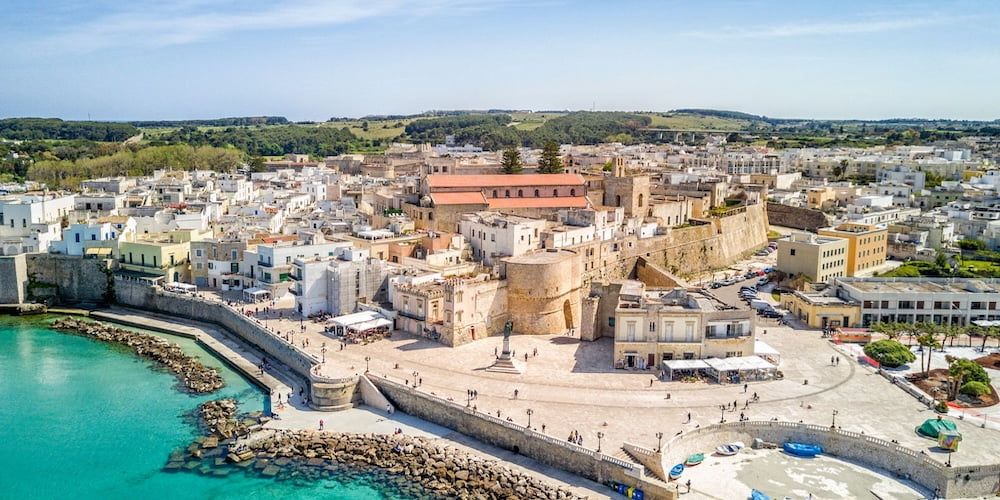
In a more discreet and less narrated Italy, the charm of Southern Via Francigena comes from the feeling of crossing territories that seem to have remained faithful to an older rhythm of time.
What stands out along this route is an atmosphere that keeps changing without ever losing its authenticity. From the first stages in Campania, where the trail moves through inland villages, rolling hills, and ancient spiritual sites, to the Benevento area, which reveals the most ancient and intimate face of the southern Apennines.
Then comes Apulia. From Troia, Via Francigena splits: one branch reaches the Gargano, climbing toward the great pilgrimage destinations of San Giovanni Rotondo and Monte Sant’Angelo. The other — the main route — continues south across the Tavoliere plain and the Murge, immersing us in a countryside that feels green, expansive, and almost suspended in time.
And we still have to admire magnificent cities such as Bari and Lecce, which lead us towards the sea of Salento, through stone villages and Mediterranean light, all the way to Otranto and Santa Maria di Leuca, where the land seems to end and give way only to the horizon.
What are the official stages of the Southern Via Francigena?
STAGE → KM
1 Sessa Aurunca → Teano 15,3
2 Teano → Statigliano 27,9
3 Statigliano → Alife 15,0
4 Alife → Faicchio 19,3
5 Faicchio → Telese Terme 12,5
6 Telese Terme → Vitulano 16,1
7 Vitulano → Benevento 17,2
8 Benevento → Buonalbergo 26,2
9 Buonalbergo → Celle di San Vito 28,9
10 Celle di San Vito → Troia 17,1
M11 Troia → Lucera 21,8
M12 Lucera → San Severo 25,7
M13 San Severo → Stignano 20,0
M14 Stignano → San Giovanni Rotondo 20,5
M15 San Giovanni Rotondo → Monte Sant'Angelo 24,1
11 Troia → Castelluccio dei Sauri 23,7
12 Castelluccio dei Sauri → Ordona 19,8
13 Ordona → Stornara 20,3
14 Stornara → Cerignola 17,9
15 Cerignola → Canosa di Puglia 19,2
16 Canosa di Puglia → Andria 24,0
17 Andria → Corato 13,8
18 Corato → Ruvo di Puglia 12,2
19 Ruvo di Puglia → Bitonto 19,6
20 Bitonto → Bari 23,8
21 Bari → Mola di Bari 23,3
22 Mola di Bari → Monopoli 29,0
23 Monopoli → Savelletri 21,0
24 Savelletri → Torre Canne 9,0
25 Torre Canne → Torre Santa Sabina 29,7
26 Torre Santa Sabina → Brindisi 34,4
27 Brindisi → Torchiarolo 25,0
28 Torchiarolo → Lecce 22,5
29 Lecce → Martano 30,6
30 Martano → Otranto 30,5
31 Otranto → Vignacastrisi 25,9
32 Vignacastrisi → Tricase 13,6
33 Tricase→ Santa Maria di Leuca 18,0
BRA Ordona → Matera 217,8
LIT Monte Sant'Angelo → Bari 143,8
Villages and landscapes of a surprising South along Via Francigena
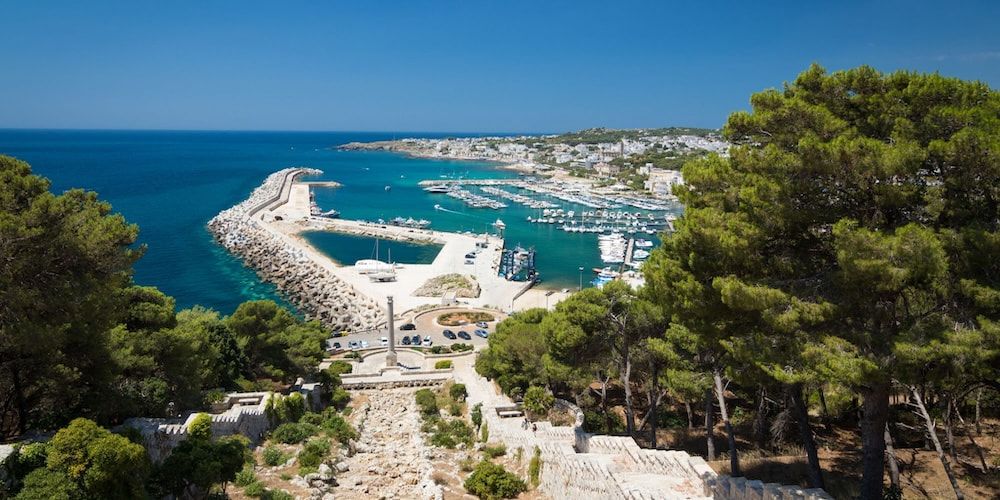
Southern Via Francigena alternates compact towns with wide-open landscapes that stand out for their variety and constant change of scenery.
Benevento carries a layered identity built over centuries: once a Samnite city, later Roman and Lombard, it still reflects its historical role as a crossroads between the Tyrrhenian and Adriatic worlds.
In the Daunia area, Troia and Lucera shape some of the most distinctive stages of the route: the former as a junction point between plateau and plain, the latter as a city that marks the edge of the flat Tavoliere delle Puglie landscape.
The branch heading toward the Gargano leads to Monte Sant’Angelo, one of the most striking and representative historic towns of the promontory.
Further south, Bari emerges as a vibrant and multifaceted city, from the narrow streets of Bari Vecchia—where the tradition of handmade orecchiette is still sometimes carried out in front of the houses—to the long, modern seafront that defines its connection with the Adriatic.
Our journey comes to an end in Salento, among Lecce, the “Queen of Baroque,” with its detailed stone architecture and ancient Roman heritage; Otranto, a frontier town shaped by its history as a meeting point between the Mediterranean and the East; and Santa Maria di Leuca, the Heel of Italy, known as the City of the Two Seas, where the Ionian and Adriatic waters meet.
The mystical places that illuminate our journey beyond Rome
Let's start in Benevento, in the heart of inland Campania. It's a city that preserves centuries of sacred history, with the Church of Santa Sofia (a UNESCO site) as a key reference point, not only for its beauty but because it remains one of the most important structured testimonies of Lombard power in Southern Italy.
In a smaller town like Troia, just beyond the Apulian border, we cannot help but be struck by the charm of the Cathedral of Santa Maria Assunta, both for its Romanesque simplicity and because, with its intimate atmosphere, it seems to bring us back to the original dimension of pilgrimage.
If we want to explore the most significant spiritual sites along Southern Francigena, we must stop on the Gargano: in Monte Sant’Angelo, the Sanctuary of Saint Michael the Archangel is one of the major Michaelic sanctuaries in Europe, while San Giovanni Rotondo is closely linked to the figure of San Pio, who has made the town one of Italy’s main centers of devotion.
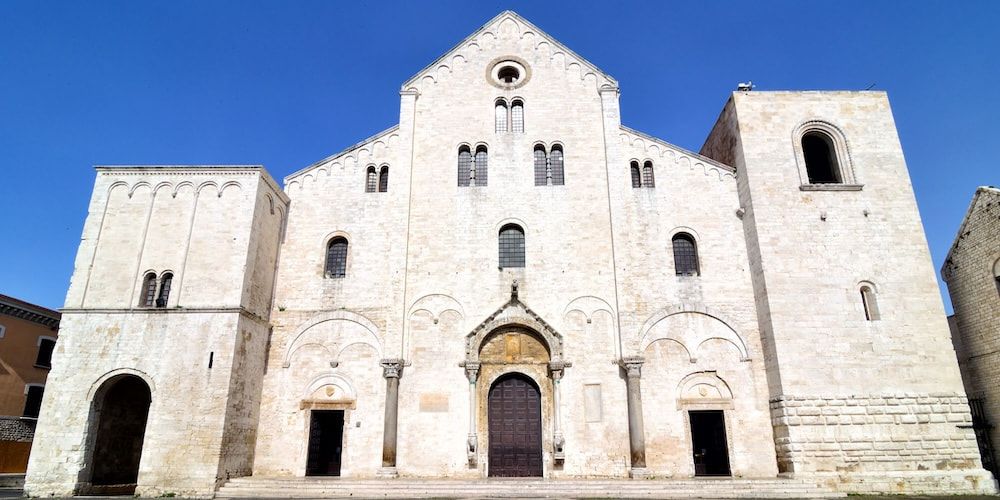
Along our route, there are still at least two sacred places not to miss: in Bari, the striking Basilica of Saint Nicholas is the center of devotion to the saint traditionally regarded as the protector of travelers and pilgrims.
In Santa Maria di Leuca, the Sanctuary of Santa Maria de Finibus Terrae stands in a unique setting, inviting contemplation and conveying the feeling of having reached the boundary of a new spiritual experience.
A journey through the gastronomic traditions of Southern Italy
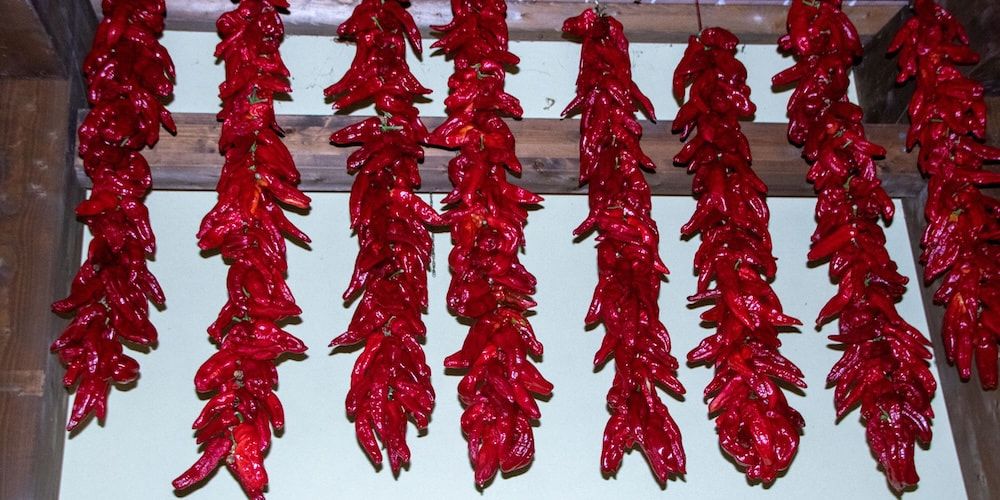
Orecchiette, turnip greens, durum wheat bread, fragrant olive oil, and sun-dried tomatoes: along Southern Via Francigena, food immediately takes center stage, especially in Puglia, where cuisine precisely reflects the agricultural landscape.
During our journey we encounter farmhouses, rural bakeries, cereal fields, and endless olive groves that accompany the route with an almost natural continuity. It’ right in this balance between production and territory that gastronomy becomes one of the most immediate ways to understand Southern Italy.
Let us not miss typical products such as canestrato pugliese, a pasture cheese that tells the long history of shepherding on the Murge highlands, and peperoni cruschi, a symbol of inland cuisine between the Murgia and the Lucanian area (there’s a Francigena route that extends as far as Matera), a territory where rural tradition shapes both the landscape and its flavors.
In Campania, in the Benevento area, the gastronomic narrative is no less significant. Here we find hand-made fresh pasta, legumes, traditional rural cured meats, and Sannio caciocavallo cheese. Above all, the cuisine revolves around seasonal dishes and those tied to local traditions and festivities.
Sea, nature, and slowness: the best time for our journey
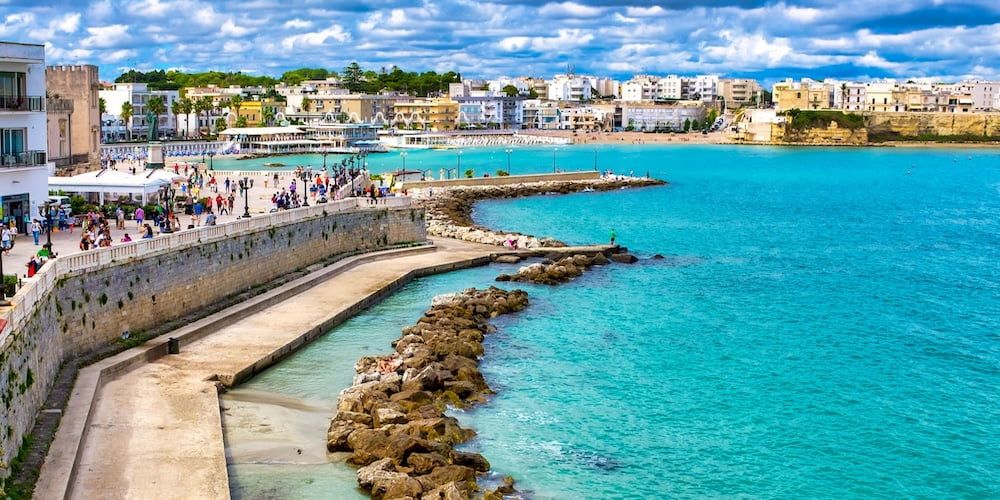
The best times to walk on Southern Via Francigena are spring and autumn, when we can complete the stages without the intense summer heat and enjoy the landscape at its most vibrant and colorful.
In Apulia, even winter can be a good option, as the climate is considerably milder than in Northern Italy and the paths become quieter and more atmospheric.
This part of the route is especially suited to slower, thematic itineraries. It can become a pilgrimage beyond Rome, or a route dedicated to discovering the timeless charm of the countryside, or even an itinerary focused on Southern Italy’s culture, alternating walking, village stops, and encounters with local traditions.
It’s probably the section of Via Francigena that most encourages us to stop counting kilometers and start breathing deeply, enjoying a truly unique adventure.
Walking to discover the hidden South
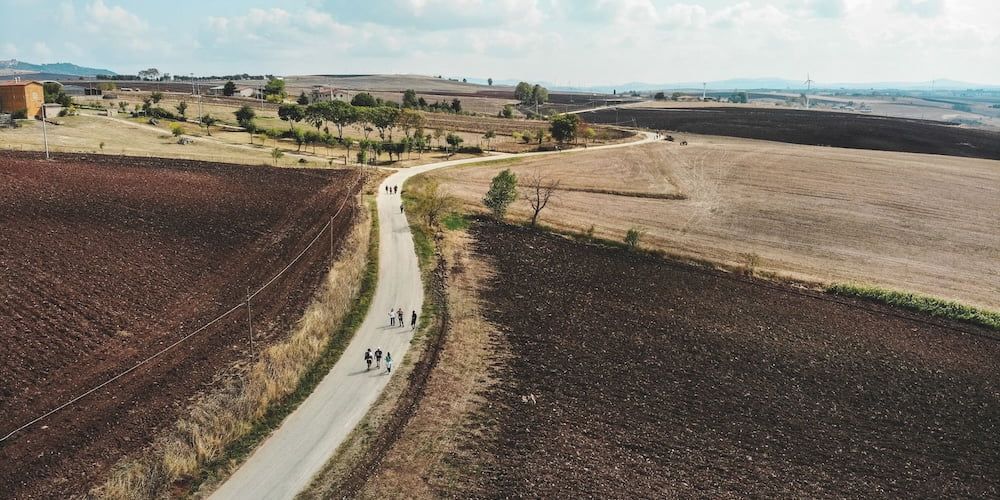
Southern Via Francigena, from Campania to the final stretch of the route in Santa Maria di Leuca, takes us far from the most familiar images of Southern Italy and instead leads us into the inland world that rarely makes the covers, yet preserves an authentic and quiet strength.
Walking through the Sannio, Daunia, and the countryside of Apulia, we discover a land made of secondary roads, villages that seem to preserve the rhythm of another era, endless olive groves, and small towns that have kept their habits and traditions intact.
This is not the South of major attractions concentrated in a handful of places, but rather one of distances, spontaneous stops, and the hospitality of local communities. And perhaps this is the true privilege of Southern Via Francigena: allowing us to gradually enter the quieter and more authentic face of Southern Italy.
About the author
Written on 04/06/2026
Alessandro Savino
SEO Copywriter & web editor: I love transforming my passion for writing into engaging narratives, creatively and precisely exploring the beauty and complexity of our wonderful country.

Alessandro Savino
Between Campania and Apulia, Via Francigena reveals a surprising South: wide-open horizons, timeless villages, and the charm of the true countryside.