

Florence hides one of Italy's most surprising, controversial and ancient foods inside its historic street kiosks: lampredotto. It may seem strange in the cradle of the Renaissance, especially to a tourist, but offal and tripe are a fundamental part of the city's identity. Florence is full of trippai (tripe vendors) who have cooked the king of street-food sandwiches the old-fashioned way, on the street, for centuries — the absolute masterpiece of Italian nose-to-tail cooking.
Incredible but true: in one of the world's great art cities, culture isn't the only thing people are hungry for. When it comes to the stomach, lampredotto offers a chance to eat cheaply while diving into the authentic flavors of the local area. Typical of neighborhood markets and districts like San Lorenzo, this sandwich — at once moist and crisp, soft and juicy — has countless fans all over the world.

Inside Florence's Lampredotto Sandwich Culture
Bambi Trippa e Lampredotto Firenze
In short, Florence isn't just Michelangelo's David and Botticelli's Primavera, the Ponte Vecchio and Piazza della Signoria, Palazzo Vecchio and the Boboli Gardens, the Duomo, bistecca and ribollita. In the culinary art of the Renaissance's birthplace, lampredotto holds a central place: it encapsulates a social ritual and a popular tradition that has survived centuries of change.
Deeply flavorful and intense on the palate, the lampredotto sandwich is an institution that remains very much alive, still drawing devotees and the curious alike. In the end, this unusual, extreme sandwich is the best way to understand Florence through its food. Its origins, its taste, the way it's cooked, served and eaten speak directly and without frills about the city's identity.
Visit Florence with the Florence PassWhat Exactly Is Lampredotto?
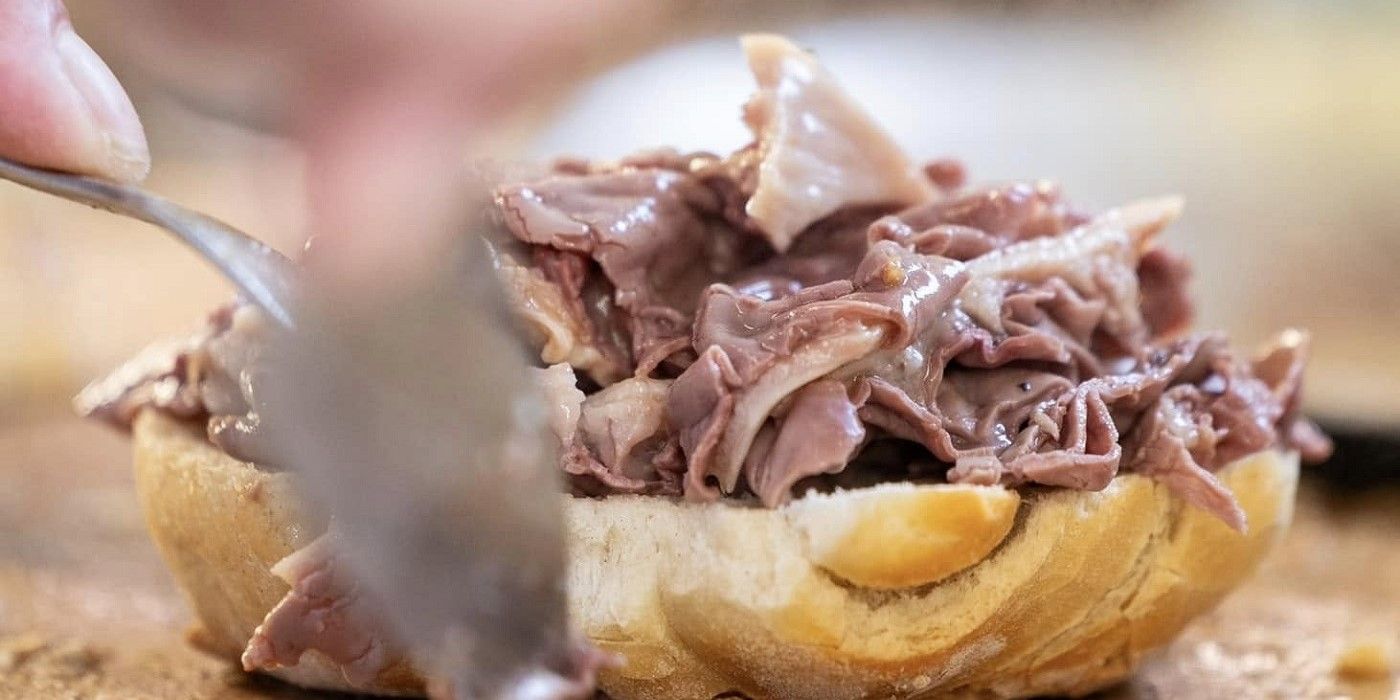
Lampredotto is simply the abomasum, the fourth stomach of the calf: the one where acid digestion takes place together with gastric juices. It is made up of a lean, spongy part called gala, and a fattier, smoother part called spannocchia. The bovine stomach is washed, trimmed of fat, and cooked in broth or simply in water for at least three hours.
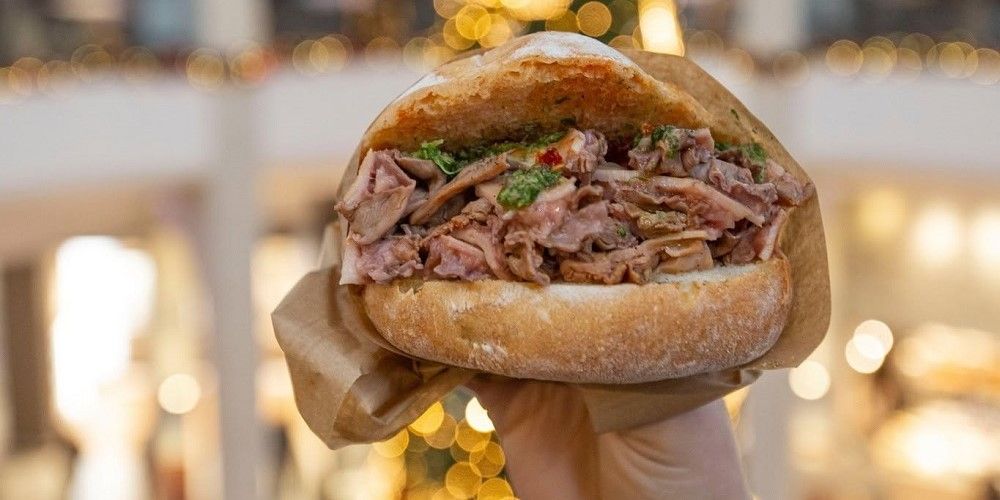
A true lampredotto must be gigliato (shaped like a lily) and cut into thin strips right on top of the semelle, the classic Tuscan roll. Lampredotto vendors serve it plain, with a sprinkle of salt and pepper, or dressed with green sauce (made of parsley, garlic, anchovies, capers and eggs) or with a spicy sauce based on chili pepper. On request, the top half of the roll can be dipped in the cooking broth.
One alternative is the zimino version, stewed with spinach or chard, garlic and parsley. But seasonal variations are numerous, such as those in tomato sauce with potatoes, with mushrooms, leeks or artichokes, or all'uccelletto style with beans in tomato sauce. In contemporary street food, reinterpretations abound: some vendors even offer a "sea" lampredotto (made with octopus or cuttlefish) and a vegan version made with seitan.
Origins and Name: Why It's Been Eaten for Centuries
Lampredotto has very humble, ancient origins: it's a dish of necessity, born from the principle that nothing from a bovine (or a pig) should go to waste. Recipes using the so-called "fifth quarter" (organ meats and offal) are recorded in Venetian documents from the fifteenth and early sixteenth centuries. The Romagnol poet Olindo Guerrini, also known by the pen name Lorenzo Stecchetti and other pseudonyms, dedicated sonnets and treatises to the art of using offal and leftovers.
In Florence, lampredotto has always been eaten across all social classes: doctors and delivery workers, lawyers and bricklayers, tourists and students all eat it. Despite these humble roots, its name is a pure invention. Scholars trace the grand-sounding term back to the lamprey (lampreda), a freshwater and brackish-water fish once common in the waters of the Arno and particularly prized by the nobility in the Middle Ages and the Renaissance.
The lamprey, famous as a "parasitic" fish because it sucks the blood of its prey, has a round, sucker-shaped mouth with sharp teeth — a shape strikingly similar to the ridged, brownish appearance of Florentine tripe. Ordinary people who couldn't afford this prized eel found in the discarded abomasum a fitting, similar-looking substitute, renaming it lampredotto with typically Florentine irony. Today, lampredotto is protected by Confartigianato to ensure compliance with minimum quality standards.
A City Institution: the Lampredottai
A classic dish of Florence's poor, working-class cuisine, lampredotto is traditionally eaten at the kiosks of the lampredottai, historic gathering spots still found scattered across every district of the city today. Records show that the first officially licensed vendors (those granted a municipal license to sell) date back more than a hundred years. It's a figure that dates back to the 12th-century arts and crafts guilds and has never gone out of style.
The old lampredotto vendors used large wood-fired cauldrons to boil the abomasum. Others went around with carts fitted with small stoves for cooking their pot of offal on the move. Over the years, up to the present day, these makeshift setups have given way to better-equipped kiosks where lampredottai now prepare their sandwiches.
Florence's trippai are legendary figures. Their preparation of this quintessential street food follows a precise ritual: lampredotto is always made fresh to order, and as a popular food meant to be eaten on the go, it's kept cheap. There's no shortage of competition, rivalry and friendly disputes among lampredottai over the choice of meat and how it should be cooked to respect tradition.
How It's Eaten, and Its Variations
The lampredotto sandwich is eaten plain, with green sauce or spicy sauce, stewed, or dipped in broth, depending on taste. The real difference, though, lies in the type of meat: cow or veal. And also in the choice of stomach part: gala or spannocchia. A sandwich made with peeled lampredotto (sbucciato : without the outer membrane of the abomasum) is made entirely from the gala.
The different proportions of these anatomical parts have a decisive effect on the final texture and flavor — not to mention the broth it's reboiled in, the bread used, and the sauces. It's proof that Florence's best food reflects the diversity of the city itself, and isn't found in Michelin-starred restaurants or social-media-hyped venues. It's the markets that offer this unforgettable street food.
Where to Eat It: 10 Must-Visit Spots
The map of Florentine street food runs through San Lorenzo, Piazza del Mercato Nuovo and the Oltrarno area. Within this triangle are concentrated several must-visit stops for tasting authentic lampredotto as the locals intend it. One of Florence's most famous kiosks belongs to the Pollini family, in Piazza Sant'Ambrogio near the market. From the classic broth-dipped version to daily specials, it's a dive into more than a century of history.
Also at the Sant'Ambrogio market, in Piazza Lorenzo Ghiberti, is a beloved neighborhood institution: I' trippaio di Sant'Ambrogio. At the San Lorenzo market, meanwhile, there's Nerbone, a classic trattoria open since 1872. Highly renowned, and among the most famous, is L'antico trippaio in Piazza dei Cimatori, just steps from the Ponte Vecchio. A name that's a guarantee in itself is Il trippaio del Porcellino in Piazza del Mercato Nuovo: "uncompromising lampredotto since 1893."
The "chicest in Florence" is I' trippaio di Firenze on Via Ugo Foscolo, whose motto is "all about offal." The ancient walls of the Oltrarno are home to I' trippaio di San Frediano in Piazza dei Nerli, a true "lampredotto boutique" suited to every cut. Born from the family butcher shop, Marione in Piazzale di Porta Romana guarantees tradition and authenticity.
In the heart of the historic center, at the Central Market, you'll find Bambi, a family-run business specializing in tripe and lamprey since 1890, when the patriarch Guido—known as "il Mori"—opened his store on Via di Camaldoli. Finally, don't miss a trip to Florence's inner suburbs: in Rifredi, in Piazza Bernardo Tanucci, there's Aurelio, i' re del lampredotto ("the king of lampredotto"), active since 1960, with a dizzying variety of sandwiches.
Florence isn't just a place of art and culture, elegance and craftsmanship: it's a city of "good forks" — people who know how to eat well. Through the universal language of food, lampredotto perfectly embodies a bridge between past and present. Its humble, mocking, anti-aristocratic origins, the irony at the root of its name, and a way of eating that erases social differences all make this sandwich — and its lampredottai — a symbol of a gastronomic and family tradition that has remained intact for generations.
About the author
Written on 16/10/2026
Alessandro Zoppo
He has been listening to music and watching movies since he was 6. Proudly Samnite but Roman by adoption, he writes about culture, travel, economics, finance, politics and sports and curates film festivals.

Alessandro Zoppo
King of local street food, Florence's lampredotto is an icon of the city's identity: discover this weird sandwich, a tradition and a social ritual.