
Say Prosecco almost anywhere and, chances are, people will know exactly what you mean: it is one of the Italian sparkling wines that has conquered the world, becoming part of aperitivo culture far beyond the country’s borders.
Now change the name and say Franciacorta: outside Italy, the reaction may be very different. And yet, in the heart of Lombardy, between Brescia and Lake Iseo, lies a wine region where sparkling wine tells the story of a landscape dotted with vineyard-covered hills, ancient monasteries, villages, cellars where bottles rest for years, and a lake that appears on the horizon when you least expect it.
Franciacorta, in fact, is not just the name of a wine, but also the land where that wine is born. Its territory encompasses 19 municipalities and stretches from the southern shore of Lake Iseo towards Brescia, across a moraine landscape shaped by glaciers in the distant past.
Between Brescia and Lake Iseo, this is where Franciacorta originates
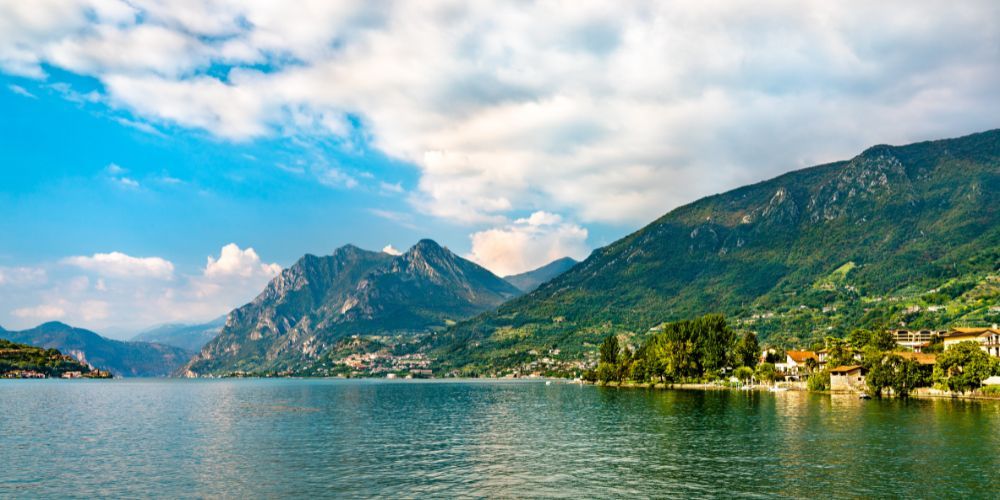
To truly understand Franciacorta, you need to look around before you even take your first sip.
To the north lies Lake Iseo, Brescia is to the east, the Oglio River to the west, while to the south Monte Orfano frames a landscape of gentle hills and rolling terrain shaped by ancient glacial activity. The moraine soils and the proximity of the lake are two key elements in the area’s winemaking vocation: in summer, cool currents from Valcamonica cross the Sebino, while in winter the lake helps soften the temperatures.
Distances are short and the scenery changes step by step: a road runs beside a vineyard, climbs towards a small town, follows the wall of a historic residence and, just a few kilometres later, leads to the lake. The Franciacorta Wine Route winds through this remarkable mosaic of wineries, villages, castles, historic buildings and monasteries, inviting you to explore it by car, but also on foot or by bicycle.
Even the name reaches much further back than the modern history of its sparkling wine. The form Franzacurta already appears in a document dating from 1277 and is linked to the ancient curtes francae, while vines had been cultivated in the area long before the present-day appellation came into being.
The modern turning point came in 1961, when Franco Ziliani and Guido Berlucchi produced the area’s first traditional-method sparkling wine in Borgonato. DOC status followed in 1967, then DOCG recognition in 1995; in 2000, the Franciacorta Wine Route was established to promote the region’s tourism and food-and-wine heritage as well.
Franciacorta vs Prosecco: two different stories of Italian sparkling wine
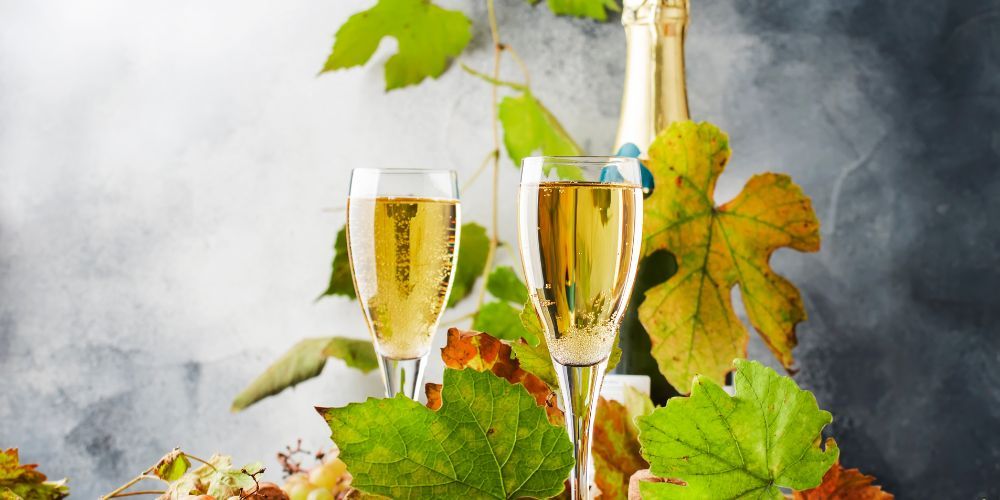
Franciacorta and Prosecco are both Italian sparkling wines, but they come from different regions, grapes and production methods.
Prosecco DOC is made from Glera grapes and, in its sparkling version, is produced mainly using the Martinotti-Charmat Method, in which the second fermentation takes place in large pressurised tanks known as autoclaves. This process is particularly well suited to preserving and enhancing the grape’s floral and fruity characteristics.
Franciacorta, on the other hand, undergoes its second fermentation in the bottle according to the Traditional Method. The permitted grape varieties are Chardonnay and Pinot Noir, which may be accompanied by Pinot Blanc and Erbamat in the proportions established by the production regulations, while the grapes must be harvested by hand.
After tirage, the bottles remain in contact with the lees for at least 18 months for non-vintage Franciacorta, 24 months for Satèn and Rosé, 30 months for vintage Franciacorta and 60 months for Riserva. This is followed by riddling, which gradually moves the sediment towards the neck of the bottle, and disgorgement.
Time becomes rows of bottles, cool dimly lit cellars and gestures repeated harvest after harvest. Alongside Franciacorta, there is Satèn, with its softer, creamier mousse, and Rosé, in which Pinot Noir plays a central role.
Heading down to the cellar to truly understand Franciacorta
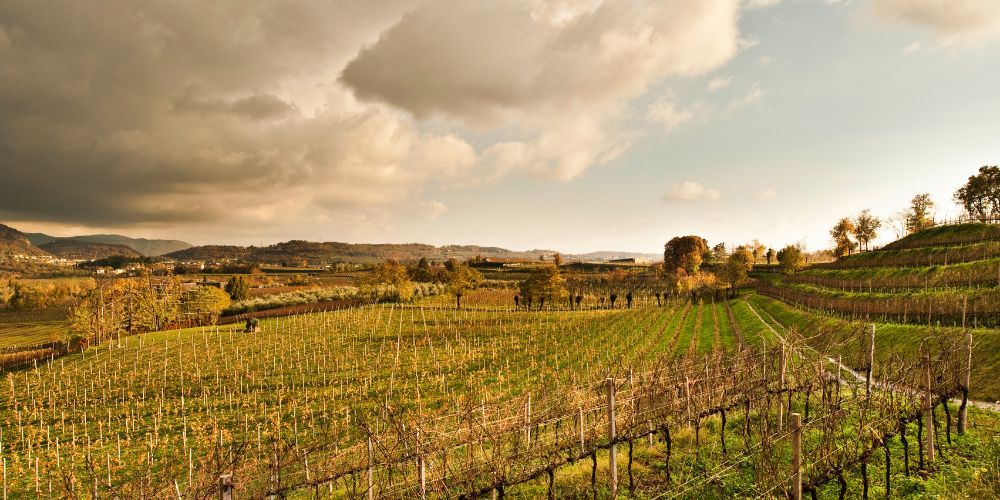
A door closes behind you, the light dims and the temperature changes. Today, the Consortium brings together more than 120 wineries, differing in size, history and approach to winemaking, and many of them offer visits and experiences for travellers who want to discover the region more closely.
The visit may begin outdoors, among the rows of vines, continue through the winemaking areas and then lead underground, where the bottles spend months or even years ageing on the lees. The noise of the road disappears, leaving cool walls, tunnels, almost geometric rows of bottles and the story of a process in which every stage requires time.
A tasting takes on a new meaning once you have seen where and how the wine was made. But there is no single way to experience Franciacorta’s wineries: across the region you can find meetings with producers, vertical and sensory tastings, vineyard visits, picnics and experiences that combine wine, food and outdoor activities.
Amidst vineyards and Lake Iseo, the journey continues beyond the wineries
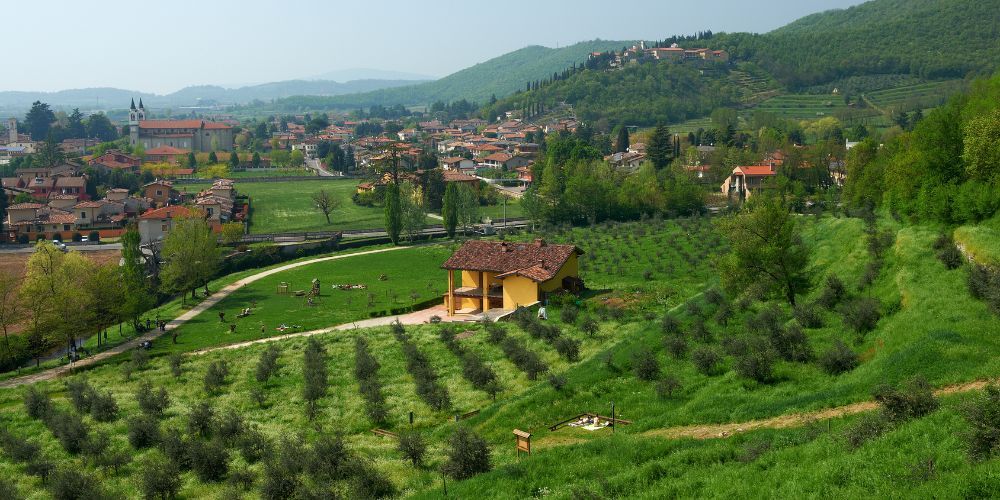
One of the natural gateways to the area is Iseo, reflected in the waters along the southern shore of the lake. The historic centre leads towards the waterfront and, within just a few minutes, the vineyard-covered hills give way to the water and the outline of the mountains embracing the Sebino.
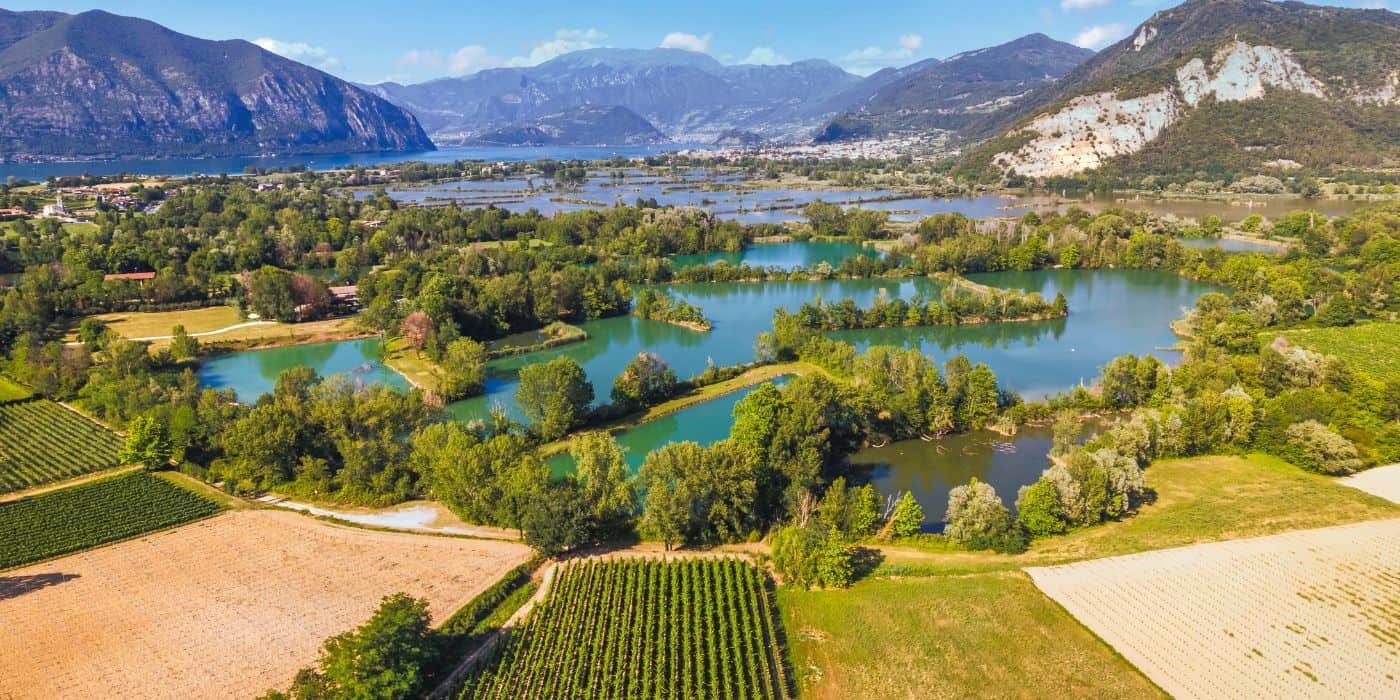
Not far away, in Provaglio d’Iseo, the transition between vineyards and lake becomes even more striking. The Torbiere del Sebino, a Regional Nature Reserve of Lombardy since 1983, extend over around 360 hectares south of the lake, among stretches of water, reed beds and walkways. From the nearby Monastery of San Pietro in Lamosa, the view takes in much of this landscape, also shaped by the peat-extraction activities that developed here between the 18th and 20th centuries.
Franciacorta is also crossed by walking and cycling routes winding through vineyards and small towns. Around Borgonato and Provaglio d’Iseo, for example, trails run past fields, wineries and railway stations, making it possible to explore part of the area without having to use a car.
In Rodengo Saiano, meanwhile, countryside and history come together at the Olivetan Abbey of San Nicola, while elsewhere castles, villas and small villages continue to appear along the Franciacorta Wine Route.
Reaching the lake also means adding a day of pure relaxation to your trip. Ferries connect the towns around the Sebino with Monte Isola, which, although outside the Franciacorta production area, feels like a natural extension of the journey. The vineyards and wineries remain on the mainland, while the pace shifts to leisurely walks, small villages, olive groves and traditions rooted in fishing.
At the table, Franciacorta meets the lake
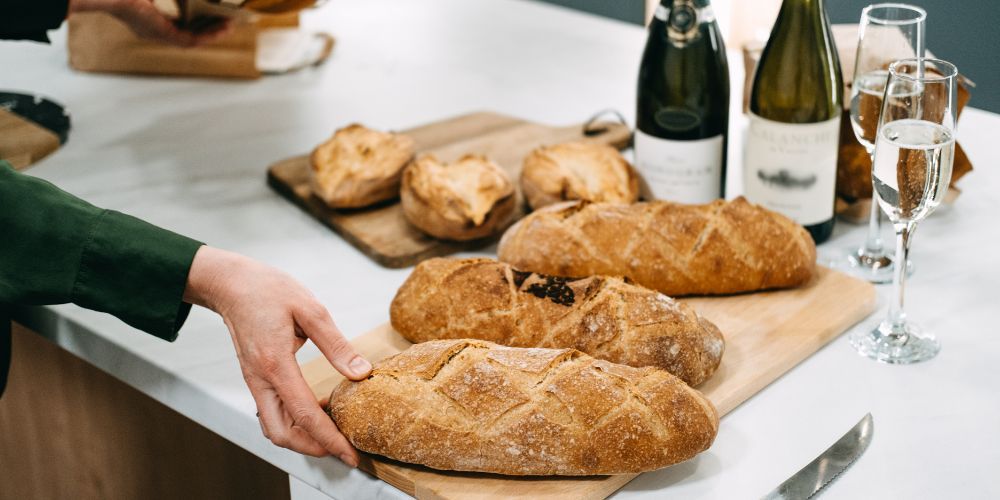
Inland, the flavours are rooted in the culinary traditions of Brescia, with meats, cured meats, cheeses and pasta dishes taking centre stage; closer to the Sebino, however, freshwater fish begins to appear on the table.
In Clusane d’Iseo, one of the signature dishes is oven-baked tench with polenta, deeply connected to the village’s culinary tradition. Around the lake, you will also find the traditional dried sardine of Lake Iseo which, despite its name, is not a sea sardine at all but a freshwater shad preserved using a centuries-old technique now protected as a Slow Food Presidium.
And then there are the casoncelli, cured meats and cheeses that draw you back towards the inland countryside and remind you that travelling through Franciacorta means moving between very different landscapes and culinary traditions.
Wine returns to the glass, but not only for the opening toast: the different expressions of Franciacorta can accompany the entire meal, making food another way to understand the character of the region.
When should you visit Franciacorta? The story changes with every season
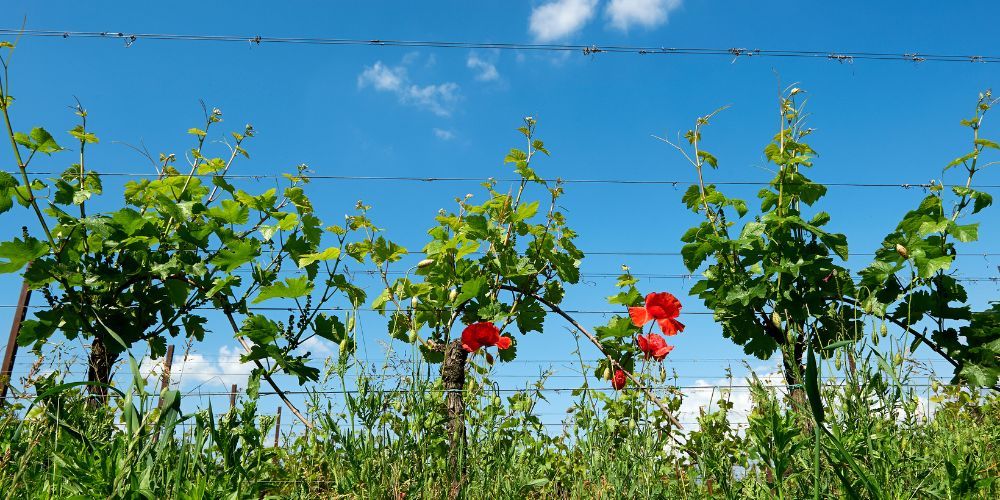
In spring, mild temperatures invite you to spend more time outdoors, alternating winery visits with walks and cycling. It is also the season when the region fully comes back to life beyond the tasting rooms.
Summer brings the journey even closer to Lake Iseo and its many activities, while the grape harvest begins between early August and the beginning of September, depending on the year. Under Franciacorta regulations, all grapes must be harvested by hand.
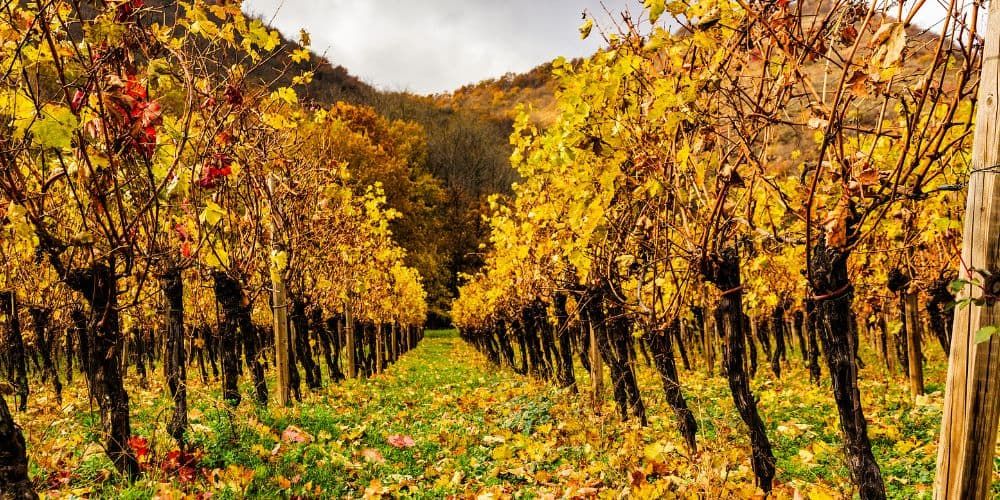
With autumn, the vineyards change colour and the hills take on golden hues, while September brings one of the area’s most important events, the Franciacorta in Cantina Festival, with winery visits, tastings and experiences spread across the region.
Winter, on the other hand, reveals a quieter side of Franciacorta, ideal for those who want to focus on wineries, local cuisine and small towns at a slower pace than in the other seasons.
How to spend a weekend in Franciacorta without turning it into a race
Two days are enough to get a sense of Franciacorta’s character. The first could begin with a winery visit long enough to follow the journey from the vineyard to the bottles ageing in the cellar, followed by lunch as a first introduction to the flavours of the region.
Then, take your time driving through the hills of Erbusco, Corte Franca and Provaglio d’Iseo, stopping whenever the landscape changes and reaching Iseo in the afternoon. After the silence of the underground cellars, a walk along the lakefront reveals another side of the area.
The following day can begin at the Monastery of San Pietro in Lamosa and the Torbiere del Sebino. From here, you can choose to return to the vineyards for a second winery visit, spend a few hours cycling, or continue towards the lake and take a ferry to Monte Isola.
With a third day, you have the chance to explore the Franciacorta Wine Route in greater depth, visit Brescia, or simply spend more time in the places that made you wish you could stay a little longer during the first two days.
Franciacorta is connected to the A4 motorway via the Palazzolo, Rovato and Ospitaletto exits, and to the A35 via Chiari, Rovato and Travagliato. By train, Brescia is the main transport hub, with onward connections along the Brescia–Rovato–Iseo–Edolo line. Bergamo Orio al Serio Airport is around 38 kilometres away.
About the author
Written on 16/10/2026
Flavia Cantini
Freelance Content Writer with over a decade of specialized experience in tourism, culture, and creative/artistic activities. I assist magazines, web agencies, and end clients in managing blogs and crafting standout articles

Flavia Cantini
Between Brescia and Lake Iseo, discover Franciacorta: wineries, vineyards, villages and traditional-method sparkling wine.