

Between Milan and Venice lies a city that is home to one of the most remarkable, yet often less known, cultural legacies in Europe: Brescia. for travelers who have already seen Rome, Florence and Venice, Brescia offers a interesting alternative: deep history, exceptional local food and world-class art without the overwhelming crowds, with events and cultural initiatives that bring the historic center of the city to life.
While Brescia has long attracted culture enthusiasts, 2026 marks a major milestone for the city: a double bicentennial celebration that makes this the ideal year to add Brescia to your Northern Italy itinerary.

Why 2026 is the perfect year to visit Brescia
The year 2026 marks exactly two centuries since two events shaped modern Brescia: the 1826 discovery of the bronze statue of the Winged Victory (Vittoria Alata) and the founding of the city’s civic museum system (Musei Civici).
To mark the occasion, Fondazione Brescia Musei is launching an ambitious cultural program throughout 2026.and which will continue with significant cultural initiatives also in 2027. Visitors can look forward to immersive temporary exhibitions, extended museum hours, and new curated routes through the city.
A highlight will come in autumn, when the city opens an exhibition celebrating the 200th anniversary of the Civic Museums of Brescia, offering a rare opportunity to see artefacts that have been kept out of public view for decades. Visiting Brescia in 2026 and in the years ahead means discovering the city at its very best.
Brescia's double bicentenary in 2026 comes after the Ministry of Culture awarded Brescia, along with the nearby city of Bergamo, the title of Italian Capital of Culture 2023.
Discover Fondazione Brescia MuseiA journey through Roman Brescia, UNESCO World Heritage
Walking through Brescia’s historic center feels like exploring an active archaeological site. The city holds the largest and best-preserved Roman archaeological area in Northern Italy, recognized as a UNESCO World Heritage Site.
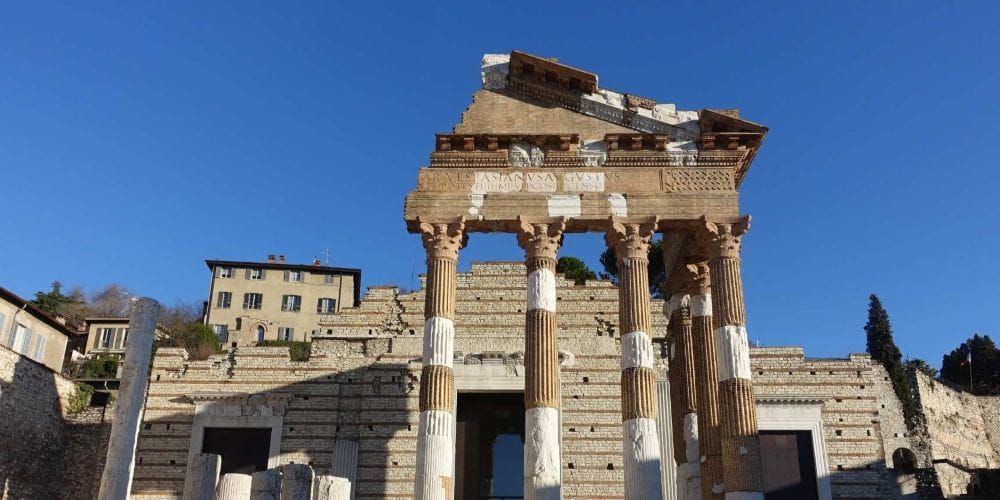
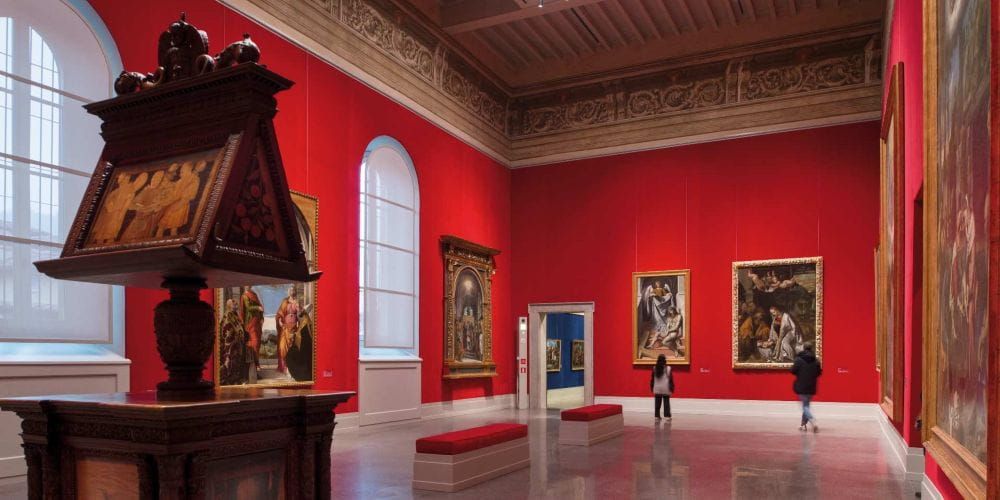
At the center of the area is the Archaeological Park of Roman Brescia, dominated by the facade of the Capitolium (built by Emperor Vespasian in 73 AD) and the neighboring Roman Theatre. Steps away stands the Santa Giulia Museum, a monumental monastic complex covering over 14,000 square meters. Here, centuries of history stack upon each other: beneath medieval arches and Renaissance frescoes lie preserved Roman domus with intact mosaics and ancient underfloor heating systems.
The current historic center of the city of Brescia is shaped on the foundations of ancient Brixia which developed over the centuries into a medieval and then Renaissance city up to the urban planning of the 20th century.
The winged victory: a rediscovered masterpiece
On July 20, 1826, workers excavating the ancient Roman forum found a hidden cavity between the walls of the Capitolium temple. Inside sat a pristine, life-sized Roman bronze statue of a winged goddess, carefully concealed centuries earlier to protect it from invading armies.
Today the Winged Victory (Vittoria Alata) is the symbol of Brescia’s artistic heritage. Displayed inside the Capitolium within a striking light installation designed by Spanish architect Juan Navarro Baldeweg, the statue remains one of the finest surviving large-scale bronzes from antiquity. Standing before its detailed bronze wings and draped robes, it’s easy to see why 19th-century Grand Tour travelers were captivated by it. Best of all, you can enjoy it up close, without the chaotic crowds of Europe's mega-museums.
Brescia: a city built for slow wandering
Beyond its ancient ruins, Brescia is an elegant, walkable city. Strolling through the historic center takes you across a series of impressive squares, each reflecting a different era:
· Piazza della Loggia: a symbol of Venetian Renaissance architecture, it is the civic heart of the city, dominated by the Palazzo della Loggia, the Monti di Pietà, the Portici and the Clock Tower.
· Piazza Paolo VI: one of the rare squares in Italy with two churches standing side by side—the circular Romanesque Duomo Vecchio (old Cathedral) and the towering 17th-century Duomo Nuovo (new Cathedral).
· Piazza della Vittoria: one of the greatest examples of rationalist architecture in Italy, every year it hosts the stamping and the start of the vehicles of the 1000 Miglia, the historic vintage car race that attracts enthusiasts from all over the world.
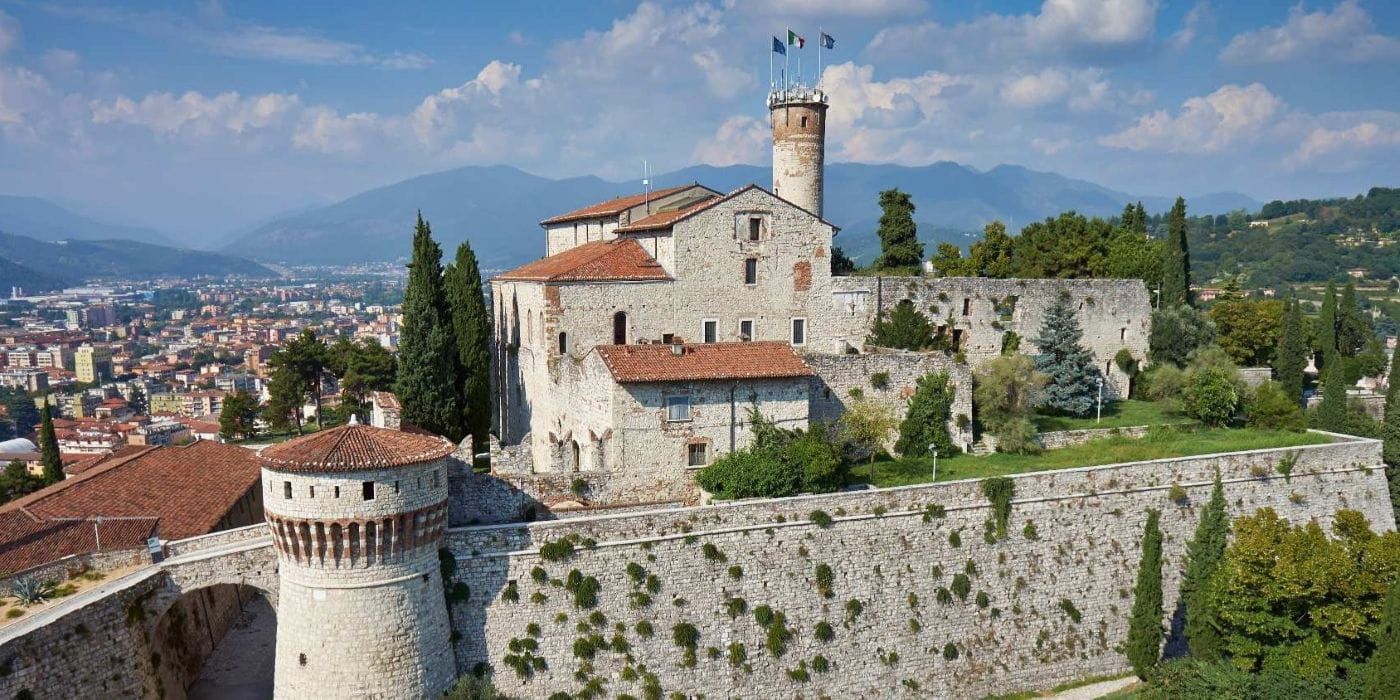
Sited atop of Cidneo hill, Brescia Castle dominates the city from above. This medieval fortress offers panoramic views of the city's rooftops and the surrounding pre-Alpine hills.
Exploring Brescia means ducking into historic shops, strolling under quiet porticoes, along charming streets and squares, and stopping for a coffee, an aperitif or a meal with friends.
Brescia: where culture meets local flavor
In Brescia, culture extends straight to the dining table. The local food scene stays true to regional Lombard traditions, offering rich flavors in a relaxed setting.
No visit is complete without joining locals for an early evening Pirlo. The Brescian predecessor to the Venetian Spritz, this traditional aperitivo mixes local white wine, Campari or Aperol and sparkling water, served with a slice of orange.
Brescia is also home to one of Italy’s most important wine-producing areas and to unique wines such as Franciacorta DOCG, made using the traditional method and perfect for any occasion.
Pair your drink with local specialties like Casoncelli alla Bresciana—handmade stuffed pasta tossed in melted butter, crispy sage, and aged cheese—or fresh lake fish caught in nearby Lake Iseo and Lake Garda.
Key events in Brescia for 2026 - 2027
Brescia is a lively city where history forms the backdrop for contemporary events. Depending on when you visit Brescia, you can line up your trip with these highlights:
· Mille Miglia (22 - 29 May 2027 ): Known as "the most beautiful race in the world" this iconic vintage car rally starts and finishes in Brescia every year, turning the city into an open-air museum of classic automotive design.
· Festa dell'Opera (May-June 2027 ): A unique festival where opera leaves the traditional theater to fill public squares, courtyards, and rooftops with live performances from morning until midnight.
· Exhibition Treasures. The Great Novel of Brescia's Museums. 1826-2026: A rare opportunity to enter Fondazione Brescia Musei's private storage vaults and view rarely seen ancient artifacts. The exhibition will be open from November 4, 2026 to August 22, 2027.
Planning your Brescia city break
Just a 35-minute train ride from Milan, Brescia offers a rich mix of UNESCO heritage, world-class art, vibrant gastronomy, and genuine Northern Italian culture. Whether you are seeking a weekend city break or a rich cultural stop on your Italian vacation, Brescia invites you to slow down and experience the real Italy before the rest of the world arrives.

About the author
Written on 11/09/2026
Elisa Verrazzo
Copywriter, globetrotter, photo-addicted. In love with Italy, its culture and its cuisine.

Elisa Verrazzo
Discover Brescia in 2026: with its UNESCO sites and two bicentenaries to celebrate, it's Italy's unmissable cultural destination.