
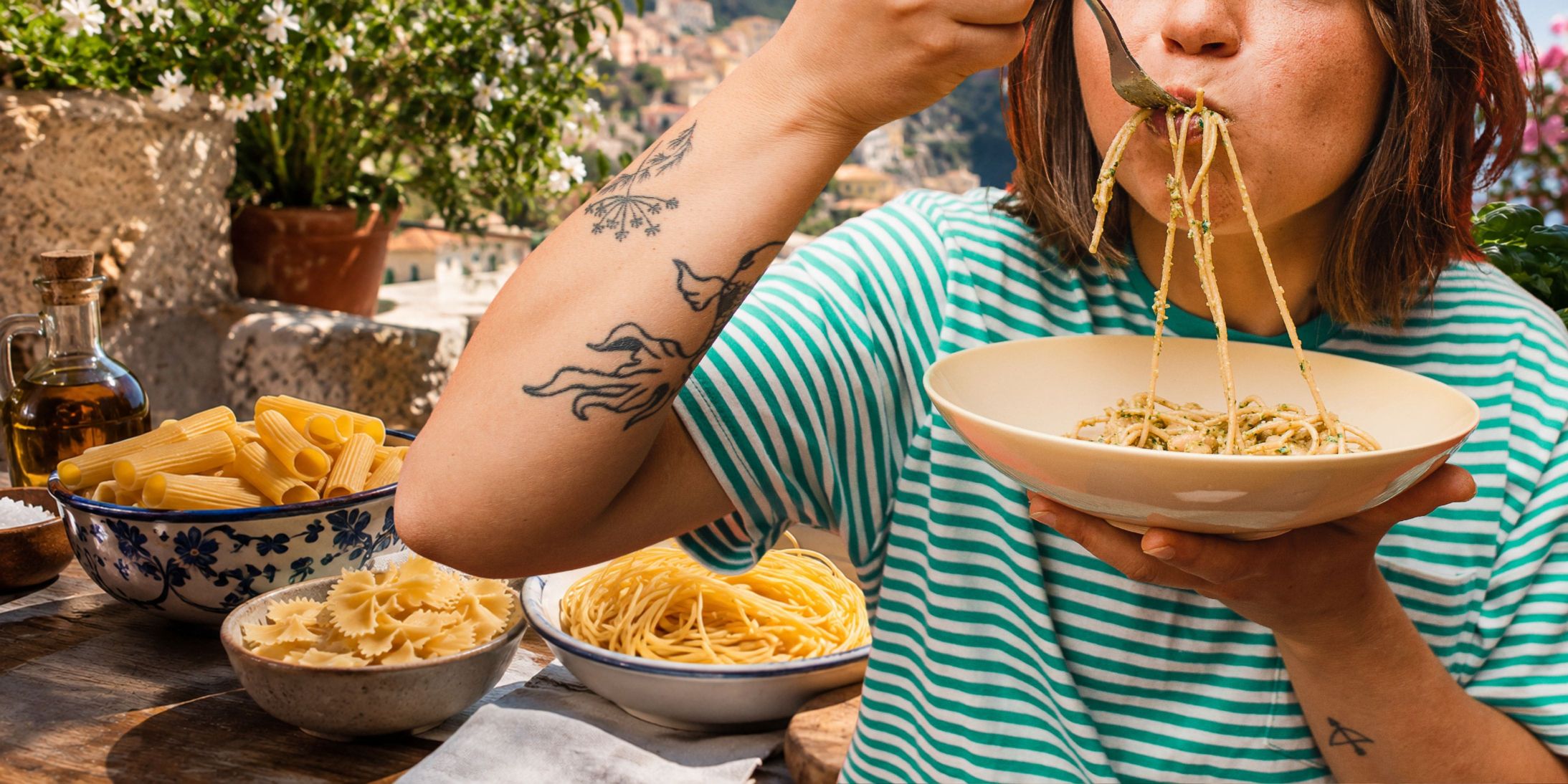

An Italian faced with a plate of pasta likes to think they know a thing or two about it. But with hundreds of Italian pasta shapes to choose from, names that sound like tongue-twisters, and designs that look like they came straight out of an architect’s sketchbook (and sometimes they did), there’s always some obscure variety out there that even the most stereotypically pasta-loving Italian has never heard of.
Inspired by World Pasta Day, celebrated around the globe on 25 October, we’ve rounded up 15 types of pasta worth trying, from beloved regional classics to some decidedly quirky creations, including one that earned recognition from the prestigious Compasso d’Oro design award.

Italian Pasta Shapes: why are there so many?
Italy is said to have more than 300 different pasta shapes. But why so many? Well, every sauce is desperately searching for its soulmate. Pesto Genovese pairs with trofie, broccoli rabe with orecchiette, carbonara enjoys a bit of a ménage à trois with spaghetti and rigatoni, and so on.
Every Italian region has developed its own pasta varieties, often with one goal in mind: finding the perfect match for its local sauces. Predictably, that means an almost endless choice. Still, when we go shopping, we often end up buying the same old shapes. According to a survey by Unione Italiana Food, Italians are creatures of habit when it comes to pasta: spaghetti and penne top the list nationwide, followed by fusilli in the north and short pasta shapes like mezze maniche in the south.
To break out of the routine, we’ve rounded up the types of Italian pasta we wouldn’t normally reach for when throwing together a lazy midweek supper, but that proved thoroughly rewarding when we made a little more effort:
- Scialatielli
- Marille
- Ziti
- Paccheri
- Busiate
- Strozzapreti
- Tajarin
- Bigoli
- Gramigna
- Campotti
- Sugeli
- Su Filindeu
- Maltagliati
- Pizzoccheri
- Cavatelli
Related story - A foodie's itinerary in Italy
15. Scialatielli: regional Italian pasta from the Amalfi Coast
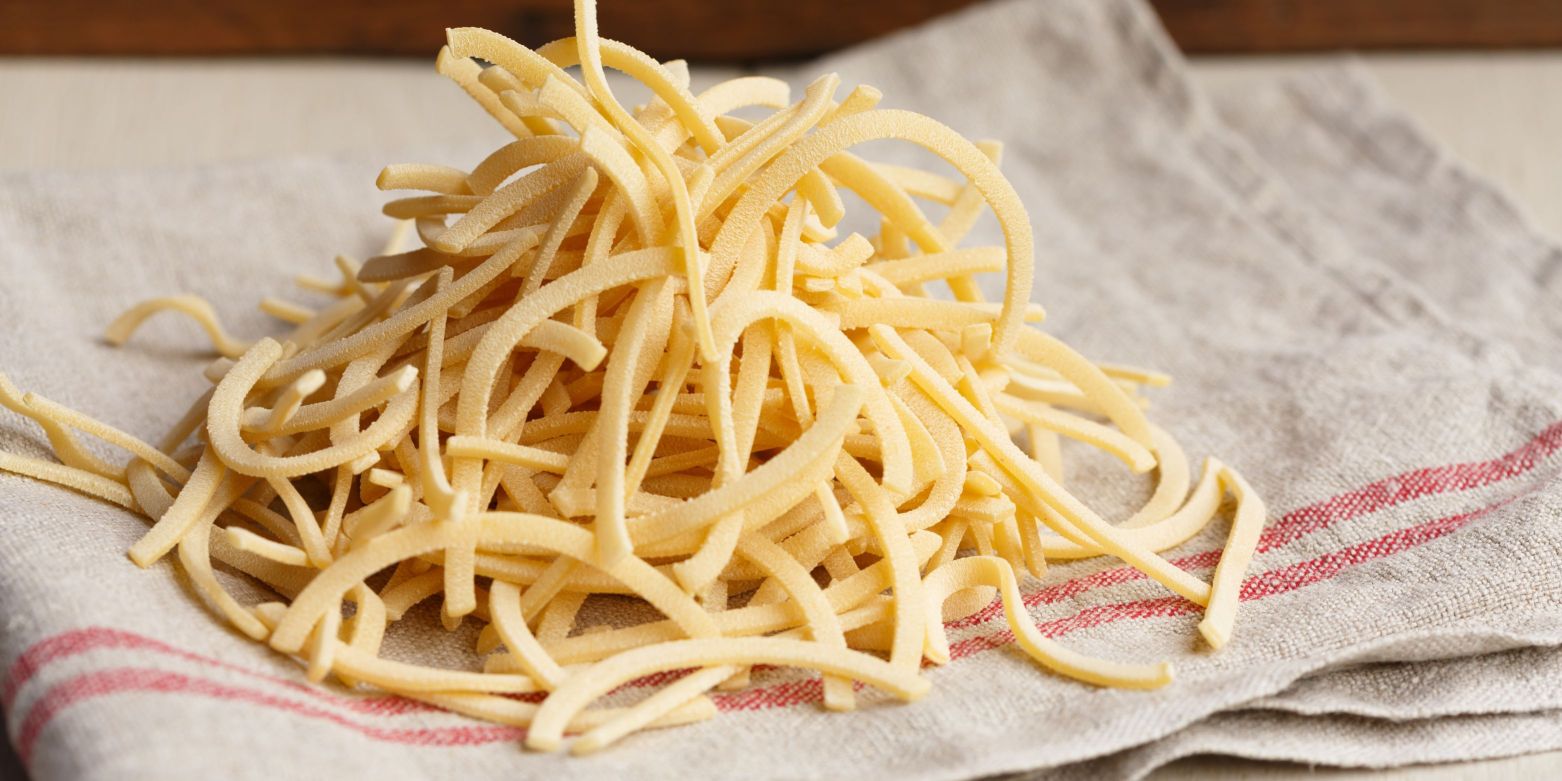
Scialatielli are a delicious speciality from the Campania region (and one of this writer’s all-time favourite pasta varieties, if we’re being honest). Amalfi native chef Enrico Cosentino invented them in the 1970s, when he came up with a thick, irregular shape that’s shorter than a tagliatella and somewhere between that and a strand of spaghetti
The traditional dough combines flour, milk, olive oil, pecorino, Parmesan, basil, eggs and black pepper. Cosentino’s original version was served with sausage and mushrooms, but in a nod to Amalfi’s seaside setting, scialatielli are now most commonly paired with seafood.
Their name is thought to come from the Neapolitan dialect word scialare, meaning to enjoy oneself or indulge. Cosentino himself explained the origin in an interview with La Cucina Italiana: “They’re called scialatielli because, when I first served them to people, many said ho scialato.” We know the feeling, chef. We really do.
Related story - How to cook pasta fresca
Learn how to make pasta in ItalyMarille, the design pasta shape that (never) made it back to the future
An honourable mention goes to Marille, a pasta shape that’s no longer in production but is still considered a little masterpiece of design. In 1983, pasta brand Voiello turned to Giorgetto Giugiaro to create it. The legendary designer had already made his mark on the automotive world with dozens of iconic cars, including the DeLorean DMC-12 (better known as Doc Brown’s time machine in Back to the Future).
Smooth on the outside and ridged on the inside to help the sauce cling to every bite, Marille had an elegant, sinuous shape that looked almost futuristic. Commercial success, however, never really took off. Among the reasons often cited for its failure were a few problems with cooking.
Ziti: the only pasta you’re supposed to break
Long, smooth and meant to be snapped into shorter pieces before cooking. Yes, you read that right: breaking pasta is practically a crime in Italy. Unless, of course, we’re talking about ziti. These long tubes, very popular in Naples, are the one type of pasta you can break in front of an Italian without causing a full-blown diplomatic incident.
Their name is thought to come from zita, meaning “bride” in Neapolitan dialect, as they were served at weddings. As we were saying, they’re hand-broken into shorter lengths before they hit the pot. And where do they go from there? Into a rich genovese sauce, a hearty lardiata or a slow-cooked ragù left to pippiare – gently bubble away for hours.
12. Paccheri, the most glorious of them all
The name says it all. In Naples, paccheri are also known as schiaffoni, or “big slaps”, evoking both the stinging smacks exasperated mums threatened us with when we were children and those long, lazy lunches overlooking the sea, preferably on a shady terrace in Posillipo, in the middle of July.
They’re large tubes of durum wheat pasta, smooth or ridged, begging for a generous coating of sauce – tomato-based, ideally. Their oversized shape makes them irresistible with meaty ragùs, seafood sauces and oven-baked fillings. These kinds of slaps only hurt in one situation: when the plate is empty and there are none left.
Take part in a pasta class in Italy11. Busiate: Sicilian spirals to fall in love with
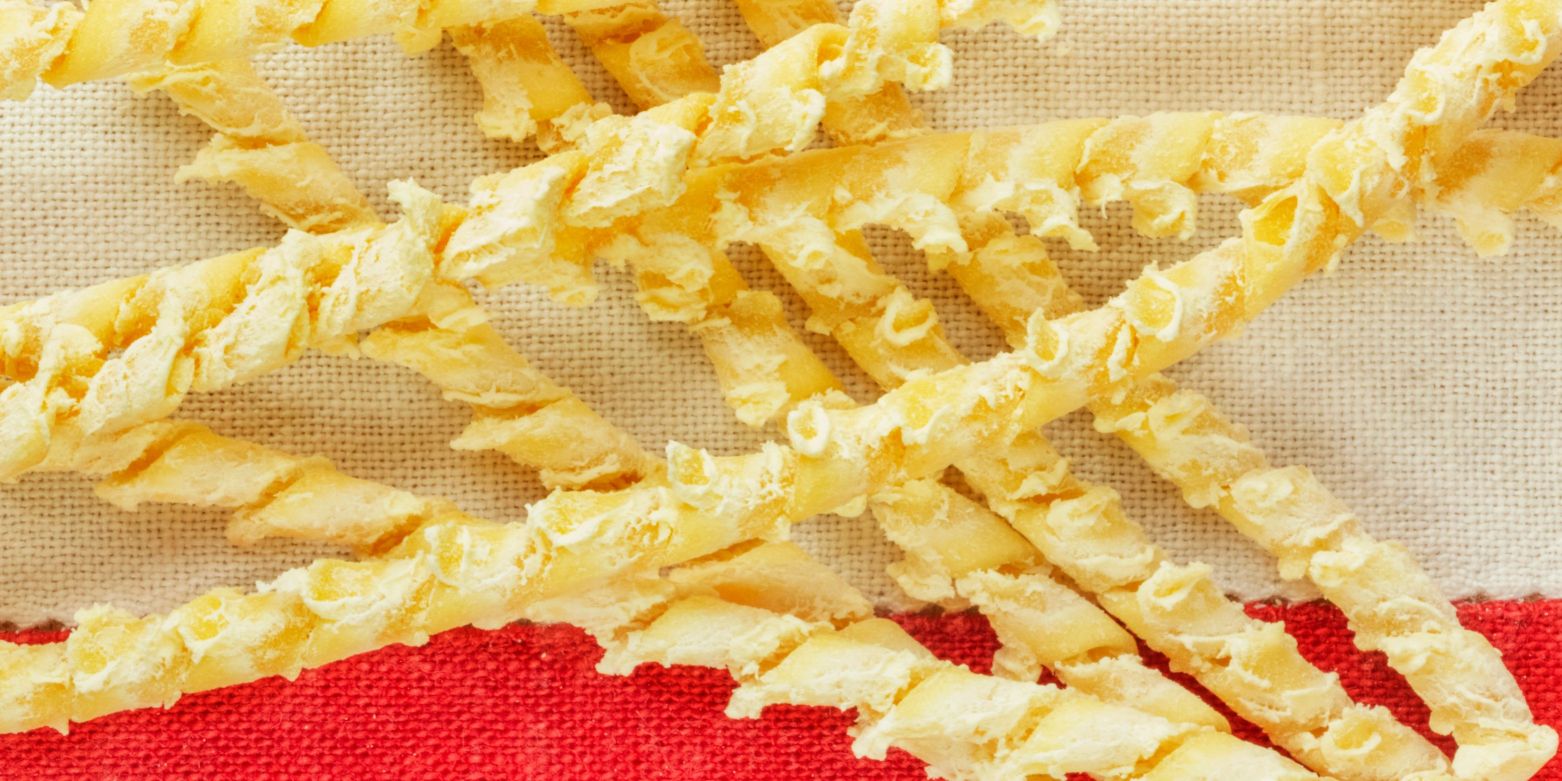
Hailing from the Trapani area, western Sicily, busiate are corkscrew-shaped pasta that looks like a spring or a stretched-out fusillo. Traditionally, they were made by winding strips of dough around a thin metal rod known as a buso – which, according to one popular explanation, is where their name comes from.
Their spiral shape isn’t just for show: it’s perfect for catching and holding on to sauce, especially pesto alla trapanese, a delicious Sicilian take on pesto made with tomatoes, almonds, garlic and basil.
10. Strozzapreti: la pasta for sinners
One story goes that strozzapreti, literally meaning “priest-stranglers”, were served to clergymen in the hope that they’d choke on them. Another claims that priests were so greedy for the stuff they’d gobble it down fast enough to choke. A third theory is that the name comes from twisting and squeezing the dough to make the pasta. Whatever the truth, one thing’s for sure: served with a good ragù or any other meaty sauce, strozzapreti are an absolute blessing.
These hand-rolled twists are traditional in several parts of Italy, particularly Emilia-Romagna, Tuscany, Marche and Umbria, although local versions can be found elsewhere, too. They’re made by rolling thin strips of dough between your hands to create irregular, twisted strands, usually without eggs.
9. Tajarin: when egg yolks make all the difference
@mom.in.italy One of the most historic trattoria of Piemonte, and fresh pasta made by hand from the one and only nonna ‘Gemma’ #osteriadagemma #osteria #tajarin #piemonte #nonna #italy bellissimissima <3 - Alfa
In the Langhe area, Piemonte region, egg pasta is serious business. Take tajarin, for instance: fine, delicate strands made with a generous helping of egg yolks, which give them their distinctive deep golden colour.
The name is the local Piedmontese word for tagliolini, but making them is anything but straightforward. The dough must be rolled out thinly and cut into silky, hair-fine strands – a job that takes a fair bit of skill. When it comes to serving them, simplicity wins. Butter and sage do the trick beautifully, but for a truly indulgent treat, nothing beats white truffle from Alba.
8. Bigoli: thick, rough and rather partial to sardines
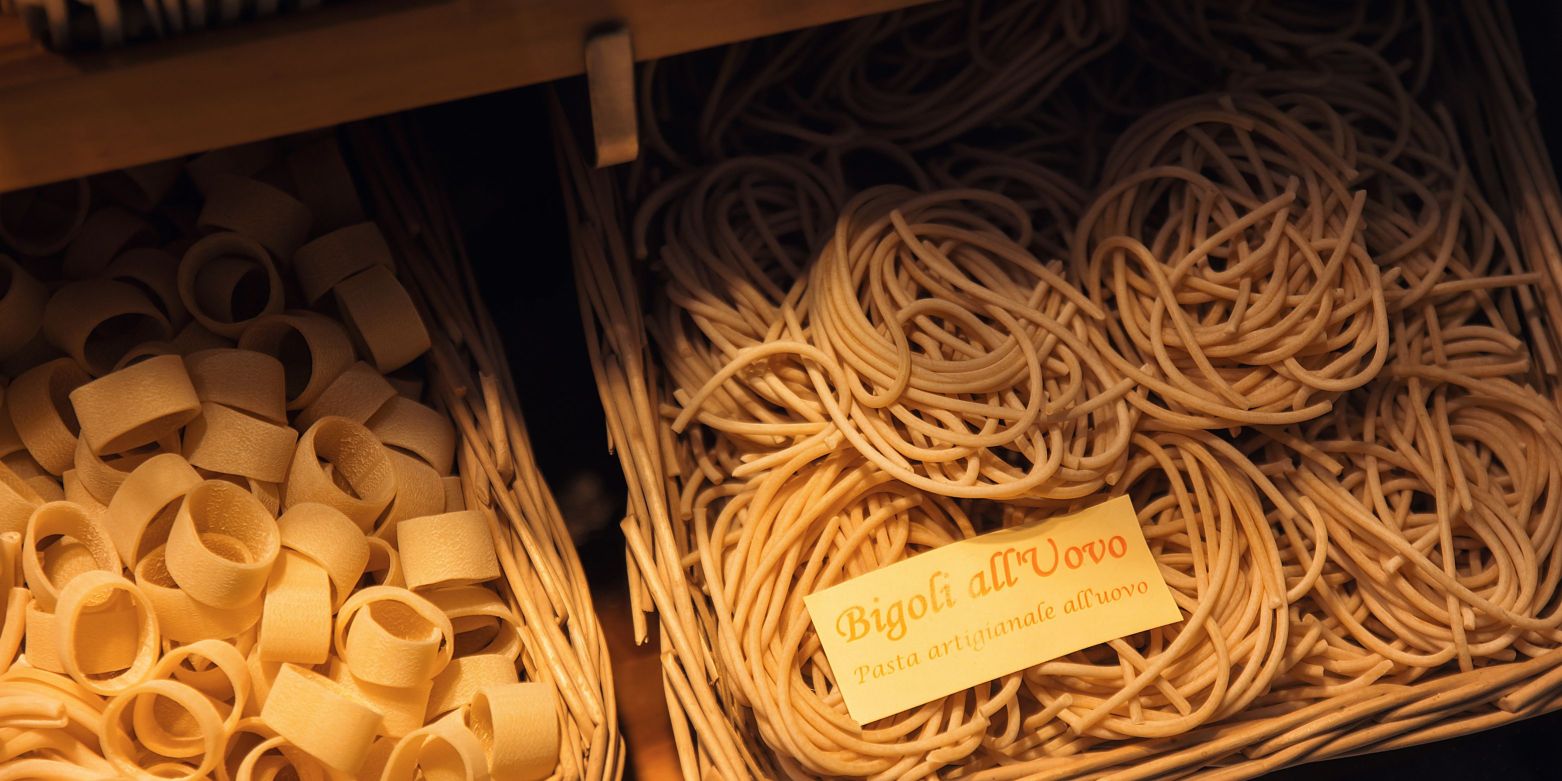
Long and chunky, bigoli are a traditional pasta found mainly in Veneto, Trentino and Lombardy. They look a bit like oversized spaghetti and are made with flour and water, sometimes with eggs thrown into the mix. Their rough surface and firm, substantial texture give them plenty of character.
They’re shaped using a bigolaro, a kind of hand-operated pasta press. And when it comes to the perfect pairing, sardines are hard to beat. Mantua and Venice are two great places to discover the local takes on this classic combination.
7. Gramigna: little curls with a soft spot for sauce
Typical of Emilia-Romagna, particularly the Bologna area, gramigna is a short, curly pasta shaped like a little bent tube. Its name comes from a type of grass that grows wild in lawns and fields, which it resembles in shape, if not in substance.
It’s made with durum wheat semolina and water, then traditionally served with a rich sausage sauce. These little curls may be small, but don’t underestimate them: they’re brilliant at catching every last bit of sauce.
6. Campotti: beautiful, delicious and award-winning
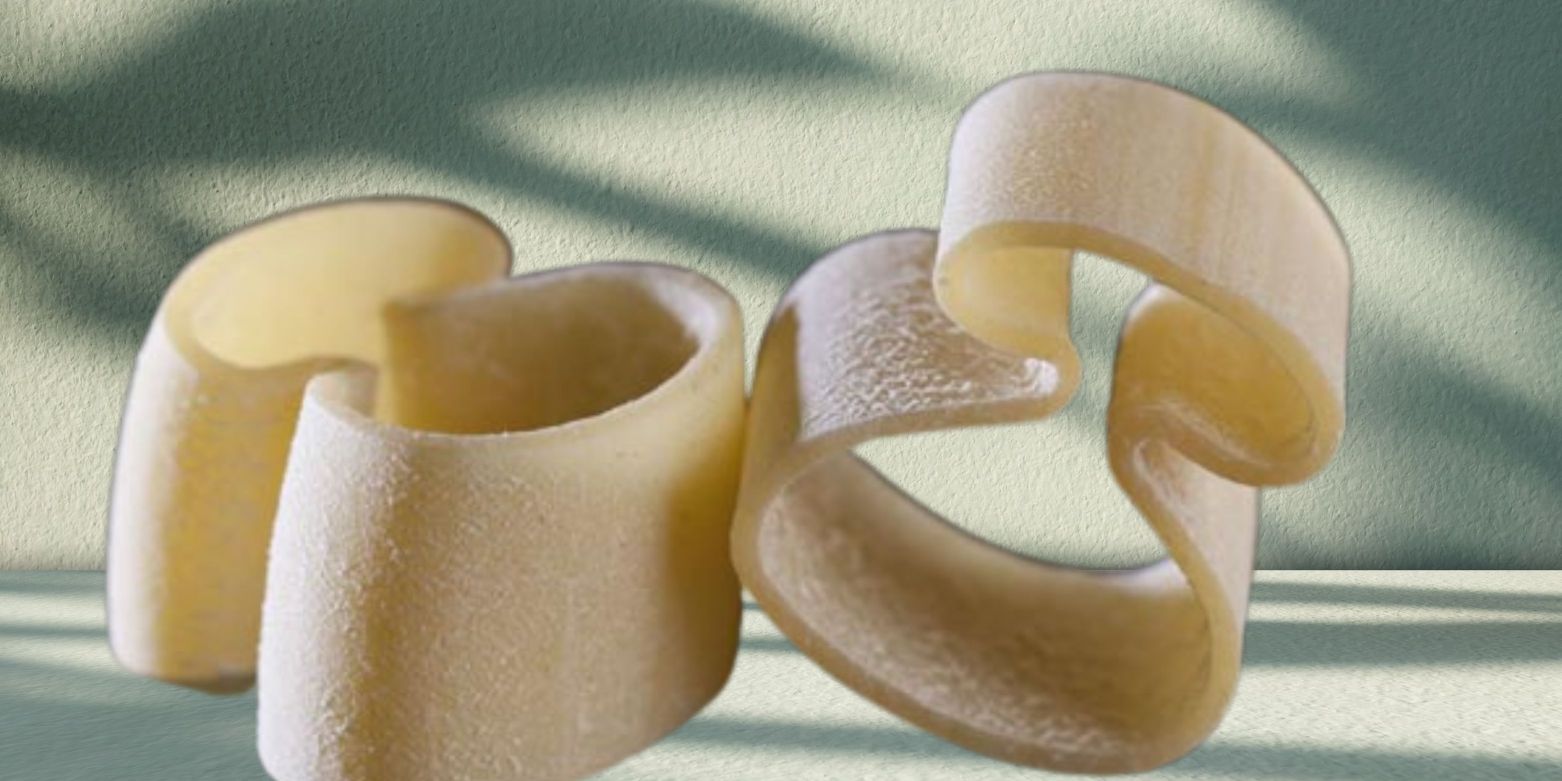
Food designer Mauro Olivieri was watching an American journalist struggle with a plate of paccheri when inspiration struck: why not rethink their shape? And so campotti were born.
Created exclusively for Pastificio dei Campi, a pasta maker based in Gragnano, the new shape was developed in collaboration with Giuseppe Di Martino. First conceived in 2010, it became the first pasta-related product to feature in the yearbooks of ADI, the Italian Association for Industrial Design, the following year.
Campotti are similar to paccheri, but pinched in the middle to create a figure-of-eight shape, so they take up less room in your mouth while still doing a brilliant job of catching the sauce.
In 2014, they received an honourable mention at the Compasso d’Oro, one of the world’s most prestigious design awards.
5. Sugeli: northern Italy’s answer to orecchiette
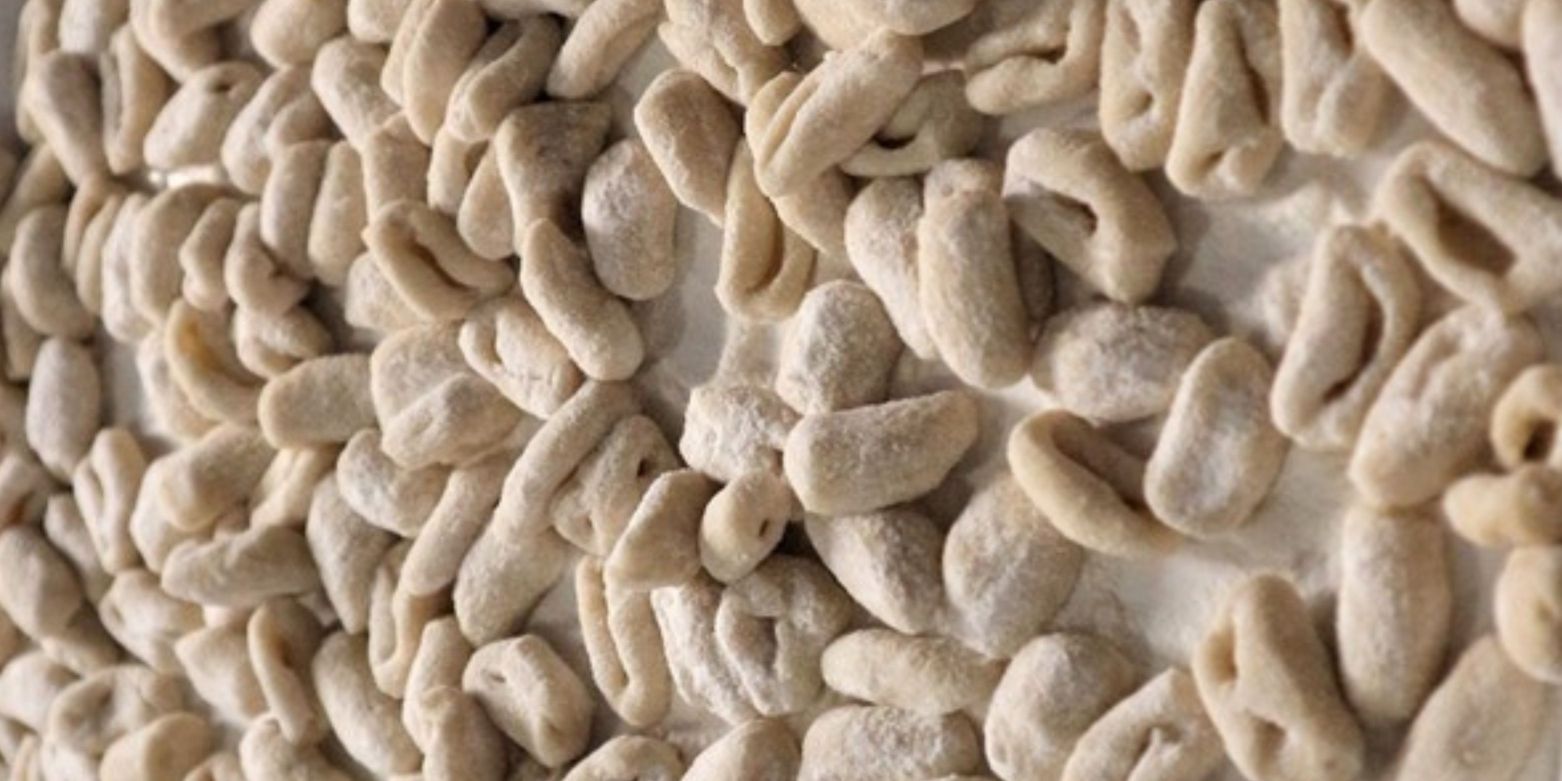
In the Liguria hinterland, the pasta of choice is sugeli, a traditional Cucina Bianca speciality, the distinctive food culture of the Ligurian Alps which is all about flour-based dishes, dairy products, and vegetables such as potatoes, leeks, and turnips.
People in Liguria make sugeli by hand with just flour and water, shaping them into little dumplings with a characteristic hollow in the middle. This indentation is created using a technique known as corpu de diu, literally “finger punch”, a wonderfully straightforward name for the simple gesture that gives them their distinctive form. The perfect accompaniment is a creamy white sauce made with brusso, the local fermented ricotta cheese.
4. Filindeu, the most expensive pasta ever
@sardegnaexplorer Il filindeu è un tipo di pasta per minestra formata da sottilissimi fili sovrapposti in tre strati incrociati, ricavati con abilità manuale#filindeunugoresu #barbagia #nuoro#cucinasarda #anticatradizione #nuoro#nugoro suono originale - Sardegnaexplorer
Originating in the Nuoro area of Sardinia, su filindeu is one of the rarest and most expensive types of pasta, costing over €60 per kilo. The technique is complex, passed down through generations and now mastered by only a handful of people: the dough is stretched and folded by hand until it forms 256 incredibly fine strands, arranged in three criss-crossed layers.
The name itself has a touch of mystery. Filindeu is sometimes interpreted as “threads of God”, although another theory links it to an Arabic word for “hair”, evoking the pasta’s delicate golden strands. The tradition is closely linked to pilgrimages to the sanctuary of San Francesco di Lula, where filindeu were served to pilgrims. It is cooked in sheep’s broth and served with fresh pecorino cheese.
3. Maltagliati: the art of making the most of leftovers
Maltagliati literally means "badly cut". These irregular pieces of pasta were originally a clever way to use up scraps left over from making tagliatelle and other fresh egg pasta. They’re made by cutting the leftover sheets of dough into diamonds, triangles or strips of different sizes.
Since there’s no standard shape to follow, no two pieces are ever quite the same. Maltagliati are pretty versatile: they’re at their best in hearty bean and pulse soups, but they also pair beautifully with meat or fish sauces.
2. Pizzoccheri: the hearty mountain pasta of northern Italy
@chefincamicia Ma quale fragole e cioccolato, noi vogliamo solo i pizzoccheri - #ChefinCamicia #AmazingFood #GoodFood #ItalianFood #RicetteSemplici #Pizzoccheri #pizzoccheridellavaltellina #videoconpiulike #pizzoccherivaltellinesi #strawberry #chocolate #cucinacontiktok suono originale - chefincamicia
Short, flat strips made with a blend of buckwheat and wheat flour, pizzoccheri have a distinctive dark colour that sets them apart from other traditional Italian pasta. Pizzoccheri are closely tied to the culinary heritage of Valtellina, in Lombardy, with the town of Teglio widely regarded as their birthplace.
The most popular recipe cooks them with potatoes and Savoy cabbage, then tosses them with melted butter and cheese, usually Valtellina Casera PDO. They're not light and delicate, but after a day on the ski slopes, this is exactly the kind of comforting, stick-to-your-ribs dish that brings everyone together.
2. Cavatelli: little hollows, big ambitions
@the_pasta_girl_ Cavatelli #cavatelli #pasta #pastatiktok #perte #foryou #italianpasta suono originale - Serena Sciotti
Found mainly in Molise, Puglia, and other parts of southern Italy, cavatelli are small, elongated pieces of fresh pasta with a hollow centre, made by pressing the dough with your fingers. With just a couple of ingredients and plenty of hands-on skill, they’re made with durum wheat semolina and water, with no eggs in sight.
Their name comes from hollowing out the dough to create a little groove that catches the sauce. Depending on where you are in southern Italy, you’ll find these regional Italian pasta favourites served with meat ragù, vegetables or pulses.
A pasta map of the Italian pasta shapes: which pasta comes from which region?
Want to explore regional Italian pasta beyond the usual suspects? Here’s a handy guide to what to look for in each region. ideally, in the very place where each speciality was born.
Valle d’Aosta: ravioles, chnolle, chnéffléne.
Piedmont: agnolotti, plin, cajettes.
Liguria: corzetti, mandilli de saea, pansoti, battolli.
Lombardy: casoncelli, marubini, agnolini.
Trentino-Alto Adige: strangolapreti, canederli, spätzle.
Veneto: casunziei, bigoli, gargati.
Friuli-Venezia Giulia: cjarsons, blecs, cjalcune.
Emilia-Romagna: garganelli, curzoli, passatelli.
Tuscany: pici, testaroli, bringoli.
Marche: frascarelli, lumachelle, maccheroncini di Campofilone.
Umbria: strangozzi, umbricelli, ciriole.
Lazio: fregnacce, tonnarelli, fettuccine.
Abruzzo: cazzillitti, tacconelle, spaghetti alla chitarra.
Molise: crioli, cavatelli, sagne.
Campania: candele, ziti, paccheri.
Puglia: troccoli, strascinati, lagane.
Basilicata: ferricelli, rascatielli, manate.
Calabria: fileja, scilatelle, calandreddi.
Sicily: anelletti, busiate, cataneselle.
Sardinia: lorighittas, fregula, culurgiones.
Fun facts about Italian pasta shapes - FAQs
@visititalyofficial Meet Teresa, an 88-year-old sfoglina whose hands carry generations of Italian tradition In Mercatello sul Metauro, a beautiful village in the Marche region, handmade pasta becomes a competitive art. During the historic Palio del Somaro and Sagra della Tagliatella, participants prepare fresh egg dough and stretch it by hand using only a wooden rolling pin. The competition is part of a much larger celebration in which the village’s four historic districts face one another through traditional challenges, from pasta making to log cutting and the famous donkey race. For the 2026 edition, local sfoglinerolled kilometres of egg pasta entirely by hand. But this is about more than perfect tagliatelle. It is about preserving the gestures, knowledge and memories passed down through Italian families long before recipes lived online. Tag the biggest pasta lover you know. Credits: @masha.ledina #visititaly #nonna #pasta #foodtok #italianfood suono originale - Visit Italy
How many pasta shapes are there in Italy?
Italy has more than 300 officially recognised pasta shapes, although the real number is probably higher. Between regional variations, new creations, and limited editions, the world of Italian pasta keeps expanding.
What are the most unusual Italian pasta shapes?
Some of the most unusual pasta shapes include Marille, designed by the legendary Giorgetto Giugiaro but no longer in production; Turbini, designed and produced using 3D printing; Creste di Gallo, which resemble a cockerel’s comb; Vesuvio, with a curled, conical shape inspired by the volcano; and Cazzetti, whose deliberately cheeky shape is sure to raise a few eyebrows.
Why are different pasta shapes paired with different sauces?
Thickness, grooves, ridges, hollows, and length affect how well pasta holds onto its dressing. Pasta shapes and sauces need to work together. Ridged shapes catch chunky sauces; long strands pair well with smooth, creamy ones. Small shapes are ideal for soups and broths. Stuffed pasta works beautifully with delicate sauces.
About the author
Written on 24/10/2026
Lorena Calise
I'm a content writer for magazines and websites. I also explore Italy through my writing for Visit Italy and Visit Naples.

Lorena Calise
These Italian pasta shapes look as good as they taste and we bet you don’t eat them every day.