
The soft touch of brushes, the intense scent of tempera and dyes, the vibrant colorful hues that bring to life extraordinarily vivid images: whether it’s frescoed walls or paintings on canvas, the Italian painting represents such a rich universe waiting to be discovered by all art enthusiasts who are looking for beauty and emotion.
Do you want to experience these magical sensations with us? Then pack your bags and prepare for a unique journey to discover the 10 most beautiful painting artworks in Italy, a heritage of colorful solemnity and elegance preserved in the heart of our arts cities, to admired while visiting some of the most famous galleries in the world.
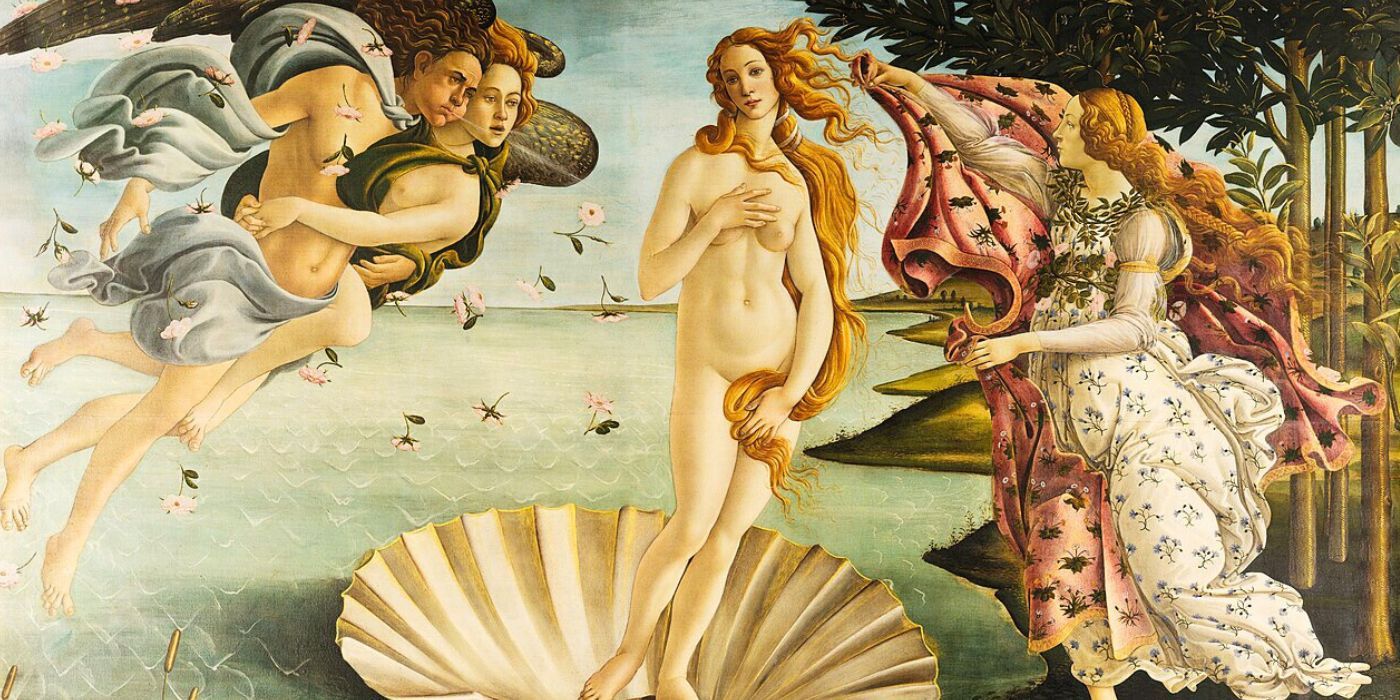
Cover: The Birth of Venus by Botticelli, Florence

Painting artworks in Italy: beautiful painted arts to mesmerize your eyes
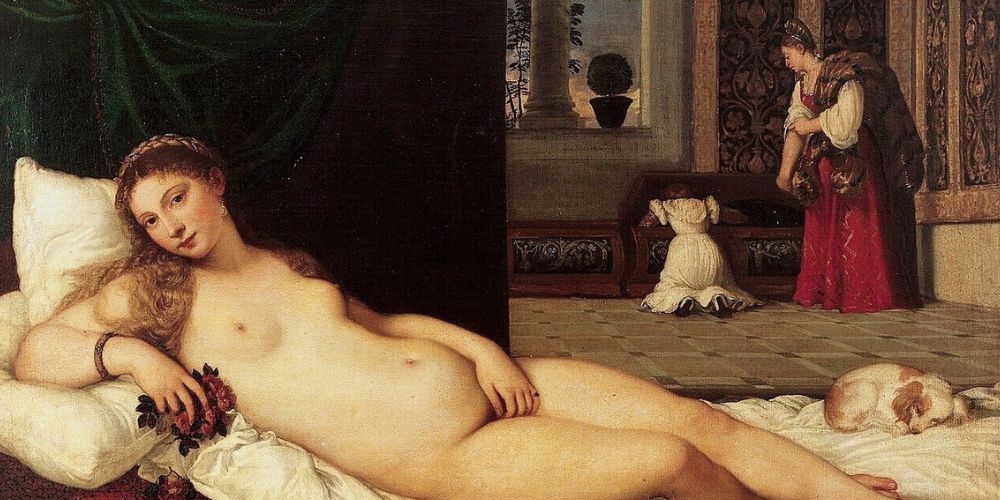
The Venus of Urbino by Titian, Florence
From the celebrated Uffizi Gallery in Florence to the Brera Art Gallery in Milan, from the Gallerie dell'Accademia in Venice to the exhibitions in Villa Borghese in Rome, without forgetting places of faith like the Basilica of San Francesco in Assisi and Duomo of Arezzo, our journey to discover the most evocative painting artworks in Italy goes primarily through the heart of the country's most surprising arts cities, key destinations for all enthusiasts - and not just about painting fans.
In this guide we've selected for you ten unmissable paintings, an ideal mix of iconic masterpieces renowned throughout the world - just like some of the wonderful frescoed vaults and domes that embellish Italian churches and palaces - and lesser-known niche works capable of astonishing, inspiring and give emotions.
Here is the list of the Italian painting artworks we're discovering together:
· The Kiss by Francesco Hayez, Brera Art Gallery, Milan
· Magdalene by Piero della Francesca, Duomo of Saints Pietro and Donato, Arezzo
· Primavera by Botticelli, Uffizi Gallery, Florence
· Cherub Playing a Lute by Rosso Fiorentino, Uffizi Gallery, Florence
· Stories of saint Francis by Giotto, Superior Basilica San Francesco, Assisi
· Sacred and Profane Love by Titian, Borghese Gallery, Rome
· Rest on the Flight into Egypt by Caravaggio, Doria Pamphilj Gallery, Rome
· Aeneas and the Cumaean Sibyl by Corrado Giaquinto, Capodimonte National Gallery, Naples
· The Tempest by Giorgione, Gallerie dell'Accademia, Venice
· The Last Supper by Leonardo da Vinci, refectory of Santa Maria delle Grazie, Milan
10. The Kiss by Francesco Hayez, Milan
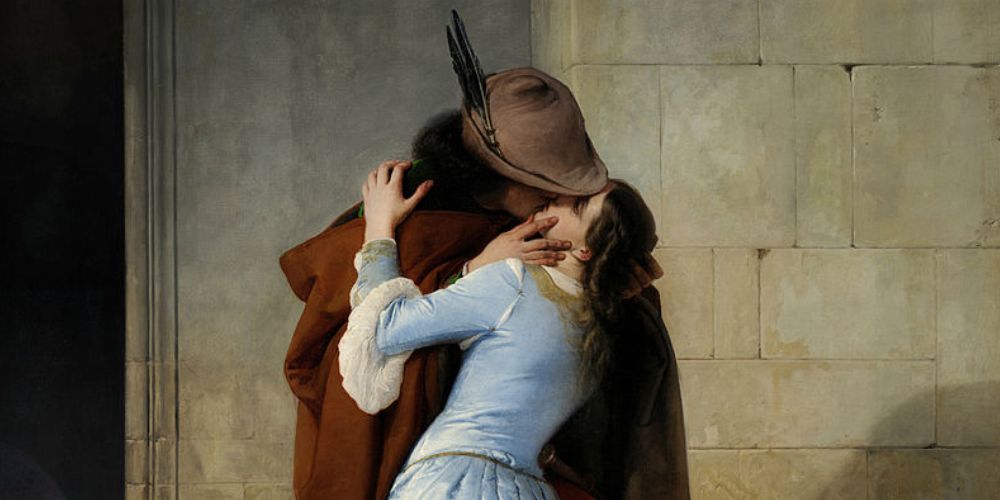
The Kiss by Francesco Hayez, Milan
The Kiss by Hayez is undoubtedly the manifesto piece of Italian romanticism in painting and an artistic icon of the era leading to the country’s unification, perhaps the work that more than any other vibrates with history and sentiment and embodies the values of patriotism and emotional passion in a metaphorical way, yet no less evocative.
The original version in oil on canvas, privately commissioned by Count Alfonso Maria Visconti di Saliceto in 1859, is now housed at the Brera Art Gallery in Milan.
In the following years at least two other authentic versions were painted, today both part of private collections: the first, very similar to the original, differs in the white colour of the woman's dress in the image (the original was azure), while the second was painted in watercolor on paper and features cooler and more feeble colours.
9. Magdalene by Piero della Francesca, Arezzo
🥇 Visit Italy’s brand partnership
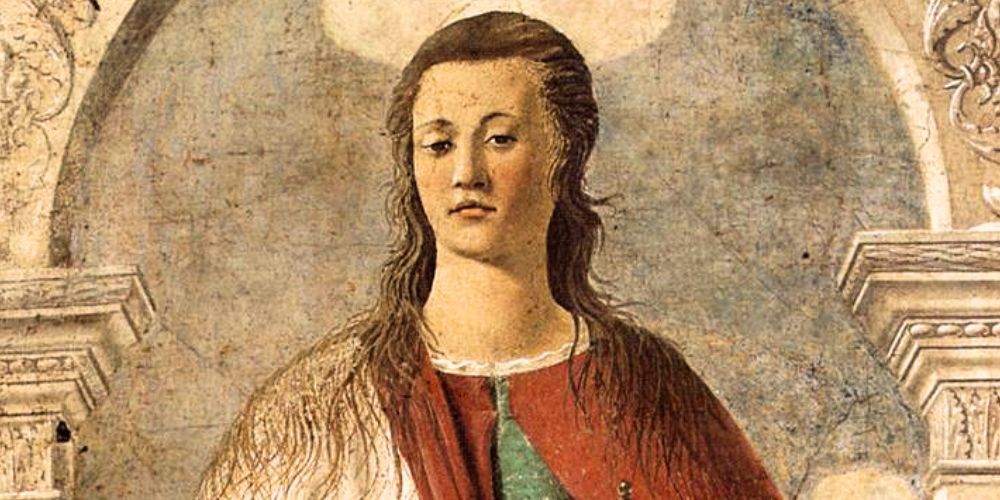
Magdalene by Piero della Francesca, Arezzo
Dating back approximately to 1460, Magdalene by Piero della Francesca is one of the most refined and prestigious examples of Italian renaissance art characterized by a harmonious search for stylistic geometry and chromatic balance.
The fresco, painted on an interior wall in a hidden corner of the Duomo of Saints Pietro and Donato in Arezzo, pictures the image of Magdalene with an elegance that feels both sober and monumental, but above all with an aesthetic sense more akin to sculpture than painting (its dimensions are significant, 190 cm x 105 cm).
Considered one of the most evocative painting artworks in Italy, this Magdalene is related to the cycle of frescoes - a dozen - representing the Legend of the True Cross, created by the same artist in several phases between 1454-1466 and visible in the main chapel of the Basilica of San Francesco in the historic centre of splendid Arezzo.
Discover the elegant City of Arts with Fondazione Arezzo Intour8. Primavera by Botticelli, Florence
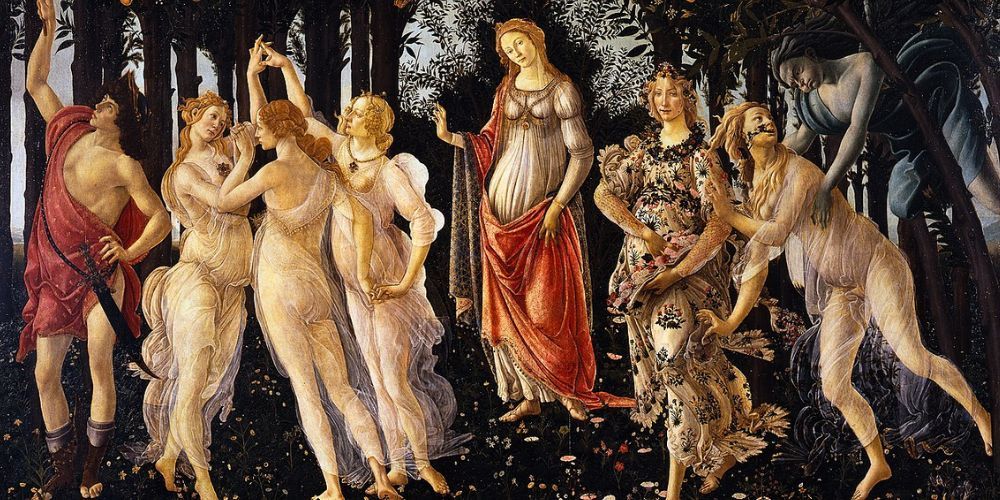
Primavera by Botticelli, Florence
Undisputed masterpiece of the renaissance as well as one the most beautiful painting artworks in Italy and the in the world, Primavera by Botticelli is certainly among the most important and acclaimed treasures of Italian art, housed in the Uffizi Gallery in Florence alongside its twin artwork, the celebrated Birth of Venus.
Dating to around 1482, the work was likely commissioned to adorn the halls of the Castello villa of Lorenzo di Pierfrancesco de' Medici, rulers of Florence at the time, and it metaphorically represents a unique blend of neoplatonism and mythology.
Botticelli pictures with the tempera on wood technique a mysterious and allegorical scene, set in a sacred grove where love, fertility and beauty are celebrated with the figures of iconic characters such as Venus, the Graces, Flora, Mercury and Zephyrus, in a style characterized by soft lines and an almost dreamlike elegance.
7. Cherub Playing a Lute by Rosso Fiorentino, Florence
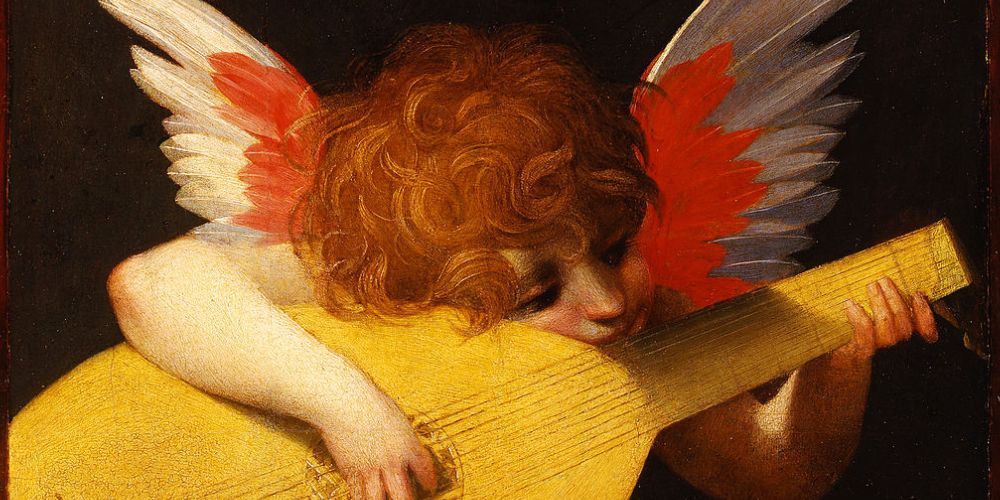
Cherub Playing a Lute by Rosso Fiorentino, Florence
Cherub Playing a Lute by Rosso Fiorentino is probably one of the most representative painting artworks of Italian mannerism, as well as one of the masterpieces of Italian painting, characterized by a complex synergy of warm and cold chromatic contrasts.
Possibly dating to 1521, this beautiful oil on panel artwork is part of the collection of the Uffizi Gallery in Florence. However, it appears not to be an independent painting: indeed, a restoration carried out in 2000 suggested that the work might actually be just a fragment of a much larger panel, likely a Virgin and Child, a typical depiction often accompanied by images of angels while singing or playing musical instruments.
Supporting this theory there is only one complete version of the work according to these canons, which is a sacred altarpiece painted around 1600 by Francesco Vanni and housed in the Collegiate Basilica of Sant'Agata in Asciano (Siena).
6. Stories of saint Francis by Giotto, Assisi
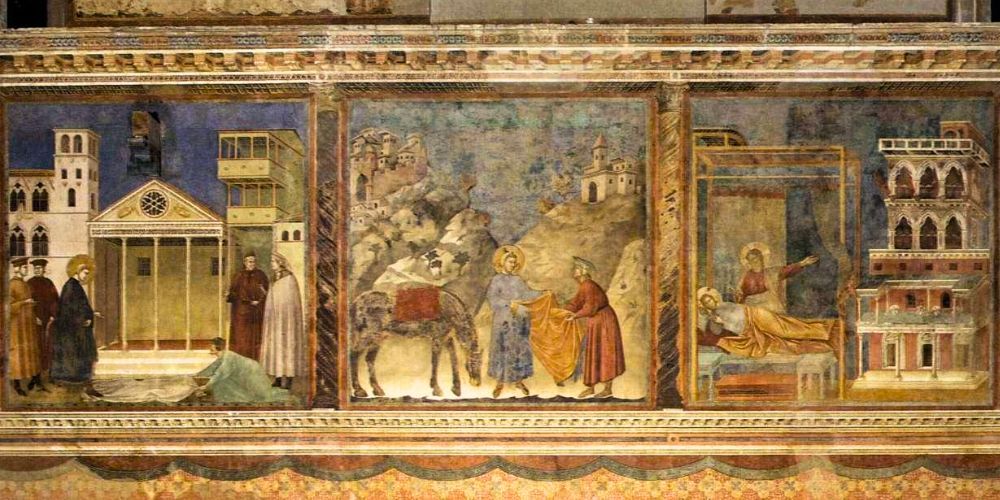
Stories of saint Francis by Giotto, Assisi
When visiting a place steeped in faith and inspiration, such as the Superior Basilica of San Francesco in Assisi, it's impossible not to be enchanted by the beauty of the arts that preciously adorns these spaces dedicated to spirituality and prayer.
We're speaking of prestigious paintings such as the cycle of the Stories of saint Francis, a monumental set of 28 frescoes painted approximately between 1292-1305 and attributed to Giotto - although some art critics believe the Master didn't actually paint the entire work, but rather collaborated with other artists, supervising its overall work in progress.
Beyond the doubts about the artwork's physical creation, these frescoes highlight Giotto's strong innovative spirit in the stylistic transition from gothic, the dominant movement of the middle ages, to a proto-renaissance conception of painting, abandoning the rigidity of figures and employing chiaroscuro techniques and three-dimensional perspective to give the painted figures greater volume, dynamism and emotion.
5. Sacred and Profane Love by Titian, Rome
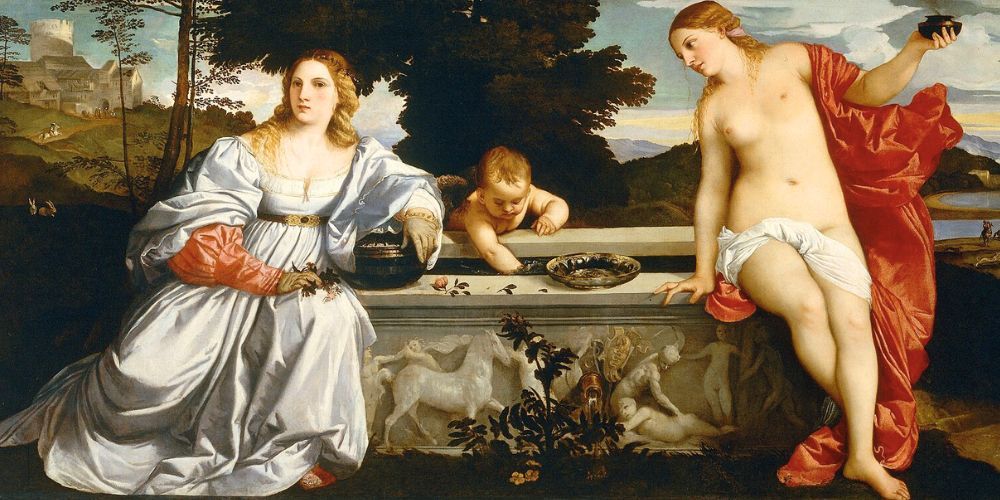
Sacred and Profane Love by Titian, Rome
Painted around 1515 and commissioned for the wedding of Niccolò Aurelio, secretary of the Council of Ten of Venice and future Grand Chancellor of the Republic, Sacred and Profane Love by Titian is one of the most interesting painting artworks in Italy.
It is considered one of the most recognized masterpieces of the venetian renaissance, a work as magnificent as enigmatic and rich in symbolism, housed in the Borghese Gallery in Rome.
The protagonists of this extraordinary oil on canvas painting are two distinct female figures, though probably representing the same woman, one richly dressed and the other nude. Both seat on either sides of what appears to be a fountain, in a powerful allegorical dialogue that celebrates the concepts of earthly and heavenly love, all expressed through the distinctive games of colours and lights typical of the venetian school.
4. Rest on the Flight into Egypt by Caravaggio, Rome
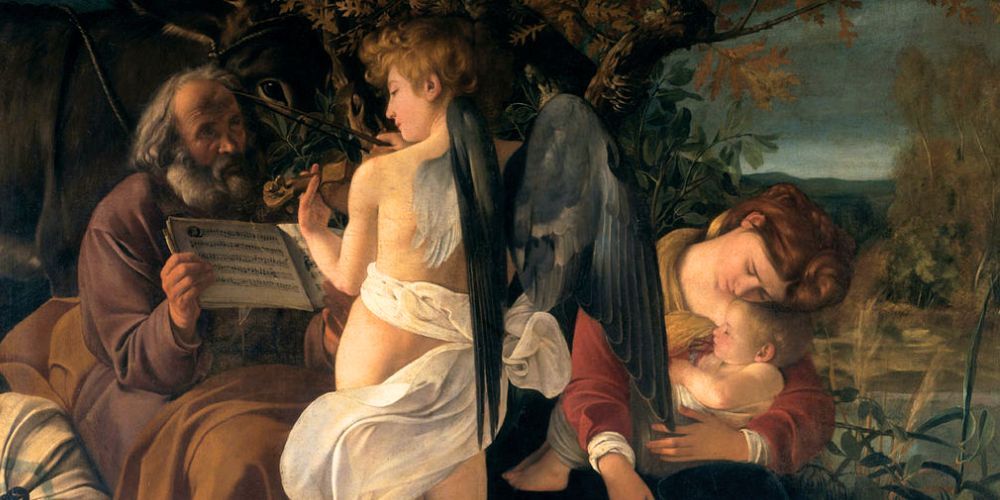
Rest on the Flight into Egypt by Caravaggio, Rome
Among the most prestigious painting artworks in Italy of course could not be missing one of the most emblematic works by Caravaggio, more precisely one of his first large-format paintings (135.5 cm x 166.5 cm) and dated 1597: we’re speaking of Rest on the Flight into Egypt.
This beautiful oil on canvas painting, now exhibited at the Doria Pamphilj Gallery in Rome, differs greatly from the dramatic and emotionally charged tension typically seen in the other artist's artworks, instead conveying to the viewer an unusual scene of tranquil and serene intimacy.
The artwork brilliantly combines sacredness and earthly materiality with a photographic attention: the intentionally central and luminous angel playing music introduces the figures of elderly Joseph (left) and the Virgin and Child (right) on his sides, respectively symbols of nature and its cycles highlighted by the natural landscape in the background, which is drier and more arid to the left of the angel while, to his right, it appears alive and lush.
3. Aeneas and the Cumaean Sibyl by Corrado Giaquinto, Naples

Aeneas and the Cumaean Sibyl by Corrado Giaquinto, Naples
Aeneas and the Cumaean Sibyl by Corrado Giaquinto is a magnificent example of Italian rococo art expressed through painting, characterized above all by the use of bright colors, rapid brushstrokes, sinuous lines and dynamic light perspectives, certainly a piece to mention as one of the most evocative painting artworks in Italy.
Painted in 1739-1741, this oil on canvas painting is housed in the majestic Capodimonte National Gallery in Naples. The artworks, looking vibrant and dynamic in the truest style of the author, illustrates the moment in the Aeneid in which Aeneas consults the Cumaean Sibyl before his descent into the underworld, with the will to meet his father Anchises and learn the fate of Rome.
The poetic power of the epic, perfectly blended with the sensorial magic of rococo painting, makes this work extremely rich in emotion and meaning, generating a mystical and visionary atmosphere worthy of the epic episode narrated by Virgil.
2. The Tempest by Giorgione, Venice
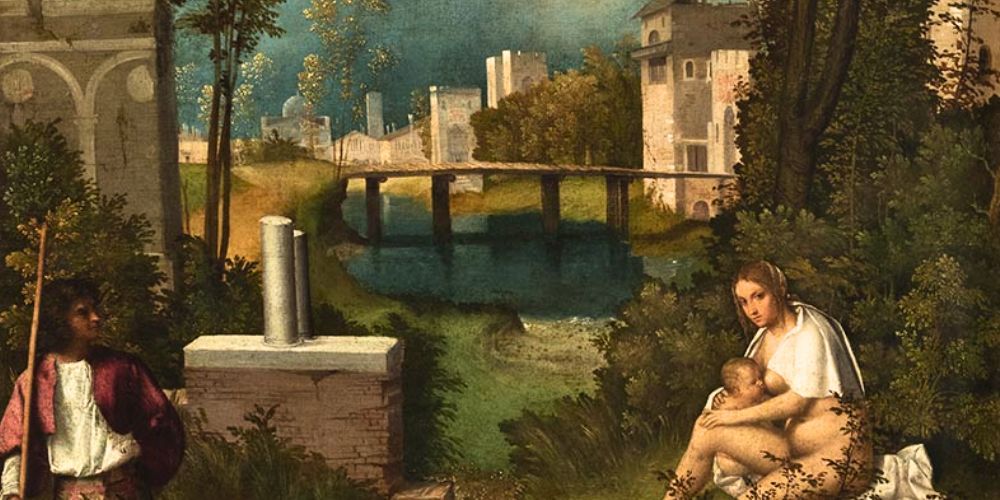
The Tempest by Giorgione, Venice
Perhaps the most mysterious painting of the entire venetian renaissance, full of hidden meanings and interpretations, The Tempest by Giorgione is one of those painting artworks that undoubtedly leave a mark, despite its illusory simplicity.
The work, an oil on canvas painting with an uncertain date over the first decade of the 16th century - some experts estimate 1502-1504, others 1506-1508 - can be admired at the Gallerie dell'Accademia in Venice.
The Tempest is a significant example of a "picture with figures in a landscape", that is a pictorial genre where the landscape, in this case a glimpse immersed in nature on the outskirts of a town and shaken by the sudden rumble of a thunder above the clouds in the background, takes the stage as the true protagonist; but the human figures in the foreground still remain with no identity and explicit meaning though, a man and a woman breastfeeding a newborn, characters that after more than five hundred years still evoke a fascinating and poetic ambiguity.
1. The Last Supper by Leonardo da Vinci, Milan
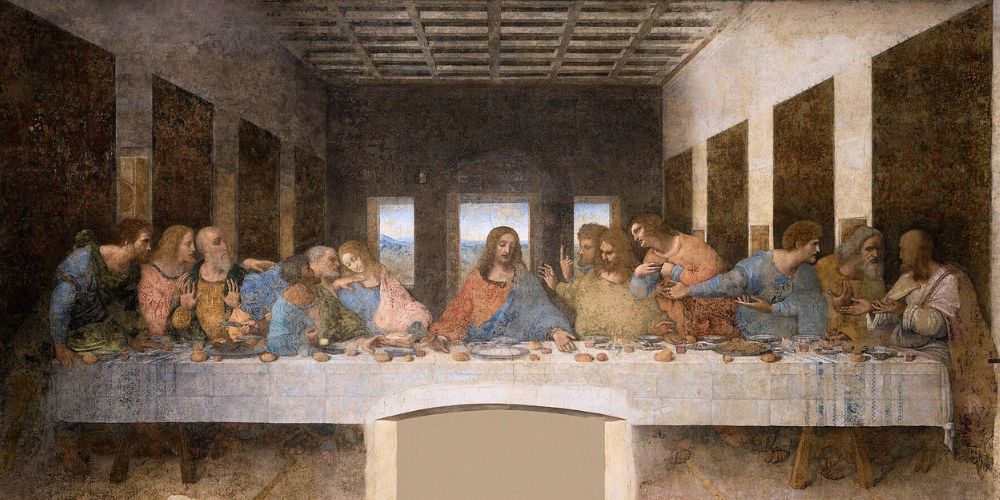
The Last Supper by Leonardo da Vinci, Milan
A masterpiece that truly needs no explanation, among the most beautiful painting artworks in Italy and in the world, The Last Supper by Leonardo da Vinci is an absolute and immortal icon of renaissance art, as well as of the creative genius of its author.
This colossal fresco, or rather technically a work created using dry painting on plaster (460 cm x 880 cm), was completed between 1494-1498 and is located on one of the walls of the refectory of the Convent of Santa Maria delle Grazie in Milan. Commissioned by Ludovico il Moro, the work captures the dramatic moment in which Jesus Christ announces the betrayal with photographic precision and great aesthetic mastery.
To best create such an immense work, both physically and even more culturally, Leonardo revolutionized conventional iconography and arranged the apostles in groups of three, using the perspective of their figures and the walls of the room in the picture to focus the viewer's full attention on Christ, while it’s also possible to meticulously analyze the psychological reactions of the characters by carefully observing their expressions and body language.
Painting artworks in Italy: FAQ

Basket of fruit by Caravaggio, Milan
So, did you enjoy these ten extraordinary masterpieces of Italian painting?
If you want to learn even more about painting artworks in Italy, please check out the most frequently asked and interesting questions to discover some of the key details about the colorful world of painting.
What's the difference between paintings and frescoes?
A painting is a work of art executed on any surface (canvas, paper, wood, drywall) using different and multiple types of paint (tempera, acrylic, oil, wax, etc.). Fresco, on the other hand, is a specific mural painting technique, extremely durable, where pigments are applied to fresh plaster and secured directly to the supporting wall using a chemical process called lime carbonation.
What's the difference between dry painting and frescoing?
The secco (or dry painting) technique is performed on a wall where the plaster is already dry, using a binder (egg, glue, or lime) to create an adhesive layer on which to apply the paint, however the result is much more exposed to wear and tear due to time or environmental conditions (like humidity). Frescoing, instead, is performed on walls where the plaster is still fresh and only with pigments diluted in water, fixing the color to the surface through the chemical process of carbonation, ensuring greater resistance and exceptional durability.
About the author
Written on 14/11/2025
Massimiliano Antonio Primi
I write by profession, but first of all by passion. I love to tell emotions and stories through the magic of writing. With my articles I want to accompany you on a journey to discover Italy, the most amazing country in the world.

Massimiliano Antonio Primi
Paintings, frescoes, masterpieces of art and brushwork mastery, here are the 10 unmissable painting artworks to discover in Italy.