
For many travelers Verona is the symbol of love, the birthplace of the most famous lovers ever immortalized by Shakespeare's genius. For us, who love experiencing every destination to its fullest, Verona is a jewel to discover with its landscapes, art, culture, traditions and truly unique events.
We spent a wonderful stay in the heart of Verona, a 3-days experience brimming with moments and emotions unmatched elsewhere. A truly Veronese magic, like the sensational opening of the Opera Season at the Arena: the peak of artistic beauty for Opera enthusiasts, and - for us - a more than compelling reason to visit this exceptional city.
If you want to discover Verona and experience it at its best during the Opera Festival, just like us, you've come to the right place. In this three-days itinerary-guide we'll take you step by step through the sights, flavors and sensations of the city that hosts the world’s most fascinating venue.
3 days in Verona: a journey to enjoy Opera at the Arena
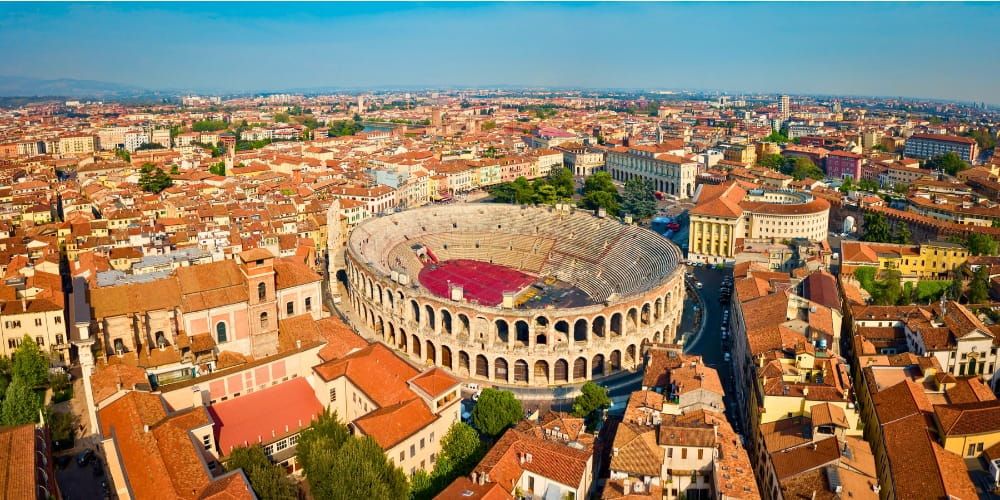
The Verona Arena is the reason we visited Juliet's city, eager to see the Opera live - the opening was dedicated to Verdi's La Traviata, by Paul Curran, who intertwined the original plot with the daring atmosphere of the Moulin Rouge - in the roman amphitheater that the whole world envies us. But Verona is more than just art and entertainment, and experiencing the city through the eyes of the Veronese we fell in love with it in just 3 days.
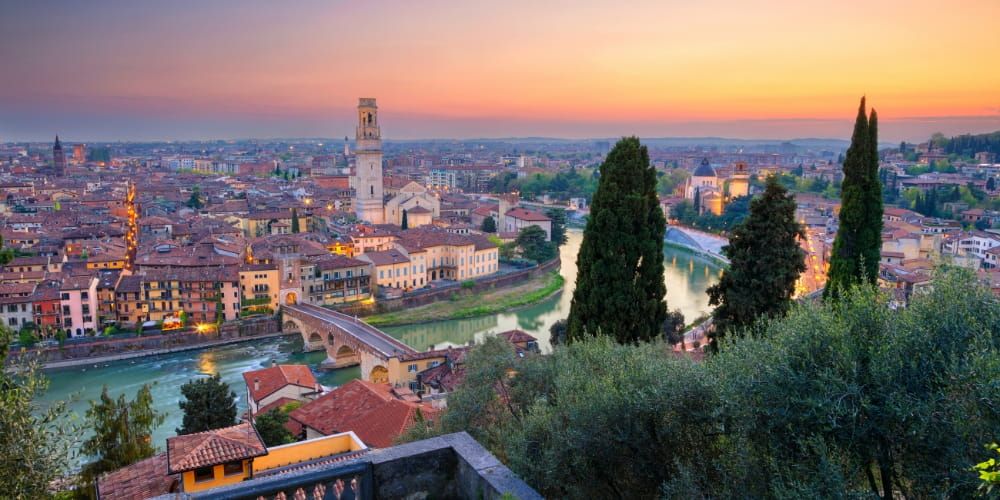
Sometimes, feeling at home even while traveling, is simple: a stroll through the historic centre among fascinating places like Piazza delle Erbe and Juliet's House, or perhaps discovering Verona's charming artisan workshops, incredible sunset views from the Castelvecchio bridge or the Castel San Pietro lookout, a relaxing afternoon in the greenery of Giardino Giusti, a quiet visit to the Basilica of San Zeno, and why not, a delicious risotto all’Amarone to enjoy in two.
Are you packing your bags yet? Well, here's a summary of the essential stops for a three-days tour in Verona, a journey that will win your heart.
Day 1:
- Stroll through Piazza Bra outside the Arena
- Piazza delle Erbe and the historic centre
- Ponte Scaligero over the Adige river (Castelvecchio)
- Traditional dinner in a tavern
Day 2:
- Visit Basilica of San Zeno, Cathedral of Santa Maria Matricolare and Juliet's House
- Tour of the artisan workshops in the centre
- Giardino Giusti and Castel San Pietro
- Traditional dinner in a tavern
Day 3:
- Visit the Roman Theater and the Archaeological Museum
- Tour of the artisan workshops in the centre
- Return to your accommodation to prepare for the opening of the Opera Season
- Evening at the Verona Arena to see Verdi's La Traviata, Piazza Bra post-performance
Watch the Vlog “3 days in Verona”
Day 1, morning: arrival in Verona and the Arena’s welcome
We arrive in Verona early in the morning, filled with visible and real excitement: we're in one of Europe's most beautiful and beloved cities, and we're already mentally counting down to the inaugural performance of the annual Opera Festival at the Arena.
But until then, we still have more than 48 hours to enjoy in this splendid city - and believe us, Verona is truly worth exploring, driven only by curiosity and the desire to discover new wonders. Just enough time to drop off our suitcases at the hotel and pack a bag with the essentials for the day. Let's go!
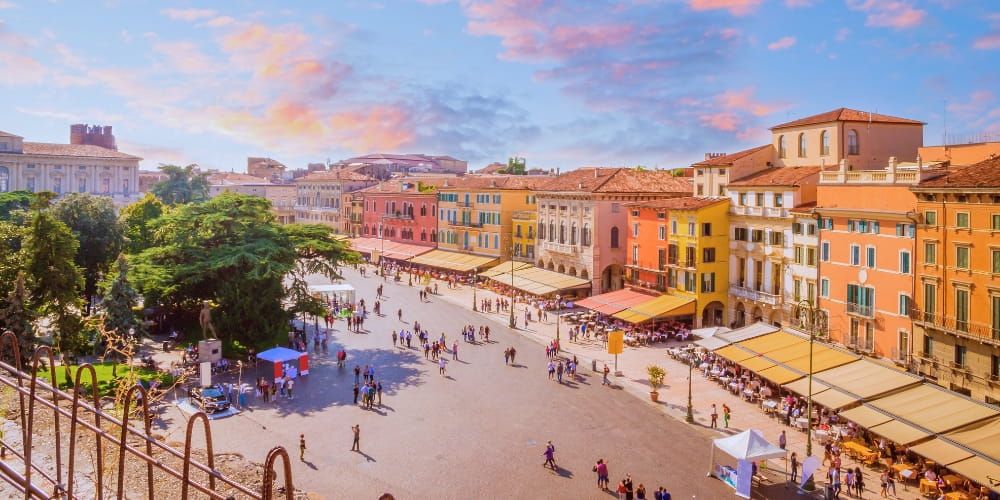
We spend the morning slowly exploring Verona's historic centre. The first stop on our walk can only be the extraordinary Piazza Bra, the heart of the city, where the majestic figure of the Verona Arena welcomes us in the sunlight. Here are many other historic attractions of Verona, such as Palazzo Barbieri, Palazzo della Gran Guardia, the Bra Gates, and the Teatro dell'Accademia Filarmonica.
We skirt the Arena and continue along Via Mazzini, a colorful street in the centre of Verona perfect for strolling and shopping. It ultimately leads to Piazza delle Erbe, Verona's oldest and most evocative square. It's an enchanting location, where history, art, and the city's identity intertwine. Here, you'll find other prestigious buildings such as Palazzo Maffei, the Domus Mercatorum, and the Case Mazzanti, a complex of buildings with frescoed facades that definitely catches visitors attention.
We also can't miss a closer look at Palazzo della Ragione, also in Piazza delle Erbe, with its picturesque staircase and imposing Lamberti Tower. The building houses a gallery of modern art and photography, as well as an internal courtyard where you can enjoy a few moments of tranquility and feel almost brought back to distant eras. Immediately adjacent is Piazza dei Signori, surrounded by solemn buildings such as Palazzo Podestà and the Loggia del Consiglio, the beating heart of Verona's political power between the middle ages and the renaissance.
Day 1, afternoon and evening: sunset at Castelvecchio and a taste of Verona local cuisine
Our stroll through Verona's historic centre continues deep into the afternoon, completely amazed by the beauty surrounding us. But we haven't had lunch yet, and with all this walking, a break is needed: it's the perfect moment for a refreshing aperitif (in Verona, it's usually served starting at 5 pm). Near Piazza delle Erbe, there are plenty of bistros and cocktail bars where you can enjoy an excellent drink.
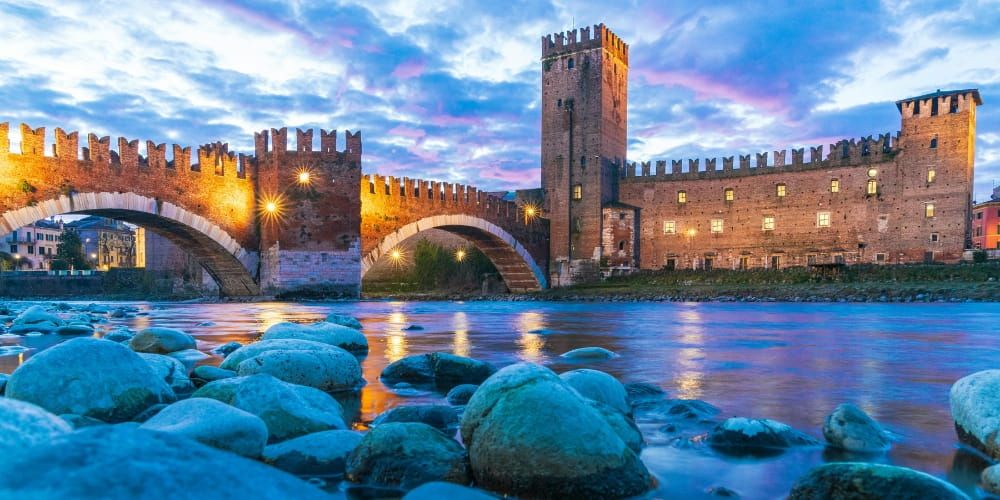
As evening approaches it's time to focus on our next stop, which awaits us as we continue towards the Lungadige (the avenue that runs along the Adige River). We're talking about Castelvecchio, a historic icon of Verona beloved by those who love to delve into art and history. Its interior rooms host a collection of sculptures, statues, paintings, antique weapons and objects, while outside its greatest attraction is undoubtedly Ponte Scaligero.
Let's walk together through this marvel of 14th-century bridge architecture, as the sun begins to set, with its rays highlighting the distinctive red bricks of the Castelvecchio bridge. We stay here for a while to enjoy the spectacle: the sunset gives Verona a truly exceptional and romantic perspective, an unmissable view worth capturing in a photograph to share with friends.
It's getting dark, and it's now dinner time. Some say the best part of any trip is sitting down at the table, discovering new flavors and the fascinating stories that characterize traditional dishes. And Verona is certainly no exception. To best round off the first day of our visit, we dined at a typical osteria, tasting the delicious risotto all’Amarone: a dish that brings together three local gastronomic delicacies, that are Vialone Nano IGP rice, Amarone della Valpolicella DOCG wine, and Monte Veronese DOP cheese.
Full and satisfied, we stroll through Verona's more intimate and quiet nighttime atmosphere, returning to our accommodation. But our minds are already set on tomorrow, ready to venture into the heart of the city and its vast historical and cultural heritage.
Day 2, morning: from San Zeno to Juliet's House, exploring Veronese crafts
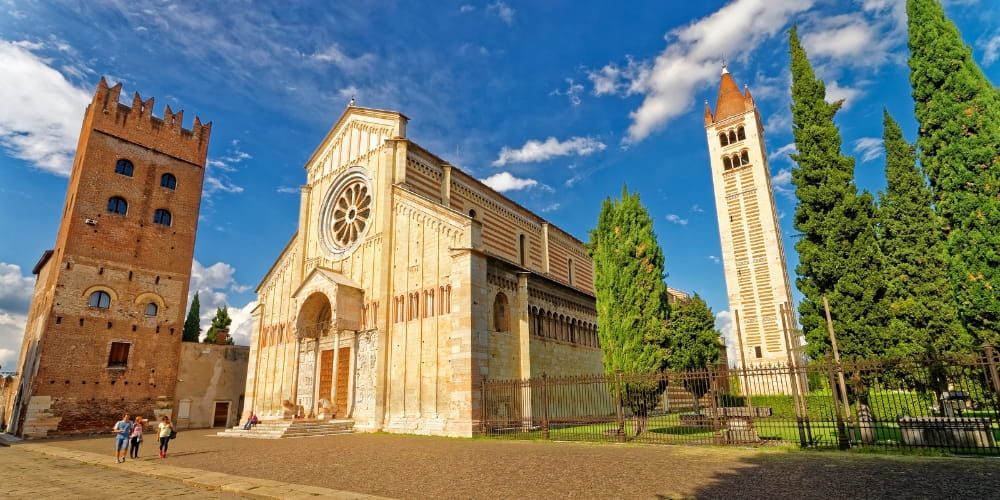
Our second day in Verona begins in the picturesque San Zeno neighborhood, just west of the historic centre, continuing past Castelvecchio. We take the chance to have breakfast in Piazza San Zeno before beginning today's planned visits: our first stop will be the Basilica of San Zeno Maggiore, dedicated to the patron saint of Verona.
This majestic church astonishes us even before entering. It's impossible not to notice its imposing bell tower, nearly 70 meters tall, and the bronze portal that adorns the romanesque facade. Our amazement, however, grows once inside: the church's interior is richly frescoed with works dating back to the 14th century depicting key moments of Christianity, while on the high altar you can admire Andrea Mantegna's magnificent triptych, or Mantegna altarpiece (from the 15th century), depicting the Virgin and Child with Saints. The body of the Saint is also preserved in the Basilica's crypt.
Speaking of churches and sacred places in Verona, after San Zeno, a stop at the Cathedral Complex of Santa Maria Matricolare is a must. Let's return to the heart of the historic centre to discover a place rich in works of art: inside the Duomo, is housed Titian's Assumption of the Virgin (in the Cartolari-Nichesola Chapel), a highly prized painting piece, while the apse features numerous frescoes dedicated to the Virgin Mary by Francesco Torbido (based on original designs by Giulio Romano).
We're staying in the historic centre, but this time, let's explore it freely. Among the most iconic attractions in the area is undoubtedly Juliet's House, a literary dream coming true for Shakespeare enthusiasts. It's said that simply touching the statue dedicated to her is a gesture of great superstition! But Verona is much more than the traditional attractions of mainstream tourism.
Wandering through narrow streets and small squares, in the heart of the city, we discover an alternative and perhaps still little-known side: craftsmanship. We enthusiastically visited the workshops, intent on seeing authentic and precious creations firsthand, but above all, to connect with the artisans as humans. Luthiers, ceramists, artists, tailors, and leather-workers, Verona truly impressed us with the life stories of its most creative citizens, that heritage of hand-craftsmanship that has historically made Italy a byword for artisan quality recognized worldwide.
Day 2, afternoon and evening: enjoy Verona’s most spectacular view
After a light lunch at a tavern in the historic centre, we continue our tour of the city. The morning was particularly rich and intense, so in the afternoon we decided to indulge in a moment of slowness surrounded by greenery, in one of the most beautiful places in Verona: our next stop is the Giardino Giusti.
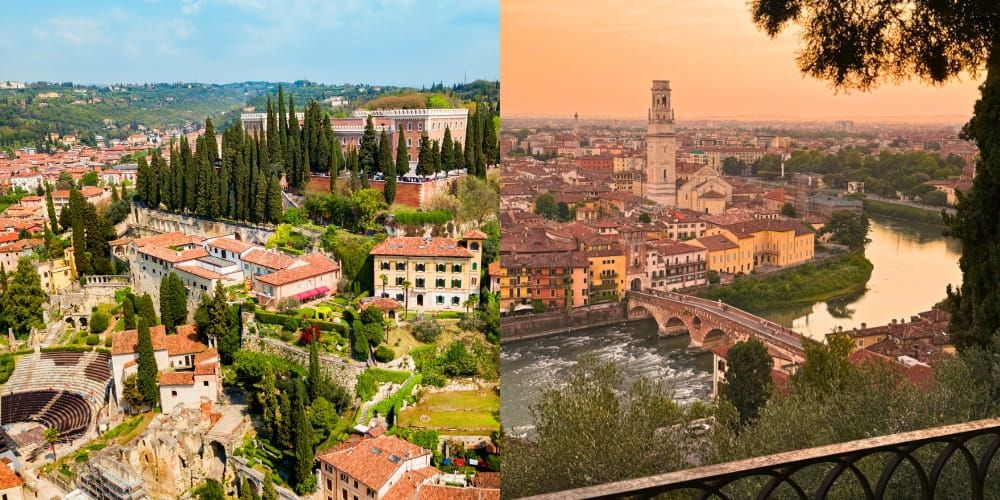
This elegant and relaxing green space is located in the heart of the Veronetta district, east of the historic centre across the Adige River. Giardino Giusti is a late 16th-century garden masterpiece that perfectly captures the city's aesthetic refinement. Must-see attractions include the famous avenue of centuries-old cypress trees (including Goethe's cypress), the hedge maze (among the oldest in Europe), the Italian-style geometric parterre with numerous mythological statues, and above all the upper belvedere, which offers a panoramic view of Verona.
An absolutely enchanting location for spending the afternoon in harmony with nature, absorbing the evocative atmosphere typical of Italy's great historic gardens. But if you think this is the peak of beauty for this second day, you'll change your mind soon. As sunset approaches, it's time to reach today's highlight: we're staying in Veronetta, heading to Castel San Pietro.
This picturesque historic building stands atop the hill of the same name that dominates the city to the northeast, and it's easily accessible via the funicular on Via S. Stefano, which, in itself, offers fascinating views of the city as you ascend. Alternatively, you can reach the top of the hill on foot, climbing the steps that start immediately opposite the Ponte Pietra bridge over the Lungadige.
In any case, once at the top, it's easy to understand why Castel San Pietro is the reason for many tourists to visit Verona. Especially at sunset, its large panoramic terrace is simply the perfect place to admire the entire city of Verona from above, capturing its wonderful and unique shades and sensations. If you want to take a selfie or capture the ultimate postcard of Verona, now is the time! And as the sun slowly disappears beyond the horizon, we prepare to descend back into the heart of the city - it's dinner time, and with the locals' recommendations we choose a traditional restaurant.
This evening we opted for another typical dish, described by the innkeeper as "the most Veronese thing ever": that’s pearà, a creamy spread of stale bread made with marrow, meat broth, and plenty of black pepper, usually served with boiled meat. A simple yet surprising blend of flavors, it delights our palate after another day of marveling around Verona. Before returning to the hotel, we stop at a bar on the way for a cicchetto or a quick drink, a small moment of pleasure that reflects one of the most distinctive historical customs of Veneto.
Day 3, morning: a walk to experience archaeology and craft workshops
Here we are, today is the day! It's our third day here in Verona, with only a few hours to go until the magic of the Opera at the Arena, and the emotions are quickly starting to build. But while we wait for a truly exceptional evening, we still have the morning available to continue exploring the city's beauties. After a quick breakfast at a café in the centre, we return to Veronetta to discover more about the archaeological charm that distinguishes Verona.
Our main stop is the Archaeological Museum complex at the Roman Theater, near Castel San Pietro and accessible from Via Redentore. The Museum encompasses the monumental open-air Roman Theater from the 1st century BC (predating the Verona Arena), the former 15th-century Gesuati convent that houses the collections (Roman statues, bronze works, mosaic floors, ceramics, stone inscriptions, and much more), and the historic Palazzo Fontana, the formal entrance to all the exhibitions.
A true immersion in ancient Verona, which already gives us a taste of the experience that awaits us at the Arena. With dreamy eyes, we take a leisurely stroll through the streets of Veronetta, searching for new and interesting insights. And immediately our attention get caught by other traditional Veronese artisan workshops: textile workshops, carpet restoration workshops, and an explosion of vibrant colors and textures, which tell us stories of life and the origins of small hand-sewn works of art.
For lunch, we take a short break and indulge in something light, sampling delicious appetizers with sophisticated combinations and surprising flavors. A pampering treat that greatly ends the first part of the day, and accompanies us back to our accommodation: a refreshing shower, the finishing touches to our elegant outfit for the evening, the choice of makeup and the right accessory, Arena here we come!
Day 3, afternoon and evening: the unparalleled wonder of Opera at the Verona Arena
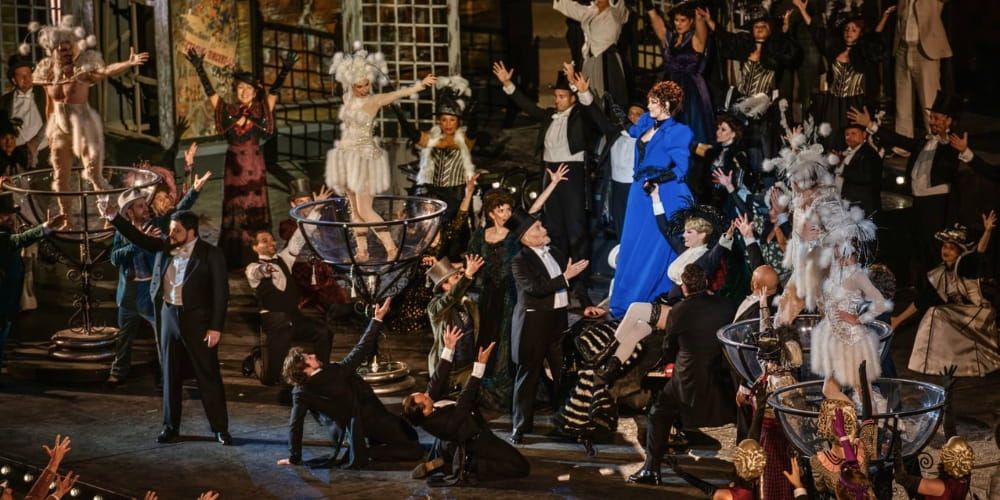
In the afternoon we reach Piazza Bra, where a completely different atmosphere greets us. It's not the bustling square we'd admired during the day, lived by the citizens on a daily basis. For the opening performance of the Opera Season, Piazza Bra becomes more sophisticated, more exclusive, ready to celebrate the world's most beautiful show - in the world's most beautiful venue.
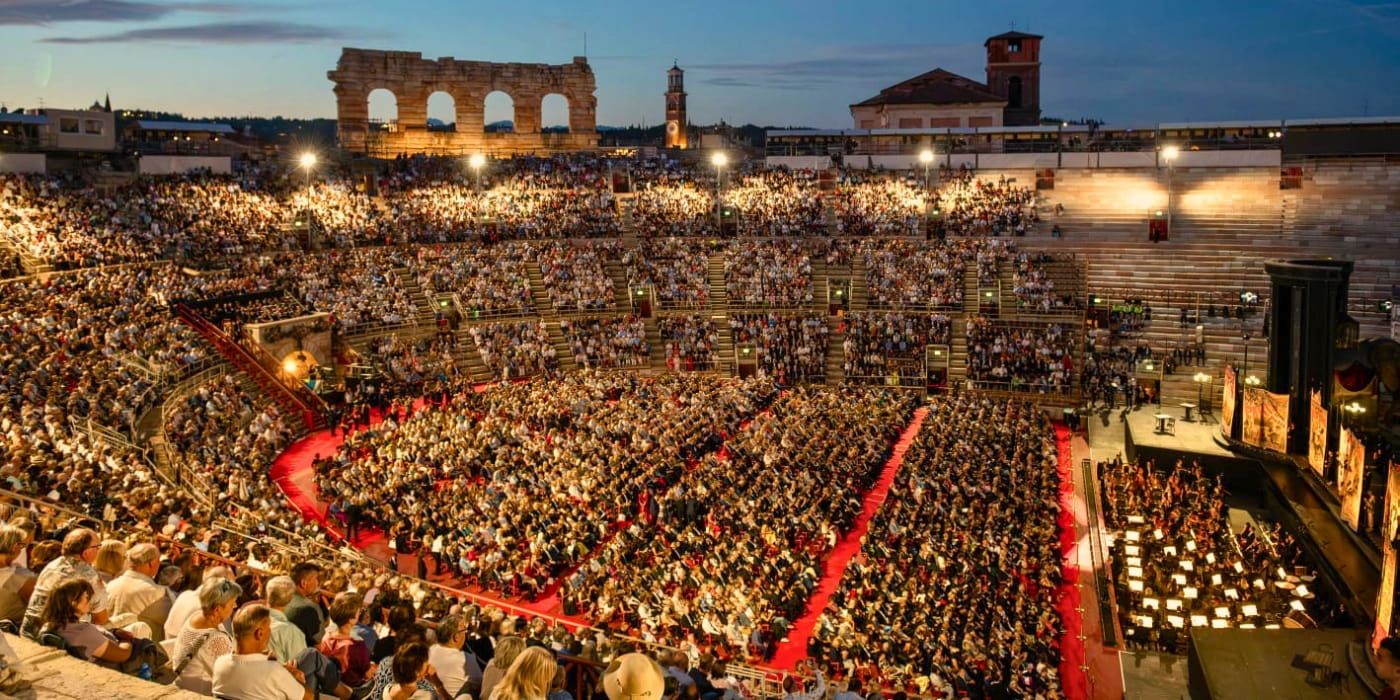
Between red carpet, elegance, and aperitifs served to the arriving audience, entering the Arena is already something magical, an experience that marks a passage into a world where beauty is the rule. Inside, the Arena is majestic, so large and captivating that it will leave speechless anyone who's never visited a Roman amphitheater. We take our seats as the sunset begins to reflect its warm light on the sky above the Arena, gradually giving way to the dark blue hues of an evening that promises to be sensational.
Everything is ready: the orchestra is complete at the foot of the stage, the set design already immerses us in the evocative power of a story waiting to be experienced, the actors are perfectly suited to their roles and wear the wonderful handcrafted costumes, sewn and tailored by the Fondazione Arena di Verona's tailoring team. The curtain rises, and La Traviata goes on stage.
Lights, acoustics, sensations, the Opera at the Arena is pure energy, difficult to put into words unless you've experienced it firsthand. Curran crafts a visual and emotional masterpiece, with masterful direction, realistic sets, and effects that bring the world of theatre closer to cinema. It's impossible for us in the audience not to be drawn into the intimacy of Violetta's inner drama, with her desperate passion meeting the eccentric atmosphere of the Moulin Rouge, in a captivating performance for an unforgettable season premiere greeted by thunderous applause.
What we witnessed at the Verona Arena was an extraordinary performance, brimming with pathos and artistic prowess, a perfect blend of the great opera tradition and the amazing cabaret, offering us a night of pure, immortal emotion.
But the Arena experience goes beyond the stage. On opera nights, Piazza Bra transforms into a true open-air foyer, allowing the enchantment of the theater to continue even after the curtain falls. Many restaurants stay open after the opera, ready to welcome spectators and artists for a late-night dinner or a fine glass of wine. And so we bid farewell to Verona, in the evocative setting of Piazza Bra and the Arena at night, thrilled and satisfied by a journey that exceeded all expectations and offered us much, much more than we had ever imagined.
Why is it truly worth visiting Verona during the Opera Season?
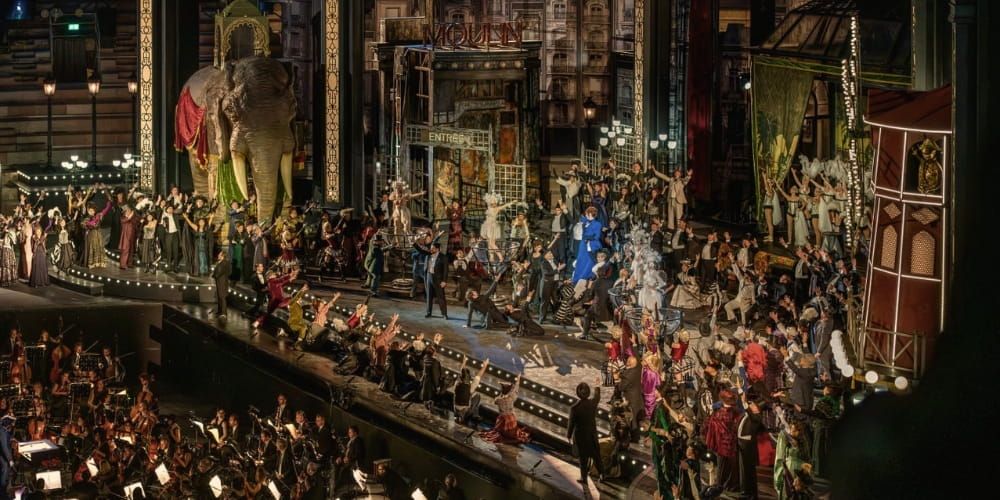
Visiting Verona during the Opera Season, as we did, is an extraordinary sensory and cultural experience. The Arena is history, yes, it's one of the best-preserved Roman amphitheaters, but it's also a majestic venue that transforms the city into a pilgrimage destination for all those who appreciate the most authentic beauty.
With unparalleled natural acoustics and impressive sets under the starry summer sky, the Opera Season at the Arena is truly magical. The unique atmosphere is felt throughout the city, where the solemn artistic tradition blends with the elegance of the town’s architecture, the renowned local food and wine, and the lively historic centre.
The thrill of sharing monumental performances, such as La Traviata, with an international audience is the special ingredient that makes each performance a truly collective event, to be treasured as an indelible memory of music, culture, history, and great entertainment.
About the author
Written on 28/08/2026
Massimiliano Antonio Primi
I love to tell emotions and stories through the magic of writing.

Massimiliano Antonio Primi
We left on a 3-days trip to Verona to experience the opera at the Arena, but we loved that for so much more. Check out why in our itinerary-guide now!