A city reborn from the ashes, embraced by the majestic peaks of Gran Sasso that invite you on a magical journey into the soul of Abruzzo.
L’Aquila, the 2026 Italian Capital of Culture, captivates with its spectacular landscape, the stories of its resilience, and its landmarks that reflect both a remarkable past and a living present.
Amid symbolic monuments, ancient traditions, and a constantly evolving cultural vibrancy, L’Aquila will surprise you with its ability to rise beyond the wounds of time, transforming them into its strength and most authentic identity.
The endless horizon of L’Aquila’s mountains
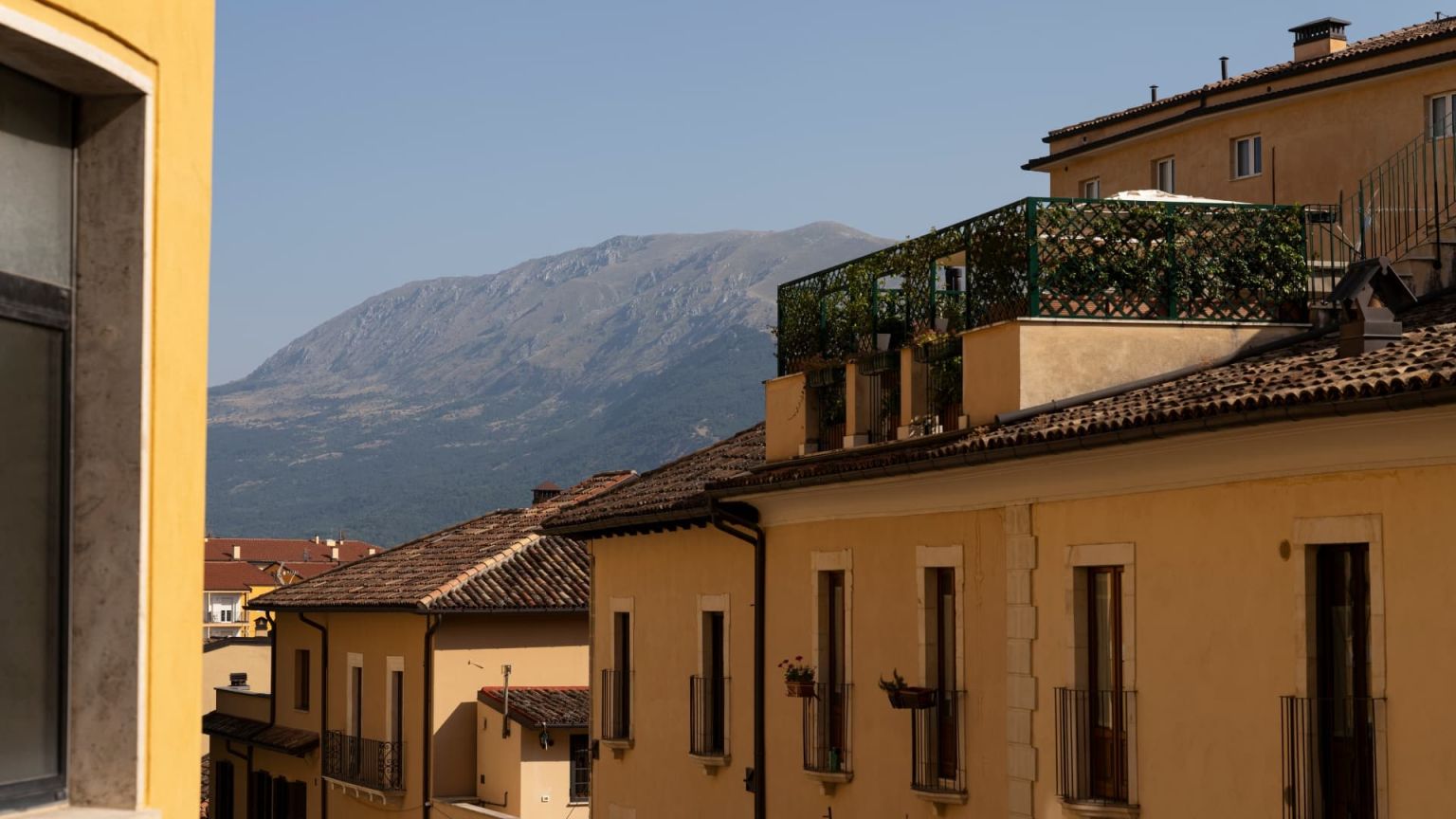
L’Aquila is set in a unique position in the heart of the central Apennines, within a mosaic of spectacular landscapes.
On one side lies the Gran Sasso massif, with its imposing peaks and high plateaus that seem suspended in silence. On the other, the Sirente-Velino range, with gentler valleys, dense forests, and timeless villages that still tell the story of a life deeply connected to the mountains.
Around the city unfold majestic and striking scenery, such as Campo Imperatore, often referred to as “the little Tibet of Italy,” and the Navelli Plateau, with its cultivated fields where the famous L’Aquila saffron DOP is produced.
What makes this setting even richer is the presence of national parks and protected areas that ensure extraordinary biodiversity, making the Aquila area one of the most fascinating and ecologically rich ecosystems in the entire Apennines.
Among these protected areas stands out the Gran Sasso and Monti della Laga National Park, a vast natural setting that embraces peaks, plateaus, and untouched forests, crossed by trails that climb to high altitudes through vertiginous panoramas and silence that seems to have no end.
The history of L’Aquila: foundation legends and timeless symbols
The roots of L’Aquila go back to the 13th century, and its history is intertwined with the fascinating traditions of medieval Italy.
According to ancient legends, the city was founded through the union of 99 castles scattered across the surrounding territory, an origin story that still lives on today in its most iconic symbols, from the Fountain of the 99 Spouts to the many references to the number 99 that continue to shape L’Aquila’s identity.
Its foundation is traditionally linked to the reign of Frederick II of Swabia, when the settlement began to develop as a strategic center in the heart of the Apennines. Thanks to its location along important trade and communication routes, L’Aquila quickly became one of the most influential cities in central and southern Italy, prospering through commerce, sheep farming, and the wool trade.
Among the figures who most profoundly shaped the city’s destiny was Pietro da Morrone, later known as Pope Celestine V. It was in the Basilica of Santa Maria di Collemaggio that he was crowned pope in 1294 and, a few months later, issued the famous Bull of Forgiveness, giving rise to the Celestinian Perdonanza, considered the first Jubilee in history and a tradition that continues to this day.
Over the centuries, L’Aquila has experienced periods of great prosperity as well as difficult times, including earthquakes that profoundly altered its appearance. Yet its ability to preserve its memory, traditions, and artistic heritage continues to make it one of the most captivating historical destinations in the Italian Apennines.
L’Aquila today: when culture becomes rebirth
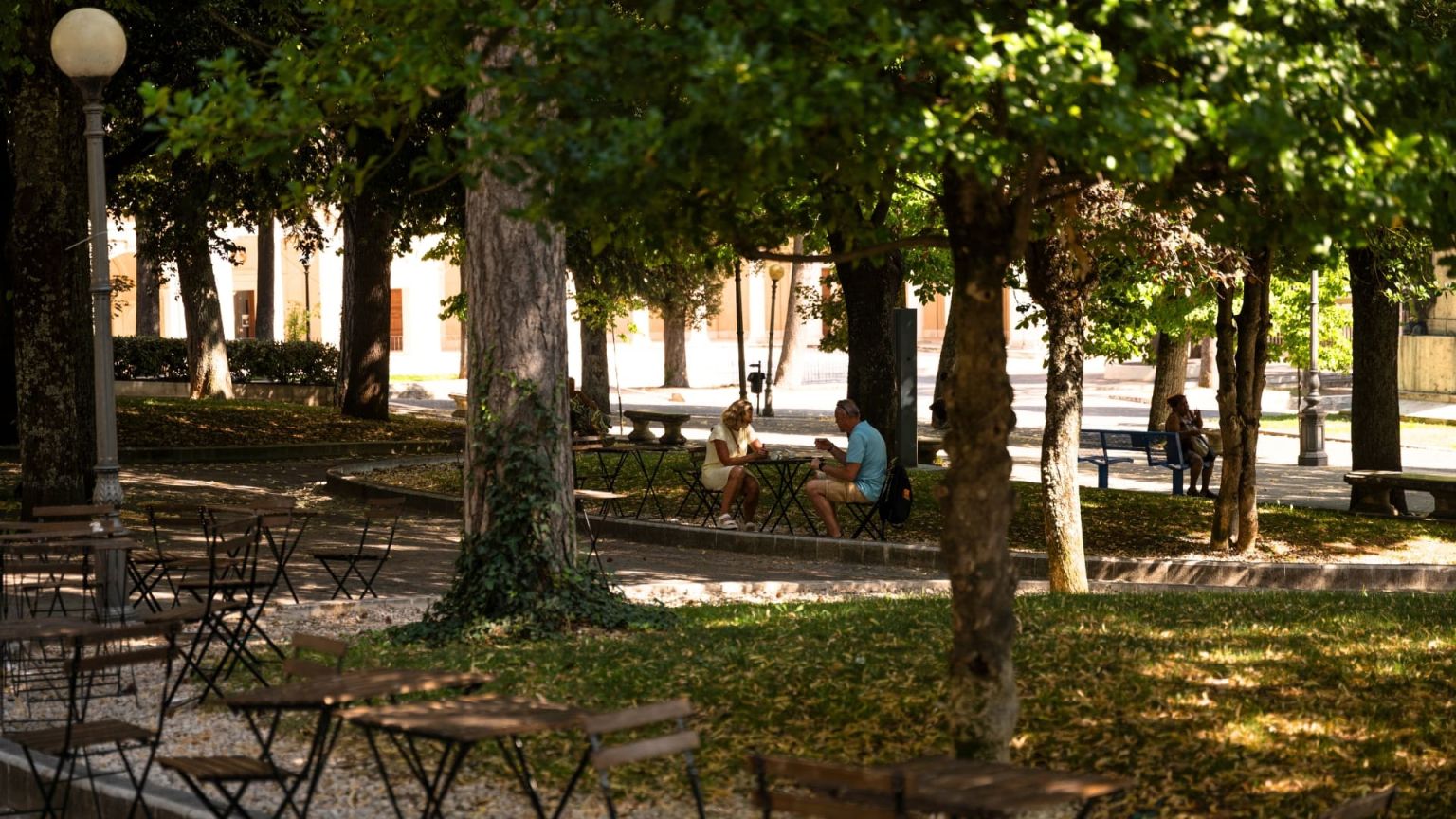
The year 2026 marks a historic milestone for L’Aquila. Its designation as the Italian Capital of Culture celebrates the value of its artistic heritage while recognizing the city’s ability to transform its own history into a vision for the future.
The city stands at the heart of a rich program of exhibitions, performances, installations, cultural events, and community initiatives that extend beyond the historic center to include surrounding villages and territories, creating what can truly be described as a “widespread capital of culture.”
But that's not all. The buildings restored after the 2009 earthquake, the historic districts brought back to life, and the many cultural projects developed in recent years all tell the story of a community that has turned resilience into renewed creative energy. The result is a destination that continues to reinvent itself while remaining deeply connected to its identity and heritage.
Discovering L’Aquila: historic landmarks and timeless treasures
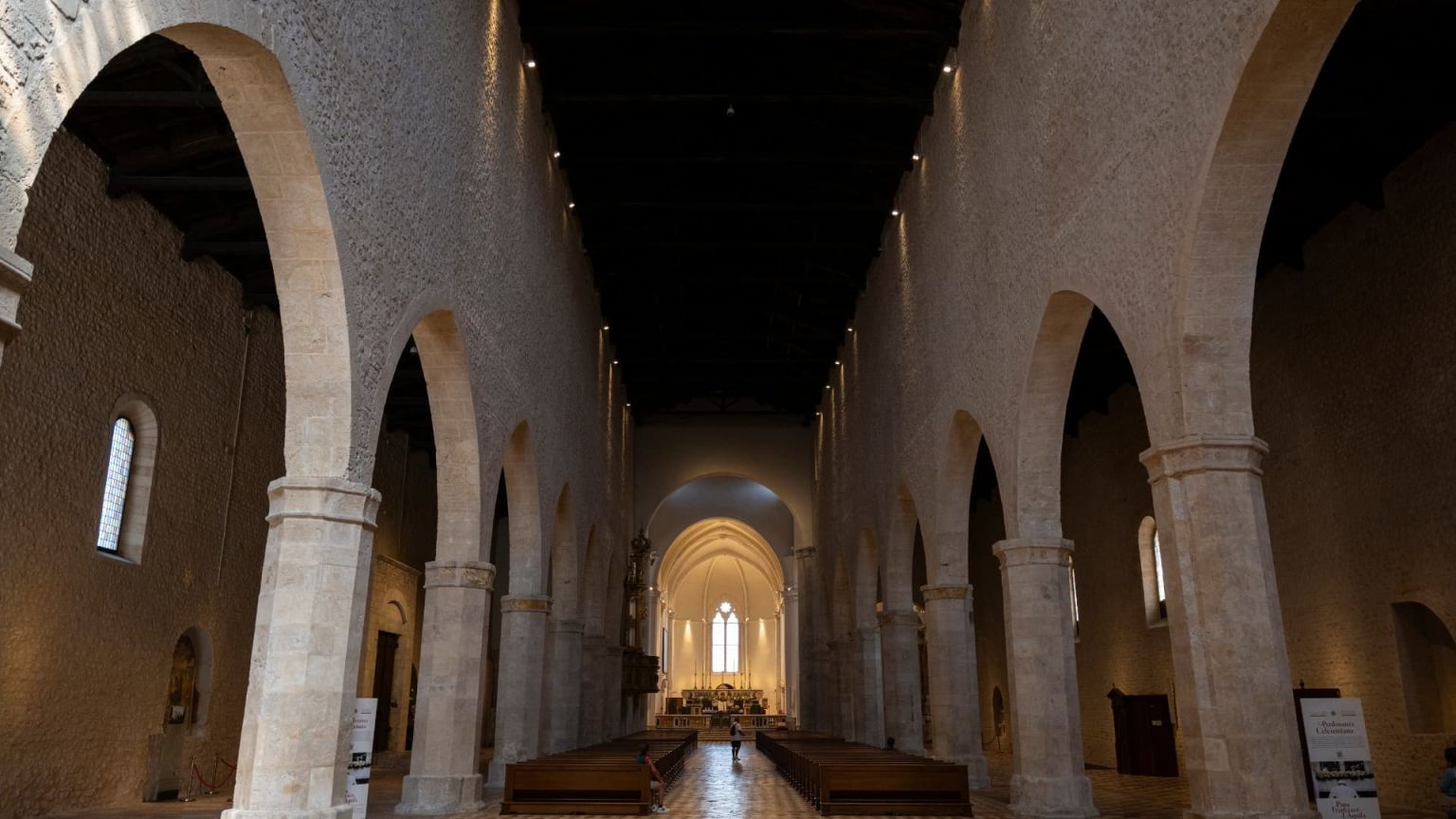
In recent years, many of the city’s most iconic landmarks have gradually come back to life thanks to major restoration projects, returning a cultural heritage of extraordinary value to visitors.
From medieval traces to elegant Renaissance buildings, every corner of L’Aquila tells an important part of the city’s identity.
The best way to discover the city is to follow its historic routes, moving among monuments, hidden views, and small details that reveal the deep connection between the local community, memory, and the surrounding territory.
The heart of the city: Piazza Duomo
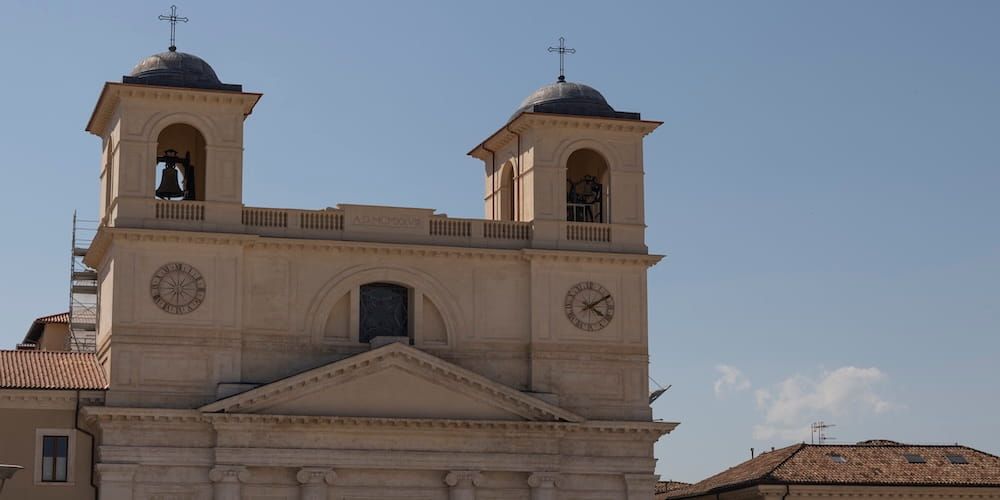
Piazza Duomo is the historic and symbolic centre of life in L’Aquila, a space that has brought together religious, commercial, and social activities for centuries.
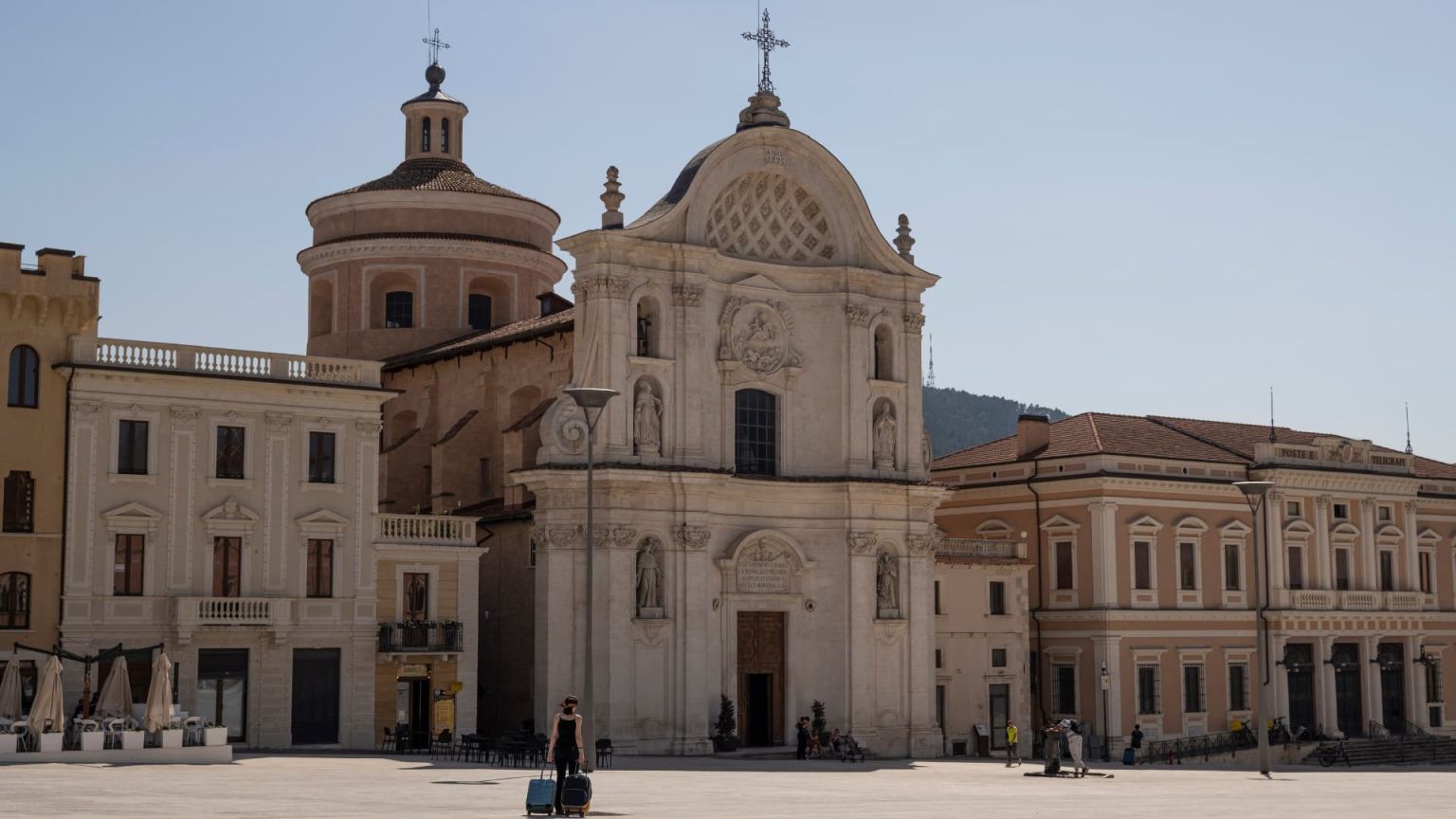
Some of the city’s most representative buildings overlook the square, including the Duomo and the Church of Santa Maria del Suffragio, also known as the Church of the Holy Souls, recognizable by its elegant 18th-century façade.
The square is one of the largest in Abruzzo. Among its symbols is the Civic Tower, home to one of Italy’s earliest public clocks, installed in 1374. The tower also housed the historic city bell, known as the Reatinella, and until the 2009 earthquake it preserved Celestine V’s Bull of Forgiveness, the document connected to the origins of the Celestinian Pardon.
The fountain that tells the story of L’Aquila’s origins
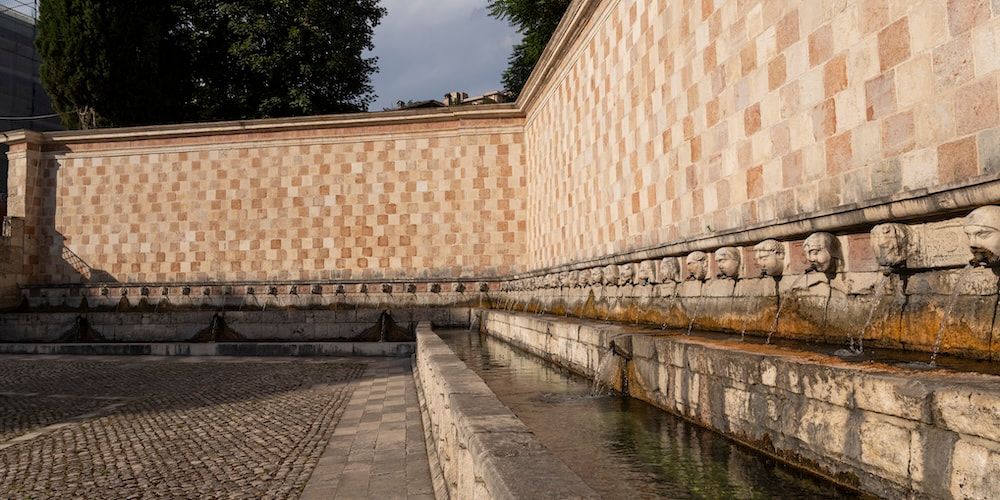
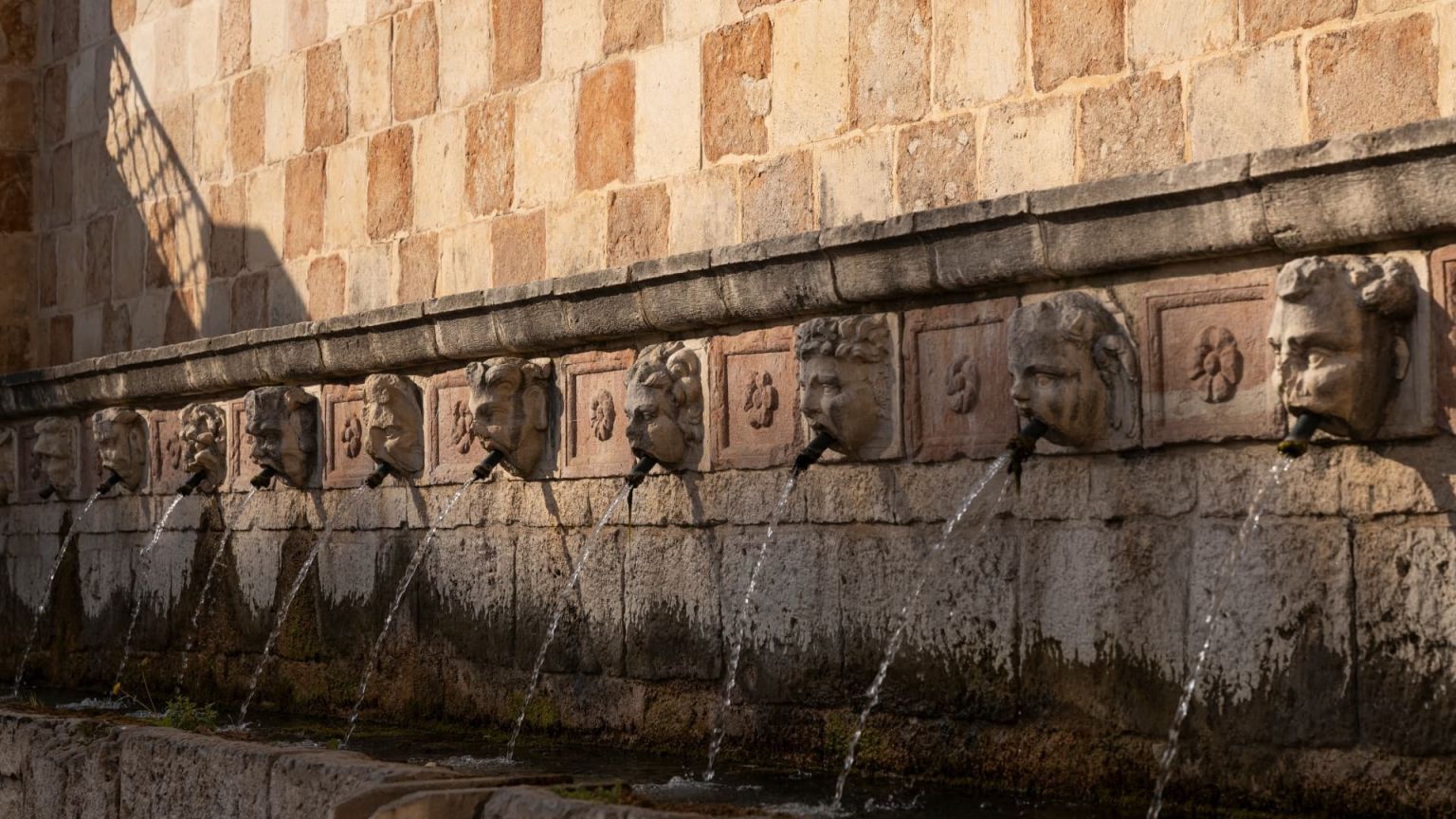
The Fountain of the 99 Spouts is one of L’Aquila’s most recognizable symbols and preserves the deepest connection with the city’s local traditions. According to legend, the number of spouts recalls the 99 castles that gave rise to the first urban settlement of L’Aquila.
Built in the 13th century, the fountain stands out for the beauty of its stone structure, decorated with 99 carved masks and the distinctive contrast between white and pink stone.
Located in the Borgo Rivera area, it is one of the places where history and collective memory meet most intensely. It is also one of the city’s most beloved landmarks and an ideal starting point for discovering L’Aquila’s medieval origins.
The Basilica of Forgiveness and L’Aquila’s history
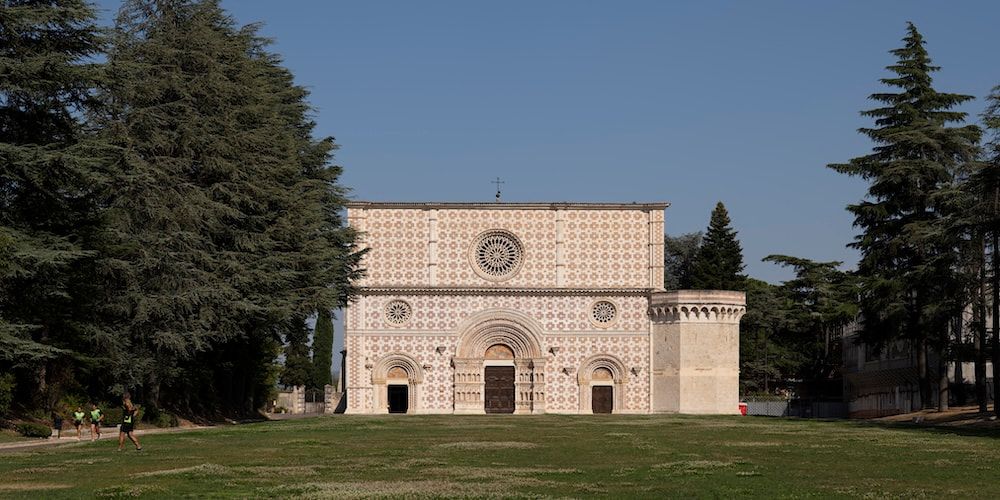
The Basilica of Santa Maria di Collemaggio was founded in 1283 at the request of Pietro da Morrone, the Abruzzo hermit monk who would become Pope Celestine V a few years later.
Its history is deeply intertwined with the Celestinian Perdonanza: it was here, in 1294, that Celestine V issued the Bull of Forgiveness, giving rise to the tradition that every year brings worshippers and visitors to the Basilica’s Holy Door.
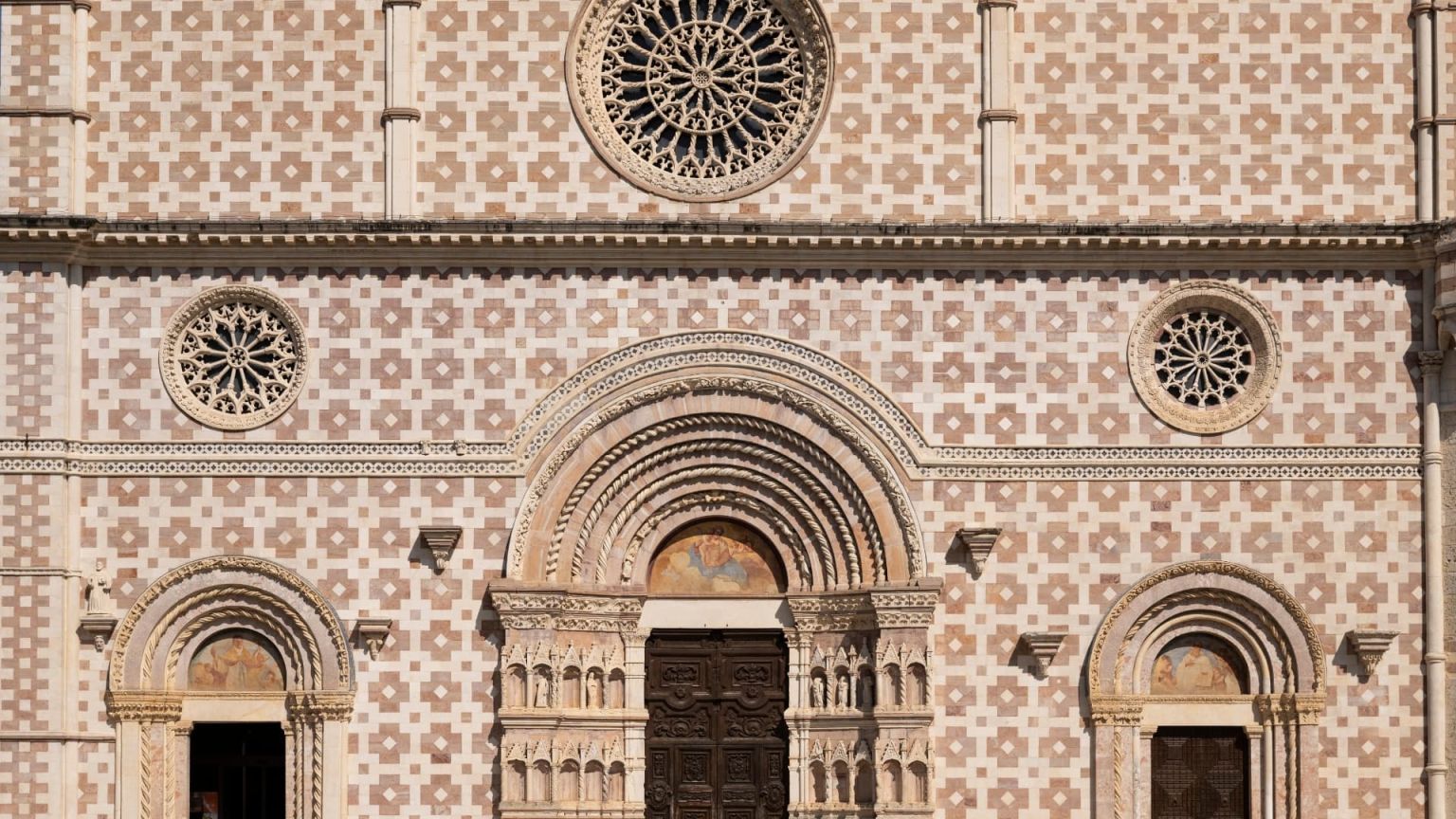
The first thing that catches the eye is the façade made of white and pink stone, a refined geometric composition that alternates shapes and colors according to the style of Abruzzo Romanesque architecture.
Inside, more intimate and solemn, the basilica houses the mausoleum of Celestine V and important artistic treasures. Severely damaged by the 2009 earthquake, it reopened after a complex restoration project, once again becoming a central place in the cultural and religious life of L’Aquila.
Castello Cinquecentesco: a sentinel overlooking the city and the mountains
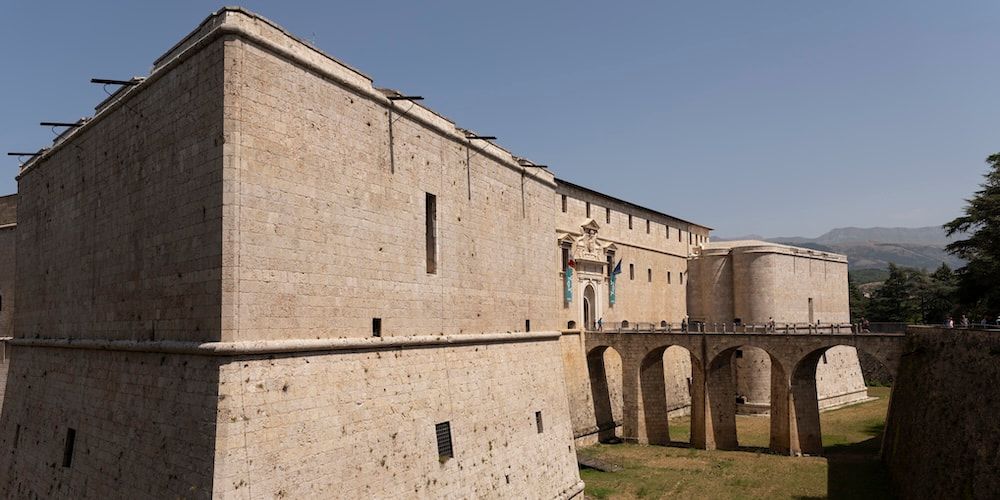
Also known as Castello Cinquecentesco, the Spanish Fort is one of the most impressive testimonies to L’Aquila’s military history.
Built in the 16th century during the Spanish rule, it was designed as a defensive structure to control the territory and represent the power of the Crown. Its square layout, massive walls, and surrounding moat still reveal the austere character of the great Renaissance fortresses.
Its strategic position offers a striking view of the city and the surrounding mountains. Surrounded by the Castle Park, it is now also a cultural hub housing the National Museum of Abruzzo, with important artworks and historical collections that showcase the heritage of the region.
Museo Nazionale d’Abruzzo: a long journey through local history
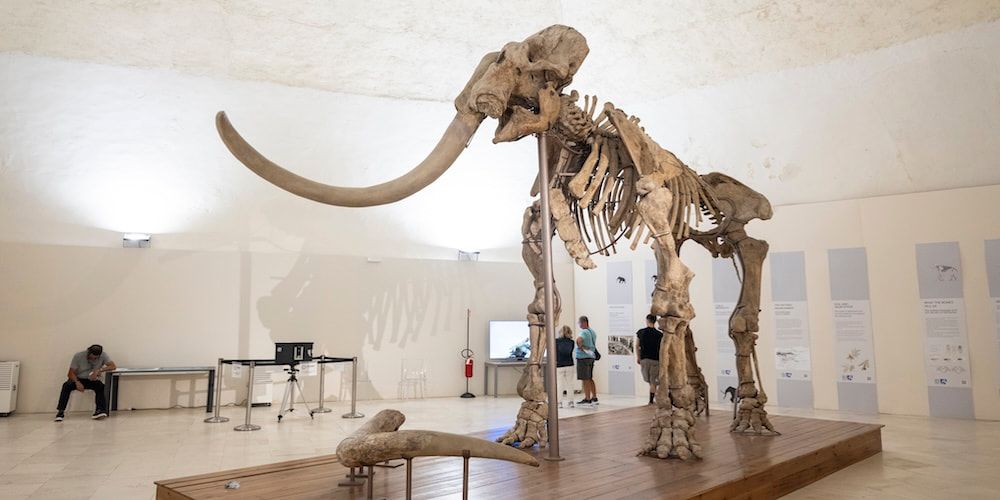
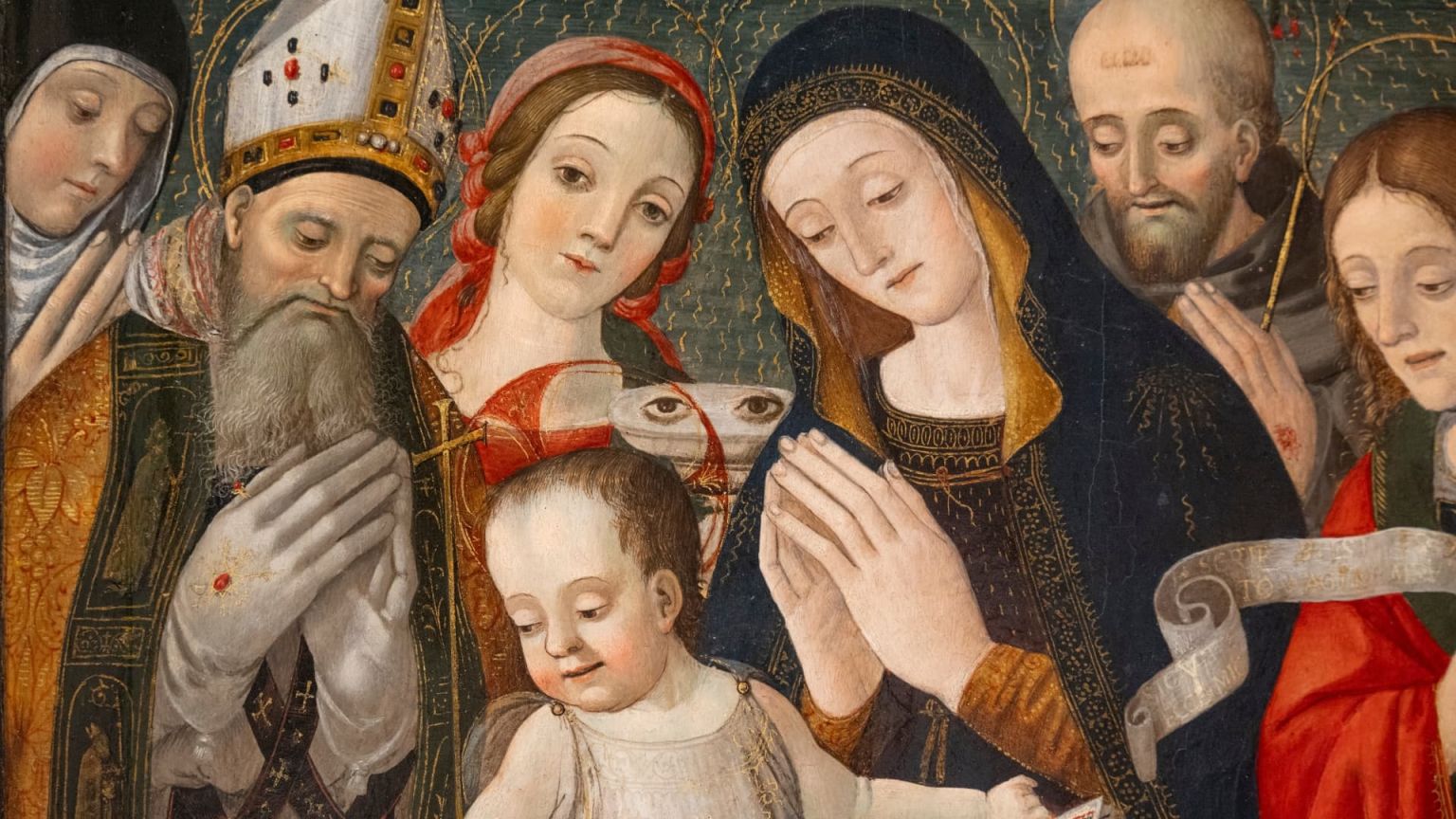
At the Museo Nazionale d’Abruzzo, also known as MuNDA, visitors can embark on a journey through the region’s artistic and cultural history, exploring centuries of heritage through fascinating collections of paintings, sculptures, sacred art, archaeological finds, and precious artifacts from churches and monuments across the area.
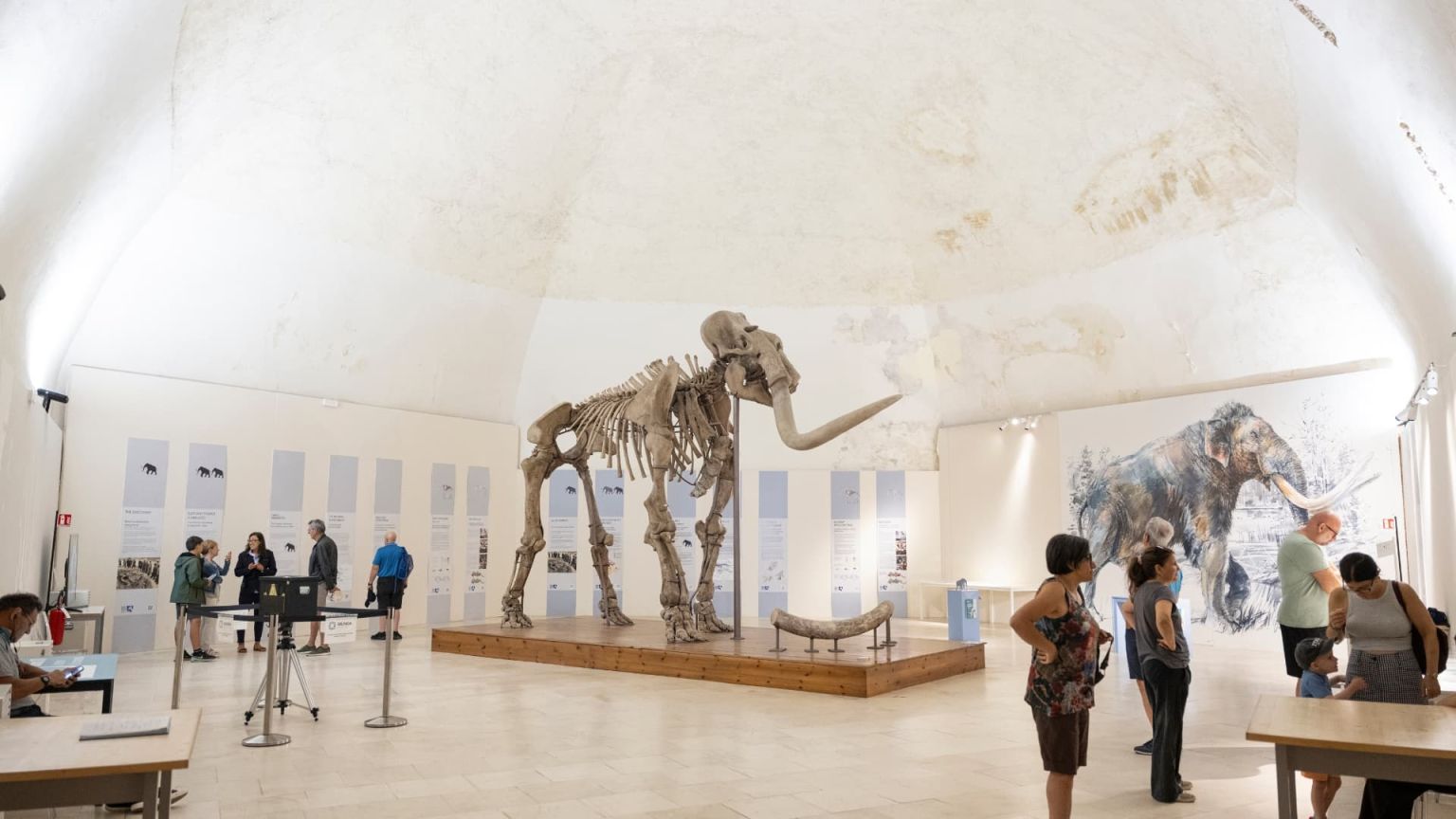
Among the museum’s most fascinating exhibits is the fossil skeleton of a Mammuthus meridionalis, discovered in 1954 near Scoppito, in the L’Aquila basin. Dating back around 1.3 million years, it's one of the most complete specimens preserved in Europe: measuring over 6 meters in length and around 4.40 meters in height, it offers a glimpse into the distant past of the Abruzzo region.
A visit to the museum reveals an Abruzzo shaped by art, memory, and traditions, showing the transformations experienced by L’Aquila throughout history through its artworks. The magnificent setting of the Spanish Fort further enhances the museum experience, creating a unique encounter between history and culture.
Basilica of San Bernardino: following the footsteps of the Saint who loved L’Aquila
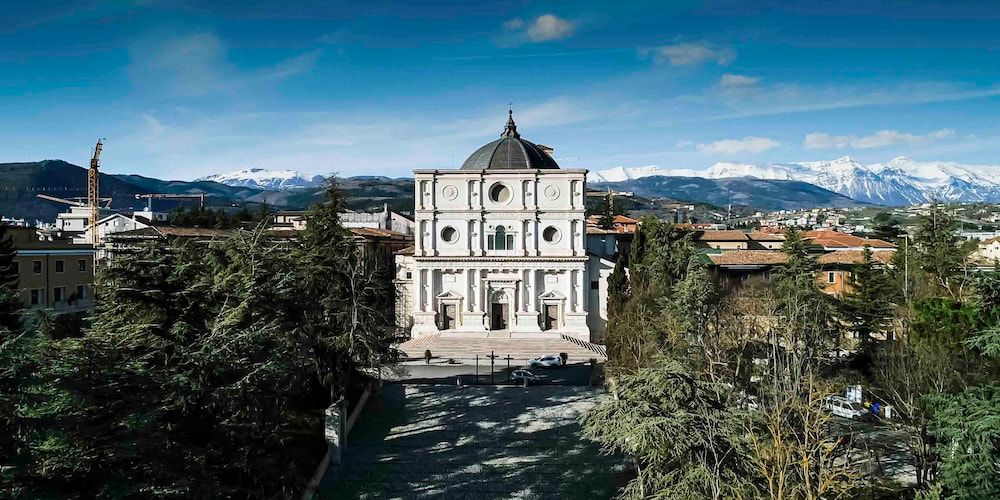
The Basilica of San Bernardino was built to honor the deep bond between L’Aquila and Bernardino da Siena, the Franciscan preacher who arrived in the city during the 15th century and died here in 1444. After his death, the people of L’Aquila chose to build a grand church to house his remains, creating one of the city's most important religious landmarks.
Reached by climbing the impressive staircase on Via Fortebraccio, the basilica immediately captivates visitors with its elegant Renaissance stone façade.
Inside, you'll find the magnificent mausoleum of Saint Bernardino, created by Silvestro dell’Aquila, along with a remarkable collection of artworks, including the gilded wooden ceiling and a terracotta altarpiece attributed to Andrea della Robbia.
Damaged by the 2009 earthquake, the basilica reopened to the public in 2015 after an extensive restoration, once again becoming one of L’Aquila’s most cherished places of worship.
Church of San Pietro a Coppito: L’Aquila’s medieval roots
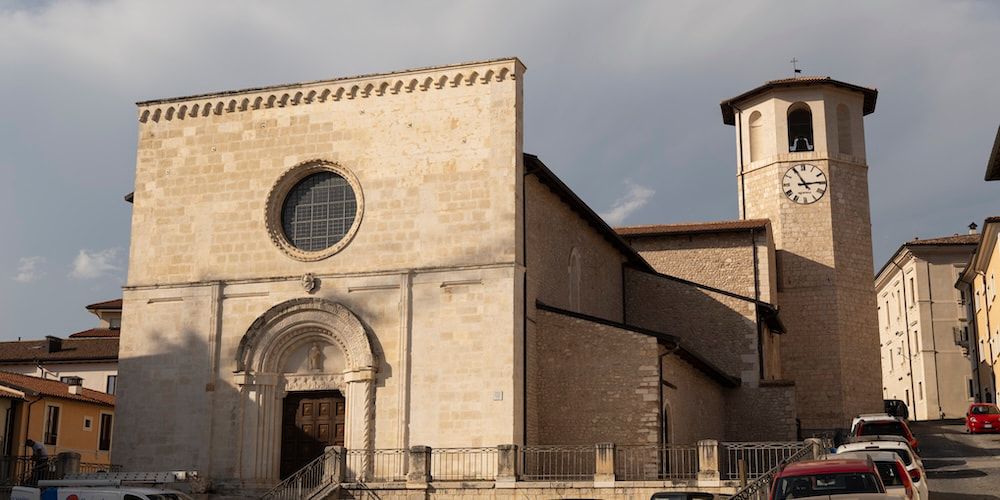
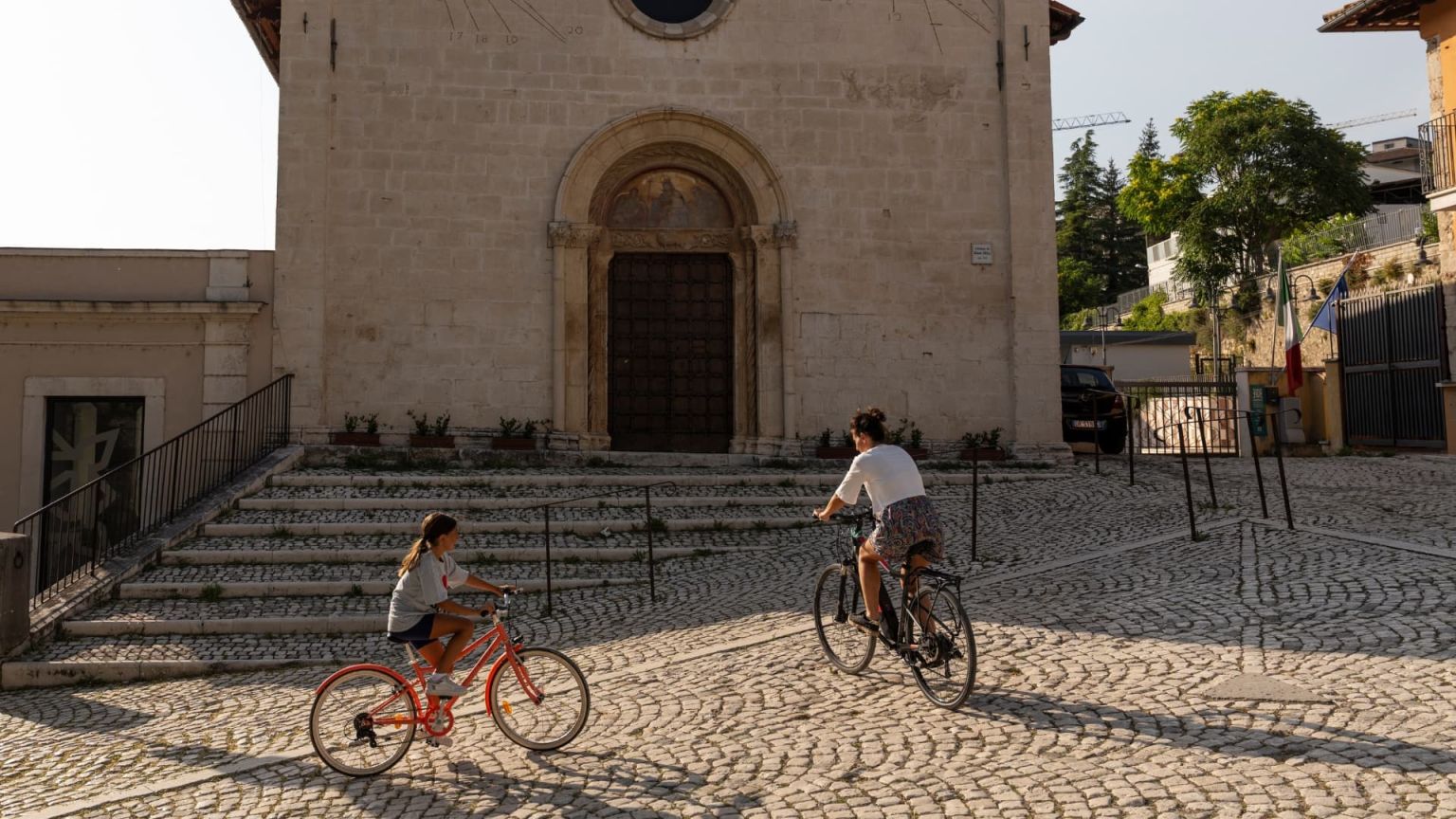
In the heart of San Pietro district, one of L’Aquila’s four historic quarters, the Church of San Pietro a Coppito preserves the link with the city’s medieval origins. It was built by the inhabitants of the castle of Coppito, one of the fortified settlements that contributed to L’Aquila’s foundation in the 13th century, and is one of the oldest examples of the city’s religious heritage.
The stone façade, featuring a Romanesque portal and a central rose window, leads into an interior that brings together different artistic periods. Among the most curious elements outside the church are the two stone lions placed on either side of the entrance, dating back to Roman times and originating from excavations at the ancient city of Amiternum, the main Roman settlement that once stood in the L’Aquila basin.
The octagonal bell tower is also worth noting. Dating back to the 13th century and modified over the following centuries, its shape today recalls that of the Basilica of Santa Maria di Collemaggio.
Among the most important artworks are the medieval frescoes and decorations that testify to the church’s long history. During restoration works, several paintings were brought back to light, including a depiction of the Madonna with the Dead Christ, a valuable example of L’Aquila’s medieval artistic production.
Basilica of San Giuseppe Artigiano and the Oratory of San Giuseppe dei Minimi
Also located in the San Pietro quarter, just a short walk from the Cathedral, the Basilica of San Giuseppe Artigiano preserves a centuries-old history. The building was originally the Church of San Biagio ad Amiterno, linked to the medieval origins of the city, and today it forms a single monumental complex together with the Oratory of San Giuseppe dei Minimi.
Inside the basilica, visitors can admire the Gothic funerary stele of Lalle Camponeschi, a nobleman, military leader, and key figure in the reconstruction of the city after the 1461 earthquake. Restoration works carried out after the 2009 earthquake also brought important medieval frescoes back to light.
Next to the basilica, the Oratory of San Giuseppe dei Minimi preserves Baroque decorations and a refined artistic heritage, also recovered through a major restoration project.
Today, the complex showcases L’Aquila’s ability to bring its extraordinary history back to life, revealing the stories preserved within its churches and oldest neighborhoods.
MAXXI L’Aquila: where Baroque meets Contemporary Art
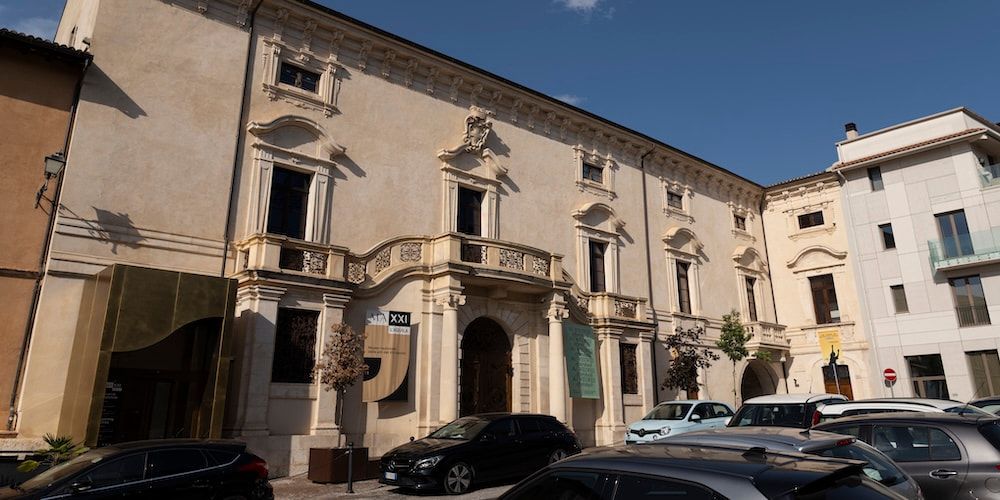
Inside the magnificent Palazzo Ardinghelli, MAXXI L’Aquila is one of the places that best reflects the city’s forward-looking spirit.
Opened in 2021 after a restoration of the 18th-century palace, the museum is the second branch of Rome’s MAXXI and was created to bring together contemporary art, architecture, photography, and the local area.
A visit here offers a different experience from a traditional museum. Alongside works from the permanent collection, you’ll find temporary exhibitions, site-specific installations, performances, and projects dedicated to contemporary artists.
What makes the experience especially striking is the contrast between the palace’s elegant Baroque interiors—with its monumental frescoed staircase and inner courtyard—and modern creativity.
Fontana Luminosa: a meeting point between history and city life
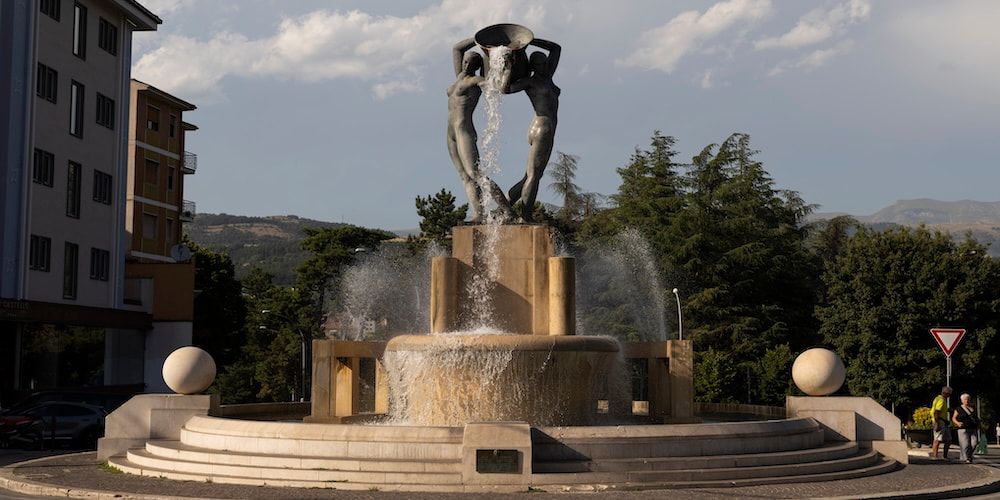
At the entrance to the historic center, between Corso Vittorio Emanuele and Castle Park, Fontana Luminosa welcomes visitors with an image deeply connected to Abruzzo’s history and traditions.
Created in 1934 by sculptor Nicola D’Antino, it features two bronze female figures holding the typical conca abruzzese, an object once used in the daily life of local women.
Built during a period of urban transformation in the 20th century, the fountain still holds a strong symbolic value for the people of L’Aquila today. Its location, in front of the scenic staircase leading to the Spanish Fortress, makes it a natural stopping point for those exploring the historic center and one of the city’s most beloved meeting places.
Experiencing L’Aquila through its events: tradition and innovation
L’Aquila celebrates its traditions through events that bring together historical memory, culture, and community participation. The most eagerly awaited event of the year is the Celestinial Perdonanza, the celebration that originated in 1294 with Pope Celestine V’s Bolla del Perdono.
Every August, the city renews this ancient tradition with the opening of the Holy Door of the Basilica of Santa Maria di Collemaggio, accompanied by the Corteo della Bolla procession, performances, and numerous cultural initiatives.
Alongside this centuries-old celebration, L’Aquila offers an increasingly rich calendar of events dedicated to the arts, music, and the discovery of the surrounding area.
In 2026, the year the city becomes the Italian Capital of Culture, the program expands with events spread across the historic centre and its surrounding villages, including CostellAzioni – Festival delle identità aquilane, which brings theatre, concerts, workshops, and outdoor experiences to different locations throughout the city.
It’s precisely this encounter between ancient traditions and new forms of cultural expression that represents the true strength of a city capable of transforming its history into creative energy.
Typical products of L’Aquila
L'Aquila cuisine is rooted in the deep connection with the land, pastoral traditions, and the ancient agricultural practices of the Apennines.
Among the best-known local specialties are L’Aquila DOP saffron, mainly cultivated in the Navelli Plateau and appreciated for its intense aroma and distinctive golden color, and the Santo Stefano di Sessanio lentil, a small legume grown at high altitude and linked to traditional production methods.
The pastoral heritage of Abruzzo can be found in local cheeses, cured meats, and traditional dishes such as arrosticini, pecora alla cottora (slow-cooked sheep meat), and agnello cacio e ova (lamb with cheese and eggs), recipes that reflect the history of mountain communities.
Completing the local gastronomic heritage are desserts, including L’Aquila torrone, a specialty that originated in the 19th century and became one of the city’s most renowned sweet delicacies. In its best-known version, soft chocolate torrone combines honey, cocoa, and hazelnuts in a smooth mixture with an intense flavour, still produced according to Aquilana tradition today.
How to get to L’Aquila
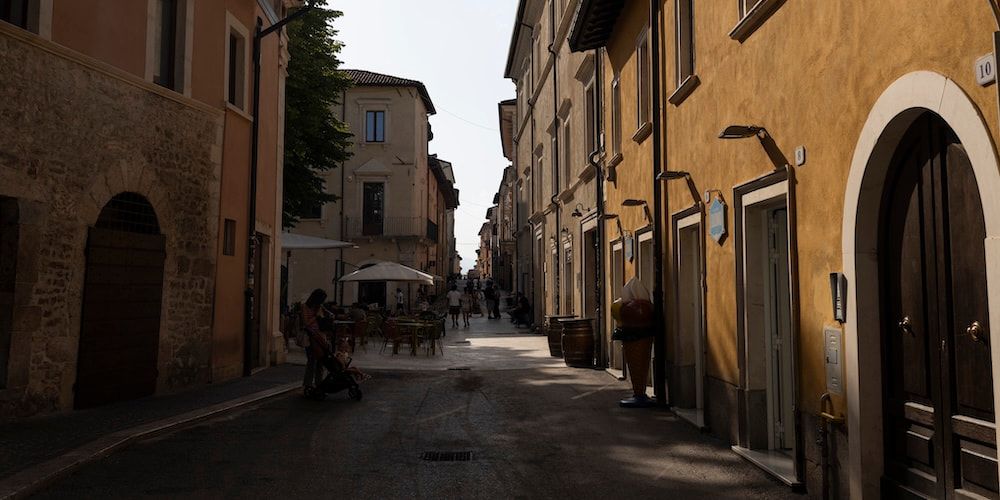
The most convenient way to reach L’Aquila, in the heart of the central Apennines, is by car. From Rome, simply take the A24 motorway towards Teramo. The journey covers approximately 120 km (75 miles) and takes just over an hour and a half.
For those traveling from the Adriatic coast, L’Aquila is also easily accessible from Pescara and other coastal towns via a network of roads that cross valleys, plateaus, and typically Apennine landscapes, offering a glimpse of the region’s remarkable natural diversity.
Public transport is also a convenient option. Numerous direct buses depart daily from Rome, particularly from Roma Tiburtina station, with travel times ranging from one and a half to two hours.
It’s also possible to reach the city by train, changing along the route (in Terni) and then continuing to L’Aquila on regional services. While this can be an economical choice, it is generally not recommended due to the significantly longer journey time, which can take up to four hours from Roma Termini.