

🥇 Visit Italy’s brand partnership
Every year, in late August, L’Aquila transforms into a place suspended between history and spirituality, where past and present meet in a unique and moving atmosphere.
The Perdonanza, the world’s first Jubilee, is a ritual of universal forgiveness that still enchants those seeking an authentic and meaningful experience. Walking through the streets of the Abruzzo capital, you can feel the power of a tradition that has endured through the centuries.
Prepare for a true journey: not just a religious one, but also a cultural exploration to find out the secrets of a unique event waiting to be experienced. The Perdonanza of L’Aquila will leave an unforgettable mark on your heart and memory.

L’Aquila and the Perdonanza: a journey through history, faith, and tradition
🥇 Visit Italy’s brand partnership
To truly understand what the Perdonanza of L’Aquila is, and why it's called “the world’s first Jubilee,” don’t stop at the allure of the ritual or the solemn moment of the Holy Door opening. You need to go deeper and travel back to 1294, when a hermit-turned-pope, Celestine V, introduced an idea that was radical for its time: universal forgiveness, accessible to everyone.
That act gave rise to a celebration that predates and in part inspired modern Jubilee, while keeping its own unique traits, deeply tied to L’Aquila and its identity.
From the historical origins of the Perdonanza to Celestine V’s revolutionary gesture, prepare to uncover a special and captivating tradition. A story that spans centuries and leads you through the streets of the city and the majestic nave of the Basilica of Collemaggio, where history comes alive as an unforgettable experience.
- Origins of the Perdonanza;
- Universal forgiveness;
- Perdonanza vs Jubilee;
- The Perdonanza today;
- An experience to be lived in the heart of L'Aquila.
Find out more about L'AquilaThe hermit Pope and the origins of the Perdonanza
The Perdonanza of L’Aquila is no ordinary medieval festival: it marks the dawn of an idea so radical for its time that it seemed almost impossible. At the end of 13th century, a man who had spent years living as a hermit in the mountains of Abruzzo—Pietro Angelerio da Morrone, later Pope Celestine V—brought a transformation to the city that would be remembered for centuries.
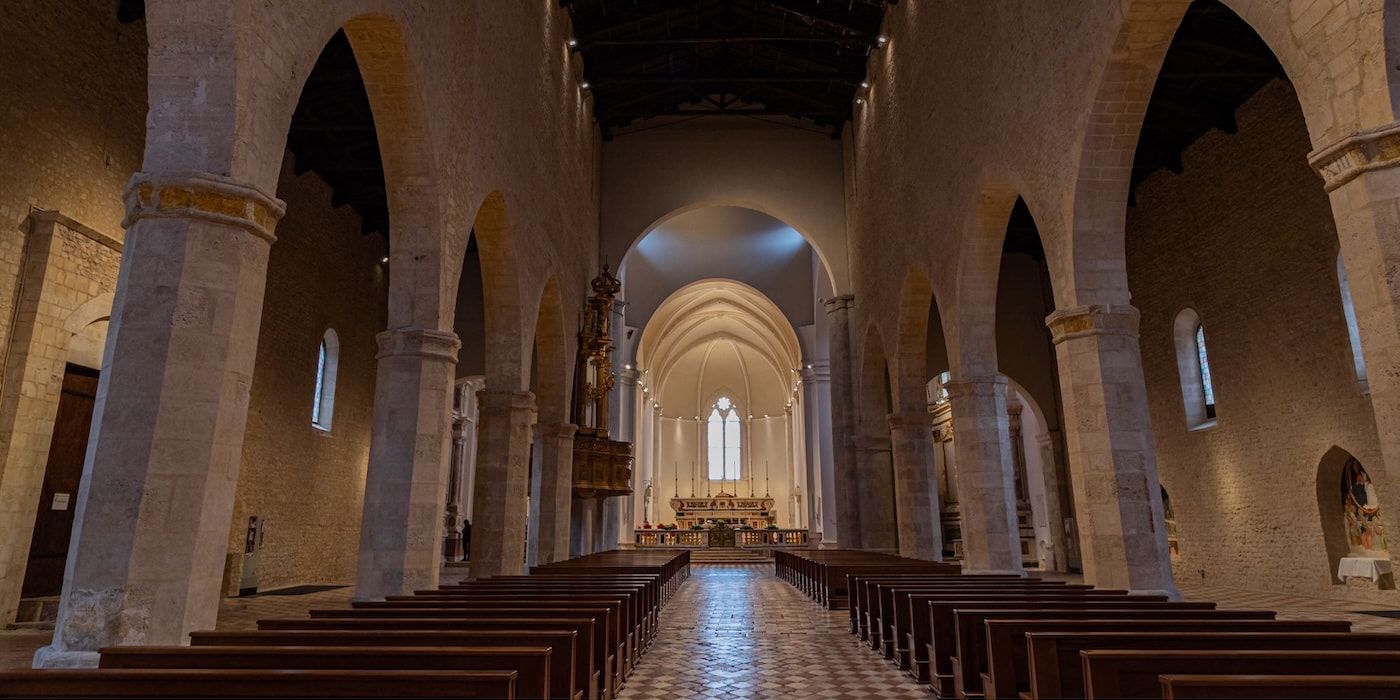
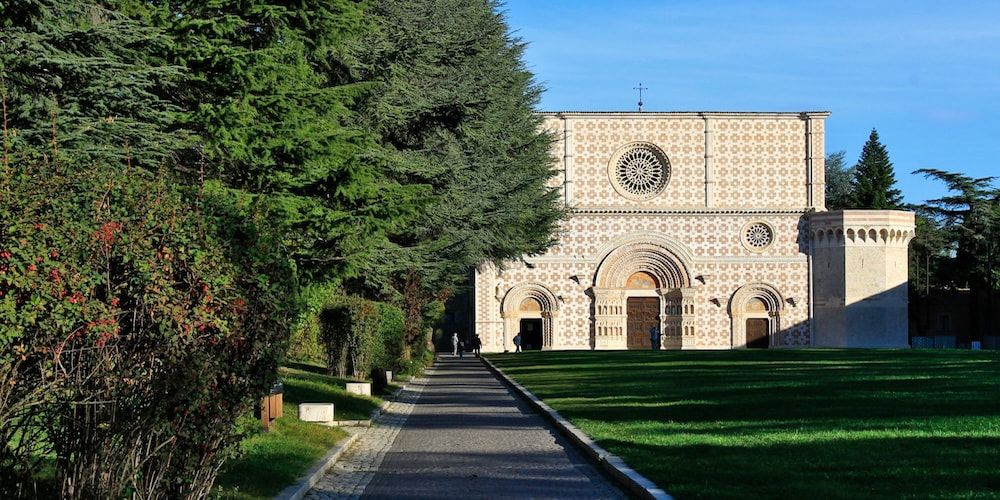
Celestine V chose the Basilica of Santa Maria di Collemaggio as the site of his coronation, a church he had personally commissioned. He selected it not only for its architectural grandeur but also for the symbolic role L’Aquila played as a central hub of faith and community across the region.
It was here, in 1294, that he issued a papal bull known as the Bull of Forgiveness, granting plenary and universal indulgence to anyone who entered the basilica, confessed, and repented, between August 28 and 29 each year. Thus was born a tradition destined to leave a profound and lasting mark on the history of the city.
Celestine V and the birth of universal forgiveness
The act of the Perdonanza of L'Aquila may seem simple at first glance, but in reality, it was far from ordinary. In a time when forgiveness was often reserved for those who could afford costly penances or was tied to strict social hierarchies, Celestine V chose to open it to everyone, regardless of class, wealth, or social standing.
The papal Bull he issued from Collemaggio was a declaration of profound moral and social significance. A truly radical act, because for the first time in history, forgiveness became genuinely inclusive: a call to reconciliation and peace extended to all of humanity.
This revolutionary choice marked the Celestinian Perdonanza as a unique event in Church history, enshrined in a parchment that the city still guards with pride and reverence today, a copy of which is carried in procession during the days of the celebration (since the original must be kept with particular care).
The Celestinian Perdonanza and modern Jubilee: what makes L’Aquila event so unique?
The Perdonanza of L’Aquila was the first rite to grant a universal indulgence, a full six years before Boniface VIII established the first Roman Jubilee in 1300. This chronological detail is significant, but it alone does not explain the difference between the two events.
The Roman Jubilee can be ordinary or extraordinary: the ordinary Jubilee follows a calendar set by the Church, like the Jubilee of 2025, while the extraordinary Jubilee is proclaimed on special occasions, such as a moment of mercy or a special celebration called by the Pope. It's an event of universal scope, involving the entire Catholic Church and assuming international dimensions.
The Celestinian Perdonanza, on the other hand, remains deeply connected to the city and community of L’Aquila: this is evident in the participation of citizens, confraternities, and musicians, in the procession through the historic streets of the city center, and in the celebrations at the Basilica of Collemaggio, creating a bond between tradition, faith, and local identity that the Jubilee cannot replicate on a global scale.
Why is the Perdonanza still relevant today?
The Perdonanza has not survived merely as a ritual of the past; on the contrary, it has evolved while preserving its original meanings, adapting them to the needs and circumstances of the present day.
It remains an occasion of great cultural, social, and symbolic significance: in 2019, it was recognized as an Intangible Cultural Heritage of Humanity by UNESCO, a testament to its message of peace, solidarity, and reconciliation that resonates far beyond the local community.
Over the years, this celebration has become an opportunity for reflection and dialogue on coexistence and inclusion, bringing together people of all ages and backgrounds in a world increasingly marked by divisions and conflicts.
Moreover, the Perdonanza experience is deeply intertwined with the city’s recent history: even after the 2009 earthquake, the tradition has continued uninterrupted, becoming a symbol of the community’s resilience and a testament to the desire to regain cohesion and hope through its history and customs.
Inside the Perdonanza: an experience that makes you a protagonist
Taking part in the Perdonanza of L’Aquila means experiencing an emotion that surrounds you in unexpected ways, drawing you into a celebration renewed year after year.
In the final days of August, the historic center vibrates with sounds and colors. Figures in period costume animate the streets, while the rhythm of drums and clarions marks the Procession of the Papal Bull, publicly read in Piazza del Municipio.
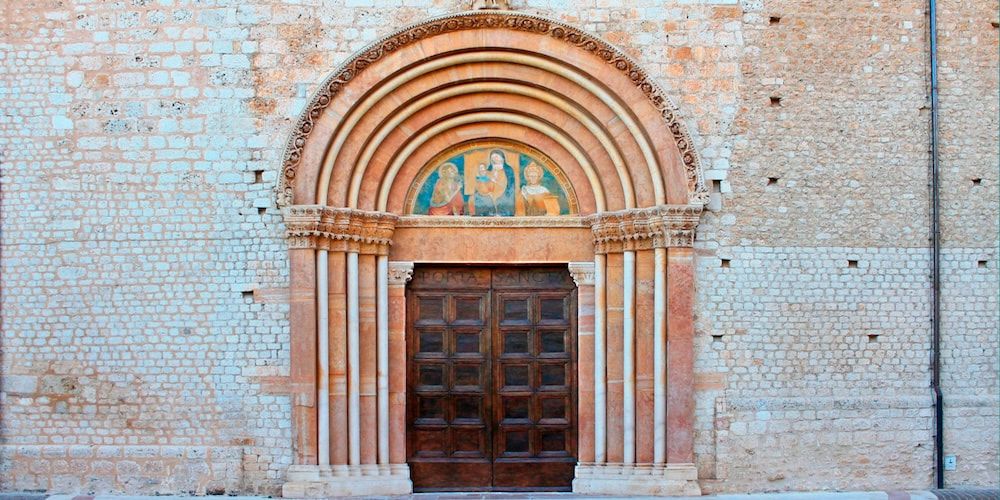
The anticipation of the opening of the Holy Door at the Basilica of Santa Maria di Collemaggio is another intense moment: eyes turn toward the basilica’s entrance, and the civic and religious dimensions of the celebration come together in a single symbolic gesture.
In recent years, this event has also embraced a modern dimension, with performances that accompany the religious rite. This year, as L’Aquila holds the title of Italian Capital of Culture, participation becomes an opportunity for dialogue among different people and cultures.
Within this setting, the Perdonanza emerges as a bridge between past and present — a moment to encounter the city’s truest identity through its gestures, its voices and its enduring capacity to renew itself while remaining faithful to its history.
About the author
Written on 23/03/2026
Alessandro Savino
SEO Copywriter & web editor: I love transforming my passion for writing into engaging narratives, creatively and precisely exploring the beauty and complexity of our wonderful country.

Alessandro Savino
Curious about the Perdonanza of L'Aquila? Step through the Holy Door of the Basilica of Collemaggio to unveil the secrets of history’s first Jubilee.