
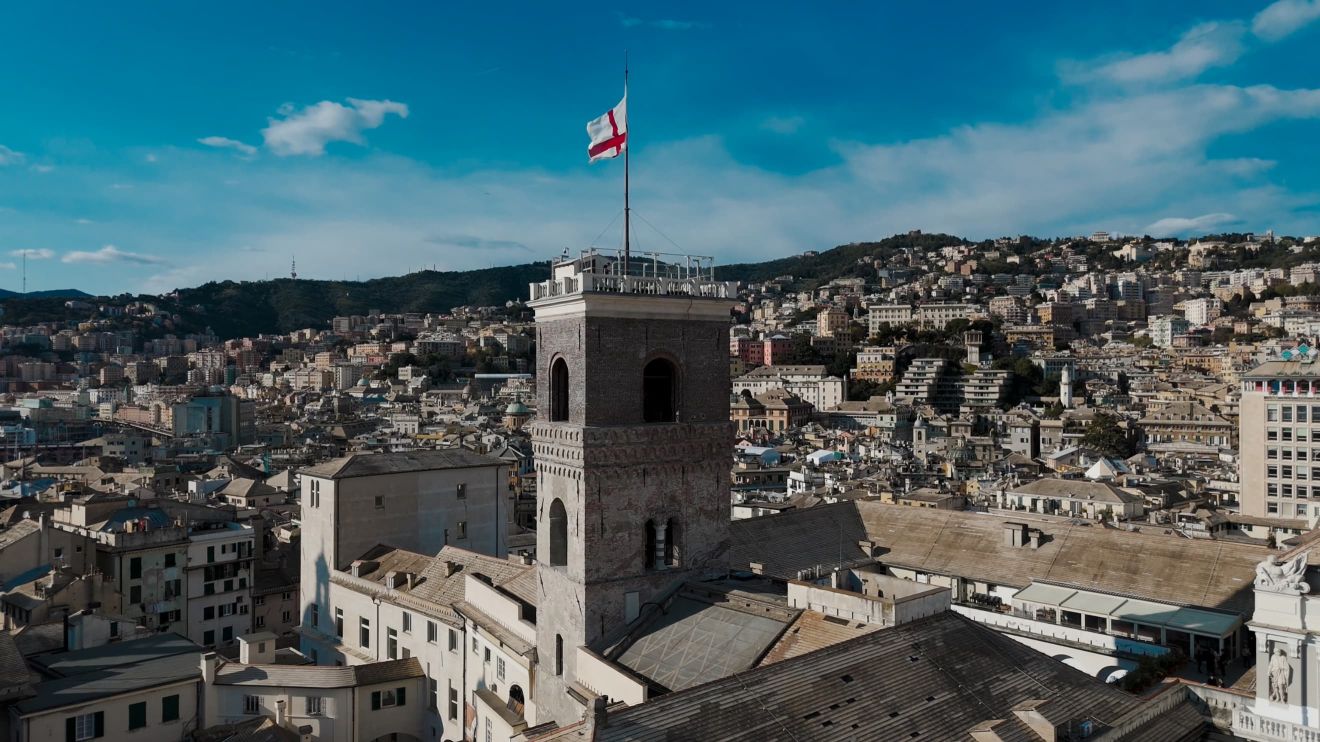

This tower is one of Genoa’s oldest and most evocative landmarks. From the top, visitors are rewarded with breathtaking views, a panorama recently returned to the public after the building underwent a meticulous restoration. Yet beyond these weathered walls lies a story of power, intrigue, and secrets.
For centuries, the cells inside the Grimaldina Tower held prominent prisoners, rebels, and political dissidents, leaving behind stories, legends, and marks that can still be seen today. What dark history is hidden within La Grimaldina? And what connection could this medieval tower possibly have to one of the greatest musicians of all time?

The Grimaldina Tower: Genoa’s Timeless Symbol With a Shadowed Past
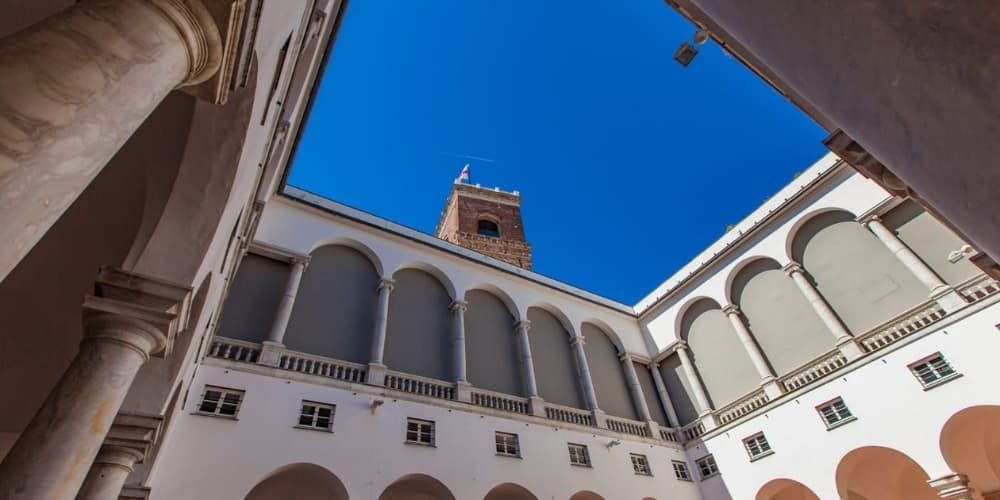
Rising nearly 50 meters (164 feet) above the city, the Grimaldina Tower of the Ducal Palace represents the power of Genoa’s glorious past.
Outside, the tolling of its bell marked the rhythm of daily life. Inside, for many, it marked the end of freedom.
Beginning in the 16th century, the tower became a maximum-security prison for political prisoners, intellectuals, rebels, and high-profile inmates.
The upper floors were reserved for privileged detainees, especially aristocrats and prisoners whose families were expected to pay a ransom. Below them were large vaulted communal cells for multiple inmates, confined together, sometimes even in chains.
Surprisingly, inside the old cells the tower’s history seems to survive beyond archival records. Heavy wooden doors, iron bars, locks, and bolts remain in place, alongside the graffiti and drawings prisoners scratched into the walls: sailing ships, armoured knights, even hot-air balloons. If nowhere else, people here sought escape through the power of imagination.
Related story - Why you should visit Genoa
More info on GenoaOne Tower, Eight Centuries, A Thousand Tales
@palazzoducalegenova Conosci la Torre Grimaldina di #palazzoducalegenova? #ArtOnTikTok #genova #tiktokliguria #museummoment #FineArt Einaudi: Experience - Ludovico Einaudi & Daniel Hope & I Virtuosi Italiani
La Torre Grimaldina is a living archive of Genoa’s history.
Its saga begins even before the rise of the Ducal Palace. The tower was originally part of a private medieval residence, the palace of the Fieschi family, which the city government purchased in 1294. From that pre-existing structure, the new seat of Genoa’s government gradually began to take shape.
Over the centuries, it has undergone numerous transformations. Raised and altered in different periods, it acquired its present appearance through a long process of architectural layering. The last major intervention came in the early 17th century, when it was adapted to the Renaissance style. Later, the restoration led by Orlando Grosso between 1935 and 1940 sought to bring it closer to its medieval origins.
In the first decades of the 20th century, the cells were still being used as a prison for political opponents of the Fascist regime. Before that, during the Italian Risorgimento, it had held patriots from the Young Italy movement. But to uncover the tower’s most legendary tale, we must journey further back, to the story of a single, extraordinary prisoner.
Related story - Inside the Rolli Palaces, a Unesco World Heritage Site
Paganini, the Most Unexpected Prisoner
Among the many who have seen the inside of the Grimaldina Tower’s cells, one name stands out, perhaps the last a visitor might expect: Niccolò Paganini.
In May 1815, the famed Genoese violinist found himself locked away in the tower for several days. The charge? The father of Angiolina Cavanna, a young woman charmed by Paganini and convinced to elope with him to Parma, had reported him for abduction and seduction.
The scandal ended when he paid 1,200 lire in compensation and was released. He spent only a few days in jail, not the long imprisonment that later legends turned into a much more dramatic tale.
According to one popular story, Paganini perfected his extraordinary violin technique during this “long” confinement. The anecdote is fascinating, but there is no historical evidence.
Even so, the episode adds a curious chapter to the already eventful history of the Grimaldina Tower, now open to the public once again as of spring 2026.
The Grimaldina Tower Reopens: Panoramic Views and New Experiences
After a meticulous conservation and restoration effort, the Grimaldina Tower has once again opened its doors, this time inviting visitors to reach its summit.
From above, Genoa’s medieval heart and the Old Port unfold in every direction, with vistas that sweep across the city’s hillsides and all the way to the Portofino promontory.
Works touched the tower’s interiors and exteriors, with special attention paid to accessibility and to ensuring visitors experience the monument in full. The new internal steel staircase gives access to the upper levels without compromising the building’s architectural integrity.
Since reopening, the Grimaldina has also become a venue for special events, like after-hours visits paired with aperitifs, as well as evenings devoted to astronomy and stargazing.
Planning a visit? The Grimaldina Tower welcomes guests every day. From April to September, doors stay open until 7 p.m. on weekdays and until 8 p.m. on weekends. Advance tickets are available online.
The Bell That Rings Just Once a Year
Today, the great bell surmounting the Tower is heard just once a year, on June 24, when Genoa celebrates the feast of St. John the Baptist, the city’s patron saint. For centuries, however, its sound shaped the tempo of civic life.
Its tolls announced the arrival of eminent guests, summoned government officials, signalled curfews, warned of fires and other emergencies, and accompanied the Republic’s solemn ceremonies.
The bell’s history is almost as fascinating as that of the tower itself. Recast and replaced several times, it was even melted down during World War II so that its bronze could be used to manufacture cannons.
The present bell was cast in Avegno, a village in the Ligurian hinterland long known for its master bell founders. Around its rim is engraved a line by the Genoese poet Edoardo Firpo, meaning “For this ancient land, a wondrous day always returns.”
Beyond the Grimaldina Tower: Following Paganini’s Footsteps
@palazzoducalegenova Conosci la Torre Grimaldina di #palazzoducalegenova? #ArtOnTikTok #genova #tiktokliguria #museummoment #FineArt Einaudi: Experience - Ludovico Einaudi & Daniel Hope & I Virtuosi Italiani
Paganini’s brief imprisonment in the Grimaldina Tower adds an unexpected chapter to the story of this Genoese landmark. It became another tile of the vast mosaic representing the mark that the legendary violinist left in the city, a heritage now celebrated through the European Paganini Route, which was recognised as a Cultural Route of the Council of Europe in May 2026.
After all, the bond between Paganini and his hometown remains as strong as ever. This autumn, Genoa is ready to pay homage to his enduring influence with Ottobre Paganini, a full month of concerts, exhibitions, lectures, and guided tours dedicated to the virtuoso whose extraordinary talent transformed violin playing.
Also among Genoa’s flagship cultural events is the International Premio Paganini, held every two years and widely regarded as one of the world’s premier violin competitions. Every edition brings the most promising young violinists to the city, so that Paganini’s extraordinary legacy keeps on resonating in the place where it all began.
Ottobre Paganini festival runs from October 2 through November 8, 2026.
Related story - The unmissable events in Genoa for 2026
Interesting Facts About Genoa's Grimaldina Tower
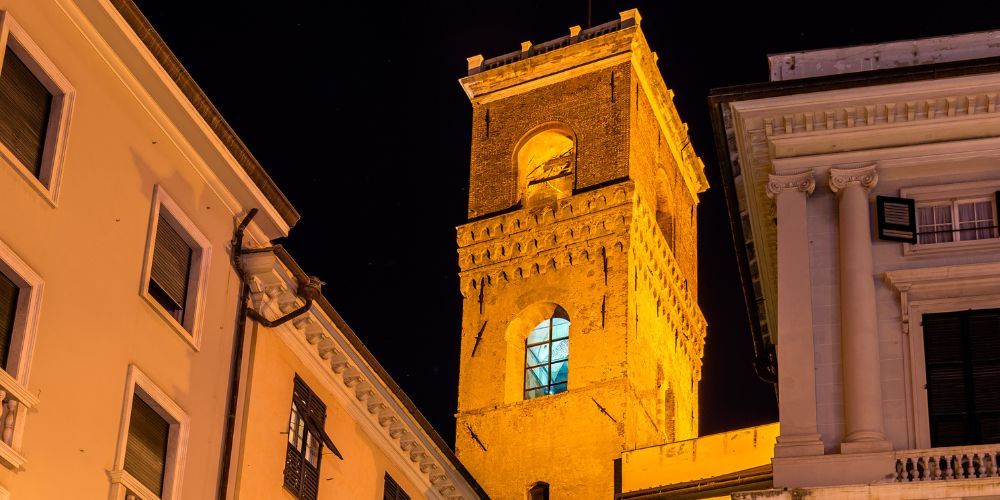
Why is the Grimaldina Tower called “Grimaldina”?
The origin of the name is not entirely clear. According to some historians, Grimaldina comes from the name of one of the prison’s old cells, known as Grimalda, and was later adopted for the entire tower. It is also known as the Torre del Popolo (tower of the people), reflecting its role as a symbol of Genoa’s political power.
How do you visit the Grimaldina Tower?
The Grimaldina Tower is open to visitors as part of a dedicated route through the Palazzo Ducale complex. The tour takes visitors from the historic prison cells to the panoramic terrace at the top of the tower, offering a chance to explore the monument’s history while enjoying sweeping views over Genoa’s historic centre.
The tower is open daily. From April through September, opening hours are 2 p.m. to 7 p.m. on Mondays, 10 a.m. to 7 p.m. Tuesday through Thursday (last admission at 6 p.m.), and 10 a.m. to 8 p.m. Friday through Sunday (last admission at 7 p.m.). Tickets can be purchased online or at the Palazzo Ducale ticket office.
Where is the Grimaldina Tower?
The Grimaldina Tower is located within the Ducal Palace at 9 Piazza Giacomo Matteotti, in the heart of Genoa's historic center. The entrance is less than a five-minute walk from Piazza De Ferrari and San Lorenzo Cathedral, two of the city's best-known landmarks.
About the author
Written on 28/08/2026
Lorena Calise
I'm a content writer for magazines and websites. I also explore Italy through my writing for Visit Italy and Visit Naples.

Lorena Calise
The Grimaldina Tower offers spectacular panoramic views over Genoa. But behind its walls lie darker stories – and one even includes Paganini.