

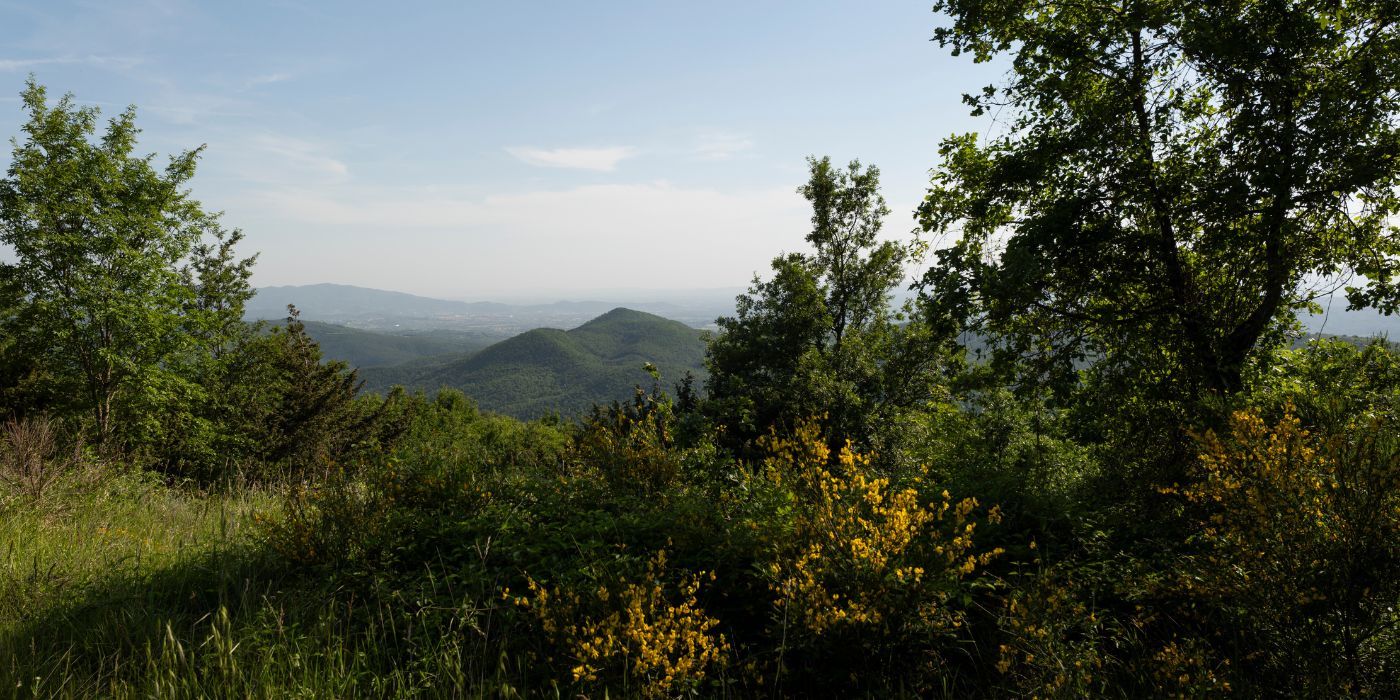

Among the many good reasons to visit the charming village of Subbiano is its strategic location for discovering an almost untouched green oasis, that of the Alpe di Catenaia. In the silence of its forests and sanctuaries, among trekking routes yet to be discovered and unique biodiversity, these beautiful mountains of unknown Tuscany are a perfect destination for those dreaming of a journey between nature and history.
Relaxing walks or more challenging hikes? In any case, the Alpe di Catenaia offers unmissable sights among oaks, beeches, chestnut trees, and meadows, not to mention the extraordinary views. From these silent mountains guarding Subbiano, you can see the plain of Arezzo and the Tevere Valley, while from the highest peaks, on the clearest days, you can even catch a glimpse of the Mount Amiata and even the Adriatic Sea.

Why visit Alpe di Catenaia, a biodiversity heaven to discover slowly
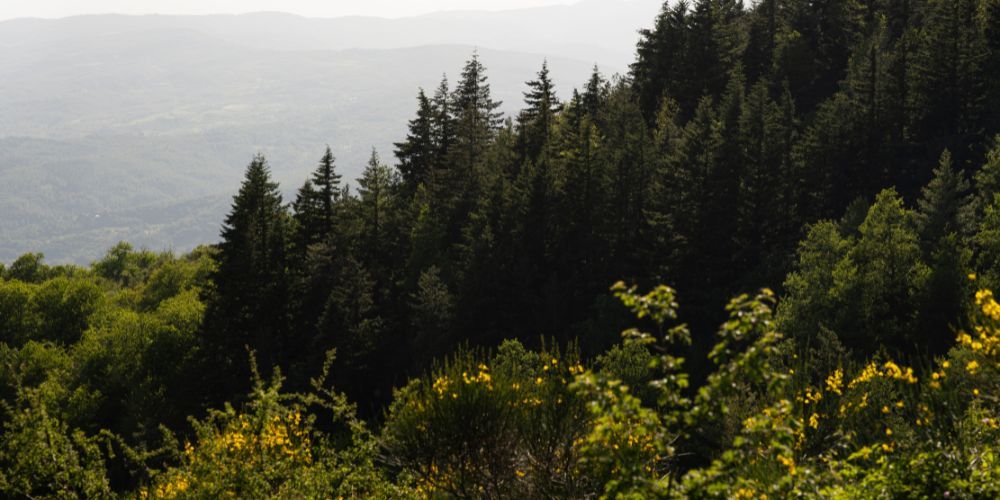
The Alpe di Catenaia marks the natural boundary between the beautiful Casentino Valley, crossed by the Arno River, and the Tiber Valley.
Monte Castello is the highest peak and, with its 1,414 meters, represents the “roof” of these mountains, which are part of the Tuscan Apennines. Monte Castello also stands out for its abundance of water springs that nourish the lush vegetation covering the slopes of the Alpe. Monte Altuccia is another peak, only a few meters lower, and it offers some of the most beautiful views in the area.
The views, truly stunning, are not the only reason to explore these mountains, though. There are trails suitable for every level of fitness, to be explored on foot or by mountain bike, ancient hermitages to visit, and even the opportunity to learn about important chapters in the history of the partisans who fought here, during WWII.
Animal lovers will also have no difficulty encountering deer, wild boars, squirrels or hawks and migratory birds that love to fly among these peaks, making it a particularly suitable place for birdwatching.
The places of Saint Francis on the Alpe di Catenaia
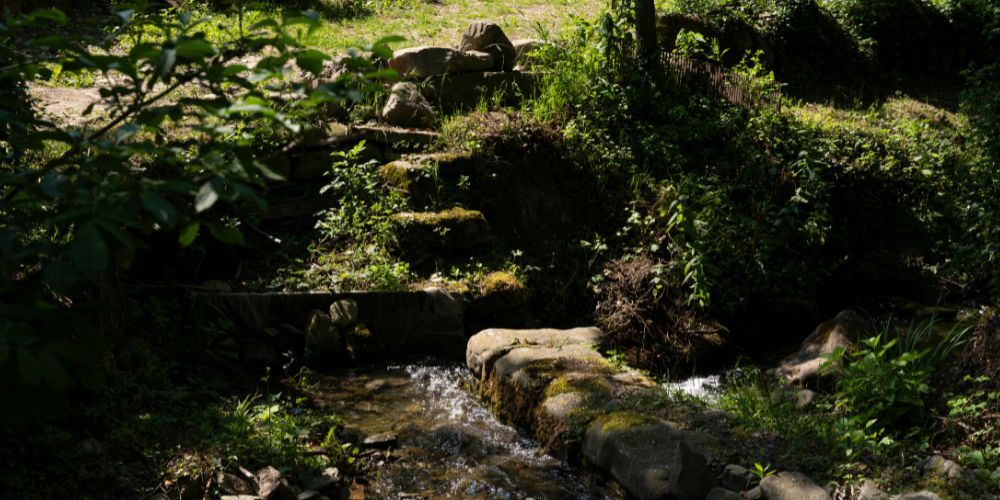
The Historic Path of Saint Francis is certainly among the most beautiful and important trails of the Alpe. By retracing the same steps as ancient pilgrims and especially Saint Francis, one can go from Subbiano to the Castle of Montauto, to the splendid Sanctuary of La Verna, on Mount Penna, through wonderful landscapes.
Likewise, the Hermitage of La Casella is a place of great charm. At about 1,263 meters above sea level, this is where, according to tradition, Saint Francis said his final farewell to the Sanctuary of La Verna while leaving on his journey toward Assisi in 1224.
A beautiful hike leading to the Hermitage of La Casella may begin at the Church of Santa Maria Assunta in the village of Fragaiolo. From here, the path, alternating ascents and descents, winds through the woods for a fully immersive nature experience.
Trekking on the Alpe di Catenaia
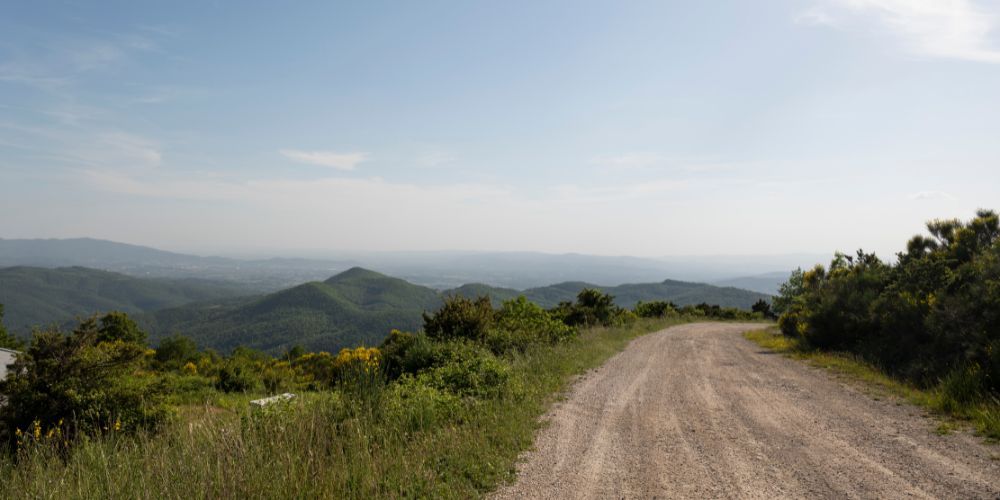
The Grande Escursione Appenninica (GEA) is a route that, in its entirety, stretches over more than 400 kilometers and involves both Tuscany and Emilia-Romagna, with several variants reaching other regions as well. The section that crosses the Alpe di Catenaia runs from Pieve Santo Stefano to Chiusi della Verna. Through forests and rocky terrain, it is a fairly challenging trail that rewards every effort with its views and lush, uncrowded woods.
Valomagna is an ancient stone farmhouse that also serves as a refuge where you can stay overnight. Located at 900 meters above sea level, with a view over the Arno valley and the “Tre Fonti” where you can collect water, it is included in several hiking routes, including the one starting from the Castle of Fioraia in Castelnuovo, not far from Subbiano.
Another particularly beautiful route is the one from the locality of Tre Fonti to Prati della Regina, one of the most scenic places in the Casentino. This trail has a possible variant along the Via degli Inglesi, a path linked to WWII history, which leads to the Baregno Springs, one of the key landmarks of the Alpe, where pilgrims once stopped to collect water.
Visible already from Subbiano, the Sasso della Regina is a sheer rock topped by a meadow, which adventurous visitors will surely love.
Historical places to see along the paths
In addition to the wonderful landscapes already mentioned, the Alpe di Catenaia is home to other places worth visiting during walks or hikes.
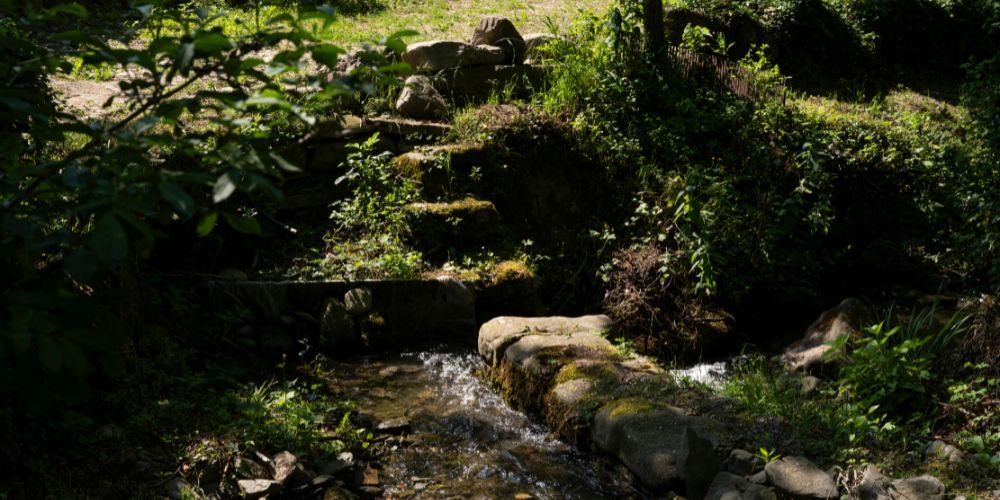
North of Falciano, a few kilometers before the junction leading to Alpe di Catenaia, stands a distinctive and unique mill complex, known as I Mulini, which has been in operation since the 16th century. It consists of four mills; two are currently in operation, while a third is being renovated. They are arranged in succession, so as to use the same water, which, once drawn from the nearby Chiassa stream, is conveyed via a berignolo to the first mill and then passes to the mill of the next mill. Currently, the stone millstones are used primarily for grinding chestnuts, which yield an excellent flour used to prepare traditional baldino or chestnut polenta.
The Casetta del Vaccaio is located not far from the Prati della Regina and was once used by shepherds. The watering troughs and rings for tethering the cattle are still visible here. Today, it is an idyllic retreat in the woods, with a small lake nearby.
This place is also important because it preserves precious historical memories. In fact, part of the Gothic Line, the long defense line built by the Germans to stop the Allies in 1944, ran along these mountains. Here, Italian partisans fought and halted the Nazi advance, and various traces of these events can be found in shelters, the remains of trenches, and defense posts.
The aforementioned Via degli Inglesi, in addition to being one of the most beautiful hiking trails, is an exceptional feat of engineering built in just thirty-six hours, dating back to the Second World War. Its historical value is great, as it allowed the Allies to withstand enemy attacks. It is one of the many signs left by the passage of the war in this area.
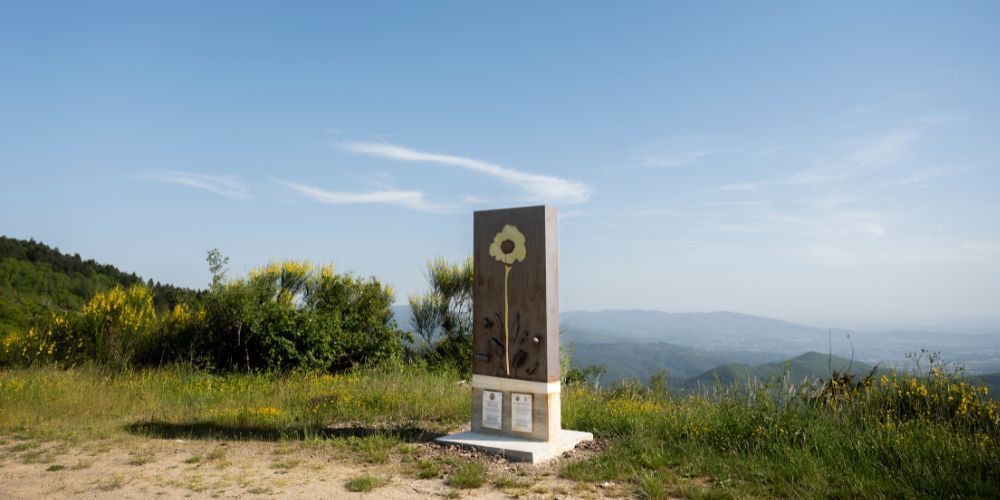
Along the road leading to the summit of the Alpe, near the Belvedere located in the I Pulpiti area, a monument to the fallen of the Battles of the Alpe di Catenaia was erected, at the behest of the "Quelli della Karin" Museum association and funded by the Municipality of Subbiano. Fighting took place between the German army and the Allied forces between August 2 and 9, 1944, in these mountains. The battle ended with the final victory of the latter, but with numerous losses on both sides.
How to get to the Alpe di Catenaia
To reach the Alpe di Catenaia, Subbiano is an excellent starting point.
Traveling by car from there is the easiest solution. Follow the directions to Falciano and continue along the forest roads that climb to higher altitudes if you prefere less demanding hikes.
For those who enjoy walking, it is possible to start directly from Subbiano or its hamlets.
Valenzano and Falciano itself, are the most common starting points for reaching the trails, and the same applies to Fragaiolo, that, however, being located beyond the mountain ridge, can be reached by car if necessary. This is a good starting point as well, for itineraries leading to the more remote areas of the Alpe.
About the author
Written on 17/07/2026
Paola Cirino
A content writer who can't help but travel. I'm also a food lover and very passionate about cinema.

Paola Cirino
In the most authentic Tuscany, Alpe di Catenaia is the mountain where woods and silences draw unexplored landscapes