
When summer begins to fade and winter has yet to arrive, San Martino di Castrozza reveals its hidden side: the magical, more authentic one it reserves for those who take the time to know it. The forests change color, taking on every shade of orange, the trails grow quieter, and the sounds of nature become clear again: the rustle of the undergrowth, the quick steps of young deer and the chatter of squirrels gathering their last supplies.
These vivid colors and this inviting atmosphere create a dream that lasts only a few weeks, and is well worth discovering. In the eastern Dolomites, at the foot of the Pale di San Martino, the trails lose the urgency of the high season and everyday life returns to the villages. At an elevation of 1,450 meters, San Martino di Castrozza is the gateway to an area encompassing Passo Rolle, Primiero and Vanoi, a territory that finds its most magical expression in fall.
All you need to do is follow the changing light, the sound of footsteps through the forest and the traditions marking the end of the alpine grazing season. The Dolomites are no secret. Some of their finest moments are, and those are the moments we want to share with you.

Why Visit San Martino di Castrozza in Fall?
In summer, people come to the Dolomites to climb; in winter, to glide back down them on snow. Fall suggests a different kind of movement: stopping.
This is the season when the landscape does not reveal itself all at once, but in layers. First come the pastures, still green after summer; then the broadleaf trees turn copper; finally, the larches glow gold against the pale rock of the Pale di San Martino. Red, yellow and gold—the warm colors of a Dolomites autumn—make every hike and walk through the foliage feel unique.
Fall is the ideal season to discover San Martino di Castrozza, Primiero and Vanoi. Its beauty does not end with the natural landscape. In villages that seem sleepy during summer, September brings renewed energy. Local festivals offer the opportunity to taste traditional specialties such as canederli and porcini mushrooms.
During the final weekend of September, the return from the summer pastures is celebrated with the Gran Festa del Desmontegar, one of the most distinctive events in Trentino and the Dolomites. Cattle, goats and horses are decorated with flowers and cowbells before parading through the village streets. The festival becomes a four-day journey through local culture.
When the weather changes, it is also the right time to step inside a museum or visit the Casa del Cibo, the House of Food. Here, local products and the history of the area are explored through food and wine, alongside cultural activities, events and workshops.
Find out more about San Martino di CastrozzaVal Canali: Where the Dolomites Turn Gold
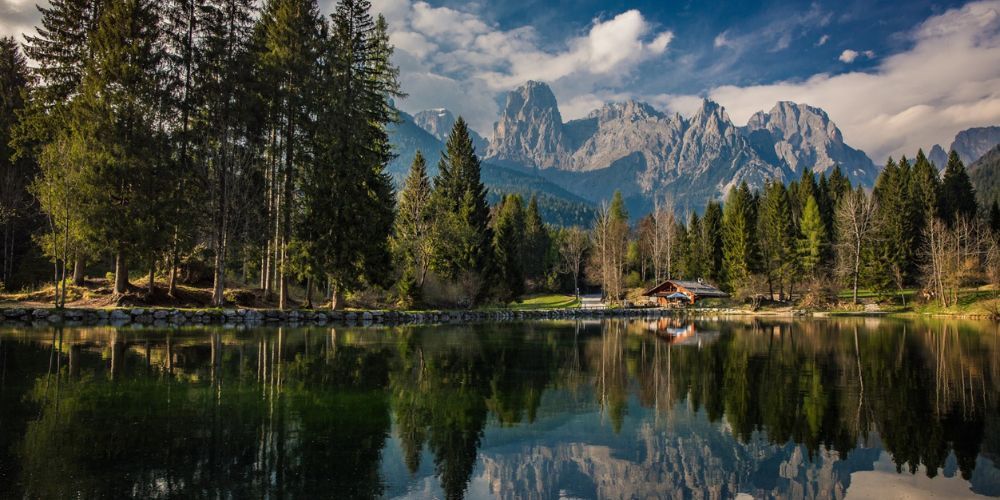
Val Canali lies at the heart of San Martino di Castrozza’s fall landscape—and is one of the most evocative places to experience fall foliage in Italy.
Located within the Paneveggio Pale di San Martino Nature Park, the valley brings together meadows, streams, forests and Dolomite rock walls in a compact landscape that can be enjoyed even during a short walk. In fall, broadleaf trees and larches create an extraordinary interplay of color. The deep green of the fir trees remains in the background, while shades of yellow, orange and brown spread along the edges of the meadows and across the slopes.
This is a landscape made to be explored slowly. Around Villa Welsperg, the headquarters and visitor center of the Nature Park, paths wind through gardens, wetlands, meadow pastures and woodland. The nearby lake mirrors the outline of the Pale di San Martino and, on calm mornings, multiplies the colors of the foliage. Farther on, forest roads and trails lead toward clearings, traditional farmsteads and panoramic viewpoints where the silence feels almost audible.
Here, fall foliage becomes the most immediate way to sense the rhythm of the mountains: the brief and unrepeatable transition between summer and winter, which you may try to preserve in a photograph.
But do not take too many. Let your eyes create their own memories, and experience the landscape without filters or screens.
Hiking Through the Quiet Side of the Dolomites
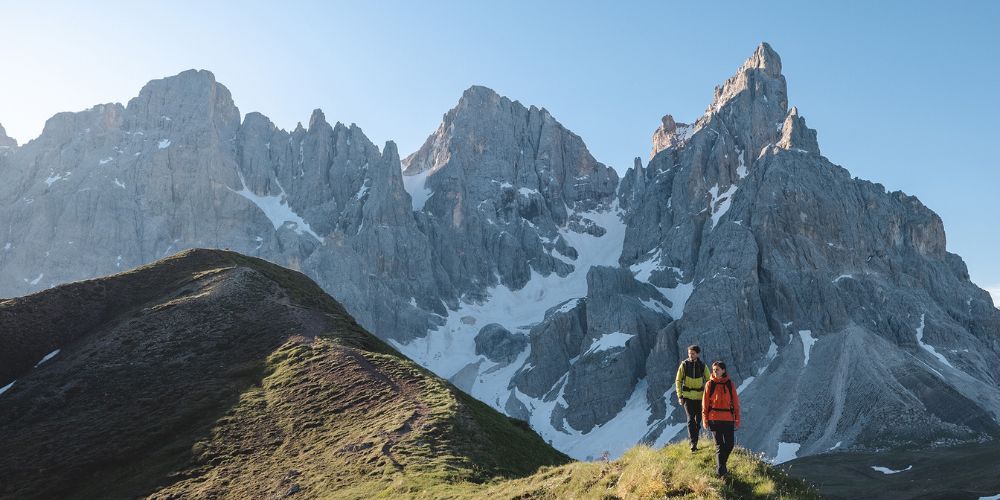
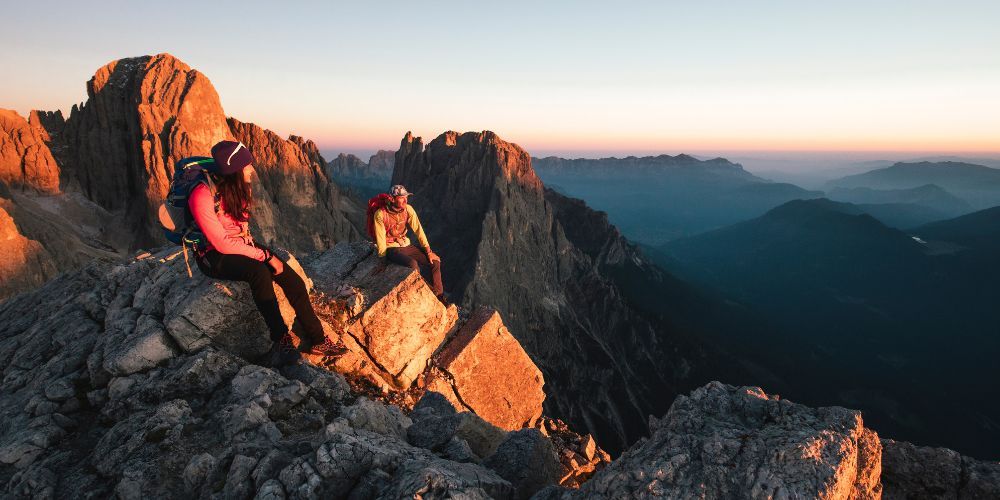
Dolomites hiking feels different in fall.
The trails no longer carry the same crowds as they do during the high season. They become quieter, and the tracks left by animals are easier to notice. You can stop, not to allow someone else to pass, but simply to observe the changing light on the Pale di San Martino.
The area offers a choice of walks along the valley floor, forest trails, panoramic routes at mid-altitude and more demanding mountain itineraries. Families can explore Val Canali, Primiero and the easier paths, while experienced hikers can seek greater elevation gains and mountain huts, always checking trail conditions, seasonal opening times and weather forecasts.
On clear days, October can feel like a cooler second summer—not because of the heat, but because it still allows many hours to be spent outdoors, without the faster pace of the central summer months.
Sporting events also reflect this relationship with the mountains. The Rosetta Verticale, which starts in San Martino di Castrozza and climbs toward Cima Rosetta, represents the more athletic side of the destination. Just a few kilometers below, during the same period, it is possible to walk unhurriedly through meadows and forests.
It is this range of different rhythms, rather than the sheer number of activities, that makes fall so compelling.
Deer, Forests and the Paneveggio Pale di San Martino Nature Park
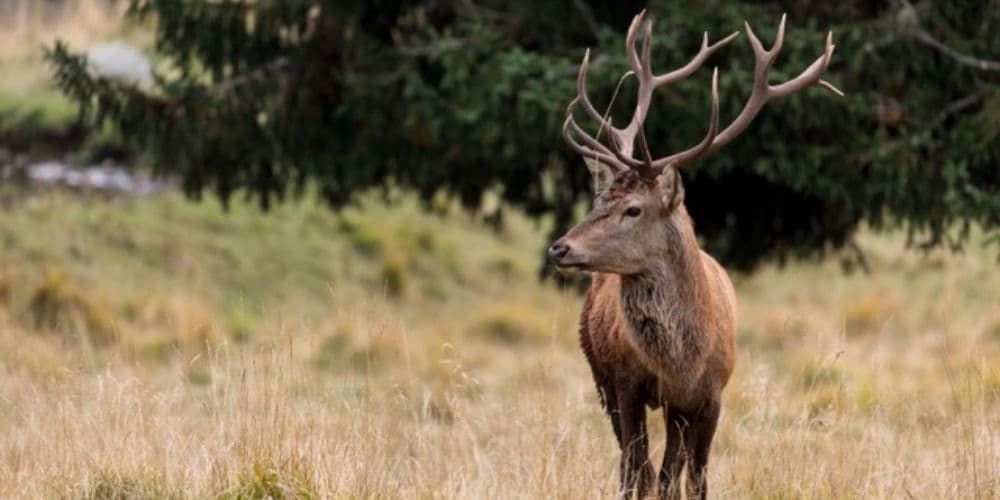
Ph. Alessandro Gruzza
San Martino di Castrozza, Primiero and Vanoi does more than overlook a beautiful natural landscape: it lies within a protected area.
The Paneveggio Pale di San Martino Nature Park encompasses remarkably diverse environments, from Dolomite walls and high plateaus to forests, pastures and wetlands. This variety supports a rich alpine ecosystem, with deer, roe deer and chamois, as well as marmots and numerous species of mountain birds.
At the beginning of fall, the rutting calls of deer can become the soundtrack to the quietest hours of the day. There is no need to seek a close encounter. The presence of wildlife is often revealed indirectly: a call echoing through the forest, a hoofprint on the ground or a sudden movement glimpsed between the trees.
The wildlife area near the Paneveggio Visitor Center also makes it possible to observe deer in semi-natural conditions and learn more about their behavior and habitat.
Villa Welsperg provides another gateway to the biodiversity of the Nature Park. Its exhibition explores Val Canali, the Altopiano delle Pale, the Paneveggio Forest, the Lagorai mountain range and Vanoi, while a dedicated children’s trail transforms these environments into an experience of discovery.
Here, nature is not a backdrop to be consumed, but a living system to be understood with care and respect.
The Flavors of Fall, When Mountain Life Returns to the Valley
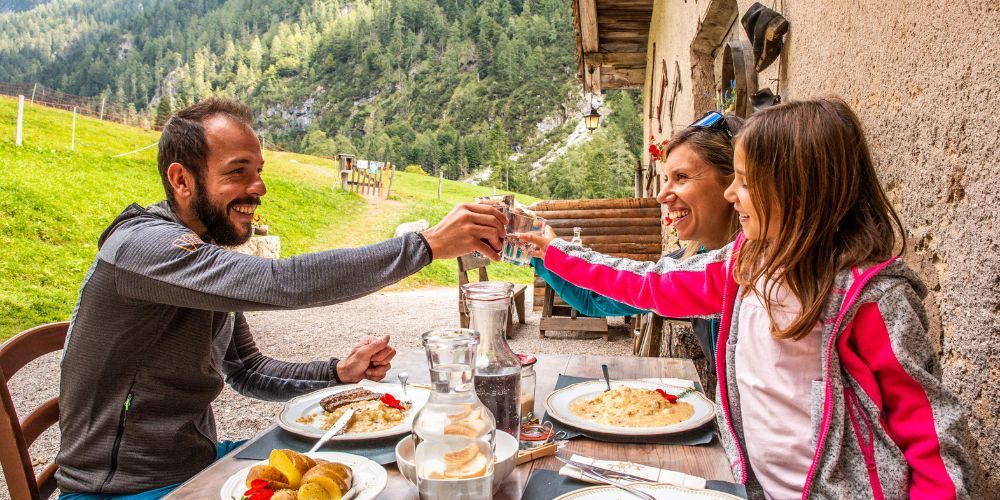
In San Martino di Castrozza, Primiero and Vanoi, fall also carries the aroma of dishes cooked slowly and with care, together with the cheerful clatter of plates in village inns as evening arrives.
September brings several events that offer a direct introduction to the area’s culinary culture. In Imèr, the Knödelfest turns canederli—traditional bread dumplings—into a gastronomic story, with sweet and savory recipes prepared in both traditional and contemporary ways.
In Vanoi, the Festa delle Brise e del Bosco places porcini mushrooms and forest culture at the center of the celebration. Toward the end of the month, the Gran Festa del Desmontegar marks the return to the valley of cattle, goats and horses after their summer in the alpine pastures. Decorated animals are accompanied by their farmers through the villages of Primiero.
The dates change from year to year, but the meaning of these celebrations remains closely connected to the passing of the seasons. For travelers interested in authentic fall festivals in Italy, their appeal lies in this close relationship between food, farming traditions, landscape and community.
Between one festival and the next, fall can also be found on the menus of restaurants, inns and mountain huts that remain open: canederli, alpine cheeses, cured meats, polenta, mushrooms and traditional desserts.
These food festivals in the Dolomites—and the local dishes served every day—make gastronomy another reason to travel. Food offers a way to understand the region through what it produces, preserves and passes down from one generation to the next.
Mountain Villages, Museums and Alpine Culture
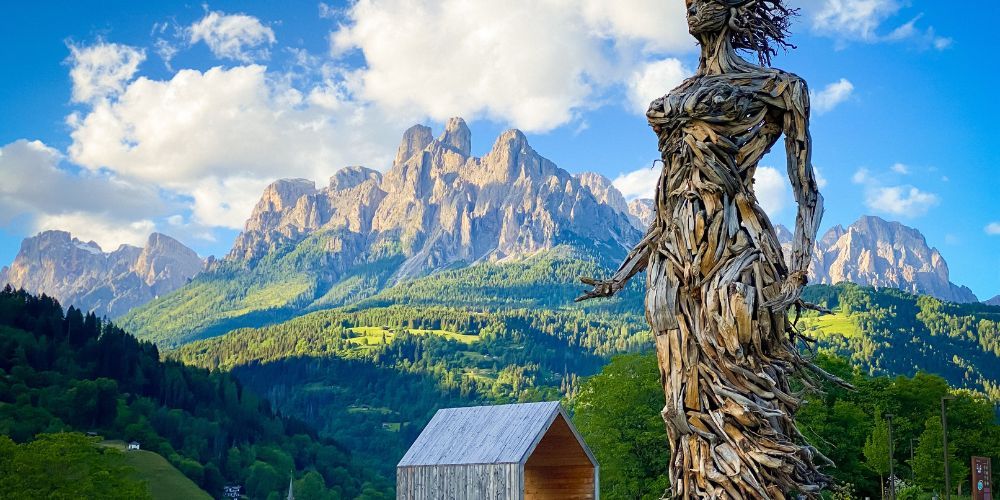
A good way to experience the area is to alternate time on the trails with visits to its villages and museums, perhaps taking advantage of days when the weather is less suitable for hiking.
Primiero and Vanoi preserve a network of small settlements where architecture, memory and everyday life remain closely connected to the landscape.
Mezzano It is among the most beautiful villages in Italy, here alleys, fountains, vegetable gardens and piles of wood transformed into installations tell a rural identity still recognizable and incredibly romantic. Along its alleys you will come across wonderful artistic piles, which underline its deep connection with wood and the surrounding nature. In Tonadico, frescoed façades lead toward Palazzo Scopoli, now home to the Casa del Cibo: a historic building that has become a place for exploring local products and the stories behind them.
In the green heart of Primiero, imposing and extraordinary, Guana stands out on the horizon, a land art work by the artist Martalar, a symbol of resilience. In Fiera di Primiero, the Palazzo delle Miniere recalls the valley’s mining past through an exhibition dedicated to its history. Farther east, the Ecomuseo del Vanoi does not confine local memory to a single building. Instead, it spreads it across landscapes, trails, traditional crafts and community spaces.
These places acquire a particular value in fall. They offer shelter on cooler days, but, more importantly, ensure that a journey through the Dolomites is not limited to contemplating the peaks.
The Dolomites are also the result of the ways in which generations of inhabitants have built, cultivated, farmed and interpreted the mountains.
A Mountain Destination Families Can Truly Experience
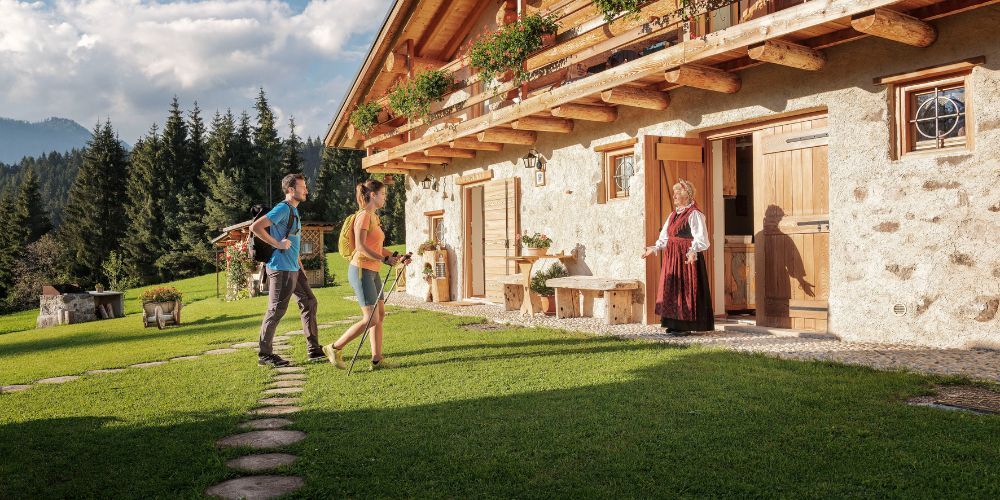
For a family, the quality of an alpine destination does not depend on the number of attractions it offers, but on the possibility of sharing the experience without forcing anyone’s pace.
In this area, easy walks, forest roads and themed trails make it possible to combine movement with discovery.
Val Canali offers accessible routes and several different environments within a relatively compact area. At Villa Welsperg, biodiversity is presented through trails and activities designed for children and young people. Elsewhere in the Nature Park, educational experiences and wildlife areas help families observe the forest with greater awareness.
In the villages, open-air museums, local legends, rural architecture and regional food add a narrative dimension to the journey, without requiring long distances or rigid plans.
This is precisely one of the advantages of fall: the day can remain simple. A walk through the leaves, a warm lunch, a short visit and enough time to stop in front of the Pale di San Martino as the light begins to change.
Why Fall Is the Best Season to Discover San Martino di Castrozza
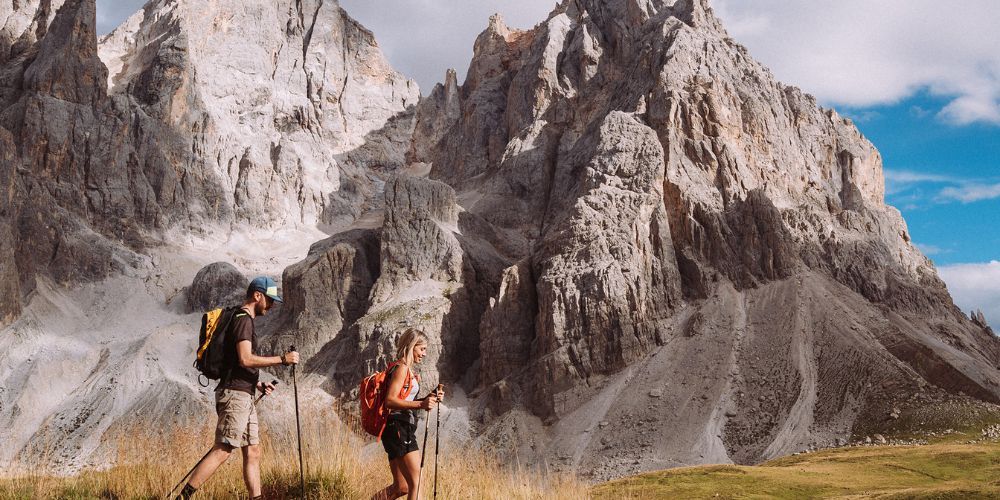
Calling one season “the best” is always subjective. Yet fall has a rare coherence here.
The colors are more intense, the trails less crowded, and the cooler air invites you to walk. September traditions bring animals, local products and people back into the valley. Nature, gastronomy and culture do not follow separate paths: they converge during the same brief period of the year.
Fall is also the season that restores a sense of proportion to the Dolomites. The Pale di San Martino remain monumental, but the journey is no longer dominated by the peaks alone.
What matters is also the forest, a road crossing the meadows, the sound of a cowbell, a painted façade or the steam rising from a plate served after a long walk. These details risk fading into the background during the busiest periods, but return to the foreground in fall.
Visiting San Martino di Castrozza in fall means experiencing the Dolomites at the precise moment when this place reveals what usually remains hidden.
About the author
Written on 07/09/2026
Chiarastella Campanelli
Dreamer, editor, beauty lover

Chiarastella Campanelli
Golden forests, silent trails, villages and end-of-season alpine traditions: in fall, San Martino di Castrozza reveals its hidden side