

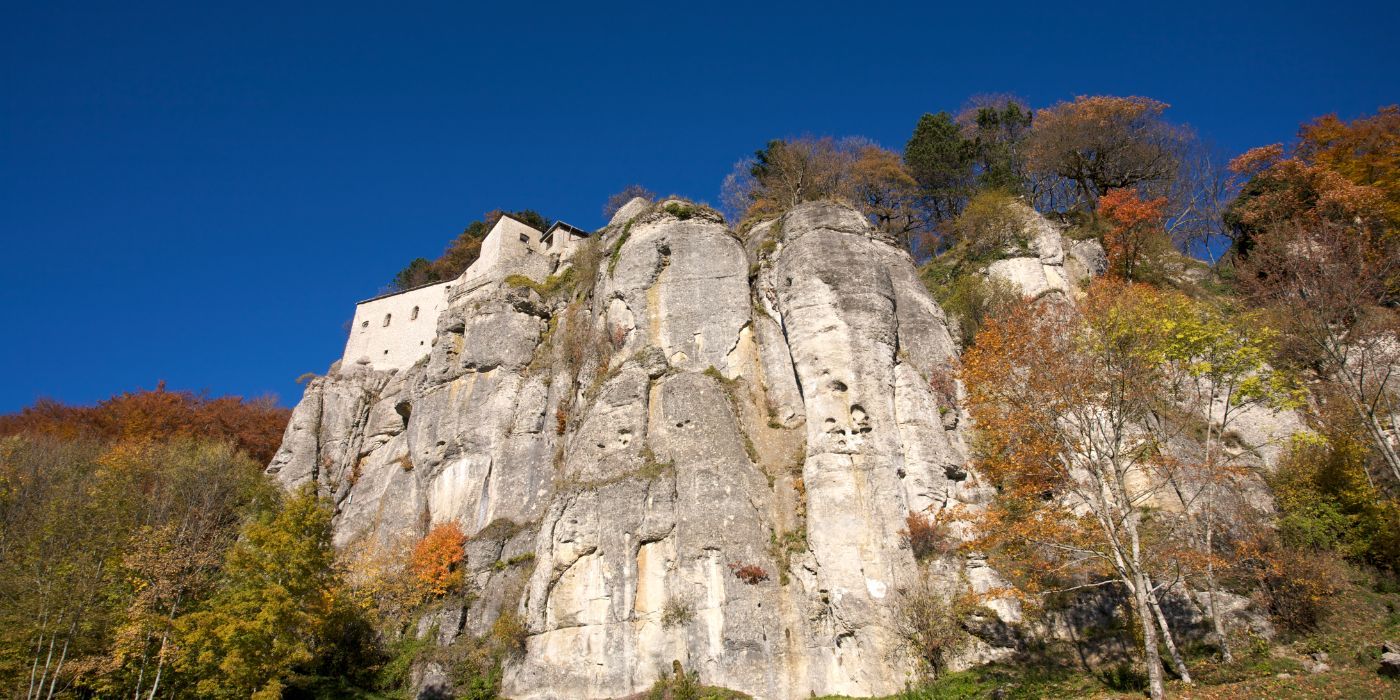

Tuscany is a land of iconic destinations and treasures waiting to be uncovered, of art cities and still unspoiled landscapes and it is here, indeed, that history and spirituality meet. At the foot of the Alpe di Catenaia mountains, on the border between the green forests of the Casentino and the Valtiberina, lies the Historic Way of St Francis. In a place of immense landscape value, as well as historical and artistic significance, this still little known path has its starting and ending poinst in two important places in the life of the Saint it is named after: the Sanctuary of La Verna and Castello di Montauto.
In the province of Arezzo, within the territory of the municipality of Subbiano, a charming village at the gateway to the Casentino, it is possible to retrace the very steps of the Saint, amid the silence of ancient woods and the solemnity of the places of faith. Setting out on this path means embarking on a true journey of the soul, through forgotten stories and testimonies of a centuries old history.
This journey is even more significant in 2026, as this year marks the 800th anniversary of the death of St. Francis, patron saint of Italy, which occurred in Assisi on October 4, 1226.

The Historic Way of St Francis, an authentic journey into the past
Walking routes in Italy are itineraries of great spiritual and religious value, meant to be experienced slowly, mostly on foot. They are often linked to ancient traditions such as transhumance, and even more frequently to the figure of a saint.
Among these, the Historic Way of St Francis stands out for having managed to retain all its authenticity, combined with its historical importance.
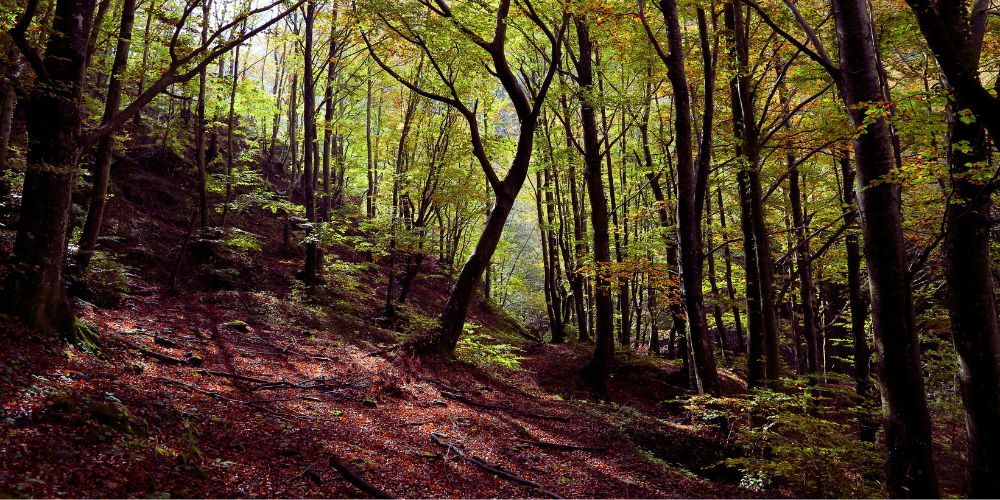
These are the places through which Saint Francis traveled, and tangible traces of his passage remain. They are also the same places where, many centuries later, Italian partisans fought, and indeed along the route, there are sites that still commemorate those events.
Whoever walks through these woods will certainly not encounter large crowds, but will discover a historical and spiritual legacy of absolute importance.
Listen to the podcast version of the article with the voice of Monna Lisa & Leonardo
The Historic Way of St Francis and the St Francis' Way: the differences
It's worth clarifying, at this point, that in Italy there are two routes dedicated to Saint Francis, and they also have very similar names. Those visiting central Italy for the first time may therefore be confused, but the two paths are in fact very different from one another.
The Historic Way of St Francis lies entirely in Tuscany and connects the Sanctuary of La Verna with the Castle of Montauto, on the way to Assisi, on southern slopes of the Alpe di Catenaia. Eight hundred years after the death of the patron saint of Italy, which occurred on October 3, 1226, this route was reconstructed on the basis of documents and traditions in order to retrace the true St Francis' pilgrimage in Italy. The limited presence of accommodation facilities and signage offers a more intimate experience, closer to the one of the ancient pilgrims, for a route that has its roots in the memory and identity of the territory.
The Saint Francis' way, on the other hand, is a longer route which, with three different starting points in Florence, Rimini, and La Verna, reaches Rome passing through Assisi, and therefore crosses four regions. Maps, signage, and accommodation facilities make the Saint Francis's a more accessible and contemporary route, but sometimes also a more crowded one.
These two itineraries overlap only in a small section, as Saint Francis's way does not cross the Alpe di Catenaia in the territory of Subbiano.
Along the way, art, beauty, and remembrances of St Francis' life
Since the very beginning, the Historic Way of St Francis gives you the emotion of retracing the same steps as the Saint.
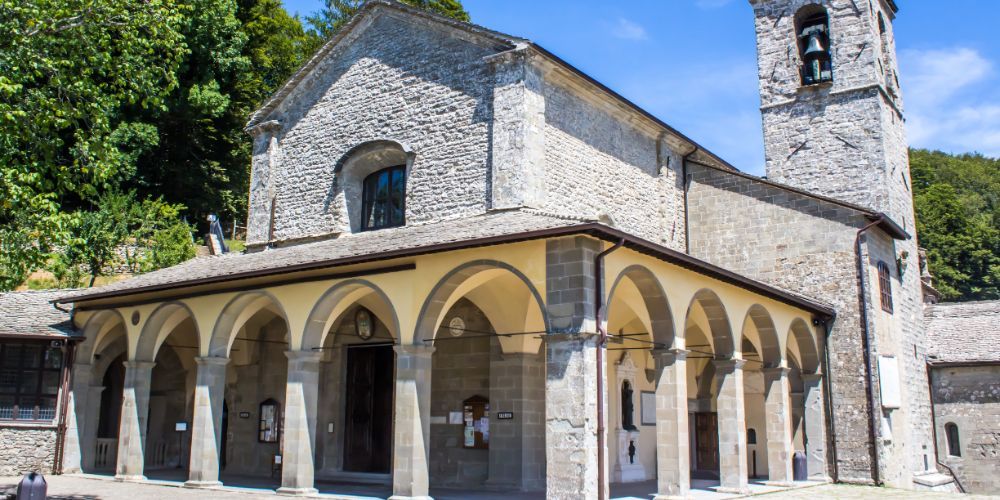
In September 1224 Saint Francis was in fact on Mount La Verna, and here, on September 17 he received the stigmata. Today, the Sanctuary of La Verna stands out as a place of peace and prayers, also rich in art and history.
This place, famous for guarding St Francis’ vest, also hosts a museum in the great XV century halls. A huge number of terracotta by the great Florentine artist Andrea della Robbia are kept here, together with artworks, documents and the fascinating convent pharmacy.
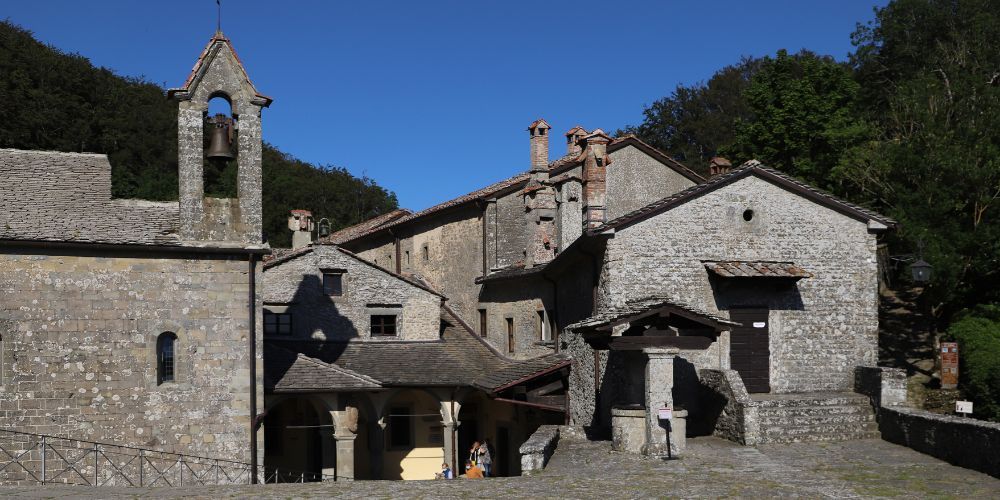
A few kilometers away, there’s another must-see, the Hermitage of La Casella. After leaving La Verna to set out on what he knew it was going to be his last journey toward Assisi, Saint Francis stopped to say goodbye to the Mountain in the place where today there’s a small chapel made in stone.
According to the chronicles, it was built at the Saint’s own request.
The Appennines' landscapes, between faith and history
Back then, as it is today, this is a journey going through a territory of great beauty that includes the landscapes of Monte Castello, and the fountain of Fonti del Baregno. Here, among the meadows, the memory of the Resistance during WWII is still kept alive by the locals.
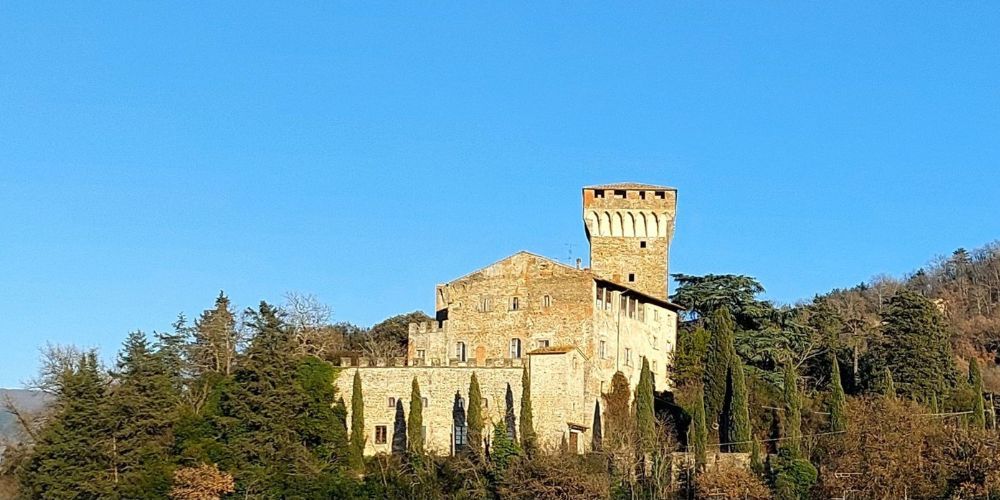
The Castle of Montauto marks the final point of the Way. Saint Francis stopped several times here, and in 1203 he donated to Alberto II Barbolani, the lord of the castle, his vest that was brought to La Verna after some time.
The building cannot be visited inside, but the site is beautiful, with stunning views and is also only about fifteen kilometers from the charming village of Subbiano, an ideal conclusion to a unique journey.
Much more than a mere strategic point, Subbiano is itself a guardian of authentic values and of a long past whose roots go back to Etruscan times, making it part of an extraordinary heritage.
An itinerary to discover the Historic Way of St Francis
Taking the time to get to know an extraordinary territory is an experience not to be missed. If you don't know where to start and are looking for a suggestion, here is a possible five day itinerary, with short stages that allow you to enjoy the route step by step.
Day 1: Sanctuary of La Verna to Hermitage of La Casella. From the place of the stigmata, the route continues for about 8 km through silent forests to the Hermitage of La Casella. Here there is a bivouac without electricity but with water, where you can spend the night if you have a sleeping bag.
Day 2: Hermitage of La Casella to Monte Castello. About 7,5 km separate the hermitage from Monte Castello. Here the route alternates between woods and beautiful views, from one of the highest points of the entire path.
Day 3: Monte Castello to Fonte al Baregno. This stage is the shortes; its length is a little less than 4 Km and it ends at a historic site known to locals, once used by pilgrims to stock up on water. Nearby there is a small agriturismo where you can stop.
Day 4: Fonte al Baregno to Castle of Montauto. A short stage of 12 km that descends along the slopes of the Alpe di Catenaia to reach the ancient castle and the nearby tabernacle of Saint Francis. Here you can spend the night in one of the small agriturismi in the area.
Day 5: Castle of Montauto to Subbiano. From the castle, the route continues downhill for about another 12 km, returning to the town of Subbiano. A natural conclusion to the journey on the Historic Way of St Francis, this welcoming village has always been a crossroads between the mountains and the valley.
Practical tips before setting out
Although it is not a tourist route and therefore not always well signposted, the Historic Way of St Francis remains easily accessible. The CAI trail 50, a map issued by the Italian Alpine Club, is an excellent reference point for finding your way more easily.
Walking through the woods while listening to the sounds of nature is an experience to enjoy at any time of year, but summer heat can put anyone to the test. It is therefore better to choose the spring and autumn months to discover the Historic Way of St Francis.
This route does not present particular difficulties, but footwear should be proper trekking shoes. Trekking poles are also very useful, despite a path that is never especially steep.
Before setting off again at each stage, it is important to stock up on water and food, as these may not always be available along the way.
And speaking of food, Tuscany boasts extraordinary culinary traditions. A walking journey is the perfect opportunity to discover the most authentic recipes of the area, among legumes, meats, cured meats, spices, and first courses. The choice is so vast that it is impossible to list every dish that should be tasted at least once.
About the author
Written on 11/02/2026
Paola Cirino
A content writer who can't help but travel. I'm also a food lover and very passionate about cinema.

Paola Cirino
The Historic Way of St Francis, a spiritual journey in the footsteps of the Saint of Assisi just outside Subbiano, the hidden gem of Tuscany