

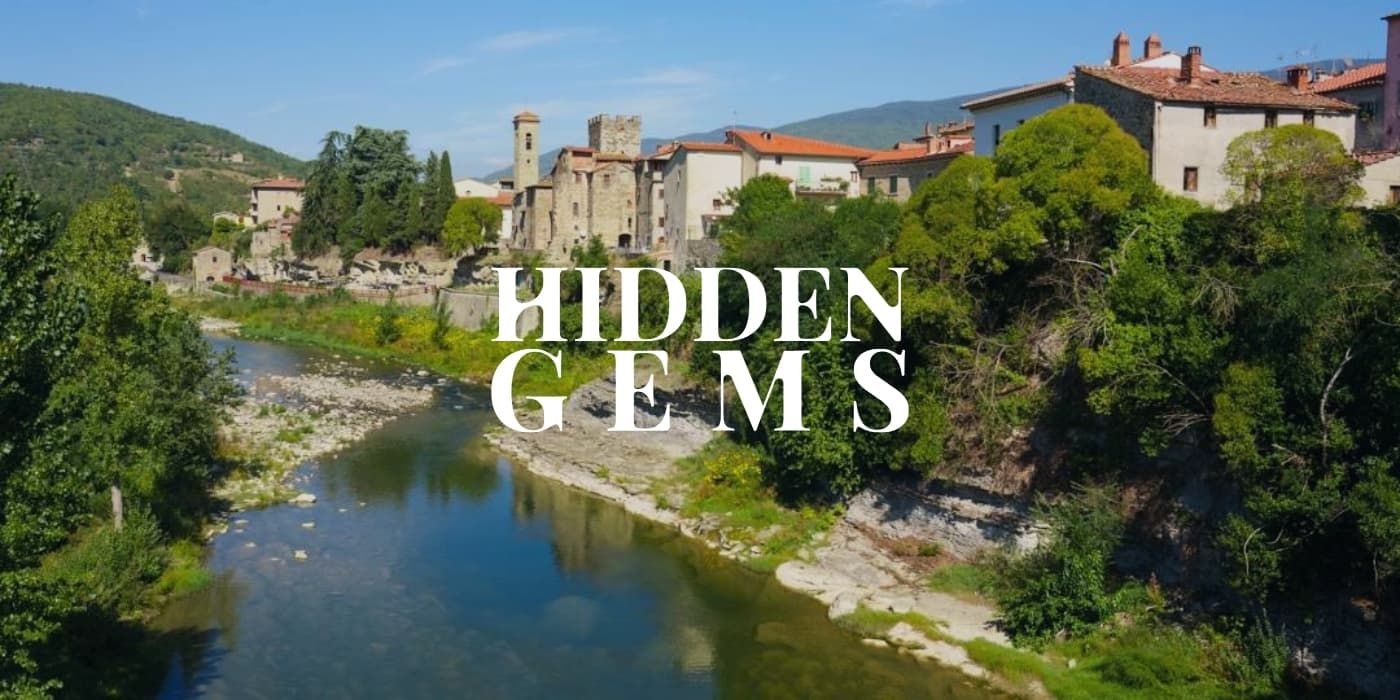

Subbiano is a small hidden gem among the artistic treasures of Arezzo and the green landscapes of Casentino. On the left bank of the Arno river, the village with just under six thousand five hundred inhabitants is not simply a diversion from the main journey, but a destination still waiting to be discovered, despite its very long history.
The traces of the Middle Ages are clear and important, but people have lived here since prehistoric times. The Etruscans left signs of their passage, then the Romans built a small town under the protection of the god Janus Bifrons, who still watches over the village from above on his golden banner. Visiting Subbiano means moving along renewed streets that preserve an ancient soul, discovering monuments rich in history and a territory to experience in every season, so beautiful they leave visitors speechless.

Subbiano: the ancient roots of a village rich in history
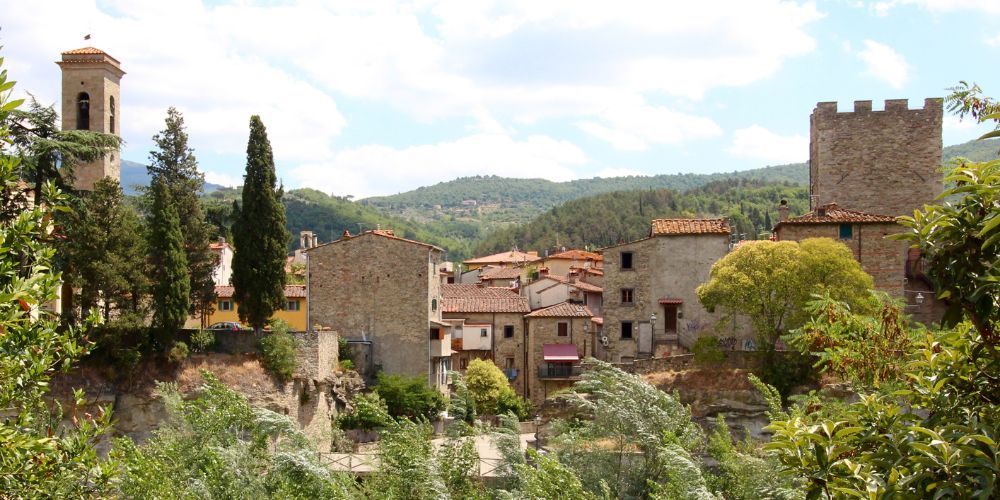
Between the sixth and ninth centuries a.C. the first permanent settlements formed here, thanks to fertile land and a strategic position near the Arno. Later, between the twelfth and fourteenth centuries, the importance of the medieval Castle of Subbiano grew, around which the village began to expand with walls, towers, houses and churches, to the point that Subbiano ended up being contested and changing hands several times.
As time passed, trade along the Arno's valley developed further and the settlement of Subbiano became enriched with villas and churches, until in 1861, with the unification of Italy, the village became part of the Kingdom of Italy.
During the Second World War Subbiano was targeted because of its position and therefore suffered some damage. For this reason, today the village is a fascinating mix of ancient and modern, where the beautiful and important historical testimonies coexist harmoniously with the most modern face of the village.
What to see in Subbiano: the old town
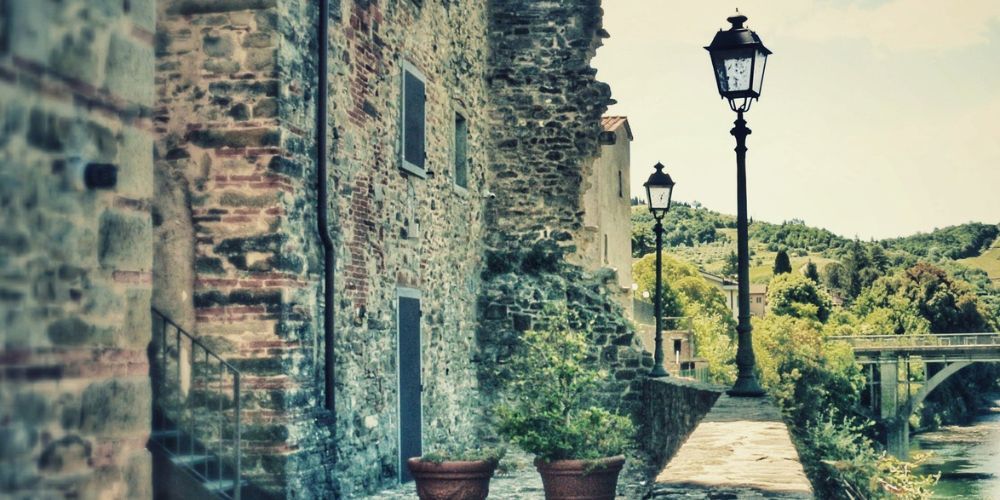
Anyone visiting Subbiano will be immediately captivated by the remains of the ancient castle built at the end of the ninth century. On the rocky spur washed by the Arno, which today appears even higher due to the lowering of the waters, the crenellated tower stands out, the most visible remnant of the ancient manor that today lives on as an exhibition space.
The castle is also bordered by a smaller watercourse, the underground Palbena stream, beyond which stand the thirteenth century church of Santa Maria della Visitazione with the Chapel of Our Lady of Lourdes.
In the recently redeveloped historic center of Subbiano there are noble residences that testify to the importance the village once held. Palazzo Ducci on Via dell'Arcipretura can be admired today in all the splendor of its eighteenth century restoration. Palazzo Subiani Ducci on Via Roma stands out for its imposing portal, while also on the same street is the Palazzo del Podestà, whose closed arches and now illegible inscriptions hint at an ancient past.
To learn more about the history of the village, the place to go is certainly the Second World War Museum, "Quelli della Karin" which houses memories and documents donated to the museum and a vast array of war relics discovered in the municipal area. Currently closed pending the start of restoration work on the building, the Documentation Center of the Archaeological Culture of Subbiano, contains the finds from Etruscan burials and terracotta artifacts.
Lastly, the water mills that can still be seen on the banks of the Arno, nestled among the houses, bear witness to the connection between the river and the village and are also a fascinating reminder of the life in the village in the past centuries.
Find out more about SubbianoAmong castles and mountains in the green heart of the Casentino
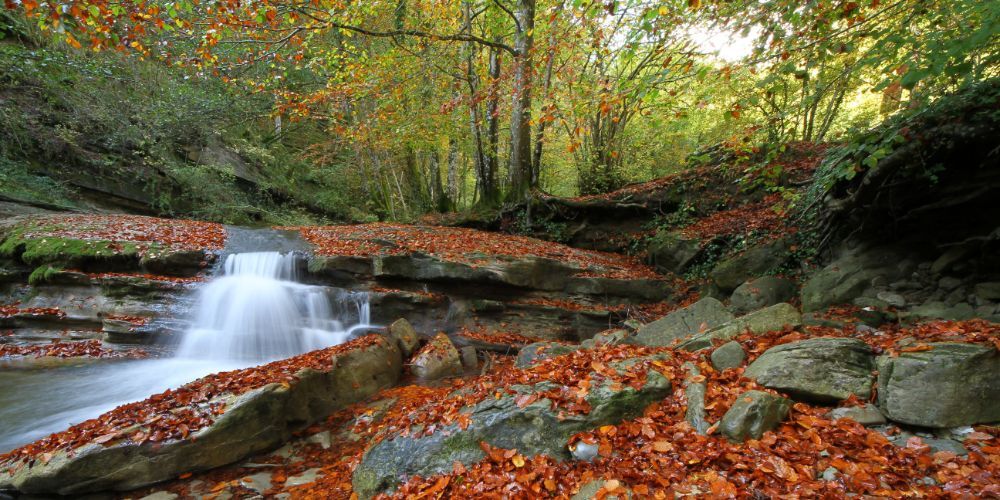
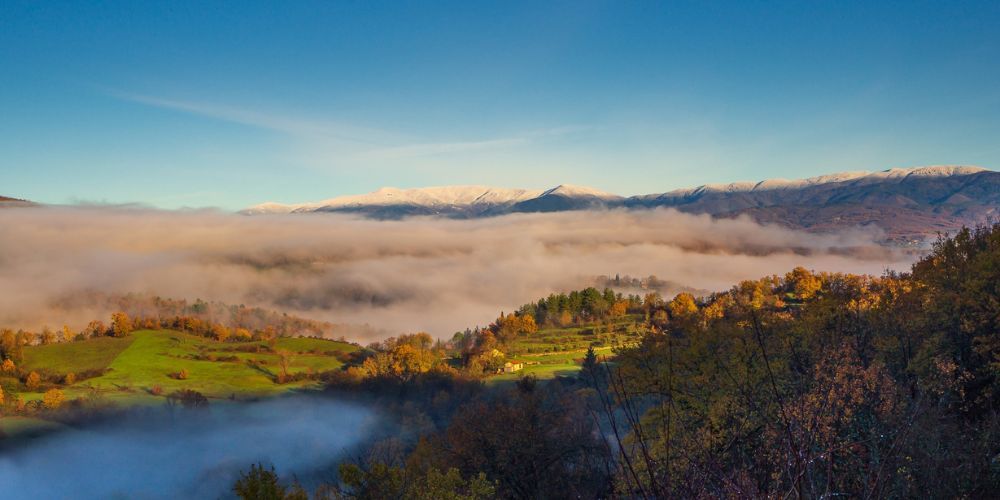
Subbiano is not only its historic center, however fascinating, because the village is located in the heart of an area of immense beauty. Nature, history and spirituality form the great heritage of the Casentino, which among woods, villages and medieval castles offers countless opportunities for excursions and day trips.
The Castle of Valenzano, for example, is a beautiful structure surrounded by greenery which today serves both as a hotel and as a venue for performances and music festivals, especially in summer. Above the settlement of the hamlet of Castelnuovo di Subbiano lies the Castle of Fioraia, both scenographic and imposing.
For a full immersion in nature, the Alpe di Catenaia is just a handful of kilometers from the center of Subbiano and is a perfect destination both in summer, with its forests and trekking trails, and in winter, when the often abundant snowfall gives these places a magical atmosphere.
The mountain, characterized first by chestnut groves and then by beech forests in the higher reaches, is crossed by the path known as Sentiero di San Francesco. This recently rediscovered trail has great historical and scenic value, but it is not the only one in the area.
At lower altitudes, there are other pilgrimage and communication routes with a distinguished past, including a stretch of the Via Romea Germanica, which connected northern Germany with Rome.
The most authentic flavors and traditions of Subbiano
Adding life to Subbiano is also the group of Flag Throwers of Subbiano, who perform precise historical reenactments of great cultural value and remarkable spectacle.
Among the most anticipated events, between late August and early September there is a huge End of Summer Festival, which in 2025 reached its fiftieth edition, culminating with the a feast dedicated to wine and called Festa dell'Uva. On this occasion, naturally linked to the rural world and the grape harvest, allegorical floats parade, created with the participation of the entire community, including the neighboring villages. The star, of course, is wine, one of the greatest points of pride in the gastronomic tradition of all Tuscany. On this occasion the historic center of the village becomes a true tasting itinerary where carefully selected wines are paired with local products.
Besides wine, it is certainly worth discovering the other delicacies of Subbiano. The gastronomy of the village is closely connected to that of Tuscany, rich in typical dishes such as soups made from local legumes or grains, homemade pasta, cured meats, cheeses and honey produced in the surrounding countryside, and recipes based on chestnuts from the local woods.
How to get to Subbiano
By car, driving along the A1 motorway, simply exit at the Arezzo tollbooth and follow the signs for Subbiano along the SR71 or the SR69. The first option is the more direct, but not the less scenic. Both routes offer the chance to enjoy the beauty of the landscapes of this corner of Tuscany, with small villages, gentle hills and green valleys.
By train, you can arrive from Florence, Rome and Bologna by stopping at the Arezzo station, from where you can take either a bus or the train of the Tuscan Railway Transport service.
For those arriving by plane, the closest airports are Florence Peretola and Pisa Galilei, both well connected to Arezzo via highway or railway.
About the author
Written on 28/11/2025
Chiarastella Campanelli
Dreamer, editor, beauty lover

Chiarastella Campanelli
Let's set off to discover Subbiano, the thousand-year-old village that overlooks the Arno River, surrounded by the lush nature of Casentino.