
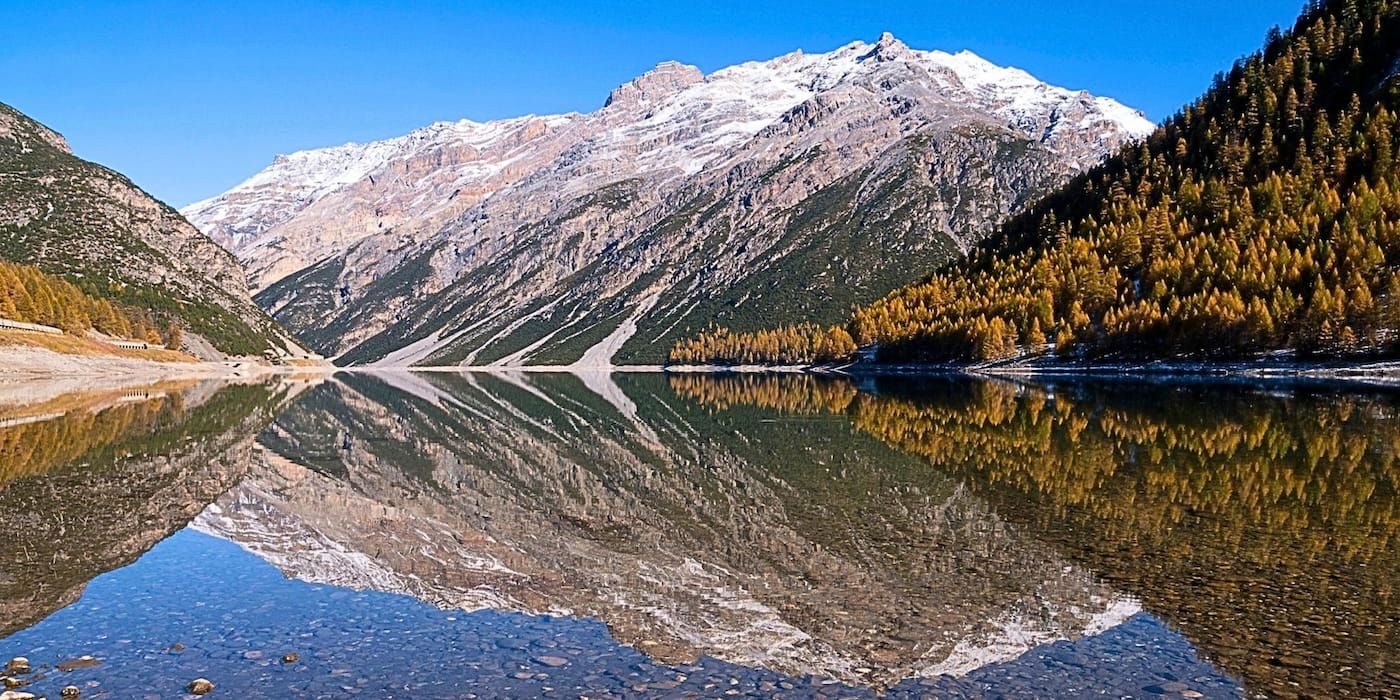

Who says we have to head to Switzerland to find a spectacular Alpine lake?
Italy is home to hidden Alpine lakes with crystal-clear waters, dramatic mountains, enchanting villages, and trails that reveal breathtaking views along the way. Some places are still relatively unknown, and having a setting like this without being surrounded by a crowd of people with their phones already out is a luxury worth enjoying.
Our 7-day itinerary starts in Livigno and winds its way through Lombardy, Trentino, and South Tyrol, in search of lakes that have little to envy compared to the most famous ones across the border.
Some are easy to reach, while others require a little more effort. But that’s part of the fun: leaving the well-trodden paths behind and discovering that Italy still has places that can genuinely surprise you.
The 7-day itinerary through Italy’s hidden Alpine lakes
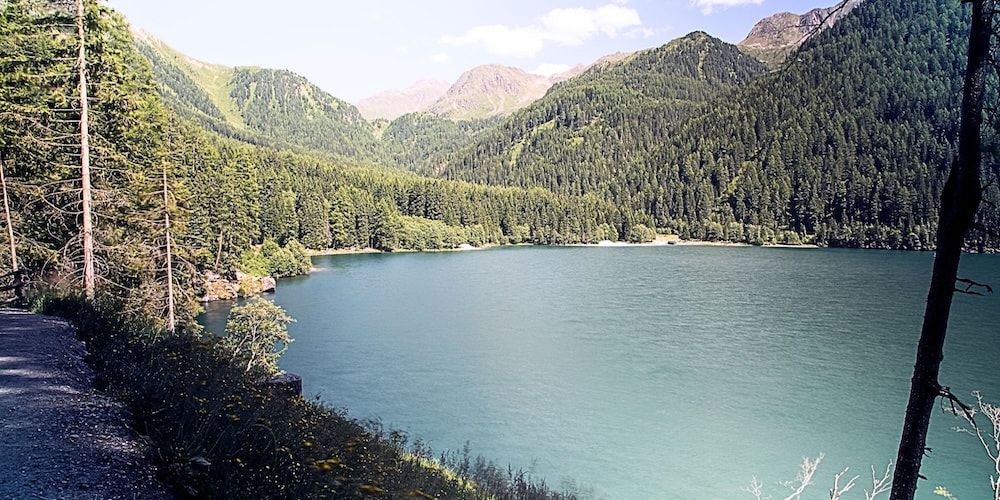
From Livigno to Anterselva: seven days, seven lakes, and above all, no rush. Our journey through some of Italy’s most beautiful hidden Alpine lakes will take us to magical places and spectacular landscapes.
The best way to follow this itinerary is by car. Not to get there faster, but to have the freedom to stop whenever we want, change our plans if a village captures our attention, or take a break whenever a particularly beautiful view calls for it.
Our journey begins in Livigno, a Luminous Destination that has embraced its natural surroundings while promoting a more sustainable way of experiencing the mountains.
From here, we’ll head to the Cancano Lakes, leaving Valtellina behind as we make our way to Lake Avio. Then we’ll reach Lake Tovel in Trentino before heading into the heart of the Dolomites, with Lake Federa and Lake Landro. Our final stop will be Lake Anterselva in South Tyrol.
These seven lakes are all very different: some are easy to reach by car, while others require a walk or a proper hike. That’s why this shouldn’t be treated as a rigid schedule. We can choose where to stop and how far to walk, because the road itself is part of the experience. And there’s no reason to rush through it.
Day 1: Livigno, our first encounter with Italy’s Alpine lakes
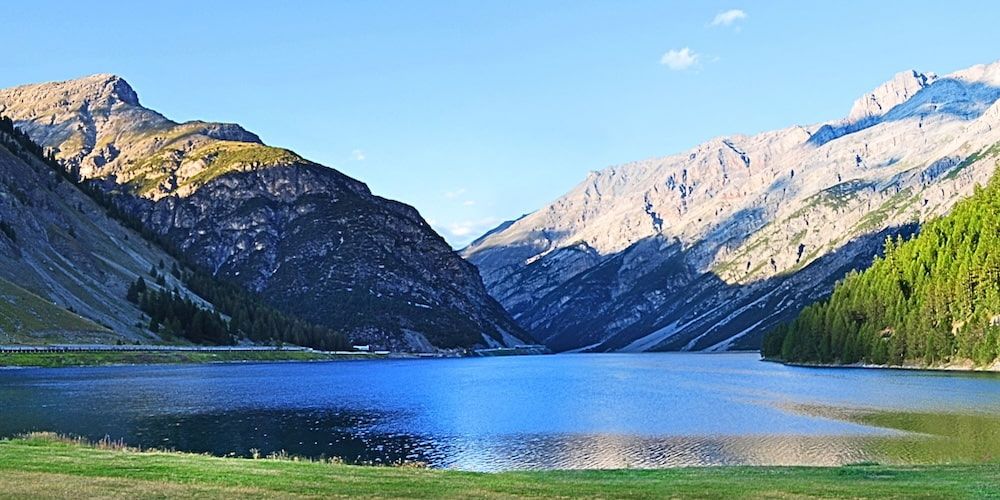
Our journey begins in Livigno, in Sondrio Province, at the heart of the Valtellina valley. The Lake of Livigno is just a few minutes from town, within Stelvio National Park, right on the border with Switzerland.
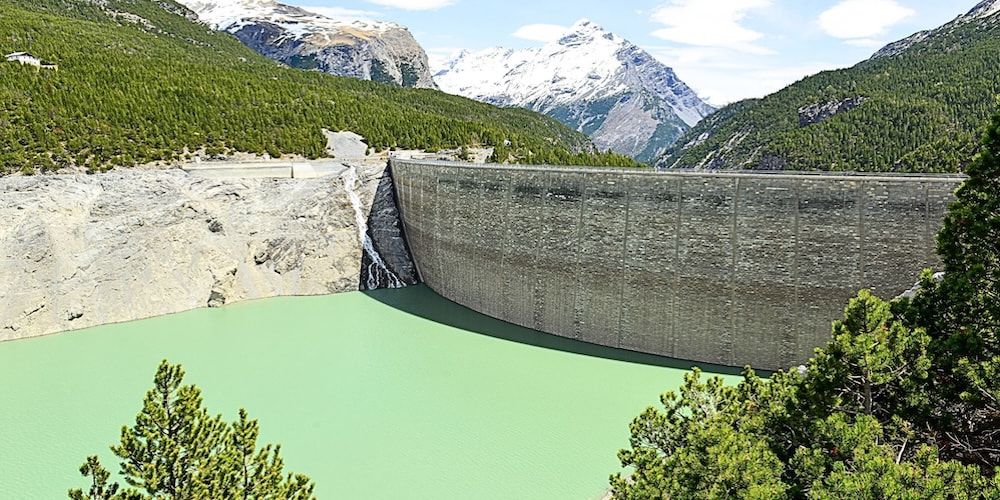
It’s a man-made lake, and its most distinctive feature is the large arch dam of Punt dal Gall, which closes off the valley to the north. Let’s take our time exploring it, following the road along the shoreline and stopping wherever the mountains open up to a fantastic panorama.
In summer, if we want to fully immerse ourselves in this beautiful setting, we can hop aboard a kayak, pedal boat, or rowboat and explore the lake, making our way to the Floating Island, a small floating wooden platform where we can stop for a refreshing break on the water.
As well as being our starting point, Livigno is also one of the Luminous Destinations 2026, a recognition that highlights its commitment to making tourism more sustainable and promoting the destination throughout the year. This approach can also be seen in its transportation system, with a free bus service that makes it easy to get around the different areas of the town and valley.
What to see and do at Lake Livigno:
- Take a walk along the lakeshore, stopping at scenic viewpoints;
- Try some water sports in summer;
- Visit Punt dal Gall, the dam that marks the end of the lake.
Day 2: on the Road to the Cancano Lakes
From Livigno, we head towards Passo d’Eira and drive through Trepalle before reaching Passo Foscagno. From there, we descend towards Valdidentro and continue to Isolaccia, where we take the road leading to the Torri di Fraele and the Cancano Lakes.
The journey itself offers several beautiful views of the Valtellina mountains, so there’s no need to rush to reach our destination.
The Cancano Lakes are two large artificial reservoirs located at around 1,900 meters above sea level in the Valdidentro area.
The first one we come across is Lake Cancano itself, followed by Lake San Giacomo. Together, they form one of the most hidden and scenic corners of Alta Valtellina. The surrounding mountains and the Torri di Fraele, ancient medieval fortifications rising above the valley, make the landscape even more distinctive.
Once we arrive, we can follow the road along the lakes, stop whenever the view catches our eye and take our time deciding where to get out of the car. The emerald-green water and mountains all around us do the rest. And after the drive from Livigno, a walk along the lake is just what we need to enjoy this wonderful scenery.
What to see and do at the Cancano Lakes:
- Follow the scenic road along the lakes;
- Stop at the Torri di Fraele to enjoy the views.
Day 3: Lake Avio, in the wildest heart of the Adamello
After the emerald waters of Cancano, let’s leave the scenic roads of Alta Valtellina and, still in Lombardy, make our way to Val Camonica and the small mountain town of Temù, at the foot of the Adamello massif.
This is where the more adventurous part of our third day begins: we leave the car at Malga Caldea, lace up our hiking boots and hit CAI Trail 1, which takes us to Lake Avio in about an hour.
At nearly 1,900 meters above sea level, the lake is naturally formed but was later expanded with a dam. The real spectacle lies all around it: waterfalls, streams, granite cliffs and a glacier-carved valley make this a wild and striking corner of the Adamello.
Once we arrive, we can take a break along the shore or keep hiking toward Rifugio Garibaldi, one of the Adamello’s historic mountain huts, where the views over the valley open up even further. If we still have some energy left, the trail continues to Lake Benedetto, adding another stretch of rugged mountain scenery to our itinerary.
What to see and do at Lake Avio:
- Hike CAI Trail 1 from Malga Caldea to the lake;
- Stop at Rifugio Garibaldi to take in the views over the valley;
- Hike to Lake Benedetto.
Day 4: Lake Tovel, the lake that once ran red
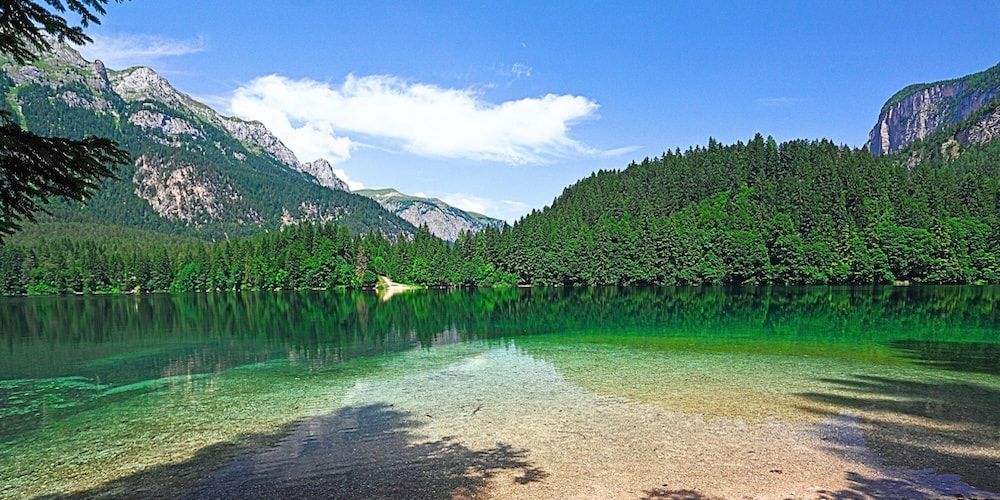
It’s time to leave Lombardy behind and head into Trentino’s Val di Non. From Temù, we cross the mountains to Tuenno, where a scenic road winds for about 7 miles through Val di Tovel before reaching the lake.
Lake Tovel sits at nearly 1,200 meters above sea level, surrounded by forests and the peaks of the Brenta Dolomites. It is best known for a phenomenon that once turned its waters red: until the 1960s, an alga called Tovellia sanguinea was responsible for the distinctive color, which no longer occurs today.
Today, the best way to experience the lake is by following the trail around its shores, an easy route that is mostly flat. Along the way, we can take in the white beaches, walk through the forest and then find ourselves back by the water, with the mountains rising in the background.
The full loop takes about an hour and a half, but there’s no need to rush. We can easily make the walk longer with a picnic or a visit to the Casa del Parco Lago Rosso, a visitor center dedicated to the history of the lake.
What to see and do at Lake Tovel:
- Walk the loop trail around the lake;
- Visit the Casa del Parco Lago Rosso.
Day 5: Lake Federa, a hidden wonder just outside Cortina
The next stop takes us into the heart of the Dolomites, almost as far as Cortina d’Ampezzo, on one of the longest stretches of our itinerary through Italy’s hidden Alpine lakes.
To reach Lake Federa, however, we have to leave the road behind and continue on foot. The trail starts near Lake Pianozes and winds through the Federa Forest along the Gores de Federa trail, passing through water-carved gorges, waterfalls, streams, and suspension bridges over the Ru Federa stream.
After about an hour and a half in this wonderfully wild and enchanting setting, the forest begins to open up and we reach Malga Federa, where the larches give way to meadows and the mountains surrounding the Ampezzo basin. A little farther along, Lake Federa finally comes into view, next to the Croda da Lago Refuge, with Becco di Mezzodì reflected in its waters.
At this point, a break at the refuge is a must. Lake Federa is the perfect place to sit down and slow the pace, finally taking in one of the most beautiful and secluded landscapes in the Dolomites.
What to see and do at Lake Federa:
- Follow the Gores de Federa trail through gorges, waterfalls, and suspension bridges;
- Reach the lake and the Croda da Lago Refuge.
Day 6: Lake Landro, the peaceful side of the Dolomites
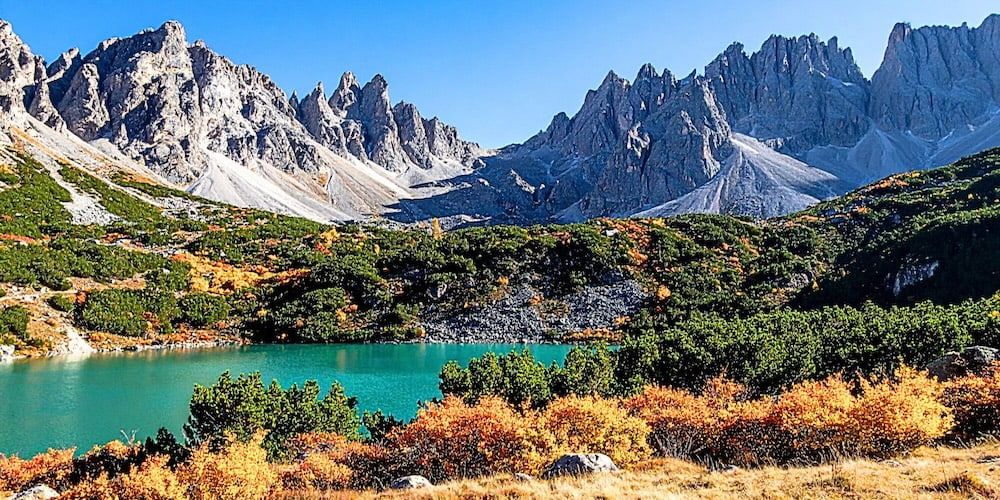
From Cortina d’Ampezzo, we follow the road over Cimabanche Pass and through the Landro Valley to Dobbiaco. It’s another particularly scenic stretch of our journey, with mountain views accompanying us along the way and the Tre Cime di Lavaredo appearing in the background at several points.
Right along this road, we come across Lake Landro, at an elevation of more than 1,400 meters and within the Tre Cime Nature Park. It’s one of those lakes that is perfect for an impromptu stop. We park, walk down to the shore, and find ourselves looking out over surprisingly clear, shallow water ranging from green to turquoise.
The water changes appearance with the light, while the Cristallo Group and the imposing mountains of the surrounding area rise in the background. A trail also starts from the lake toward Monte Piana, where we can find trenches, tunnels, and military positions dating back to the fighting of World War I.
It’s a different kind of stop from the previous ones, simpler and more relaxed, and the perfect place to take a break before the final stop of our journey.
What to see and do at Lake Landro:
- Admire the lake’s clear waters and the views;
- Follow the trail toward Monte Piana to discover the remains and testimonies of World War I.
Day 7 — Lake Anterselva, the last surprise of our journey
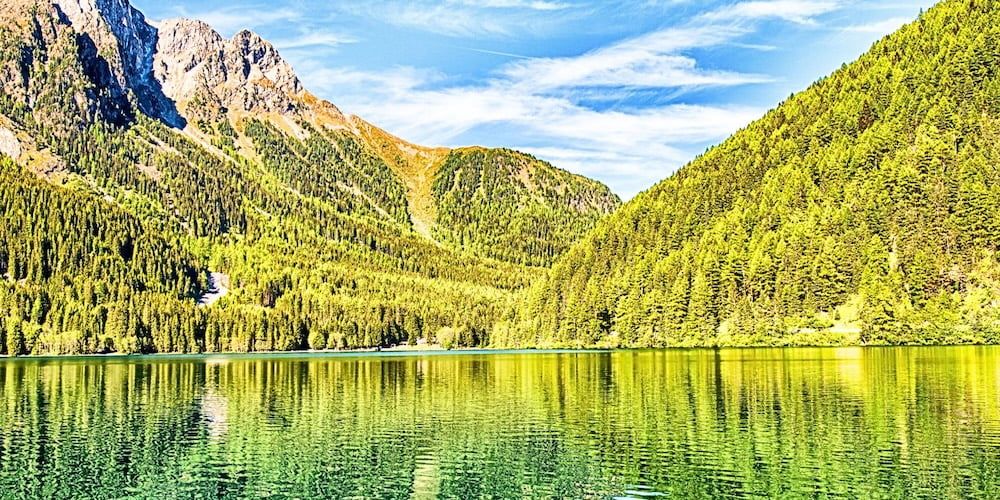
For six days, we’ve been chasing Italy’s hidden Alpine lakes, crossing valleys, winding along mountain roads, and lacing up our hiking boots to reach places that always had something different to offer. For our final stop, we head to the far end of the Anterselva Valley, beyond the village of Anterselva di Sopra.
Lake Anterselva lies in an area that still has a strong rural character, with mountain farms, meadows, and old mills. In Anterselva di Sopra, we can follow the Mill Trail along the Tränkabachl stream, passing reminders of the farming traditions that shaped life in the valley for generations.
Once we reach the lake, we can follow the easy trail around its shores. It’s more than just another scenic walk like the ones we’ve encountered along the way. The 2.1-mile trail features several information stations covering the area’s flora, fauna, and geology, including some particularly unusual details, from carnivorous plants to the tonalite rock of the Rieserferner Group.
And perhaps that’s exactly why Anterselva works so well as our final stop. After so many days spent searching for the perfect mountain view, Anterselva shows us something more authentic, a place where the beauty of nature still goes hand in hand with local traditions and culture.
What to see and do at Lake Anterselva:
- Follow the nature trail around the lake;
- Visit Anterselva di Sopra and walk the Mill Trail.
About the author
Written on 12/09/2026
Alessandro Savino
SEO Copywriter & web editor: I love transforming my passion for writing into engaging narratives, creatively and precisely exploring the beauty and complexity of our wonderful country.

Alessandro Savino
Untouched nature, emerald waters, quiet trails: from Livigno to Anterselva, discover a one-of-a-kind journey through Italy’s hidden Alpine lakes.