
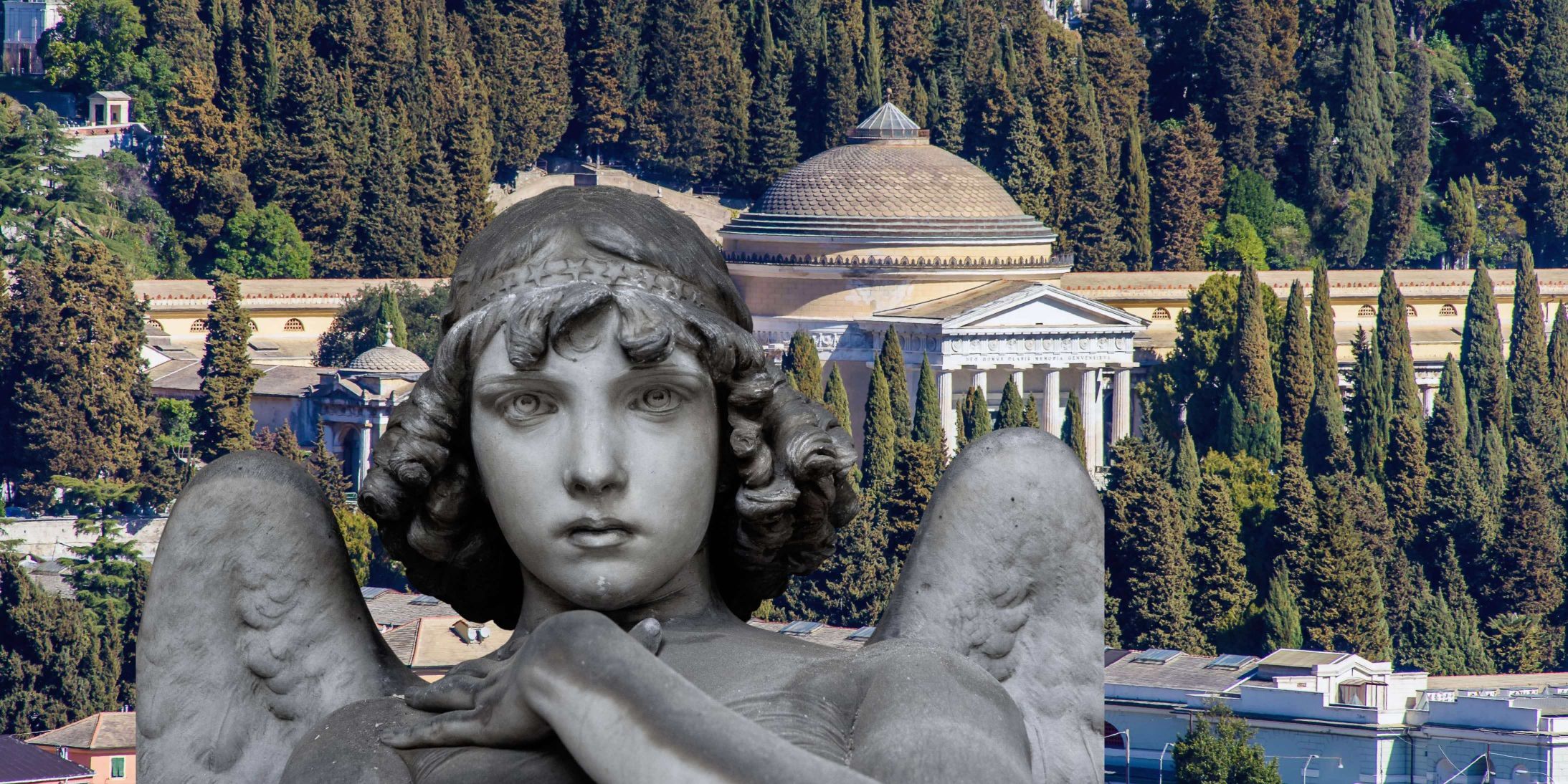

The Monumental Cemetery of Staglieno is a marble labyrinth where theatrical colonnades, cypress-lined avenues, and sculptures of startling realism make you half expect the figures to spring to life.
Ernest Hemingway described it as “one of the wonders of the world”, and he was far from the only celebrated traveller to fall under its spell. Yet beyond its romantic grandeur and faded splendour, this 19th-century masterpiece of funerary art also tells a story about Genoa and its ambitions.

Staglieno Monumental Cemetery, a European wonder
Nietzsche, Mark Twain, Empress Elisabeth of Austria, Guy de Maupassant, Joy Division: at different times and in their own ways, all have fallen under the spell of the Staglieno cemetery in Genoa.
This extraordinary complex feels like an open-air museum, where memory takes shape in marble, architecture becomes theatre and sculpture takes centre stage in a story spanning almost two centuries.
Along miles of grand neoclassical arcades and tree-lined avenues, mournful figures, angels and lifelike portraits tell stories of desire, love, grief and social standing. Genoa’s monumental cemetery is a portrait of the society that created it, from the splendour of the 19th century to the transformations of the 20th.
The best way to visit Staglieno is to take it section by section. Here are the key areas to know as you discover its most remarkable monuments.
- Lower Portico: the historic core, where Neoclassical heritage meets bourgeois realism, alongside works shaped by Symbolism and Art Nouveau.
- Historic Semicircular Portico: home to monumental tombs decorated with allegorical figures and symbolic motifs.
- Porticato Sant’Antonino and Porticato Montino: a demonstration of the evolution of Ligurian funerary sculpture in the years between the two world wars.
- Upper Portico and Pantheon: among the complex’s most striking spaces, inspired by classical architecture and dedicated to the memory of Genoa’s distinguished citizens.
- Boschetto Irregolare: a romantic stretch of greenery, with curving paths, mature trees, chapels and tombs nestled among the vegetation.
- Religious cemeteries: dedicated sections for different faith communities, including Jewish, Protestant, Anglican and Greek Orthodox communities.
- War memorials: places of remembrance for those who died in conflict, reflecting Staglieno’s ties to Italy’s national history.
Related story - Our guide to Genoa for 2026
More info on GenoaGenoa’s own Spoon River attracted famous visitors
Since it opened on 1 January 1851, Staglieno has gathered its own version of Spoon River among its arcades and leafy pathways, a realm of stories, faces and lives brought back into view by monumental tombs and family mausoleums.
Its mood is at once haunting and romantic, and it has enthralled some of the world’s most celebrated travellers and intellectuals.
Famous visitors included Anton Čechov, Evelyn Waugh and Oscar Wilde. Mark Twain wrote about the cemetery in The Innocents Abroad; Nietzsche apparently considered it the most beautiful in the world; Elisabeth of Austria, Sissi, is said to have sought inspiration there for the funerary monument to her son, Rudolf.
Even today, Staglieno continues to appear in art and popular culture. In 2015, Peter Hook, bassist with Joy Division, visited the Appiani tomb, whose image had become the cover artwork for Closer, the band’s final album with its original line-up.
Related story - Our Paganini-inspired tour in Genoa
Monteverde Angel and the other Famous sculptures in Staglieno
Faces, hands, the folds of a dress, the slightest hint of an expression: every detail is rendered with such extraordinary realism that the figures seem on the verge of movement.
The cemetery’s most iconic sculpture is perhaps the Angel on the Oneto tomb, copied and reproduced countless times. Created by Giulio Monteverde in 1882, the statue has an intense gaze, a melancholy expression and magnificent wings that droop towards the ground. Fun fact: David Beckham fans may recognise a strikingly similar figure tattooed on the former England captain’s right bicep.
Wander a little further through the galleries, and other hidden gems emerge: women captured in exquisite detail, scenes from everyday life, and deeply moving compositions exploring love, grief, and the human urge to leave a mark on the world. Here are six sculptures worth seeking out:
- The Peanut Seller – Campodonico tomb. Lorenzo Orengo immortalises Caterina Campodonico, a Genoese street vendor known for selling peanuts and other wares, in her everyday clothes and with the tools of her trade. Intimate and strikingly lifelike, the sculpture gives a woman from humble beginnings the monumental presence usually reserved for the great and the powerful.
- The Angel at the Helm – Carpaneto tomb. Giovanni Scanzi sculpted this angelic figure in 1886 as it steers a small boat. Intricate and quietly evocative, the composition suggests a final voyage and invites visitors to meditate on the passage from life to whatever lies beyond.
- The Ribaudo tomb - Onorato Toso created this monument in 1910; it features a female angel reclining on a sarcophagus, her wings resting loosely behind her and one hand raised to her face. It has also found an unexpected place in music history: an image of the sculpture was used on the cover of Joy Division’s single Love Will Tear Us Apart.
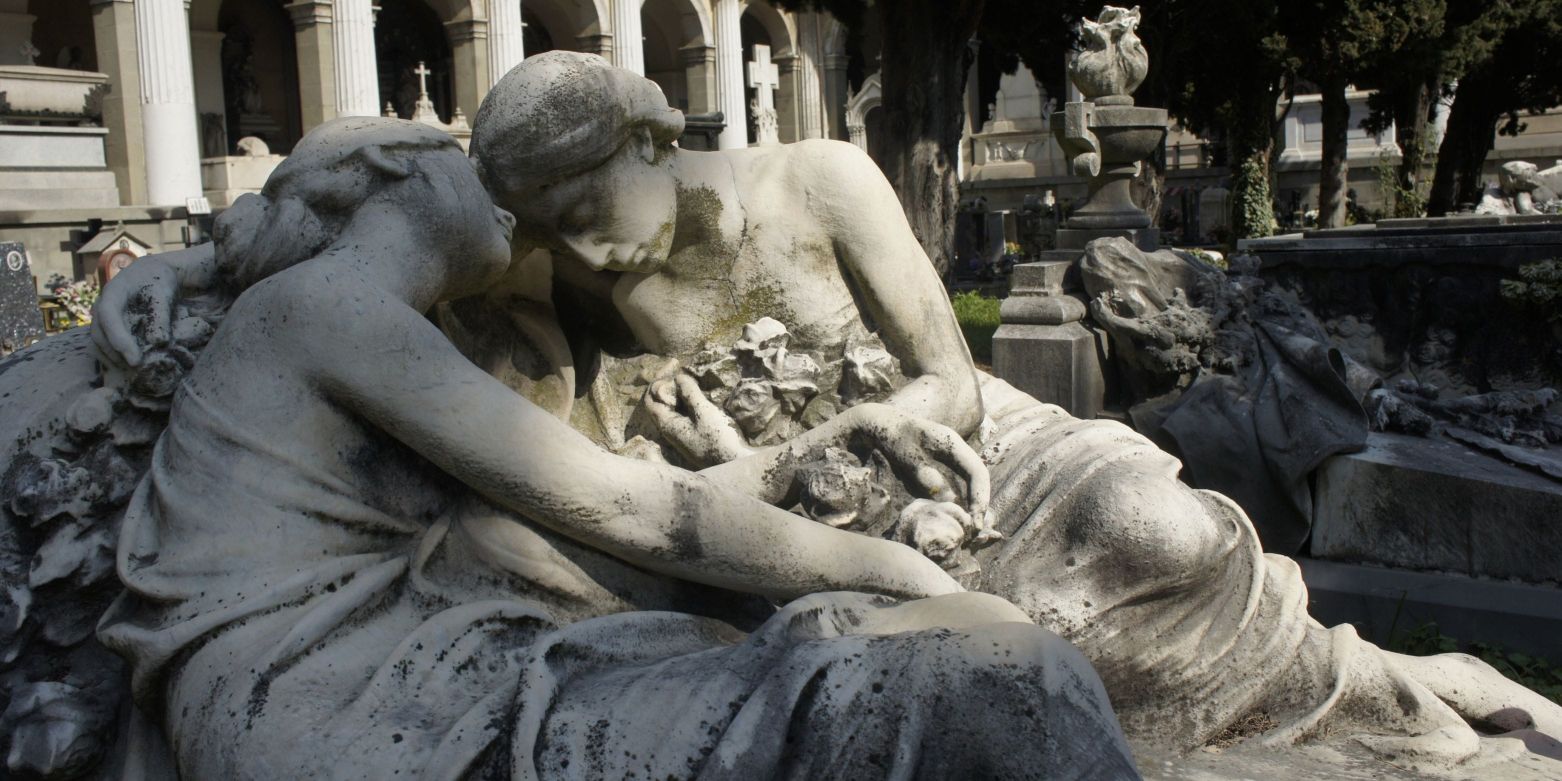
- The Pienovi monument - Sculpted by Giovanni Battista Villa in 1879, this intimate, almost theatrical scene depicts the young widow Virginia Aprile lifting the veil covering her husband, Raffaele Pienovi, in one final act of farewell.
- The Appiani tomb - Demetrio Paernio realised the monument in 1910 for the Appiani family; it gained international fame when its image appeared on the cover of Closer, Joy Division’s second album, released in 1980.
- The Caprile tomb - The Three Graces of classical mythology are shown dancing together in a composition that reflects on youth and its passing. Art Deco decorative elements meet a more geometric sculptural style.
Who is buried at Staglieno Monumental Cemetery
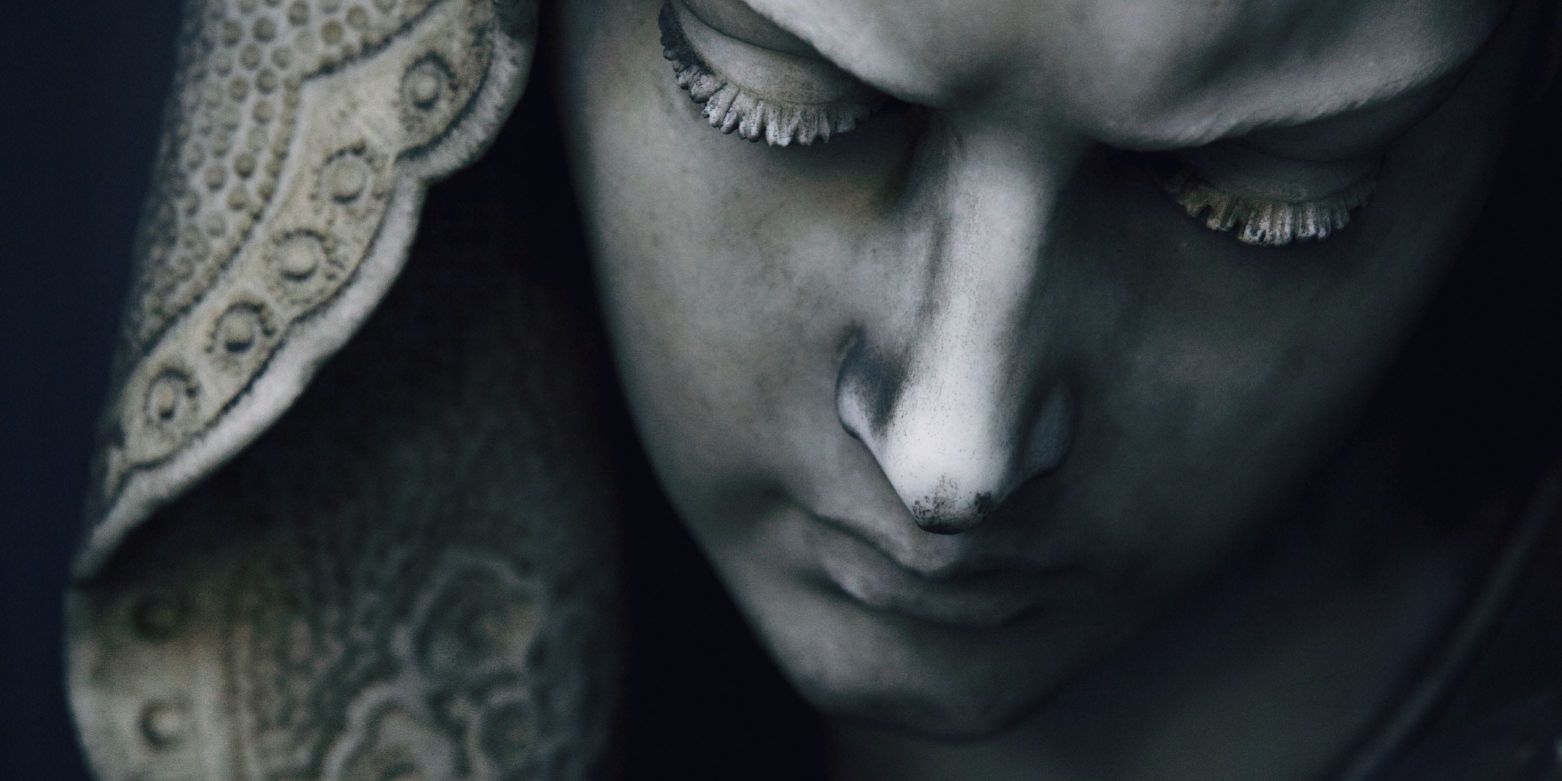
Staglieno is the final resting place of figures who have helped shape Italian and Genoese history and culture.
The cemetery holds Gilberto Govi, an icon of Ligurian dialect theatre, and Edoardo Sanguineti, the poet and intellectual associated with Italy’s neo-avant-garde movement. Fabrizio De André, the Genoese singer-songwriter whose music gave a voice to the outsiders, is buried in section 22.
Giuseppe Mazzini, a major protagonist in the Italian unification movement, lies in the mausoleum at Boschetto dei Mille.
Another notable name is Constance Lloyd, the Irish writer and wife of Oscar Wilde, who died in Genoa in 1898 and was buried in the cemetery’s multifaith section.
Yet, those laid to rest at Staglieno are only one part of the fascination. The sculptures themselves, often by leading artists and architects, offer a portrait of an era, and their styles, faces and elaborate details reveal the society that created them.
A tour of 19th- and 20th-century art, from Neoclassicism to Art Nouveau
@lorenzomaddalena_ È davvero assurdo nei prossimi video ve lo racconterò meglio con molte più informazioni a riguardo! Seguitemi per non perdervi tanti altri consigli su mete insolite e alternative
Il Respiro del Mare - Stefano Lentini
The evolution of funerary sculpture unfolds across the monuments of Staglieno’s historic quadrangle and upper arcades, from Neoclassicism to bourgeois realism and, eventually, Art Nouveau.
These works tell something of the changing Genoese society. Wealthy middle-class families commissioned elaborate tombs to honour their dead and cement their own social standing.
Lifelike portraits, painstakingly rendered clothing, and intimate family scenes reveal more than changing artistic styles. They are like a window onto the customs, values, and ambitions of 19th-century life.
Related story - How to spend 4 days in Genoa
Staglieno Romantic Grove
From the Pantheon, follow Viale Superiore Pontasso until you reach the so-called Boschetto Irregolare, an area quite different from the monumental geometry of the cemetery’s central complex.
This is Staglieno at its most romantic: winding paths follow the contours of the hillside, and centuries-old trees frame the chapels in a landscape reminiscent of the great cemeteries of northern Europe.
The Boschetto is also a place of remembrance for the Italian Risorgimento, the movement that led to Italy’s unification.
Buried here are patriots who took part in the independence campaigns, including Giuseppe Mazzini, whose mausoleum is marked by austere classical lines, and Michele Novaro, the composer who wrote the music for the Italian national anthem.
Among Europe’s Most Beautiful Cemeteries
Like Père-Lachaise in Paris, Vyšehrad Cemetery in Prague, and Glasnevin Cemetery in Dublin, Staglieno is part of the European Cemeteries Route, which the Council of Europe recognised as a Cultural Route in 2010.
The designation celebrates a shared European heritage that exceeds national borders and expresses the history, traditions and identity of its cities through the art of remembrance.
Far more than resting places, historic cemeteries are heritage sites in their own right, where sculpture, architecture, and symbolism trace society's evolution.
Seen in this contexts, Staglieno sheds light on Genoa’s past and the development of funerary art from the 19th into the 20th century.
How to Visit Staglieno Monumental Cemetery
You can explore Staglieno Monumental Cemetery independently or with a guide. To find your way among its arcades, chapels and monuments, consider following one of the suggested routes (which you can find in the leaflet). Choose a historical and artistic tour of the cemetery’s original section, a scenic walk through the Veilino Valley over the surrounding hillside, or a route through the Romantic Boschetto Irregolare.
The City of Genoa has also organised a series of themed itineraries, running until 30 December 2026, that explore specific aspects of Staglieno’s heritage, from its art and history to its cultural traditions and its female figures. Some are designed specifically for children.
Special events like Staglieno Days, Rolli Days and European Cemetery Week feature expert-led tours, talks, music, theatre and historical re-enactments.
The tourist information point at the entrance on the florists’ side provides maps, visitor materials and practical information.
Fun facts about the Staglieno Cemetery in Genoa - FAQs
How long does it take to visit Staglieno Monumental Cemetery?
It depends on the kind of experience you’re after, whether it's a general walk around the main monuments or a structured themed itinerary. The City of Genoa organises some guided tours that last around 90 minutes.
How can you join a guided tour of Staglieno Monumental Cemetery?
Guided visits and special events take place throughout the year, including Staglieno Days, a cultural programme of tours and events dedicated to the cemetery. For upcoming dates, programme details and booking information, visit Visit Genoa or the official Staglieno Monumental Cemetery website.
About the author
Written on 27/10/2026
Lorena Calise
I'm a content writer for magazines and websites. I also explore Italy through my writing for Visit Italy and Visit Naples.

Lorena Calise
Spoon River atmospheres and sculptures turned rock icons: welcome to Staglieno, Genoa’s mysterious monumental cemetery.