
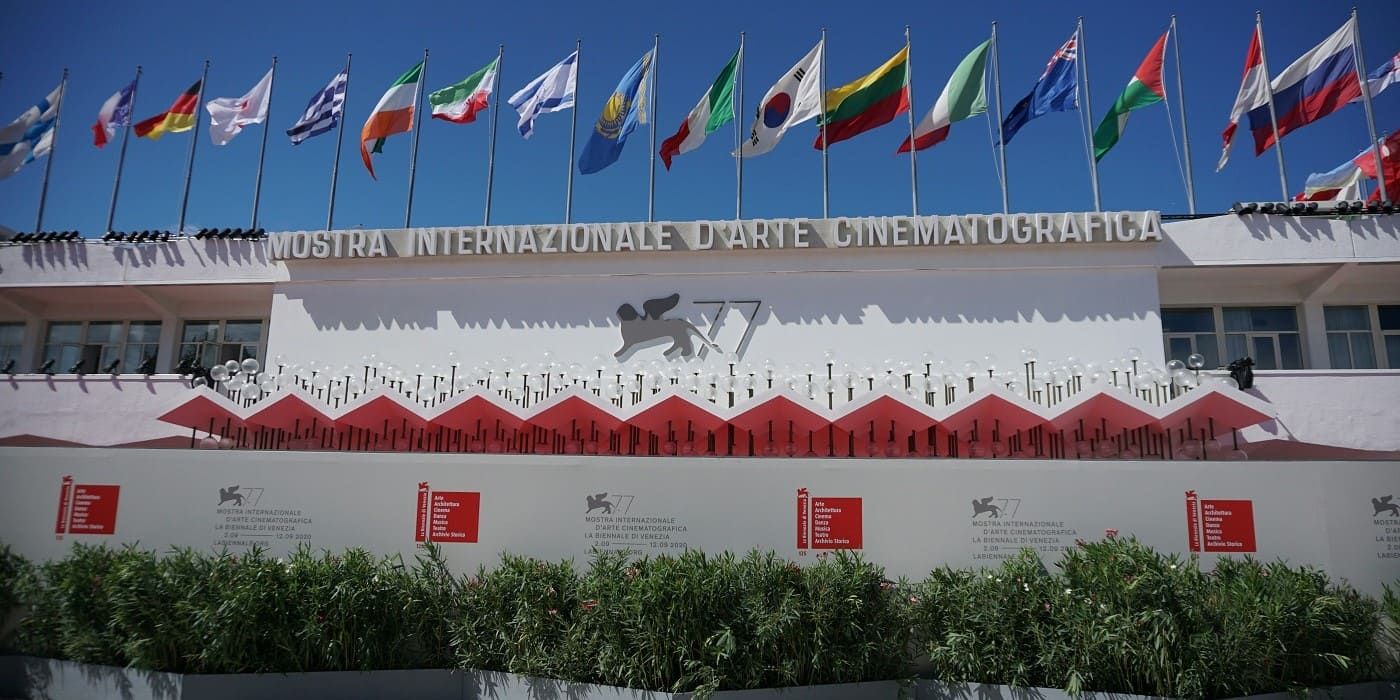
The Venice Film Festival is the oldest and most prestigious film event in the world. The magic of a legendary festival could only take hold in one of the most beautiful and evocative cities anyone can visit. The Serenissima is the world capital of the seventh art, the place where stars land, where the year's most anticipated and interesting films are seen, and where the awards that open the awards season are handed out.
At the Lido, arthouse cinema and glamour arrive together, along with new aesthetic and expressive trends and the beauty looks that anticipate fashion. Every year the Lagoon hosts the protagonists of cinema, from already established actors and masters to the youngest and most innovative talents. But when was the Festival born? Why is it so important? And can the general public — from film enthusiasts to tourists visiting Venice — access the festival?
The Impact of the Venice Film Festival
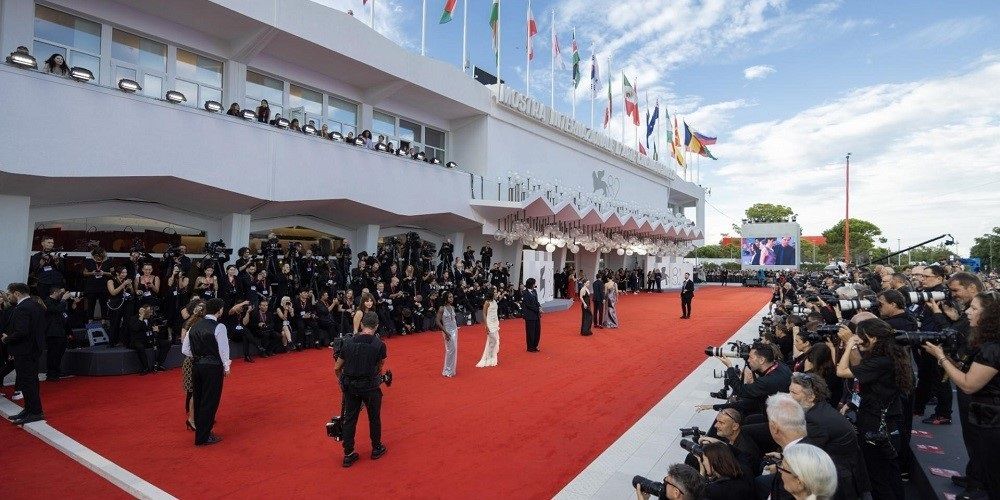
La Biennale di Venezia
The Venice Film Festival is a fundamental platform for the diffusion and promotion of auteur cinema. Since its earliest editions, the festival has legitimised cinema as an art form and not merely as industrial entertainment. Over the years, the Festival has helped launch key movements such as Italian Neorealism, the French Nouvelle Vague, British Free Cinema, New German Cinema and New Hollywood.
The festival's highest honour is the Golden Lion, inspired by the Lion of Saint Mark and one of the most prestigious prizes in world cinema. Every year the films in competition vie for the Golden Lion and all the other top awards (the Silver Lion for Best Director, the Special Jury Prize, the Volpi Cup for acting, and so on), but Venice is so influential that for many filmmakers simply being selected already feels like a victory.
The Festival has the ability to capture the state of health of world cinema and to shape its future, anticipating the languages and styles that are to come.
The Birth of a Legend : The Origins of the Festival
The festival was born in 1932 as a section of the 18th Venice Biennale of Art, under the name International Exhibition of Cinematographic Art. The initiative was the brainchild of Count Giuseppe Volpi di Misurata, a Venetian nobleman and entrepreneur who at the time served as a fascist plenipotentiary minister. Volpi was the driving force behind the cultural initiatives of the Fabbriceria of St Mark's Basilica and was the main promoter of the first International Exhibition of Cinematographic Art.
The Count of Misurata was not the only architect of the Festival. A fundamental contribution to its creation came from sculptor Antonio Maraini, and above all from film critic Luciano De Feo, founder of the Educational Cinematographic Union and director of the International Institute for Educational Cinematography. It was these three leading figures of Venetian culture at the time who organised the "edition zero" of the Festival, held from 6 to 21 August 1932 on the terrace of the Hotel Excelsior.
The first edition, opened by Dr. Jekyll and Mr. Hyde by Rouben Mamoulian, was not yet competitive — winners were chosen by public referendum — but it drew more than 25,000 people, an extraordinary turnout for the time. The competition itself debuted at the second edition in 1934: the Mussolini Cup (not yet the Golden Lion) for best Italian film went to Teresa Confalonieri by Guido Brignone, while the award for best foreign film went to Man of Aran by Robert J. Flaherty. From 1935 onwards, the Festival became an annual event.
Why the Biennale Changed Cinema
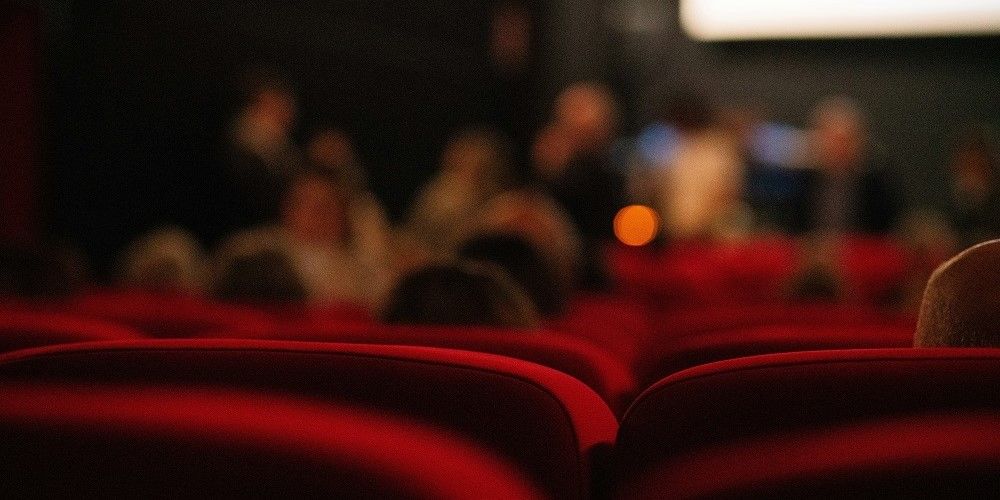
The Festival invented the public ritual of the festival as an event. Venice created the format of the film festival: the premiere of works before the public and critics, the competition with juries and awards, the encounter between artists, audiences and industry professionals. A model later replicated by Cannes, Berlin, Locarno, Toronto and all the other major international festivals.
The world's oldest film festival is also the engine of the seasonal awards industry. Venice launched and consolidated the link between the festival circuit and film awards such as the Oscars, the Césars and the David di Donatello.
This influence and authority stem from the festival's transformative capacity. Venice has continually reinvented itself, expanding its ecosystem (the Orizzonti experimental competition, independent parallel sections such as the International Critics' Week and the Venice Days) and successfully overcoming a fair number of difficult moments.
A Journey Through Historic Moments
1934 was the year of the scandalous Ecstasy by Gustav Machatý, remembered in history for featuring the first full nude scene in film history, that of the very young actress Hedy Lamarr. Banned in Germany but backed in Italy by Mussolini himself, the film caused such an uproar that Pope Pius XI personally condemned it. Despite the censorship, Ecstasy won as best foreign film, and Machatý as best director.
1958 was the year of the "clash" between divas: Brigitte Bardot, the festival's most anticipated star for La Femme et le Pantin by Claude Autant-Lara, and Sophia Loren, surprise winner of the Volpi Cup for her performance in The Black Orchid by Martin Ritt. Convinced she had already won, BB was so upset that she left the Lagoon in protest.
In 1960 another diva left an indelible mark on the Festival: Shirley MacLaine. The actress arrived in Venice wearing rhinestone-studded sunglasses and leather gloves. Beyond the glamour, she won the Volpi Cup for her performance in the cult classic The Apartment by Billy Wilder.
But Venice also means controversial and contested films. 1961 was the year of Accattone, the directorial debut of Pier Paolo Pasolini. Presented at the 22nd Festival, it received harsh criticism for its raw content, considered outrageous by the bourgeois morality of the time.
Pasolini was the most polarising and discussed director in Venice's history: Mamma Roma in 1962 was met with boos, insults and violent protests; Teorema in 1968 enraged Catholic critics and was even charged with obscenity by the Court of Venice. From then on, Pasolini never presented his films at the Lido again.
In 1968, amid the wave of protest, something incredible happened: the awards were abolished for an entire decade. In 1971 and 1972, the first honorary Golden Lions were awarded instead. The recipients were two absolute giants of world cinema history: John Ford and Charlie Chaplin.
The competition, with the awarding of the Golden Lion, was reinstated in 1980. The artistic direction, entrusted to director Carlo Lizzani (in office from 1979 to 1982), opened the door to innovative and spectacular sections that revived both the research spirit and the glamour of the Lido. That year's competition also marked another major first: for the first time, two films — Atlantic City by Louis Malle and Gloria by John Cassavetes — shared the award ex aequo.
In 1981 Margarethe von Trotta became the first woman to win the Golden Lion, with Marianne and Juliane. Like Pasolini, like Ken Russell with The Devils in 1971 and Carmelo Bene with Salomè in 1972, Rainer Werner Fassbinder was overwhelmed by criticism, boos and insults in 1982 over the explicit content of Querelle. Jury president Marcel Carné was the only one to defend him, but it was not enough: the Golden Lion went to The State of Things by Wim Wenders.
Another small revolution took place in 1983: artistic director Gian Luigi Rondi set up an international jury made up exclusively of filmmakers, starting with Bernardo Bertolucci. The Festival became a "show of the auteurs, for the auteurs."
1999 is remembered for Tom Cruise and Nicole Kidman, a couple both in real life and on screen in Eyes Wide Shut by Stanley Kubrick, who had died six months earlier. Speaking of provocative films, a real uproar happened the following year.
In 2000 South Korean director Kim Ki-duk, who died in 2020 at just 59, brought to the Lido the striking The Isle, a love story between a young prostitute and one of her clients, a man on the run from a crime. Some extreme and disturbing scenes caused audience members to faint and feel ill.
In 2005 there were tears thanks to Heath Ledger, who set the record for the most-screened actor of that edition. The Australian star came to the Lido to present no fewer than three films: The Brothers Grimm by Terry Gilliam, Casanova by Lasse Hallström, and Brokeback Mountain by Ang Lee, winner of the Golden Lion. The film won over both critics and audiences and remains unforgettable to this day: Ledger died three years later, at just 28.
One of the most controversial editions was that of 2019. The selection committee chose to bring Roman Polanski (who has confessed to the 1977 rape of a thirteen-year-old girl) back into competition with An Officer and a Spy, while very few female directors were in competition: just two out of twenty-one. Things would get even worse at the 2026 edition: only one woman (Danish-Egyptian director May el-Toukhy) out of twenty titles in the lineup.
Practical Tips for Attending
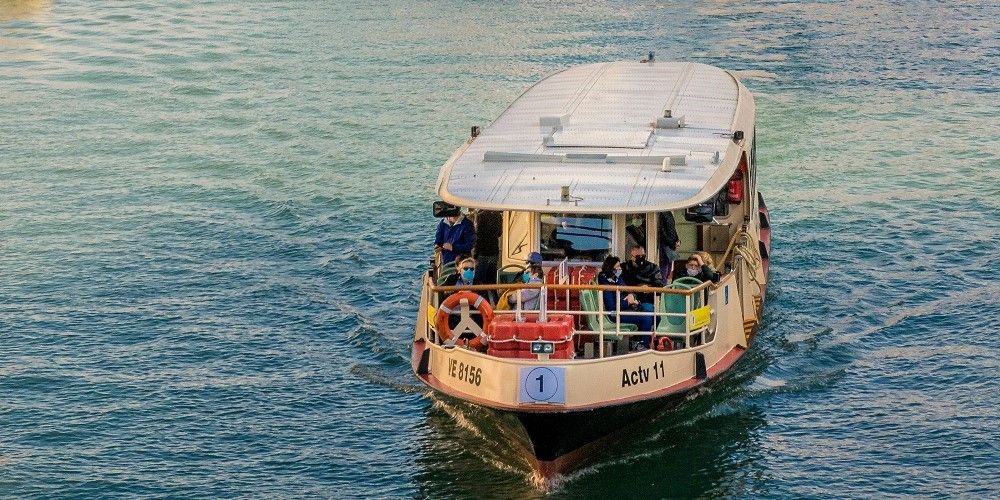
The Festival takes place every year at the Lido of Venice, where screenings follow different access routes. The public has a specific access route, with tickets and passes sold exclusively online, while accredited attendees (journalists, film critics, radio and television correspondents) have privileged access to reserved screenings. Actors and directors attend the afternoon and evening screenings in the Sala Grande, one of the venues alongside the Palabiennale, Sala Darsena, Sala Giardino, Sala Corinto, Sala Casinò, Sala Perla, Sala Volpi and Sala Astra.
Anyone who wants to experience the Festival as a member of the public, without accreditation, should organise travel and accommodation well in advance (the Lido fills up quickly during the Festival) and buy tickets online on the Biennale's official website as soon as sales open, especially if aiming to see films in the Sala Grande. The opening and closing ceremonies are off-limits to the public, while it is possible to watch stars and delegations pass on the red carpet, but only from the pedestrian area.
The detailed programme with all final screening times and venues is published only in August, shortly before the festival begins, so it is advisable not to plan too rigidly what to see. Activities are concentrated at the Lido, particularly in the Lungomare Marconi area, so it is worth staying nearby or checking vaporetto connections from central Venice. Finally, don't forget how you dress: formal attire is recommended for access to evening screenings in the Sala Grande.
Discover Venice with the Venice PassAbout the author
Written on 27/08/2026
Alessandro Zoppo
He has been listening to music and watching movies since he was 6. Proudly Samnite but Roman by adoption, he writes about culture, travel, economics, finance, politics and sports and curates film festivals.

Alessandro Zoppo
What is the historical and cultural impact of the Venice Film Festival? Why is it such an important event? Find out how it all began.