
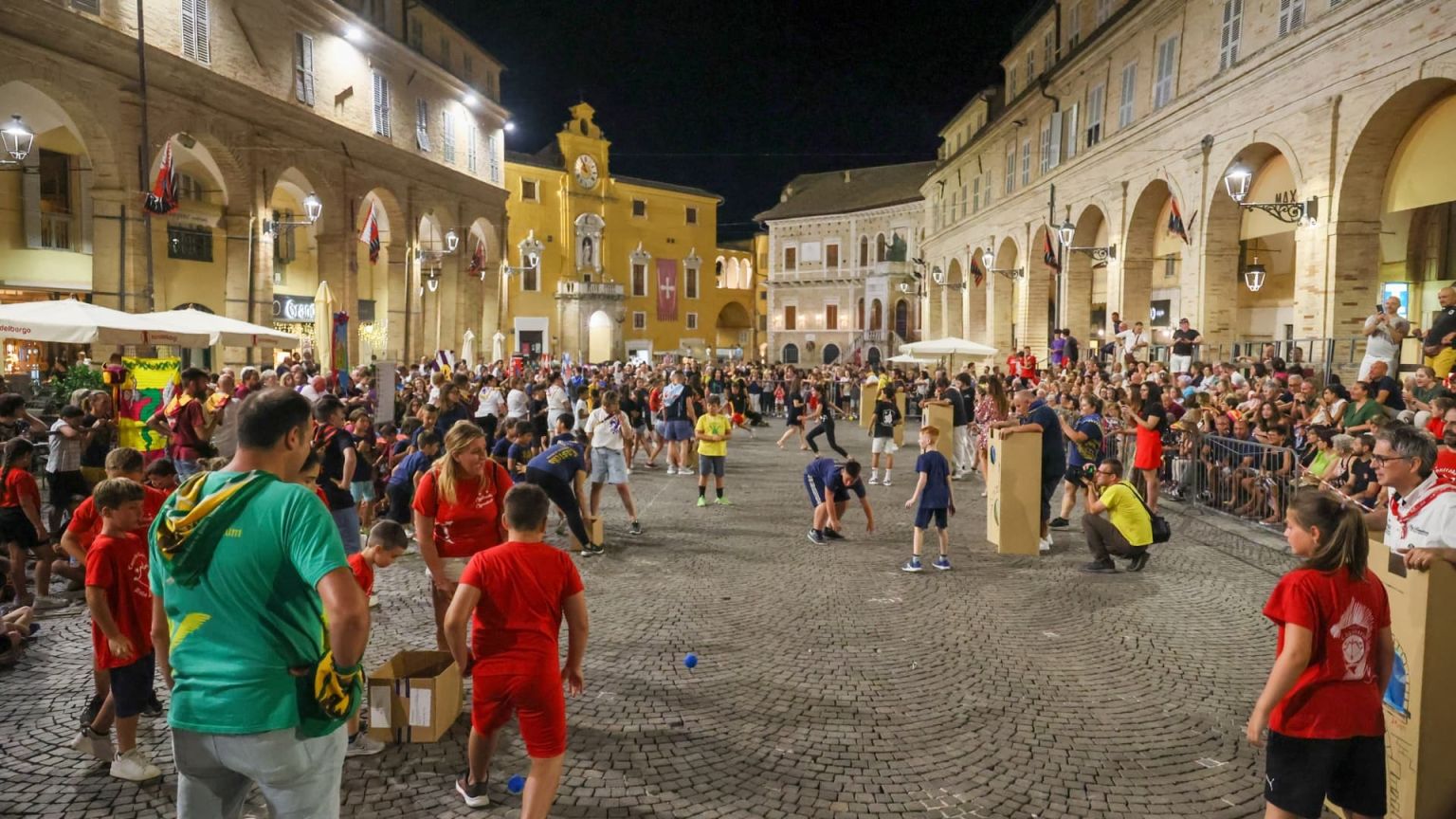

In Fermo, the Cavalcata dell’Assunta is defined not by a single day or event, but by the ten contrade that give it life, shape, and meaning.
These historic districts are not simply geographical divisions. They are living communities, each with its own identity, memory, and voice, woven into the fabric of the city for centuries. In the months leading up to the Palio, and especially during the festival days, it is the contrade that set the rhythm of Fermo, turning streets and squares into spaces of belonging.
10 contrade of Fermo: 10 identities
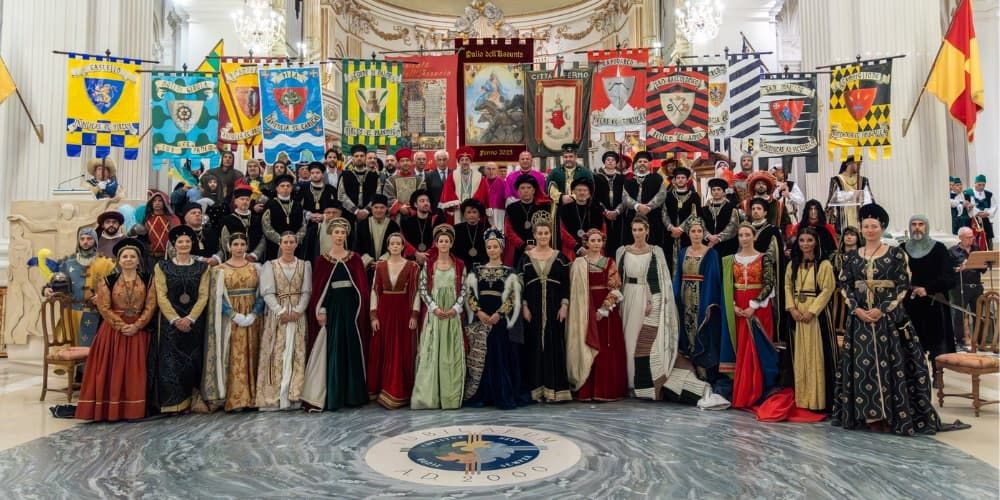
At the heart of the Cavalcata are 10 contrade, each distinct yet inseparable from the others.
6 of them—Castello, San Martino, Campolege, Fiorenza, San Bartolomeo, and Pila—belong to the historic center, rooted within the ancient city walls. Their identity is shaped by palaces, narrow streets, and layers of history that remain visible in everyday life.
Beyond the walls, four contrade—Molini Girola, Capodarco, Campiglione, and Torre di Palme—extend this identity outward. Though geographically separate, they are deeply connected to the same civic and cultural tradition, bringing a different perspective and energy to the competition.
Each contrada is immediately recognizable through its colors, coat of arms, and symbols. These are not decorative elements, but markers of continuity: visual languages that tell stories of origin, craft, and collective memory. To wear these colors is to represent an entire community.
Leadership, Responsibility, Belonging
Every contrada is guided by its Priors and Gonfaloniers, figures entrusted with far more than ceremonial roles.
They embody responsibility. They make decisions that carry emotional weight for the entire district. When they receive their roles, they also inherit the expectations, hopes, and pride of their community.
This sense of shared responsibility is what transforms the Cavalcata into something deeper than a historical reenactment. It becomes a collective act of participation, where each contrada contributes to preserving and renewing a living tradition.
Rivalry That Sustains the City
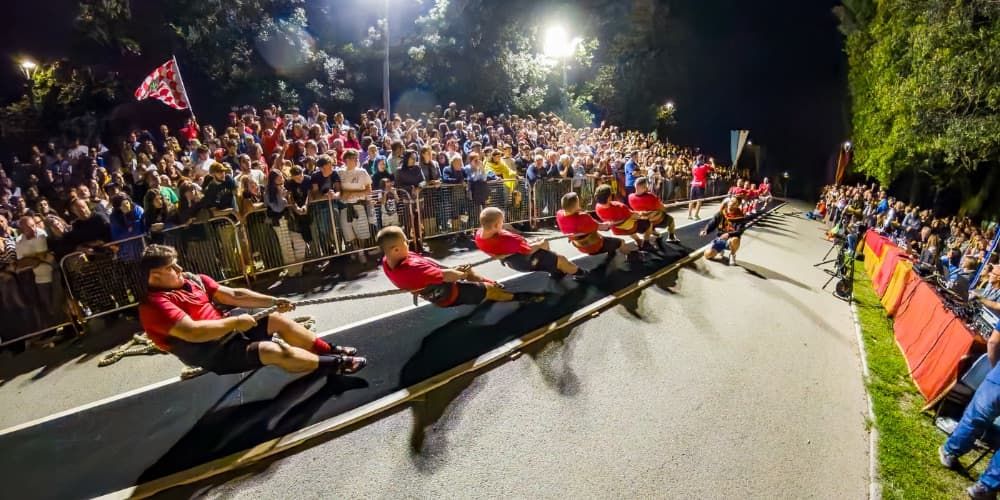
Competition between the contrade is intense, but never divisive.
Rivalries are built over time, fueled by memory and pride, yet always grounded in mutual recognition. Each contrada exists in relation to the others; each victory only has meaning because it is shared within a system of equals.
This balance between competition and respect is what keeps the Cavalcata alive. The festival does not fragment the city, it reinforces its unity through contrast.
Daily Life Inside the Contrade
In the weeks leading up to the Palio, the contrade become the true social centers of Fermo.
Preparations unfold gradually: meetings, shared work, rehearsals, and conversations that stretch late into the evening. Time is no longer abstract, it is counted, anticipated, and experienced collectively.
The opening of the hosterie marks a key moment in this process. These temporary taverns are more than places to eat. They are spaces where identity is performed and shared, where recipes become heritage, and where visitors can step inside the life of a contrada.
Sitting at a long table, surrounded by voices and colors, means crossing an invisible threshold—from observer to participant.
Tradition Passed On
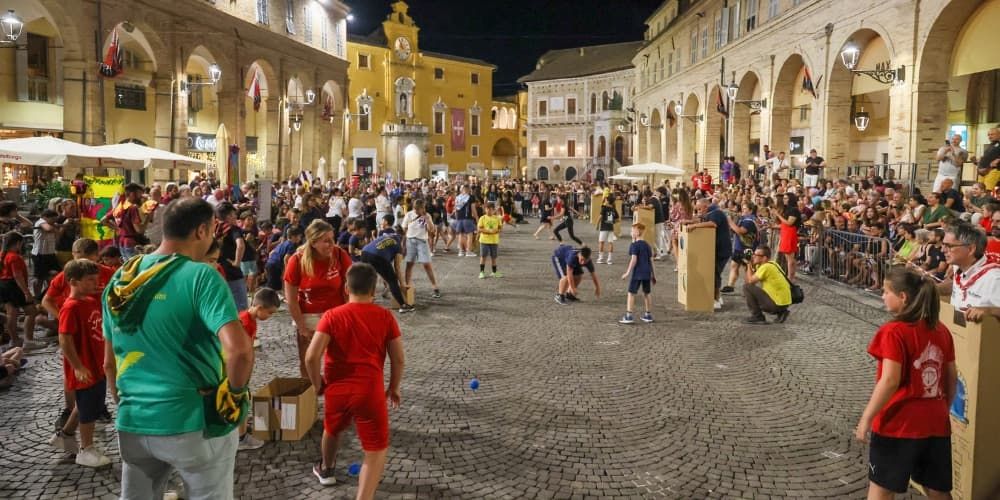
One of the most revealing aspects of the contrade is how naturally they transmit tradition.
Children grow up within this system, absorbing its values through participation rather than explanation. Wearing the colors of their contrada, they learn gestures, rhythms, and meanings simply by being present.
This continuity ensures that the contrade are not static entities, but evolving communities. Each generation inherits them and reshapes them, without breaking their connection to the past.
Moments That Define Each Contrada
Throughout the Cavalcata, several key moments place the contrade at the center of the experience.
The assignment of the horses, for example, is lived as an emotional turning point within each district. Reactions, hope, tension, disappointment, are collective, immediate, and deeply felt.
On the night before the race, every contrada gathers. Dinners, silences, and shared anticipation create a suspended atmosphere, where anticipation becomes almost tangible.
Then, on the day of the Palio, everything converges. Months of preparation, identity, and expectation are condensed into a single, decisive moment. Victory belongs to one contrada alone, but the experience, of waiting, hoping, and belonging, is shared by all.
More Than a Festival
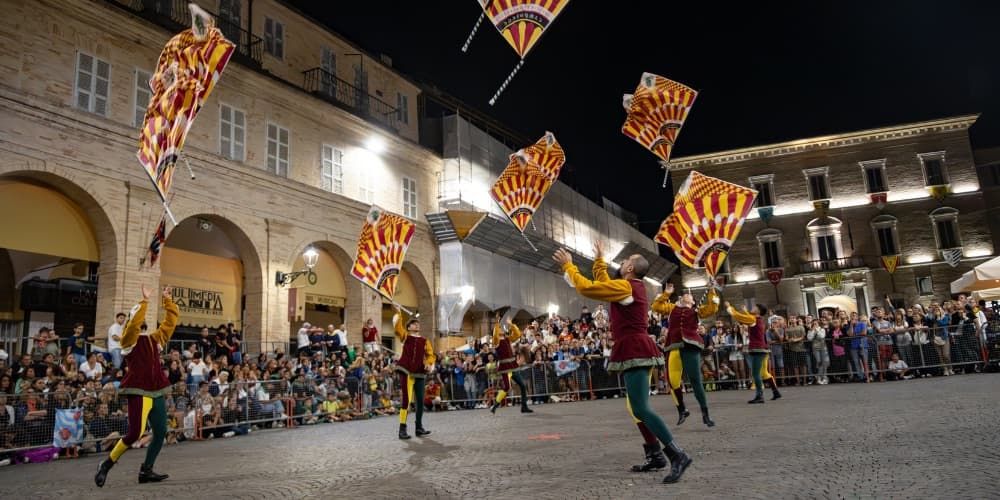
To understand the Cavalcata dell’Assunta, one must start from its contrade.
They are its foundation and its driving force, the reason the festival continues to feel authentic, rooted, and deeply meaningful. Through them, Fermo does not simply stage its history; it lives it, year after year.
For visitors, exploring the contrade offers a different way into the city: not as spectators of an event, but as witnesses to a community that still recognizes itself through its neighborhoods.
And, for a moment, invites others to do the same
About the author
Written on 20/07/2026
Redazione Visit Italy
Visit Italy is a cultural platform dedicated to illuminating hidden places, untold stories, and overlooked beauty. Because every corner of Italy deserves discovery.

Redazione Visit Italy
The contrade of Fermo are the heart of the Cavalcata dell’Assunta: identity, rivalry, and tradition in every neighborhood.