

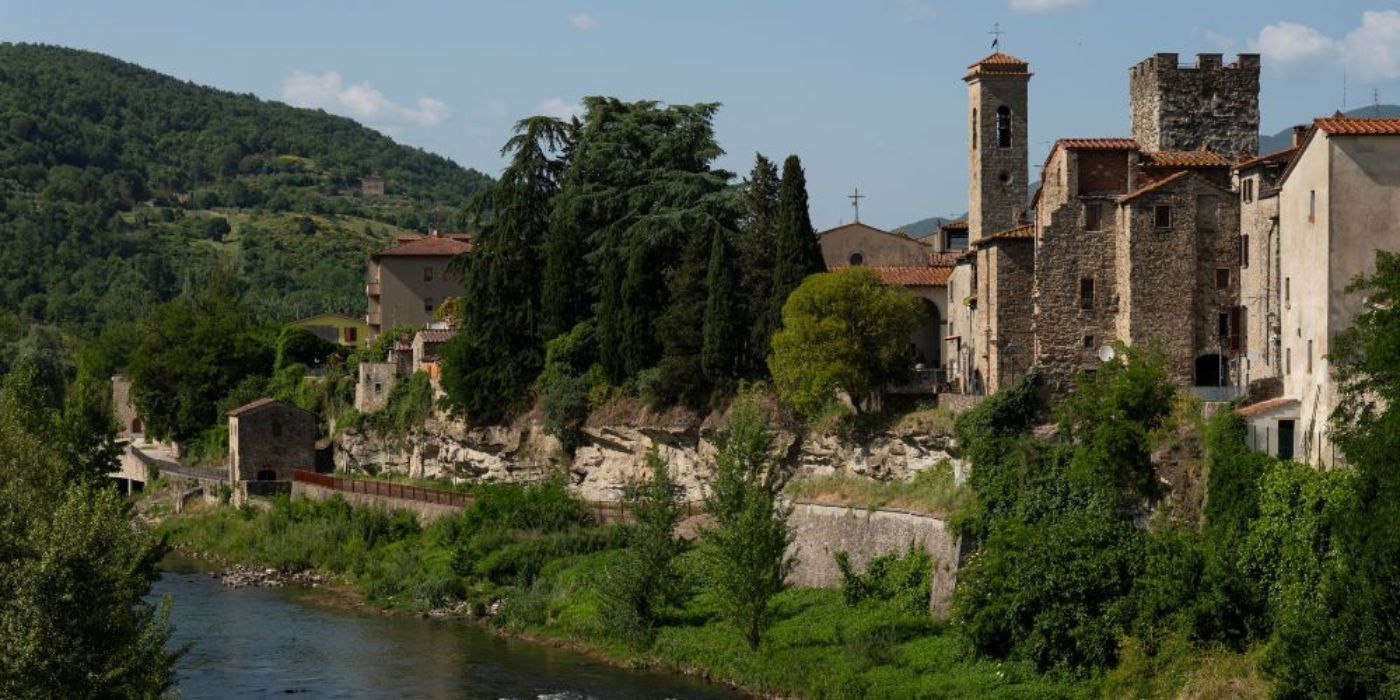

The ancient core of the village of Subbiano lies along the left bank of the Arno River, and it is precisely here that one of its most important monuments welcomes visitors. This is the Medieval Castle, an ancient fortress built a short distance from the riverbank.
Today much of the castle is gone, but with its ten centuries of history the building remains an unmissable testimony to a past full of events. Together with the nearby parish of Santa Maria della Visitazione, the Castle of Subbiano recalls the central role the village has played over the centuries.

The Castle of Subbiano and the village: why an inseparable bond exists
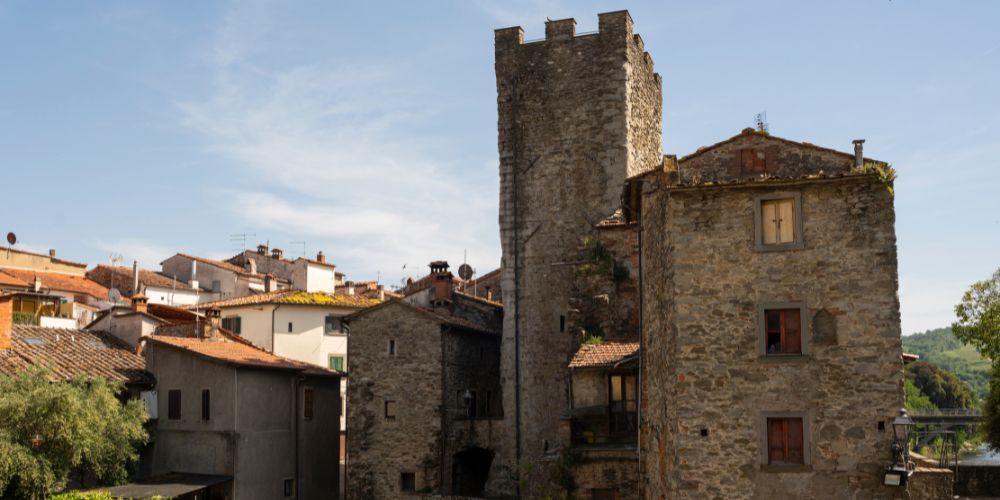
Throughout its thousand-year history, Subbiano Castle has been the town's most visible landmark.
Today, despite having lost its role as a "castle," it still offers a striking spectacle that makes Subbiano unmistakable thanks to its tall tower, visible from afar.
The building, which stands out in the surrounding landscape, is indeed a powerful landmark, tied to the local identity. Its privileged location, on a small rocky ridge almost sheer above the river, certainly contributes to this. The trees separating it from the bank seem placed there to add a fairytale atmosphere, while the lowering of the river's water level makes it appear even taller.
It's also worth noting that its ancient church still exists, as does the Chapel of Santa Maria di Lourdes within the parish church of Santa Maria della Visitazione, which is also worth a visit.
A long, never-ending story
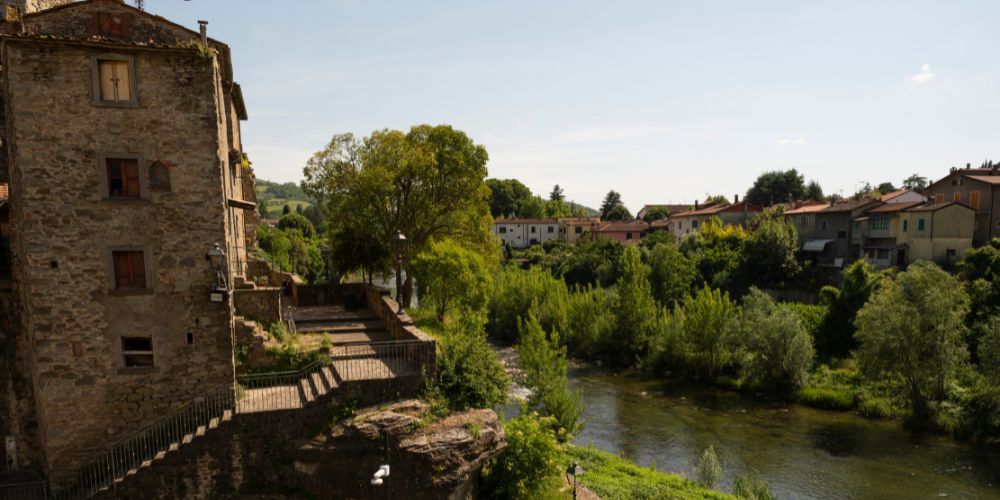
Built on a rocky spur bordered to the west by the Arno River and to the north by the Palbena stream, Subbiano Castle, whose existence has been documented since the year 1000, was of considerable importance in the early Middle Ages: it controlled a bridge and the communication route between Arezzo and the Casentino.
A former dominion of the Canons of Arezzo Cathedral, in the 13th and first half of the 14th century it was owned by the Ubertini and Tarlati da Pietramala families who then governed Arezzo and its territory.
In 1384, when the Florentine Republic took control of Arezzo and its surrounding countryside, Subbiano Castle, around which a village had developed, also fell under Florentine rule, losing its defensive function.
What to see in the Castle of Subbiano
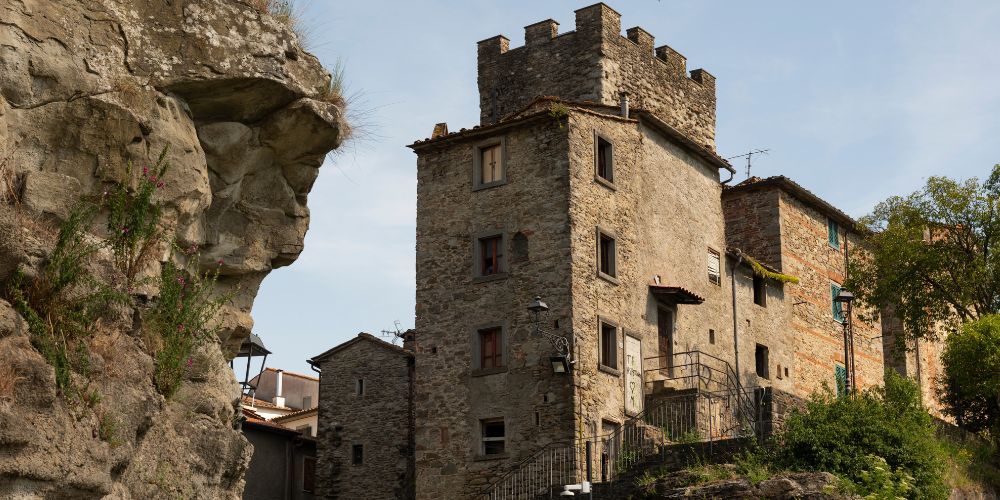
Today, all that remains of the original structure are a crenellated defense tower, a pointed arch where the gate with protective portcullis once stood, a walled enclosure with adjoining buildings and an internal courtyard, as well as the remains of the gate of the second wall.
A lancet-shaped slit, two long stone-closed slits where the drawbridge chains were inserted at the top, and the trapdoor leading to the tower, 19 meters high and on three levels, were only accessible by a ladder, are clearly visible.
There is also a walled enclosure and a small courtyard beneath which the river flows. The buildings that can be seen today around the castle were originally part of the complex but have been converted into residential buildings.
Today, Subbiano Castle is still a vibrant part of the village, used as a venue for exhibitions and summer events.
How to reach the Castle of Subbiano
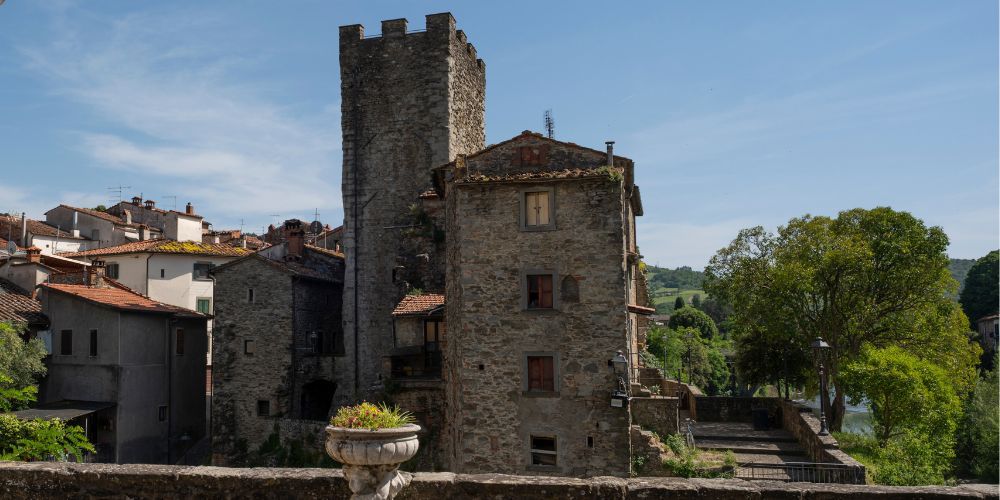
The Castle of Subbiano is clearly visible thanks to its tower, which also serves as a guide for visitors who are not yet familiar with the area.
The easiest way is to arrive by car along the SR71 regional road connecting Arezzo and the Casentino. Along the way, you can also enjoy beautiful views of the Arno River, its valley, and the green hills.
There are a few parking areas around the center of Subbiano, separated from the castle by just a few minutes’ walk.
The same applies to the train station: from here you can take a pleasant walk to the castle, simply following the course of the river.
About the author
Written on 17/07/2026
Paola Cirino
A content writer who can't help but travel. I'm also a food lover and very passionate about cinema.

Paola Cirino
Subbiano Castle in Tuscany, the thousand-year-old fortress guardian of the history of the village, reflected in the waters of the Arno