
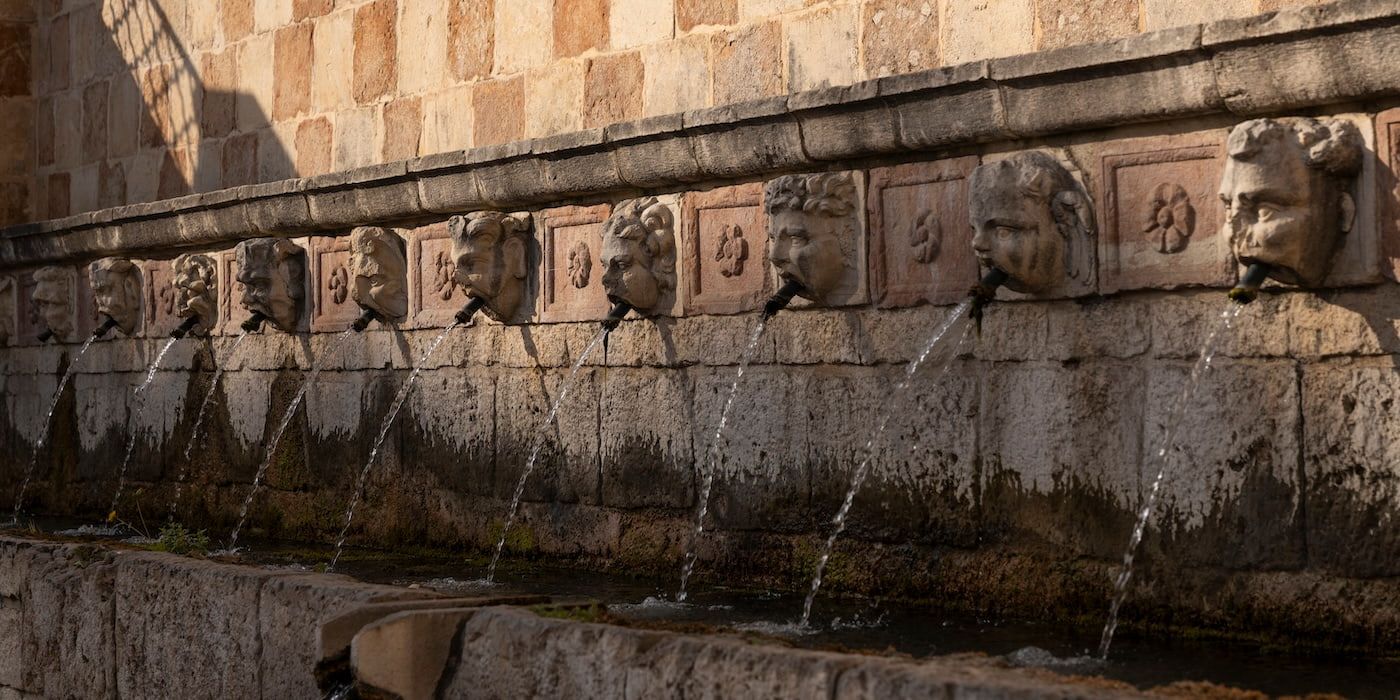

99 stone faces and a single sound, that of water flowing through the spouts without ever stopping.
Just a short walk from L’Aquila’s historic center, the Fountain of the 99 Spouts stands as a symbol of beauty that also carries an ancient and mysterious charm, closely tied to the city’s identity and origins.
A monument and, at the same time, an icon that has crossed the centuries while preserving its evocative power. Behind its harmony lie secrets that give this fountain a deep and unique character.
And this is exactly where it's worth continuing: because what we see is only a small part of its history, and only by getting closer can we discover the details that make it so special.

Fountain of the 99 Spouts: L’Aquila’s soul carved in stone
To truly understand the charm of the Fountain of the 99 Spouts, it is not enough to simply stand in front of its façade. We need to explore its history, its development, its structure, and the symbols and hidden meanings it carries.
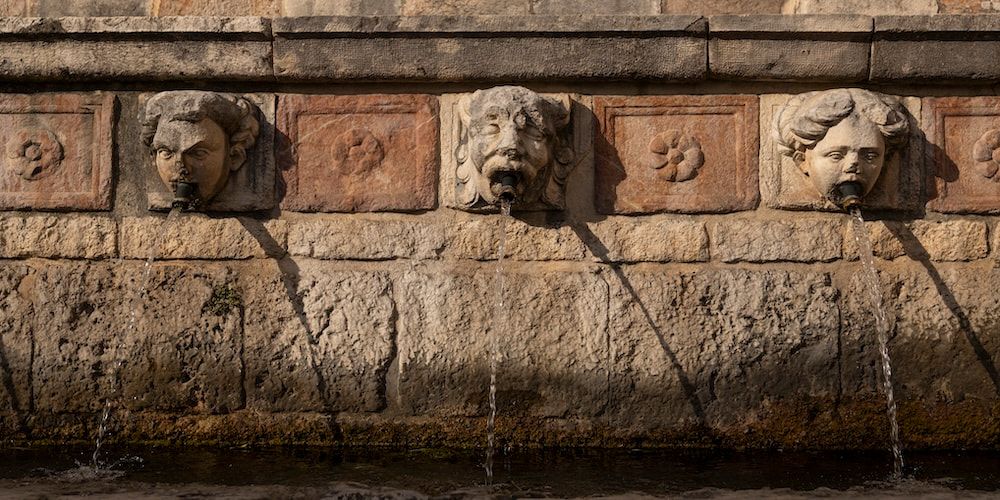
Seen up close, it reveals a long stone wall that stretches across the space without a single dominant focal point, as water flows out from different openings, one after another. The carved masks are not identical: they vary in expression, details, and proportions, as if each belonged to a different fragment of the same construction.
According to tradition, each spout represents one of the castles that contributed to the founding of L’Aquila. There are 99 in total, a number deeply rooted in the city’s memory and one that the fountain turns into one of its most striking and recognizable representations.
Why 99? The story behind one of L’Aquila’s most enduring symbols
When it was built in the 13th century, the Fountain of the 99 Spouts served an essential purpose: providing water to the inhabitants of the new city that was taking shape in the valley around L’Aquila. At a time when springs and fountains were indispensable to daily life, the structure was a valuable resource and one of the community’s main points of reference.
As the centuries passed, the fountain acquired a meaning that extended far beyond its original function. The number 99, which still defines its identity today, is closely linked to one of the most deeply rooted traditions in L’Aquila’s history.
According to the story passed down through generations, it recalls the communities that contributed to the city’s foundation, turning the fountain into a symbol that continues to preserve a connection with its origins. This is why the 99 Cannelle remains one of L’Aquila’s most recognizable landmarks, carrying a special significance and a deep bond with the city itself.
A fountain that reveals more at every glance
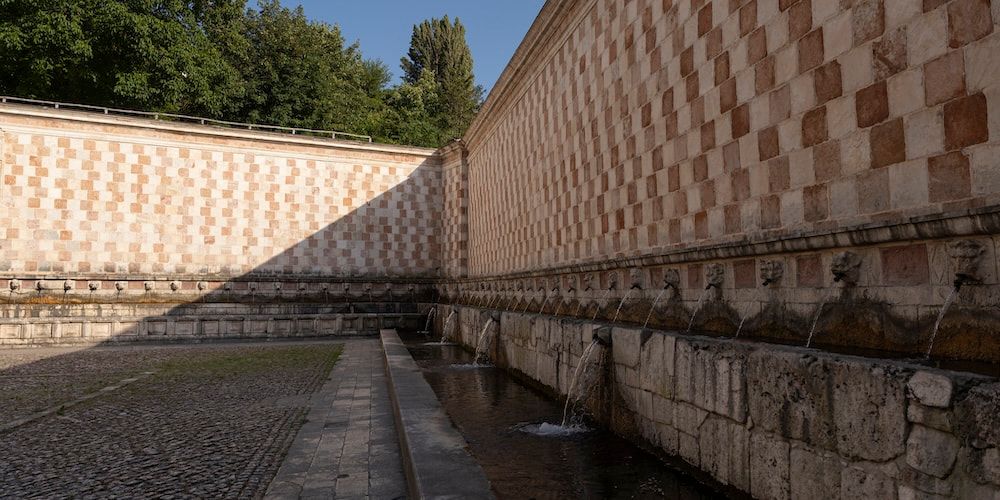
The first surprise of the Fountain of the 99 Spouts lies in its scale. Many photographs tend to isolate individual details, but the experience in person is quite different: the structure occupies a larger space than we might imagine, to the point that there's no single vantage point from which it can be fully appreciated.
In fact, every step slightly changes the perspective and brings into focus details that would otherwise go unnoticed from a distance.
This is one of the reasons why the fountain continues to surprise first-time visitors. The closer we get, the more we begin to appreciate the extraordinary care with which it was created, from the alternating light and dark stone blocks that cover the wall to the countless variations in the expressions and particulars of the carved elements.
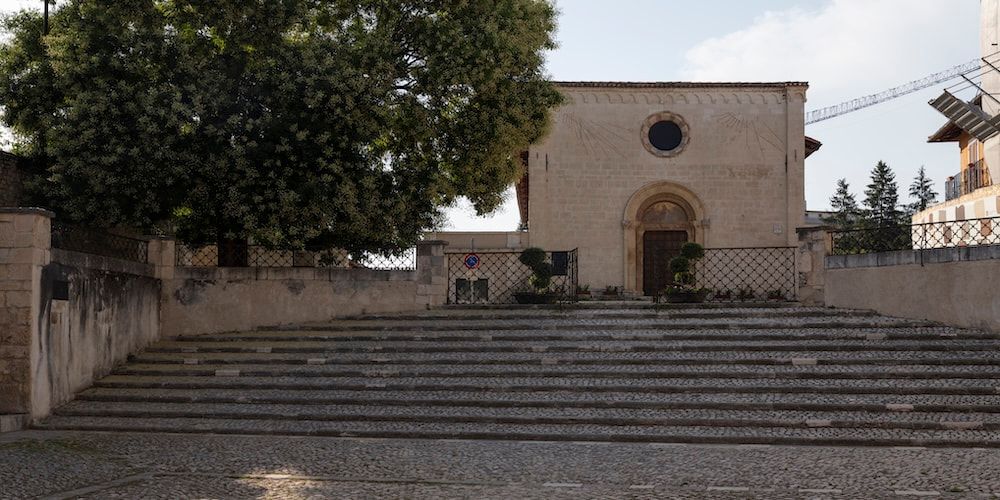
Completing this monumental setting is the Church of San Vito alla Rivera. Located directly opposite the fountain, it is one of L’Aquila’s oldest religious buildings, dating back to the 13th century. The fountain and the church are not two separate monuments: the open space defined by the Fountain of the 99 Spouts also serves as the churchyard of San Vito, creating a remarkably evocative monumental ensemble unlike any other in the city.
99 unique faces
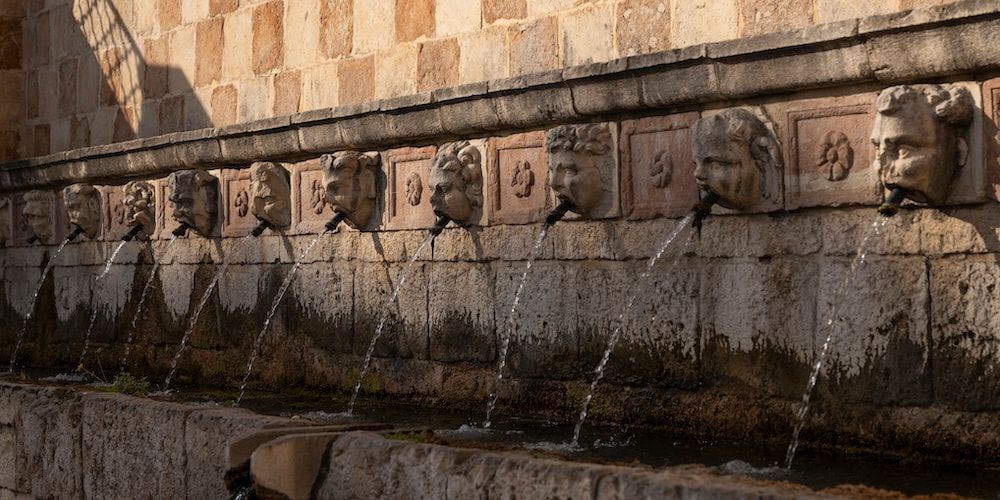
If we take a closer look at the spouts, we soon discover that the fountain’s most remarkable feature is not simply their number. The masks display a wide variety of characteristics: some depict human faces, others feature more stylized traits, while some take on forms that evoke fantastic or symbolic figures.
Expressions, facial features, and proportions constantly change before our eyes, creating a sequence that feels both original and dynamic. Our gaze moves from one face to the next, searching for similarities and differences, almost as if each element possessed its own distinct personality.
Between the masks, decorative panels carved with flowers and rosettes further enrich the composition, adding another layer of visual interest and craftsmanship.
It’s no coincidence that many visitors find themselves lingering over these details. Centuries after its construction, the faces of the fountain continue to capture attention, transforming a functional structure into something far more personal and memorable, leaving the impression that each mask may conceal a unique story of its own.
A monument between legend and reality
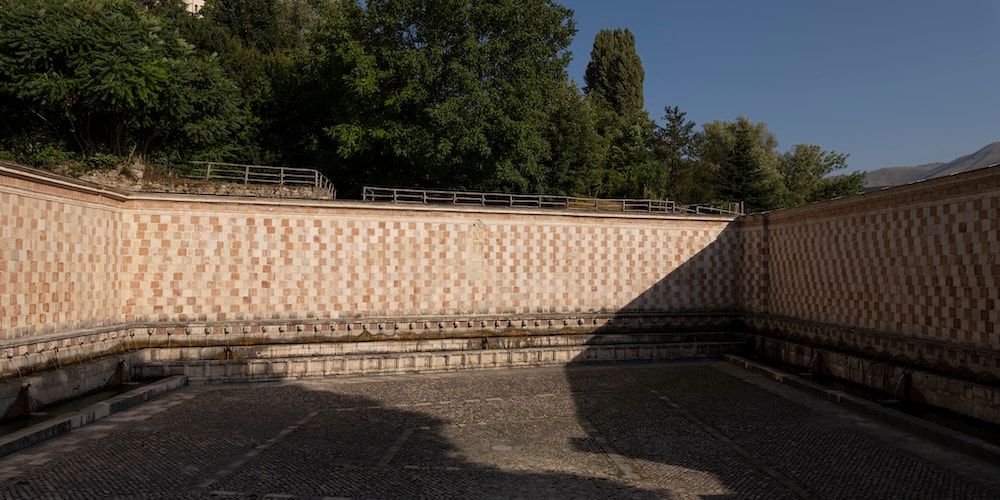
Over the centuries, the fascination of the Fountain of the 99 Spouts has inspired stories, interpretations, and curiosities that extend beyond its documented history.
At the heart of it all lies the number 99. According to tradition, the city was made up of 99 castles, 99 churches, 99 squares, and 99 fountains—an enduring symbolic image that still plays an important role in local identity today.
What makes this tradition particularly interesting is that history and legend do not perfectly align. The actual number of communities involved in the foundation of the city was likely lower than 99, and the fountain itself underwent expansions and modifications over the centuries.
Perhaps it is precisely this overlap of documented facts, popular memory, and symbolic interpretations that has made the 99 Spouts such a remarkable monument—a kind of signature of the city and a recurring element in local stories and collective imagination.
How to reach the Fountain of the 99 Spouts
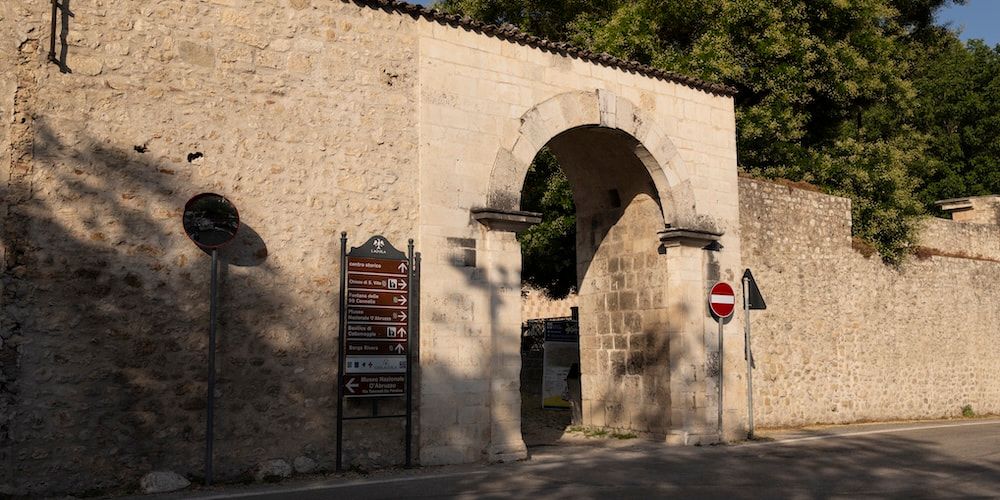
The Fountain of the 99 Spouts is located in Piazza San Vito, in the Borgo Rivera district, one of the oldest areas of L’Aquila.
Visitors arriving by train can reach it within a few minutes on foot from the railway station, which is situated just a short distance away.
Those traveling by car will also find the station area one of the most convenient places to park before continuing on foot to the fountain, which lies only a few hundred meters away, just beyond Porta Rivera.
From the historic center, and more specifically from Piazza Duomo, the walk takes around 15 minutes and passes through some of the city's most characteristic streets, offering the opportunity to experience the architecture and distinctive atmosphere of the capital of Abruzzo up close.
About the author
Written on 24/08/2026
Alessandro Savino
SEO Copywriter & web editor: I love transforming my passion for writing into engaging narratives, creatively and precisely exploring the beauty and complexity of our wonderful country.

Alessandro Savino
Stone, water, and legend: the Fountain of the 99 Spouts reveals L’Aquila’s hidden identity through symbols, history, and a timeless harmony.