
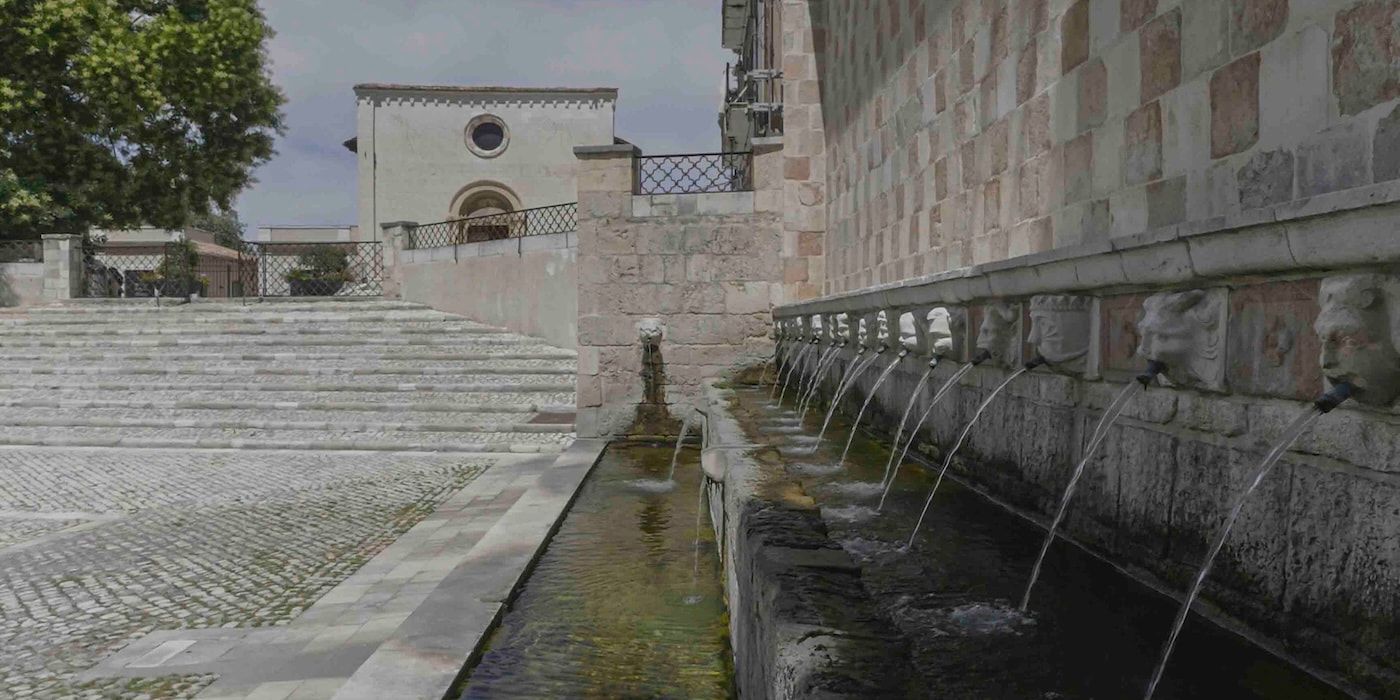

L'Aquila's historic center is a network of streets, squares, churches, and palaces that tell a story spanning more than seven centuries. Walking through its historic Quarti, you can move from grand monumental spaces to more intimate corners, each preserving a fragment of the city's identity.
Gateways, palaces, historic residences, churches, and fountains line the route, offering a glimpse of a city that still preserves the traces of its history and legends of the past, including the story of the 99 castles that, according to tradition, came together to found the city.
But what is the legend, and what are the real origins of this community? And why is it called the City of 99? Among the alleys and tucked-away corners, curiosities and secrets intertwine, ready to reveal the history that shaped L’Aquila’s historic center.

The myth of 99: the identity of L’Aquila and its historic center
🥇 Visit Italy’s brand partnership
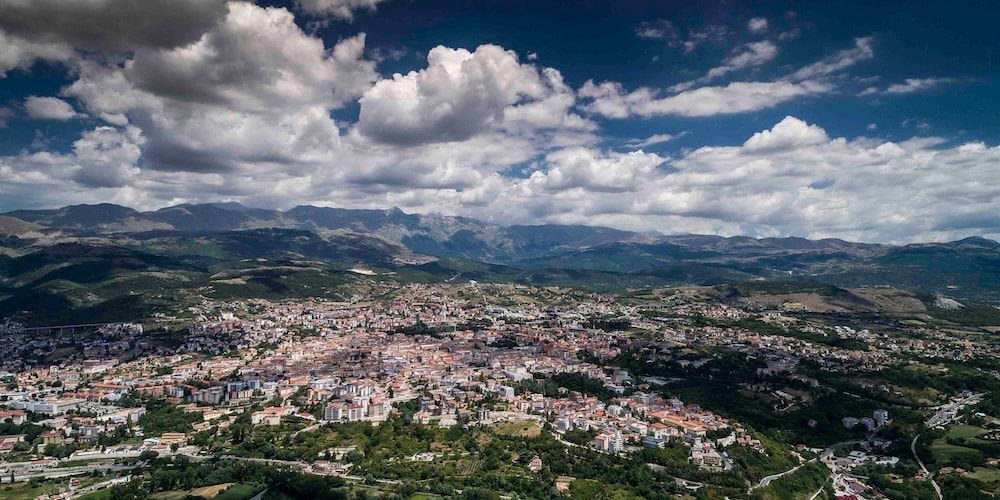
Image: Francesco Colantoni
The story of the 99 castles belongs to tradition, yet L’Aquila’s roots lie in a documented historical process, shaped by the decision to bring scattered communities together within a single fortified settlement.
To understand the legend, you need to go back to its medieval origins and notice how the number appears in the city’s most recognizable symbols: from the famous Fountain of 99 Spouts to historic churches and squares that preserve the memory of the city.
Then there is the more recent chapter: the reconstruction after the earthquake, the restoration of landmark buildings, and the determination to restore vitality and charm to the historic center. If 99 tells the story of communities coming together, this revival represents its most authentic contemporary expression.
- Origins of the myth of number 99;
- Symbolic churches, squares and fountains;
- Medieval urban planning and civic identity;
- Post-earthquake reconstruction and renewal;
- Why visit the historic center today.
Discover more about L'Aquila historic centerAt the origins of L’Aquila: the myth of 99
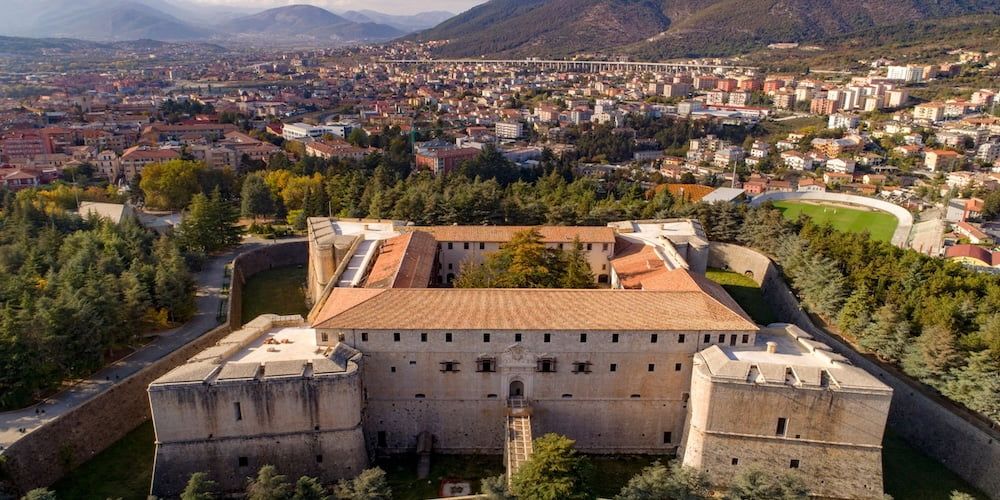
The number 99 has accompanied the history of L’Aquila since its beginnings and remains one of the city’s most distinctive symbols.
According to tradition, in the 13th century numerous castles and communities from the Aquila basin decided to join forces to create a common fortified center, designed to ensure security, order, and autonomy from surrounding feudal powers.
This alliance gave rise to a new settlement, conceived to welcome and represent the union of multiple local communities. Legend has it that 99 castles participated in the founding, leaving a symbolic mark that still shapes the city’s identity today.
The documented reality is slightly different: besides the fact that fewer communities were actually involved than the legend suggests, many of the so-called castles were not independent fortified settlements, and the foundation of L’Aquila was guided more by political and urban authorities than by a spontaneous aggregation.
Nonetheless, the story of the 99 castles has cemented the idea of a city built on cooperation between different communities, a concept that still resonates in the city’s local symbolism today.
Churches, squares and fountains: the number 99 in the symbols of L’Aquila’s historic center
🥇 Visit Italy’s brand partnership
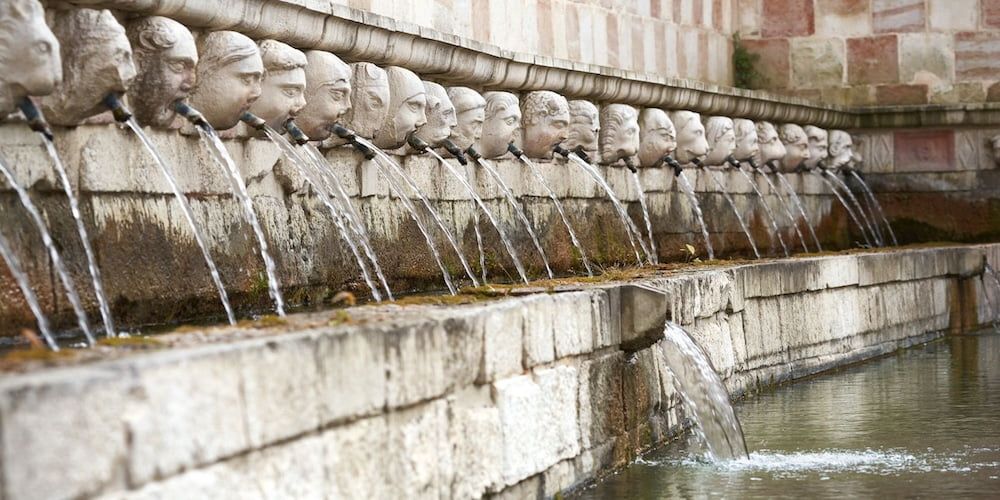
In the historic center of L’Aquila, references to the number 99 appear in several of the city’s most emblematic places. The best-known example is the Fountain of the 99 Sprouts, located in the Borgo Rivera district, long associated with the legend of the founding castles.
Built between 1272 and 1274 by the architect Tancredi da Pentima, the fountain was originally used as a public washhouse, with basins intended for washing laundry. The sculpted masks—each different from the others—and the many water spouts gradually helped link this place to the tradition of the 99 castles.
Standing before this monument, it's almost natural to start counting the spouts, testing the connection between the actual number and the one suggested by legend.
The reference to the number 99 also appears in the structure of historic squares such as Piazza Duomo or Piazza Santa Maria Paganica, and in the churches built across the city’s districts. According to what has been passed down, each of the founding communities would have had its own church, square and fountain as points of reference within the new town.
The City of 99: what are the secrets of its Medieval identity?
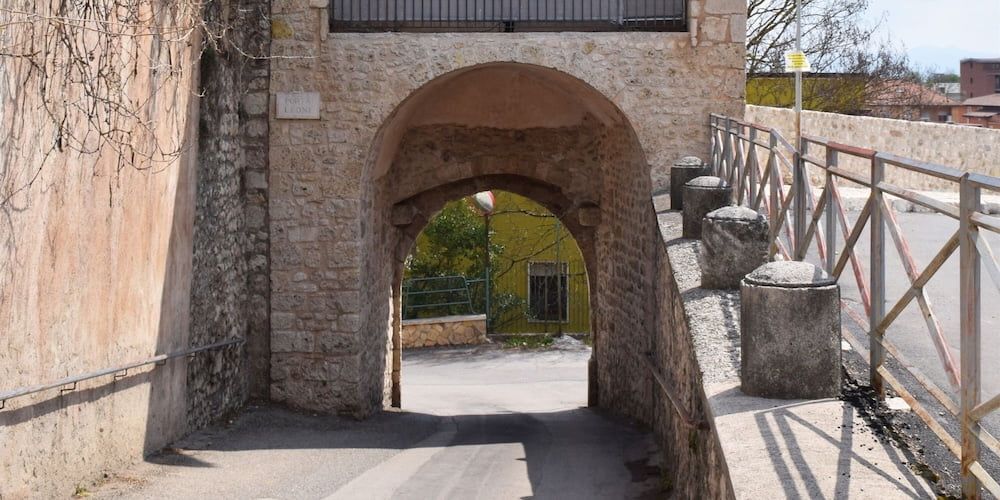
The number 99 also appears in the layout of streets and open spaces in L’Aquila’s historic center.
Walking through its streets and taking in the main squares, monumental spaces, and historic palaces, you can see how the city was designed to bring together different local communities within a compact and harmonious urban center, with the ancient gates marking the entrances to the city’s various historic quarters (Quarti) and recalling their original defensive function.
This arrangement was no accident; it reflected a deliberate balance between security, functionality, and collective participation. Each area had a clearly defined role in daily life: squares and open spaces were intended for gatherings, markets, and traditional ceremonies, while alleys, porticoes, and passageways connected the neighborhoods, fostering interaction and social cohesion.
Therefore, even if the myth of the 99 castles tells an idealized version of the city’s foundation, the urban reality shows how L’Aquila was born with a strong sense of shared civic identity, still clearly visible today.
Post-earthquake reconstruction: the rebirth of L’Aquila’s historic center
🥇 Visit Italy’s brand partnership
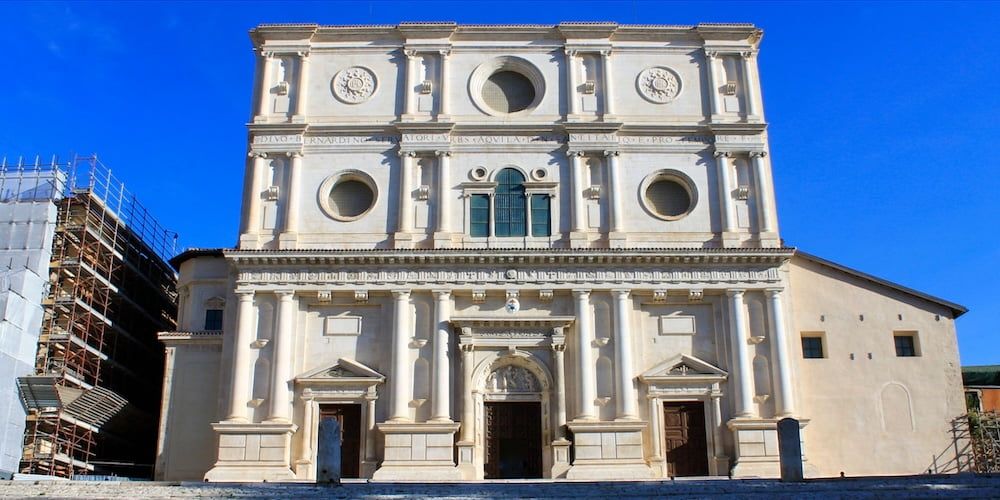
If the symbolism of 99 originally represented the union of the communities that founded L’Aquila, in more recent times—through the reconstruction that followed the 2009 earthquake—that meaning has re-emerged in a new and contemporary form, reflected in the commitment and collaboration between institutions, technicians, and citizens working together to restore the city’s authentic character.
In the years following the earthquake, the historic center became the focus of one of the most complex urban recovery efforts carried out in Italy: historic palaces were structurally reinforced, churches restored, and many buildings gradually returned to full use.
Today, the heart of L’Aquila has regained the rhythm of the past, and the myth of the 99 once again evokes the idea of a community that, by uniting its energies, can overcome challenges.
It’s no coincidence that the city has been chosen as the Italian Capital of Culture 2026, a recognition that highlights the value of its historic heritage and the path of renewal undertaken in recent years.
Why L’Aquila historic center is a treasure you shouldn’t miss
🥇 Visit Italy’s brand partnership
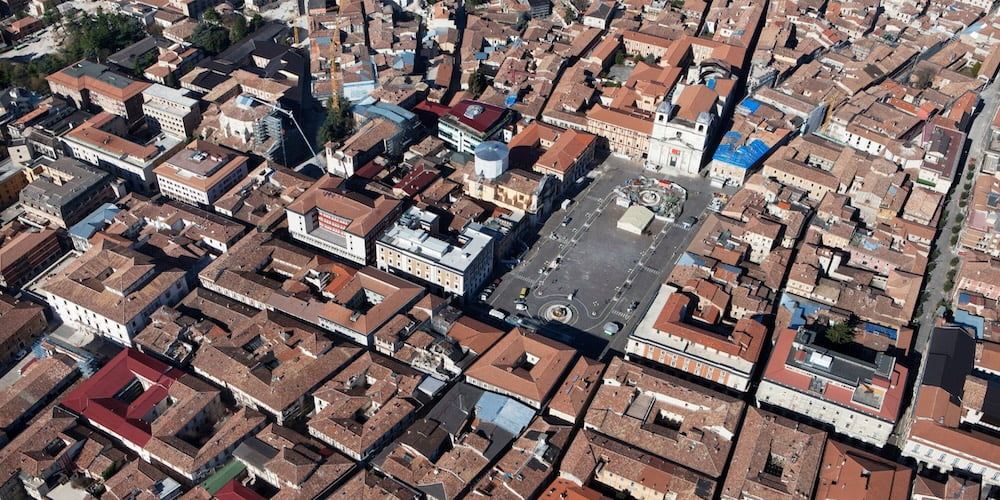
History and legend, numbers and symbols, tradition and identity: L’Aquila historic center, therefore, tells you all this and much more, allowing you to observe up close a city that continues to preserve and enhance its historical and cultural heritage.
Beyond the ancient restored palaces brought back to life, don’t miss its main squares, meeting points that for centuries have marked the heartbeat of the city and today host markets, events, and social gatherings.
In the churches and museums, you can admire temporary exhibitions and cultural initiatives, while the pedestrian streets and artisan shops let you sense L’Aquila’s everyday life as it was in centuries past.
It’s precisely this intertwining of past and present, between monuments to discover and experiences to live, that truly transforms the historic center into a magical place, one that captivates you with its legends and invites you to explore its special soul.
About the author
Written on 15/07/2026
Alessandro Savino
SEO Copywriter & web editor: I love transforming my passion for writing into engaging narratives, creatively and precisely exploring the beauty and complexity of our wonderful country.

Alessandro Savino
Medieval symbols, historic squares, an identity more alive than ever: feel the magic of L’Aquila’s historic center and the legend of the City of 99.