
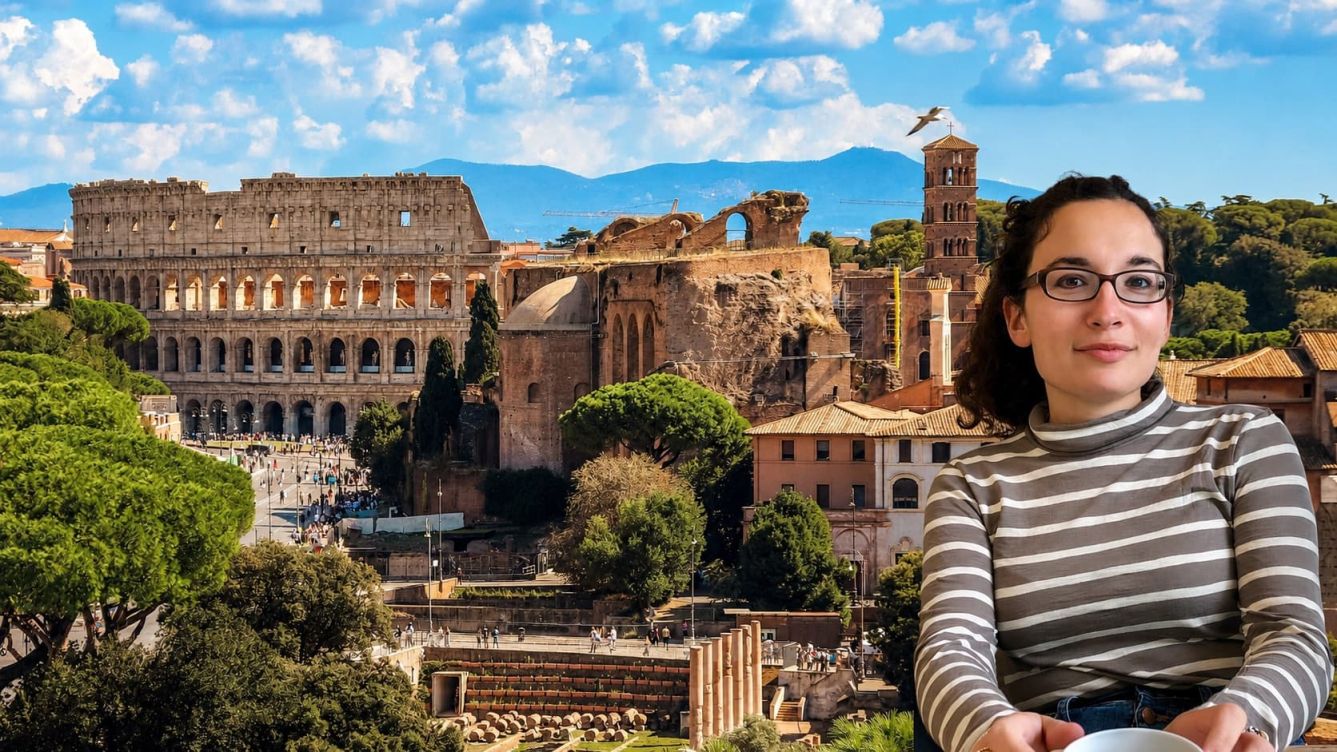

Four years ago, I had moved to Rome, and while it was true that I hadn’t done so solely in search of the ancient city, it was always in the back of my mind. I was like one of the American men who found themselves thinking about the Roman empire every day—I didn’t want to just think about it every day. I wanted to live it every day.
And yet, with each passing moment in Rome, I felt some of this fascination literally diminish, like progressing from the honeymoon stage of a love affair to the more ingrained monotony of a long-term relationship. Looking on ancient sights that had once brought me to tears now left me feeling simply numb.
I wondered if this magic was recoverable, if I could access the feelings I had once had for the ancient city in certain moments, or if living in Rome meant accepting a certain reality, that history was fascinating the first, second, even third time you saw it, but after the umpteenth time, even you, a great lover of the classics, could be desensitized.
I didn’t want this to be the answer, but I found it hard to find evidence to the contrary. The pulsating summer days of Rome made me loath to even leave my house, and so the last thing I wanted to do was take on an anthropological tour of the city in hopes that I might be able to rekindle the flame.
Of course, what I didn’t know was that it wasn’t Rome, but Pompeii, that would bring it all back to me.

“The cloud was rising from a mountain”
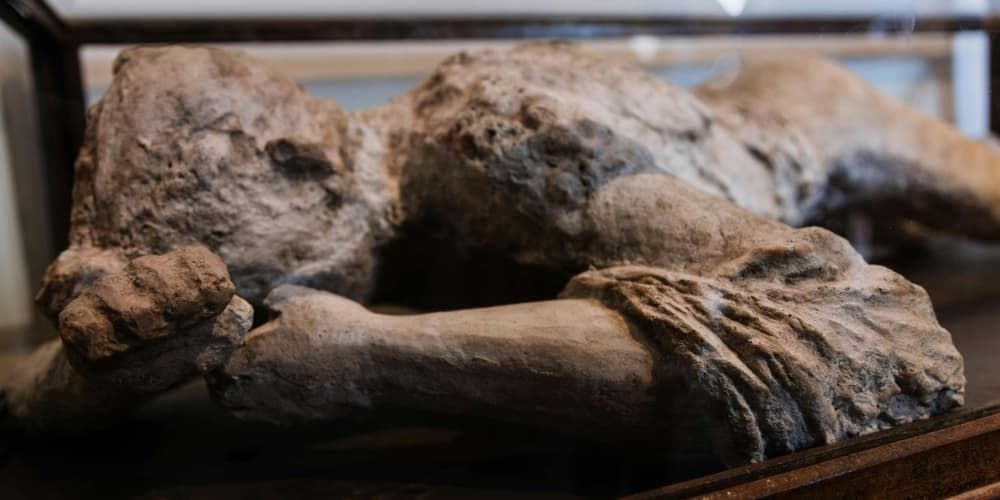
The figure’s arms were thrown back, as if in distress, its legs bent at the knee, its jaw clenched, an expression of quiet terror on its face. It was almost painful to gaze at—it made you feel as if you were watching someone die right in front of you.
A crowd of people began to gather around the body cast, enclosed in glass in a secluded area in the middle of the archaeological park. But while, little by little, they fanned out, diverted by something else to look at, I found myself glued to the spot, entranced and slightly horrified by the displayed figure.
These were casts that had been poured meticulously from cavities in the earth at Pompeii, revealing the positions at death of young men, women and children almost 2,000 years ago. I was only 11 years old, and though I had dreamed for years of seeing the ancient Roman city buried in ash and pumice, this was different—these were the humans behind the ruins. Even today, the casts remain in my mind, as if I had conjured them to life from my mere imagination.
Pompeii’s human appeal
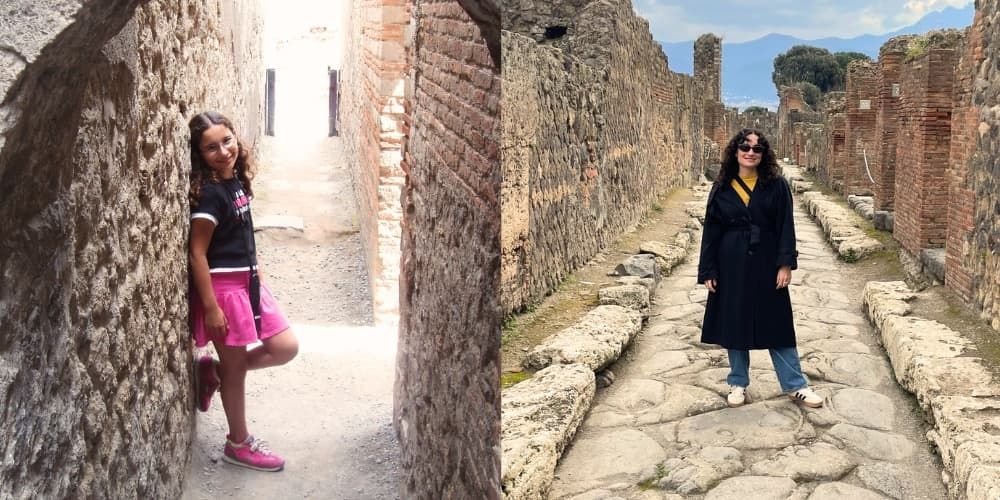
In Pompeii, then and now
More than a decade later, I found myself back in the ancient site, this time as a college student majoring in Classical Languages. My entirely Classics-themed course in Rome was composed of nerds (I use the term affectionately), so dedicated that they quite literally dressed up as gladiators to go to the Colosseum or could recite most of the emperors by heart.
My professors had arranged for us to spend a few days in a hotel neighboring Pompeii, and so we started our mornings walking the main street of the city, the east-west Decumanus Maximus or the so-called Via dell’Abbondanza, in a way that began to make the place feel real to me, as if it were a central thoroughfare I was visiting as part of my spring vacation.
Even when I talk about Pompeii now, as someone who lives in Rome, I come back to its scope. Restored archaeological sites like Ostia Antica or Pompeii have a way of making the ancient city come to life, because they display the ancient city as it might have been structured. Here, there are literal calculations to be made: how far was the theater from the brothel? How did one get from the baths to the forum? What was the difference in grandeur between a one-level villa and one with a downstairs garden? And where and how were the dead buried? The frescoes are a weakness of mine because of their level of detail and, of course, their level of beauty, but the reality is that Pompeii has always felt most present to me when looking at its outlines.
Journeying to Italy
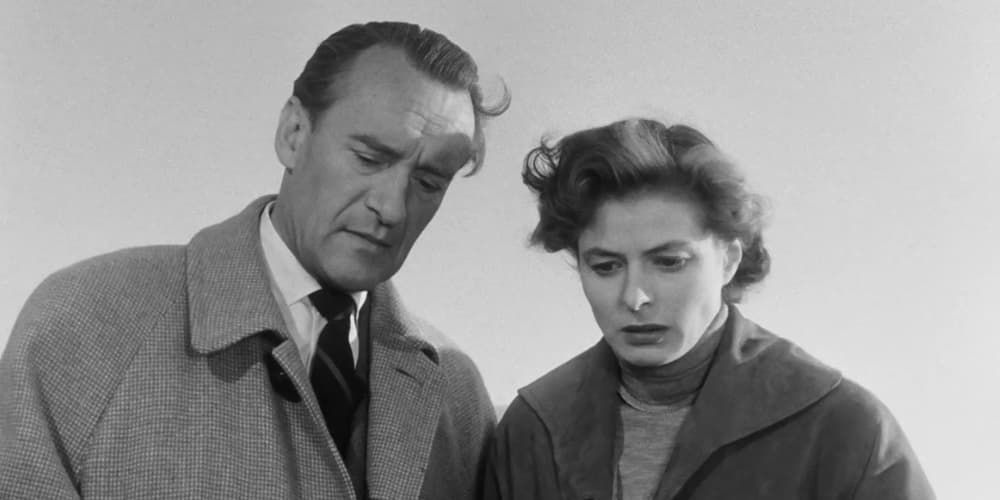
In a scene from famed Italian director Roberto Rossellini’s Journey to Italy, a British couple on the brink of divorce, played by George Sanders and Rossellini’s own wife, Ingrid Bergman, visit the archaeological site of Pompeii and witness the excavators pouring plaster into holes in the ground. As the plaster fills the cavity, bodies seemingly rise from below the earth, in the shape of a man and a woman, a couple that their tour companion muses may have been “husband and wife, who may have found death like this, together.”
This comment, too close to reality for Bergman’s character, causes her to flee in horror. But the visceral emotional pain spurred just from seeing the casts of Pompeii shows us how the ancient city still has the power to move. We may be removed from Rome in time, but not in some kind of innate, unchanging human psychology that makes us what we are.
I now feel an almost painful wince in my side if someone tells me that they just don’t love Pompeii. It’s too touristic. It’s too big. There’s too much to see and too little explanation. And while all of those factors may be ostensibly true, they don’t capture the quality that makes it so captivating. It is the emotional access it yields to the ancient city, something that those of us who live among the ruins each day can find easy to forget.
How Rome affected foreign writers
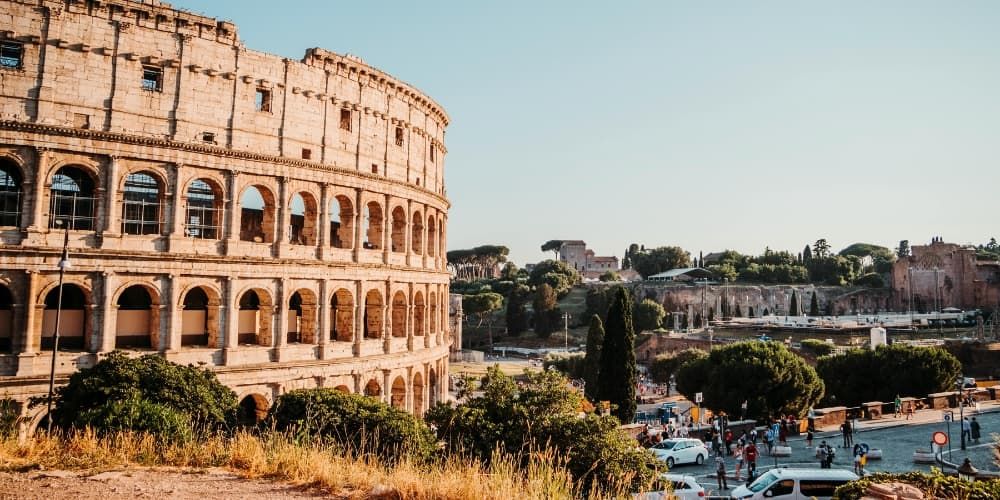
I know this firsthand because I live in Rome. When I first moved to the Eternal City, I promised myself, in vain, not to take it for granted. I wanted to view the city each day with new eyes, astonished by the hidden treasures its various corners could offer, a 3rd-century BC temple here, a second-century CE Roman home there.
I wanted to be like Johann Wolfgang von Goethe, who once famously wrote of visiting Rome that just the mere sight of it had meant that he would be “tranquilized” for his whole life.
“In other places, one has to search for what is important,” Goethe wrote only seven days into his visit to the city. “Here, one is oppressed and borne down with numberless phenomena.”
Despite his own innate cynicism, Henry James, too, was struck by Rome, awed by its ruins, its vastness, its seemingly endless layers of history.
“Here I am then in the Eternal City,” James wrote in a letter to his brother in 1869. “At last—for the first time—I live! It beats everything: it leaves the Rome of your fancy—your education—nowhere. It makes Venice—Florence—Oxford—London—seem like little cities of pasteboard.”
And even Thomas Mann, who set his dark and stirring Death in Venice in another famous Italian city, found himself reflecting on Rome at the end of his life, writing in his diary at almost 80 that he still had “sympathy for Rome with its obelisks and fountains.” Even in his old age, he wanted to return.
The modern ancient city
I recognized flickers of myself in the reflections of all of these writers, who were left stunned and even wounded by Rome’s beauty. And yet I also lived a quotidian life here, a life marked by normalcy, mundanity and inconvenience, that these writers had not. I had passed by the Colosseum countless times on the 75 bus that took me from my residential neighborhood of Monteverde to the central terminus of Termini and had found myself sadly unaffected. I would watch as tourists craned their necks on the bus to get just one glimpse of the Flavian amphitheater. Almost instinctively, I too turned my gaze to one of the city’s greatest wonders.
That’s the Colosseum, I felt an internal voice rise up inside of me, almost indignant, quietly proud. You’ve wanted to live here your entire life. And here you are, passing the Arch of Constantine, the Arch of Titus, the Roman Forum, the Colosseum, the Basilica of Maxentius every day. What must that feel like?
But suffocated by the sweltering air in the already crowded bus and the tourists that continued to pack every inch of conceivable space, I saw that, really, I couldn’t access much of anything at all.
Do as the Romans do
I conceded that this was perhaps the natural progression of living in Rome. One gets used to existing among the ruins—perhaps one begins to see them as old friends, wanting at times to exuberantly greet them and, at others, to duck one’s head, hoping to avoid them entirely.
This must be what Romans felt, right? I wasn’t alone. Yet in classic journalistic fashion, I decided to poll a few of my born-and-bred Roman friends to see if this phenomenon was actually borne out in the data.
At first, it seemed that I was onto something. I talked to 33-year-old Silvia, who was born and raised in Monteverde and now worked in the cultural sector. The sites that most foreigners think of as defining Rome, the Forum, the Capitoline, the Colosseum, the Pantheon, didn’t produce in her a great wonder.
But in certain moments, she could access that feeling, like a New Year’s Eve that turned into a 4 a.m. viewing of the Trevi Fountain. Sometimes, coming down from the Capitoline and heading towards the Forum, masses of people crowded into its center, she could feel a confluence of antiquity and modernity that made it seem as if she was living in two eras at once.
Paolo, another 39-year-old Roman raised in the Giuliano-Dalmata neighborhood and now living in Flaminio, felt that the trouble with the monuments was an issue of context. The principal sites of Rome had become symbols of the city for the entire world, he said, visited each day “by thousands of people.” The average Roman ended up distancing themselves from these, because what they wanted was to discover a piece of Rome that still felt like theirs.
Still, just as with Silvia, there were certain times where you were reminded of that feeling, perhaps taking a nighttime Vespa ride in the empty city, seeing yourself as “a little bit Nanni Moretti,” and parking in front of the Colosseum.
Rome always had the last word
67-year-old Cristiana, residing for many years in Trastevere, not the city center but a touristic neighborhood nonetheless, reminded me that the average Roman had a head full of other things—you know, real life. They weren’t here on vacation. They had to worry about work, about family, about troubles with the bank or taking their child to their after-school sports. It wasn’t the most conducive mindset to simply stumbling around in awe of the surrounding archaeological sites.
And yet, she said, Rome always had the last word.
“Rome always surprises you with its beauty,” she told me. “You can be distracted, but you can’t not recognize the weight of its history.”
Almost half a day later, I received another text from Cristiana, who was usually sick of hearing my various requests for interview candidates on obscure topics about Italian culture. This time, she had found herself in a taxi and decided to broach the conversation with the driver. Here was someone who quite literally witnessed every facet of Rome. Of all people, a Roman taxi driver must be, dare I say it, slightly desensitized to the beauty of Rome’s ruins.
But no, his response, dictated to me breathlessly by Cristiana, astonished even me. In 32 years as a taxi driver in Rome, he had never once found the city to be the same. And even in the middle of traffic, presumably at the end of a stressful day, he would sometimes stop at a light, lift his eyes towards the site in front of him and notice something entirely new.
About the author
Written on 02/07/2026
Elizabeth Djinis
Elizabeth Djinis is a Rome-based writer and journalist. She specializes in feature stories and analysis on history, culture, climate and politics and she regularly writes about Italy for Smithsonian Magazine, The New World and Italy Segreta. She writes a monthly newsletter on life in Rome.

Elizabeth Djinis
What is it like living in a city full of History like Rome? Does the sense of wonder stay, or do you eventually get used to beauty?