

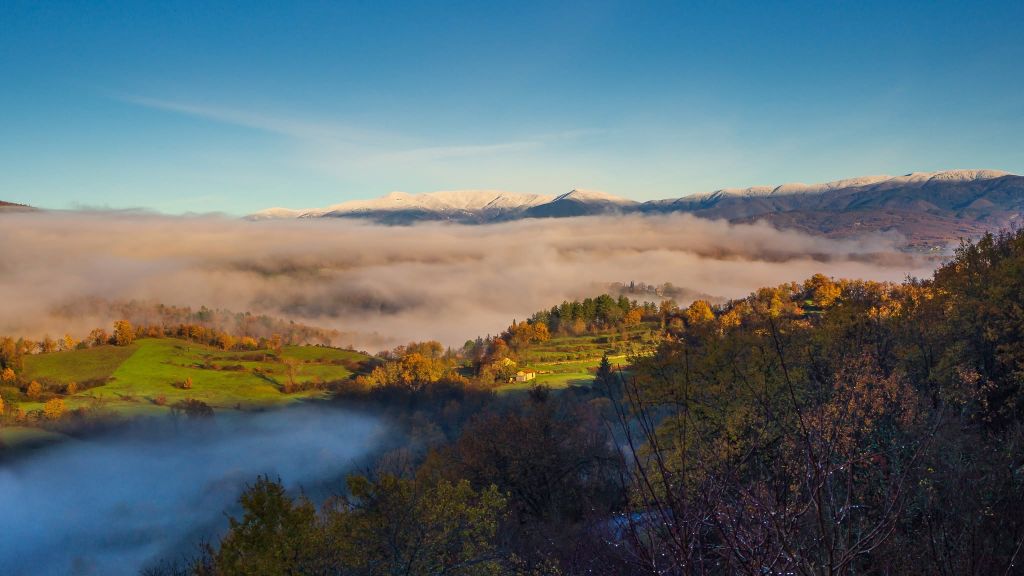

There is a food and wine itinerary in Tuscany that is still waiting to be unveiled, set in a lush green land where a cultural heritage thousands of years old alternates with some of the most beautiful and unspoiled natural sceneries in the country. This is the Casentino, a destination worth visiting for the protected area of Foreste Casentinesi, Monte Falterona e Campignaits National Park, for the villages and the mountains, but also for its flavors and aromas, the stars of an extraordinarily rich and distinguished tradition.
So, it's not just Chianti. Traveling through the Casentino is the perfect opportunity to embark on a fascinating journey into a lesser-known side of Tuscany, one that feels all the more authentic because it remains largely undiscovered. Treat yourself to the luxury of traveling at a slower pace, far from overtourism and the bustle of major cities, and experience the history, beauty, and flavors of a truly unique land. It will be a sensory journey during which you will find out all about the tastes of the local cuisine, along with the wines that are driving what is already being recognized as Italy’s next emerging wine region.
Why now a Food and Wine Tour in Casentino?
🥇 Visit Italy’s brand partnership
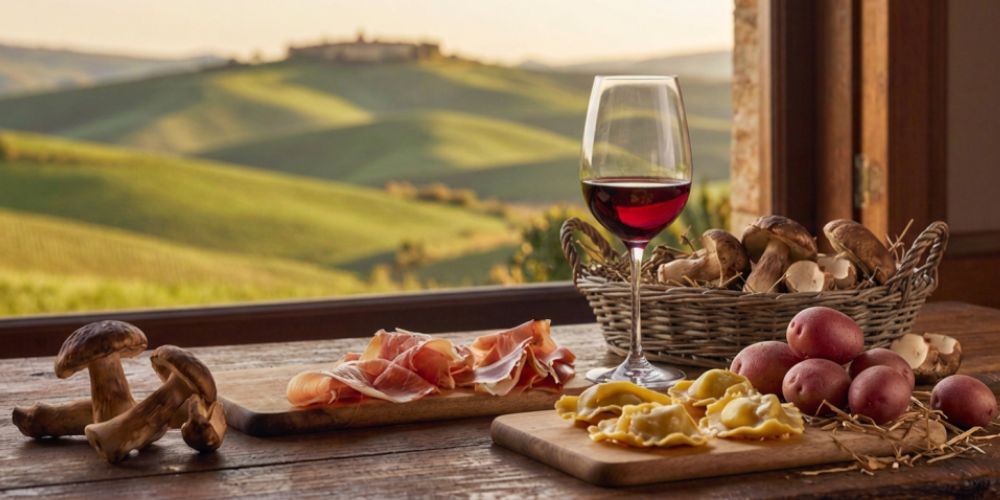
In recent years, the Casentino, in Tuscany, has been shaping a different side of its own identity, one that goes beyond even the wonder of its forests, castles, and monasteries.
The local cuisine is deeply connected to the land and the changing seasons. With the woods providing mushrooms, chestnuts, game, aromatic herbs, and much more, the region’s culinary traditions is defined by full-bodied flavors, often tied to rural traditions.
This is a destination where, away from the main currents of gastronomic tourism, at least geographically, you'll get to taste authentic recipes handed down through centuries, and there is even more.
Today, a food and wine itinerary in Tuscany that begins in the Casentino also offers an extraordinary opportunity to explore the craft of a new generation of master winemakers.
Centuries ago, the Casentino’s wine tradition was thriving, but it then slowed down for several decades. Today, thirty-five young wineries are passionately and skillfully working to tell the story of the territory through its grape varieties, including historic cultivars that the long years of neglect seemed to have condemned to oblivion forever.
Let's discover 10 unmissable stops, all concentrated along a route of just over 100 km, for an unforgettable journey through the flavors of Casentino:
•Subbiano
•Talla
•Chitignano
•Chiusi della Verna
•Bibbiena
•Ortignano Raggiolo
•Poppi
•Camaldoli
•Moggiona
•Castel San Nicolò
•Montemignaio
•Pratovecchio Stia
Discover Casentino ValleyListen to the podcast version of the article with the voice of Monna Lisa & Leonardo
Stage 1: Subbiano
Subbiano, the gateway to the Casentino for those arriving from Arezzo, is the first stop on our food and wine itinerary in Tuscany.
Its historic landmarks, such as the Castle and the Church of Santa Maria della Visitazione, are reason enough to explore this charming village. Subbiano is also an ideal starting point for excursions into the Alpe di Catenaia or along the Historic Way of Saint Francis, leading to the Sanctuary of La Verna, which we're going to know better in a little while.
In Subbiano, anyway, you can find many other delicacies of Casentino, starting with the excellent olive oil. Also, try the topini, the small potato dumplings perfect with rich, flavorful sauces such as duck ragù. Here, duck is also served stewed, often accompanied by Sant’Anna beans, an ancient local variety harvested at the end of July during the celebrations of Saint Anne’s feast day.
If you are a meat lover, you certainly won’t be disappointed by Chianina beef steak, one of the proudest symbols of the region’s culinary heritage.
To accompany your meal, be sure to choose the local wine, Moscatello di Subbiano. Its appeal lies not only in its flavor and aroma, but also in its remarkable story: it comes from a grape variety that was recently rescued from extinction and is now protected. You can enjoy it dry, in pair with cured meats and cheeses, or sweet, an excellent way to end a meal.
Stage 2: Talla
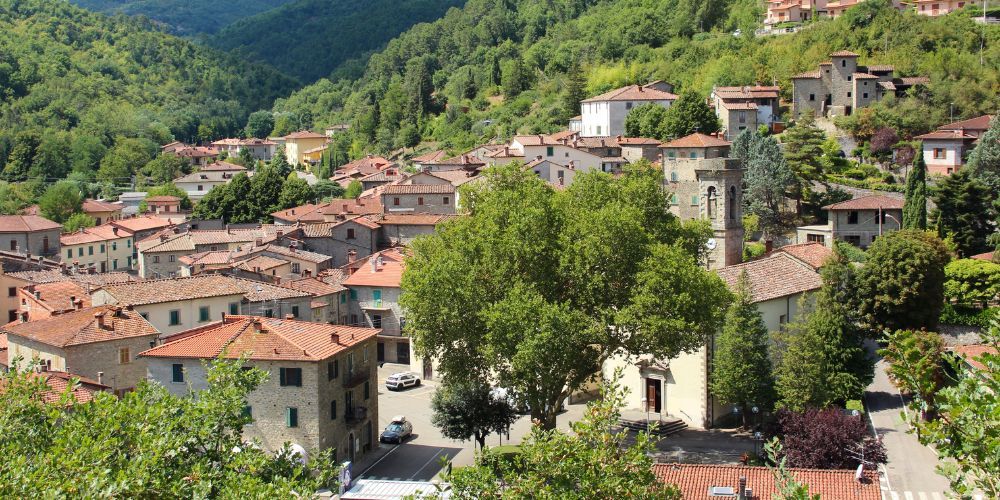
Let’s continue north and reach the ancient village of Talla, once inhabited by the Etruscans. The settlement you see today dates largely from the medieval period, especially the upper section known as the Castellaccia.
Among the stone houses of Talla was born Guido Monaco, the man credited with developing modern musical notation, and to whom a local museum is dedicated. In the village center, the main church is San Niccolò, while just outside the town, the evocative ruins of the Abbey of Santa Trinità in Alpe are another unmissable stop.
Talla is also a place where local recipes deserve to be explored. Chestnuts play a central role in the area’s culinary tradition. You can sample them in classic local preparations, simply boiled with a handful of salt, or flavored with wild fennel.
For food lovers, however, Talla is especially renowned for its cheese. The pecorino produced here has a long and proud history. Talla lies along the ancient transhumance route between the mountains and the Maremma, and the cheese still made in the village today is flavorful, lightly salted, and characterized by its pale paste.
Local dairies also produce flavored versions of the cheese, including varieties infused with chives or black pepper.
Stage 3: Chitignano
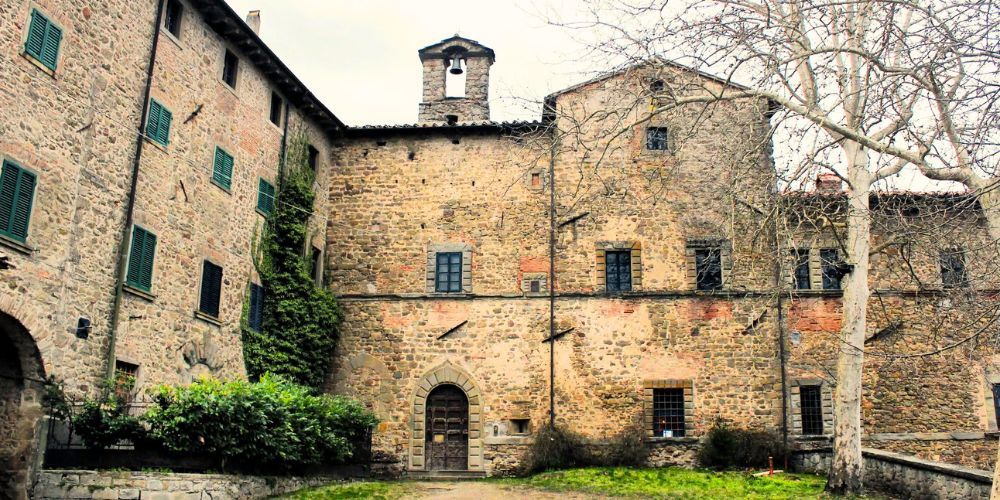
The itinerary to discover the food and wine excellence of Casentino now leads us towards Chitignano, a charming mountain village.
Here is the centuries-old Ubertini Castle, surrounded by the trees. To make the village so popular, there were also the healing springs. They were particularly appreciated by the pilgrims coming from Northern Europe on their way to Rome, along the Via Romea Germanica.
There are three springs around Chitignano: the Rio Spring, the Galastri Spring, and the Buca del Tesoro Spring; here you can bottle the water.
The village was once also known for its mills producing gunpowder and for the flourishing tobacco cultivation. Although it became illegal starting in 1830, this activity nevertheless continued clandestinely. Chitignano's museum, the Ecomuseo della Polvere da Sparo e del Contrabbando, is definitely the place to go to learn more about it.
Afterwards, to refresh yourself, you can choose a very popular snack in this area, the ciaccia, a fried focaccia excellent with local cured meats. Alternatively, there are the many specialties of the local cuisine. Mushrooms, for an instance, are the main stars here, to be tasted fried or sautéed with garlic and parsley. Truffles are popular as well, alongside game meat and cardoon flan.
Stage 4: Chiusi della Verna
From Chitignano, let's continue our journey along the road that winds through the forests till Chiusi della Verna, best known for the renowned Sanctuary of La Verna, a magnificent masterpiece of art and spirituality closely connected to the life of Saint Francis.
Among these forests, now a favorite destination for pilgrims from around the world, Saint Francis spent time in prayer and, in 1224, received the stigmata. One of the most evocative places to visit in the Casentino is the Chapel of the Stigmata, the spiritual heart of the Sanctuary, built on the very spot where this extraordinary event took place.
When it comes to local specialties in Chiusi della Verna, on the other hand, be sure to try the mushrooms and game, but this area is also renowned for truffles, which thrive in these woodlands and are celebrated each August with a dedicated festival.
The homemade pasta is another local highlight, especially tortelli alla lastra, one of the Casentino's most distinctive traditional dishes.
These square-shaped stuffed pasta are traditionally cooked on heated stone slabs. The most famous version comes from the village of Corezzo, where they are celebrated each year with a festival held in mid-August.
To finish your meal, treat yourself to local desserts such as lattaiolo, a milk-based sweet typical of the surrounding mountains, or baldino, a traditional chestnut dessert.
Stage 5: Bibbiena
The next stop on our tasty food and wine itinerary in Tuscany is Bibbiena, some 15 Km north of Talla. This is the capital of the Casentino Valley, which developed around a parish church starting in the 10th century.
Many are the art treasures of Bibbiena, including the Church of San Lorenzo with its terracotta works by della Robbia, the Oratory of San Francesco and the Sanctuary of Santa Maria del Sasso, built just outside the town center to a design by Giuliano da Maiano. The village's flavours, anyway, are just as precious.
Chianina beef, paired with local wines, is once again one of the must-try specialties. Here you can also taste the delicious brown trout of Casentino, that lives in this territory thanks to the climate and the temperature of the water. It is particularly delicious when grilled over charcoal and seasoned with local herbs and we will meet it againg along this journey.
A constant presence on Bibbiena’s tables is potato tortelli, excellent to be served with ragù sauce.
Cheeses are also part of the local tradition. There are many to taste, but Abbucciato del Casentino may be considered the local cheese par excellence. It is a particular type of pecorino that combines the long tradition of sheep farming with cheesemaking. Excellent on its own, it also pairs beautifully with local honey, itself a product of outstanding quality.
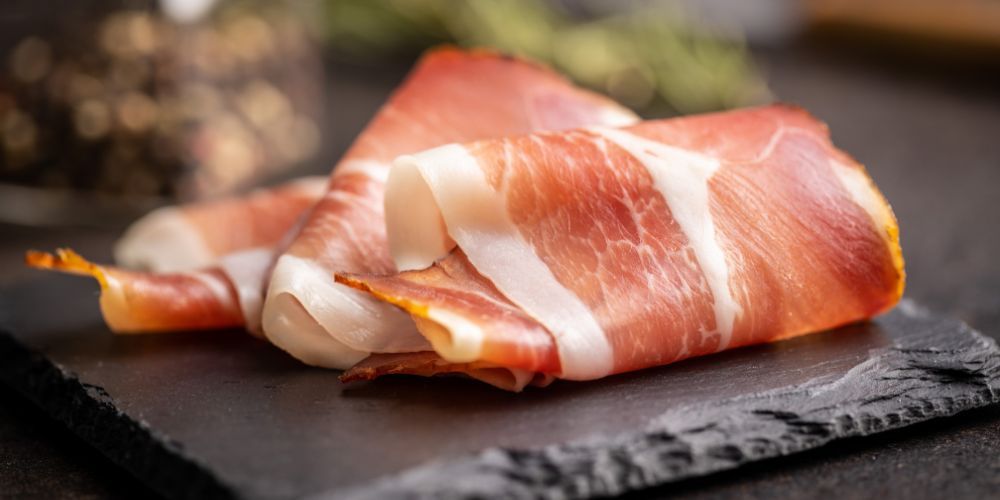
And last but not least, cured meats: the Casentino Grey Free-Range Pig is a tasting experience you should not miss.
Stage 6: Ortignano Raggiolo
Let's now set off again to discover the flavors of Casentino, taking a short detour west of Bibbiena. Just a few minutes and we'll reach the charming 13th-century village of Ortignano Raggiolo, surrounded by chestnut groves. A small heaven for slow tourism, with its pedestrian streets, peaceful atmosphere, and the timeless appeal of stone buildings, Ortignano Raggiolo is included among Borghi più belli d’Italia, the list of Italy’s most beautiful villages.
Here too, the Guidi Counts, such an important family in the history of the Casentino, have left traces of their noble past. The Church of San Michele, for instance, is located inside what once was the family’s ancient noble palace.
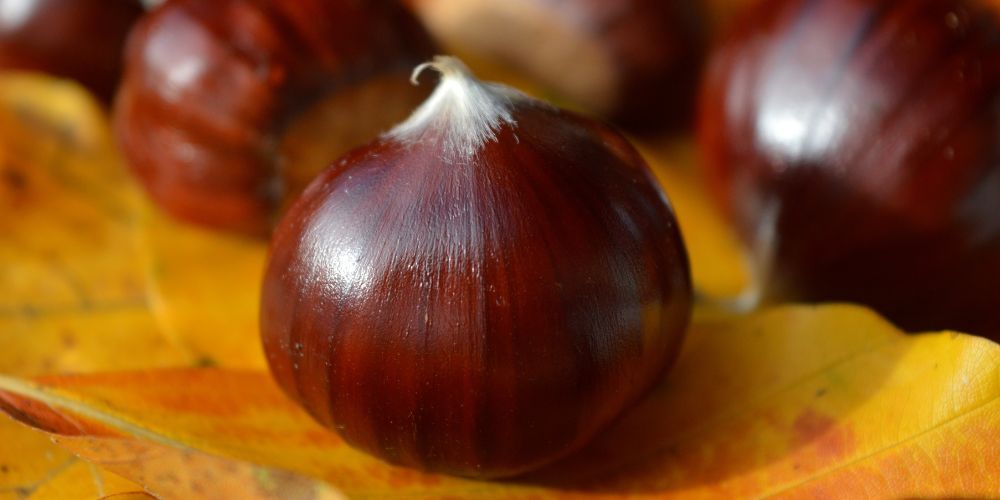
A culinary stop in Ortignano Raggiolo should definitely include dishes based on mushrooms gathered in the surrounding forests. Even more central here, however, is another forest treasure: the chestnut, to which the Chestnut Ecomuseum is dedicated, also hosting workshops for children.
There is no better way to truly get to know this Casentino treasure than sitting down at the table and tasting the many dishes made from it. For example, polenta made with chestnut flour is a traditional dish of the Casentino mountains, and of Ortignano Raggiolo in particular.
Chestnut flour is also used in many other recipes, one of which is baldino, a dessert with an intense flavor that becomes even richer with the addition of pine nuts, walnuts, and raisins.
Stage 7: Poppi
Poppi is among the most precious gems of the Casentino, also included in the list of Italy’s Most Beautiful Villages. The harmony of its architecture defines the historic center, together with the magnificent Castle of the Guidi Counts, where Dante Alighieri is said to have stayed during his exile.
The Castle of Poppi is not only one of the most beautiful castles in Tuscany, but also one of the main epicenters of the Casentino’s food and wine tradition.
It is right here, in fact, that the Gusto dei Guidi event takes place every year during the last weekend of August, celebrating the region’s wines. It is a perfect opportunity to taste Casentino wines, as well as those from the rest of Tuscany, along with many local delicacies.
Being one of the most renowned centers in the region, this village is an excellent place to sample many of the area’s traditional dishes. Potato tortelli are one of the most representative specialties of the Upper Casentino that you can find in Poppi, alongside Acquacotta, a traditional peasant soup.
On the tables of Poppi you will also find exquisite cured meats and Chianina beef, together with excellent cheeses, such as the Raviggiolo, soft and fresh. Furthermore, those with a sweet tooth will certainly appreciate the fine local honey and the marroni, a variety of chestnuts of the Casentino.
Stage 8: Camaldoli
From Poppi, along a road that alternates between open stretches and wooded sections, we reach Camaldoli, home to one of Italy’s most important monastic complexes, together with its hermitage.
The Monastery and Hermitage of Camaldoli were founded in the 11th century by Saint Romuald and became a major cultural center, particularly during the Renaissance. The Hermitage, nestled in the woods, also preserves the cell of Saint Romuald, which can still be visited today.
The Camaldolese monks are well known for their pharmacy, where a variety of products rooted in a long tradition can be purchased. Among them are herbal teas made from local plants for a wide range of needs, as well as excellent liqueurs based on medicinal herbs. Among those there are for example rhubarb, gentian, and artichoke.
Laurus 48 is among the most appreciated spirits, but all the digestive and bitter liquors made inside the Monastery's walls according to ancient recipies, are of very high quality.
No less important is the monastery’s winery, which makes an essential part of the local culture. The IGT wines such as Farnetino Bianco and Borbotto in its red, white, and passito versions, are a hallmark of the Camaldolese tradition, but they are produced at the historic La Mausolea estate in the Bibbiena area, where the climate is milder.
Also typical of Camaldoli’s production is Musileo, a fortified wine made from late-harvest grapes.
Stage 9: Moggiona
Just a little over five kilometers separate Camaldoli from the next stop: Moggiona. A small hamlet of Poppi set on a hillside at 700 meters above sea level, the village has just over one hundred inhabitants, but it carries a history of its own.
During the Second World War, Moggiona found itself along the Gothic Line and on September 7, 1944 it was the site of a tragic massacre carried out by the Nazis.
Long before that, and for many years afterward, this was the village of the bigonai, the craftsmen who built vats and barrels using wood from the forests near the Camaldoli Hermitage. In the last century, the village had as many as thirty workshops that supported entire families, making vats used for grape harvests or oil production across the region.
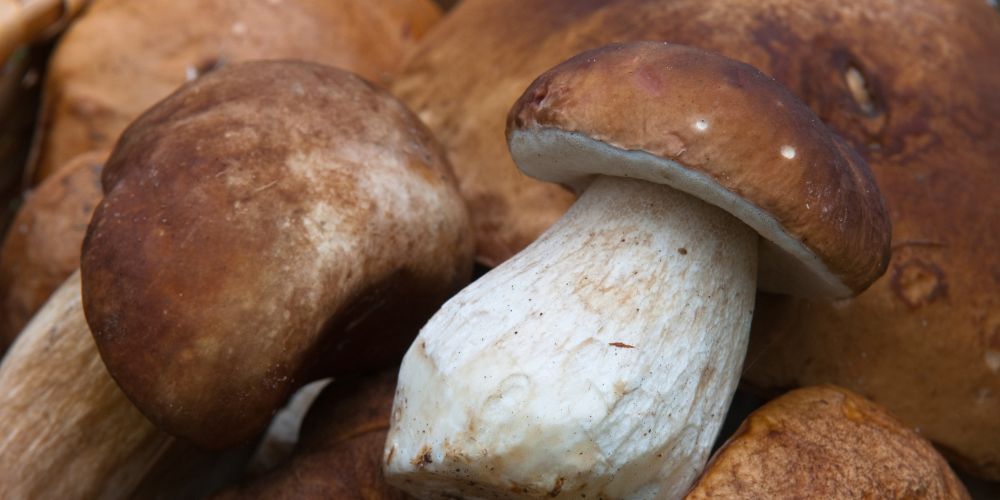
If you happen to be in Moggiona during mid-August, you can taste one of the local specialties: porcini mushrooms, celebrated at the Moggiona Porcini Mushroom Festival, which has also received national recognition. For the occasion, tables are set up along one of the village streets and wine is served for free. Alternatively, there is also the Cantina del Bigonaio, where you can sample both white and red wines. On August 15, the festival is further animated by a procession dedicated to the Virgin Mary.
Needless to say that you'll get to taste Moggiona's delicious dishes all year long. Among those, there's also the Acquacotta, a common soup in the Casentino mountains but typical in particular of this small village, where it is made with wilted red onions, tomato, and sausage.
Stage 10: Castel San Niccolò
Leaving Moggiona behind, we set off to discover Castel San Niccolò, a small, scattered municipality surrounded by verdant countryside, just over ten kilometres west of Poppi.
The castle from which the village takes its name stands perched on a rocky outcrop. The fortified citadel includes a Tower with two clocks, the parish church, now converted into the Museum of Castle Civilization, the Podesteria, and the Chapel of the Crucifix.
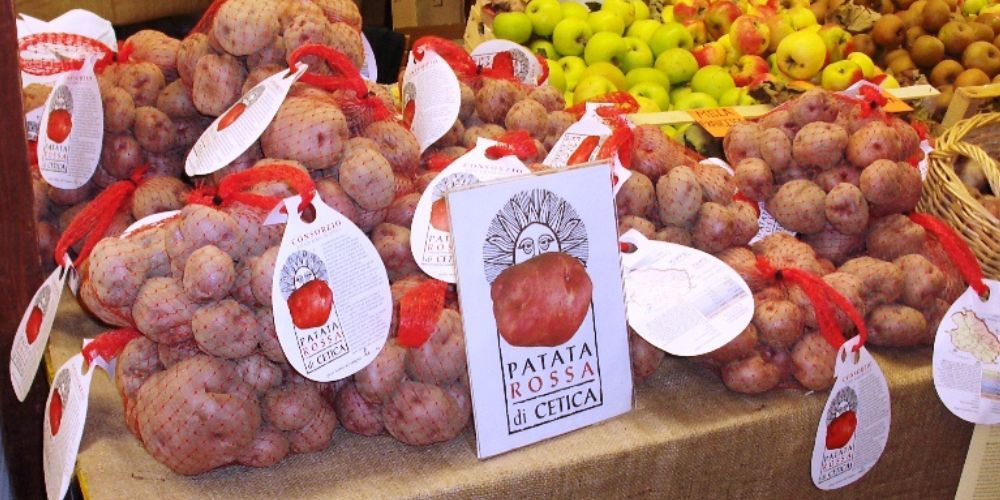
Castel San Niccolò is also renowned as the birthplace of two of the Casentino valley’s most celebrated agricultural specialities. The first is the Cetica potato, distinguished by its white flesh and red skin, and cultivated exclusively on the slopes of the Casentino Pratomagno. It is therefore also known as the Red Potato of Pratomagno, or simply the Casentino Red Potato.
Then there is Garliano, one of the village’s four “founding quarters”. This is where the prized Garliano beans are grown: white, thin-skinned, and delicately flavoured. They are also known as Quota beans, after the other locality for which they are traditionally renowned, situated between Poppi and Garliano itself.
Traditionally, these beans were cooked in the fiaschi, the classic straw-covered wine flasks. Once they were no longer suitable for storing wine, the flasks were stripped of their straw covering, filled with water, beans, and herbs, and placed in the oven where bread had previously been baked. Today, more practical terracotta pots are generally preferred, yet the flavour of the beans remains exactly as it was in times past.
Stage 11: Montemignaio
Our journey through Casentino's flavours takes us to Montemignaio, a picturesque village that grew up around the remains of a thirteenth-century castle. Here you can also find the beautiful medieval parish church of Santa Maria Assunta, one of the finest in the Casentino Valley.
Close to the border between the provinces of Arezzo and Florence, the village is surrounded by pastures, cultivated fields, and forests. Its historic centre is home to the fourteenth-century Oratory of Saint Agatha, which bears the coat of arms of Florence’s Wool Guild, that once enjoyed thriving trade relations with the village's livestock farmers.
In Montemignaio don't miss the delicious pulenda, the local version of polenta made from chestnut flour. Its distinctive aroma comes in part from the traditional drying process, which uses wood-fired heat.
Pulenda pairs wonderfully with fresh cheeses and locally grown mushrooms, as well as with regional wines. Being a typical dish of this village, it is also celebrated with its own festival, held every year in November.
Montemignaio has another feature that makes it particularly special. The small village is known as the “Town of the Christmas Tree” because magnificent fir trees are cultivated here and often go on to adorn town squares across Italy during the Christmas season.
Stage 12: Pratovecchio Stia
Our journey through the gastronomic delights of the Casentino has, unfortunately, reached its final stop: Pratovecchio Stia. Watching over the village are the majestic ruins of the Castle of Romena, one of the most important in Tuscany, as well as its splendid Romanesque parish churches. The church of Santa Maria Assunta, home to significant artworks, is located in the historic centre and just outside the town stands San Pietro a Romena.
Pratovecchio Stia is also renowned for its craftsmanship, being the centre of production for the famous Panno Casentino, the cloth to which the Museo dell’Arte della Lana is dedicated. The local culinary traditions are equally distinctive and deeply rooted in the territory. Among the region’s most prized products is the Zolfino bean, cultivated exclusively in the area between the Pratomagno mountains and the Arno Valley. Here it thrives thanks to well-drained, mineral-rich soils.
Another local delicacy is the Casentino trout, that we met already along the road, and that's native of Pratovecchio Stia's area in particular.
Among the jewels in the crown of local cuisine, it is impossible to forget the precious saffron, entirely produced within the territory of the Casentino Forests National Park. This is an high-quality product, grown according to fully organic methods.
Don't leave Pratovecchio Stia without tasting the Scottiglia, the hearty meat stew. It is enjoyed throughout the Casentino yet closely associated with the area of Pratovecchio Stia.
In the hamlet of Lonnano there's also a festival dedicated to Scottiglia and held in July. The recipe is undoubtedly ancient, probably dating back to the Middle Ages, although some trace its origins as far back as Etruscan times.
A food and wine itinerary in Tuscany: discovering Casentino's uthentic soul
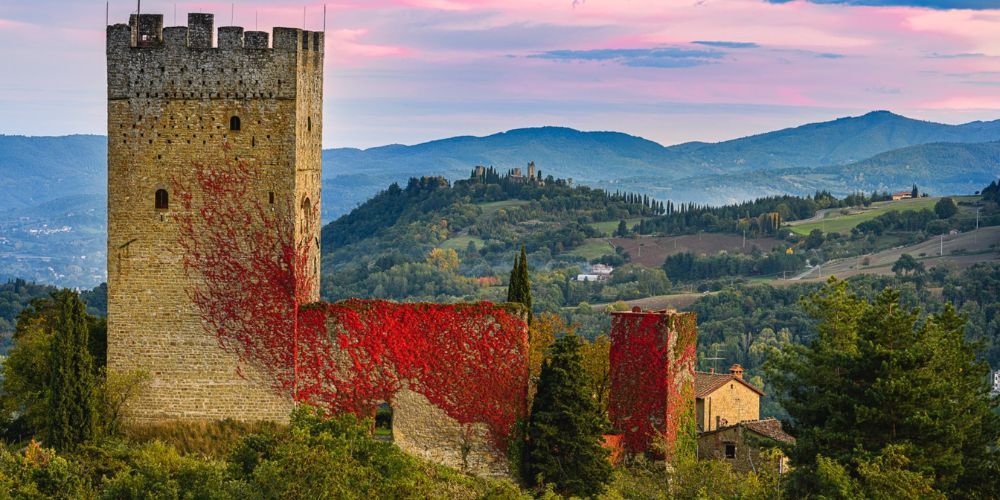
From Subbiano to Pratovecchio Stia, thanks to this itinerary you will be taken to the heart of a region that retains all the magic of a place still waiting to be truly known, a stone throw away from the famous art city of Arezzo.
As if hidden among forests and mountains, the Casentino Valley almost looks like a world of its own, eagerly waiting to open its doors to visitors, offering an extraordinary wealth of culture that is also expressed through its cuisine.
Explore it at a leisurely pace and, perhaps along the cycle and pedestrian path of Ciclopedonale dell'Arno, for a food & bike experience that crosses Casentino for thirty kilometers.
Anyway, between sustainability, short supply chain and hospitality, in Casentino you'll get the chance to immerse yourself in the striking authenticity of the local produce: from chestnuts to prized porcini mushrooms, from cheeses to the wines of a new generation of cellars, reviving the valley’s precious winemaking tradition.
This is a journey that goes far beyond simple tasting, leading you through the flavours of a naturally authentic Casentino that many have yet to discover.
About the author
Written on 09/07/2026
Paola Cirino
A content writer who can't help but travel. I'm also a food lover and very passionate about cinema.

Paola Cirino
Casentino is the Tuscany food and wine itinerary just waiting to be discovered. Leave for a journey among the most authentic flavours