
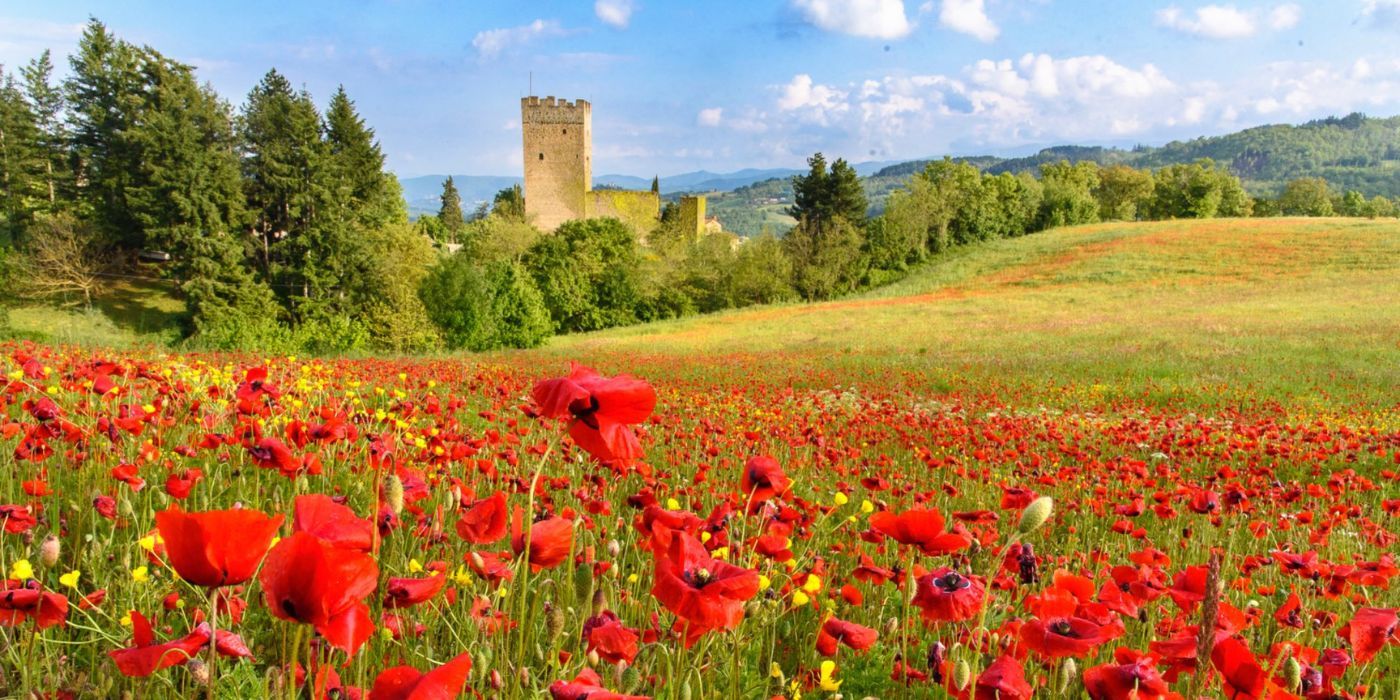

The Casentino Valley is Tuscany as you have never seen it. This green land, nestled among the peaks of the Apennines, welcomes visitors with its castles and ancient sanctuaries, surrounded by silent, age-old forests. Far from the lively streets of Florence and the villages of Chianti, beautiful yet often crowded, in Casentino the days unfold gently among picturesque places and the fragrances of nature.
The landscapes of the Casentino have remained unspoiled, almost wild, and for this very reason they are all the more beautiful when truly contemplated, without the filter of screens. The local culture, too, preserves a deeply authentic soul in which one may lose oneself for a while. This is a land to be experienced with all the senses: from the flavors of traditional cuisine to the aromas of its wines, to the hushed sounds of nature. Every experience here will make you fall a little more in love with Tuscany’s most intimate side, still known to only a few.

Casentino and the art of slowing down: the other Tuscany to experience in 2026
🥇 Visit Italy’s brand partnership
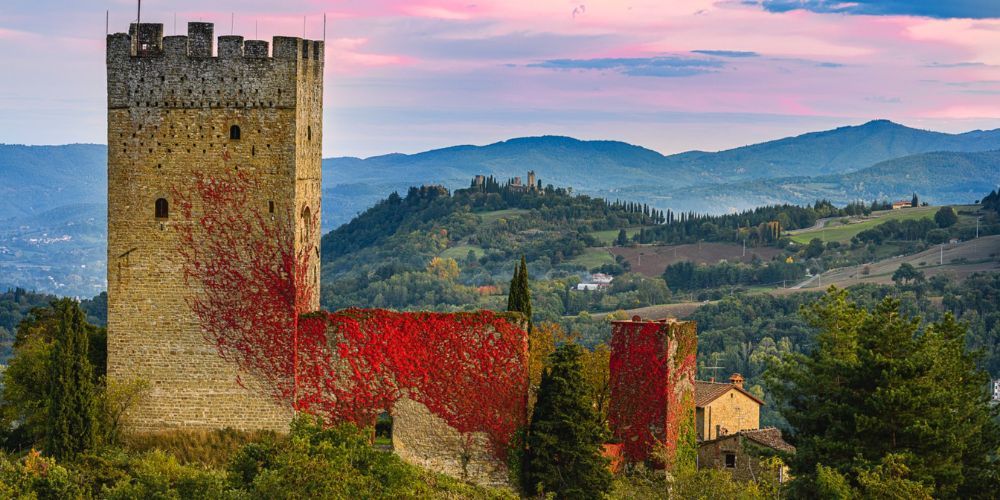
Casentino is a destination that captivates anyone who loves to live in tune with nature’s rhythms, savoring every single moment.
Genuine human connections, life in the open air, and the honest flavors of a culinary tradition of the highest order make this enchanting corner of Tuscany the place to be in 2026, especially if you wish to uncover the still-hidden secrets of one of Italy’s most visited regions.
A perfect alternative to overcrowded destinations, this valley tailored to unhurried travelers feels like a small world unto itself, at once near and remote, to be explored through spiritual paths and the silence of its sanctuaries. In 2026, cycling enthusiasts too are finally beginning to discover the routes that reveal all its wonders, including its ancient villages, small hidden gems nestled among lush forests and rivers of crystalline waters.
An ancient history, begun three thousand years ago, has left in the Casentino Valley many precious traces, shaping this fortunate land of immense charm, much like the beauty of its landscapes, which you will not forget.
Discover CasentinoWhere Casentino is located
The Casentino valley lies a short distance from Arezzo, between the ridges of the Pratomagno massif and the Apennines, on the border between Tuscany and Emilia-Romagna. It is crossed by the Arno, “the river of Florence,” which rises just a little further north, on Mount Falterona.
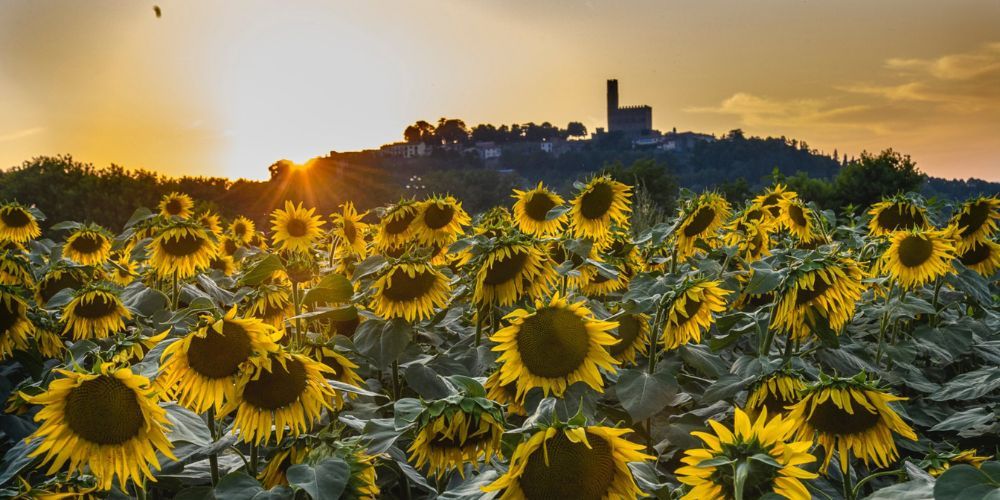
Bibbiena is its main hub, but there are many villages to discover and fall in love with in this green valley. In Casentino, you’ll find the charming town of Poppi, recognized as one of Italy’s Most Beautiful Villages (Borghi più belli d'Italia), which, together with its extraordinary castle, is one of the region’s icons.
Far from traffic and smog, among forests and mountains, Casentino boasts a privileged location that has allowed the thrieving of an extraordinary variety of species, both in terms of flora and fauna. Chestnut groves, fir-woods, and beech forests alternate with meadows that form a true open-air museum for nature lovers, preserving thousands of years of botanical evolution.
The forests and mountains of the northern Casentino are part of the National Park of the Casentino Forests, a true oasis where you can enjoy the full beauty of a day immersed in greenery, in every season of the year.
The National Park of the Casentino Forests and outdoor life
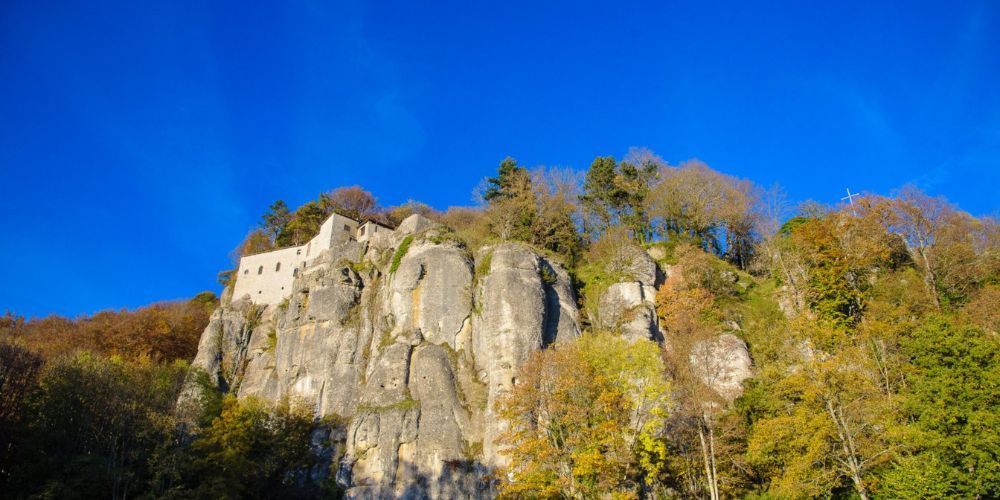
Among the most beautiful experiences to be enjoyed in the Casentino are undoubtedly its vast open spaces. The Park, whose full name is the National Park of the Casentino Forests, Monte Falterona and Campigna, it is an extraordinary green protected area to explore through a network of eight hundred kilometers of trails. It also includes Mount Falterona, which at 1,654 meters is among the highest in the region. On the mountain lies Capo d’Arno, the source of the Arno, also mentioned by Dante in his Divine Comedy.
Within the park there are countless unmissable places, such as the Lake of the Idols, near Capo d’Arno, worth visiting not only for its beauty but also as the site of important archaeological findings, like the six hundred small bronzes of Etruscan origin.
Sasso Fratino is one of the wildest and most untouched areas, among the primeval forests recognized as a UNESCO World Heritage site. It is fully protected, so it's not accessible, but via the wonderful Lama Forestry Trail, you can admire the ancient beech forests.
It's worth remembering, anyway, that green Casentino is not limited to the park alone. Even beyond its boundaries, there are always places where you can breathe clean air, surrounded by greenery.
Exploring Casentino on foot or by bike
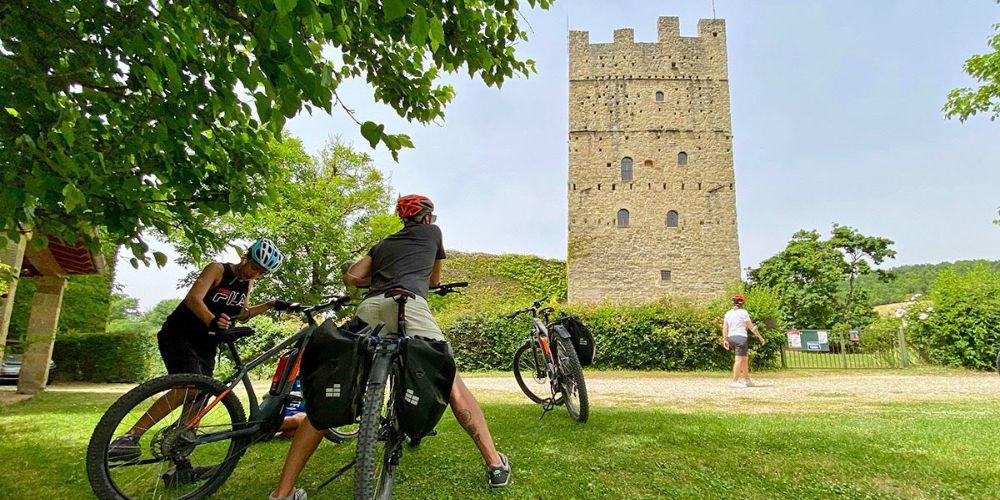
There is no better way to immerse oneself fully in the natural beauty of the Casentino valley than by exploring it on foot or by bicycle.
Trekking enthusiasts can experience the thrill of walking along paths steeped in history, such as the Historic Path of Saint Francis. In the footsteps of the Saint of Assisi, you will discover a landscape rich in emotion including, for example, a visit to the beautiful Sanctuary of La Verna.
Along the Alpe di Catenaia runs the ancient Via Romea Germanica, once used by pilgrims journeying from the North Sea to the Holy Land. The stretch that crosses the Casentino once again passes through La Verna before reaching Arezzo.
Do you prefer cycling excursions? The Casentino is becoming an unmissable destination for cycle tourists from around the world thanks to the recently created Arno Cycle/pedestrian Path.
Far more than a simple track, this itinerary crosses Casentino for thirty kilometers. Through hills, countryside, and treasures of art and history, the Arno Cycle/pedestrian Path is one of Italy’s most valuable assets in terms of sustainable tourism, an unmissable way to discover the region’s nature, its genuine hospitality, and its culture.
The most authentic flavours of Casentino
In Tuscany, flavors and culinary traditions are held as something almost sacred, an integral part of daily life and the most genuine expression of local culture. The Casentino, of course, is no exception, with its many recipes and dishes that stand as a testament to the immense richness of the land.
Among the most beloved traditional dishes is scottiglia, a slow-cooked meat stew historically linked to transhumance, as well as acquacotta, a soup that in its local variation is enriched with sausages and mushrooms. From pastures and livestock farming also come a variety of cheeses and dairy products, often prepared using traditional methods handed down through the centuries.
The flavor of tortelli casentinesi is just as rich, especially when dressed, as tradition dictates, with butter and sage or a meat-based sauce. At the heart of these stuffed pasta is the Cetica potato, a local specialty of the Casentino and a Slow Food presidium, alongside other delicacies such as aged ham from the Casentino Grey pig.
The generous land of this region offers many prized ingredients, including mushrooms, chestnuts and grains, increasingly cultivated using sustainable methods.
Sheep farming, practiced for generations, has fostered the development of dairies where pecorino cheeses and ricotta are produced and used in many traditional dishes.
No true Italian table is complete without a good glass of wine, and this is becoming ever more true in the Casentino, where local wines could be described as a relatively recent discovery, one that deserves a discussion of its own.
Casentino, the emerging Italian wine region

Did you know that the Casentino is one of Italy’s emerging wine regions? Among the many hidden gems of this unique land are its wineries, especially in recent years.
A skillful blend of new techniques and ancient practices has given rise to a wine production defined by both quality and variety, led by thirty-three young wineries.
Visiting the wineries of the Casentino allows you to step into a world where past and present are seamlessly intertwined. As you sip wines that have received notable awards, you can observe up close the roots of a millennia-old tradition.
At the end of August, moreover, the charming village of Poppi becomes the heart of the region’s wine culture thanks to Gusto dei Guidi, the festival that celebrates local wineries.
Through history, among the silences of sanctuaries
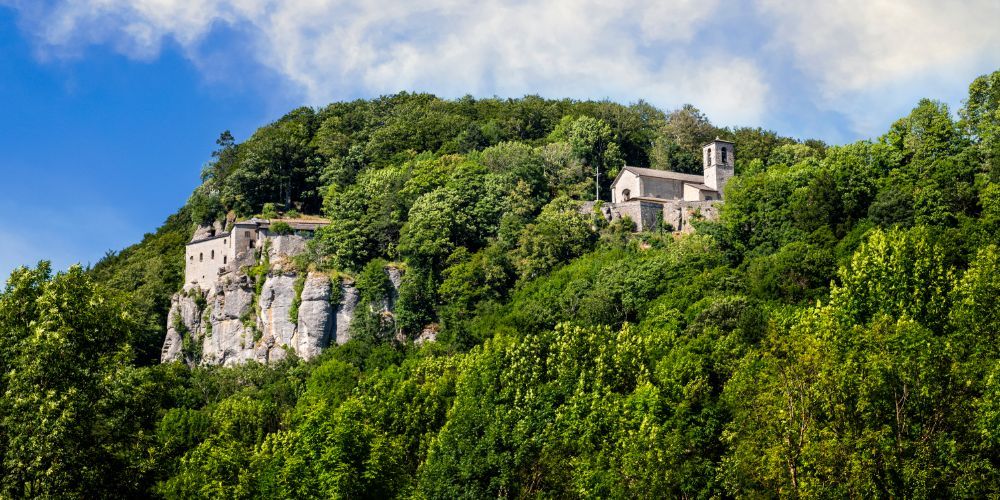
The flavors of tradition and life in the open air are only some of the many facets of the Casentino, a region that also stands out for its deep connection with the world of spirituality.
To truly appreciate its silences and its timeless atmosphere, one encounters parish churches, hermitages, and above all sanctuaries, some of which are among the most important in Italy.
The Sanctuary of La Verna, starting point of the Historic Way of Saint Francis, holds immense significance not only for the region but for the Christian world as a whole. It was here, in 1224, that Saint Francis received the stigmata, while inside, still today, are kept artworks of huge value, including Della Robbia terracottas.
This is a place whose beauty moves even those who are not religious. Set in a privileged position, it is surrounded by paths that wind through the forest and lead to symbolic sites such as the Chapel of the Stigmata, guarding the stone where St. Francis was when he received the stigmata, and Sasso Spicco, a beloved place of pilgrimage where St. Francis used to stop to meditate.
Within the National Park of the Casentino Forests lies the monastery of Camaldoli, founded in 1012 by Saint Romuald. It is a noteworthy site for its cloister, its herbal workshop, the precious manuscripts preserved in its library, and its evocative garden. Here too, beautiful trekking paths can be found.
In Casentino, parish churches are a moving expression of the religious sentiment of its inhabitants, and also a good reason for slow travelling in Tuscany. In Pratovecchio Stia, for instance, there is the Romanesque Parish Church of Romena, and among the Casentino's places beloved and cited by Dante Alighieri.
Another beautiful Romanesque parish church is Santa Maria Assunta, with fourteenth century frescoes. It's located in the small village of Montemignaio, that was built inside the walls of an ancient castle.
Pieve a Socana is certainly one of the most interesting in Casentino. It is located in Castel Focognano, and it is worth noting that there is also an extraordinary archaeological area here, which includes the largest and best preserved sacrificial altar in Etruria.
Villages and castles, to dream a little
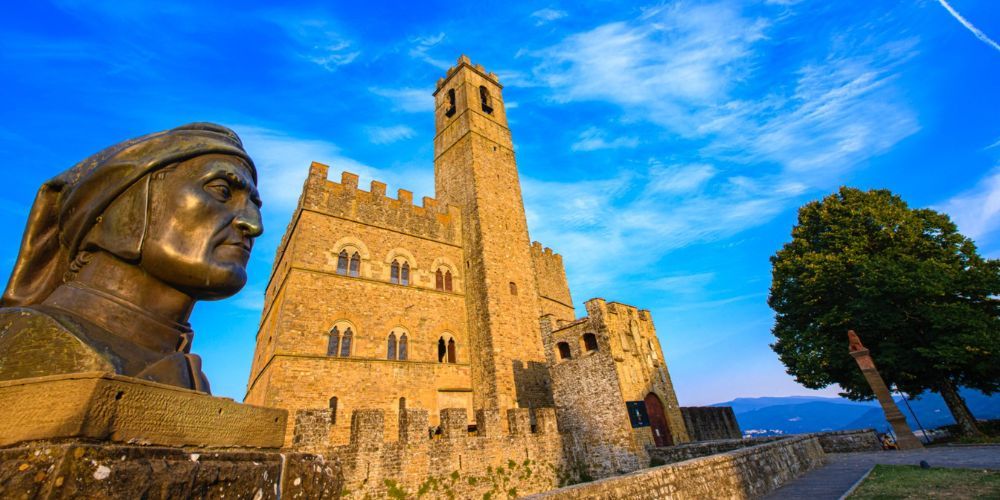
With its villages and castles, the Casentino feels almost like something out of a fairy tale. Choosing among the many treasures of such a vast heritage is no easy task, but a good starting point is the region’s main town, Bibbiena.
Here stands the Clock Tower, once part of a great medieval castle, but the town still preserves many traces of the Romanesque-Gothic period. Bibbiena also hosts the largest open-air photography gallery in Europe, where fifty works by major Italian artists are exhibited.
Poppi, as mentioned earlier, is well worth a visit. Set on a hill, it boasts a splendid medieval historic center and the magnificent Castle of the Counts Guidi overlooking it. One of the Casentino's most important monuments, Dante lived for one year during his exile and is said he composed several verses of the Divine Comedy right here. Inside, several rooms can be visited today, including the museum on the Battle of Campaldino, the frescoed chapel, the tower, and the courtyard with its elegant loggia.
Like Poppi, Ortignano Raggiolo is among the Most Beautiful Villages in Italy, worth visiting for its chestnut trail and the Ecomuseum dedicated to it, while the small village of Chitignano is known for its three springs of healing waters, once believed to be magical.
Pratovecchio Stia is a true treasure chest of history and art. The village is remarkably rich in traces of past centuries, particularly from the Middle Ages, and it has its own stronghold too: on a solitary height stand the ruins of Romena Castle. Majestic and romantic at once, they still reveal the traces of a past marked by glory and grandeur.
Not to be forgotten is Subbiano, a small and charming village set along the banks of the Arno, with a very ancient history dating back to the Etruscan period, in a strategic position for visiting the castles of Valenzano.
Did you know that modern musical notation was born in Casentino? The Benedictine monk Guido Monaco, who devised it, was born in the village of Talla in the 10th century. His birthplace can still be found here, now converted into a museum.
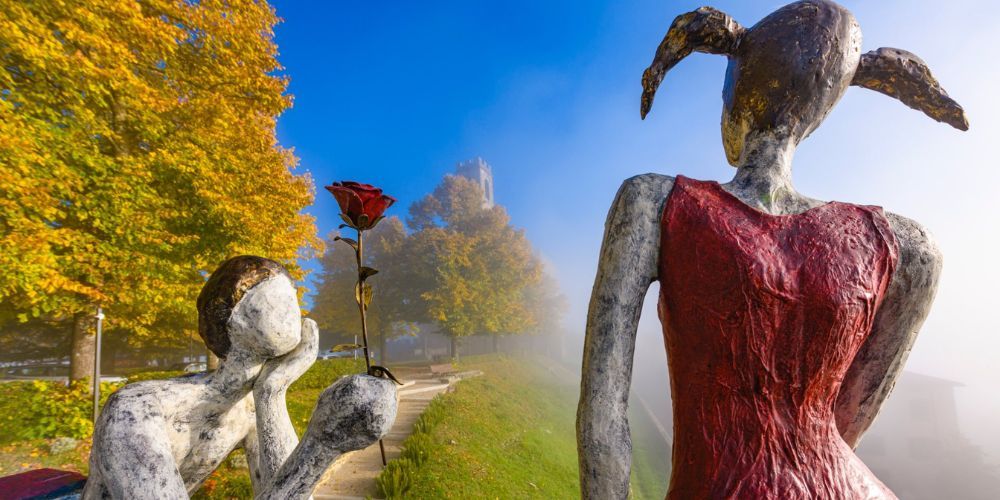
One of the purest, and also most enjoyable, expressions of Casentino’s culture is found in its events such as fairs and festivals, especially those rooted in tradition.
Imagine, for instance, the magic of experiencing Christmas at the Castle of Poppi, the same village where, in August, local wines are celebrated during Il Gusto dei Guidi.
In May, the municipality of Poppi, and more precisely the village of Badia Prataglia, also takes center stage with the Trail Sacred Forest, the most important running race in the Casentino, set within the extraordinary natural scenery of the National Park of the Casentino Forests.
During the months of July and August, Chiusi della Verna hosts the International Organ Music Festival, while in Pratovecchio Stia, the widespread festival Naturalmente Pianoforte was established in 2012.
In August, in Corezzo, a hamlet of Chiusi della Verna, the Tortello alla Lastra Festival takes place. This large tortello cooked on stone slabs is a delicious local specialty, and the festival dedicated to it typically takes place between August 10th and 14th or 15th.
In summer, in Subbiano, between the end of August and the beginning of September, the traditional Festa di Finestate takes place at the same time as the Festa dell’Uva. Floats inspired by rural traditions and performances by flag-wavers make this event particularly captivating.
Finally, in Stia, the Biennale of Forged Iron Art is held. This event is especially fascinating for lovers of craftsmanship, as it is one of the most important dedicated to the working of wrought iron, an ancient form of craftsmanship, and art, that in the Casentino is still very much alive today.
Craft and tradition to know in Casentino
Craftsmanship in the Casentino Valley takes many different forms, shaped by creativity and techniques refined over centuries of customs, habits, and knowledge passed down through generations.
Ceramics, leather, iron, and textile fibers are among the local excellences in the realm of handmade production.
Textile fibers, in particular, boast an exceptionally long tradition here, already widespread among the Etruscans and the Romans. Thus, the cloth known as Panno Casentino stands as one of the most renowned expressions of local craftsmanship.
Obtained from sheep’s wool, it is fulled to make it water-resistant and teaselled to soften it. It is also known as “curly cloth” for the distinctive curls created through a finishing with stone, called "rattinatura".
It is warm and durable, and for this reason highly valued; indeed, due to its exceptional quality, in the Middle Ages it even became a form of currency in trade. Today it is exported worldwide and sought after by major fashion houses.
An important testament to the value of the art of wool in the Casentino can be found in Pratovecchio Stia. It is the Museum of Wool Art, which offers an extraordinary multisensory experience, as visitors can touch the wool and engage directly with the various textiles.
Casentino: a slow journey that renews the spirit
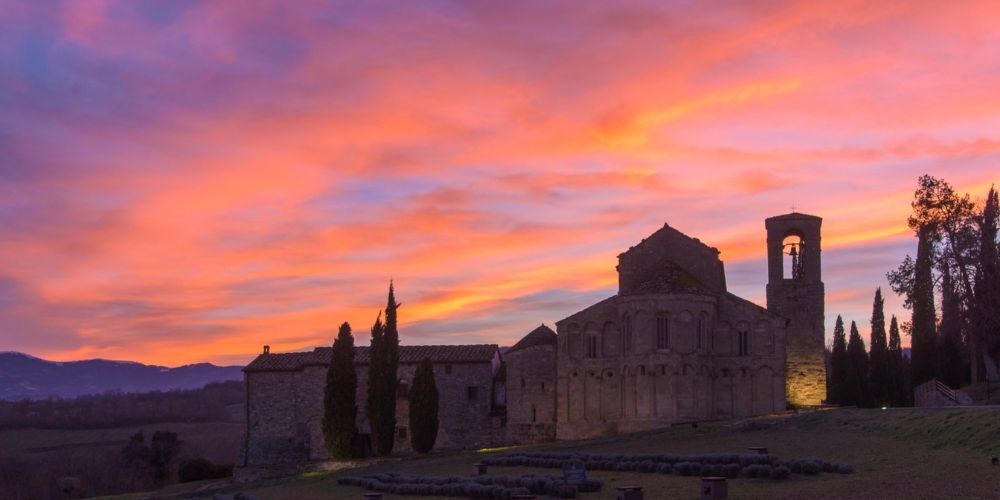
After a virtual journey exploring one of Italy’s most exclusive destinations, all that remains is to set off and experience firsthand the emotions that the Casentino has to offer.
Switch off your phone for a while and immerse yourself in a travel experience unlike any other. Let yourself be enchanted by a nature where human presence is discreet, and savor the extraordinary flavors of local dishes and wines.
Far from the crowds, you can truly enjoy every moment that these historic places give to those who allow themselves the time to know them.
Along paths winding through forests and hills, in the shadow of castles and in places of spiritual reflection, you will discover the Casentino’s most sincere hospitality, amid ancient traditions still alive and local festivals that bring the seasons to life.
About the author
Written on 27/04/2026
Paola Cirino
A content writer who can't help but travel. I'm also a food lover and very passionate about cinema.

Paola Cirino
Come and know Casentino, the most authentic side of Tuscany to be discovered slowly, among surprising landscapes, history and genuine flavours