

In the heart of inland Cilento, (not too) far from Southern Italy’s most celebrated routes, something new is taking shape. Among hidden villages nestled in greenery and postcard-perfect landscapes that rarely make it onto postcards, a group of artisans, digital nomads and young entrepreneurs is rewriting the future of local communities.
The recipe? A sustainable model built on inclusion, creativity, and a genuine curiosity for this stretch of Campania. To see it up close, we headed to Cilento and gathered the voices of those who decided this was the right place to tell a new story. What we discovered was not what we expected.
Inside Inland Cilento: The Revival of Hidden Villages
🥇 Visit Italy’s brand partnership
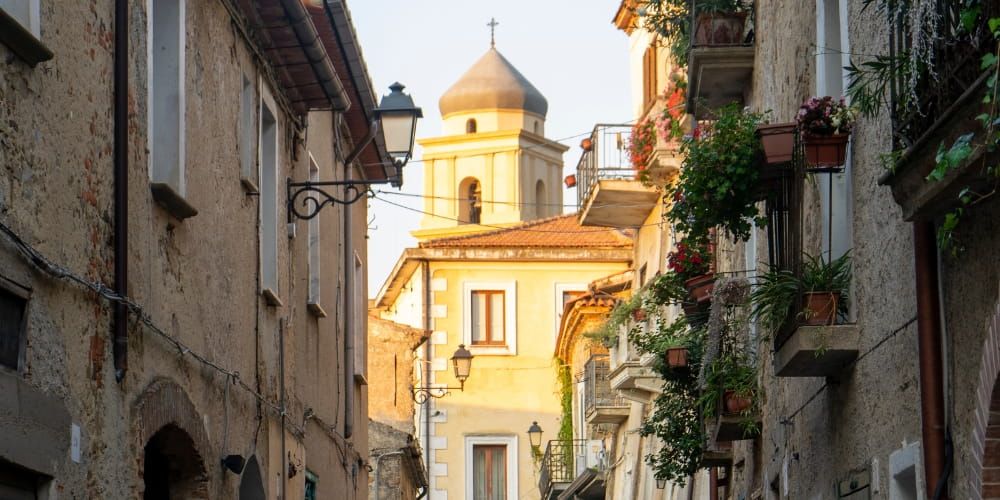
A wind of renewal moves through olive-dotted hills and small villages where houses often outnumber residents.
Long considered marginal, these places of elusive beauty are now becoming spaces for experimentation and new opportunities. For living, and for travelling.
Orria, San Mango Cilento, Cuccaro Vetere, Ceraso. Some choose to call them home; others discover them as niche destinations.
While a select few return to the villages of their parents or grandparents, others pass through, drawn by a more conscious and ethical way of travelling.
These aren’t isolated stories but part of a growing network. Projects like Cilento's try to connect the dots, giving space to those who are reimagining Cilento from within. Their choice is courageous and inspiring, so we set out to meet them and understand what led them here. Here’s what we found.
Why Inland Cilento Is Becoming a New Escape
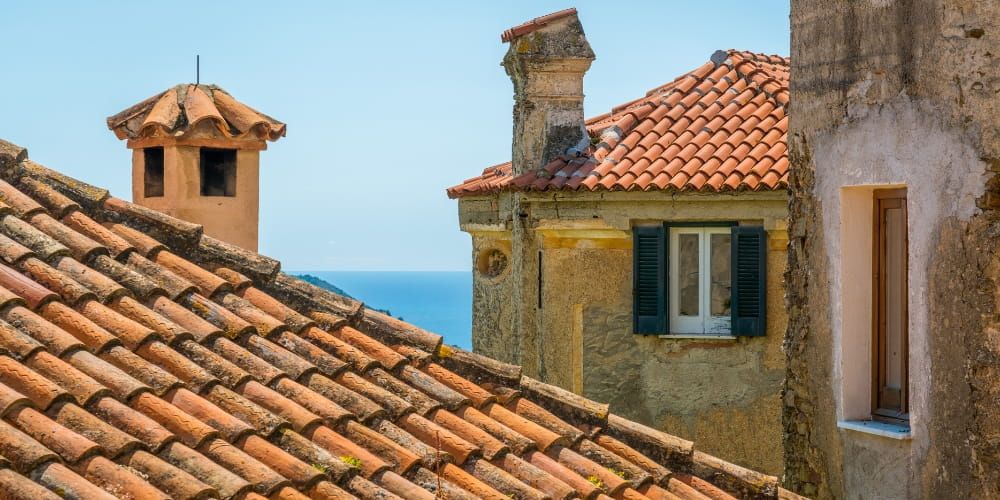
What’s changing these villages is people.
Some have decided to build their lives here from scratch. Others are coming back with skills, ideas, and a different perspective. They’re reshaping places that not long ago felt on the verge of disappearing.
Drawn to a slower way of life, digital nomads work remotely from old stone houses, and young entrepreneurs experiment without the pressure of scale.
In piazzas where everyone is on first-name terms, new faces now appear, and different languages can be heard.
Unused land is being farmed again, centuries-old traditions are being updated, and creative workshops give people a reason to meet and connect.
The inland villages of Cilento are changing. It remains to be seen if this will make the area one of the best places in Southern Italy for authentic travel experiences, too.
Remote Workers love Cilento's Slow life
Inland Cilento used to be the kind of place people once would have overlooked, but not anymore.
Alongside those returning to their families’ hometowns, another crowd is showing up, with laptops in their backpacks and calls scheduled across time zones.
Digital nomads choose Cilento for its slower pace, lower costs, and the time it offers to do what they love.
Their presence is shifting the atmosphere in places that were emptying.
Now there are more lights that glow at night, a bar keeps its doors open a little longer, and a few more people linger on the streets.
Travellers are starting to pick up on it, too. First-time visitors to these lesser-explored corners of Southern Italy are finding something closer to a lived-in experience than a curated destination.
Related story – Why Cilento is trending for summer 2026 travel
Real Stories of Reinvention and Upcycling in Cilento
@cilentoskyshots Sospesa tra storia e devozione, la Chiesa di San Giorgio nel cuore di Cicerale incanta con la sua facciata secolare e l’eco delle campane che attraversa i vicoli del centro storico. #cilentoskyshots #cilento #cicerale #italy #paesi Con Te Partirò - Andrea Bocelli
Up in the hills of Cilento National Park, abandoned plots are being worked again. Stone walls are cleared, olive trees pruned back into shape, paths reopened. It’s not just about producing something, but relearning how to inhabit the places.
"I wanted to understand where food actually begins," says Linda Montagna Maffongelli, who left Switzerland for San Mango Cilento. "And adopt a more sustainable way of living."
Her farming business, Eco della Terra, focuses on regenerative olive growing and the stewardship of Cilento’s rural landscapes. "It’s about involving people," she explains, "making them feel responsible for our planet."
A few kilometres away, in Ceraso, a different kind of recovery is taking place.
Sarah Khoudja works with what others leave behind – old sails, worn olive nets, scraps of upholstery. Materials that have already lived a life here. In her hands, they become everyday objects again.
Her project, CuciLento, is a matter of intention. "Every piece starts with a choice," she states, "not just to reduce waste, but to make something that can still be useful and good looking."
Meet the Artisans: Giulia and Manuel
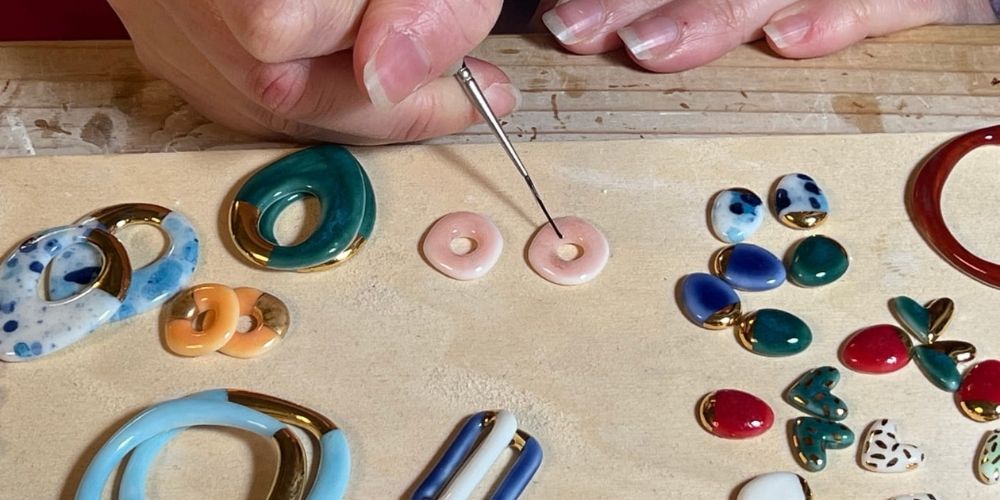
Linda and Sarah aren’t exceptions. Once you start looking, similar stories begin to surface.
We met more of them in Orria.
Giulia Marzaro, a Venetian artist, came back to her grandfather’s village with an idea.
Her CilentoLab is somewhere between an art studio and a meeting point. "A creative refuge for those who wish to express themselves through art", she remarks.
Since 2021, it has attracted people who come here to make things with their hands and, just as importantly, live an experience.
A delicate jewellery line, Joya Porcelain, reflects her formative years as an artist, but it is only one part of the story. In her studio, Marzaro hosts open workshops and creative aperitifs.
Manuel Ventre, too, found a new beginning in Orria. "I wanted to invest in my craft without giving up my roots, bringing an ancient art back to Cilento." The art he’s referring to is watchmaking.
After studying in Switzerland at the prestigious École Technique de la Vallée de Joux – one of the leading schools in the field – Manuel returned home in 2021 to open his atelier, where he repairs, maintains, and restores mechanical watches, including antique pieces.
It is through initiatives like these that the inland villages of Cilento are gradually opening themselves up to the wider world.
The Surprising Ways Nature is Turned Into a Creative Laboratory
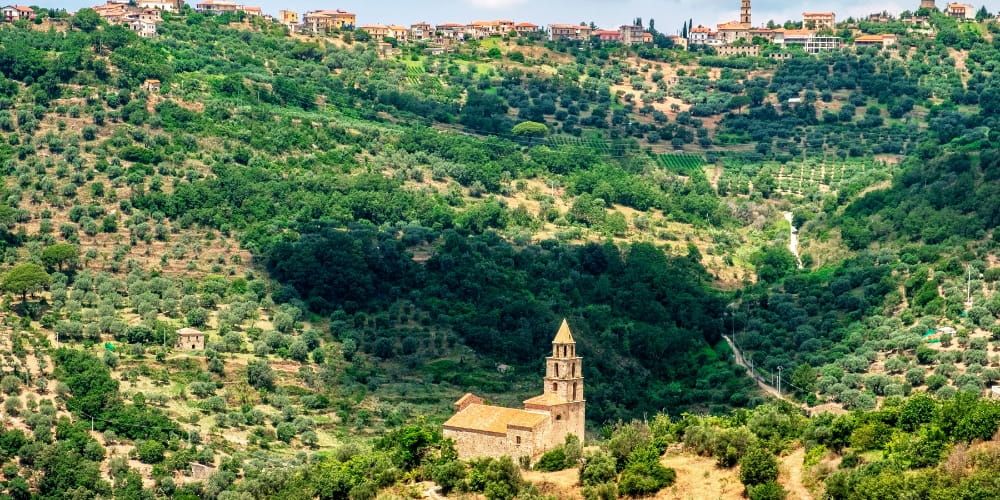
Even nature is a source of experimentation. Some study its sounds while others explore its medicinal properties. The landscape itself turns into an open-air laboratory.
Musician and sound researcher Antonio Alessandro Pinto listens closely to the natural sounds of Cilento. Working with physiotherapist Julia Zimmermann in the health center Fisiolismo, he creates bioacoustic projects and wellbeing paths that explore how these sounds might help people feel better.
Local biodiversity also inspires the creation of natural cosmetics based on traditional herbal knowledge.
In Ascea, young pharmacists Gloria and Nicola produce sustainable skincare products for their Officina Eleatica brand. "We follow every step ourselves," they explain – from gathering wild plants by hand to the final packaging.
The Second Life of Cilento’s Inland Villages
@cilentolab.joya Scopri Orria e la sua frazione Piano Vetrale, nel Parco Nazionale del Cilento e mettiti alla prova con una esperienza sensoriale creativa unica. Cerca i nostri eventi sul sito web www.cilentolab.com alla voce workshop e prenota il tuo posto!#cilento #aperitivocreativo #ilpaesedeimurales #Orria suono originale - Cilentolab & JOYA
People who have settled in Cilento are showing that it is possible to build a slower and more intentional way of living. They create, experiment, and bring new energy to places that once seemed forgotten.
In villages where decline once felt inevitable, narrow streets now lead to reopened workshops and studios. People are working together, picking up old skills, and finding new ways to connect as a community.
Even the smallest local businesses can now reach people far beyond Cilento, thanks to online shops and digital tools.
Cultural and entrepreneurial projects are bringing in new faces, people who want to stay, and travellers who want to learn. These efforts are helping to keep the villages alive.
Making things by hand, sharing local know-how, and bringing back old traditions are the starting points for a new kind of local economy.
Cilento Historic Buildings and Rural Luxury
The revival of Cilento’s small villages often begins with a key that hasn’t turned in a lock for years.
Buying historic buildings in inland Cilento is still quite affordable. People are restoring old houses that once stood empty and are now becoming homes, guesthouses, and creative spaces.
While this generates work for local artisans, builders and professionals, the presence of new residents and visitors is also helping to keep villages from fading out altogether.
Sometimes, this energy leads to bigger projects. Alberto Carrato and Maria Chiara Faganel left Milan to start an experience-focused hotel in the hills of Cuccaro Vetere.
Their Convento Francescano is an example of rural luxury. "We wanted to bring this place back to life while respecting its history," they explain. "It’s a dream shaped by deep roots and a forward-looking vision."
The Place Where People Come to Stay
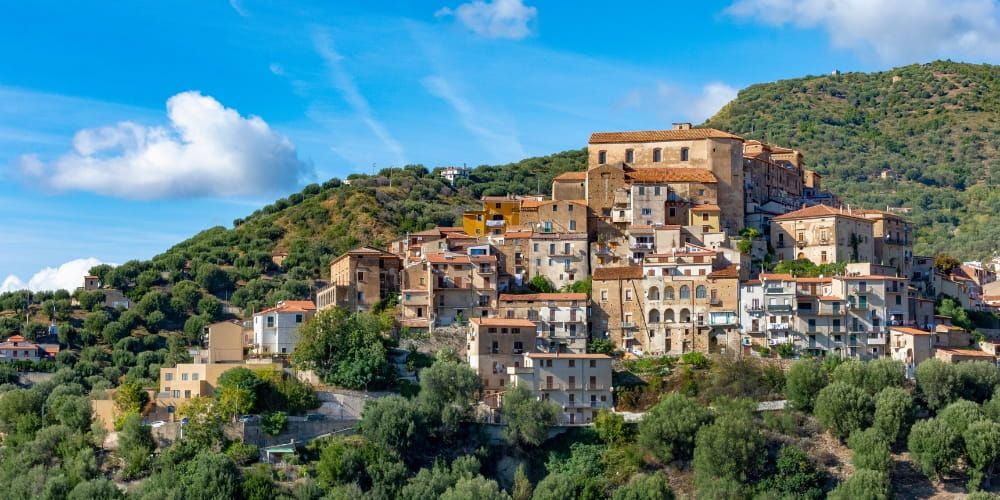
Cilento’s small villages used to be places people left, but now more are choosing to stay or come back.
Being far from the cities is part of what makes them appealing. Life moves at a slower pace here, which gives newcomers time to think about what the future could look like, or simply to travel without rushing.
Landscape is the common thread: olive-covered hills, woodlands tracing the slopes, rivers cutting through deep gorges, and the sea never too far away. Pockets of untamed nature alternate with signs of human presence.
In between largely unspoilt landscapes and communities in transition, a different vision of Southern Italy begins to emerge, looking to the future with growing awareness.
A Guide to the Ultimate Italian Adventure in Cilento
@cilentolab.joya Orria. Un piccolo borgo nel Parco Nazionale Del Cilento. Il silenzio, l’apparente immobilità, la bellezza della natura, i paesaggi larghi che ti permettono di vedere lontano, ma anche dentro di noi. #cilento #aperitivocreativo #ilpaesedeimurales suono originale - Cilentolab & JOYA
On their own, these stories feel scattered. Together, they start to form a pattern.
Inland Cilento isn’t easy to read at first. Things are spread out, often unmarked, happening "secretly".
To navigate between projects, places and local initiatives, the platform Cilento's brings together and connects what is happening across the region, offering a point of entry for those looking to explore further, plan their journey, find out which destinations to visit, and discover what not to miss.
Their site collects the stories of those who are changing Cilento.
About the author
Written on 24/04/2026
Lorena Calise
I'm a content writer for magazines and websites. I also explore Italy through my writing for Visit Italy and Visit Naples.

Lorena Calise
In the hidden villages of inland Cilento, where digital nomads and young entrepreneurs are shaping new models of community.