
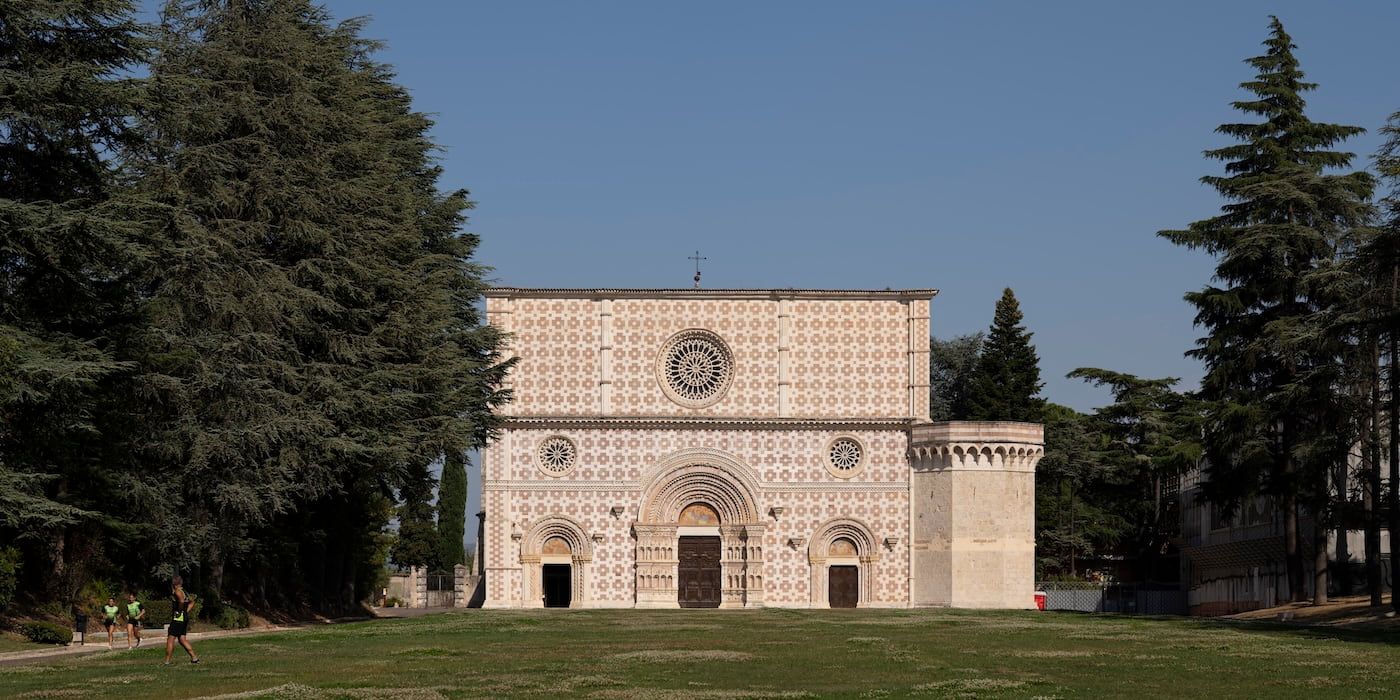

An architectural gem and the spiritual heart of L'Aquila, the Basilica of Santa Maria di Collemaggio is a unique place that tells centuries of history and devotion, where faith, local identity and tradition intertwine to preserve the community’s most authentic heritage.
A must-see when exploring the city, it stands as a true symbol of L'Aquila, admired for the significance it has held throughout the centuries and for the important role it continues to play today.
Its harmonious architecture, the wide open spaces that surround it and the atmosphere within make every visit a memorable experience, leaving a lasting impression even on those who arrive simply out of curiosity.

Basilica of Collemaggio, where L’Aquila rediscovers its roots
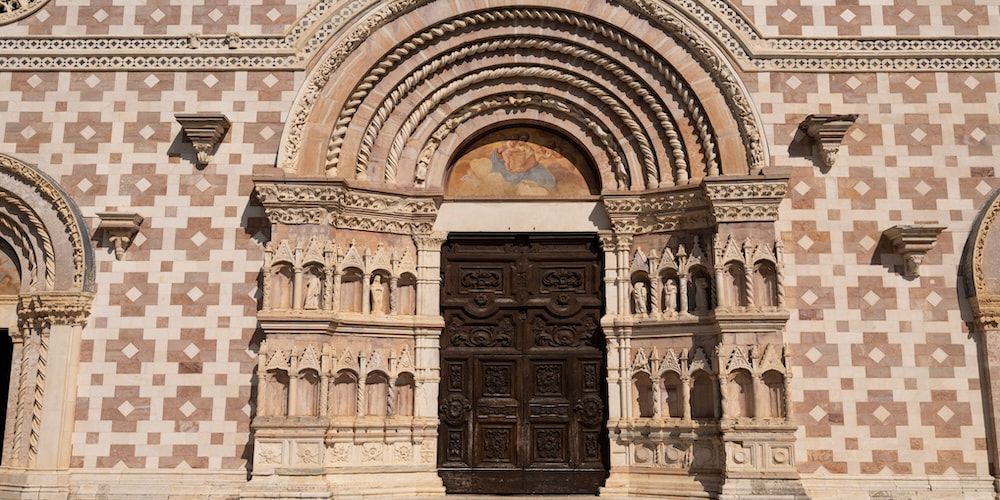
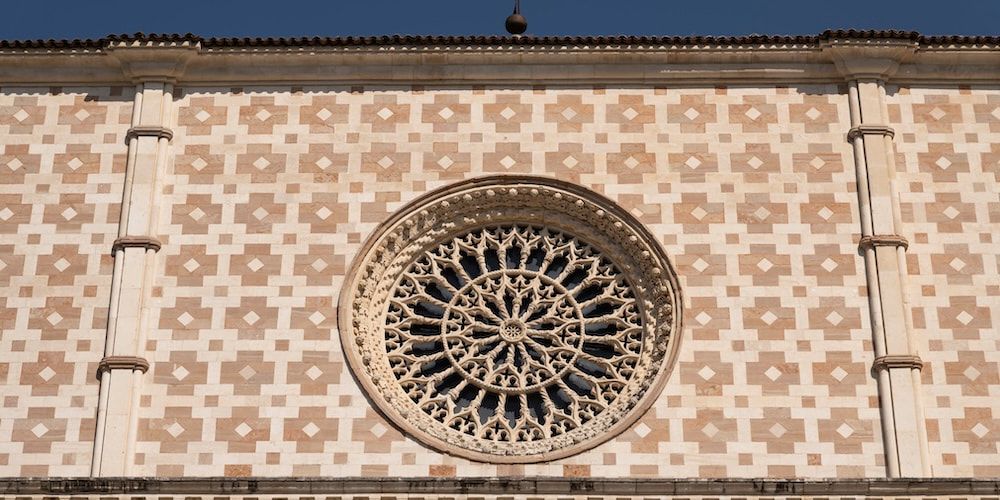
To discover the secrets of the Basilica of Santa Maria di Collemaggio, we can start from what makes it immediately recognizable, its façade in white and pink stone that clearly defines the landscape of L’Aquila.
Inside, simplicity blends with elements of great historical and religious value, including the remains of Celestine V and the Porta del Perdono, linked to the Celestinian Perdonanza, which every year attracts pilgrims and visitors.
Collemaggio is also a place that has gone through complex phases of its recent history, particularly after the 2009 earthquake, which required a long restoration process. This recovery has restored the basilica to its original role, bringing it once again to the heart of the city’s cultural and religious life.
Today, we can admire it in its full integrity, as a unique place that continues to be lived in and that perfectly reflects the most authentic and deeply felt traditions of the city.
The first impression of Collemaggio
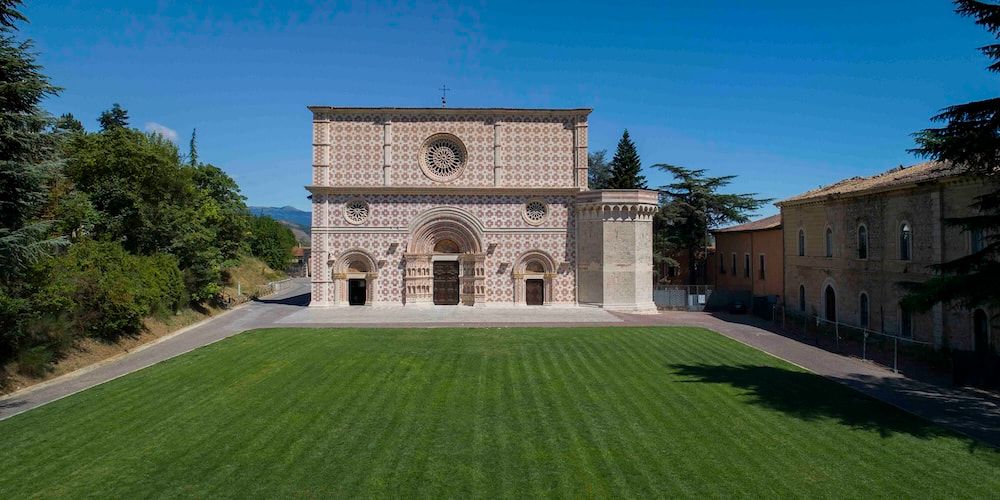
The Basilica of Collemaggio is not located exactly in L’Aquila’s historic center. It stands a short distance away, a few hundred meters outside Porta Bazzano, in an isolated position surrounded by a large open lawn, with its façade already visible from afar as it welcomes us.
This open space creates an immediate contrast between the basilica and its surroundings, producing a strong visual impact precisely because of the simplicity of the setting.
The façade is marked by the use of white and pink stone and is dominated by the large central rose window, characterized by a dense pattern of small columns and arches that make its structure even more striking. Santa Maria di Collemaggio is, in fact, a true masterpiece of Romanesque-Gothic architecture, an extraordinary testimony to the historical and spiritual richness of the city.
Even from the outside, perhaps thanks to the presence of the lawn in front of the building, we can already perceive a feeling of particular serenity, a sensation that we will also find once inside.
A journey into the simple nature of the Basilica
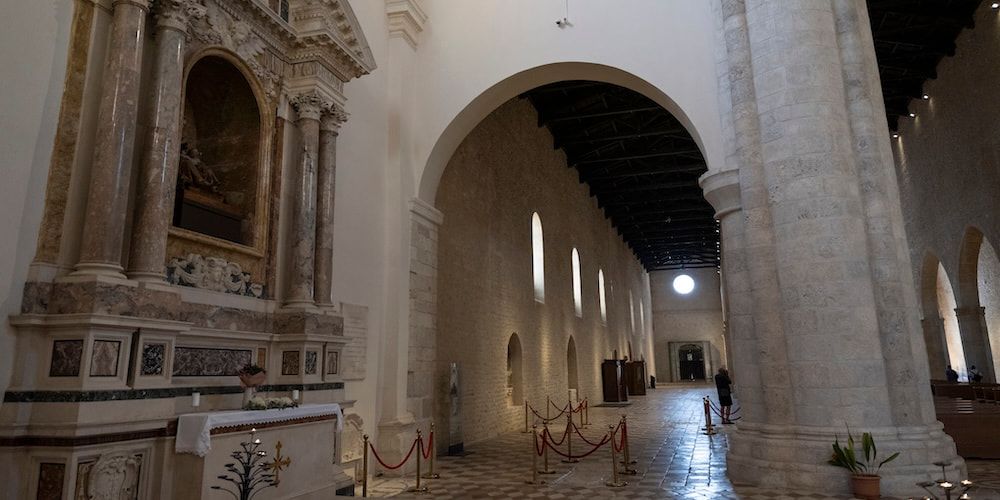
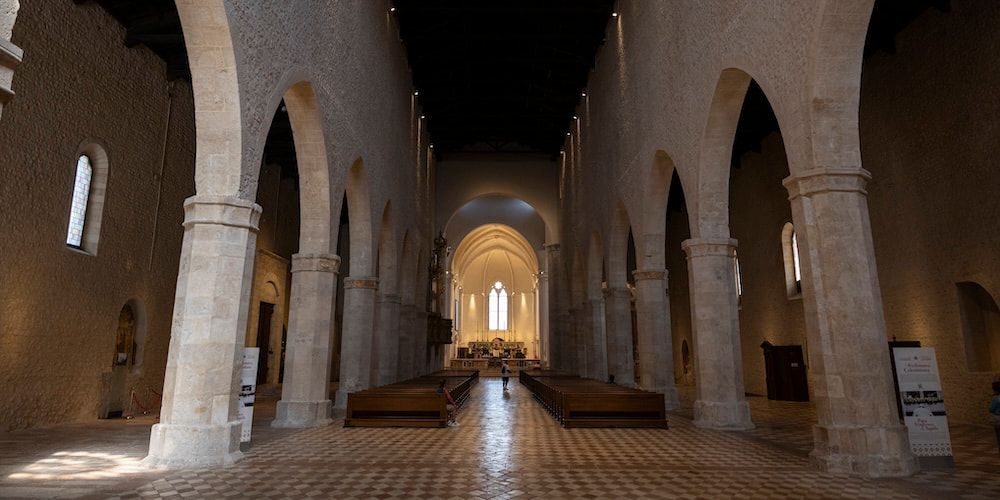
Inside the Basilica of Collemaggio, the impact is mainly defined by the simplicity of the space. The three naves develop in a straight line, and the element that draws the most attention is the white and pink marble floor, with geometric patterns that guide the path towards the altar.
On the left side of the side nave there is the Holy Door, an opening used for the entry of the faithful during the traditional Celestinian Perdonanza.
Next to the door, we can admire the small marble shrine that houses the remains of Celestine V, the 13th-century hermit pope who was crowned here in Collemaggio in 1294, before renouncing the papacy a few months later.
In general, Santa Maria di Collemaggio offers an experience of great naturalness and minimalism. It is a large but essential space, without overly scenic features, but with an overall composition that is appreciated precisely for its essential and authentic character.
The symbolic meaning of Collemaggio: the Celestinian Perdonanza
The role of Collemaggio in the life of L’Aquila is directly linked to the figure of Celestine V, who in 1294 chose this very basilica as the place of his coronation. On that occasion, he also issued the so-called Bull of Forgiveness, granting plenary indulgence to anyone who passed through the Holy Door between 28 and 29 August, after confession and repentance.
From this act originates the Celestinian Perdonanza, which is still celebrated every year in the same period, keeping alive a rite that has a precise origin in this place. The opening of the Holy Door marks the central moment of the event and each year draws thousands of faithful, citizens, and visitors.
This means that Collemaggio is not perceived as a normal historical or religious building, however aesthetically striking, but as a specific point in the city that people return to cyclically, because it represents an essential rite that expresses the deepest identity of L’Aquila.
The living and contemporary dimension of the Basilica di Collemaggio
Today, the Basilica of Collemaggio remains directly connected to the Celestinian Forgiveness. During those days, the large space in front of the façade fills with people arriving to witness the opening of the Holy Door and take part in the event.
Outside these dates, the same area remains open and much quieter, conveying a special sense of calm and slowness.
The alternation between moments of strong collective presence and a more simple and discreet everyday use defines its current role: a unique and complex place, capable of coming alive at specific times of the year and then returning to its ordinary dimension, whose quiet character makes it all the more evocative.
How to get to Santa Maria di Collemaggio
Getting to the Basilica of Santa Maria di Collemaggio is easy, whether you are already in L’Aquila’s historic center or arriving in the city by public transport or by car.
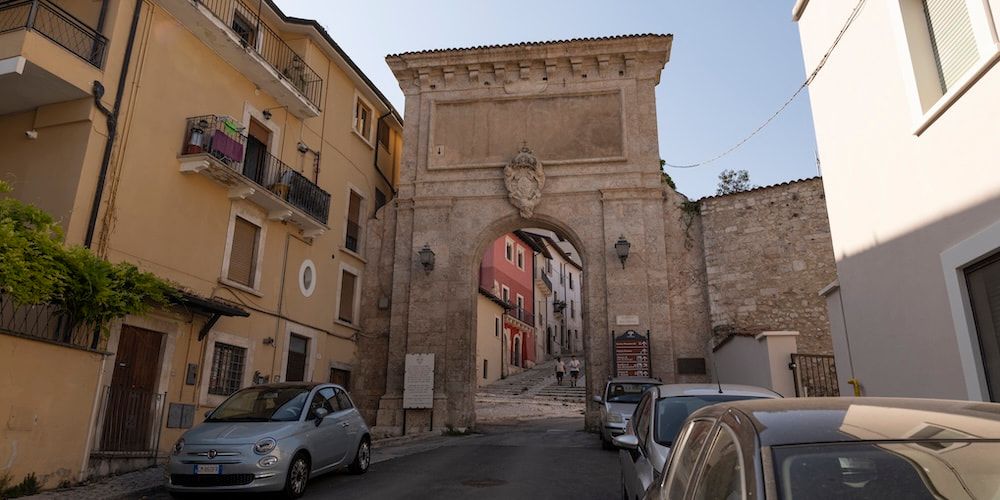
From the heart of the historic center, it takes about 15 minutes on foot, walking through part of the modern city and passing Porta Bazzano, one of the main reference points for orienting yourself toward the area outside the ancient walls.
Visitors arriving from L’Aquila train station can take local buses heading toward the city center and then continue on foot toward the southern area of the city.
Arriving by car, the most convenient option is to follow signs for Collemaggio or the San Salvatore hospital: there are parking areas close to the basilica, allowing for a short final walk through the open space surrounding it.
About the author
Written on 24/08/2026
Alessandro Savino
SEO Copywriter & web editor: I love transforming my passion for writing into engaging narratives, creatively and precisely exploring the beauty and complexity of our wonderful country.

Alessandro Savino
Step into the Basilica of Collemaggio, one of L'Aquila’s most fascinating landmarks, where art, history and a touch of magic come together.