
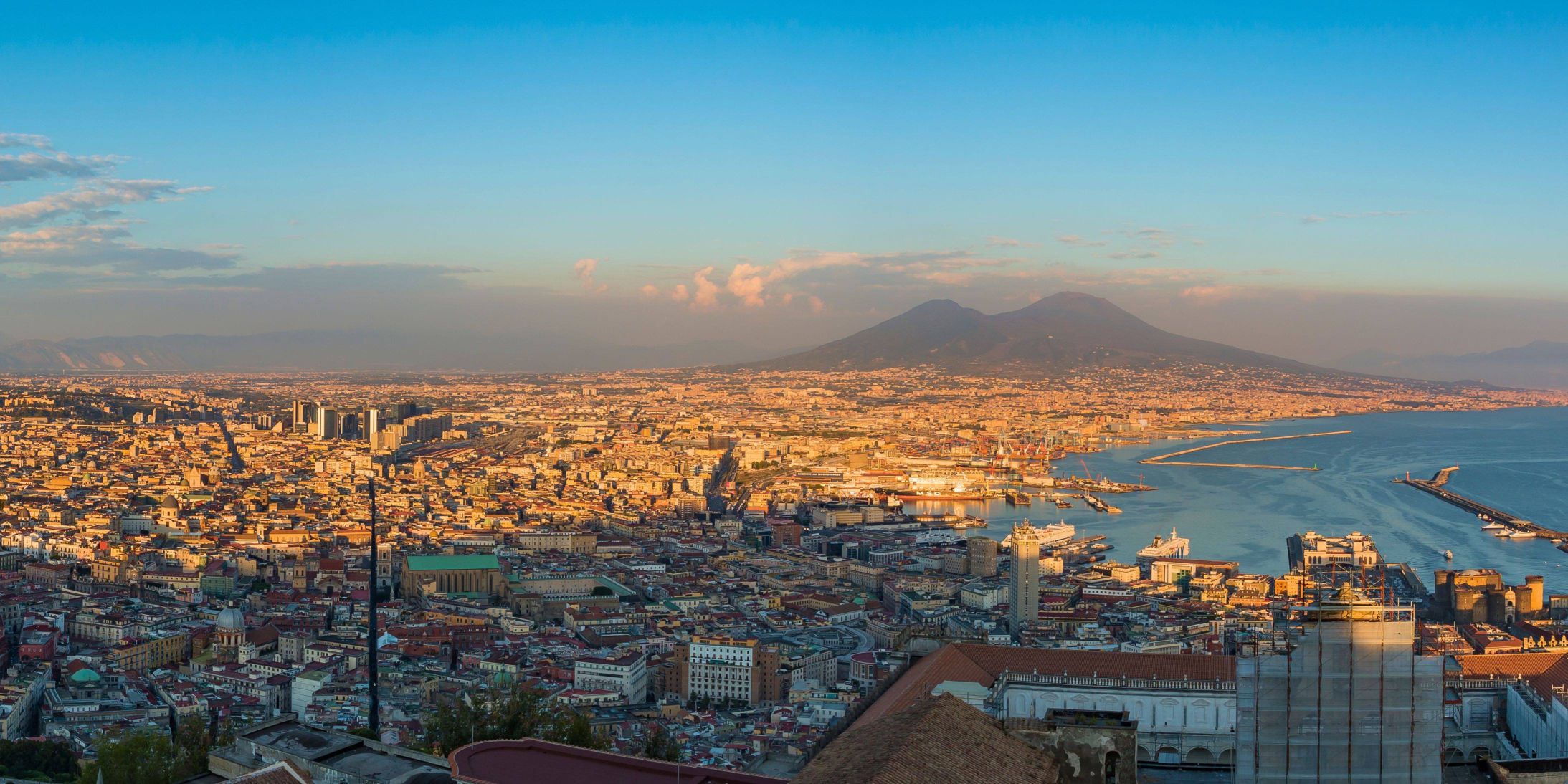

Ancient, unruly, cosmopolitan and full of contradictions, Naples is a fascinating mix of worlds. You see it everywhere: bustling street markets sit alongside contemporary concept stores; unassuming little bars with no signs compete with cutting-edge new openings; historic pizzerias, with their no-frills interiors, stand alongside impossibly cool venues where every detail is picture-perfect.
Short on time? We've put together a flexible two-day itinerary featuring some of our current favourite hotels, restaurants, cafés, and cultural spots. Here are Visit Italy's insider tips for making the most of a city break in Naples in 2027.
Naples in 2 Days: unmissable addresses and a taste of local life
In Naples, perhaps more than anywhere else, it's worth leaving room for the unexpected. But when time is short, having a few carefully chosen addresses up your sleeve can come in handy – a little compass to guide you when needed. After that, the city will take care of the rest.
You don't have to venture far to move from one experience to the next. Distances are brief, yet every street brings a change of scenery, atmosphere or perspective.
We chose to stay at the Airone Hotel, whose convenient location makes it easy to explore the city on foot or by public transport.
Our itinerary covers food stops, everyday pleasures and cultural discoveries, without trying to stick to a rigid schedule.
Even two weeks wouldn't be enough to see everything. But with just two days, you can still be swept up by the vibrant energy of Partenope and its utterly irresistible chaos.
- Day 1
Morning: Via Toledo and the Pignasecca district, for shopping, market discoveries and your first taste of authentic Neapolitan cuisine.
Afternoon: Piazza del Plebiscito, the underground Naples, and the seaside neighbourhood of Santa Lucia.
Evening: Dinner in Borgo Marinari, followed by cocktails in Chiaia's hidden bars.
- Day 2
Morning: Speciality coffee, characterful Forcella and the story of pizza.
Afternoon: The treasures of the historic centre, from Via Duomo to Spaccanapoli, traditional crafts and historic palazzi.
Evening: Local cooking and drinks at one of the best scenographic spots.
More on Airone Hotel NapoliDAY 1 – The heart of Naples
It took 27 centuries to shape Naples' historic centre, a UNESCO World Heritage Site so extraordinarily diverse that it can feel almost surreal.
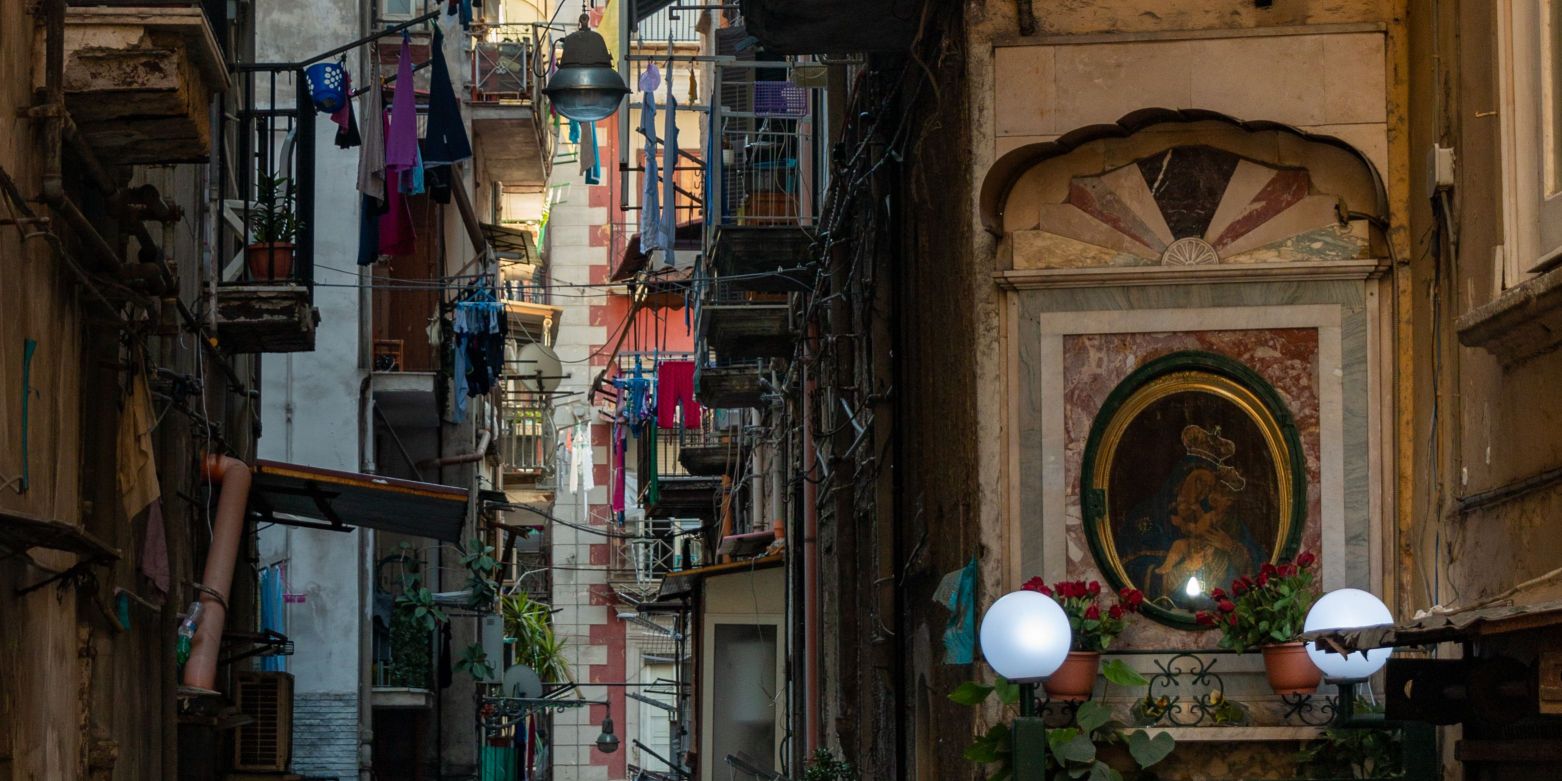
Narrow, slightly crumbling streets, crowded with banners, shop signs and washing hanging overhead, somehow find room for both café tables and passing cars. They open onto bustling shopping streets, where provocative lingerie displays sit cheek by jowl with the entrance to a Baroque church. Behind the grand doorways of old buildings, blackened by traffic fumes, priceless works of art lie hidden. Outside, Madonnas in their roadside shrines and images of football hero Maradona look down on passers-by as they navigate the city's spectacular traffic and metro stations that look more like contemporary art galleries.
If you're only staying for two days, choosing somewhere central makes getting around much easier. Over our first coffee of the day on the panoramic rooftop garden of the Airone Hotel, we can take in the views and gather inspiration before diving headfirst into the city's hustle and bustle. Housed in a handsome 19th-century building, with charming little balconies overlooking Via Guglielmo Sanfelice, the hotel is just a stone's throw from Naples' must-see sights. We can't wait to get out and explore.
Via Toledo and Pignasecca: shopping and local flavours
That's exactly what we do. First stop: Via Toledo. Opened in 1536 at the behest of the Spanish viceroy Don Pedro de Toledo, it's now one of the liveliest thoroughfares, lined with historic palazzi, churches, little shops and major international brands. The Quartieri Spagnoli climb towards the hill of San Martino behind it, like the backdrop to a theatrical set.
Head north and you'll reach Pignasecca, home to Naples' most picturesque open-air market. According to local lore, its name dates back to when de Toledo ordered the area's vegetation cleared, leaving just one withered pine tree standing. Today, its streets are packed with crates of fruit, fishmongers, vendors calling out to passers-by and stalls spilling into every available space, selling just about everything imaginable – from salt cod to counterfeit handbags.
At Pizzeria e Trattoria al ‘22, a favourite among Naples' foodies, we stop for an informal bite and finally get our hands on the pizza we've been dreaming about since we arrived. The menu of Neapolitan classics is just as tempting.
More on Pizzeria & Trattoria al '22An afternoon in Santa Lucia: monumental Naples meets the sea
In the afternoon, we make our way to Piazza del Plebiscito, the vast elliptical square framed by the colonnade of the Basilica di San Francesco di Paola and the Palazzo Reale.
Behind it, the silhouette of the San Carlo theatre reminds us that even music is a complex business in Naples. Neomelodic, urban, afrobeat, opera: they all coexist with an ease that somehow feels perfectly natural.
Just a little further on, another side of the city reveals itself, this time beneath the surface. We head underground into the Galleria Borbonica, a tunnel commissioned by Ferdinand II of Bourbon as a possible escape route for the royal family. The project was never completed, but during the Second World War its vast chambers became an air-raid shelter.
Today, guided tours (there's also an adventure route) take you past ancient cisterns, traces of everyday life during the bombings and an unusual collection of vintage cars and motorbikes, brought here when the tunnel was used as a judicial storage depot.
Back above ground, the seafront leads us to the heart of the Santa Lucia neighbourhood, where the Greeks founded Partenope more than 2,500 years ago. Roman general Lucius Licinius Lucullus had a palatial villa built there, where he entertained guests with such lavish banquets that his name lives on in the Italian adjective luculliano, meaning sumptuous or extravagant. It's almost time for dinner and, after all that history, we're feeling thoroughly inspired.
Visit Galleria Borbonica with Naples PassA night in Borgo Marinari
We spend the evening in Piazzetta Marinari, boats moored in the little harbour, restaurants lining the waterfront, and Castel dell’Ovo as our backdrop. We settle in at Donna Luisella, a great address for Neapolitan cooking. Fresh fish is the main focus, but plenty of traditional dishes tempt you too, including the local favourites pasta alla genovese and ragù, and everything is prepared according to signora Luisa's recipes.
After dinner, it's time to explore Naples' hidden cocktail bars. In Chiaia, L’Antiquario has an unassuming entrance and a speakeasy atmosphere reminiscent of a 1930s jazz club. Or try Astronomia, a secret bar where finding the entrance is all part of the adventure: access is by reservation, through a delicatessen on Via Ferdinando del Carretto.
More on Donna LuisellaDay 2 – Na tazzulella ’e cafè: the Neapolitan morning coffee ritual
A piping-hot espresso – one of the first things that comes to mind when you think of Naples – is how we kick off the second day.
Maria Carolina of Austria, wife of King Ferdinand IV of Bourbon, introduced coffee to the Neapolitan court, inspired by Viennese customs. Nevertheless, it wasn't until the 19th century that it really caught on, thanks to the caffettieri ambulanti. At first light, these travelling coffee sellers would make their way through the streets carrying hot coffee and milk in large containers, serving them straight to passers-by.
At It’s Caffè, this tradition meets the third-wave coffee. Carefully sourced beans from local, ethically minded producers go into handcrafted blends, brewed using alternative extraction methods. To go with your coffee, there's French-inspired viennoiserie – made, of course, in Naples – as well as a tempting selection of savoury options. The place is on Via Monteoliveto, so it’s perfect for fueling up before setting off on our first adventure.
More on It's caffèForcella: history, food and everyday Neapolitan life
The storied Forcella neighbourhood is a lively patchwork of people and stories, watched over by Jorit's enormous mural of San Gennaro beside the Church of San Giorgio Maggiore.
Its name seems to reflect the area's layout: it comes from the Y-shaped fork formed by an old street, which resembles a forcella, a fork. The Cippo a Forcella, a remnant of ancient Neapolis, is one of its best-known landmarks. Just a little further on, the Teatro Trianon Viviani keeps the city's popular musical traditions alive.
Another hot spot is the Pizza Museum at Antica Pizzeria Da Michele, a tribute to Naples' most iconic food creation. The visit begins in a room filled with vintage photographs, memorabilia, and pizza-making tools, then moves from theory to practice. Guided by a master pizzaiolo, you'll learn how to prepare the dough, stretch it using the characteristic schiaffo technique and bake it in a wood-fired oven.
The building also holds a remarkable hidden treasure: a 15th-century church, the Chiesa della Disciplina della Santa Croce, complete with its own cloister.
More on the Pizza Museum by Antica Pizzeria Da MicheleInto the belly of Naples: hidden treasures and wonders of the old town
By now, stopping for a pizza at L’Antica Pizzeria Da Michele on Via Cesare Sersale is practically a moral obligation. The queue of tourists outside might make you wonder whether it's all hype. Don't let it put you off: the pizza, served in its simplest form – Margherita, Marinara, or Cosacca – really does live up to its reputation (and locals know it).
After lunch, we wander around Via Duomo, Via dei Tribunali and Spaccanapoli. At first glance, parts of this area may seem a little neglected, but tucked away among its streets are some of Naples' greatest treasures, almost as if the city were keeping them to itself: the Treasury of San Gennaro, one of the world's richest collections of goldsmiths' work; Caravaggio's Seven Acts of Mercy, in the small church of Pio Monte della Misericordia; and the Girolamini Library, Naples' oldest public library. Nearby, in Piazza dei Girolamini, you can also spot Banksy's only mural in Italy, Madonna with a Pistol (we also have an article about the best street art in Naples).
From great masterpieces to small-scale craftsmanship, it's only a short step to Via San Gregorio Armeno, the famous street of nativity scenes. At Christmas, it's so busy that one-way pedestrian routes are introduced to keep the crowds moving.
More on Antica Pizzeria da MicheleAmong books and restored toys
Craftsmanship, memories and traditions lead us to San Biagio dei Librai, the stretch of Spaccanapoli that still reflects its historic calling. From the 17th century onwards, booksellers gathered here under the protection of Saint Blaise.
You can still find rare and precious books today, alongside bookbinders, antique dealers, religious art shops, souvenir stores and old-school bars (one even displays a lock of Maradona's hair as a rather unusual secular relic). Venture a little deeper, and you'll discover some unexpected hidden gems, too.
One of them is tucked away in the courtyard of Palazzo Marigliano: the Ospedale delle Bambole, Naples’s incredible doll hospital. This workshop-turned-museum was conceived by set designer Luigi Grassi in the late 19th century. Now run by his great-granddaughter Tiziana, it has been bringing toys back to life – and putting broken pieces of happiness back together – for four generations.
Inside, time seems to stand still in a nostalgic world of childhood; outside, the constant bustle of the streets brings you straight back to the present.
More on Ospedale delle BamboleNeapolitan Nights
Via dei Tribunali, the ancient Greek-Roman Decumanus Maximus, runs right through the historic centre, from west to east. Its name comes from the city's old Aragonese courts, but these days it's the church towers and grand façades that catch your eye: San Lorenzo Maggiore, with the remains of Neapolis hidden beneath it; the Anime del Purgatorio Church, home to the curious cult of the anime pezzentelle; the Renaissance beauty of the Pontano Chapel; and the San Gregorio Armeno complex, with its magnificent cloister.
Come evening, we grab an outdoor table at Locanda del Grifo, on Via Francesco del Giudice, right next to Pietrasanta's Romanesque bell tower. It's time for one last taste of Naples: local ingredients, familiar flavours and a fresh twist on the classics. We go for pasta with creamy friarielli and mussels – a pretty perfect way to round off our Naples getaway.
There's no need to call it a night just yet. Head to Lento Hi-Fi, a Japanese-inspired listening bar on Via Giovanni Paladino, or drop by Bucopertuso, a laid-back fixture on the old town's nightlife scene.
More on La Locanda del GrifoAbout the author
Written on 27/11/2026
Lorena Calise
I'm a content writer for magazines and websites. I also explore Italy through my writing for Visit Italy and Visit Naples.

Lorena Calise
Where to go in Naples in 2 days: our guide to the places we love to make the most of a short stay.