
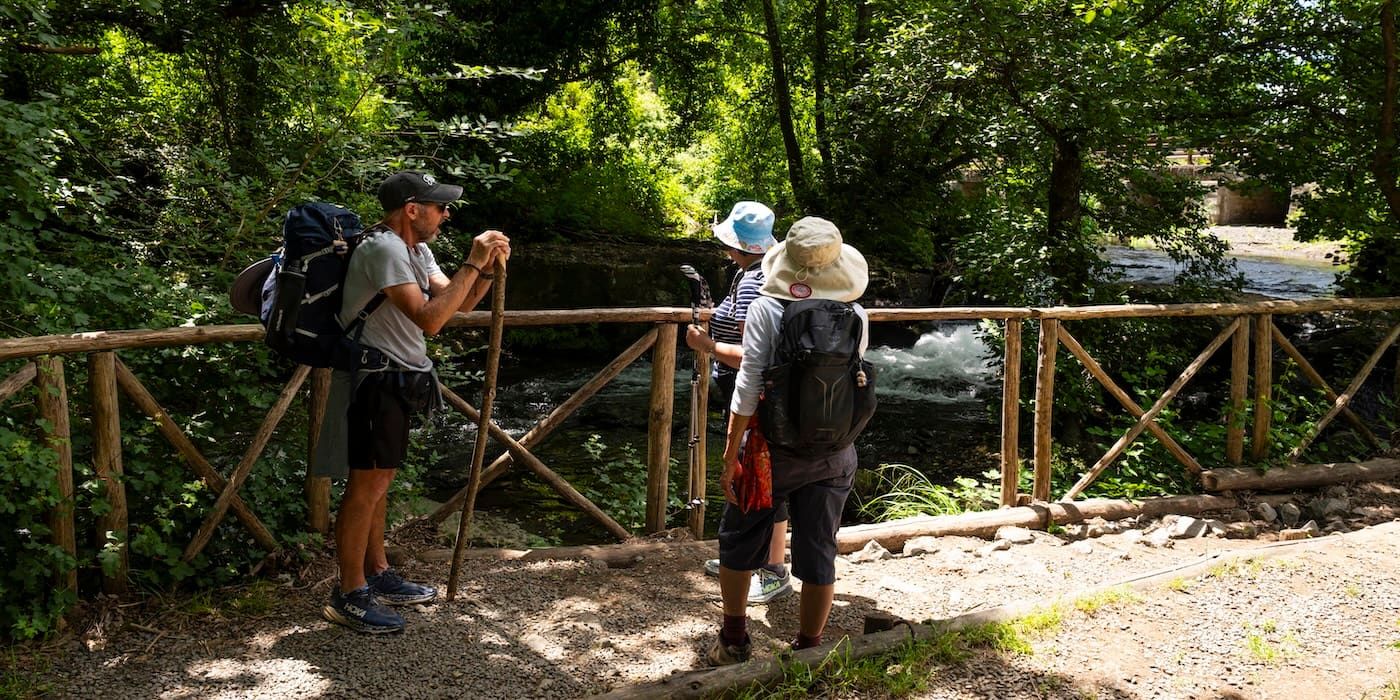

Along Via Francigena unfolds an itinerary that leads from rural Lazio to the heart of Rome, in a 3-day journey that follows the ancient rhythm of medieval pilgrims and crosses some of the most evocative stretches of the route.
It’s a route that led us to discover silent lakes, remarkably preserved historic towns, abbeys, Roman remains, and unique spiritual sites, in a mosaic of landscapes that made us feel as though we were travelling through time, across the eras that shaped this wonderful land.
It was a special, immersive experience and one worth telling — through an Italy that still speaks with an authentic voice. We are ready to reveal the secrets of this unforgettable adventure!
3 days on Via Francigena: our journey through the heart of Tuscia toward Rome
🥇 Visit Italy’s brand partnership
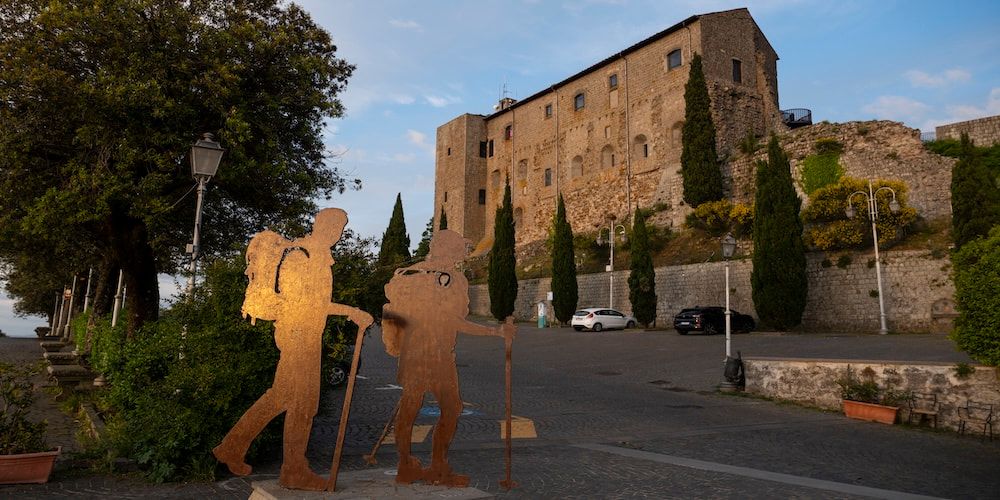
Our journey begins in Acquapendente, in the province of Viterbo, one of the first towns crossed by Via Francigena in Lazio. It can be reached from Rome in about 2 to 3 hours by public transport, taking a train to Orvieto and then continuing by bus.
From here, the next 3 days will lead us back toward the capital. Traveling both on foot and by public transportation, we will make our way through the heart of Tuscia, among ancient villages and lakeside landscapes. Each stop will open a window onto local history, while the region’s unspoiled nature will accompany us quietly and continuously along the journey.
We’ll reach Bolsena and Viterbo, the City of the Popes, we will be surprised by the rock-hewn amphitheatre of Sutri, and we’ll find well-deserved relaxation in the cool setting of the Monte Gelato Waterfalls.
Finally, when we feel almost too tired to continue, the energy of the city will come to our aid: the entrance into the outskirts of Rome, the parks that precede the metropolis, and the evocative arrival at St. Peter’s Basilica.
Although marked by iconic stops, these 3 days along Via Francigena are never a spectacle in themselves, but rather the sum of landscapes, flavors, and unique moments that make our journey magical and unforgettable.
Itinerary recap:
- Day 1: Acquapendente and Bolsena, with historic centers, the lake, and the first stages of the Via Francigena;
- Day 2: from Tuscia to the outskirts of Rome, passing through Montefiascone, Viterbo, Sutri, Monte Gelato Waterfalls, Campagnano di Roma, and Formello;
- Day 3: conclusion of the journey in Rome with St. Peter’s Basilica during Sunday celebration.
Discover more about Via FrancigenaWatch the Vlog
Day 1, morning - From Acquapendente to Bolsena: our 3-day journey along Via Francigena begins
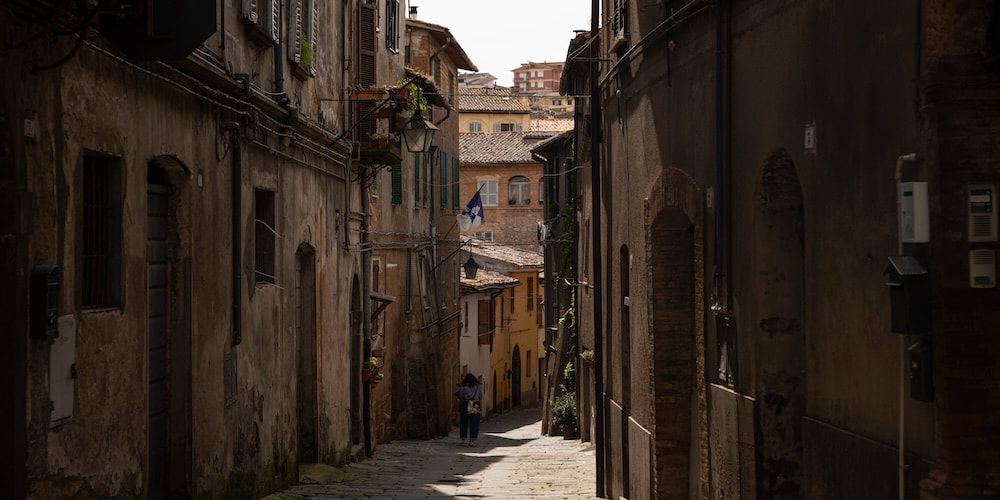
The historic center of Acquapendente is small and atmospheric, and the best way to explore it quickly is to head to the Cathedral of the Holy Sepulchre, the town’s religious heart and a key historical landmark along Via Francigena in Central Italy.
In 990 AD, Archbishop Sigeric of Canterbury recorded a stop here on his return journey from Rome, including Acquapendente in his list of “submansiones,” the stopping points along his route back to Canterbury.
Inside the Cathedral, we visit the crypt with the Chapel of the Holy Sepulchre, a space devoted to the Holy Sepulchre in Jerusalem, created to symbolically recall Christ’s tomb and holding strong significance for medieval pilgrims.
We leave Acquapendente behind and set off on foot for the 22-kilometer walk to Bolsena, set on the shores of its volcanic lake. In the village, beneath the Basilica of Santa Cristina, lies a unique underground complex known as the Catacombs, spaces linked to the early phases of Christian worship and still considered a particularly evocative site today.
- Acquapendente, Cathedral of the Holy Sepulchre;
- Bolsena, Catacombs of Santa Cristina.
Day 1, Afternoon and evening - Lake and history in Bolsena
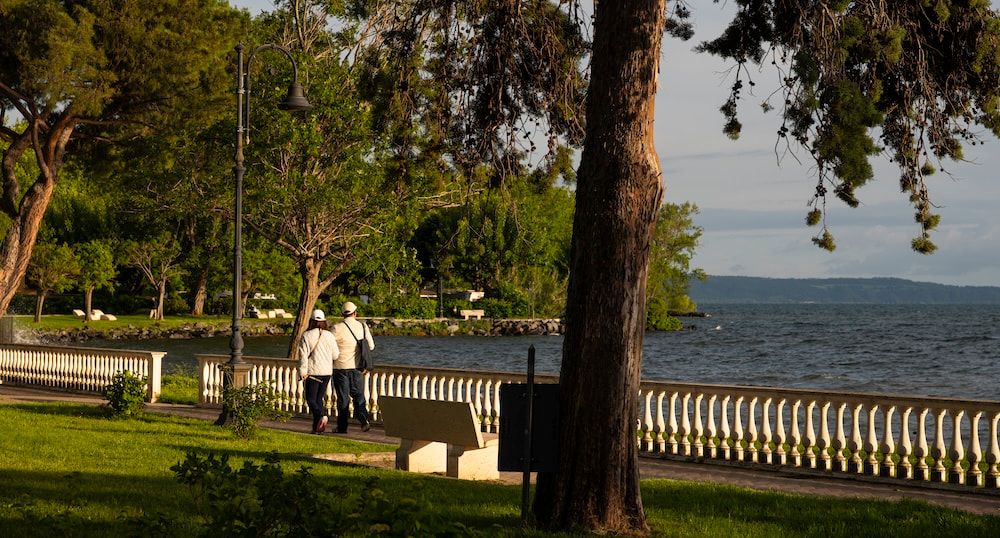
In Bolsena, the lake sets the pace of our stop, starting with a delicious lunch based on lake fish and local products, such as whitefish and eel, typical of the area’s culinary tradition.
In the afternoon, we can explore the charming historic center, reaching Rocca Monaldeschi della Cervara, a medieval fortress that overlooks the town from the top of the promontory and now houses the Lake Bolsena Territorial Museum. Visiting it, we understand the strategic role of the castle in controlling the territory and its connection to medieval history.
Alternatively, we can head to the site of the ancient Etruscan-Roman city of Volsinii, just outside the town center, to immerse ourselves in local history and discover the true origins of this land.
The most fitting way to close our first day of travel is a walk along the lakeside at sunset, to take in a unique view in a peaceful and evocative setting, among the most enchanting in Lazio. The perfect way to recharge before continuing along Via Francigena towards Rome.
- Lunch in Bolsena;
- Historic center of Bolsena: Rocca Monaldeschi della Cervara, ruins of ancient Volsinii;
- Sunset walk along the lakeside.
Day 2, morning - From Montefiascone to Viterbo, we enter the heart of Via Francigena
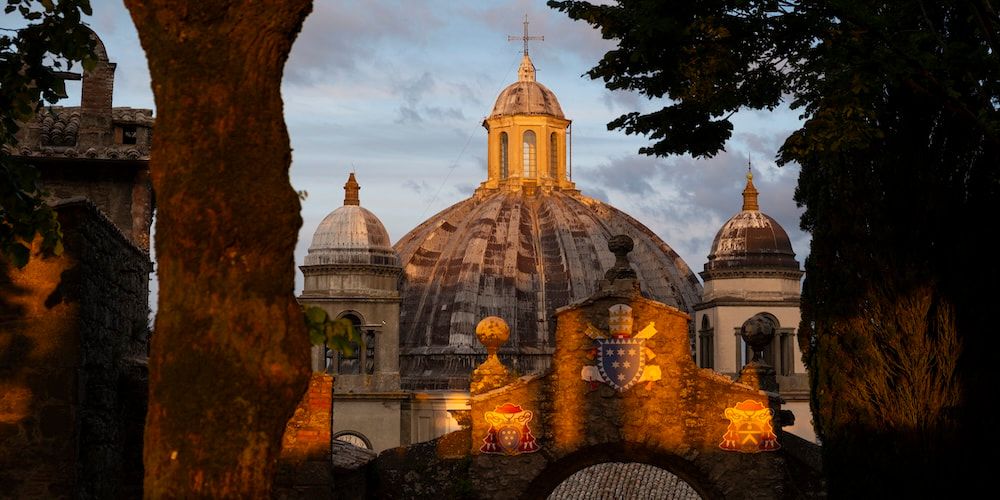
If the first day introduced us to the rhythm of the journey, today the route expands and focuses on the major centers that, for centuries, marked the approach to Rome.
To cross such a wide territory without giving up the time needed to truly experience it, we follow the historic route of Via Francigena, alternating walking with short transfers and focusing on the places that best tell the story of the journey toward the capital.
Our first stop is Montefiascone, which we reach as Lake Bolsena gradually disappears behind us. Here, we climb up to Fortress of the Popes, built in the Middle Ages and later transformed over the centuries into a papal residence and a strategic center of territorial control. From the top, we can enjoy sweeping views over the lake and the landscapes of Tuscia.
From Montefiascone, we continue on foot for 17 km toward Viterbo, following one of the most distinctive stretches of Via Francigena in Lazio, where parts of the ancient basalt paving of Via Cassia, once walked by pilgrims and travelers for centuries, can still be seen.
Once in Viterbo, one of the best-preserved medieval historic centers in Italy, we stop to visit the iconic Palace of the Popes, a symbol of the period when the city became one of the leading religious and political centers of medieval Italy.
- Montefiascone, Fortress of the Popes;
- Walking along Via Francigena on the ancient route of Via Cassia;
- Viterbo, historic center and Palace of the Popes.
Day 2, afternoon and evening - Archaeology and nature on the road to Rome
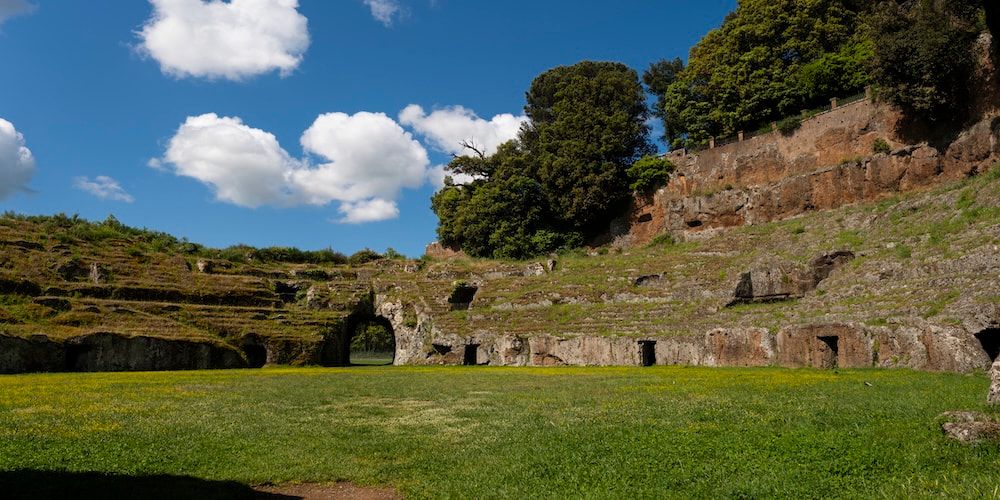
Early afternoon stop in Sutri, where we enter the Archaeological Park to discover a unique landscape, entirely carved into the tuff rock.
The Roman amphitheater is the most recognizable landmark of the park, a structure that follows the form of classical amphitheaters but was created not by building walls, rather by shaping the living rock itself. Nearby lies the Mithraeum, an underground place of worship dedicated to the god Mithras in Roman times, later reused and adapted in the Christian era, still preserving its subterranean structure.
After visiting Sutri, we take a break in nature by reaching Campagnano di Roma and the nearby Monte Gelato Waterfalls. Here, surrounded by the greenery of an idyllic setting, we stop for a packed lunch and a moment of rest in the heart of the Treja Valley.
Finally, as the last stop of the day, we reach Formello and the nearby Veio Regional Park. The landscape now opens up into an alternation of trails, woodland and stretches of countryside that guide us toward the outskirts of Rome.
And in the final miles, in the Monte Mario area, the dome of St. Peter’s finally appears in the distance for the first time. For medieval pilgrims, seeing the profile of the city was an emotional moment. Even today, this passage preserves that same evocative power, the same feeling of relief and excitement that once accompanied the arrival in the Capital after a long journey.
- Sutri, Archaeological Park;
- Campagnano di Roma and Monte Gelato Waterfalls;
- Veio Regional Park, view from Monte Mario and return to Rome.
Day 3, morning - Rome, St. Peter’s: the final stage of our journey
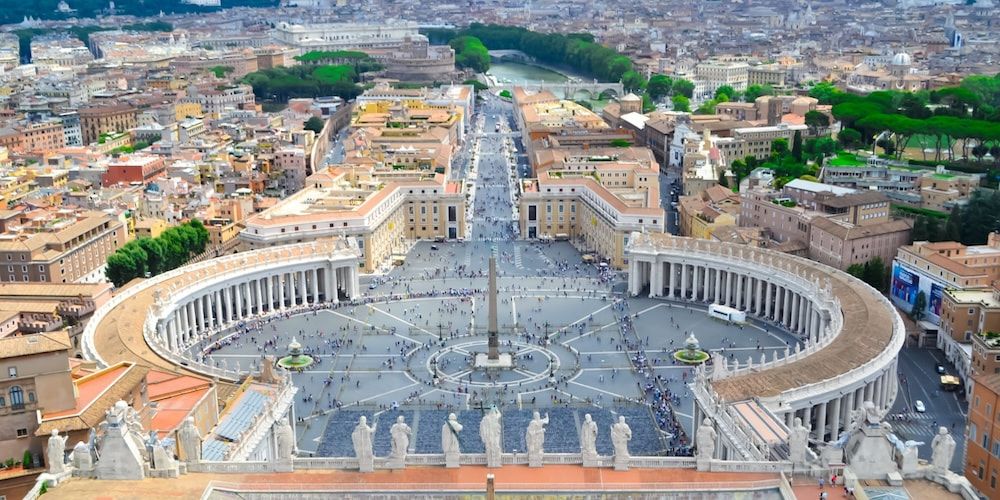
Arriving in Rome, for those who walk the Via Francigena, is the completion of a physical and spiritual journey with a unique atmosphere. Since the Middle Ages, the city has represented one of the great destinations of Christianity.
The ideal destination of this journey is St. Peter’s Basilica, built over the site traditionally believed to be the tomb of the Apostle Peter, the first Bishop of Rome and a central figure in the Church.
Over the centuries, arriving at St. Peter’s has retained the same importance. Today, however, the meaning of pilgrimage often goes beyond religion alone. Some undertake it for spiritual reasons, as a journey toward an encounter with the Pope, others to slow down, and others to rediscover a more authentic connection with themselves.
And perhaps this is one of the most fascinating aspects of the journey: sharing the road with different people, each with their own reason for being here, yet united by the same search for time, silence, and awareness.
That's why arriving in St. Peter’s Square still holds such a special meaning today. We also arrived in the Capital on a Sunday, in a day when St. Peter’s Square is filled with a continuous flow of people attending the Sunday Mass.
- Rome, St. Peter’s Square and Sunday Mass.
Day 3, afternoon and evening – A fitting conclusion to our 3 days along Via Francigena
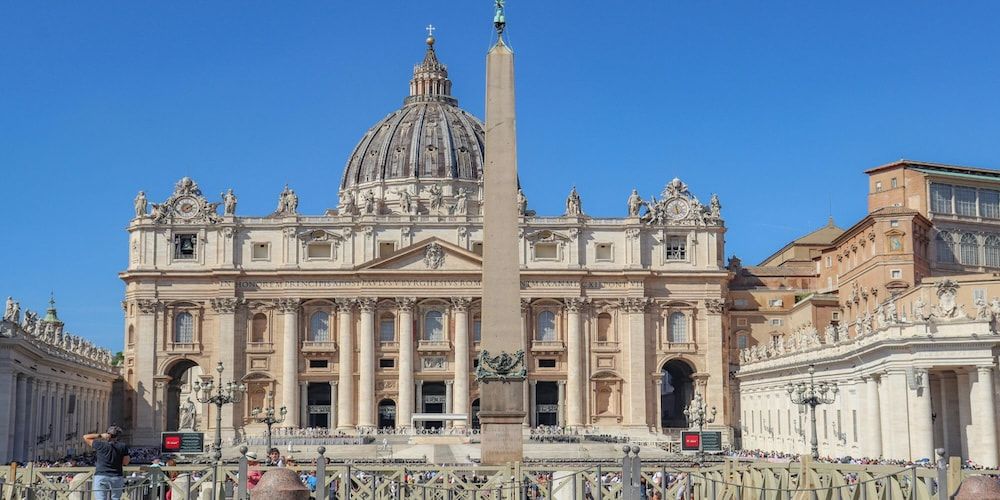
After Mass, let’s take the opportunity to admire the magnificent St. Peter’s Basilica and explore its treasures. This is also part of the experience we carry back from our journey along the Via Francigena.
The religious service in the morning and the afternoon visit to the heart of Christianity in Rome are key moments that give tangible form to the conclusion of our journey.
Beyond the joy of reaching the destination and the lightness of completing such an intense and beautiful itinerary, there is also a sense of nostalgia that emerges almost immediately, as we think back to the places we crossed in the previous days: the landscapes of the Tuscia, the villages, the lakes, and the stretches of road that together gave us 3 days of pure magic.
- Visit to St. Peter’s Basilica.
Official stages from Acquapendente to Rome: the route along Via Francigena
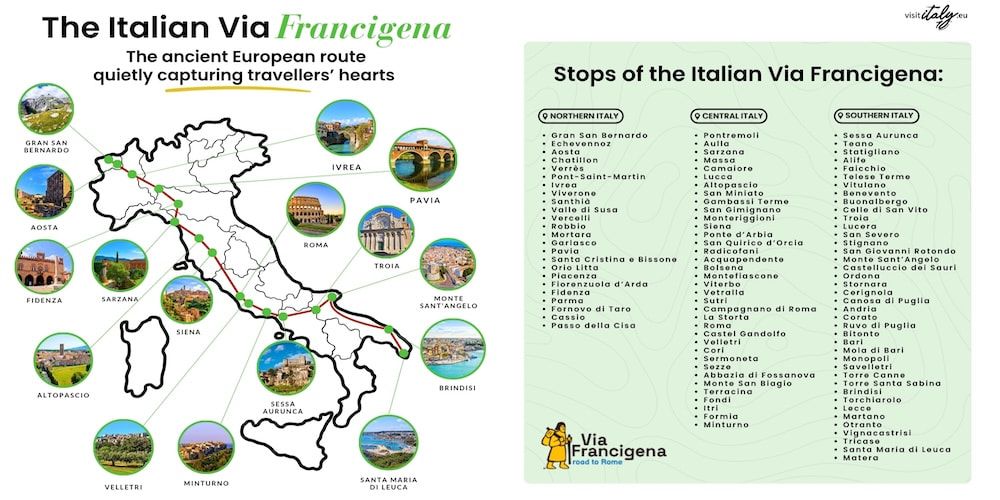
Our Via Francigena itinerary has taken us on three intense days, designed to narrate the journey through the landscapes and villages of Tuscia, all the way to the heart of Rome.
However, this is a travel proposal shaped around our own storytelling: one of the key strengths of Via Francigena is its flexibility, which allows each pilgrim to adjust distances, timing, and stops according to their needs, either by splitting the journey into multiple days or tackling individual sections.
Below are the official stages of the Acquapendente to Rome section, along one of the most historically compelling stretches of the entire route:
Stop → KM
1 Acquapendente → Bolsena – 22.8 km
2 Bolsena → Montefiascone – 16.5 km
3 Montefiascone → Viterbo – 17.6 km
4 Viterbo → Vetralla – 21.9 km
5 Vetralla → Sutri – 23.9 km
6 Sutri → Campagnano di Roma – 23.8 km
7 Campagnano di Roma → La Storta – 23.0 km
8 La Storta → Rome – 19.4 km
About the author
Written on 08/06/2026
Alessandro Savino
SEO Copywriter & web editor: I love transforming my passion for writing into engaging narratives, creatively and precisely exploring the beauty and complexity of our wonderful country.

Alessandro Savino
A 3-day Via Francigena itinerary in the footsteps of the pilgrims: let’s walk through villages and scenery in the historic, spiritual heart of Lazio.