
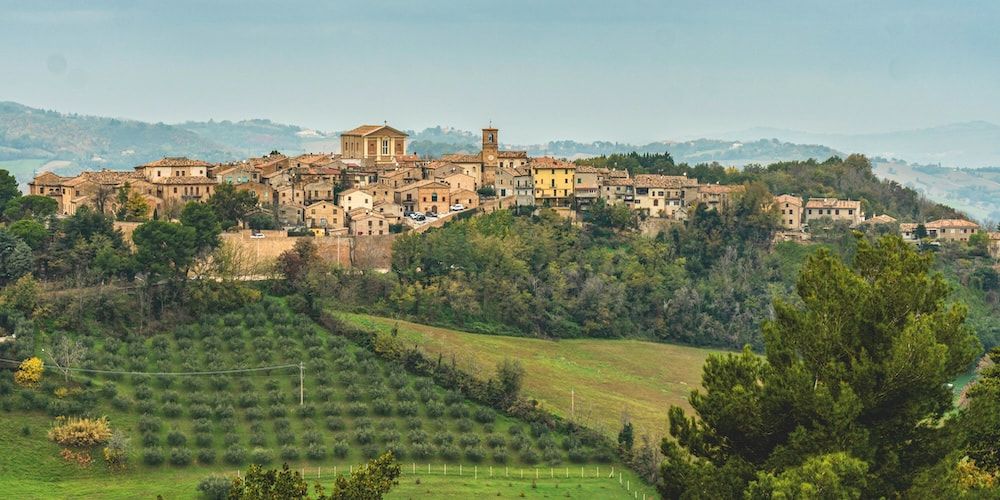

Far from Italy's busiest tourist destinations, Le Marche preserves a quieter, more authentic side, where ancient villages, monasteries, and sacred places invite us to slow down and experience this beautiful region at a different pace.
Our itinerary is designed for travelers who want to go beyond the most familiar landmarks, discovering places where history, spirituality, and local traditions have shaped the landscape for centuries.
It’s a journey through hidden corners of Le Marche, where silence is part of the experience, faith has left a lasting imprint on the territory, and every stop offers a deeper connection with the region's cultural heritage.
6 Stops to experience silence, faith, and the authentic soul of Le Marche
🥇 Visit Italy’s brand partnership
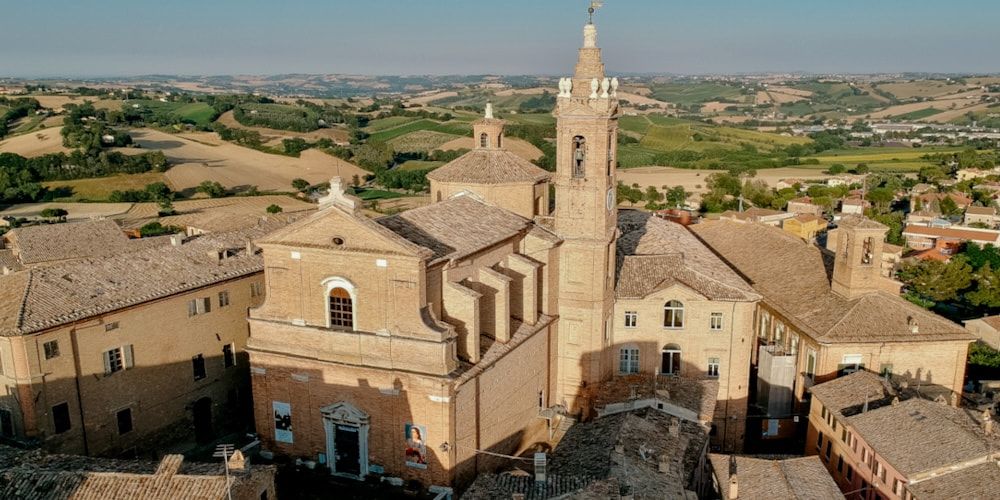
Image: corinaldoturismo.it
The six stops of our itinerary of silence and faith take us to some of the lesser-known places in the province of Pesaro and Urbino, where an authentic side of Le Marche emerges through historic villages and centuries-old traditions.
Before heading into the heart of the region, our first stop is Pesaro, the ideal starting point to explore an artistic and cultural heritage where spirituality has also played an important role.
From here, we move inland to the historic villages of Mombaroccio and Corinaldo, where the charm of ancient towns blends with important artistic and religious landmarks preserved in churches, historic buildings, and local traditions.
Our journey then continues to San Lorenzo in Campo, Borgo Pace, and Apecchio, three inland towns where abbeys, sacred places, and traces of the past reveal the deep connection between local communities and their territory.
To fully experience this route, we recommend traveling by car, allowing us to easily reach even the smallest villages and move at a slower pace through hills, valleys, and secondary roads. This freedom to explore the landscape at our own rhythm makes the itinerary even more special, offering the chance to discover authentic places far from the busiest tourist routes.
Discover more about itineraries in Le MarcheStop 1. Pesaro: art and history as the starting point of our Silence and Faith itinerary
🥇 Visit Italy’s brand partnership
Pesaro is best known for its seaside setting, music, and vibrant cultural scene, but just beyond the rhythm of the coast lies a more intimate side of the city, shaped by churches, ancient memories, and places connected to the spiritual life of local community.
In the heart of the historic center stands Pesaro Cathedral, one of the city’s most important historical landmarks. Behind its façade lies a surprising heritage: the cathedral’s ancient origins and its remarkable early Christian mosaics tell a story that reaches back to the first centuries of Christianity.
We can discover this extraordinary archaeological complex through an engaging immersive experience using augmented reality headsets, allowing us to virtually "walk" across the mosaics and explore their symbols, details, and history from an entirely new perspective.
Our journey through Pesaro’s spiritual heritage continues with the Sanctuary of Madonna delle Grazie, guardian of the city’s centuries-old Marian devotion, and the Church of Sant’Agostino, where the refined Gothic portal and 15th-century wooden choir reveal the deep connection between faith, art, and local history.
This is where our silence and faith itinerary begins: a first stop that allows us to gradually connect with the spiritual soul of Le Marche, before leaving the coast behind and reaching the small villages where the journey slows down among landscapes, abbeys, and places of contemplation.
How to get to Pesaro?
Pesaro can be easily reached both by car and by train.
By car: take the A14 highway and exit at Pesaro-Urbino, then reach the city center in just a few minutes.
By train: Pesaro railway station is located along the Adriatic railway line and is connected with several Italian cities, including Bologna, Ancona, and Rome (with a connection).
What to see and do in Pesaro:
- Cathedral and early Christian mosaics;
- Sanctuary of Madonna delle Grazie;
- Church of Sant’Agostino.
Stop 2. Mombaroccio: the quiet charm of an authentic village in Le Marche
🥇 Visit Italy’s brand partnership
Leaving Pesaro behind, our itinerary truly begins as we head inland toward the historic village of Mombaroccio. Enclosed by medieval walls and characterized by narrow streets, arches, and charming views, this small village still preserves the authentic atmosphere of the ancient communities of Le Marche.
Mombaroccio is an important stop because it's here that we truly begin to experience the most authentic spirit of our journey: the peaceful and special atmosphere of a different side of Italy, more hidden and away from the usual tourist routes, where everyday life still seems to follow a slower rhythm.
Just outside the historic center, we find the Sanctuary of the Blessed Sante, surrounded by greenery and reached by crossing the beautiful woodland that surrounds it.
Founded by Franciscan friars in the 13th century, the sanctuary has long been an important religious landmark for the local community. This is where Blessed Sante Brancorsini lived. After leaving his military life behind, he joined the Franciscan order, devoting himself to prayer and a life of simplicity and contemplation.
Mombaroccio also preserves a remarkable legacy of civic courage. In 2025, the President of the Italian Republic awarded the town the Gold Medal for Civil Merit in recognition of the bravery and solidarity shown during World War II, when local residents, clergy, and families sheltered Jews and others fleeing persecution. This honor further enriches the identity of a village where hospitality and remembrance remain deeply rooted values.
We can complete our visit with a stroll to Palazzo del Monte, whose gardens now serve as a vibrant cultural venue hosting events and community initiatives, or explore the Museum of Art and Rural Civilization, where historic rooms, traditional tools, and everyday objects reveal the deep connection between local communities and the land that sustained them for centuries.
How to get from Pesaro to Mombaroccio?
From Pesaro, we can reach Mombaroccio after a journey of just over 20 km, which takes around 30 minutes by car along scenic secondary roads that lead us through the beautiful countryside of the province of Pesaro and Urbino.
What to see and do in Mombaroccio:
- The atmosphere of the historic center;
- Sanctuary of the Blessed Sante;
- Palazzo del Monte;
- Museum of Art and Rural Civilization.
Stop 3. Corinaldo: the hometown of Saint Maria Goretti
🥇 Visit Italy’s brand partnership
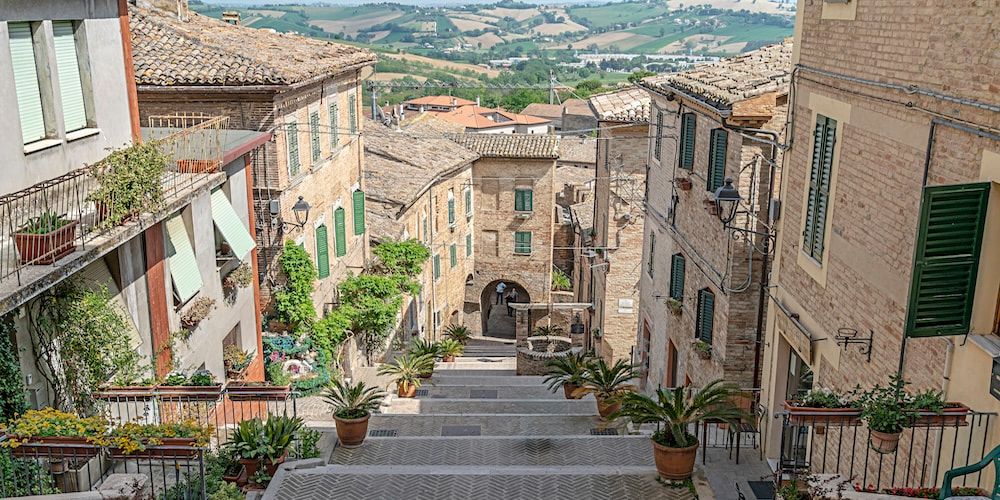
Our journey continues to Corinaldo, the only village on this itinerary located in the Province of Ancona. Crossing beyond the borders of the Province of Pesaro and Urbino does not interrupt the thread that ties this route together: a journey through places where history, spirituality, and local identity continue to intertwine.
Corinaldo is known around the world as the birthplace of Saint Maria Goretti, one of the most beloved saints in the Catholic tradition. The Sanctuary dedicated to her preserves the places of her childhood along with numerous testimonies to her life, welcoming pilgrims from many countries every year.
Beyond its spiritual significance, Corinaldo also captivates visitors with its beautifully preserved historic center, listed among Italy's Most Beautiful Villages and awarded the Orange Flag by the Italian Touring Club. Walking along the medieval walls, we can explore the famous Piaggia—a picturesque staircase of one hundred steps that winds through the village—pause at the iconic Pozzo della Polenta, and discover the curious Casa di Scuretto.
According to local tradition, the owner, nicknamed "Scuretto," spent in taverns the money his son, who had emigrated to America, sent home to build the house. To keep up appearances, he constructed only its façade, making his son believe that the work was progressing as planned. The house has remained unfinished ever since, becoming one of Corinaldo's most distinctive landmarks.
How to get from Mombaroccio to Corinaldo?
From Mombaroccio, Corinaldo is about 35 km away and can be reached by car in approximately 50 minutes. The route winds through the rolling hills on the border between the provinces of Pesaro and Urbino and Ancona, offering beautiful views of the typical countryside of Le Marche.
What to see and do in Corinaldo:
- Sanctuary of Saint Maria Goretti;
- Historic center;
- La Piaggia and the Pozzo della Polenta;
- Casa dello Scuretto.
Stop 4. San Lorenzo in Campo: the timeless charm of a thousand-year-old abbey
🥇 Visit Italy’s brand partnership
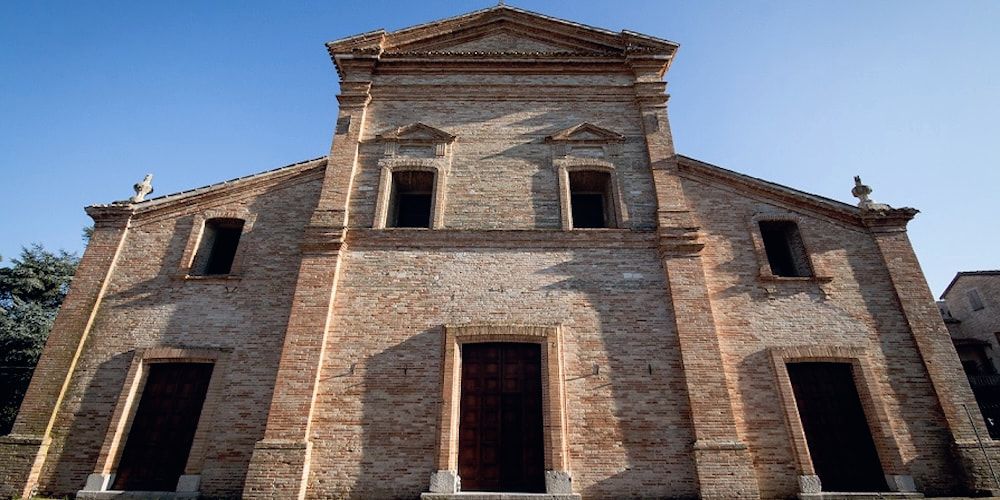
Image by comune.sanlorenzoincampo.pu.it/
If there’s one stop where silence becomes part of the landscape itself, it’s San Lorenzo in Campo. Here, the village and its abbey have coexisted in perfect harmony for centuries, creating an atmosphere of peace and quiet. The presence of the ancient monastic complex shapes the character of the village, making it a natural fit for our Silence and Faith Itinerary.
At the heart of the visit is the Abbey of San Lorenzo, founded before the first millennium on the remains of an ancient pagan temple and built using materials taken from the nearby Roman city of Suasa—one of the many ancient sites that bear witness to the rich history of the Pesaro and Urbino area.
Inside, its three naves impress with their balance, defined by massive columns, rounded Romanesque arches, and finely carved capitals. Among its most striking features are four granite columns of Egyptian origin, a reminder of the many civilizations that have left their mark on this extraordinary place.
Beneath the presbytery lies the ancient crypt, which housed the relics of Saint Demetrius of Thessalonica for centuries. The visit continues in the Antiquarium, where works of art and precious liturgical objects—including an exquisite chalice donated by Giuliano della Rovere, the future Pope Julius II—tell the long and fascinating story of the abbey.
As we stroll through the historic center, it's well worth stopping at Palazzo Della Rovere, now home to the town's civic museums, the municipal theater, and the remarkable Stamp Room. Its walls and ceiling are entirely covered with more than 90,000 original postage stamps dating from the late 19th and early 20th centuries, arranged in striking decorative mosaics—a one-of-a-kind masterpiece that offers one of the village's most unexpected attractions.
How do you get from Corinaldo to San Lorenzo in Campo?
San Lorenzo in Campo is just 13 km (8 miles) from Corinaldo, a drive of around 15 minutes. The route follows the peaceful Cesano Valley, passing through gentle farmland, woodlands, and small historic villages that showcase the quiet beauty of the Marche countryside.
What to see and do in San Lorenzo in Campo:
- Abbey of San Lorenzo;
- Antiquarium;
- Palazzo Della Rovere, home to the civic museums, the municipal theater, and the Stamp Room;
- The peaceful atmosphere of the historic village.
Stop 5. Borgo Pace: where nature and spirituality become one
🥇 Visit Italy’s brand partnership
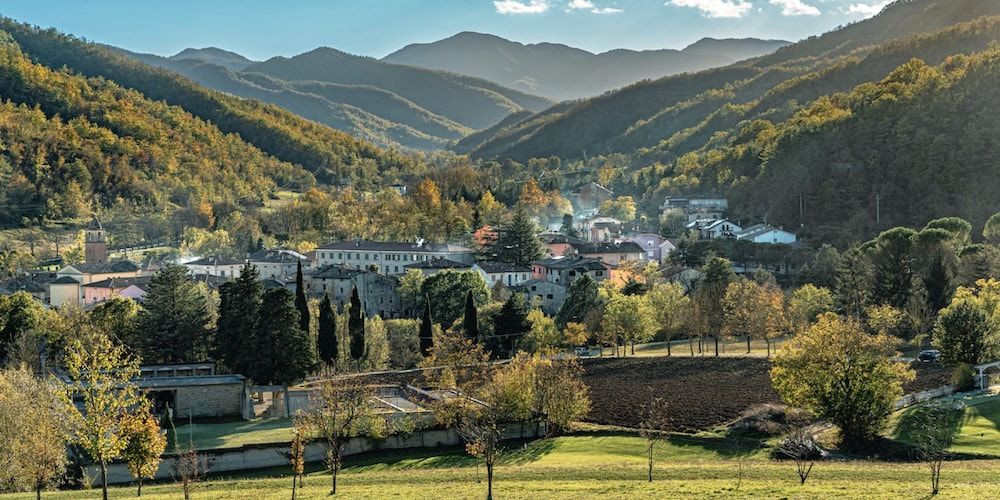
Image by itinerariodellabellezza.it
After exploring historic villages and ancient abbeys, we reach one of the quietest corners of Le Marche. Nestled among forests and mountains on the banks of the Metauro River, just a short distance from the Tuscan border, Borgo Pace is a small village where nature seems to have preserved a lasting sense of peace and tranquility—the perfect setting for this stage of our journey.
Just a short distance from the village, we can reach Lamoli, home to the Benedictine Abbey of Saint Michael the Archangel. Its Romanesque architecture, immersed in the silence of the surrounding landscape, invites us to contemplation, while inside, the light filtering through the ancient narrow windows, the evocative crypt, and the Museum of Natural Colors reveal the spiritual and cultural legacy left over the centuries by the Benedictine monks.
Nearby, the small rural hamlet of Parchiule preserves the authentic charm of the Marche mountains, with its stone houses, the Church of Santa Maria, and the Crociani Chapel.
From here, trails winding through the forests of the Alpe della Luna lead us to discover enchanting landscapes, such as the Piscine dell'Auro, where the connection with nature becomes the perfect opportunity to recharge, slow down, leave behind the rush of everyday life, and experience one of the most authentic sides of Le Marche.
How do you get from San Lorenzo in Campo to Borgo Pace?
The drive from San Lorenzo in Campo to Borgo Pace is the longest stretch of our itinerary: around 70 km (43 miles), taking approximately 1 hour and 20 minutes by car. After reaching Fossombrone, continue along the Metaurense Provincial Road, following the course of the Metauro River through Urbania, Sant'Angelo in Vado, and Mercatello sul Metauro before arriving in Borgo Pace.
What to see and do in Borgo Pace:
- The Marche Apennines;
- Benedictine Abbey of Saint Michael the Archangel in Lamoli;
- Parchiule and the villages of the Alpe della Luna;
- Nature trails and Piscine dell'Auro.
Stop 6. Apecchio: nature, spirituality and the flavors of Le Marche
🥇 Visit Italy’s brand partnership
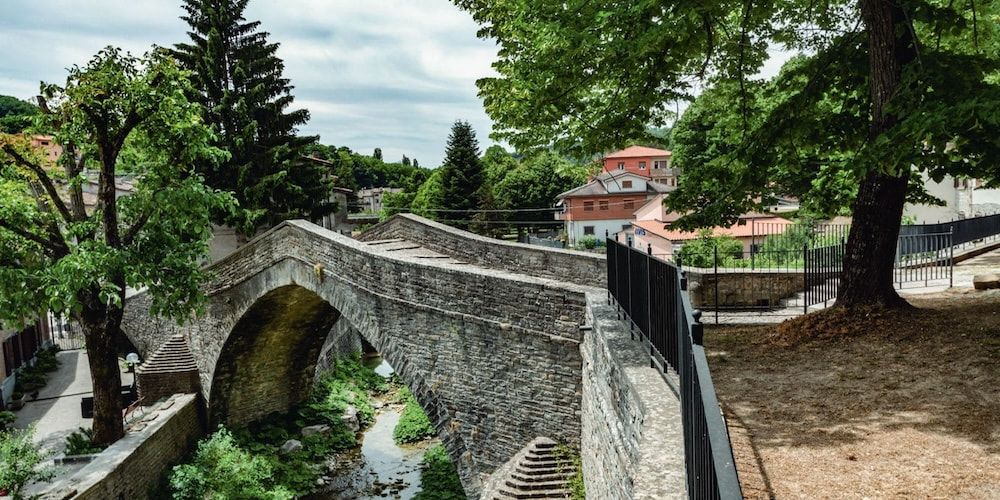
Image by itinerariodellabellezza.it
The final stop of our silence and faith itinerary in Le Marche takes us to Apecchio, a village at the foot of Mount Nerone, located in one of the most unspoiled areas of the Marche Apennines, near the border with Umbria.
This borderland has welcomed different traditions, cultures, and influences over the centuries, creating an identity that is still reflected in everyday life.
Apecchio is a place to experience slowly, strolling across its picturesque medieval bridge and through the streets of the historic center, until reaching Palazzo Ubaldini, an elegant Renaissance residence commissioned by the ancient lords of the village. Today, this beautiful palace continues to be a cultural landmark, home to the historic theater and the Museum of Fossils and Minerals of Mount Nerone.
The village’s spiritual heritage has also left behind remarkable traces. In the historic center, we can visit the Sanctuary of the Holy Crucifix, home to the famous wooden Crucifix venerated by the local community and linked to the tradition that it protected Apecchio from the effects of an earthquake. Nearby, we find the Church of Madonna della Vita, which preserves valuable artworks and tells the story of the village’s deep-rooted religious devotion.
Apecchio also offers the opportunity to rediscover the authentic flavors of the Apennines. Known as the City of Beer, it has developed a strong gastronomic identity through the concept of alogastronomy, which combines craft beer, truffles, and traditional local products.
A final moment of pleasure and conviviality before bringing our journey to an end: rediscovering, even around the table, that sense of authenticity and harmony with the land that has accompanied us throughout every stage of this unforgettable itinerary.
How to get from Borgo Pace to Apecchio?
Just over 30 km (18 miles) separate Apecchio from Borgo Pace, a drive of approximately 40–45 minutes through the landscapes of the Marche Apennines. We follow the Metauro River valley to Sant’Angelo in Vado, then turn onto the SP90 toward Perugia and Apecchio.
What to see and do in Apecchio:
- Historic center, medieval bridge, and Palazzo Ubaldini;
- Sanctuary of the Holy Crucifix and Church of Madonna della Vita;
- Mount Nerone and the landscapes of the Marche Apennines;
- Local flavors and alogastronomy.
About the author
Written on 27/07/2026
Alessandro Savino
SEO Copywriter & web editor: I love transforming my passion for writing into engaging narratives, creatively and precisely exploring the beauty and complexity of our wonderful country.

Alessandro Savino
Six stops in the province of Pesaro-Urbino, where villages, monasteries, and sanctuaries reveal the true side of Le Marche through silence and faith.