
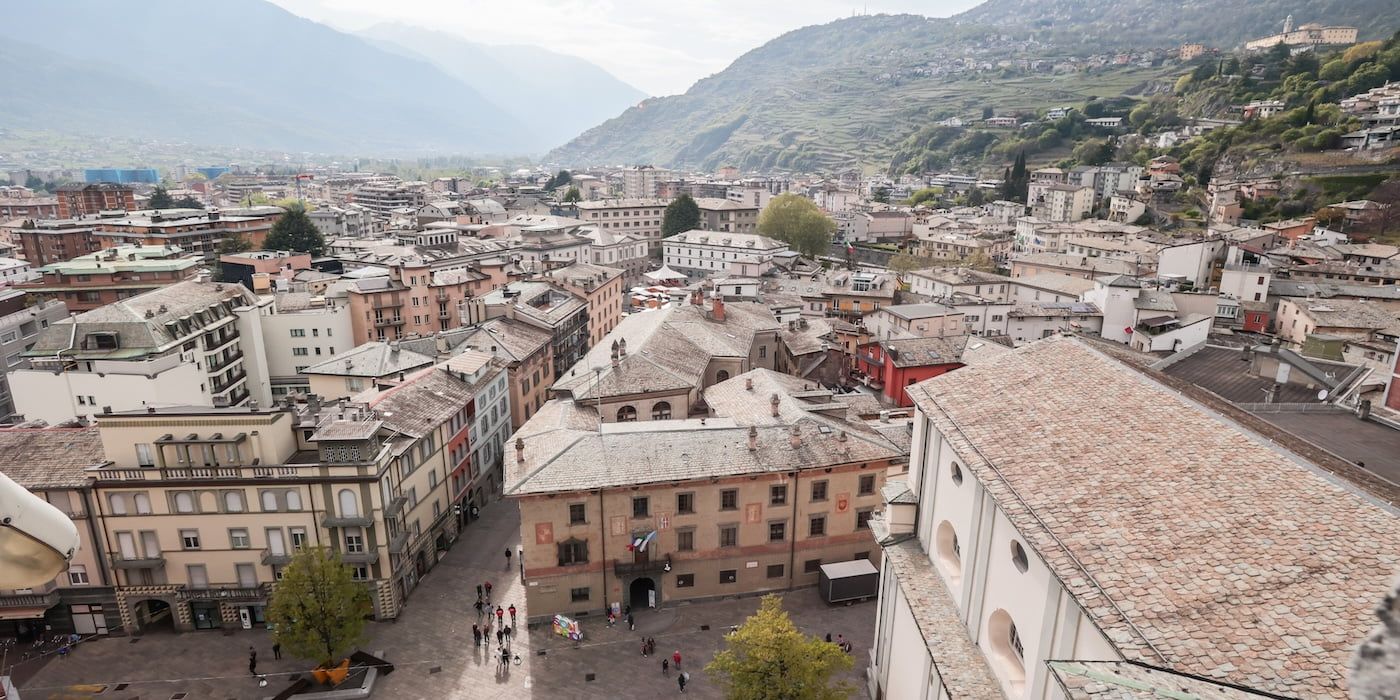

When you think of Valtellina, you probably picture towering mountains, ski slopes, and steaming plates of pizzoccheri. But have you ever considered starting your journey in the valley’s main city to discover it all from a new perspective?
A weekend in Sondrio is the perfect opportunity to be surprised by a charming, elegant city ready to win you over with its historic heritage, authentic atmosphere, and deep-rooted connection to the surrounding landscape.
From picturesque squares and castles to historic palaces and traditional local flavors, you’ll discover a different side of Valtellina than you might expect: more intimate, rich in culture, and full of experiences to enjoy, with the Alps always in the background.
Sondrio in a weekend: the gateway to the Italian Alps you won't expect
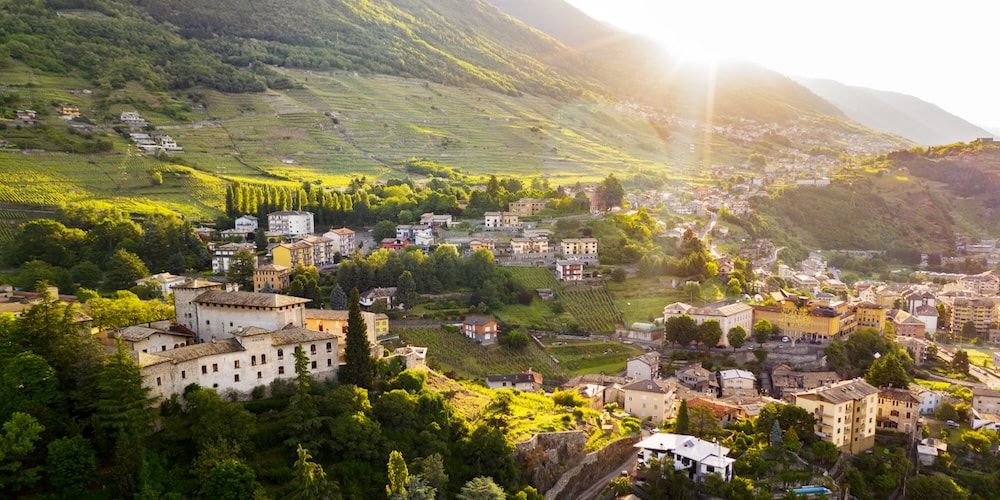
Nestled between the Alps and the terraced vineyards of Valtellina, Sondrio is a city that often takes a back seat to the region’s better-known mountain destinations.
And yet, right here in the heart of Valtellina, you can discover a different side of the Alps: more intimate and authentic, shaped by historic neighborhoods, cultural landmarks, and culinary traditions that reflect the deep connection between the city and its valley.
The compact, walkable historic center invites you to wander through its squares and narrow streets in search of unexpected views, while the surrounding area offers the chance to immerse yourself in breathtaking scenery, rich of nature trails.
During a weekend in Sondrio, you can soak up the atmosphere of Scarpatetti, with its stone houses and cobblestone lanes, explore the collections at the Valtellina Museum of History and Art, and then make your way to Masegra Castle, overlooking the city, and the Sanctuary of Madonna della Sassella, just outside town but deeply rooted in the local landscape.
All while getting around almost entirely on foot, exploring at your own pace and making the most of every minute, with well-deserved breaks to sample the local cuisine.
Here’s how to plan an unforgettable weekend discovering Sondrio:
- Friday: Get your first taste of the city with a stroll through the historic center’s squares and the medieval atmosphere of the Scarpatetti district.
- Saturday: Discover Sondrio’s history and cultural heritage by visiting the Valtellina Museum of History and Art, the historic mansions in the city center, and Masegra Castle.
- Sunday: Take a walk among the terraced vineyards that shape the hillsides around the city, stop at the Sanctuary of Madonna della Sassella, then head back downtown for one last taste of the local cuisine.
Discover more about Sondrio, the gateway to the Italian AlpsA Weekend in Sondrio, Friday morning - Starting from the historic town squares
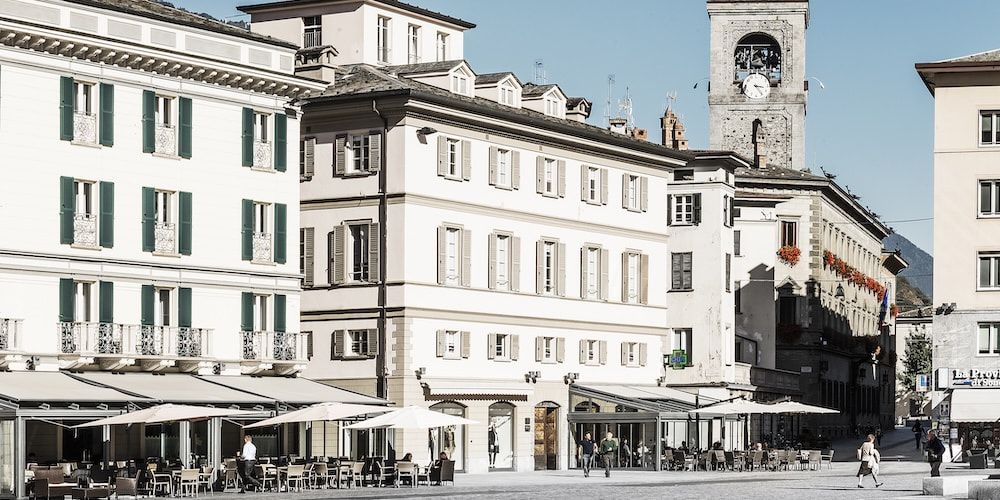
If you arrive in Sondrio by train, you can kick off your weekend at Piazzale Bertacchi, right outside the station. From here, it’s just a short walk along Via XXV Aprile to Piazza Campello, right in the heart of town.
Take a few minutes to admire the Collegiate Church of Saints Gervasio and Protasio, with its distinctive 19th-century bell tower, and the nearby Palazzo Pretorio, which now houses City Hall.
Palazzo Pretorio may look fairly understated from the outside, but there’s something special inside. The building preserves a 16th-century stüa, a traditional Alpine room lined with wood to keep it warm during the long, cold mountain winters.
From City Hall, continue along the short pedestrian stretch of Corso Italia toward Piazza Garibaldi. Designed in the early 19th century as a grand entrance to the city, the square has a very different feel from Sondrio’s older medieval streets. Here, you’ll find the Teatro Sociale, opened in 1824, elegant 19th-century buildings, and a statue of Garibaldi which has stood here since 1909.
Before that, the square featured a monument to Austrian Emperor Francis I. This change is more than a simple swap of statues: it reflects a pivotal chapter in Sondrio’s history, when the town moved from Austrian rule to life in a united Italy.
Friday afternoon and evening - From Lungomallero to Scarpatetti
After passing Piazza Garibaldi, you’ll find yourself near the Mallero stream. Turn right and follow it for about 200 meters (650 feet), with the mountains surrounding Sondrio in the background. Once you reach the small covered bridge, with the imposing Masegra Castle ahead, you’re almost at Piazza Cavour.
Piazza Cavour is the city’s old marketplace, also known as Piazza Vecchia. For centuries, it welcomed merchants and shoppers from all across Valtellina. Today, it retains its charm with its 18th-century buildings, historic market canopy, and flush fountain, which recalls the ancient Malleretti, small streams fed by the Mallero that once flowed through the city.
It’s the perfect time for a break: find a café on the square, order a coffee, and enjoy the relaxed atmosphere of the historic center for a few minutes.
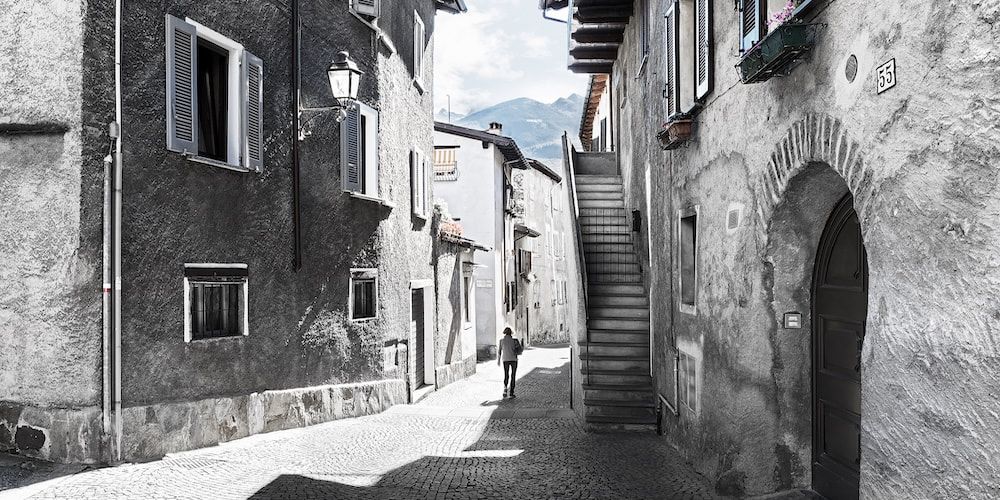
Spend the rest of the afternoon strolling through Scarpatetti, the historic farming district, which climbs uphill from Piazza Quadrivio toward the castle. As you wander its charming narrow streets, you’ll come across traditional rural houses with wooden balconies, stone arches, and hidden courtyards, all fascinating reminders of the area’s rural past that are still clearly visible today.
As evening arrives, it’s time to discover Sondrio’s culinary side, too. Try pizzoccheri, the classic recipe of Valtellinese cuisine: buckwheat pasta with potatoes, Savoy cabbage, Casera cheese, and melted butter. Complete your meal with a few sciatt, buckwheat fritters with a gooey cheese center, or a taste of Valtellina bresaola.
Friday’s stops:
- Piazza Campello;
- Piazza Garibaldi;
- Piazza Cavour;
- Scarpatetti;
- Dinner featuring pizzoccheri.
Saturday morning – Sondrio’s hidden treasures: art and architecture
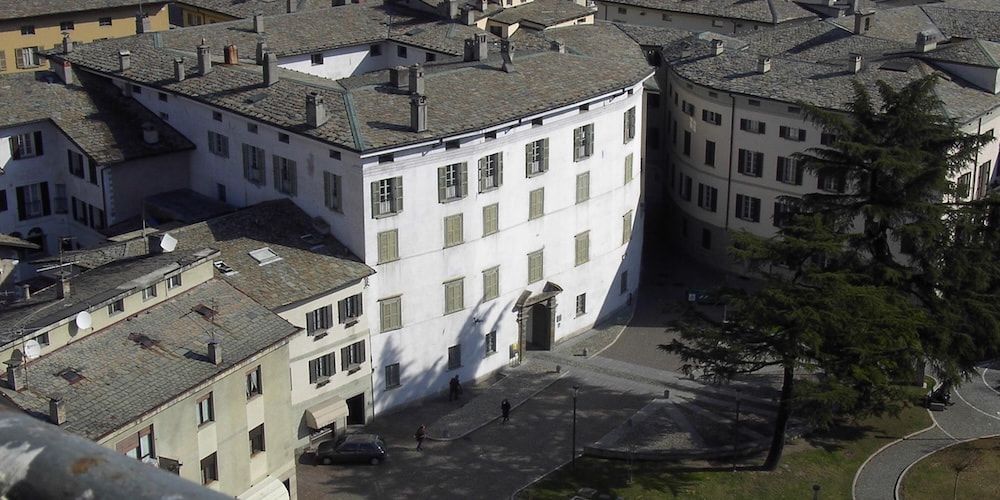
MVSA, picture from visitasondrio.it
After exploring the squares and historic neighborhoods, spend Saturday morning discovering the city’s artistic heritage by stepping inside elegant palaces that hold fascinating stories beyond their impressive facades.
Start at the Valtellina Museum of History and Art (MVSA), housed in Palazzo Sassi de’ Lavizzari along the Via dei Palazzi, a historic route that follows the ancient Via Valeriana through noble residences, Baroque doorways, and narrow streets in the old town.
The museum is worth a visit because it allows you to connect with the valley’s history through artifacts and works left behind by the people who have lived here over the centuries. Its collections include archaeological finds, religious art, and paintings, drawings, and sketches by the Ligari family, whose work helped shape Valtellina’s artistic heritage.
After leaving the MVSA, take time to admire other historic residences, including Palazzo Paribelli and Palazzo Sertoli. Behind its elegant yet understated facade, Palazzo Sertoli reflects Sondrio’s more aristocratic past. Inside, the magnificent Rococo ballroom features elaborate stucco work and captivating frescoes.
Saturday afternoon and evening: Masegra Castle and the stories of the mountains
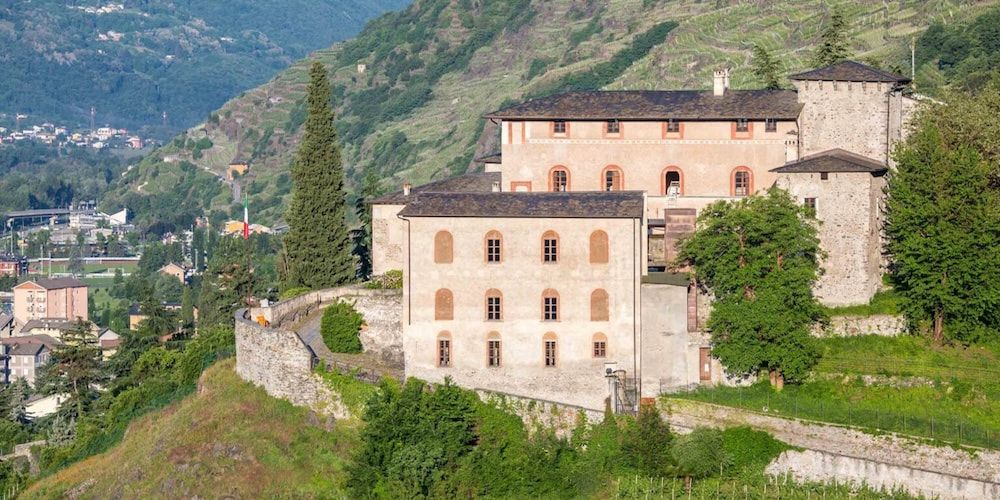
Masegra Castle, picture from visitasondrio.it
Right across from the MVSA, take a short break at Giardini Sassi, a peaceful little green space decorated with sculptures—an ideal spot to pause and relax for a few minutes. Then get back on your way to Masegra Castle. You’ve been spotting it up there overlooking the city since yesterday, and now it’s finally time to make your way up!
This is a truly special place, a symbol of the transformations that have shaped the entire Valtellina Valley. Over its more than seven centuries of history, the castle has changed roles many times: from the stronghold of the powerful Capitanei feudal family to an aristocratic residence, then a farm and later a military barracks.
Today, the castle belongs to the Municipality of Sondrio and houses CAST – the Museum of Mountain Stories, a museum dedicated to mountaineering, rock climbing, and the relationship between people and the Alpine environment.
Through its interactive exhibits, you can explore the mountains both as a natural landscape and as an essential part of the culture and everyday lives of the people who call these valleys home.
The castle is also home to the camera picta, or painted chamber, in the dovecote tower, decorated with Renaissance frescoes inspired by Ludovico Ariosto’s Orlando Furioso.
The story of Orlando Furioso in Valtellina is an little artistic and historical surprise. Ariosto never visited Sondrio, but his famous epic poem made its way here through art, probably also as a reflection of the cultural prestige of the noble families associated with the castle. An unexpected discovery to enjoy between one mountain story and the next!
Saturday’s stops:
- MVSA;
- Palazzo Sertoli;
- Giardini Sassi;
- Masegra Castle.
Sunday morning – The Sanctuary of Madonna della Sassella
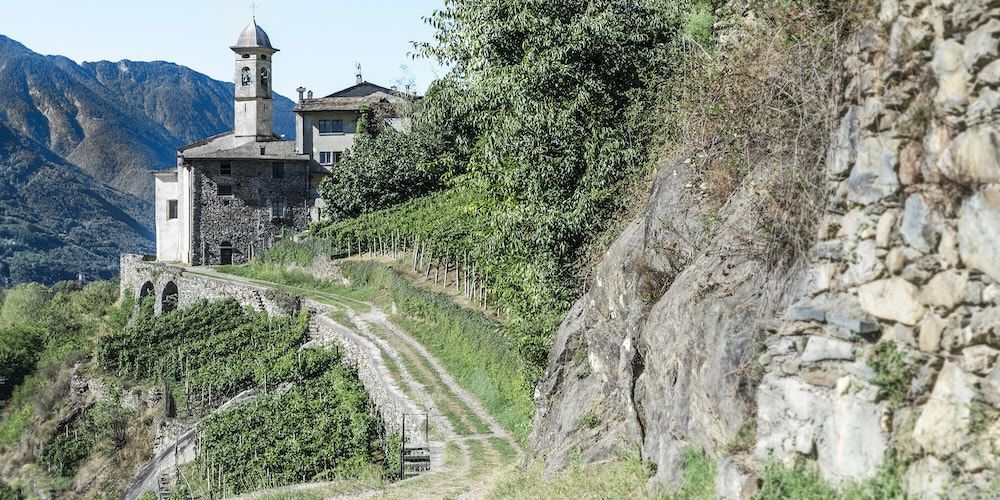
For the final morning of your weekend in Sondrio, leave the streets of the town center behind for a while and head to the Sanctuary of Madonna della Sassella, perched on a rocky outcrop west of the city. You can take public transportation to the start of Via Sassella, then continue on foot for about 500 meters.
The sanctuary dates back to the 15th century, but a curious legend surrounds its origins. According to the story, in 932 the Virgin Mary miraculously moved the church, making it appear at the top of the rocky outcrop. Beyond the myth, the site has been closely tied to local devotion for centuries, as well as to the ancient Via Valeriana, once traveled by merchants and other wayfarers.
Once inside, take a few minutes to admire the Renaissance frescoes decorating the apse, attributed to Andrea De Passeris and dated 1511. You don't need to be an art expert to appreciate them—just let your curiosity guide you and notice how the light brings out different details.
Before heading back, look for the large figure of Saint Christopher, the patron saint of travelers, on the outside wall. Then step onto the terrace, supported by imposing arches and known as the “Balcony of Valtellina.” From here, the wonderful view stretches across the vineyards and along the Adda Valley. It's well worth lingering for a few minutes to take it all in.
Sunday afternoon and evening – Final views and Valtellina flavors
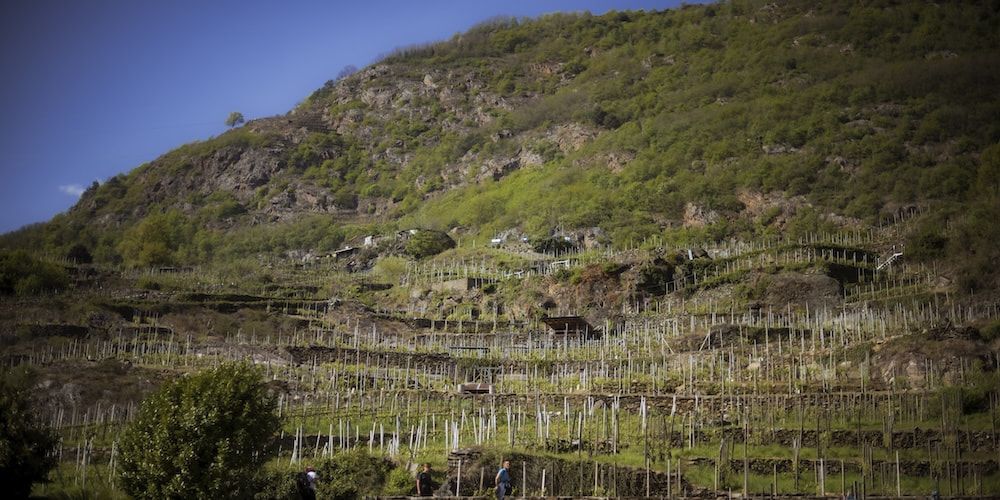
If you're still in the mood for a walk, follow part of the Percorso DiVino, a trail winding through the Sassella vineyards along old roads and footpaths, past neat rows of vines and small hamlets.
The full route to Castione Andevenno is about 8 miles long and takes more than three hours, so for a relaxed Sunday afternoon, you could walk just a section before making your way back to Sondrio.
If you'd rather explore another historic landmark, consider Castel Grumello, a medieval castle just outside the city, in the opposite direction from the sanctuary.
Otherwise, head back downtown and settle in at a café or trattoria for one last treat. To wrap up your weekend on a high note, order a glass of Valtellina Superiore wine and pair it with a local specialty, such as the delicious, traditional Bitto cheese.
Sunday stops:
- Sanctuary of Madonna della Sassella;
- Part of the Percorso DiVino or Castel Grumello;
- One last aperitivo with Valtellina Superiore wine and Bitto cheese.
How to arrive in Sondrio
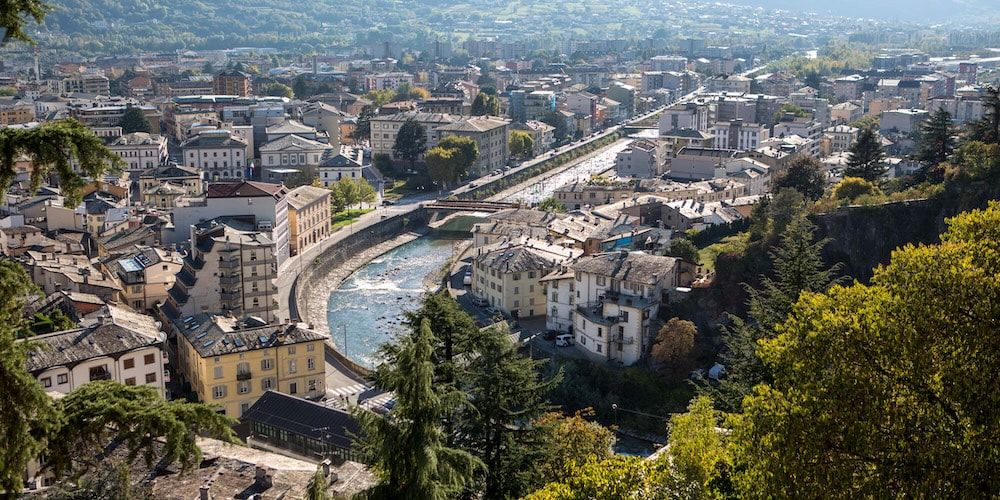
For a weekend getaway, traveling by train is a great option. From Milano Centrale, you can take a Trenord train on the line to Sondrio/Tirano. The journey takes about two hours, and trains generally run once an hour, making it a convenient choice.
By car: From Milan, follow the SS36 toward Lecco and Colico, then enter Valtellina and continue along the SS38 dello Stelvio to Sondrio. The drive takes around two hours and covers approximately 130 km.
If you’re already in Valtellina, you can also take the bus. Regional services connect Sondrio with several towns throughout the valley and nearby villages.
About the author
Written on 29/10/2026
Alessandro Savino
SEO Copywriter & web editor: I love transforming my passion for writing into engaging narratives, creatively and precisely exploring the beauty and complexity of our wonderful country.

Alessandro Savino
Off the beaten path in Valtellina: spend a weekend in Sondrio unveiling the most surprising and unique soul of the Italian Alps.